
Magazine La Palma: Road Trips, Activities and the Best Stories of the Isla Bonita
Open. Curious. Without a fixed plan. You drive the LP-4 up to the Roque de los Muchachos, and suddenly you’re above the clouds — literally: the trade-wind clouds hang just below the road, and up top the sun is shining. That is La Palma in a nutshell: an island full of surprises for those who embrace it.
Whale Watching, Diving, Surfing and Road Trips — La Palma Beyond the Hiking Trails
The Go La Palma magazine gathers everything that goes beyond hiking, beaches and nature: whale watching off the west coast, where short-finned pilot whales cruise all year round. Diving in lava caves beneath the sea surface. Surfing on the north coast with swells born on the open Atlantic. Canyoning in the barrancos of Garafía. Paragliding above Tijarafe overlooking the pirate cove. And itineraries for 3, 5, 7 and 14 days on the island — for everyone who wants to know what really counts. La Palma is not an island for package tourists. It is an island for those who want more.
500 Years of Agriculture on La Palma – Always Reinvented
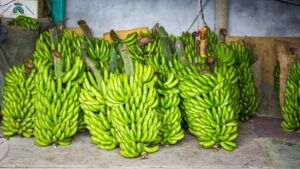
La Palma has an agricultural history that reads like a series of boom and bust: a crop flourishes, transforms the face of the island, collapses – and the island finds the next product. Sugar cane, wine, silk, cochineal, bananas. Five cycles in 500 years, each with its own prosperity and its own end. What remains is an island that has learned to reinvent itself.
Markets on La Palma – Where the Island Sells Itself
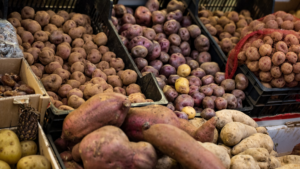
Right next to the Casa Roja, the Mazo farmers’ and crafts market takes place. It is best known for its traditional ceramics, fine embroidery, and regional food. Goat’s cheese, honey, and seasonal fruit are also on offer.
Wine, Rum, Cheese and Salt – La Palma’s Island Specialities
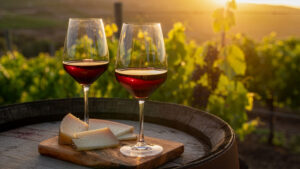
La Palma produces little – but what it produces, it produces well. Wine on lava soils that is mineral like no other. Rum from freshly pressed sugarcane juice, the only one in the Canary Islands made by the Agricole method. Goat’s cheese from Garafía, award-winning multiple times. And sea salt from the saltworks at the southern cape, which appears in restaurants from Madrid to Munich. Souvenirs with a true sense of place.
Festivals on La Palma – An Island That Pulls Out All the Stops
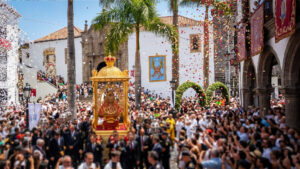
On La Palma there is an unwritten law: when a festival comes along, it is celebrated in style. Not for tourists – but for themselves, for the saints, for their own history and the traditions of the island. La Palma’s festival culture is one of the most vibrant in the Canary Islands. Anyone travelling on the island during a major festival gets what is perhaps the most authentic insight into Palmero culture – free of charge and right in the middle of the action.
Canarian Cuisine on La Palma – What You Must Try
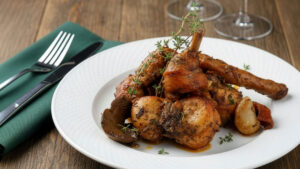
Canarian cuisine is not fusion food, not a food trend, not an Instagram concept. It is an unpretentious cuisine shaped by poverty and island life, turning a few honest ingredients into dishes that you don’t forget easily. Eating on La Palma means eating the Atlantic, volcanic soil, and centuries-old tradition – on one plate.
La Palma with Kids – Adventure on the Volcano Island
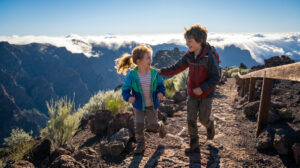
La Palma is not a typical family island with giant water slides, loud amusement parks, and non-stop entertainment – and that is precisely what makes it invaluable for families looking for real adventures. It is the authentic nature experiences that leave a lasting impression on children: the first ‘summit conquest’ at 2,426 metres, curious parrots landing on their shoulders, or swimming in a sheltered natural pool carved by lava from the Atlantic. What La Palma gives children cannot be bought in any resort.
Water Sports on La Palma – The Blue Side of the Island
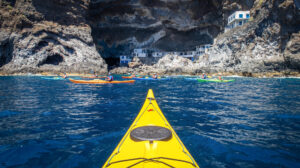
La Palma is an island most people first get to know from above – past deep gorges, over bare summits, and into the vast Caldera de Taburiente. But the island has a second, equally spectacular side that only reveals itself from the water: hidden sea caves unreachable from land, dolphins and whales in the deep Atlantic waters off the coast, and an underwater world full of volcanic structures.
Sport & Adventure on La Palma – The Island for Active Travellers
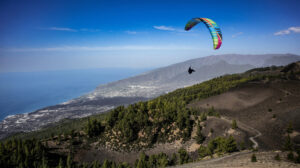
La Palma is by nature a gigantic adventure playground. Extreme differences in elevation, deeply carved gorges, an almost unbroken line of cliffs along the coast, and a climate that permits outdoor activities on many days of the year make the island an extraordinary destination for athletes and adventurers. Those wanting to travel actively will find terrain here that fills far more than just a single holiday week – from flights over the volcanic landscape to abseil routes deep in the gorges.
Beaches on La Palma – Black, Wild and Rarely Crowded
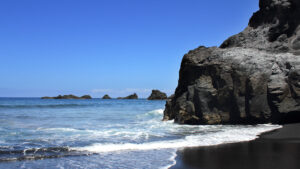
Playa de Nogales is one of the most impressive natural beaches in the Canary Islands. A black sand beach around 500 metres long lies nestled between steeply rising, green-covered rock faces and reveals the wild side of the Atlantic.
Hiking on La Palma – Discovering the Island on Foot
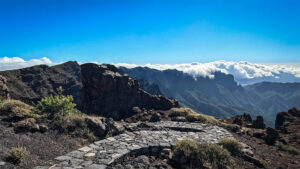
Car parking at the La Cumbrecita viewpoint is limited. A free online reservation via the official national park portal is therefore required.
Notable People from La Palma – The Island and Its Faces
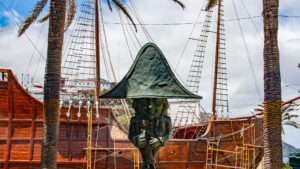
La Palma has around 83,000 inhabitants. Statistically speaking, launching an international career from here is unlikely – and yet it has happened more than once. A shoe designer whose creations are held in the world’s most important museums. A warrior regarded as the last resistance against the Spanish conquerors. And a film actress who captivated Hollywood in the 1940s.
Festivals on La Palma – Island Culture in Full Splendor
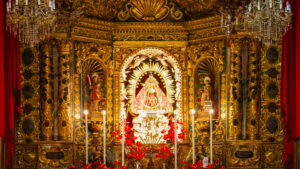
La Palma loves to celebrate – and does so frequently and well. Canarian festival culture is not an artificial backdrop for visitors; it is the living expression of an island society that takes pride in carrying its saints, its history, and its joy for life out into the streets. Anyone who happens to be on La Palma during one of the great traditional festivals experiences the island from a side that no hiking trail and no museum can reveal.
Art on La Palma – From Flemish Masters to Luis Morera’s Mosaics
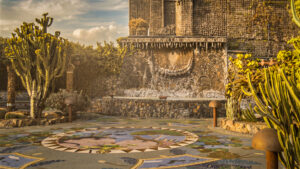
At first glance, La Palma is not a classic art metropolis. There are no large museum quarters and no international gallery scene. Yet the art that has emerged on the island and continues to be cultivated here possesses a remarkable variety: mysterious rock carvings by the Benahoaritas, Flemish masterpieces in historic village churches, traditional crafts, colourful street art, and the unmistakeable mosaic works of Palmero artist Luis Morera, which continue to shape the face of the island today.
La Palma – The Island in Numbers
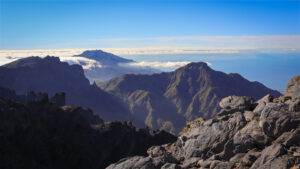
La Palma is small – 708 square kilometres in area, barely 45 kilometres long and 27 kilometres wide. But anyone assuming this means easy driving distances will soon be proved wrong on their first trip around the island. This compact area contains 2,426 metres of elevation, more than thirty deeply cut ravines, five climate zones, and a trail network that seems virtually endless. La Palma is an island that feels significantly larger in experience than it appears on a map.
La Palma’s Water System – Engineering in Volcanic Rock
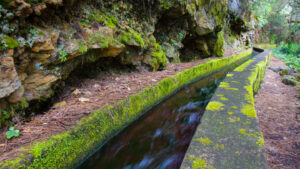
La Palma is a water-rich island – but this water is almost invisible to the eye. There are no large lakes, barely any rivers, and only occasionally does a small stream trickle through the barrancos. What keeps the island so lushly green and alive flows deep underground and through an ingenious network of channels that people have driven into the hard volcanic rock over centuries. Walking the Marcos y Cordero springs trail brings you face to face with this remarkable system.
Rain or Sunshine? – La Palma’s Dual Climate
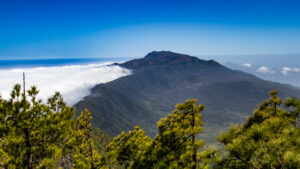
You can be sitting in thick drizzle on La Palma and risk sunburn a ten-minute drive away. What sounds like a meteorological curiosity is everyday reality here. La Palma has a pronounced dual climate: a wet, lushly green eastern side and a sun-drenched, warm western side – separated by the island’s powerful volcanic ridge, which rises to 2,426 metres.
La Palma Biosphere Reserve – The Green Island and Its Conservation
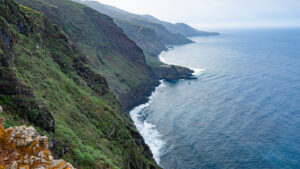
La Palma carries a title you would not necessarily expect of an Atlantic island: UNESCO Biosphere Reserve. Not just a part of the island – the entire island has been under this designation since 2002. Behind it lies more than a label: a system of protected areas, sustainability guidelines, and a natural diversity that, across 708 square kilometres, assembles everything the Canary Islands have to offer botanically and geologically.
Volcanoes on La Palma – An Island Still Growing
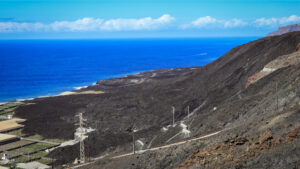
La Palma is one of the most volcanically active islands in the Canary Islands and is home to one of Europe’s most dynamic volcanic systems. What on other islands has long since become fossilised history – cooled craters, ancient lava fields, and extinct vents – is a living reality on La Palma. The last eruption was less than five years ago. The island continues to grow, and future eruptions form part of its natural long-term development.
Starry Skies on La Palma – Why the Sky Is Dark Here

In a world where 80 per cent of humanity can no longer see the Milky Way because they live beneath a blanket of artificial light, La Palma is a rare exception. Here the Milky Way is not a faint grey smear but a broad, structurally complex river of light – full of dark dust lanes, glowing star clusters, and a depth that genuinely takes your breath away. This is not coincidence, but the result of far-sighted legislation.
La Palma for Photographers – An Island Full of Subjects
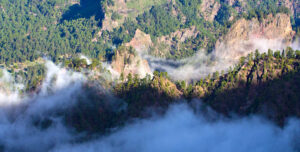
La Palma is an island for people who look carefully. For photographers, that is a profound gift: a landscape with extreme elevation changes that cycles through every quality of light within a single day. Volcanic black against laurel forest green against Atlantic blue. Traditional balconies in terracotta and turquoise. A sky so dark that astrophotography is possible at a serious level. The subjects here are inexhaustible.
La Palma for Couples – The Island’s Most Romantic Spots
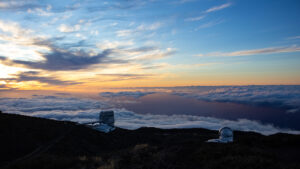
La Palma is naturally romantic. No mass-tourism infrastructure, no resort strips, no noise – instead, quiet rural fincas in pine forest, boat trips to sea caves lit by extraordinary blue light, and sunsets over the Atlantic from viewpoints with no one else around. What makes the island special for couples is the quality of its tranquillity.
La Palma in Spring – The Most Beautiful Season on the Volcano Island
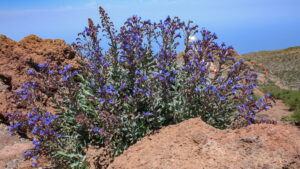
While Northern Europe is still under lingering cold, La Palma is exploding in blossom. The Canarian spring begins early – with the almond trees of Puntagorda in late January – and ends late, when in June the tajinaste stretches its last flowering spires across the high slopes. February to April are for many visitors the most impressive time on La Palma: warm, green, colourful, and not yet summer-hot.
La Palma in Winter – Green, Mild and Almost Tourist-Free
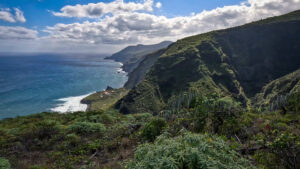
While northern Europe is grey and cold, you can walk through La Palma’s green laurel forests in short sleeves. The Canarian winter is the exact opposite of mainland Europe’s: warm enough for outdoor activities, wet enough for lush nature, and quiet enough to have the island almost to yourself. December to February are among the best months to visit – those who know come back every time.
La Palma or Tenerife – An Honest Comparison
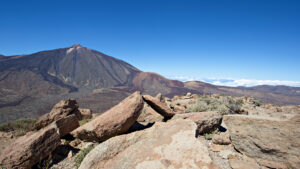
Both are Canary Islands. Both have volcanoes, sunshine, and year-round mild weather. Both are easily reached from most northern European airports. But La Palma and Tenerife are profoundly different islands, and the choice depends largely on what you want from a holiday. This comparison is not a sales pitch for either island – it is an honest assessment.
La Palma in 5 Days – The Essential Short Trip
Arrive at Santa Cruz de La Palma airport, pick up your hire car, and check into your accommodation in or near the capital. Spend the afternoon walking the Calle Real – the island’s finest street, lined with ornate wooden balconies and colourful façades. Visit the Plaza de España, walk the harbour promenade, and choose a local restaurant for dinner. Sleep in Santa Cruz or the surrounding area.
La Palma Road Trip – 7 Days Around the Whole Island
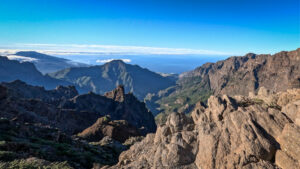
Seven days on La Palma is the right amount. Enough to understand the island without falling into repetition, enough to slow down and stop when something catches your eye, and enough to cover the full range of what La Palma offers – from the caldera to the lava field, from laurel forest to saltpans. A hire car is essential for the full experience.
Tajogaite 2021 – 85 Days That Changed La Palma
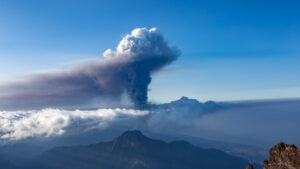
On 19 September 2021 at 3.12 pm local time, the earth opened a fissure near El Paraíso. Within minutes, lava was flowing. Within hours, the first people had been evacuated. What followed were 85 days of fire, ash, and uncertainty – the longest volcanic eruption in La Palma’s documented history, and the first that the entire world watched in real time.
La Palma Highlights – 15 Sights That Define the Island
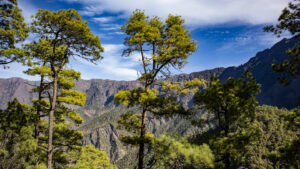
La Palma is small – 47 km long, 29 km wide – but extraordinarily dense with natural spectacle, cultural depth, and experiences that exist nowhere else in the Canary Islands. These 15 highlights are the essential reference points for any visit.
Corpus Christi in Mazo: Flower Carpets as Folk Art
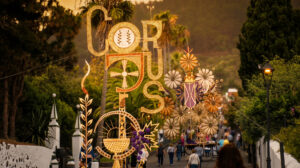
On Corpus Christi, which falls on a different date each year, the residents of Villa de Mazo cover the streets of their village with something no other place in the Canary Islands produces with such intensity: flower carpets. Not decorative strips of petals, but complete, figurative works of art made from flowers, coloured sand, salt crystals, black lapilli and white earth — motifs from the Bible, from the island’s history, from Canarian mythology.
Fiesta de los Indianos: The White Carnival of Santa Cruz de La Palma
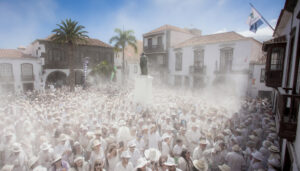
On Shrove Monday, Santa Cruz de La Palma transforms into a sea of white. The Fiesta de los Indianos is the highlight of La Palma’s carnival calendar and counts among the most extraordinary festivals in the Canary Islands. Thousands of people in historically inspired white clothing parade through the streets, celebrating to Cuban rhythms.
La Bajada de la Virgen: The Five-Year Festival
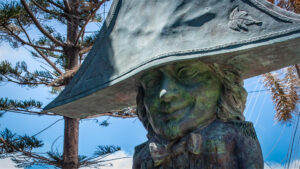
Every five years, La Palma holds its breath. The Bajada de la Virgen de las Nieves — the ceremonial descent of the island’s patron saint from her sanctuary above Santa Cruz de La Palma into the island capital — is the most significant religious and cultural event on the island. At the same time, it ranks among the most impressive popular festivals in the Canary Islands and all of Spain.
Almond Blossom on La Palma: The First Promise of Spring in Winter
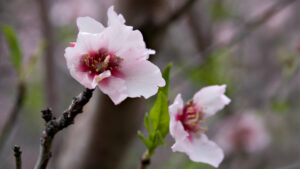
While central Europe often still has snow and freezing temperatures in January and February, spring has already begun on La Palma. In the northwest of the island, thousands of almond trees around Puntagorda, Tijarafe, and along the scenic LP-1 mountain road transform the landscape into a sea of white and pale pink blossoms.