La Palma Night Sky – Why the Sky Here Is Dark
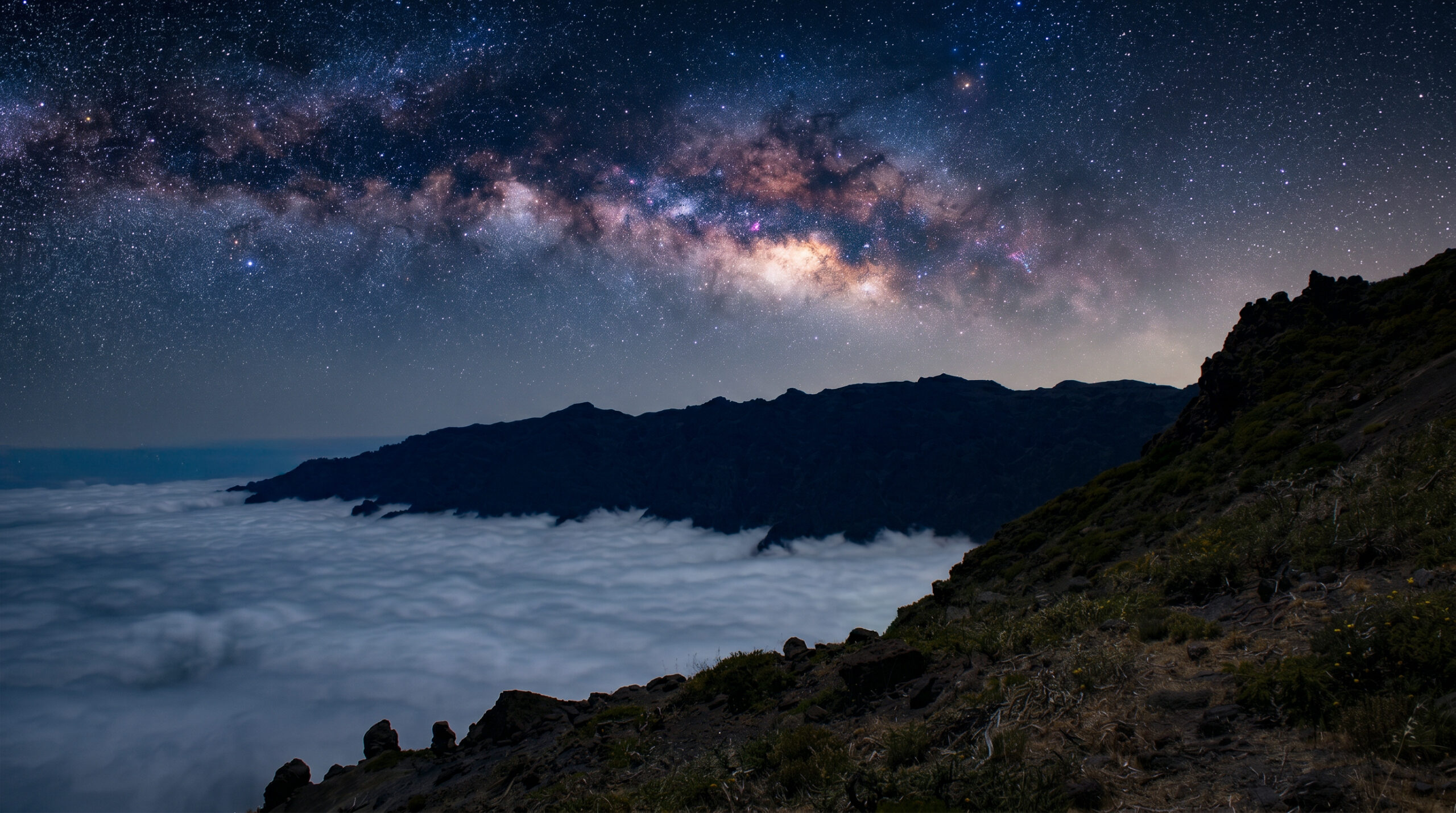
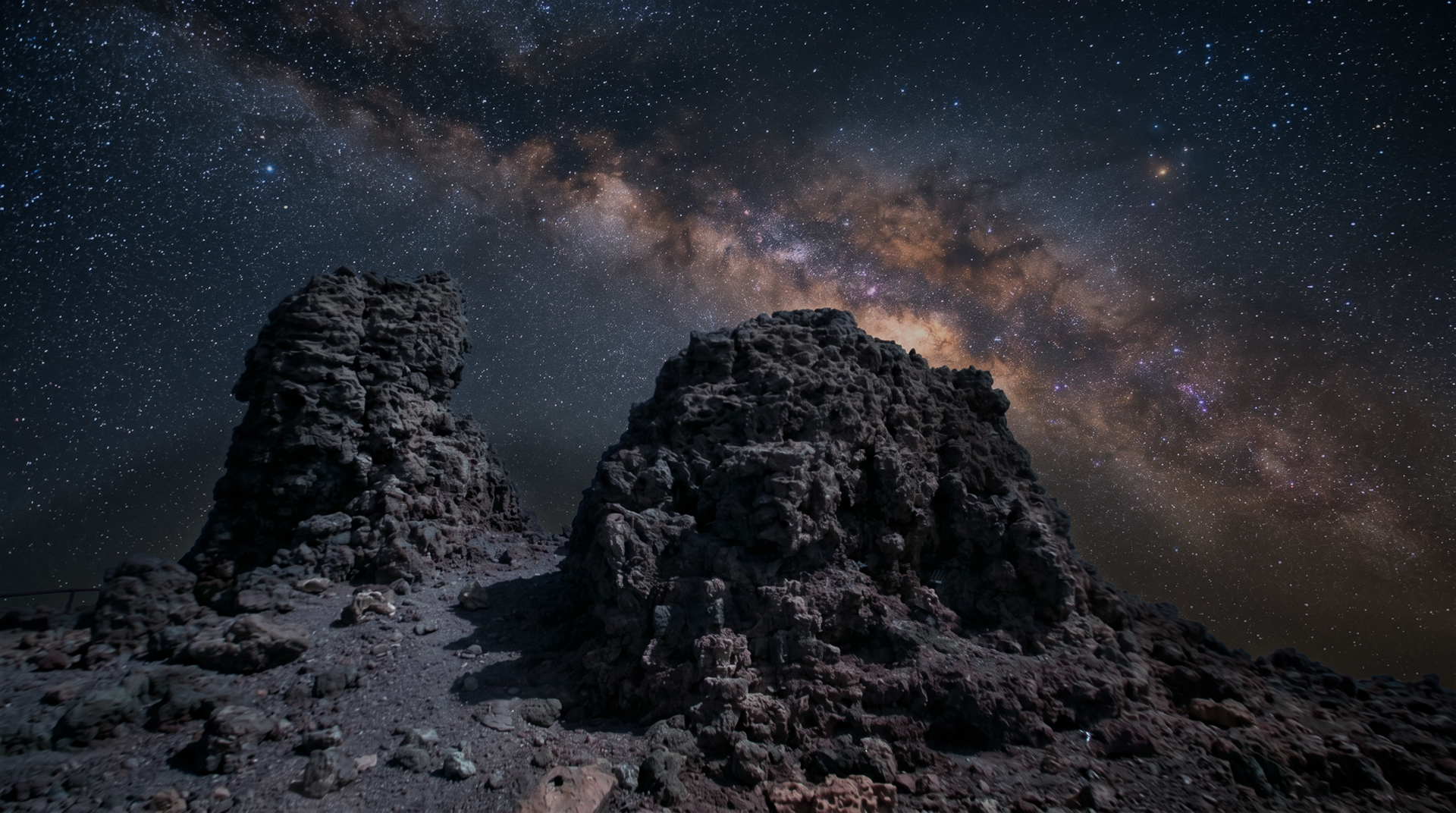
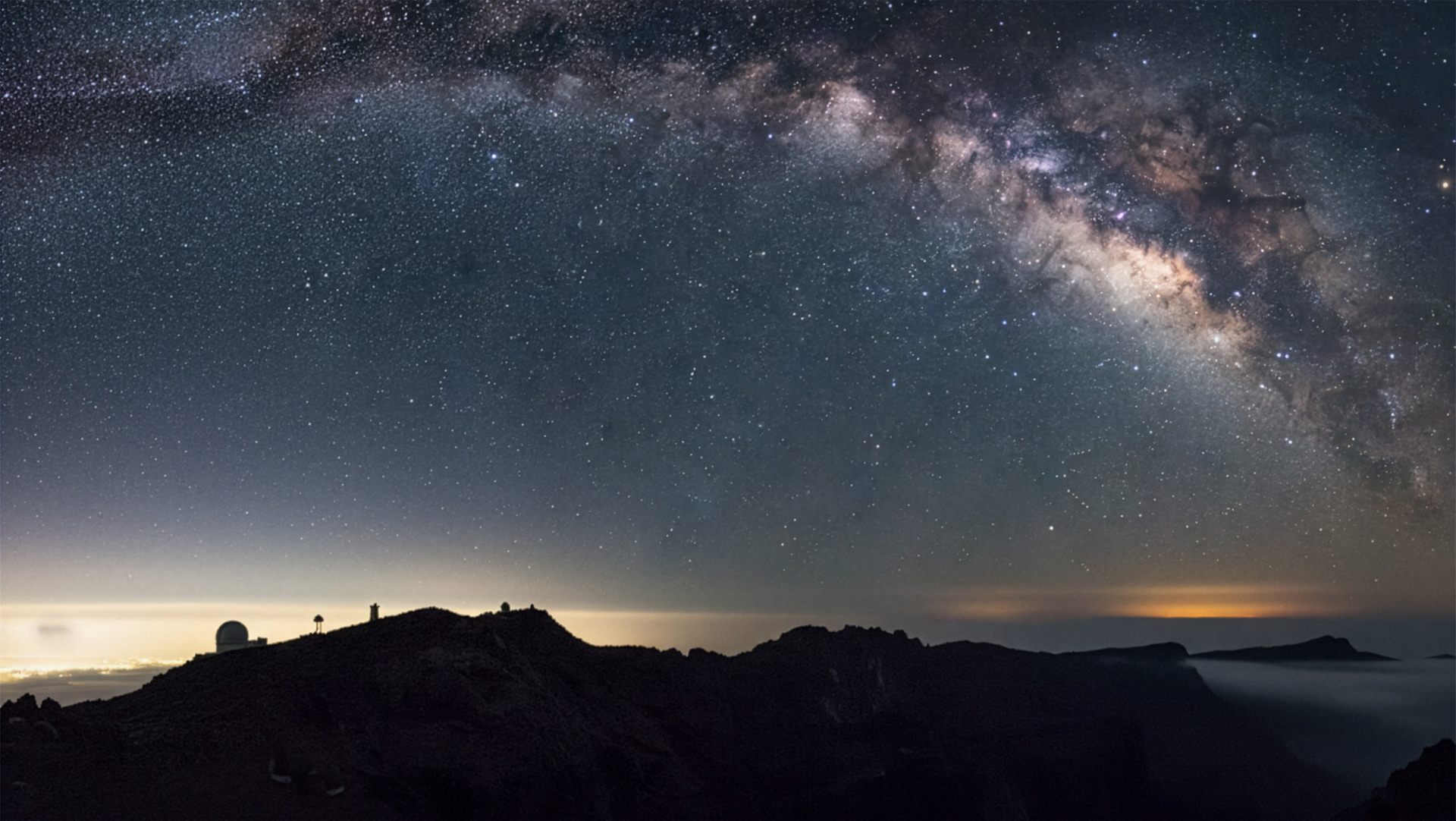
In a world where 80 per cent of humanity can no longer see the Milky Way because they live beneath a blanket of artificial light, La Palma is a rare exception. Here the Milky Way is not a faint grey smear but a broad, structurally complex river of light – full of dark dust lanes, glowing star clusters, and a depth that genuinely takes your breath away. This is not coincidence, but the result of far-sighted legislation.
The Ley del Cielo – Dark Sky Protection Act
As early as 1988, La Palma became the first region in the world to pass legislation protecting the night sky: the Ley del Cielo. It regulates the intensity, colour spectrum, and direction of every artificial light source on the island. Street lamps use special amber-yellow bulbs and shine downwards only. Advertising signs and outdoor lighting must be switched off completely after midnight.
The result is spectacular: even directly on La Palma’s coastline – in Puerto Naos, Santa Cruz, or Tazacorte – the night sky is clearer than in most rural areas of northern Europe. Above 1,000 metres, once you leave the densest atmospheric layers behind, the view becomes truly breathtaking.
The World’s First Starlight Reserve
In 2012, La Palma became the world’s first Starlight Reserve – a designation supported by UNESCO. Beyond the Ley del Cielo, the island’s unique climatic conditions play a central role. The trade wind clouds typically form a stable inversion layer between 1,000 and 1,600 metres. Above this, on the summit plateau at over 2,400 metres, the air is extremely dry, dust-free, and completely cloudless on more than 300 nights per year.
The Observatorio del Roque de los Muchachos (ORM)
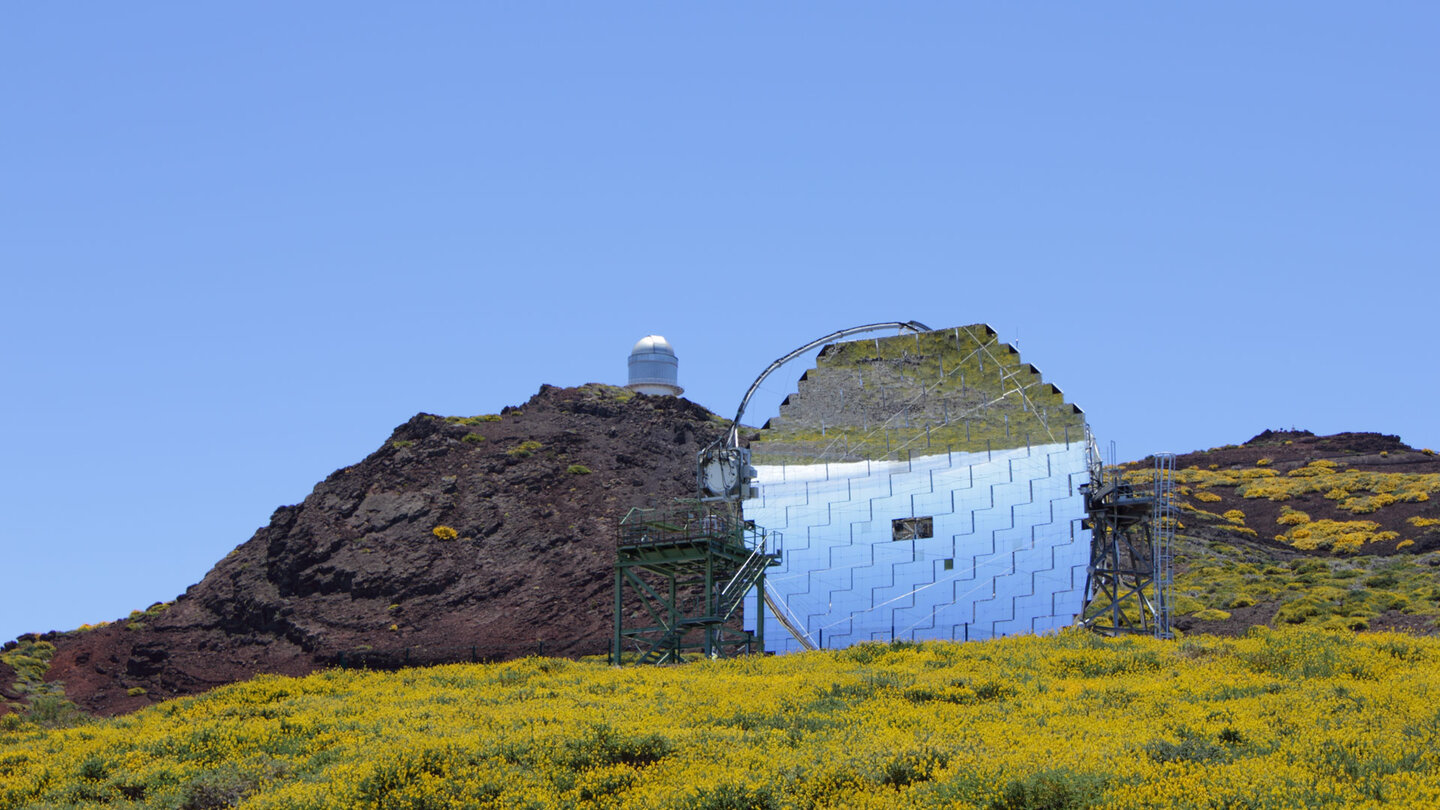
Thanks to these conditions, La Palma is home to one of the world’s most important astrophysical observatories. More than 20 telescopes from over 20 nations stand on the ridge:
- Gran Telescopio Canarias (GTC): At 10.4 metres in mirror diameter, it is the world’s largest single-mirror optical telescope.
- The MAGIC Telescopes: Two giant mirror structures that measure high-energy gamma radiation from distant galaxies and black holes.
- Cherenkov Telescope Array (CTA): The next generation of gamma astronomy is currently being built on the Roque de los Muchachos, consolidating La Palma’s role as a world centre for astrophysics.
Astrotourism on La Palma
La Palma can claim to have pioneered astrotourism in the Canary Islands and remains the leading destination for stargazing travel in Europe. Specialist operators run guided tours to the best observation points, equipped with professional travel telescopes and laser pointers. Providers such as LaPalmaStars.com or Ad Astra La Palma lead groups to the finest viewpoints on the island.
Tips for Independent Stargazing
Best time: The long, clear nights from October to March offer ideal conditions. The darkest nights fall around the new moon.
Important note on night-time access: The summit area of the Roque de los Muchachos around the telescopes is closed to public traffic at night by barriers, to protect sensitive measurements from headlight interference.
The alternative: Dedicated astronomical viewpoints (Miradores Astronómicos) have been established across the island. Places such as Llano del Jable (El Paso) or the Mirador de Las Mimbreras (north) offer spectacular views at over 1,000 metres altitude and are freely accessible at night. Be sure to bring very warm clothing – temperatures in the mountains drop sharply after dark.
What You Can See with the Naked Eye
Even without optical aids, the view of the sky above La Palma is an unforgettable experience. The Milky Way stretches across the sky as a broad, structurally complex river of light, full of dark dust lanes, glowing star clusters, and a depth that stops you in your tracks. The Andromeda Galaxy – our nearest major neighbour at 2.5 million light years – is easily visible as a faint smudge. On clear nights, thousands of stars sparkle overhead, and during major meteor showers (such as the Perseids in August or the Geminids in December), shooting stars streak across the sky in remarkable numbers.
| Feature / Offering | Details |
|---|---|
| Best time | October to March, especially on new moon nights |
| Best free locations | Official Miradores Astronómicos (e.g. Llano del Jable) |
| Guided tours | LaPalmaStars.com, Ad Astra La Palma (from approx. €30–50 per person) |
| ORM guided visits (daytime) | By prior booking only via iac.es (limited places) |
| Events | Stars & Science Festival (annual, Santa Cruz) |
La Palma as an International Astrotourism Destination
La Palma pioneered astrotourism in the Canaries and remains the leading destination for stargazing travel in Europe. What exists as a niche product on Gran Canaria or Tenerife has on La Palma developed into a dedicated infrastructure: specialist tour operators, an annual astronomy festival, observatories with visitor programmes, and accommodation specifically positioned in dark locations away from light pollution.
For amateur astronomers bringing their own equipment, La Palma is particularly appealing. The freely accessible astronomical viewpoints have no commercial activity, no queues, and no entry fees. Set up your tripod, look up, and you are alone with the universe.
Frequently Asked Questions (FAQ)
Can you see the Milky Way from the coast of La Palma?
Can you drive up to the Roque de los Muchachos at night?
Is a guided astro tour worth it?
This article is based on the on-the-ground knowledge of the Gequo editorial team – publishers of the Reisezeit hiking guides and operators of Sunhikes.com. Last updated: May 2026