Celebrating on La Palma – an Island that Pulls out All the Stops
On La Palma there is an unwritten law: when a festival comes along, it is celebrated in style. Not for tourists – but for themselves, for the saints, for their own history and the traditions of the island. La Palma’s festival culture is one of the most vibrant in the Canary Islands. Anyone travelling on the island during a major festival gets what is perhaps the most authentic insight into Palmero culture – free of charge and right in the middle of the action.
Los Indianos – the White Carnival of Memory
Every year on Carnival Monday (Shrove Monday), Santa Cruz de La Palma is transformed into a sea of white. Los Indianos is not an ordinary carnival parade, but an extraordinary celebration of remembrance with a historical background.
The term Indianos referred to the Palmeros who emigrated to Cuba and Venezuela in the 19th and early 20th centuries, prospered there, and later returned wealthy to their home island. The carnival takes up this story and combines it with an affectionate parody of the former emigrants.
The participants appear in elegant white colonial dress: linen suits, straw hats, lace gowns, and fine accessories define the scene. Added to this is the famous talcum powder spectacle: tonnes of white powder fill the historic streets until Santa Cruz appears blanketed in snow.
The festival comes alive with Cuban rhythms, salsa, and son music. What makes it special: Los Indianos is not a staged tourist spectacle. The Palmeros celebrate this tradition above all for themselves – but anyone who dresses in white and embraces the ritual immediately becomes part of this extraordinary community. It is not a spectacle to watch – it is a celebration to join.
How to Experience Los Indianos at Its Best
Dress in white – that is the first and only dress code requirement. Then: buy talcum powder (available in every supermarket on La Palma before the festival), travel to Santa Cruz early, find a spot in the lanes near the main promenade, and wait. What comes, comes and evolves: first slowly more white, then ever more music, then the powder salvos.
Important: Protect cameras, mobile phones, and all electronics well – the talcum powder penetrates every gap. Many visitors bring sealable plastic bags for their devices. Those who experience the festival from a balcony or café table observe it – those who step in become part of it. Both have their value.
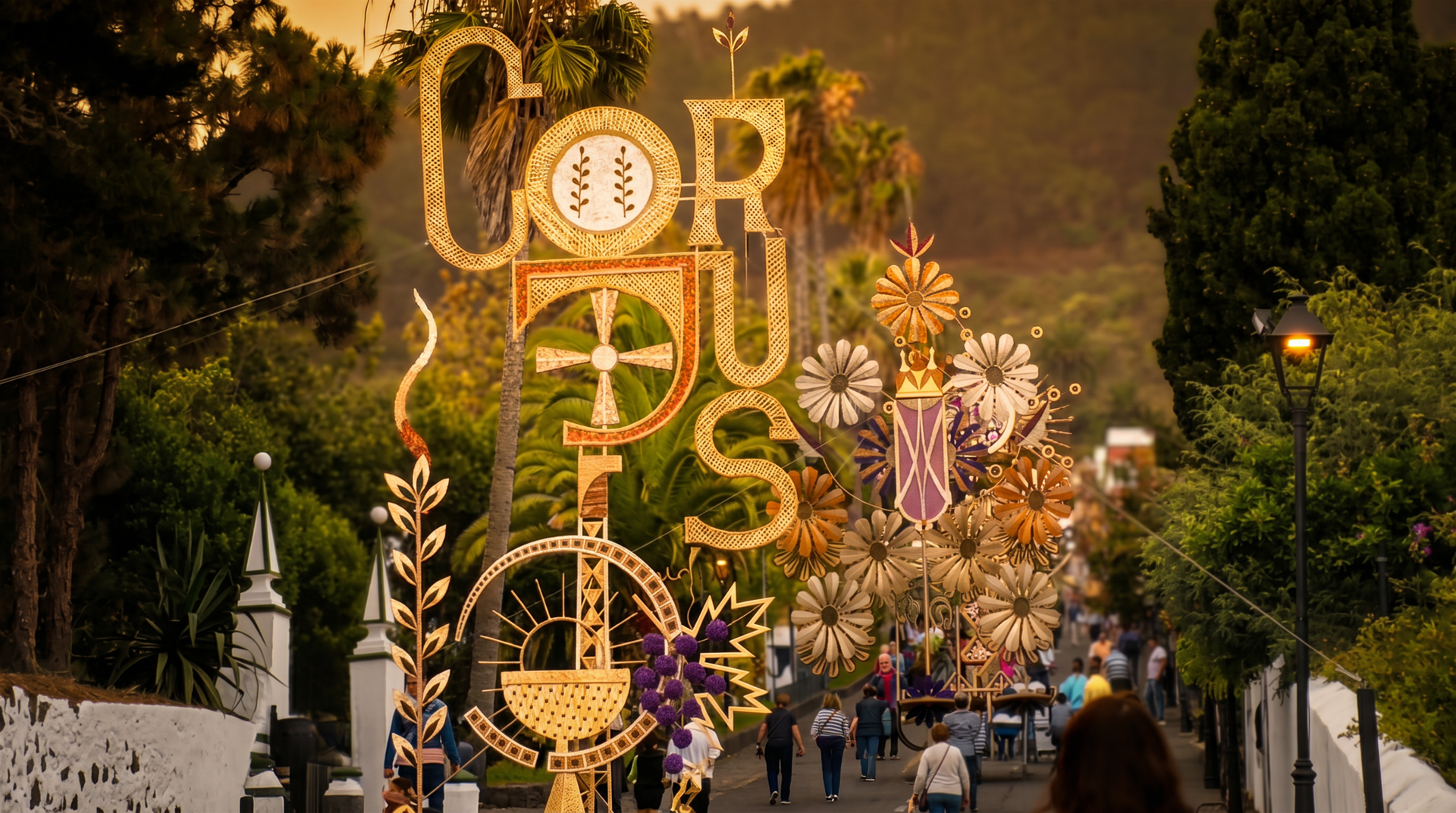
Corpus Christi in Mazo – Flower Carpets from Millions of Petals
The Feast of Corpus Christi in Villa de Mazo is one of the most impressive traditions on La Palma. Depending on the church calendar it takes place in May or June and transforms the historic town centre briefly into a huge open-air gallery.
Months in advance, the residents collect natural materials such as flowers, seeds, mosses, plants, and coloured stones. On the night before the festival, these are used to create intricate carpets, religious motifs, and geometric patterns in the streets – with extraordinary patience and millimetre-precise handcraft.
The next day, the solemn procession passes over these ephemeral works of art. A few hours later the flower carpets have gone. Only photographs, memories, and eager anticipation of the following year’s designs remain.
Romerías – Festival Processions Full of Costume and Tradition
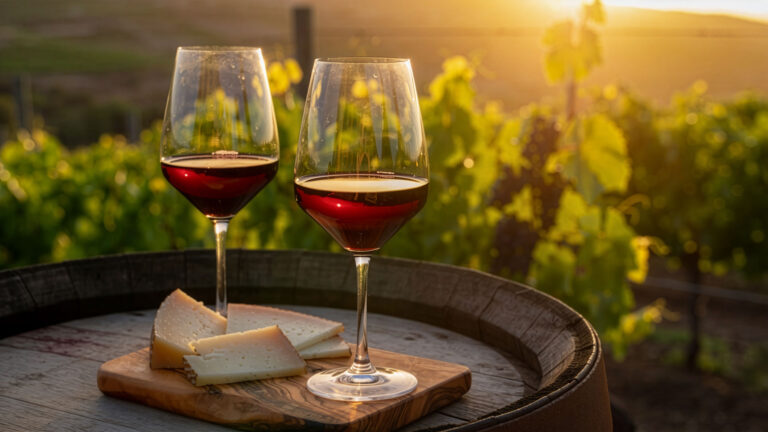
Almost every municipality on La Palma has its own Romería – a traditional festival procession in honour of its patron saint. At these colourful folk festivals, participants wear the typical Palmero costume (Traje de Mago). Decorated floats pass through the streets, traditional music groups play Canarian folk music, and spectators along the route are treated to wine, cheese, fruit, and regional specialities.
Among the best-known festivals are the Romería de San Isidro in Breña Alta and the Romería Típica of Los Llanos de Aridane as part of the patron saint celebrations at the end of June. The romerías are not historical performances for visitors – they are living tradition, bringing entire families and village communities together.
Good to Know: The Bajada de la Virgen de las Nieves
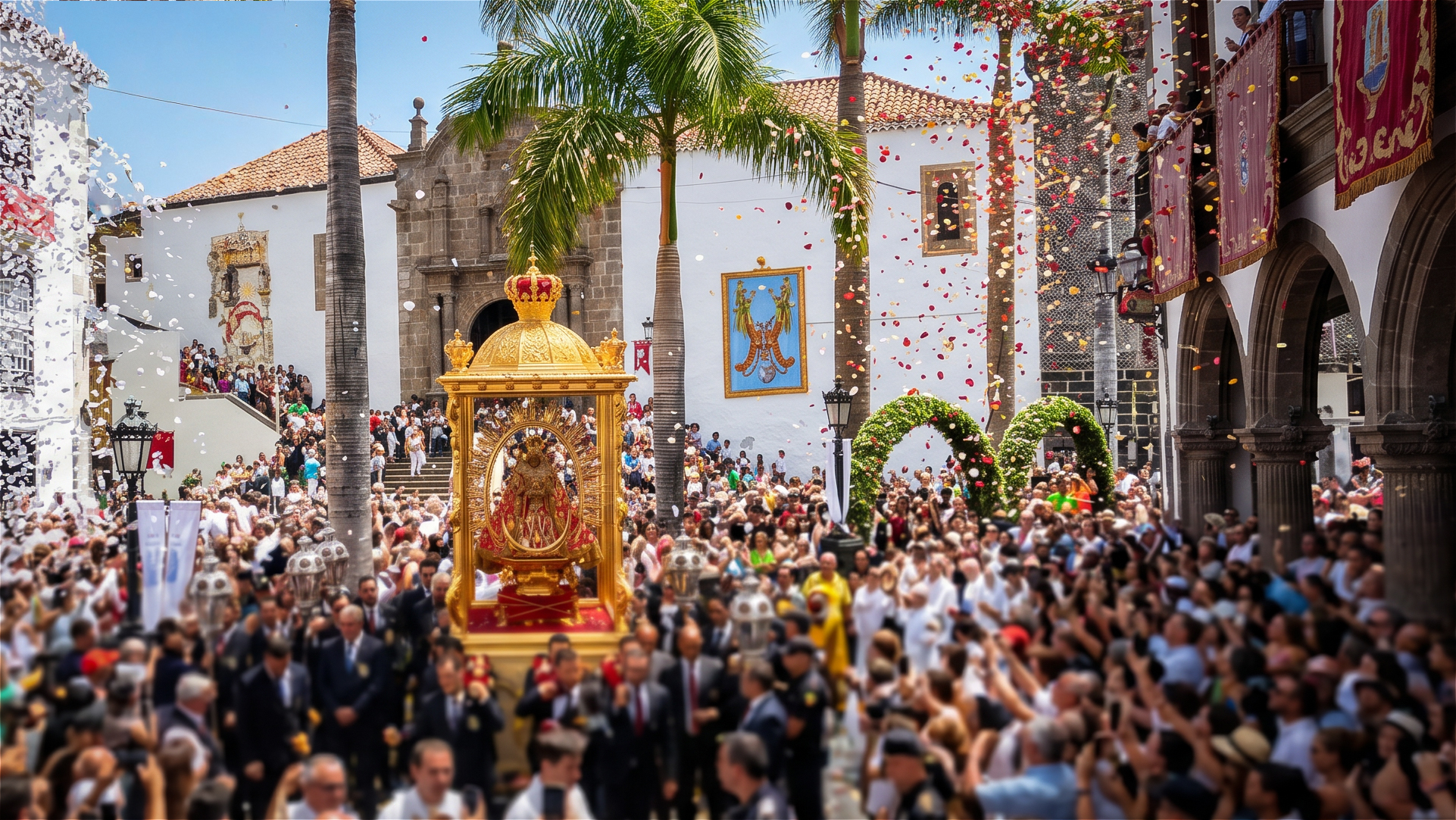
Anyone exploring La Palma’s festival culture will inevitably encounter the island’s greatest event: the Bajada de la Virgen de las Nieves. In this extraordinary festival, the island’s patron saint is carried down from her mountain sanctuary, the Real Santuario Insular de Nuestra Señora de las Nieves, to Santa Cruz de La Palma. Highlights include the famous Dance of the Dwarfs (Danza de los Enanos) and numerous traditional events.
Important for travel planning: The Bajada does not take place annually, but only every five years in what are called lustral years. The most recent Bajada was celebrated in the summer of 2025. The next great festival of this kind will therefore not take place until the summer of 2030.
Frequently Asked Questions (FAQ)
When is the next Los Indianos Carnival?
What is the best way to prepare for Los Indianos?
When is the next Bajada de la Virgen de las Nieves?
Where can you find out about the dates of local festivals?
Which festivals on La Palma should visitors not miss?
This article is based on the on-the-ground knowledge of the Gequo editorial team – publishers of the Reisezeit hiking guides and operators of Sunhikes.com. Last updated: May 2026