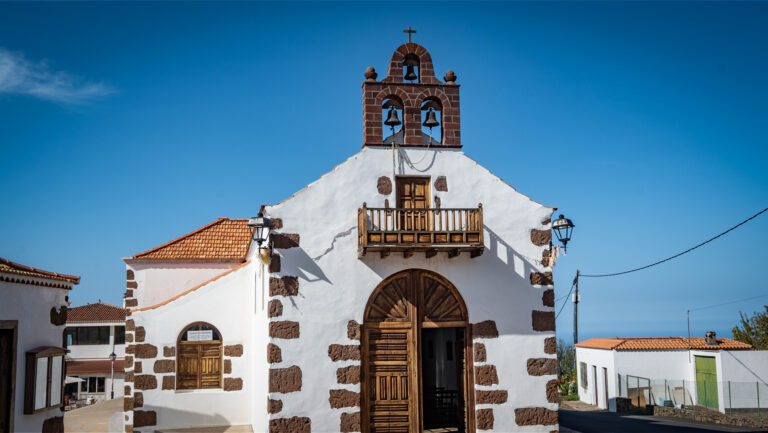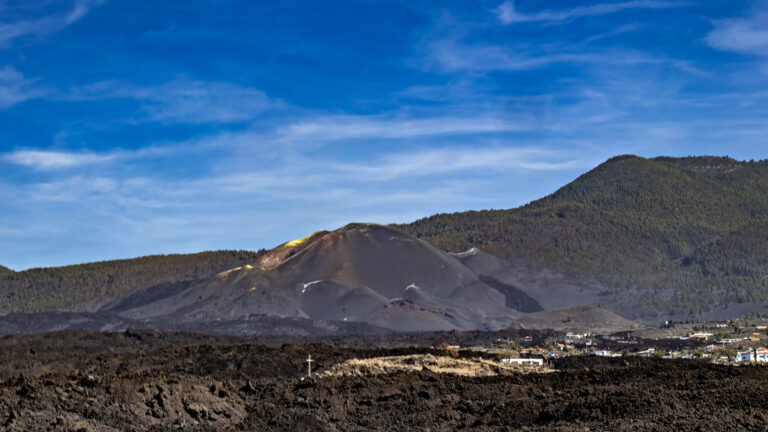
San Andrés y Sauces: Northeast, Laurel Forest, and the Blue Pool
San Andrés y Sauces is one of La Palma’s greenest municipalities. The two villages of San Andrés and Los Sauces lie in the humid northeast of the island and together form the cultural and scenic heart of the region. Lush banana plantations, centuries-old laurel forests, and a spectacular cliff coast define the landscape. With around 4,000 residents, the municipality has preserved its authentic character and is an ideal base for exploring La Palma’s evergreen north.
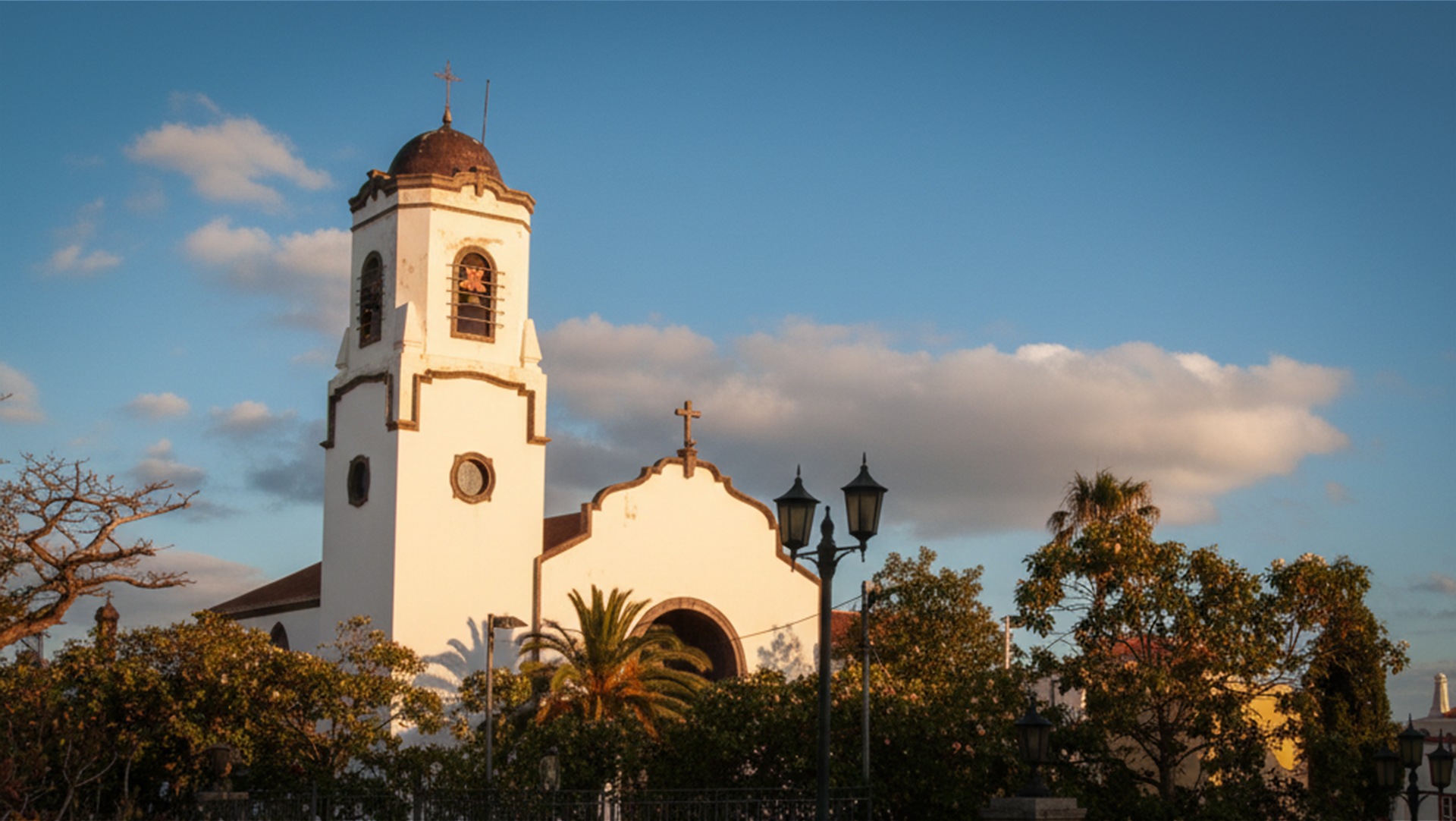
San Andrés: Colonial Charm and Sugarcane History
The historic centre of San Andrés is one of the most beautiful old villages on the island. Around the Plaza de San Andrés with its Iglesia de San Andrés Apóstol stand lovingly restored manor houses with ornate wooden balconies — a striking testament to the prosperity that sugarcane cultivation brought to the region in the 16th and 17th centuries.
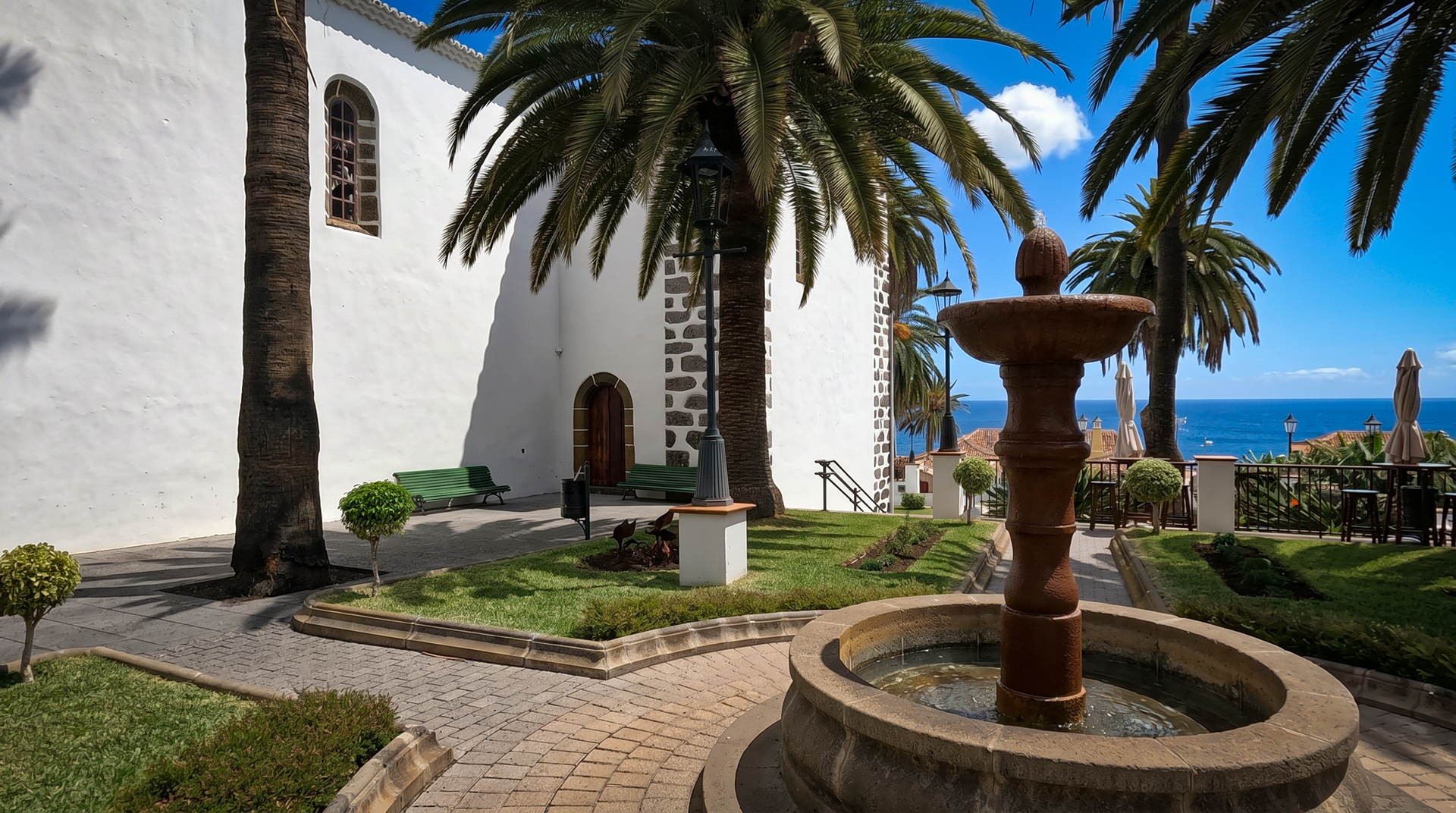
Puerto Espíndola: Sugarcane, Rum, and Traditional Craftsmanship
Just a few minutes’ walk from the historic village centre lies the small harbour Puerto Espíndola. Historically, the sheltered bay was an important transshipment point for sugarcane and agricultural produce.
The sugarcane tradition lives on today: at the Ron Aldea Distillery high-quality rum is produced from Canarian sugarcane using traditional methods. Visitors can learn about the production process and taste various varieties — a fascinating glimpse into one of the island’s oldest agricultural traditions.
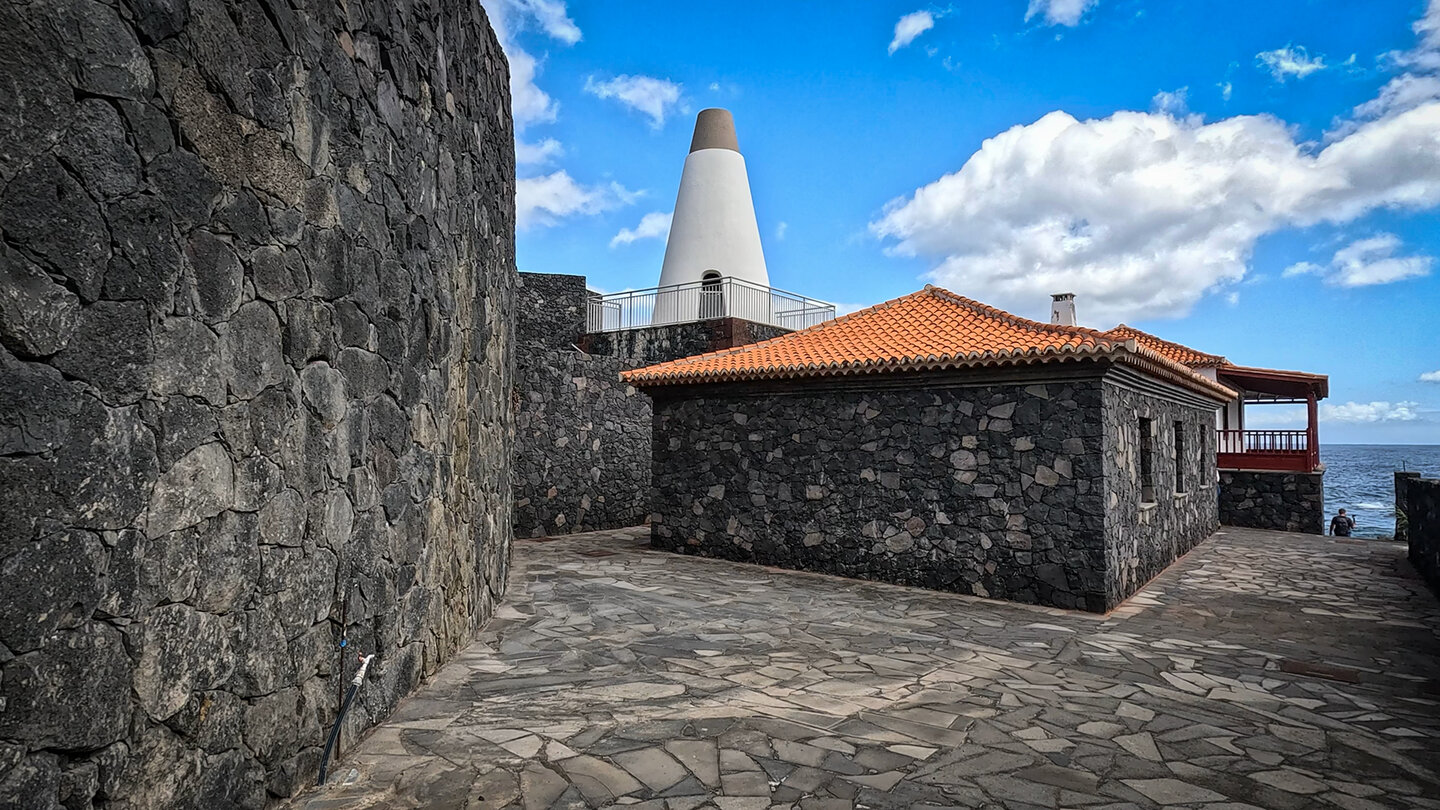
Along the coast, a restored lime kiln recalls another once-important craft. Limestone from the island was used to produce quicklime for construction and agriculture. Today the kiln stands as a rare witness to the traditional use of La Palma’s natural resources.
Charco Azul: Safe Swimming on the Atlantic
The natural seawater pools Charco Azul are among La Palma’s most popular bathing spots. The modern complex sits between San Andrés and Puerto Espíndola, harmoniously integrated into the black lava rock. Several seawater pools, a separate children’s pool, and the historic Charco de las Damas offer sheltered swimming directly on the Atlantic.
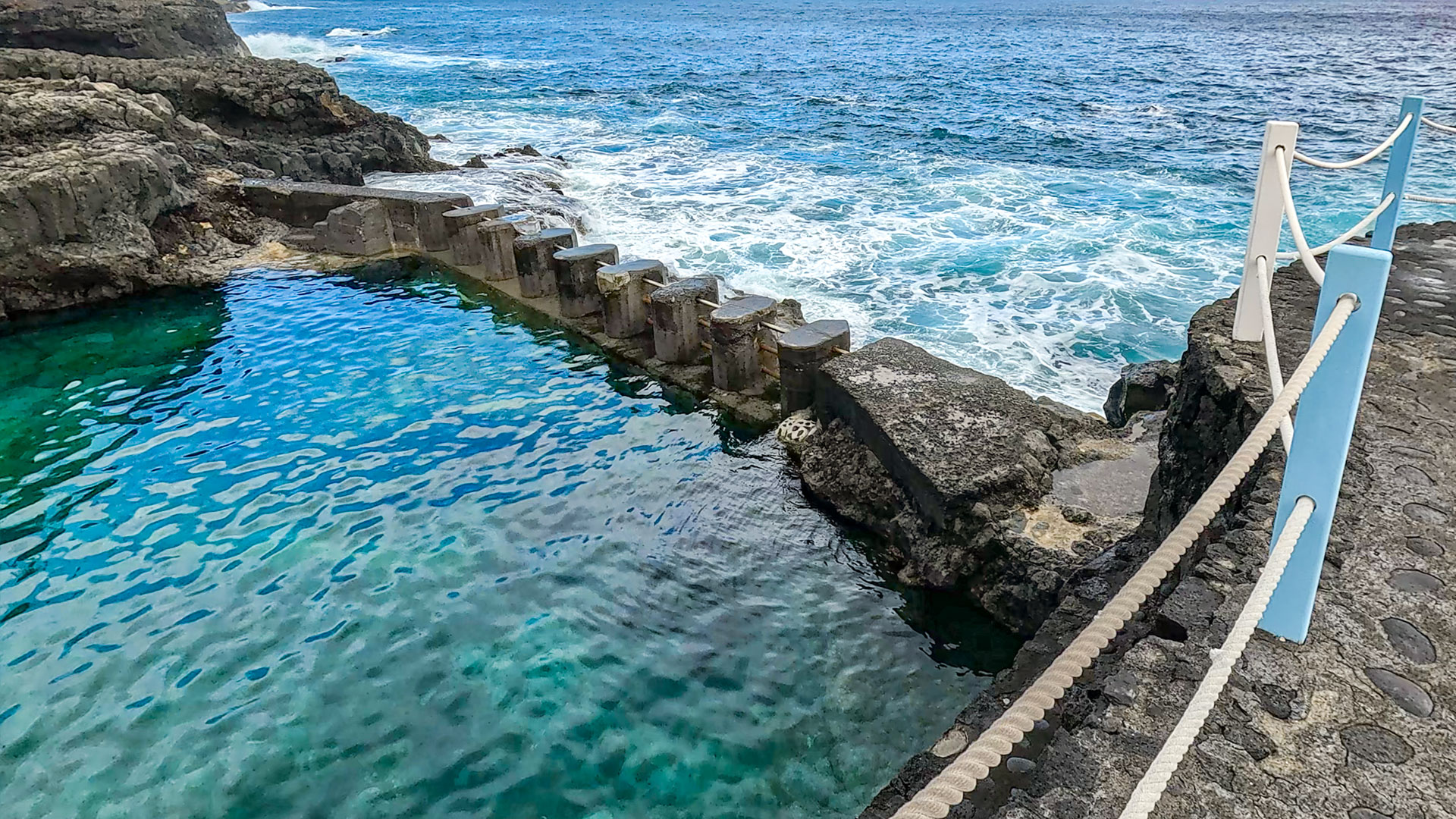
A restaurant, sun terraces, showers, changing rooms, and accessible pathways make Charco Azul one of the most comfortable bathing facilities on the island. During heavy swell, the complex may be temporarily closed for safety reasons.
Los Sauces and the Los Tilos Biosphere Reserve
Los Sauces is the larger of the two villages and the economic centre of the municipality. From here you can reach the Los Tilos Biosphere Reserve, one of Europe’s last original laurel forests and a UNESCO-protected nature reserve since 1983.
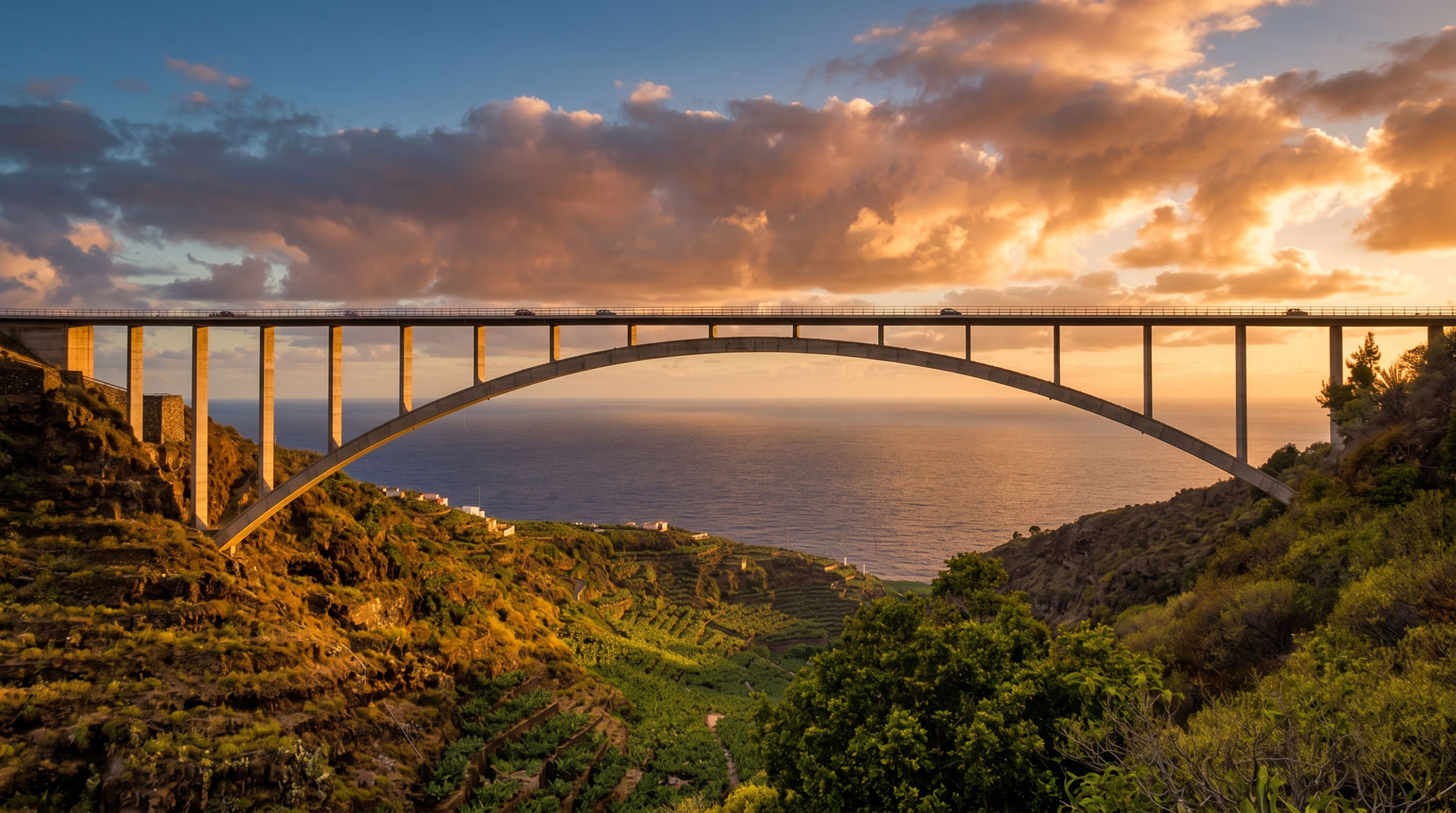
Even the approach is impressive: just before the visitor centre, the road crosses the Puente de Los Tilos, which spans the deeply carved Barranco del Agua. The elegant arch bridge has no central pillar and ranks among the largest bridges of its kind in Europe. From here, you get a stunning view into the densely forested ravine.
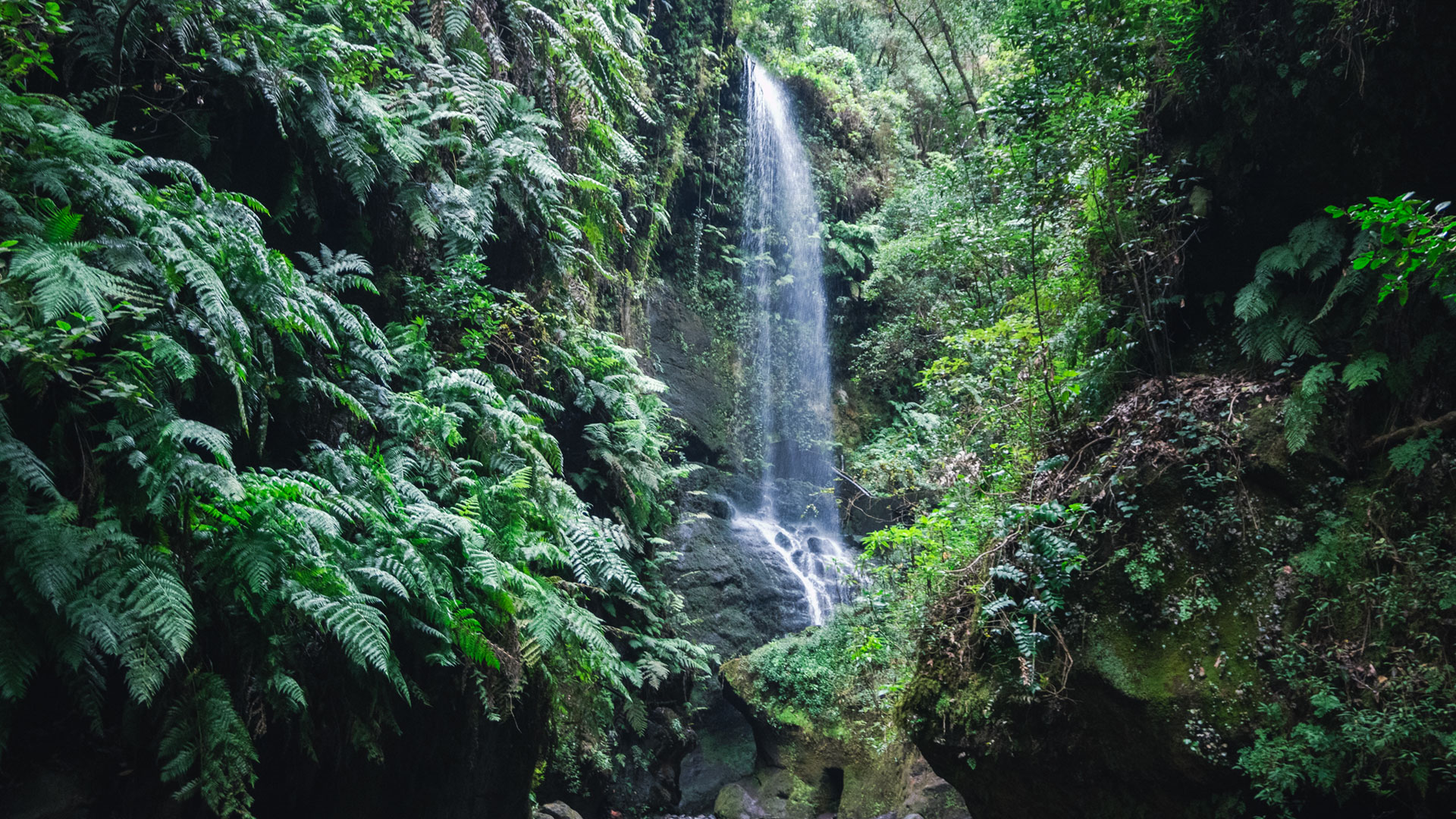
From the visitor centre, several hiking trails begin, including the popular Cascada de Los Tilos tour as well as the spectacular hike through the Barranco del Agua to the springs of Marcos y Cordero. It ranks among the most impressive hikes on La Palma, passing through tunnels, laurel forest, and along ancient water channels.
Hiking Tip: Marcos y Cordero – Tunnel Hike through the Laurel Forest
Start: Casa del Monte (reachable by licensed 4WD shared taxi from Los Tilos)
End: Los Tilos / visitor centre
Duration: approx. 4–5 hours
Distance: ca. 12 km
Difficulty: moderate to challenging
Trail Character: The Marcos y Cordero – tunnel hike is one of the most impressive hikes in northern La Palma, leading through the evergreen world of the Los Tilos Biosphere Reserve. From Casa del Monte, you follow a historic water channel through 13 tunnels cut deep into the forested mountain slopes. Beyond the springs of Marcos und Cordero the trail descends through the wild Barranco del Agua back to Los Tilos. The combination of dark rock tunnels, babbling streams, deep ravines, and dense laurel forest makes this route one of the island’s most beautiful natural experiences.
Equipment: A headlamp or flashlight, sturdy hiking boots, and weatherproof clothing are essential. The tunnels are dark and damp, and the laurel forest can turn cool and wet at any time due to trade wind clouds.
Tip: The ascent to Casa del Monte is best done by official licensed 4WD shared taxi. In heavy rain or unsafe conditions, the route may be closed.
San Andrés y Sauces at a Glance
| Category | Information |
|---|---|
| Location | Green northeast of La Palma, about 20 km / 25 minutes from Santa Cruz de La Palma. |
| Highlights | Charco Azul, Los Tilos Biosphere Reserve, Cascada de Los Tilos, springs of Marcos y Cordero, historic village centre of San Andrés, Puerto Espíndola. |
| Nature | UNESCO-protected laurel forest, deep ravines, lush vegetation, and banana plantations. |
| Activities | Hiking, swimming in seawater pools, nature experiences, visiting historic village centres. |
| Special Feature | Home to La Palma’s most significant laurel forest and one of the island’s most beautiful natural swimming complexes. |
| Ideal For | Hikers, nature lovers, families, independent travellers, and those seeking tranquility. |
| Cuisine | Regional Canarian cuisine, fresh fish, and bananas and sugarcane as traditional regional products. |
| Accommodation | Holiday houses and fincas in a peaceful, green setting — ideal as a base for hiking and day trips in the northeast. |
Conclusion
San Andrés y Sauces combines colonial history, impressive nature, and relaxed bathing spots in a uniquely compelling way. Between the historic village centre of San Andrés, the seawater pools of Charco Azul, and the ancient laurel forest of Los Tilos, you experience the green north of La Palma at its finest.
Frequently Asked Questions
What is Charco Azul?
What should you definitely see in San Andrés y Sauces?
How far is San Andrés y Sauces from Santa Cruz?
Can you hike in Los Tilos?
Is Charco Azul suitable for families?
This article is based on the on-the-ground knowledge of the Gequo editorial team – publishers of the Reisezeit hiking guides and operators of Sunhikes.com. Last updated: May 2026