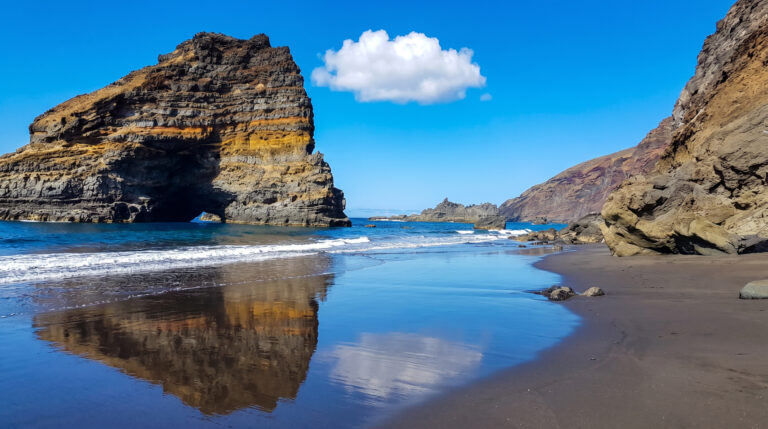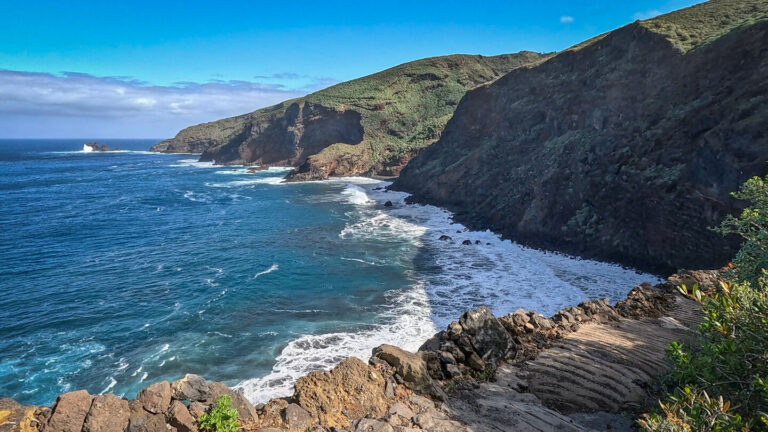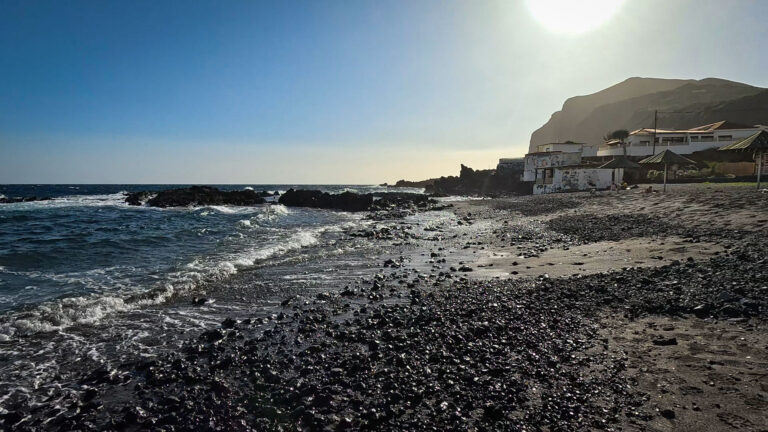
Puerto Espíndola – The Harbour of San Andrés
In San Andrés, one of La Palma’s most beautiful historic old towns, there is more to discover than the main street suggests. Just a short stroll from the town centre lies Puerto Espíndola — a picturesque fishing harbour where local boats still bob gently in the water, rum is made from locally grown sugar cane, and the crystal-clear waters of the Atlantic invite you for a swim.
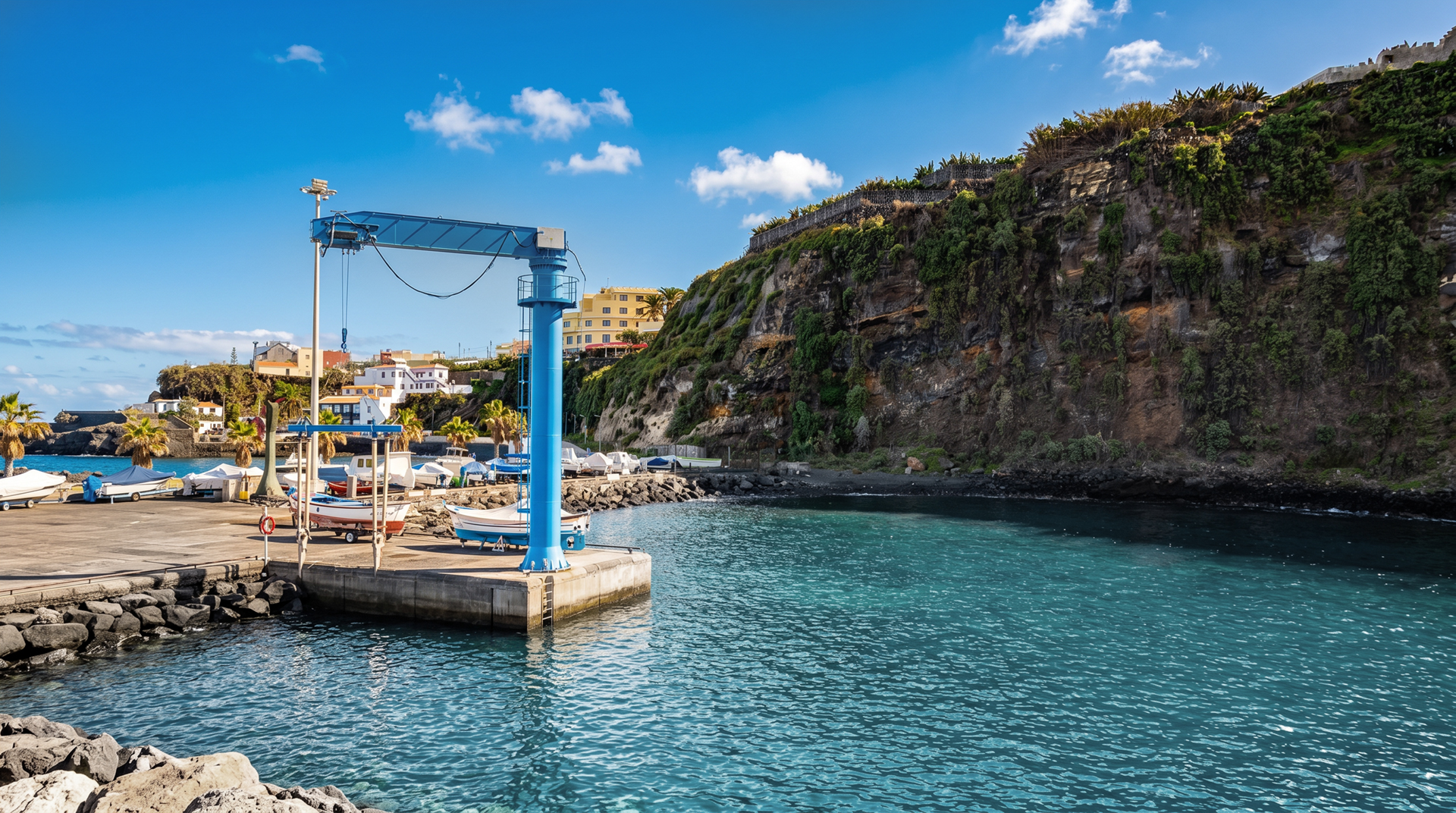
Harbour and Harbour Basin
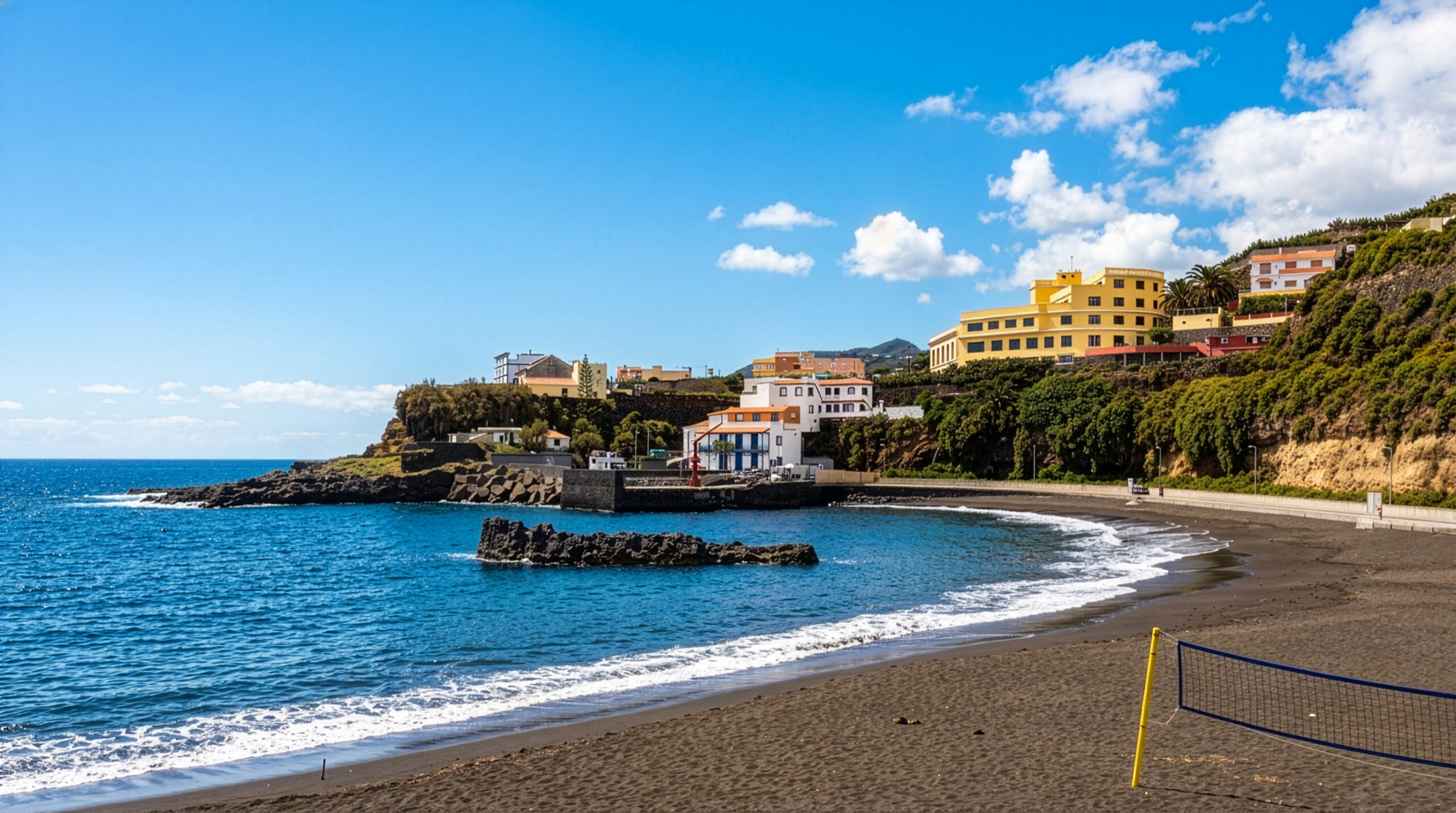
The harbour basin of Puerto Espíndola is open for swimming. The water is deeper and clearer than many natural pools along the coast – offering deep, open-water swimming away from algae-covered rocks. Those who visit nearby Charco Azul and still want to swim but prefer deeper, calmer water will want to head to the harbour.
The boats rock, the fishermen repair their nets, occasionally a cutter comes in. Puerto Espíndola has remained a small harbour because it never became a tourist port.
Swimming & Safety
The harbour basin is open for swimming – calm, deep water.
In onshore winds and swell, the harbour basin can become rough too.
No lifeguard service. Pay attention to the flags at the harbour.
Water shoes are recommended for entering the water.
Diving in Puerto Espíndola
Diving off Puerto Espíndola reveals a vibrant underwater world: the seabed of San Andrés y Sauces reveals itself in all its natural splendour. Sponges and soft corals line the bottom, while amberjacks, groupers, parrotfish, gilt-head bream and neon damselfish swim past – typical inhabitants of the Canary Islands. With a bit of luck, you may even spot butterfly rays, spotted eagle rays or a shy angel shark. A night dive is particularly rewarding and ranks among the most impressive experiences on this stretch of coast.
Ron Aldea: Rum from the Distillery Next Door
Right next to the harbour, the Ron Aldea distillery produces rum from Canarian sugar cane – a tradition deeply rooted in the northeast of La Palma. The sugar cane is grown in the region, and the rum is still distilled using traditional methods today. Tours and tastings are available. Pairing a morning swim in the harbour with an afternoon rum tasting offers an authentic taste of La Palma’s north-east coast.
San Andrés: The Old Town
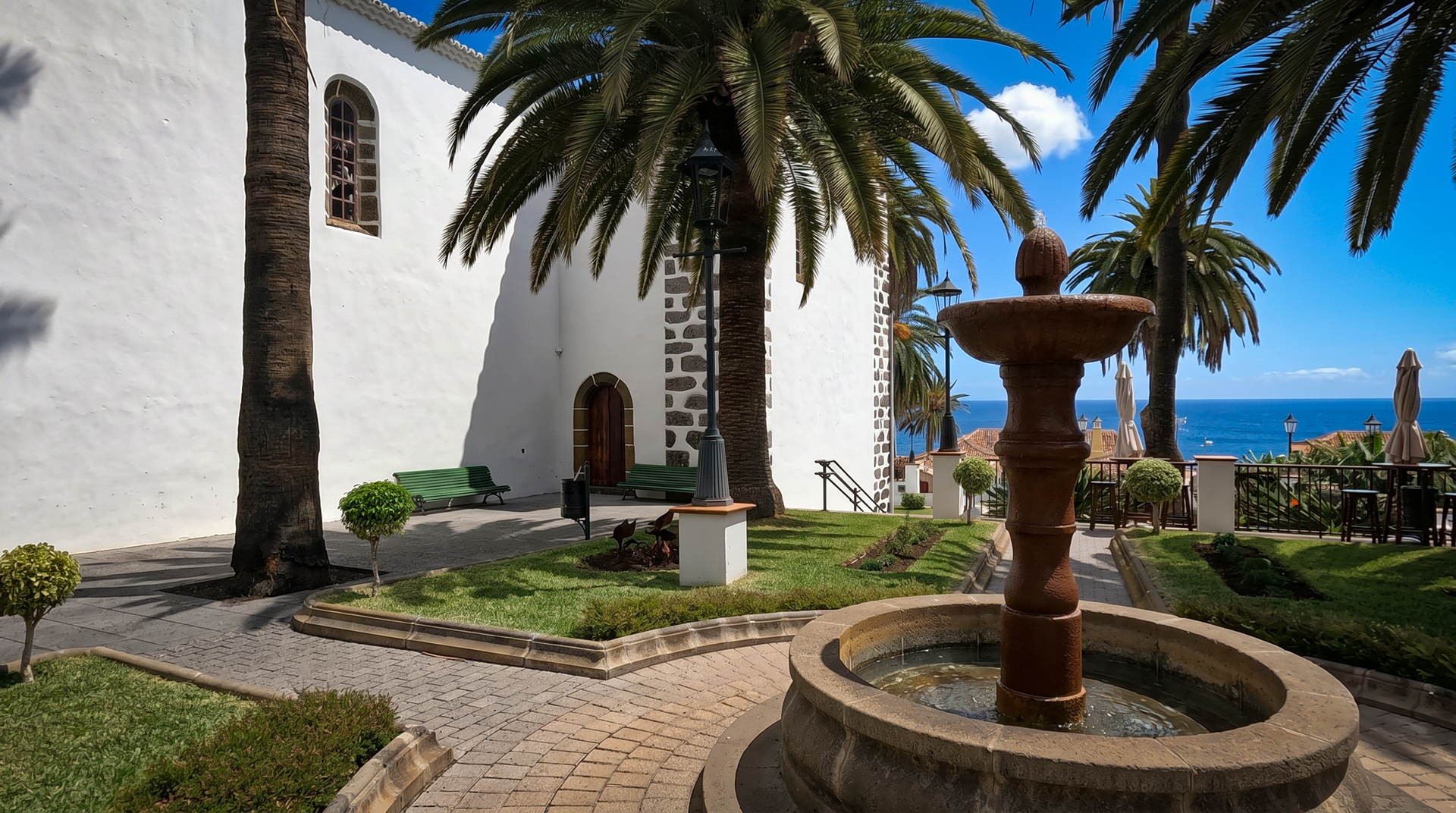
San Andrés is one of La Palma’s most remarkable old towns. The Plaza de San Andrés, with its fountain and typical wooden-balconied houses, is the heart of the village. The Iglesia San Andrés Apóstol overlooks the square. Picturesque lanes with views of the Atlantic: that is San Andrés, explorable in just a few steps. The harbour is only a few minutes from the town centre – old town and beach can be combined effortlessly.
Charco Azul and Laurel Forests
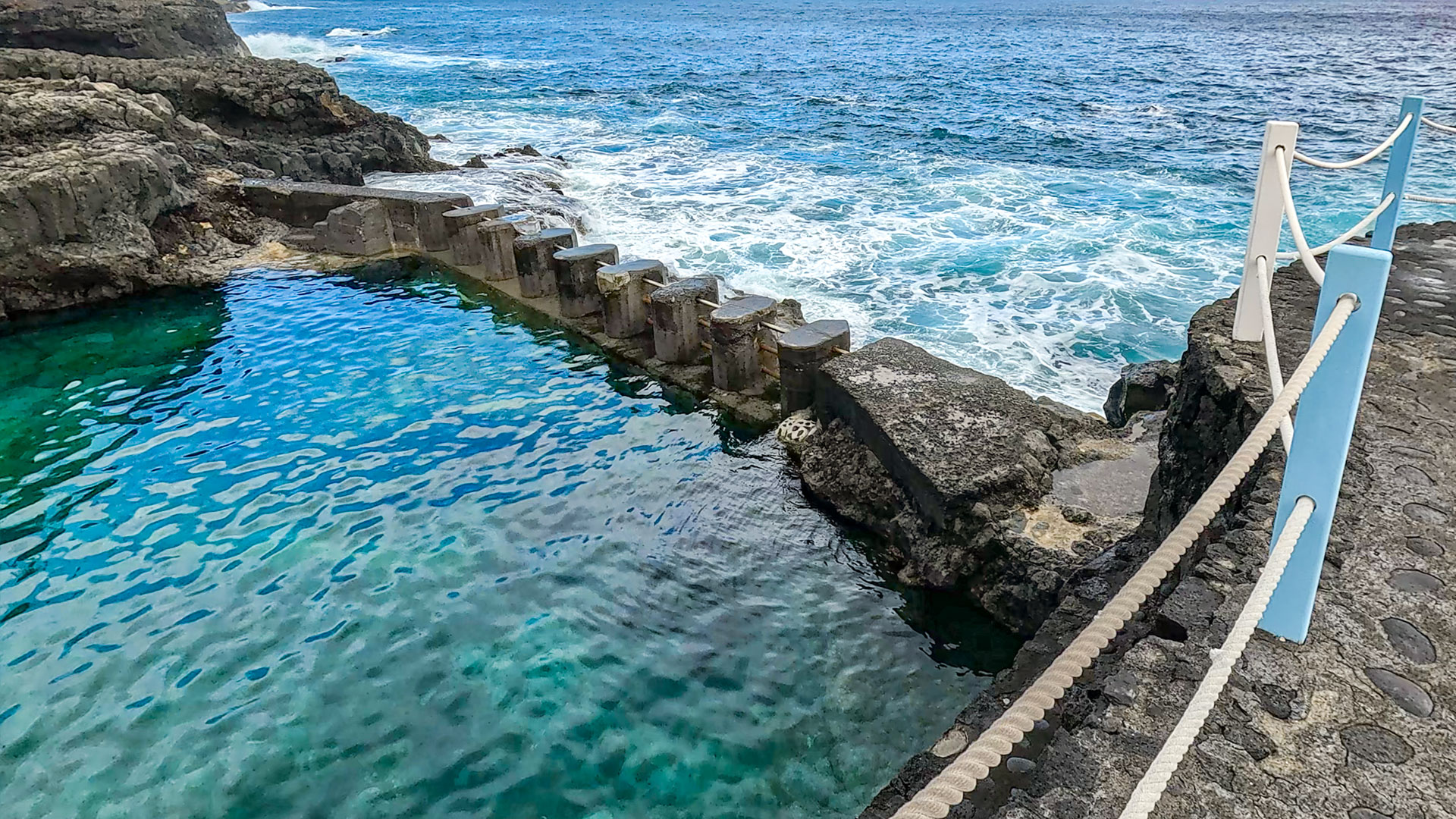
Puerto Espíndola is in the immediate vicinity of the Charco Azul natural pool – the most famous seawater pool in the northeast. Those who combine both get the most complete swimming experience on the east coast: a natural pool for families, a harbour basin for swimmers. And those who want to extend the day can drive four kilometres further into the Los Tilos Biosphere Reserve, home to one of the last great laurel forests in the world.
| Location | North-east coast of La Palma, municipality of San Andrés y Sauces |
|---|---|
| Swimming | Harbour basin open for swimming – calm and deep |
| Special feature | Ron Aldea distillery right next door |
| Old town | San Andrés – within walking distance |
| Combine with | Charco Azul · Ron Aldea · Los Tilos laurel forests |
| Getting there | About 20 min from Santa Cruz; easy to reach |
The Coastal Walk to Charco Azul
The coastal path from San Andrés to Charco Azul is one of the easiest and most beautiful coastal walks in the northeast. The gentle 20 to 30-minute walk traverses lava rock and passes historic lime kilns – Hornos de Cal, the historic kilns of the coastal communities – making your arrival at the natural pool feel well earned. Walking the route in both directions makes for a complete coastal morning.
Old Town Lanes and Views
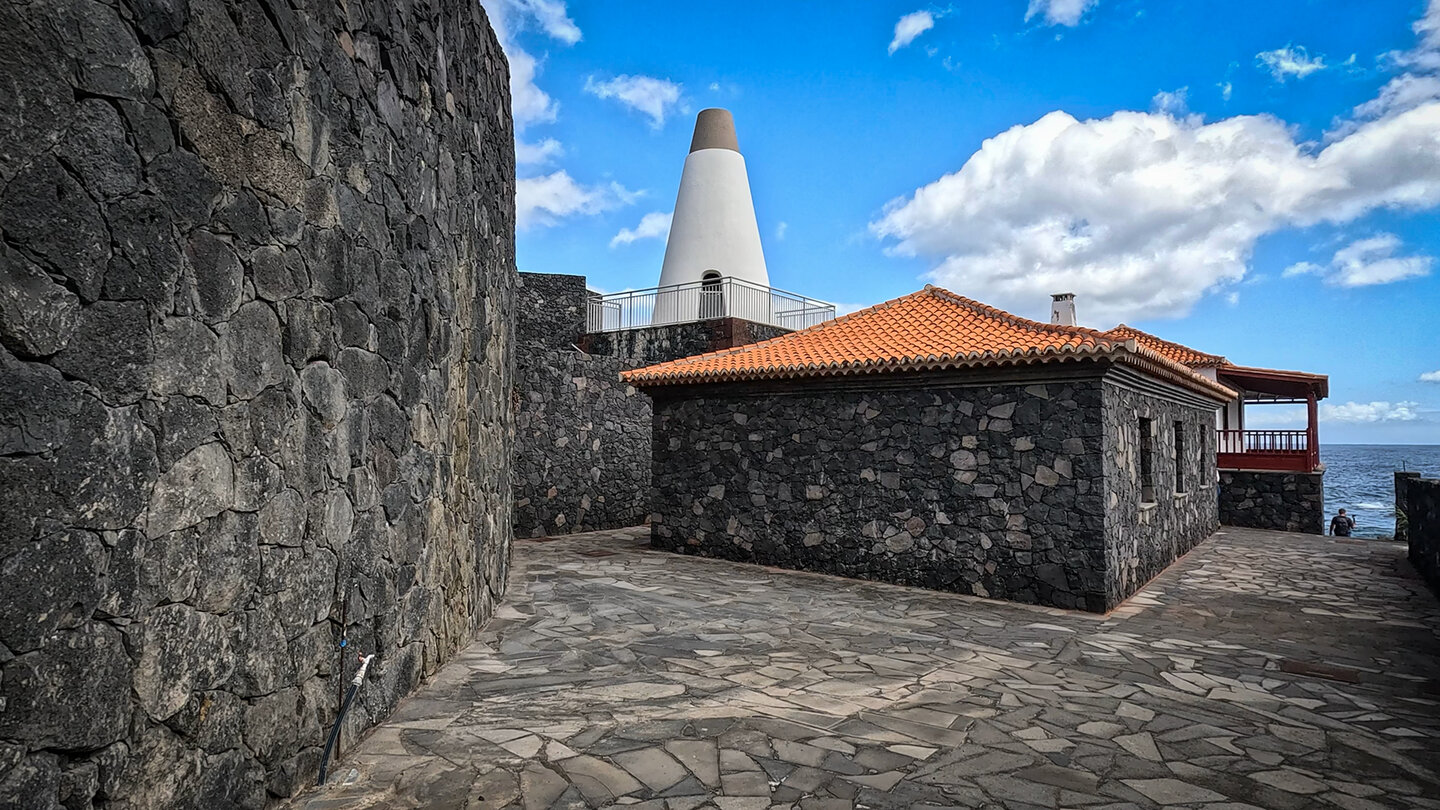
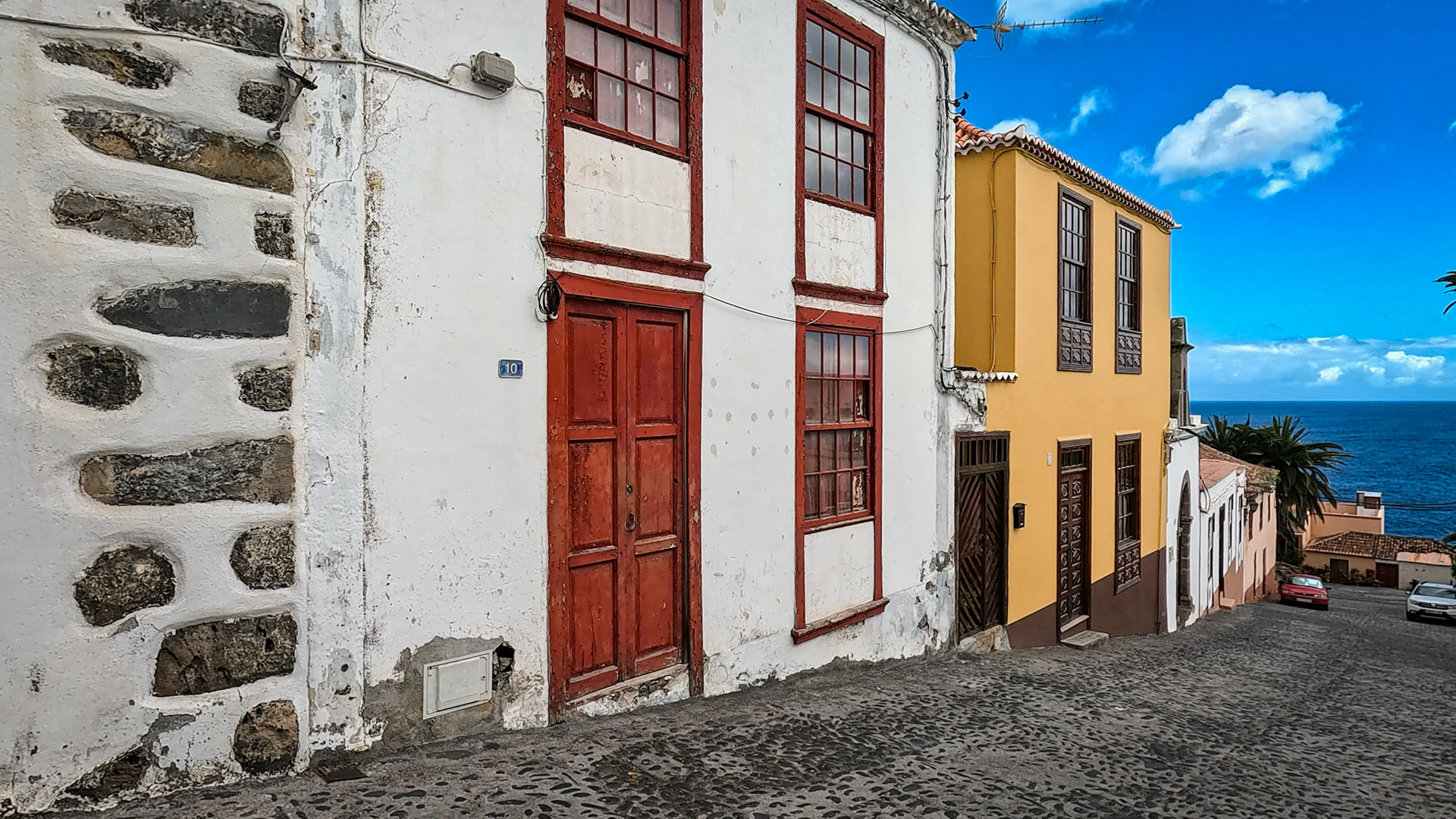
San Andrés has lanes that are hard to match anywhere on La Palma. Narrow paved paths between whitewashed houses, wooden balconies jutting out over the alley, and at the end always the view: the sea, the coast, the steep slopes behind it. Anyone who strolls through the old town from the harbour and then comes back again sees San Andrés from two sides – coast and village, harbour and square.
Los Tilos: The Laurel Forest Nearby
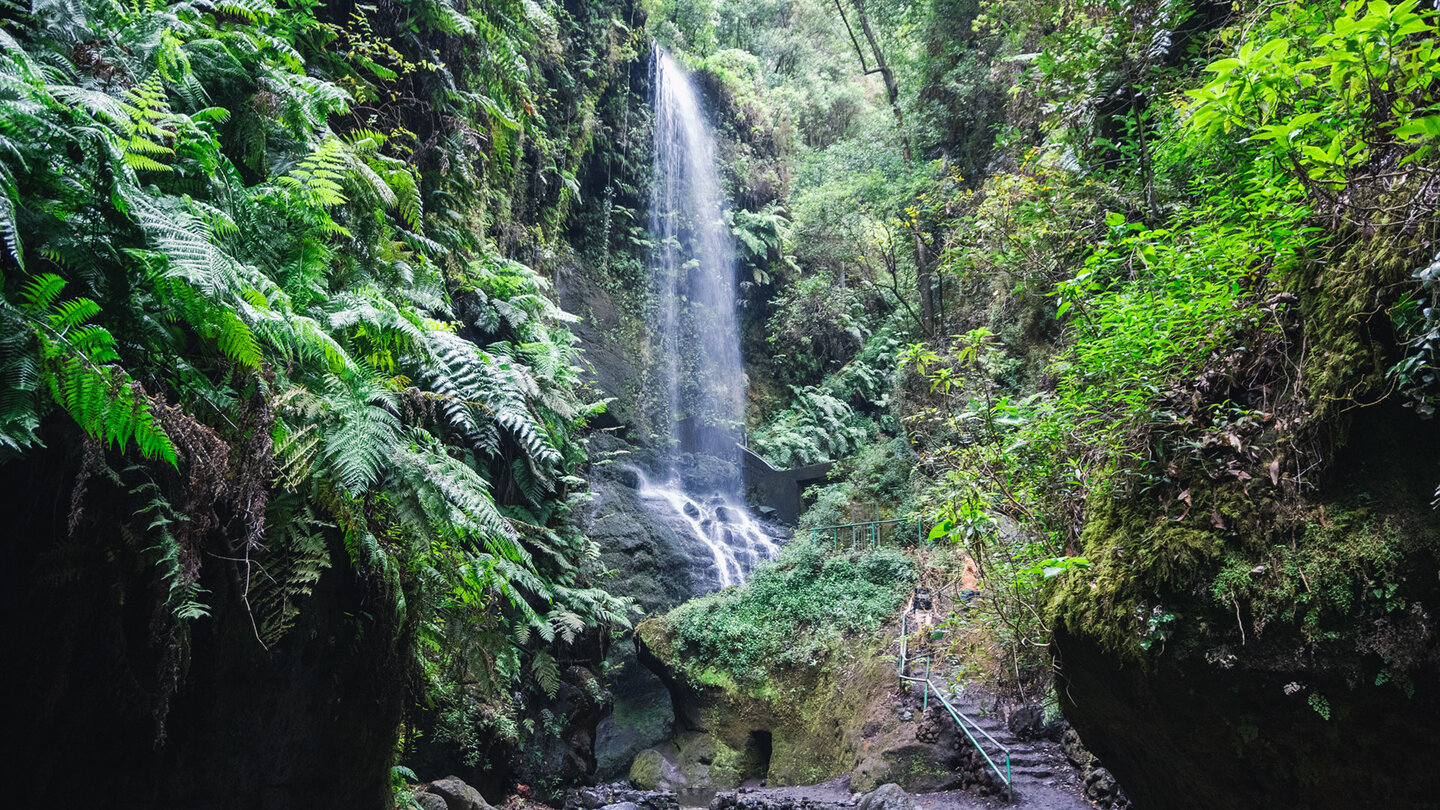
Los Tilos is four kilometres from Puerto Espíndola – the UNESCO Biosphere Reserve with one of the world’s most significant laurel forests. The trail through the gorge, past waterfalls and moss-covered rocks, is one of La Palma’s most impressive hikes. Those who visit Puerto Espíndola in the morning can be in Los Tilos in the afternoon. That is the northeast of La Palma in a single day.
Rum and History
The rum from Puerto Espíndola has a history that begins with sugar cane. Sugar cane has been grown in the northeast of La Palma for centuries – a tradition brought to the island by the Spanish that lives on to this day. The Ron Aldea distillery is not a museum but a working operation: the sugar cane comes from local fields, and the rum is distilled and aged on site. A tour lasts about an hour and explains why this rum tastes different from anything you know from the Caribbean.

Puerto Espíndola is the kind of place that lingers in the memory long after you leave. Harbour, rum, old town – three hours are enough. The image of the harbour, the lane with its Atlantic view, the taste of the rum: that stays with you longer than the time you spent there.
Summary: Puerto Espíndola
Puerto Espíndola is more than a harbour: rum, old town, clear water and the northeast of La Palma at its most relaxed.
Ideally combined with Charco Azul and an afternoon in Los Tilos.
Frequently Asked Questions
What makes Puerto Espíndola worth visiting?
What is Ron Aldea?
What else is there to see in San Andrés?
This article is based on the on-the-ground knowledge of the Gequo editorial team – publishers of the Reisezeit hiking guides and operators of Sunhikes.com. Last updated: May 2026