Playa del Callejoncito – Garafía’s Hidden Beach
Callejoncito means ‘little alley’ — and the path leading to this beach earns the name. Narrow, steep, wedged between rock: those who visit Playa del Callejoncito didn’t just stumble across it; they sought it out. This beach on Garafía’s north coast is invisible to the vast majority of La Palma visitors. And that is part of its essence.
A Cove at the End of the Trail
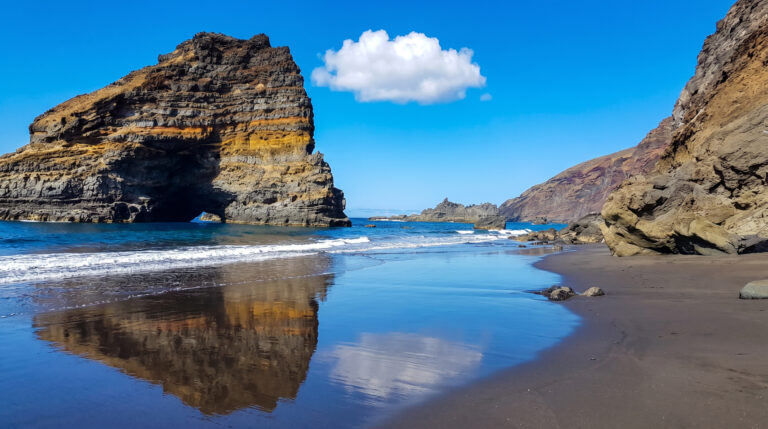
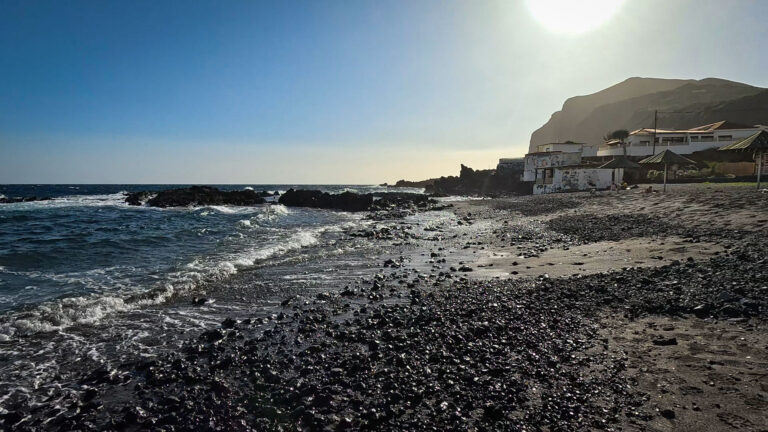
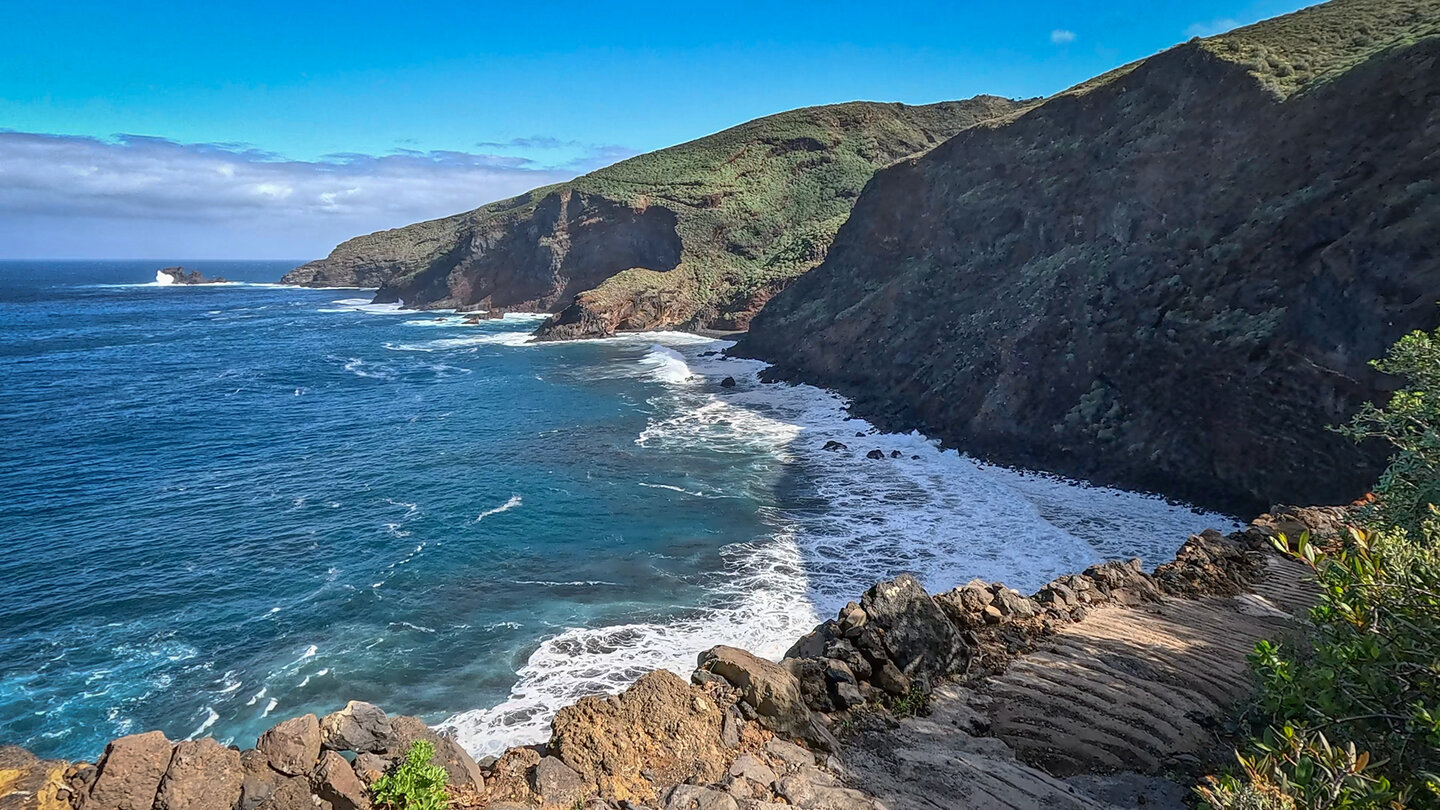
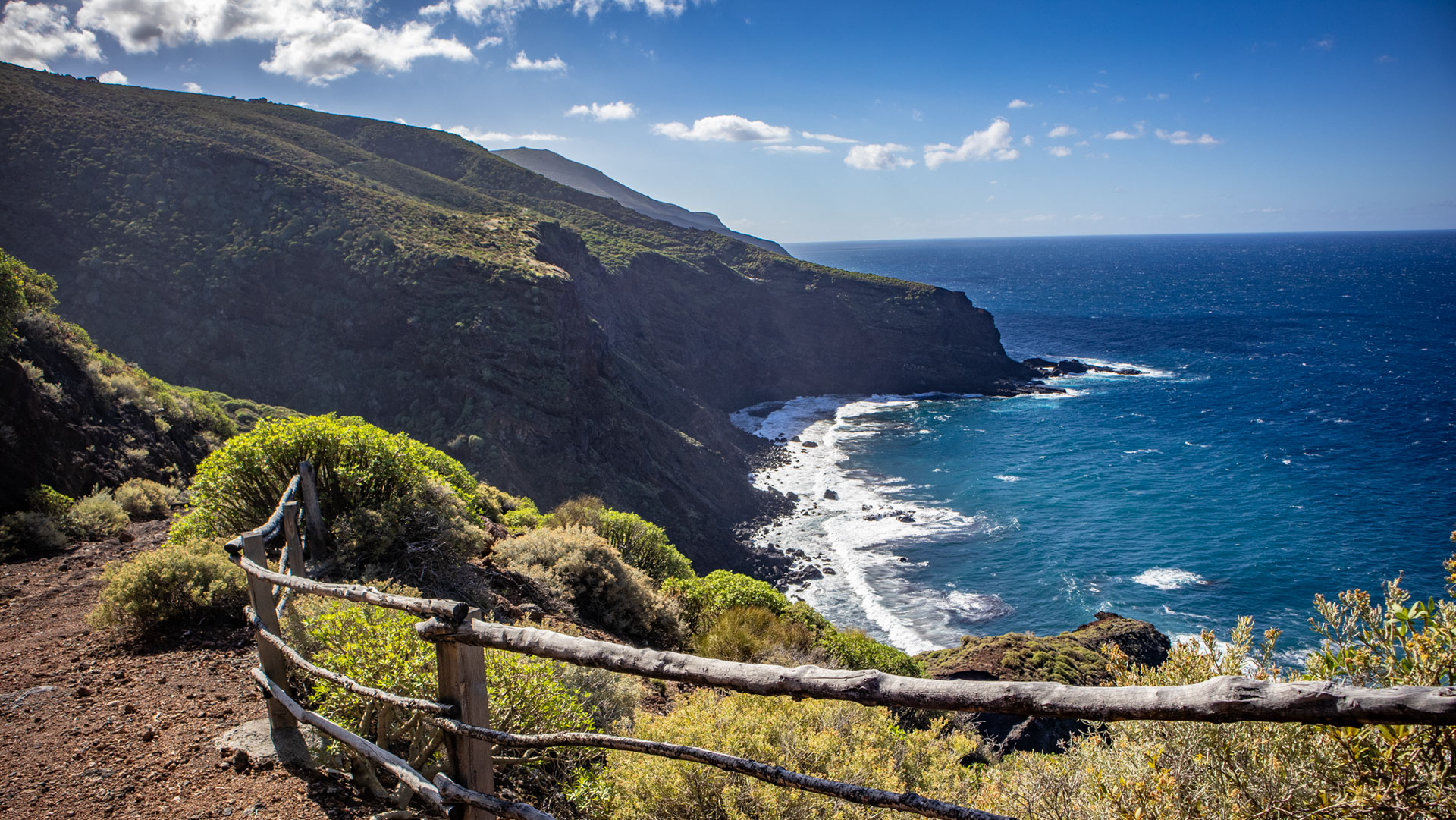
Playa del Callejoncito sits in a narrow notch of the north coast, carved by the gorge of a small barranco. Black sand, lava rock, the roar of the Atlantic — nothing more. No facilities, no beach flags, no other visitors. The descent demands sure footing and sturdy shoes; the final meters are tight and exposed.
Those who make it down stand in a cove that offers a genuine sense of discovery. Garafía is La Palma’s most remote municipality, and Callejoncito is its most remote beach.
Access & Safety
Narrow, steep descent — sure footing and sturdy footwear are essential.
No lifeguard, no beach flags, no infrastructure.
Swimming only in absolute calm conditions and for very experienced swimmers.
Plan your return — the climb back up is harder than the descent.
Garafía: Where the Island Is at Its Wildest
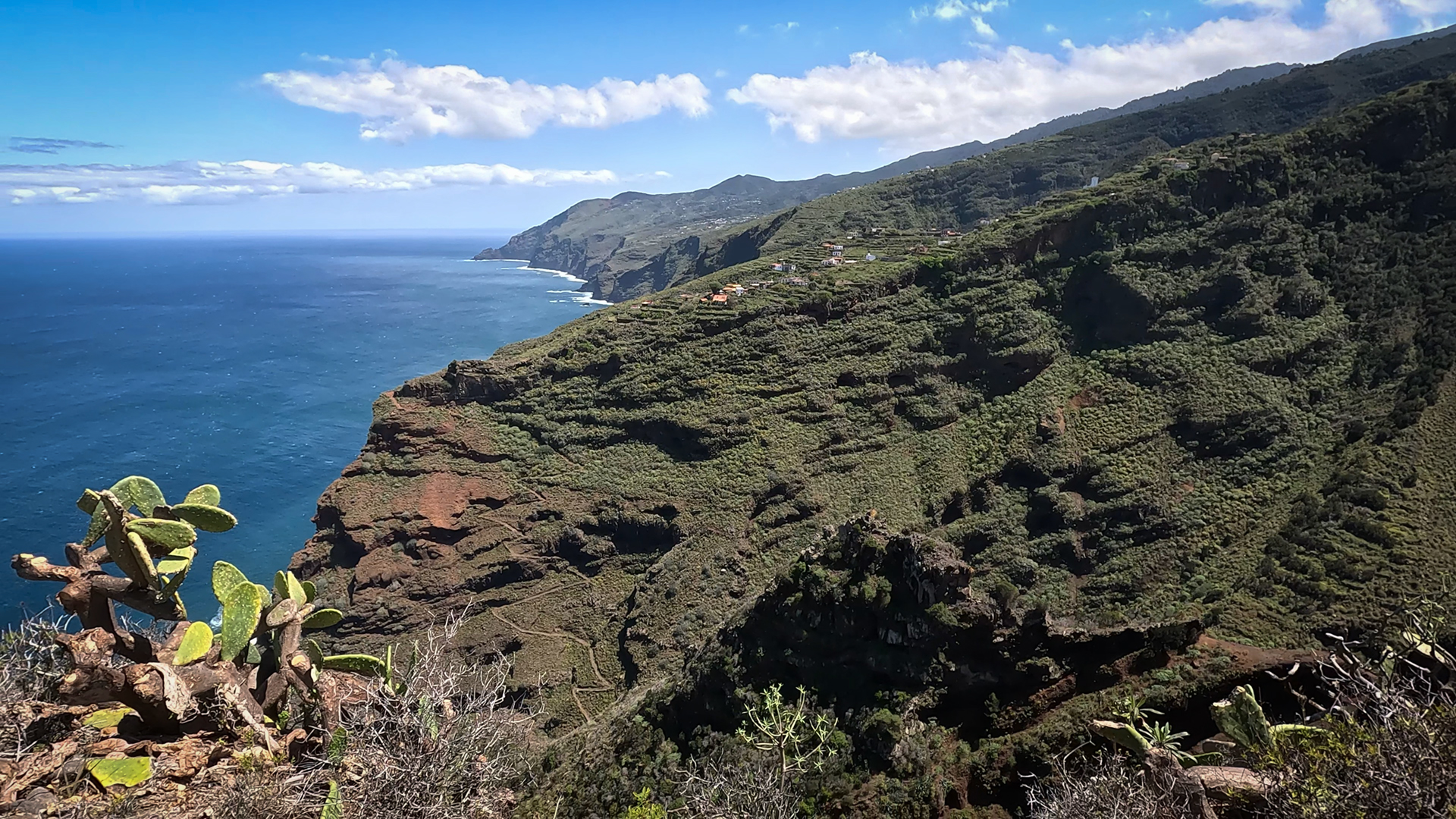
Garafía is La Palma’s northernmost and wildest municipality. The cliffs here plunge almost vertically into the sea, laurel forests cover the gorges, and the view from the lookouts over the open Atlantic coast is one of the widest on the island. Queso de Garafía — an aged goat cheese made from the milk of local Palmero goats — is considered one of the best in the world.
The cultural park La Zarza y La Zarcita, with the petroglyphs of the indigenous people, lies just a few kilometers away. A visit to Callejoncito pairs perfectly with a stop at the rock carvings and a glass of Vino de Tea, the resinous pine-wood wine that’s as typical of Garafía as its cheese.
The North Coast as a Whole
Playa del Callejoncito is one of several access points to Garafía’s north coast. Neighboring Porís de Santo Domingo has historic loading stations and cave dwellings. Puerto de Garafía offers one of the most complete views of the wild north coast. Those who want to truly know Garafía plan a full day: coast, cultural park, cheese.
| Location | Northern coast of La Palma, municipality of Garafía |
|---|---|
| Access | Narrow, steep descent path – sure-footedness required |
| Beach | Narrow cove, black sand, untouched |
| Swimming | Only in calm seas, experienced swimmers only |
| Combine with | Kulturpark La Zarza · Porís de Santo Domingo · Queso de Garafía |
| Accommodation | Clariso Garafía (3 houses) |
Accommodation in Garafía
Garafía has La Palma’s smallest Clariso offering – three houses, all with the sense of remoteness that defines the municipality. Book via Clariso Garafía.
Garafía on Foot: Barrancos and Trails
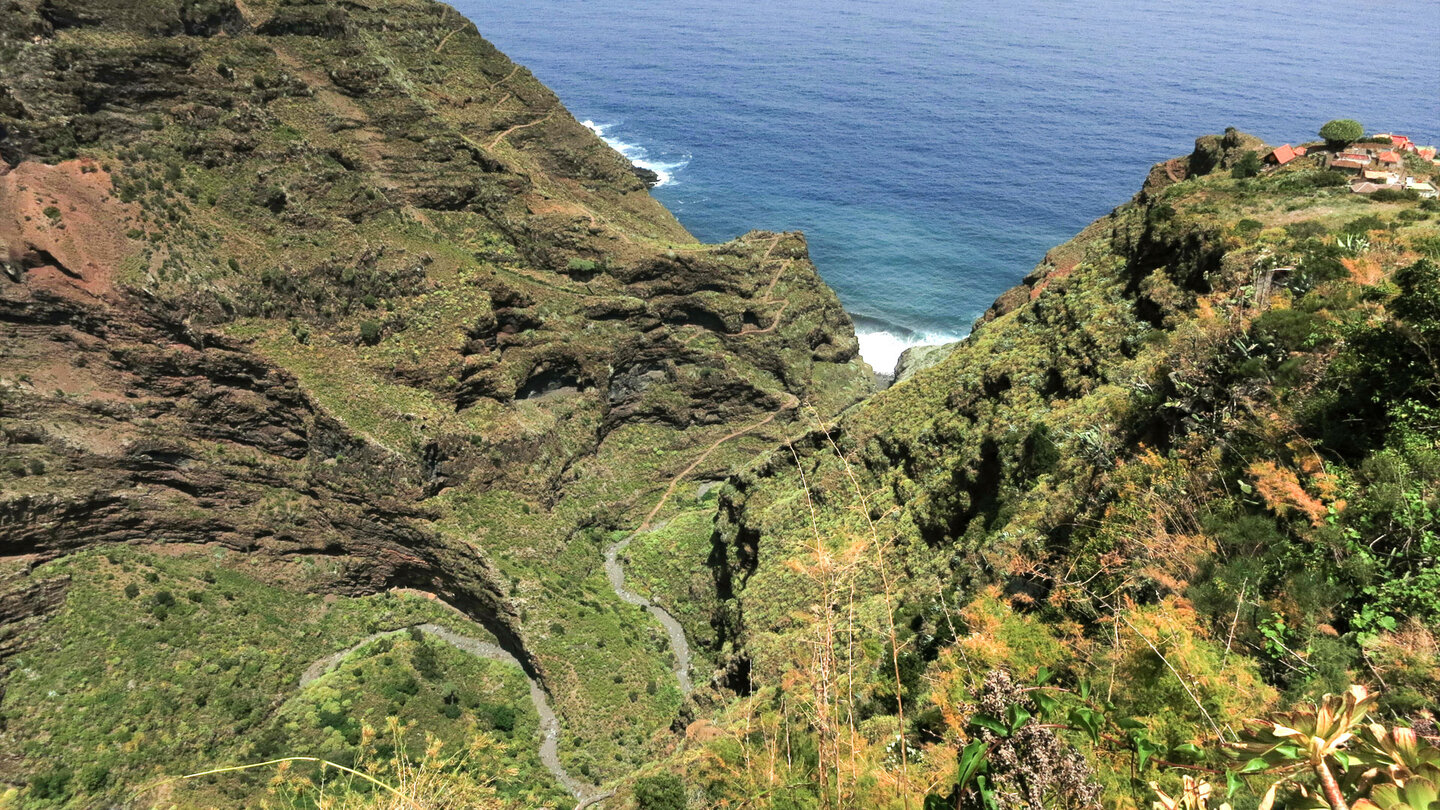
Garafía is a hiking municipality — not because there are signposted paths and organised tours, but because the landscape demands it. The gorges that cut from the mountains to the coast are the key to everything: to the Queso de Garafía produced in the high valleys, to Callejoncito tucked away in the barranco, to the petroglyphs carved into the gorge walls. Those who explore Garafía on foot get closer than any viewpoint allows.
La Zarza y La Zarcita: The Language of the Past
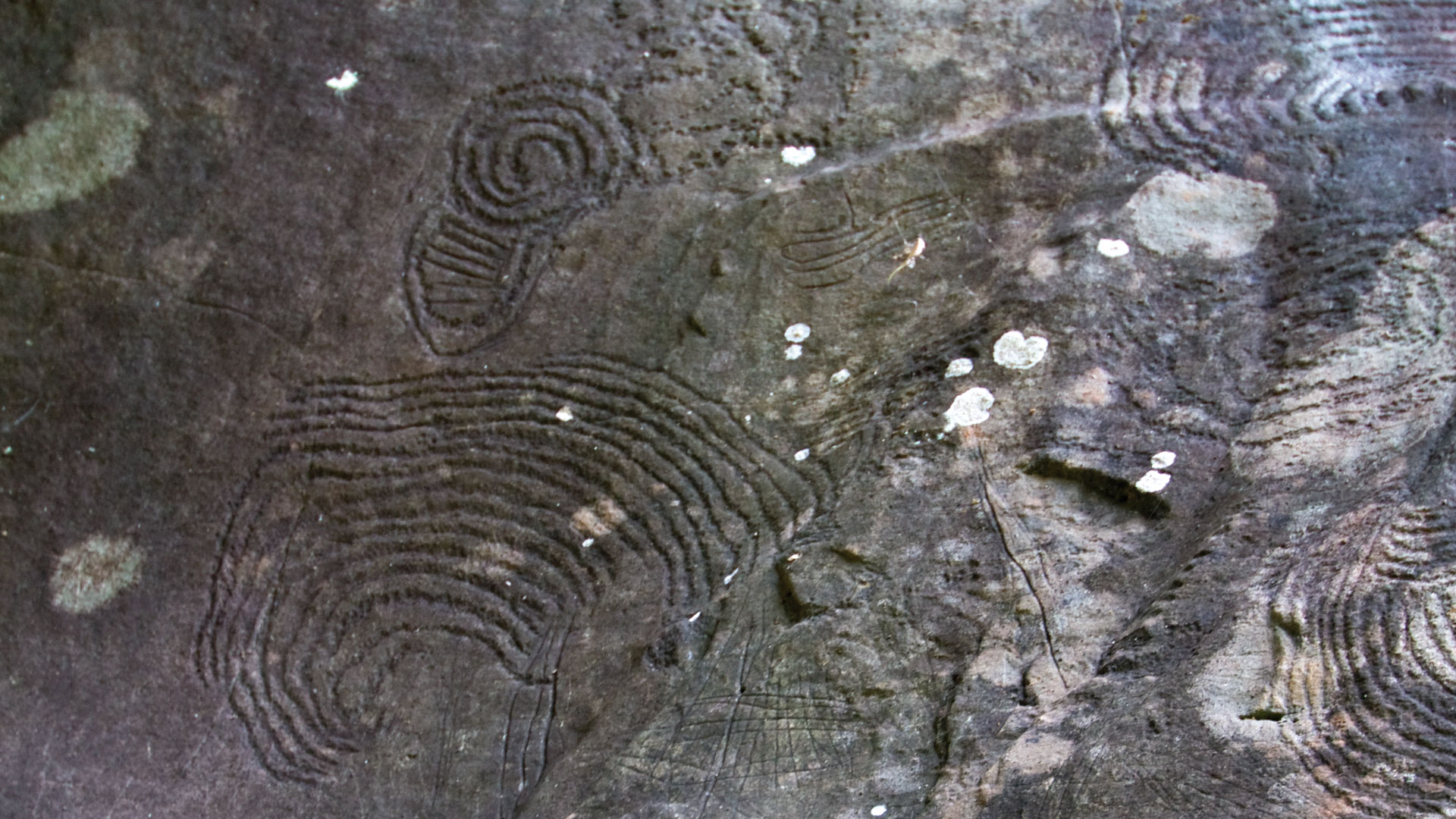
Just a few kilometers from Playa del Callejoncito lies the cultural park La Zarza y La Zarcita. In the gorge below, spirals and geometric patterns carved into the rock are visible — left behind by the Benahoaritas, La Palma’s indigenous people, before the Spanish Conquest. What these signs mean has not been fully decoded. But the fact that they exist, that people lived up here on this coast and wrote their thoughts in stone — that’s a thought that lingers as you descend to Callejoncito.
The Cheese That Needs No Marketing
Queso de Garafía needs no marketing story. It tastes so good the story tells itself. The Palmero goats graze on the high plateaus above the Callejoncito, the milk is processed in small dairies, the cheese matures in cool cellars. Buying it directly in Garafía — from a small village shop or local producer — means paying less than in tourist spots and getting a fresher product. It’s the best ending to a day in Garafía.
El Tablado: The Village Above the Coast
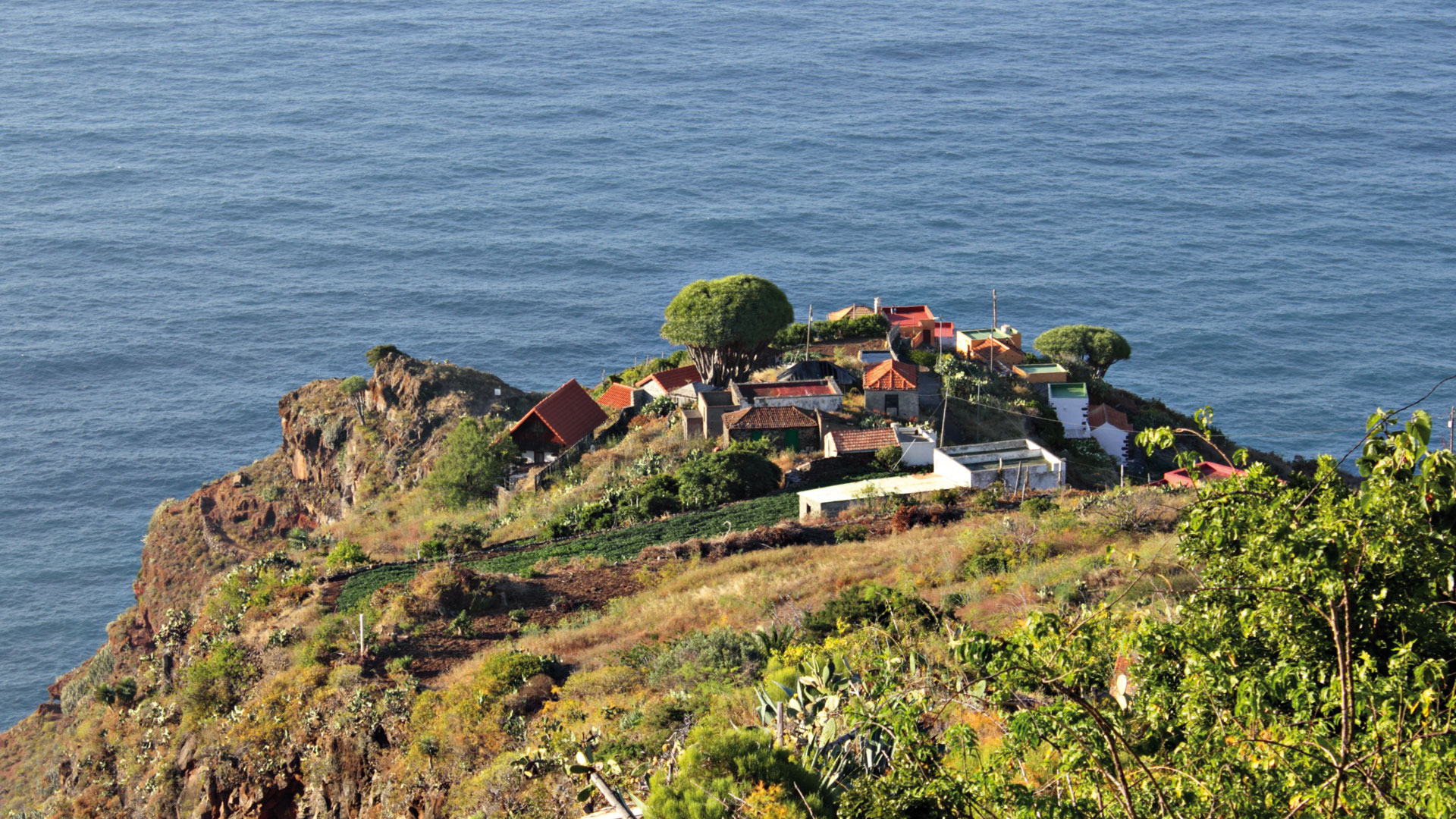
Not far from Playa del Callejoncito lies El Tablado — one of La Palma’s most secluded hamlets, perched on a ridge above the sea, surrounded by deep gorges. Once accessible only on foot, today reached by a winding road. The village is small and quiet; those who grew up here know what Garafía means. A short detour on the way to the coast is well worth it.
When to Visit Garafía
Garafía can be visited year-round, but spring is the best time. In April and May the gorges turn green, the laurel forests carry fresh foliage, and the coast has the light photographers always seek on La Palma. In winter the north coast can be rough and overcast — not unpleasant, but different. Those who want sun head south in winter. Those who want the real thing come to Garafía at any time of year.
Vino de Tea: The Wine of the North
Garafía produces a wine unique to the Canary Islands: Vino de Tea. Aged in casks of Canarian pine, it develops a resinous character that divides opinion — you love it or you find it strange. Taste it for the first time and you understand why wine is a cultural artifact: it tastes of the place where it grew. Paired with a slice of Queso de Garafía, it’s the perfect end to a day that no restaurant on the island can top.
Summary: Playa del Callejoncito
Playa del Callejoncito is La Palma’s most hidden beach: a narrow descent, a small cove, no crowds.
Garafía reveals itself here in its most unspoiled form — for those willing to find it.
Frequently Asked Questions
How do you get to Playa del Callejoncito?
Can you swim at Playa del Callejoncito?
What is Vino de Tea?
This article is based on the on-the-ground knowledge of the Gequo editorial team – publishers of the Reisezeit hiking guides and operators of Sunhikes.com. Last updated: May 2026