Beaches La Palma – The Complete Beach Guide
La Palma is not Lanzarote, not Fuerteventura, not Gran Canaria. The island has no endless white sand beaches, no beachfront promenades lined with hotels, no water parks. What it has is something different: black volcanic sand that stores warmth. Natural seawater pools in lava rock. Secluded bays you have to earn. And a coastline that shifts between pristine and wild within a few kilometres.
Black Sand: What Makes It Special
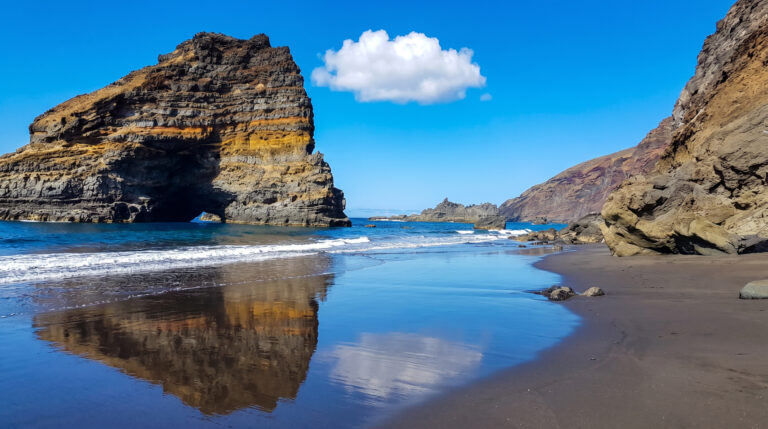
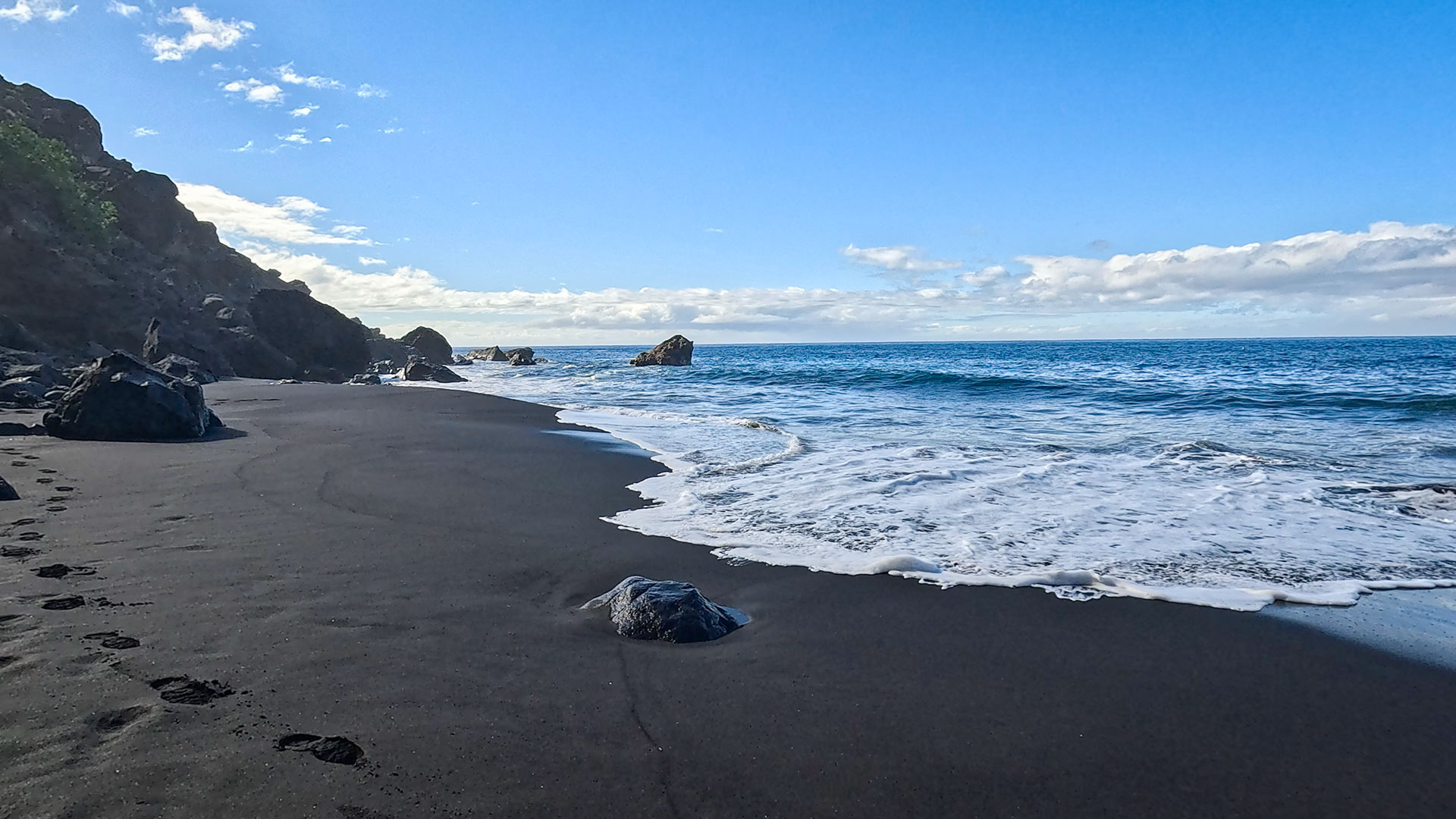
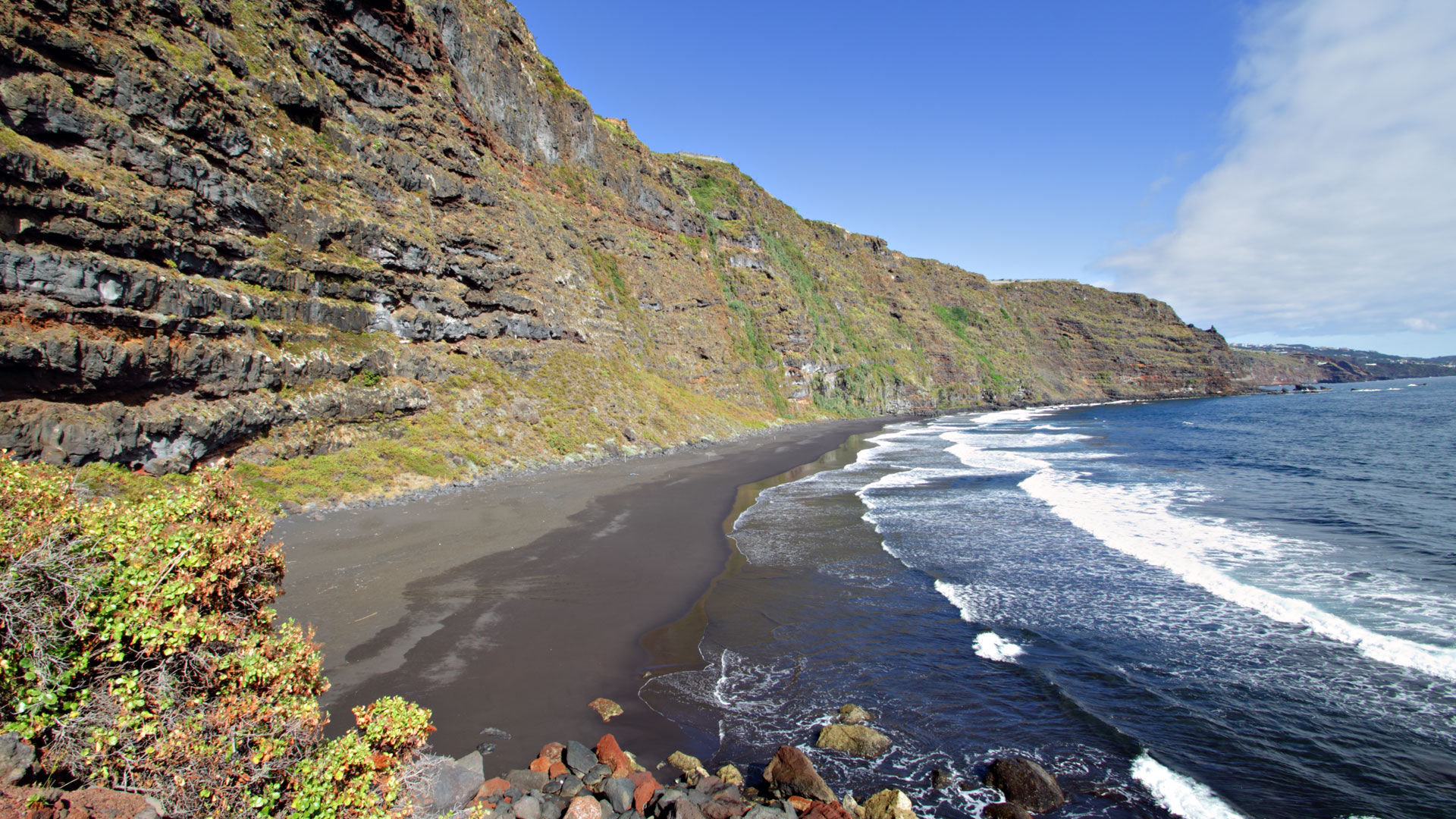
La Palma’s black volcanic sand is not a lack of white sand, but a sign of the island’s age and activity. Basalt rock, ground by the sea into fine grains over millennia, forms beaches that feel different from coral sand: warmer, heavier, with a weight of their own. Anyone who has once lain on black sand and felt the warmth it still radiates hours later understands why lovers of natural beaches keep coming back.
The West Coast: Sun and the Best Beaches
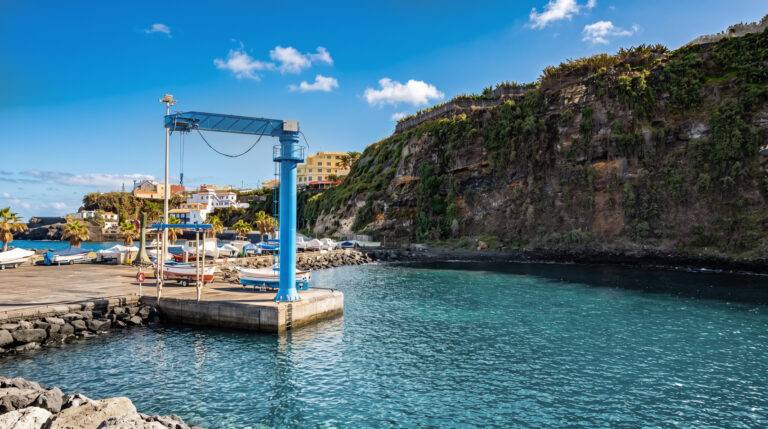
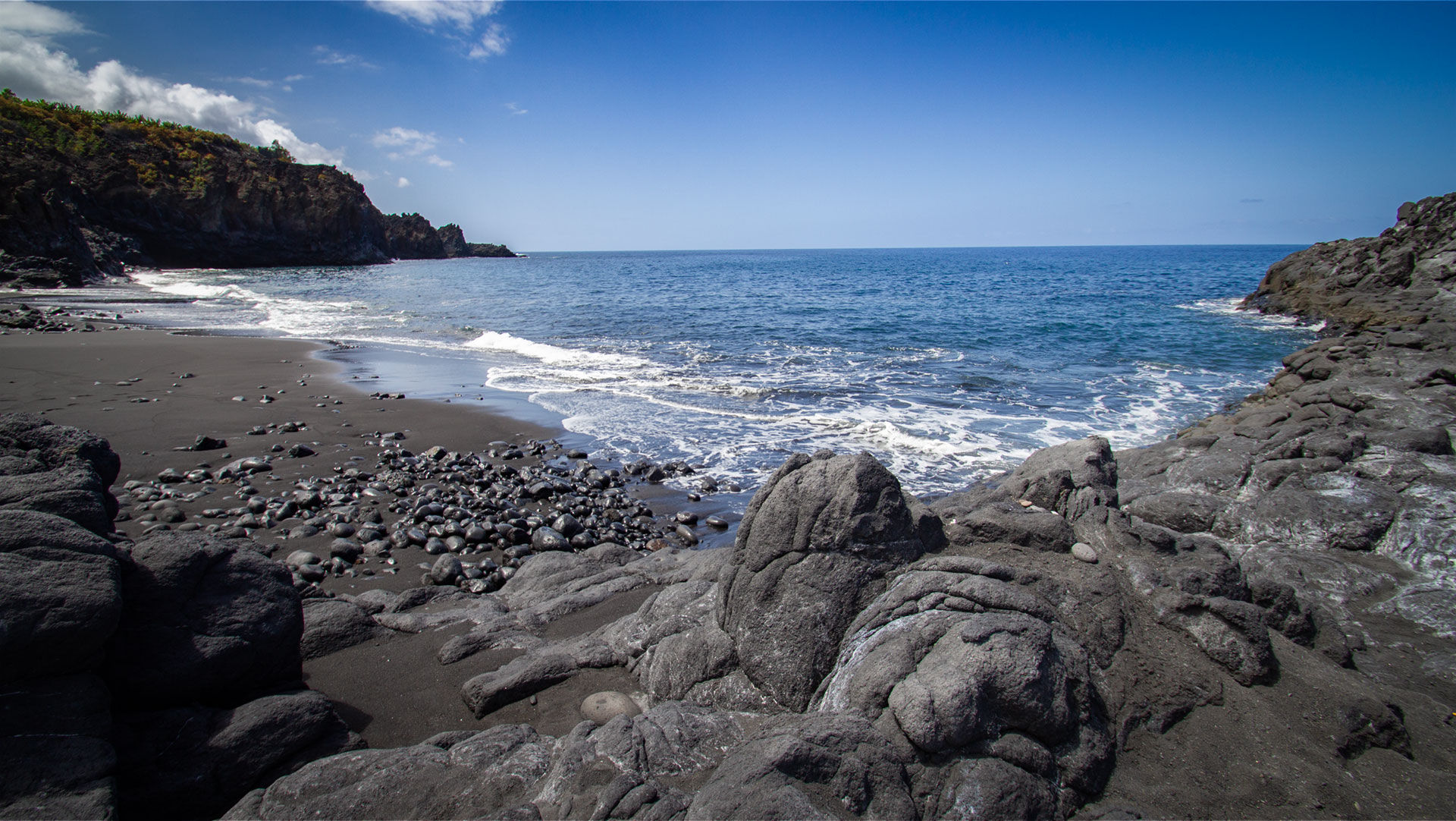
The west coast of La Palma between Tazacorte and Puerto Naos is the sunniest corner of the island – around 300 sunny days a year. Here lie the best-known bathing spots: Puerto Naos with its promenade, Charco Verde with the green lagoon, Tazacorte with the double harbour. The west coast is the first choice for all those seeking sun and beach – even in winter.
The South: Lava, Salt Pans and Natural Pools
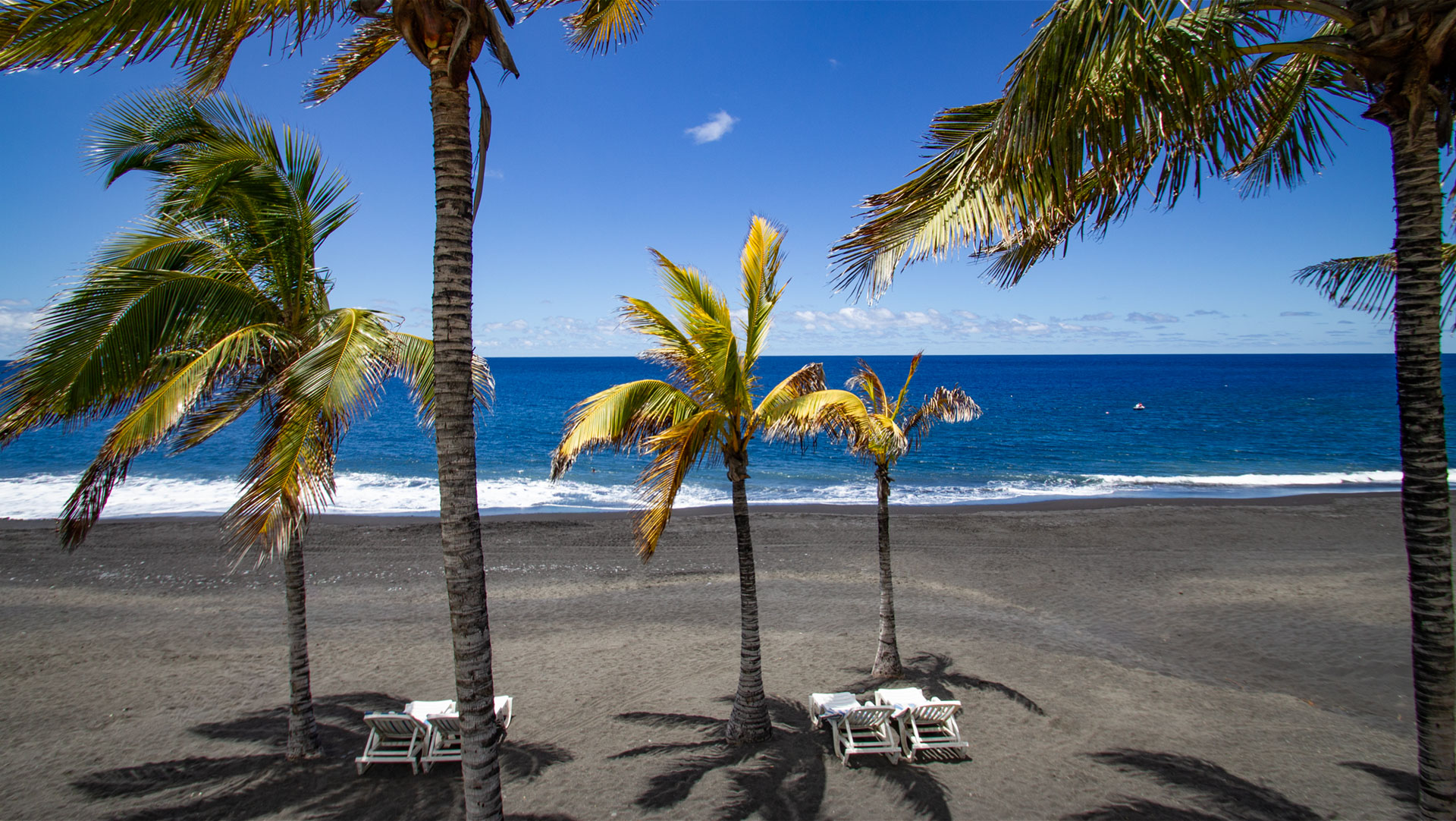
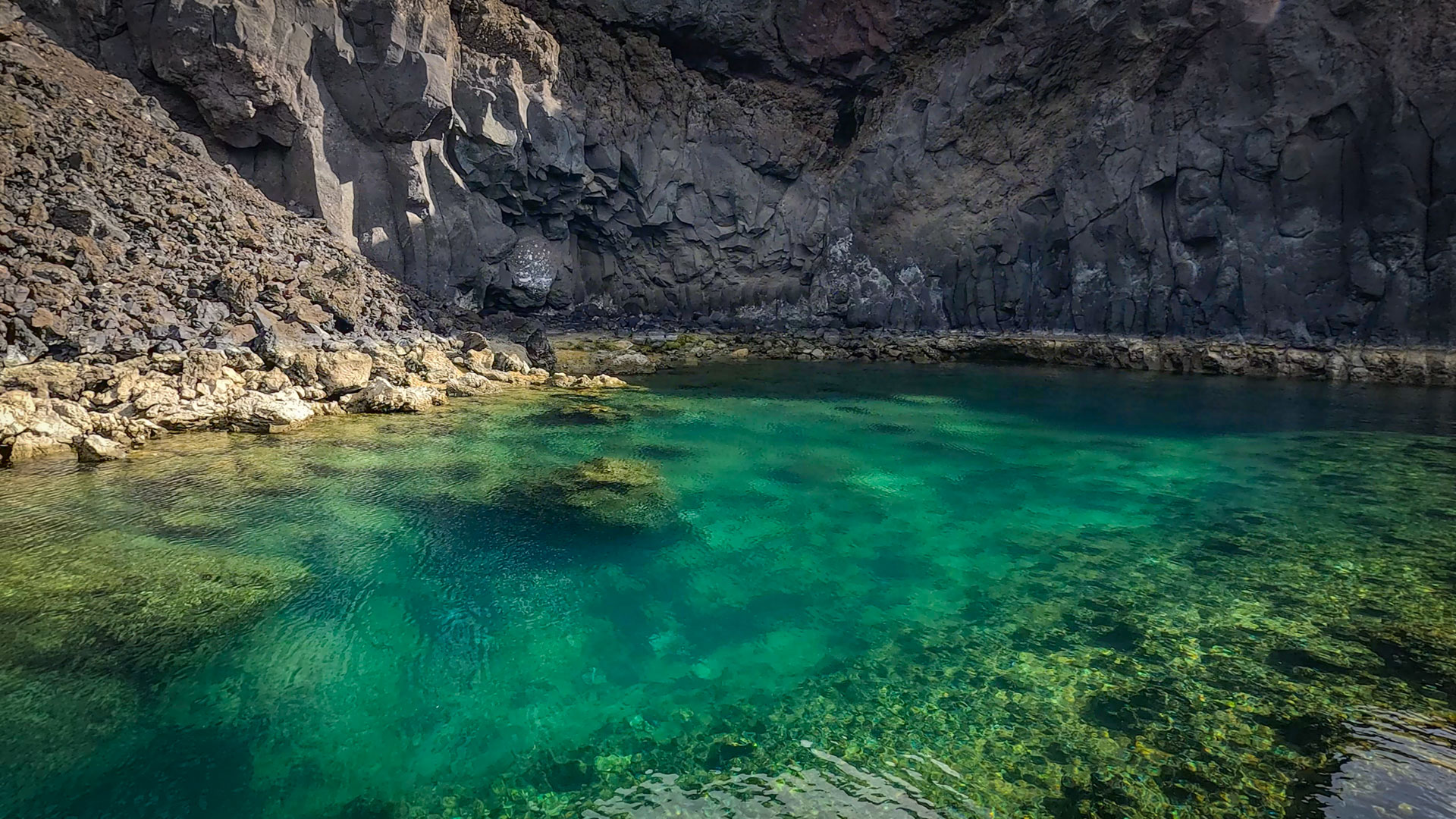
Fuencaliente, the southernmost municipality of La Palma, concentrates a density of coastal highlights that is hard to surpass in the Canary Islands. Here, fascinating natural pools such as El Aljibe nestle picturesquely into the pitch-black Teneguía lava field, alongside deep-black volcanic beaches. Right beside them stretch the glowing salt gardens of the salt pans, the historic lighthouses and the traditional vineyards on the slope. Those who spend a day at the southern tip without combining these different, spectacular coastal sections leave the best of the island behind.
The East Coast: Infrastructure and History
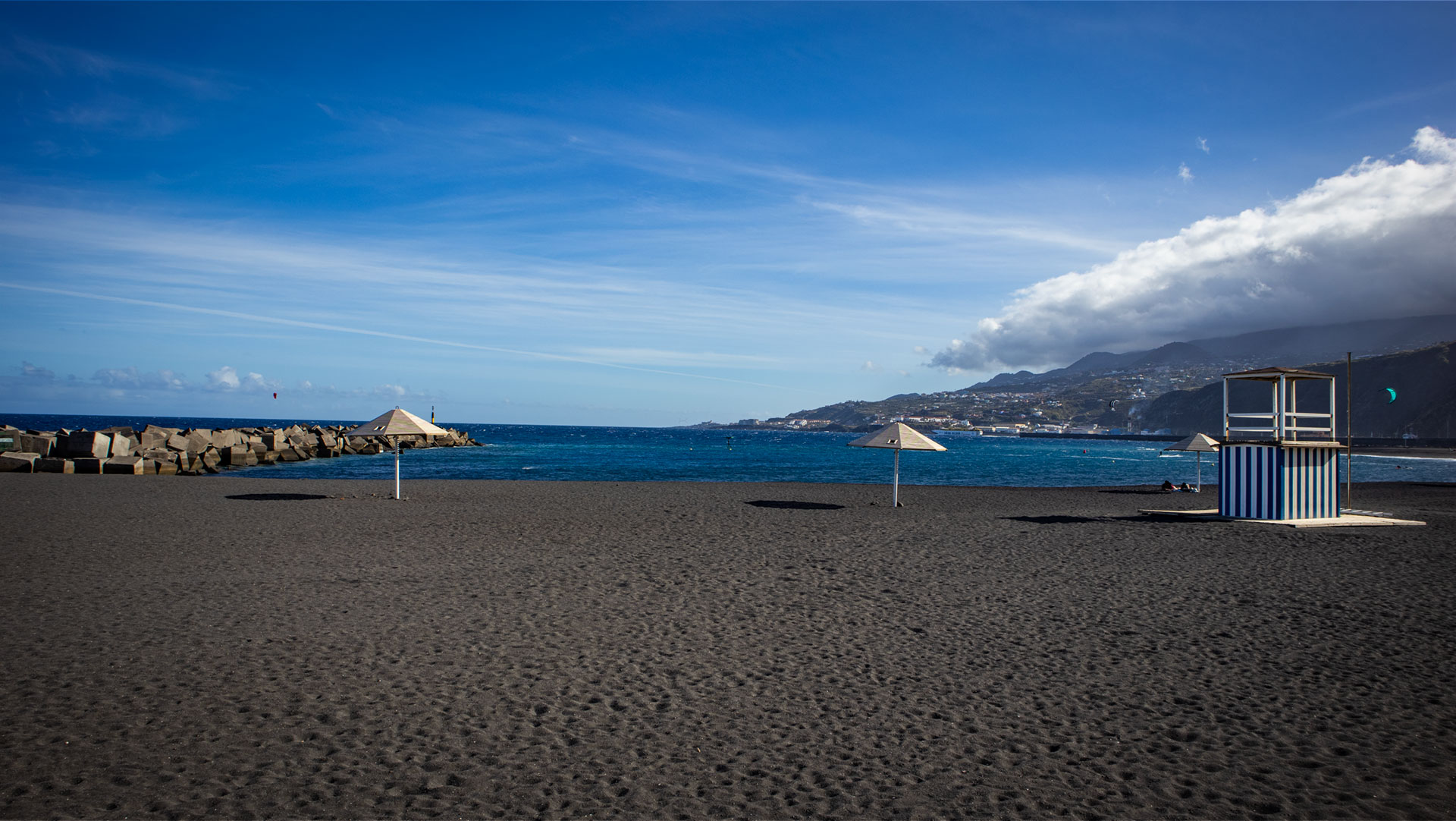
On the east coast lies the most visited beach on La Palma: Los Cancajos with Blue Flag, lifeguards and full infrastructure. A few kilometres to the north the island capital Santa Cruz de La Palma – with Playa Santa Cruz de La Palma and Playa de Bajamar as urban beaches, surrounded by colonial architecture and the island’s busiest harbour. The east coast is not the wildest, but the most accessible.
The North: Natural Pools and Seclusion
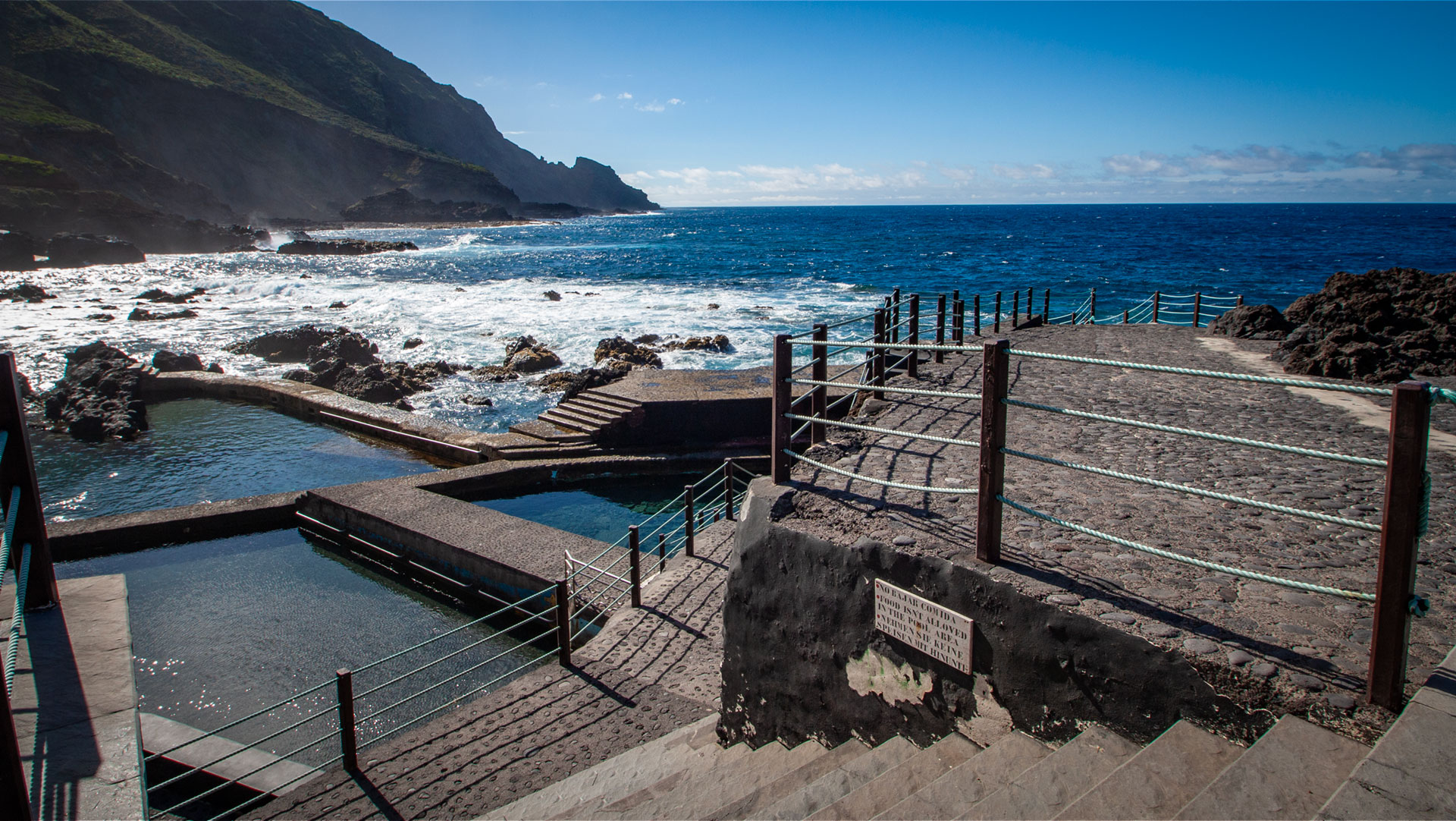
In the northeast La Palma has its most beautiful natural pools: Charco Azul near San Andrés and La Fajana near Barlovento, both in lava rock, both with a view of a coastline that has remained true to itself. Further north, in Garafía, the seclusion begins that attracts those genuinely seeking solitude.
Note: What La Palma Is Not
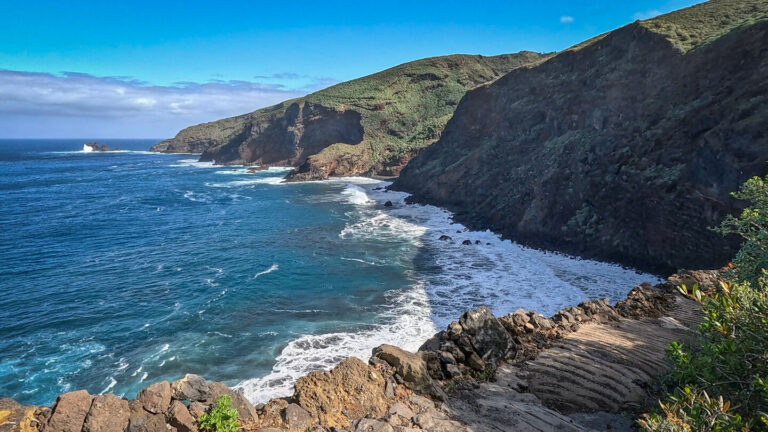
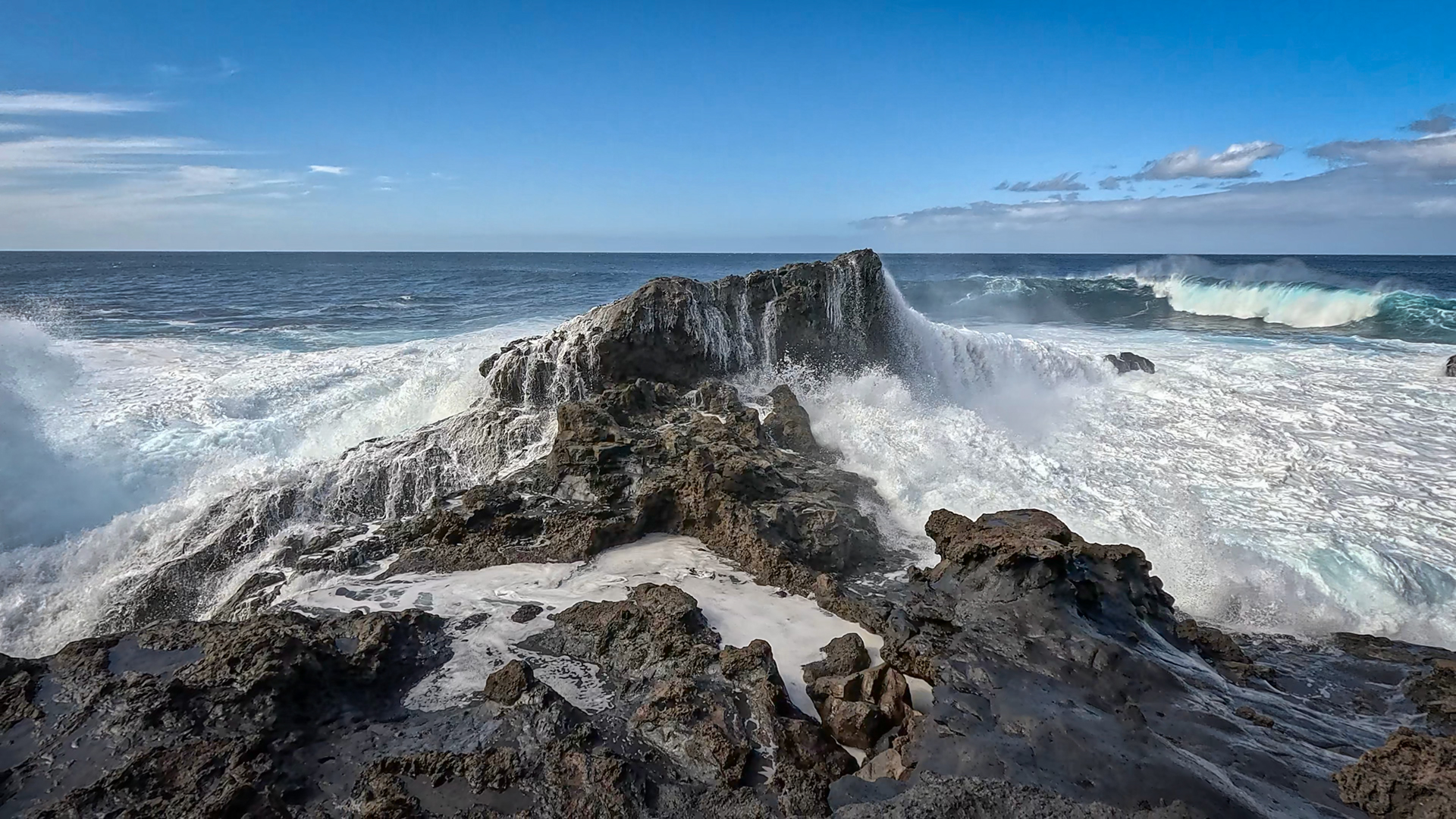
La Palma is not a beach island in the classic sense. The coastline is steep and many sections are hard to access. Strong surf and dangerous currents are everyday features at many beaches. Those planning a holiday consisting exclusively of relaxed swimming are better served on Lanzarote or Fuerteventura. Those who want a holiday where the beach is part of a bigger experience – an island with volcanoes, forests and a history – come to La Palma.
| Best west coast beaches | Puerto Naos · Charco Verde · El Remo · Las Monjas |
|---|---|
| Best natural pools | Charco Azul (San Andrés) · La Fajana (Barlovento) |
| Thermal pools | El Aljibe · Echentive lagoons (Fuencaliente) |
| Secluded coves | Playa de Nogales · Playa del Jurado · Playa de Bujarén |
| Family beach | Playa de Los Cancajos (Blue Flag) |
| Nudist / Naturist | Playa de Las Monjas (Los Llanos) formerly. Today the nudist alternative is a remote section of Playa de Tazacorte (Playa Grande, far left towards the cliffs) or Playa de las Gaviotas in the north. |
Safety Note: Take La Palma’s Coast Seriously
La Palma’s beaches are beautiful and pristine. They are also dangerous if you do not take them seriously. Strong undertows, powerful surf and the absence of lifeguard services at most beaches are not exceptions – they are the norm. The beach flag must always be observed. A red flag means no swimming — with no exceptions. Those who respect the coast can enjoy it.
La Palma as a Beach Island – What That Means
La Palma isn’t suited to a holiday made up entirely of beach days. The coastline is wild, infrastructure limited, the beaches pristine. What La Palma offers is something better: beaches as part of a bigger journey. Hiking in the morning, beach at noon, fish in the fishing harbour in the evening – that is La Palma. Those who seek that will find no better island in the Canary Islands.
Best Time to Visit Beaches on La Palma
La Palma has no real beach season – the island can be visited year-round. Those wanting sun and warmth come to the west coast or southern tip, which have around 300 sunny days even in winter. Spring (March to May) is ideal: few tourists, pleasant temperatures, vegetation at its peak. Summer brings more visitors and warmer water. In winter the secluded beaches are at their most secluded.
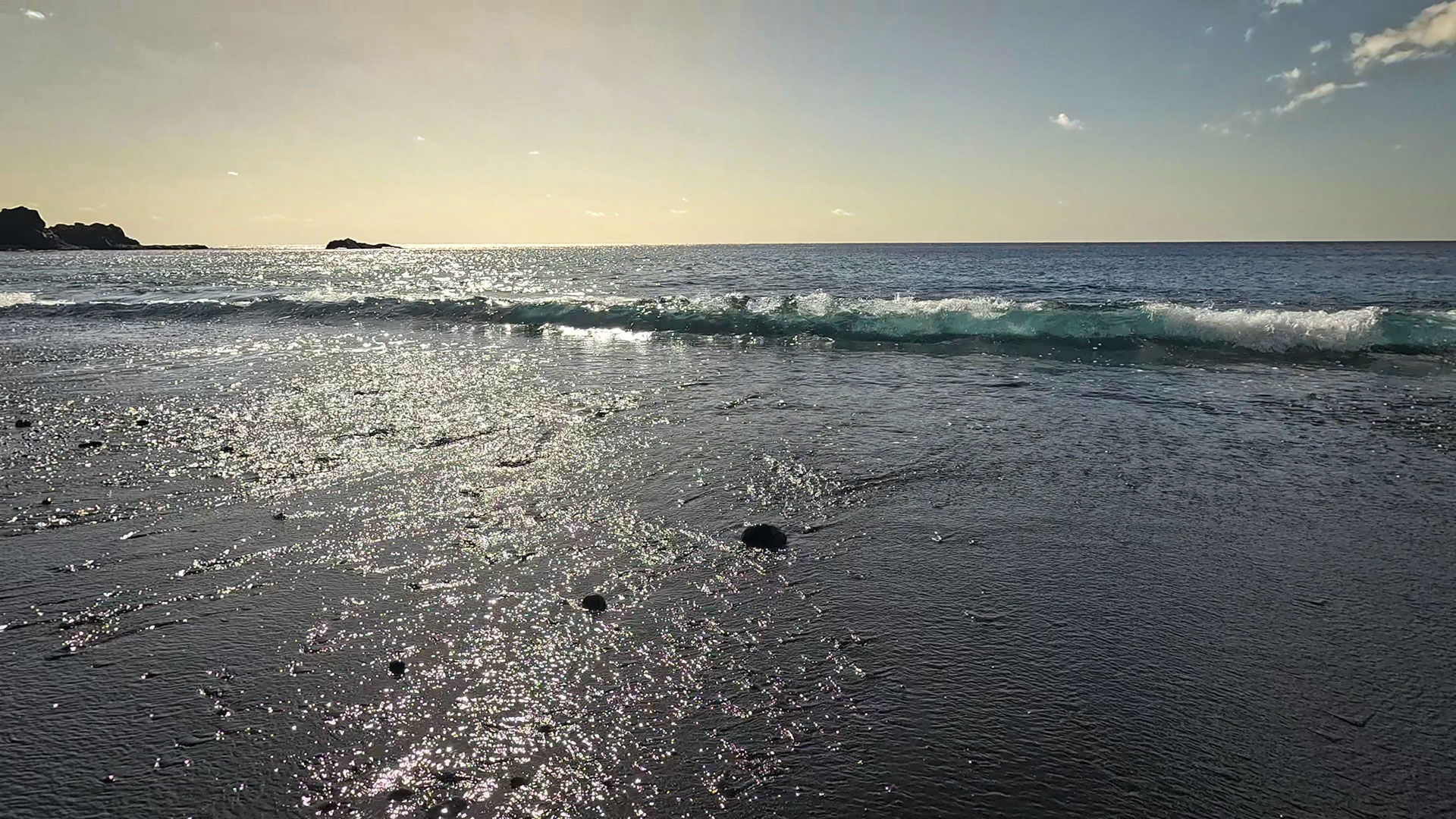
What does La Palma have that the other Canary Islands do not? Black sand that you sometimes have to earn. Natural pools in lava rock. Fishing-harbour atmosphere that is still genuine. And the silence that arises when you lie alone on a beach on a Wednesday morning with nothing to hear but the Atlantic.
La Palma: A Beach Island in Its Own Way
La Palma’s beaches are not a backdrop for mass tourism – they are part of an island that has not bent itself out of shape.
Black sand, natural pools, secluded bays: those who seek that find it here. And those who have found it come back.
Frequently Asked Questions
Does La Palma have white sand beaches?
Which beach on La Palma is best for families?
Which beach is the quietest and most unspoiled?
Can you swim at La Palma's beaches all year round?
This article is based on the on-the-ground knowledge of the Gequo editorial team – publishers of the Reisezeit hiking guides and operators of Sunhikes.com. Last updated: May 2026