Almogrote – La Palma’s Savoury Answer to Everything
There are spreads you try and forget. And then there is almogrote. This savoury cheese paste, made from aged Queso Palmero blended with roasted red peppers, garlic, olive oil, and tomato, is proof that La Palma has a distinct culinary identity. Almogrote originally comes from the neighboring island of La Gomera — but on La Palma, made with robust aged Queso Palmero Curado, it has developed its own unmistakable character.
The name has Arabic roots — al-mughruta — a reminder that Canarian cuisine has a history that runs deeper than the Spanish Conquest. Almogrote has been part of La Palma’s heritage since the 16th century. It has outlasted centuries of economic hardship and the island’s geographic isolation without changing its character. That is either resilience — or a flavour that stays true to itself.
What Makes Almogrote Special
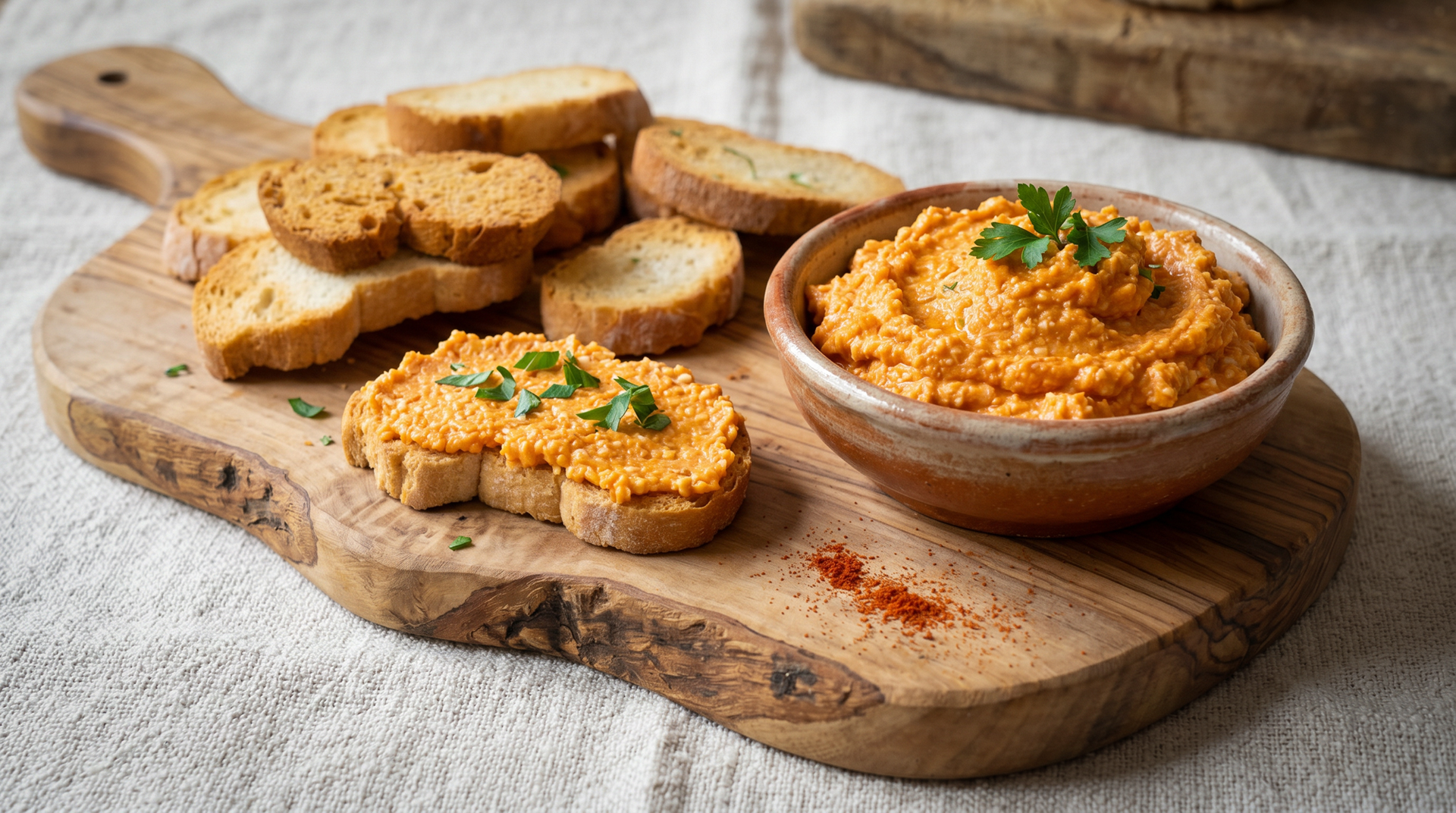
The key is the cheese: aged Queso Palmero — not fresh and mild, but dry, savoury, with a depth that only comes from time. This cheese is grated and then worked with pepper, garlic, and oil into a coarse paste — not pureed, not homogenized. Almogrote must have texture. You should be able to taste what it is made from.
A good almogrote from La Palma tastes of: aged cheese (slightly sharp, slightly resinous), roasted red pepper, garlic (distinct, but not overpowering), and a hint of acidity from the vinegar. On freshly toasted white bread, with a glass of Malvasía Volcánica — that is a complete experience. The version with roasted red peppers easily beats the dry version: it gives the spread perfect moisture and a wonderful fruity depth.
The Recipe – Making Almogrote at Home
Makes approx. 250 g: 200 g aged Queso Palmero (or other aged goat cheese, as dry as possible). 2 roasted peppers (peeled) — these make the spread noticeably more moist. 3 garlic cloves. 1 ripe tomato, deseeded and roughly diced. 3 tbsp good olive oil. 1 tbsp red wine vinegar. 1 tsp smoked paprika. Salt. Optional: 1/2 tsp ground cumin. Note: For a more purist, dry version, substitute dried, soaked Pimienta Palmera peppers.
Method: Roughly crumble the cheese. Process all ingredients in a mortar or food processor into a coarse paste — the goal is a spreadable but still textured consistency. Adjust consistency with olive oil. Season to taste. Refrigerate, but bring to room temperature before serving. Keeps in the fridge for 1–2 weeks.
Where to Buy Almogrote
Buy it fresh at the local farmers’ markets: Puntagorda (Sat/Sun), Mazo (Sat), Santo Domingo de Garafía (Sun). Direct from the producer, freshly made, often with their own Queso Palmero. That beats any supermarket jar hands down.
At the supermarket: “Almogrote de La Palma artesano” on the label is a good sign. Brands like Guachinerfe or local producers outperform industrial products. 180 ml jars cost around €3–5 and pack easily in checked luggage. Keeps several weeks in the fridge.
What to Use Almogrote For
Classic: on toasted white bread or toast. As a dip with papas arrugadas (a change from mojo). Alongside grilled fish — instead of mojo when you want to try something different. On pizza (unconventional, but delicious). Straight from the jar with a spoon — the most honest approach, one that needs no dish at all.
Frequently Asked Questions (FAQ)
Can you make almogrote without Queso Palmero?
Does almogrote come from La Palma?
What does almogrote taste like?
What do you eat almogrote with?
How long does homemade almogrote keep?
Can almogrote be frozen?
Is almogrote spicy?
This article is based on the on-the-ground knowledge of the Gequo editorial team – publishers of the Reisezeit hiking guides and operators of Sunhikes.com. Last updated: May 2026