Papas Arrugadas – The Dish That Explains La Palma in Three Words
Some dishes describe a cuisine completely — without explanation, without a guide. Papas arrugadas con mojo is one of them. Small potatoes cooked in a high concentration of salt until the skin dries out and wrinkles into a white crust, served with mojo rojo and mojo verde. The result is simultaneously a technique, a philosophy, and a flavour you will not find in exactly the same form anywhere else on earth.
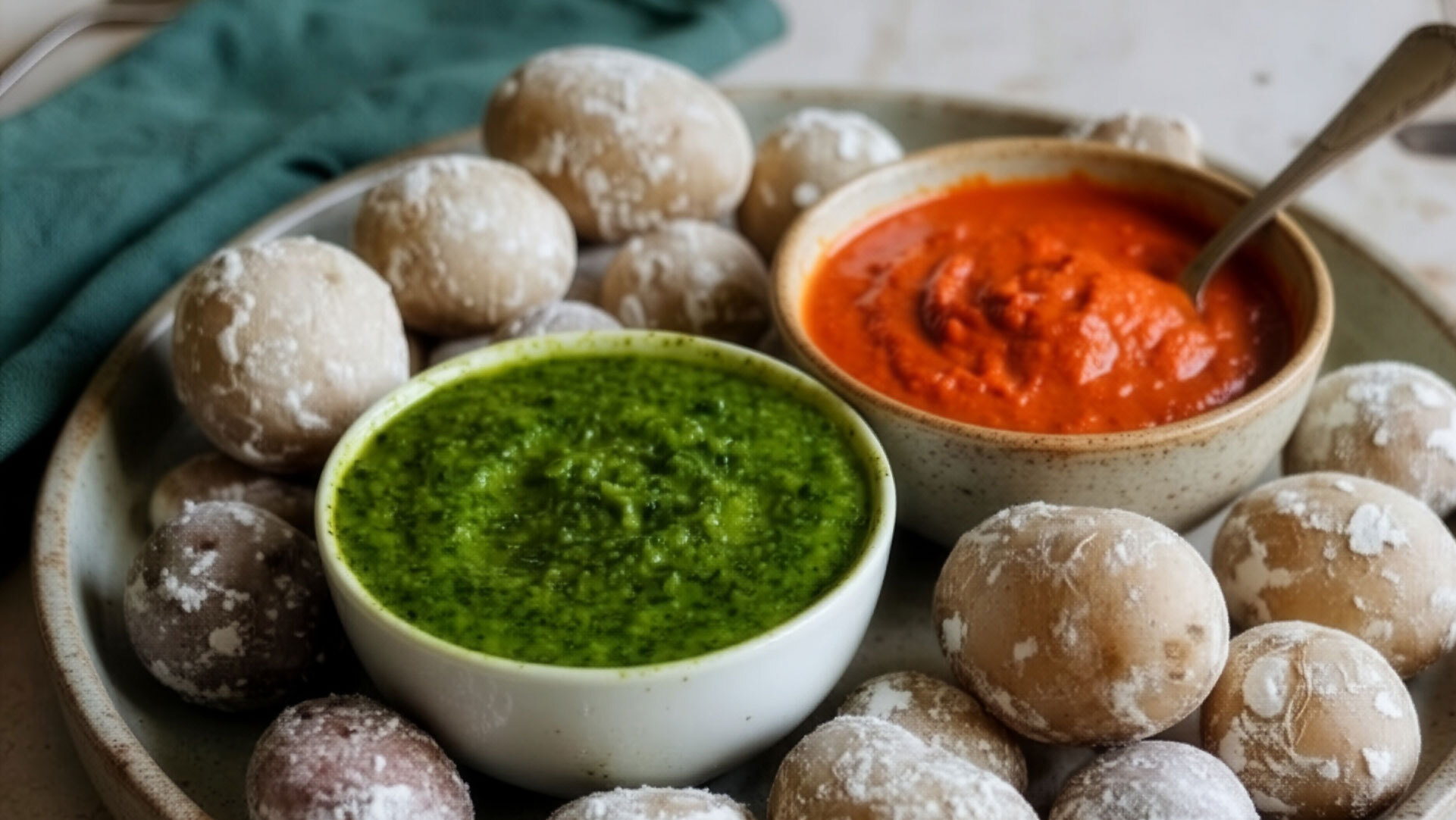
When you order papas arrugadas on La Palma for the first time and receive genuine, salt-dried papas negras — the black heirloom potatoes from the volcanic soil — you immediately understand the difference. These are not ordinary potatoes. They are a product of this specific island, this specific soil, this specific farming tradition. The salt crust on the skin concentrates the starch inside. The result is a texture and depth of flavour that changes the way you think about what a potato can be.
The Story Behind the Name
Arrugadas means wrinkled — and the name perfectly describes what large amounts of salt do to a potato skin. Traditionally the potatoes were cooked in seawater or heavily salted fresh water until nearly all the liquid evaporated, leaving a white crystalline crust on the skin. This method preserved the potatoes and intensified their flavour — a technique born of necessity that became a tradition.
Papas arrugadas come from scarcity: on the Canary Islands, salt was cheaper than fresh water. Boiling potatoes in concentrated salt water made economic sense. What began as frugal island cooking became one of the most beloved dishes in the entire Canarian archipelago.
Papas Negras – The Black Potato from Volcanic Soil
On La Palma there are heirloom potato varieties that have nearly vanished from the mainland. The papas negras (black potatoes) have a dark, violet-black flesh produced by anthocyanins — the same pigments that colour blueberries. The flavour: more intense, nuttier, slightly earthier than conventional yellow potatoes. They are not just a local specialty; they are a direct link to traditional Canarian agricultural heritage.
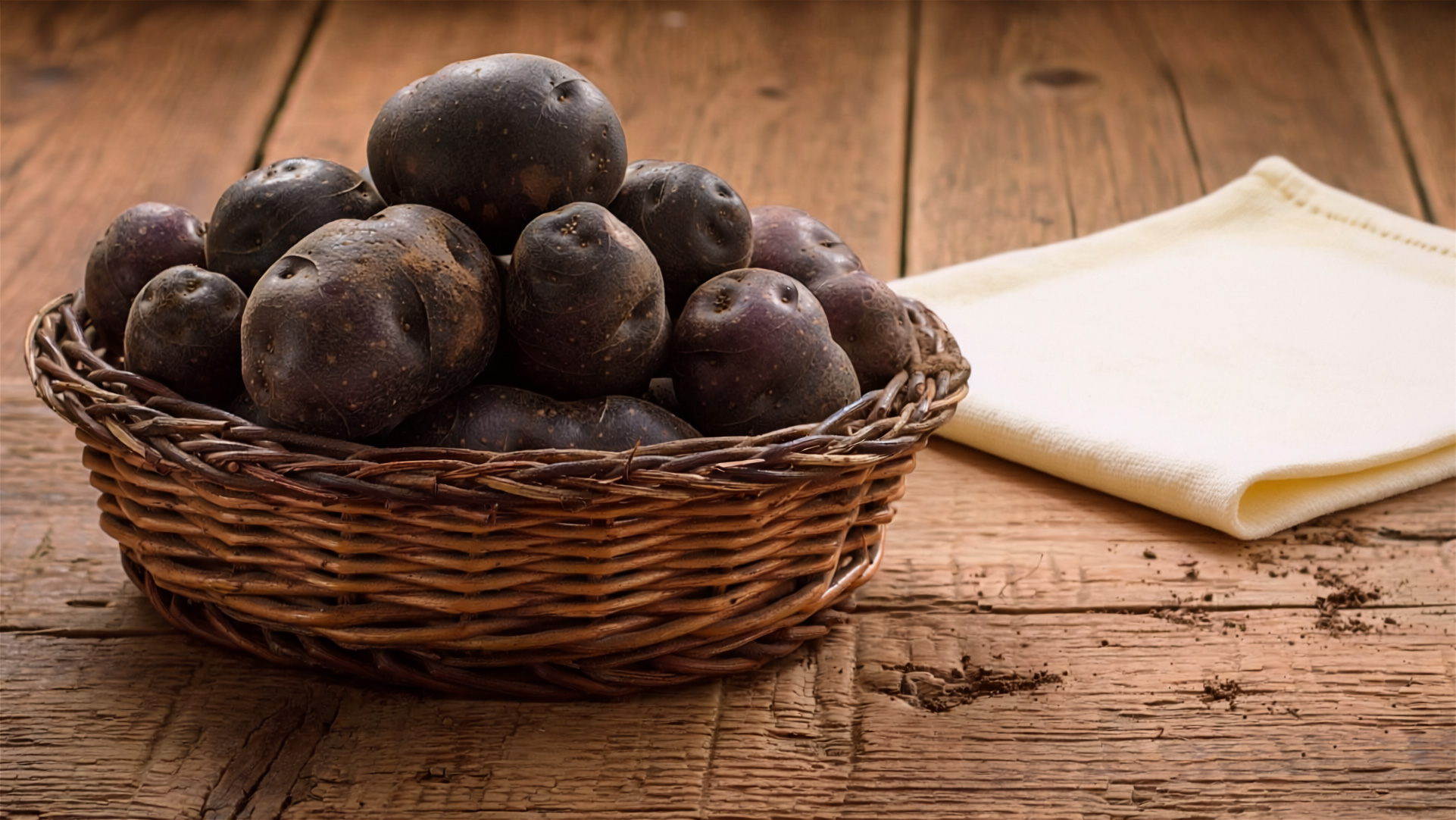
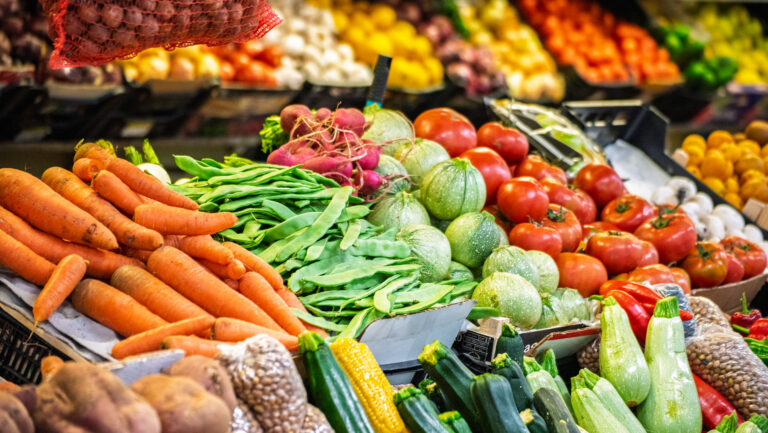
Papas negras can be found at the island’s farmers markets (Puntagorda, Mazo) and occasionally at roadside stands in the Aridane Valley. They are rare and prized — and the best argument for stopping at the market before heading back to the rental.
Mojo Rojo – The Recipe
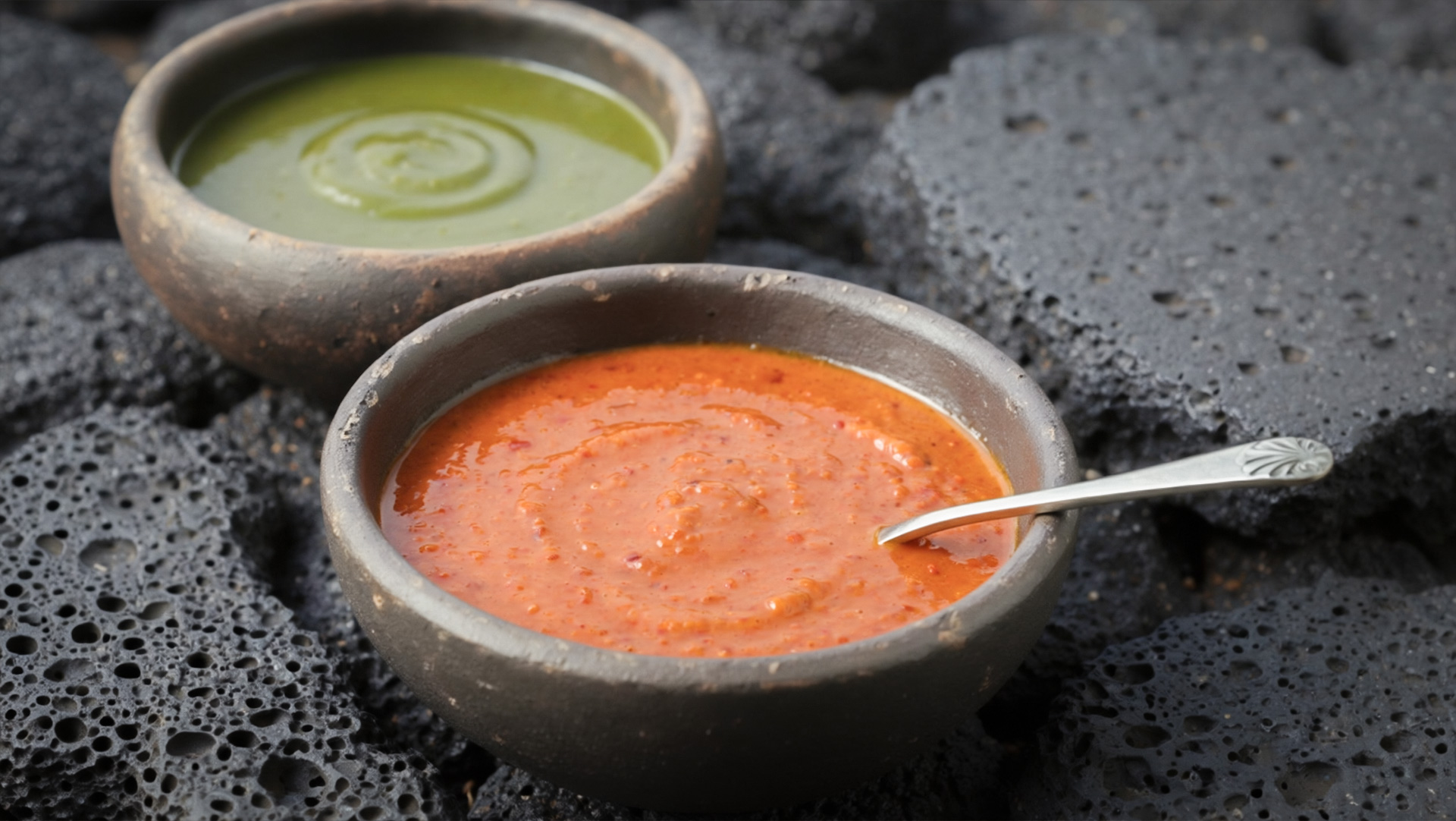
Ingredients for approx. 200 ml: 4–6 dried red peppers (ñora), soaked 30 minutes in warm water. 4 garlic cloves. 1 tsp cumin (ground). 1 tsp smoked paprika. 3 tbsp red wine vinegar. 8 tbsp olive oil. 1 tsp coarse salt.
Method: In a mortar, pound garlic with salt into a paste. Squeeze out the soaked peppers, add the flesh, pound further. Work in cumin and paprika. Add vinegar and stir. Incorporate oil in a thin stream while stirring. Taste and adjust. Keeps in the fridge for up to 2 weeks.
Mojo Verde – The Green Variant
Ingredients: 1 bunch fresh cilantro (or half cilantro, half parsley), 1 green pepper, 4 garlic cloves, 3 tbsp wine vinegar, 6 tbsp olive oil, salt, 1 tsp cumin. Blend or pound in a mortar into a smooth, aromatic green paste. Always make fresh and serve immediately — it oxidizes and browns overnight, though the flavour holds.
The Recipe – Making Papas Arrugadas at Home
Ingredients for 4: 1 kg small potatoes (waxy, similar in size). 200–300 g coarse sea salt. Water. Wash potatoes thoroughly (they cook unpeeled). Place in a pot, cover just barely with water. Add salt generously — the water should taste noticeably salty. Boil at medium heat until the water has nearly evaporated and a white salt crust forms on the skins (about 25–30 min). Remove lid, return briefly to low heat to dry completely. Serve immediately with mojo rojo and mojo verde.
Frequently Asked Questions (FAQ)
How much salt is too much?
Can I buy papas negras in Germany?
This article is based on the on-the-ground knowledge of the Gequo editorial team – publishers of the Reisezeit hiking guides and operators of Sunhikes.com. Last updated: May 2026