Puerto de Talavera – Cave Dwellings, History and Clear Water
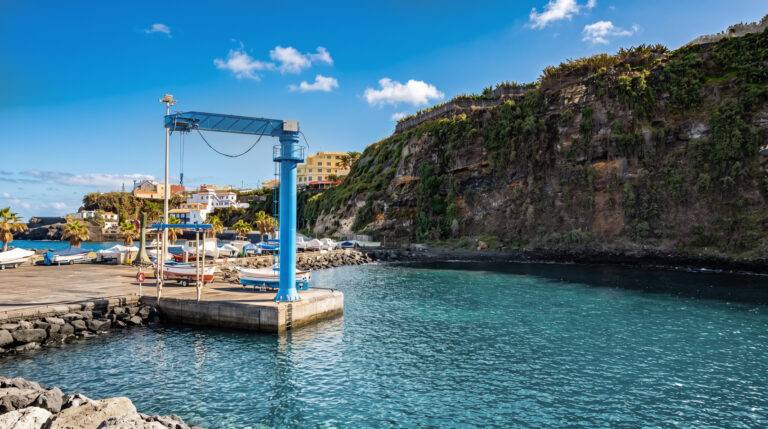
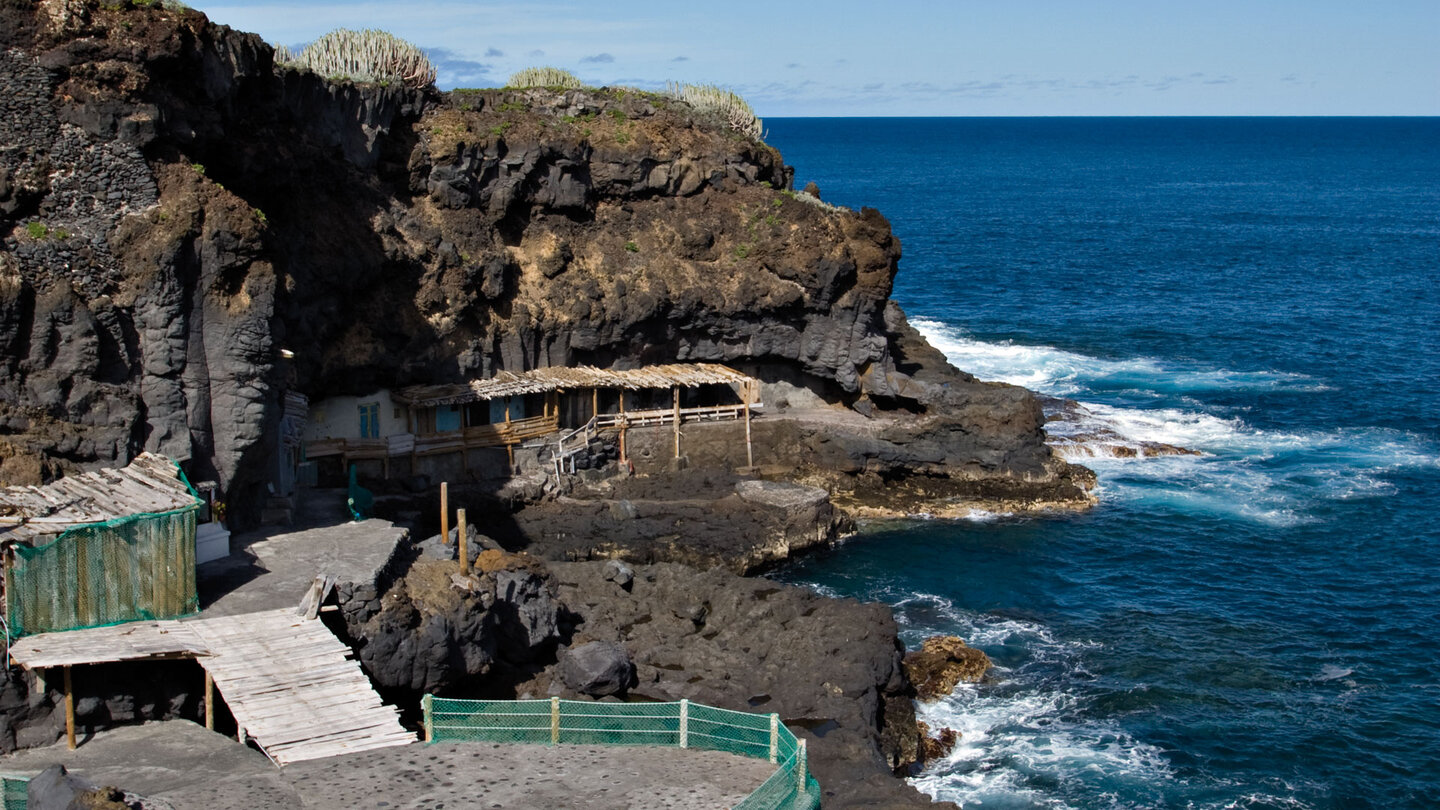
The small, rugged headland on Barlovento’s northeast coast looks almost inaccessible. But appearances deceive. Puerto de Talavera was one of the most important landing points on the north coast until well into the 20th century — fruits were shipped from here before roads connected the coastal communities to the rest of the island. What remains from that era still stands.
Cave Dwellings in the Lava Rock
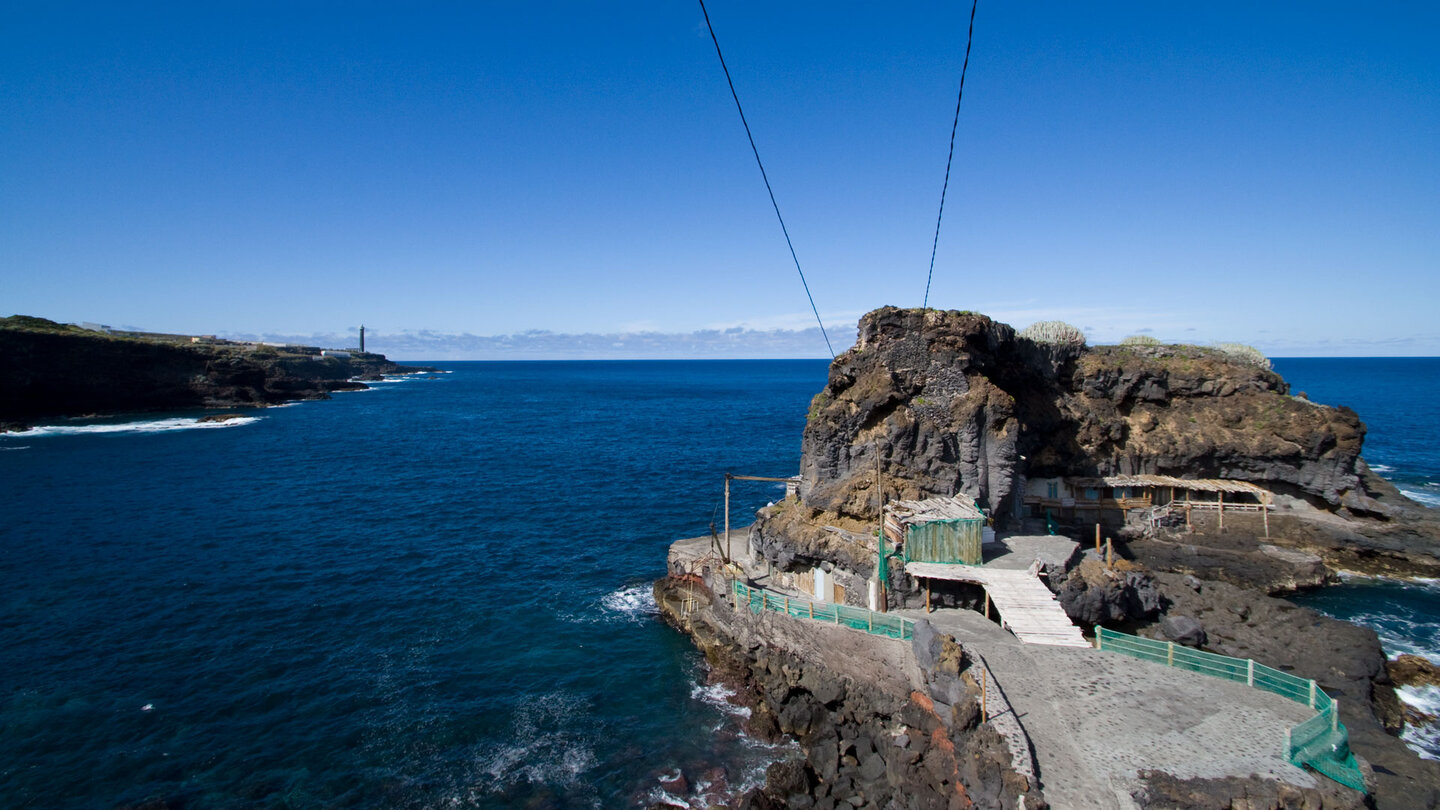
In Puerto Talavera’s lava rock, caves were converted into living spaces — the fragile-looking small houses around them built around these natural chambers. Iron rings in the walls, wear marks on the stones, steps down into the water: the tools of an era when the sea was the only connection to the outside world. Those who read these traces understand why La Palma is a different island from Lanzarote or Fuerteventura.
Faro de Punta Cumplida: In Operation Since 1867
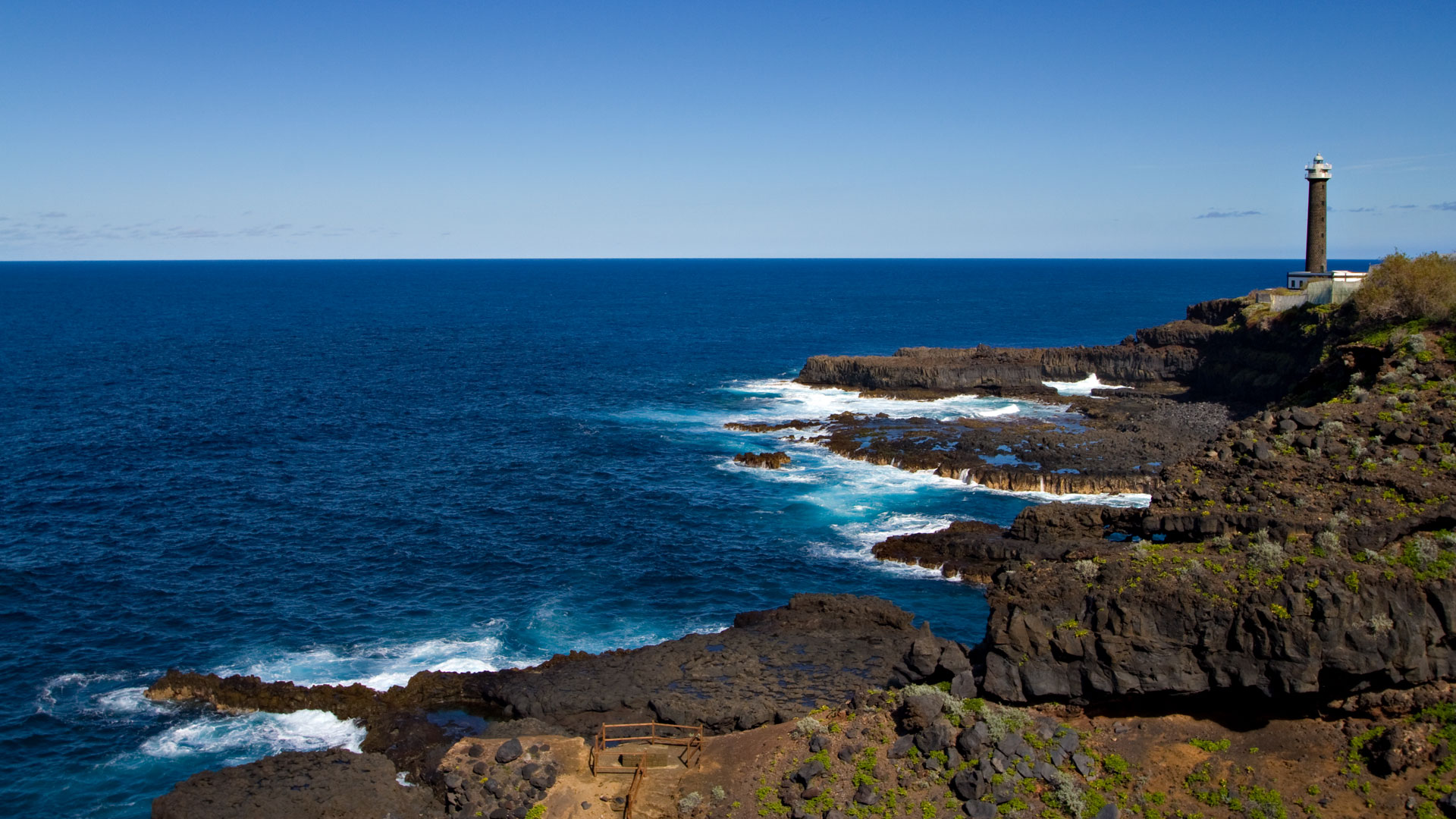
Visible from Puerto Talavera: the Faro de Punta Cumplida, La Palma’s oldest lighthouse. Built 1861, continuously in operation since 1867. Every five seconds the lamp rotates — visible 20 to 23 nautical miles away. The old outbuildings where lighthouse keepers once bred carrier pigeons still stand. The conversion to a hotel was approved in 2017 for 35 years. In March 2019 it opened with a pool, patio, two double suites, and a suite for up to four guests.
A short coastal path connects the harbour to the lighthouse — 30 minutes on foot, with the best views of the northeast coast for company.
Swimming & Safety
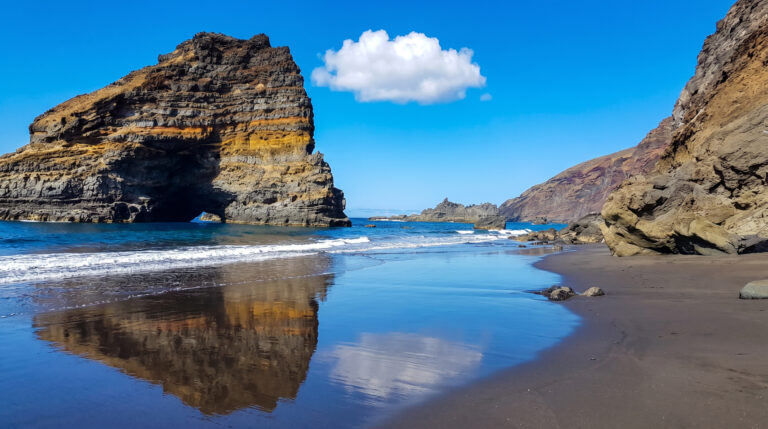
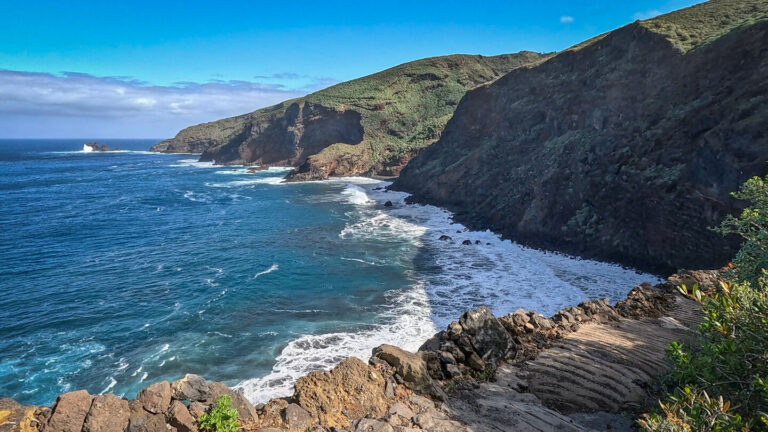
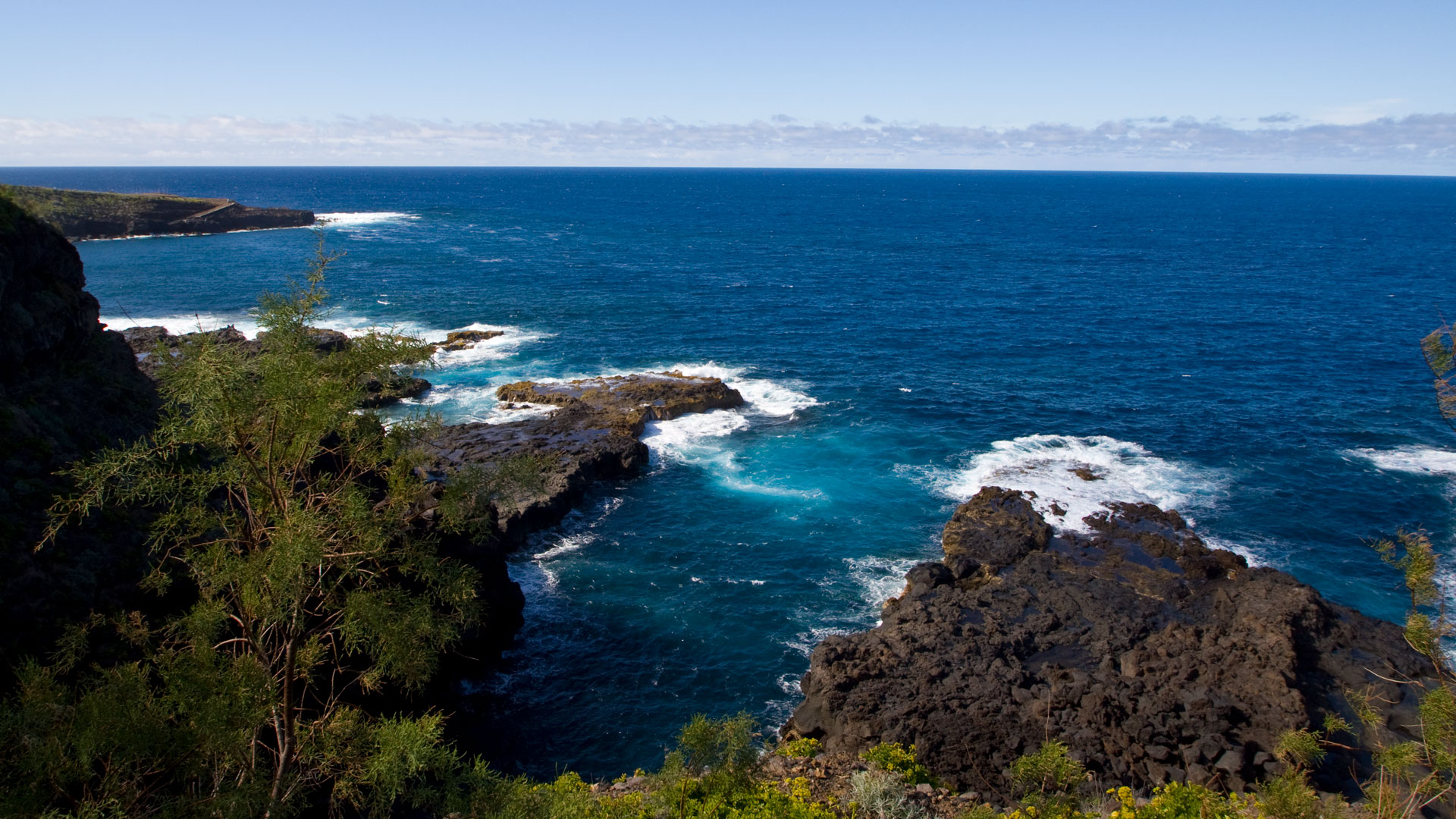
Northeast coast — the Atlantic meets rock unbroken. Surf and currents can be strong.
Swimming is only advisable in calm seas, and strictly for experienced swimmers.
Crystal-clear water is ideal for snorkelling — excellent visibility in good weather.
No lifeguard on site.
Snorkelling in Puerto Talavera
In calm seas, snorkelling off Puerto Talavera is one of the most rewarding underwater experiences on the northeast coast. The water is clear, the lava formations beneath the surface rich in life: parrotfish, sea bass, moray eels, octopuses. No equipment on site — bring your own mask and snorkel. Water temperature is 19 to 21°C in winter, up to 24°C in summer.
The Coastal Trail: La Fajana – Talavera – Lighthouse
A coastal path connects the natural pool La Fajana in the south with Puerto Talavera and Faro de Punta Cumplida. The total route takes about one and a half to two hours on foot and is moderately demanding. Natural pool, historic harbour, ancient lighthouse: three places, one coast, half a day. The best introduction to La Palma’s northeast coast.
| Location | North-east coast of La Palma, municipality of Barlovento |
|---|---|
| Character | Historic fishing harbour, cave dwellings, lava rock |
| Snorkelling | Highly recommended in calm conditions |
| Lighthouse | Faro de Punta Cumplida (1861) – oldest on the island |
| Combine with | La Fajana natural pools · Lighthouse · Barlovento tea plantation |
| Getting there | About 45 min from Santa Cruz; car hire recommended |
Barlovento: The Greenest Municipality
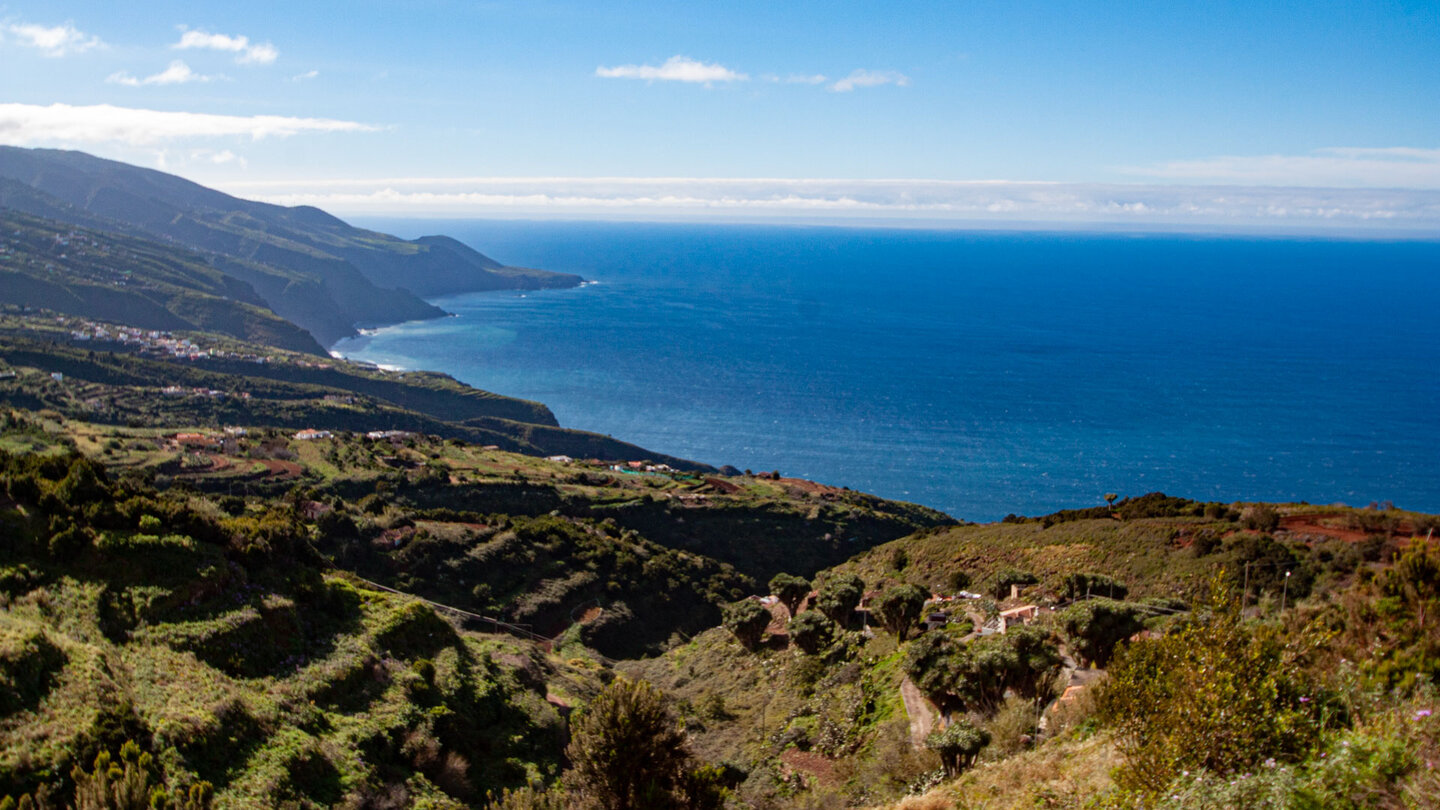
Barlovento is La Palma’s greenest municipality. The trade-wind clouds meet the mountains here first, and what they bring stays: rain, mist, vegetation of almost tropical density. This explains the contrast between the rugged coast down at Puerto Talavera and the lush landscape above. The Hacienda Las Eras — Spain’s only tea plantation — lies a few minutes away. Combining Puerto Talavera and the tea plantation in half a day captures the northeast coast in its full range.
Getting There and Planning Your Day
From Santa Cruz the drive to Barlovento takes just under 45 minutes on the LP-1. The turn-off is clearly signposted. Combining Puerto Talavera, the lighthouse, and the natural pool La Fajana requires anything from half a day to a full day. Recommended order: La Fajana in the morning for swimming, coastal path to Puerto Talavera, lighthouse, Barlovento for lunch. Return in the afternoon.
What You Can Still See Today
The stone loading ramps, the iron rings for mooring lines, the wear marks on the walls — the inventory of a harbour that stopped being a harbour but never lost its presence. Lay your hands on these stones and you reach back to a time when La Palma was not connected by roads and the sea was the only link. This is history you can touch.
Snorkelling: The Best Comes Early
The best time for snorkelling at Puerto Talavera is early morning, when the northeast coast is still calm and the water hasn’t been stirred up by waves. Visibility is at its best then, and the fish are most active. Parrotfish, moray eels, small sea bass, the occasional octopus moving between the rocks: the underwater world of the northeast coast is no less diverse than that of the west side – just less well known.
What Else Barlovento Has to Offer
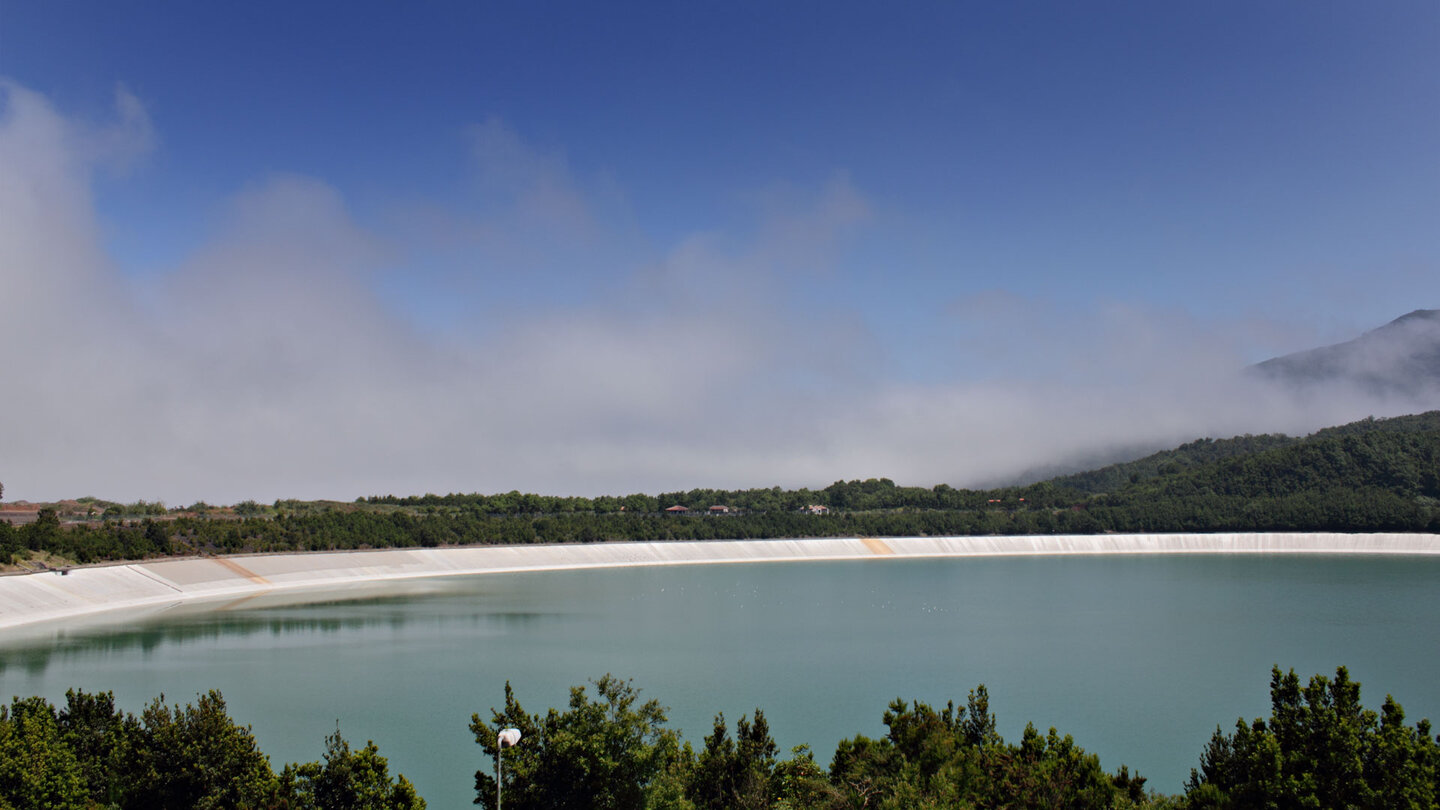
Beyond Puerto Talavera, the lighthouse, and the tea plantation, Barlovento also has the Laguna de Barlovento — a mountain reservoir, which is a rare sight on La Palma. The water lies quietly between green slopes with laurel forests mirrored in it. A walk around the lagoon takes an hour and gives a sense of what the island’s interior looks like — unseen from the coast.
Conclusion: Puerto de Talavera
Puerto Talavera tells a story: cave dwellings, loading ramps, the island’s oldest lighthouse.
Not a classic swimming beach — but one of the most authentic spots on the northeast coast, ideally combined with La Fajana and Faro de Punta Cumplida.
Frequently Asked Questions
What is the Faro de Punta Cumplida?
Can you swim at Puerto Talavera?
How do you get to Puerto Talavera?
This article is based on the on-the-ground knowledge of the Gequo editorial team – publishers of the Reisezeit hiking guides and operators of Sunhikes.com. Last updated: May 2026