Tajinaste on La Palma: The Floral Spectacle That Surpasses Tenerife
When people hear the word Tajinaste, they think of Tenerife — of the brilliant red flower spikes that define the high mountain landscape of Mount Teide in spring. But La Palma, the Isla Bonita, surpasses its larger neighbour in one decisive way: the island is home to several endemic Tajinaste species found nowhere else on Earth. This makes La Palma a globally unique hotspot for this fascinating plant genus of the borage family (Boraginaceae).
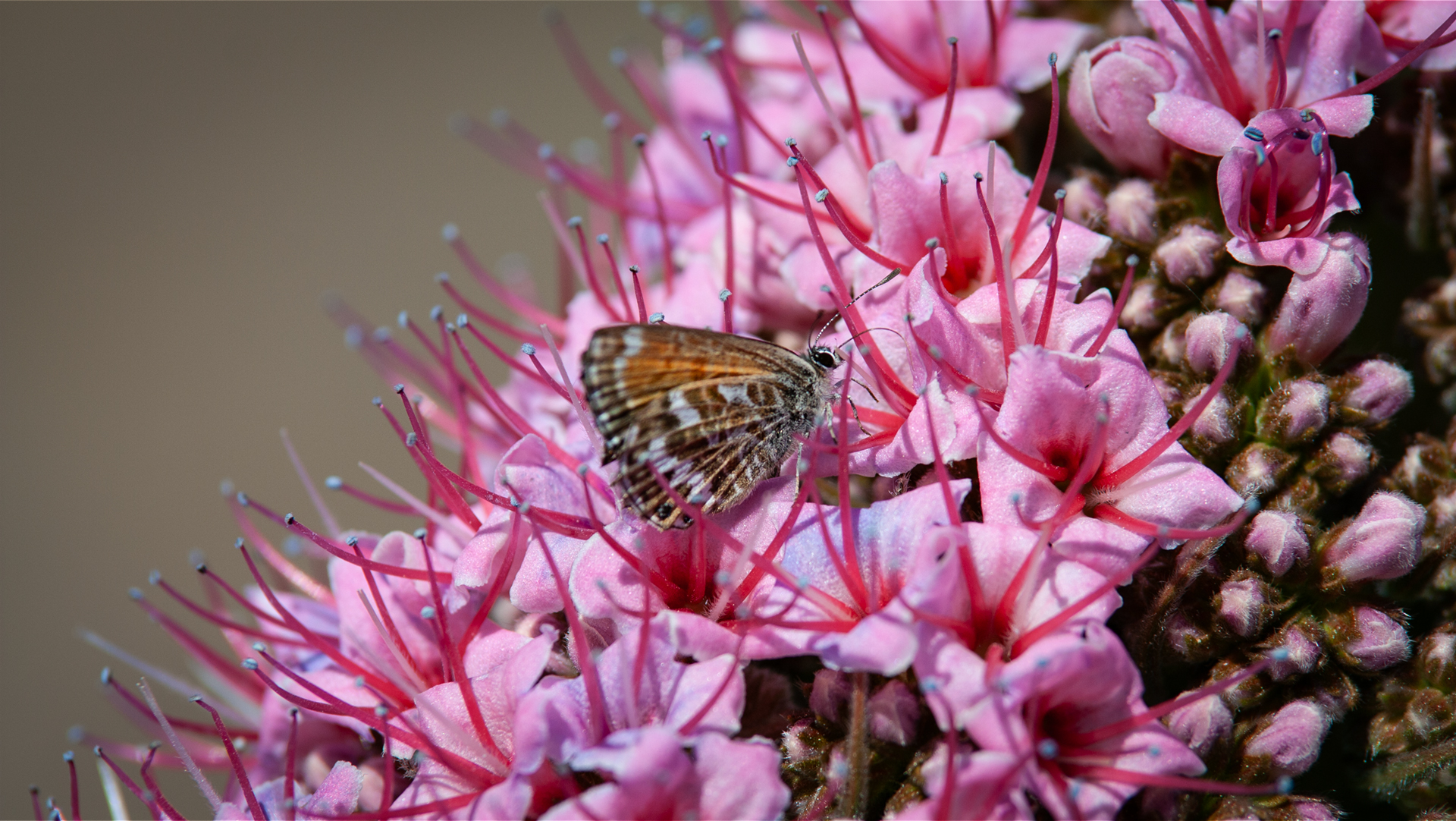
From the spectacular pink Tajinaste of the summit region to the rare blue viper’s bugloss and the white Tajinaste of the barrancos, La Palma showcases a botanical diversity that is unique in the world. Add to this the imposing giant viper’s bugloss (Echium pininana), whose towering flower spikes adorn the island’s laurel forests.
From May through July, the Tajinaste rosada and the rare blue Tajinaste transform the high-altitude areas around the Caldera de Taburiente and Roque de los Muchachos into a breathtaking sea of flowers. At the same time, the giant viper’s bugloss blooms in the humid mountain forests on the island’s northeastern side. For hikers, nature photographers, and plant enthusiasts, this period is one of the most beautiful natural experiences on La Palma.
The Four Characteristic Tajinaste Species of La Palma
The Tajinaste rosada (Echium wildpretii subsp. trichosiphon) is the landmark plant of La Palma’s high elevations. From May through July it raises its up to two-metre-tall pink to pale violet flower spikes among pine forests and lava slopes around Roque de los Muchachos and the Caldera de Taburiente. It is endemic to La Palma and occurs exclusively on this island. Its closely related sister species on Tenerife bears the famous red flowers and is known as Echium wildpretii.
Tajinaste azul (Echium webbii)
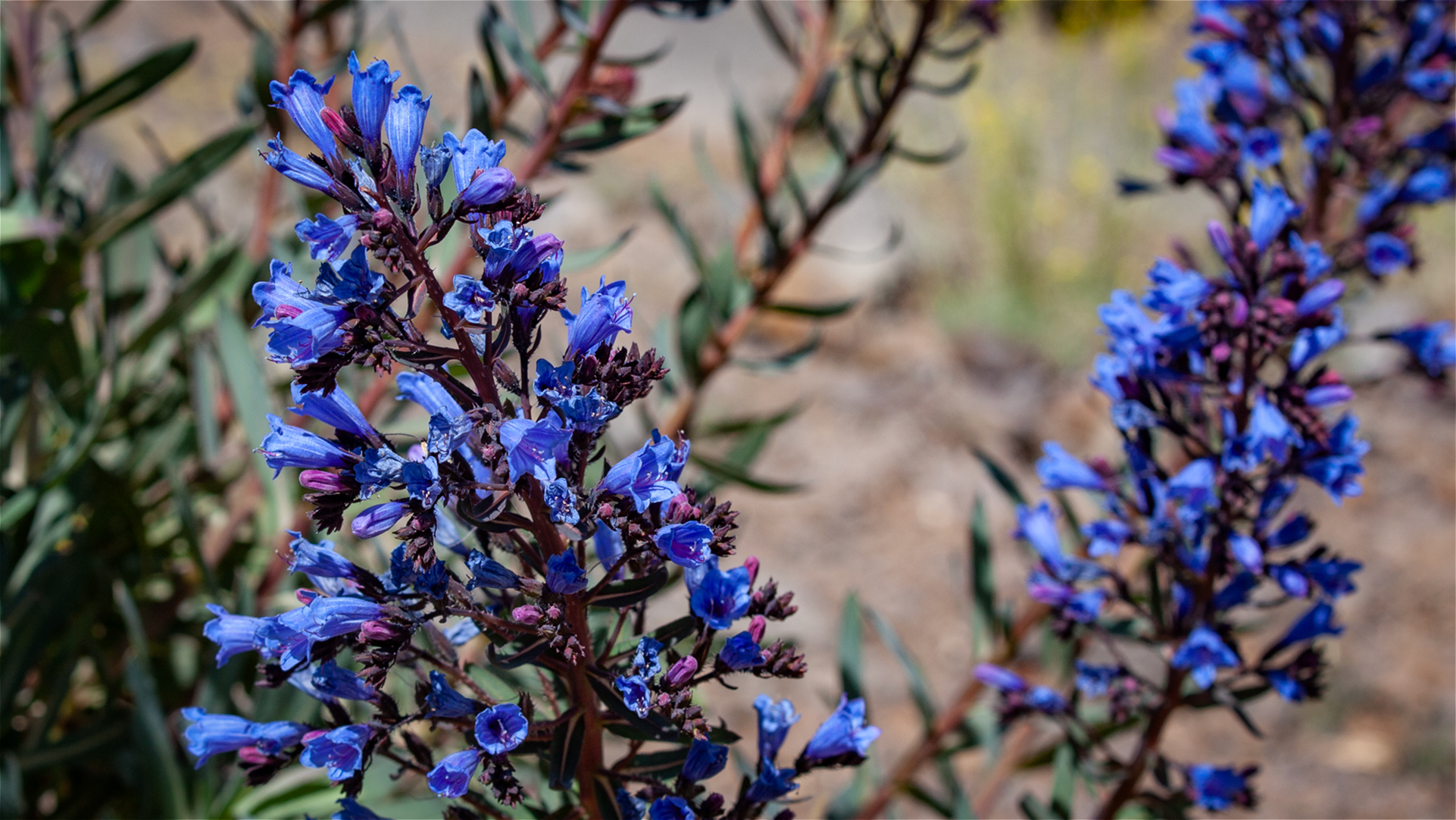
The Tajinaste azul (Echium webbii) is one of the rarest plants on La Palma. Its intensely gentian-blue flowers appear from May through June in the rocky summit areas above approximately 1,800 metres. This bushy-growing species is strictly protected and grows exclusively in the island’s high-altitude zones. Anyone who discovers it during a hike experiences a truly exceptional botanical encounter.
Tajinaste blanco (Echium brevirame)
The Tajinaste blanco (Echium brevirame) differs markedly from its relatives in the summit region. It grows in the dry barrancos and in the mid-elevation zones of La Palma, bearing numerous white flowers. This species is also endemic and occurs exclusively on La Palma.
Giant viper’s bugloss (Echium pininana)
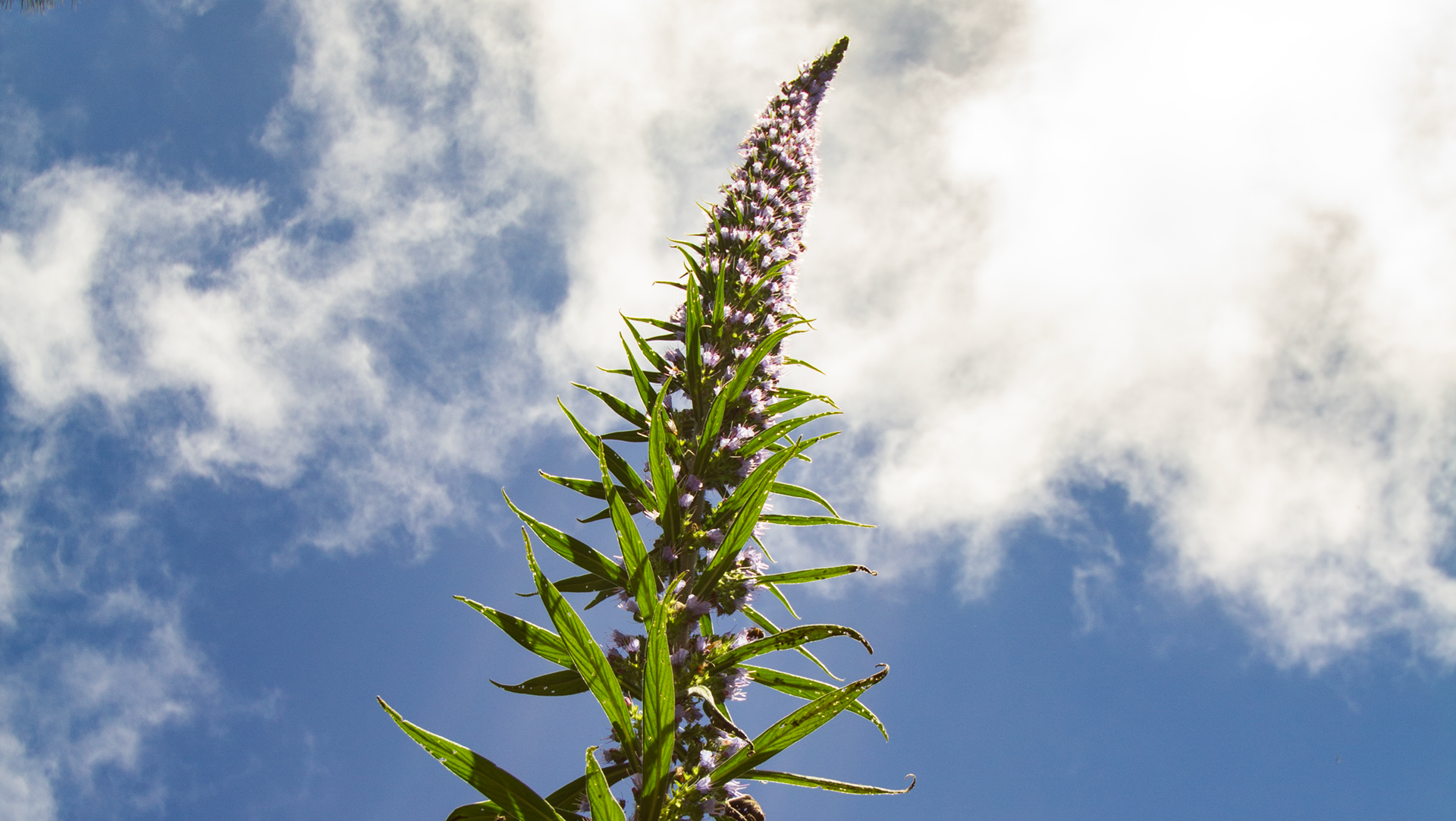
The imposing giant viper’s bugloss (Echium pininana) is also among La Palma’s best-known endemic plants. Its blue-violet flower spikes, which can exceed three metres in height, grow not in the high mountains but in the humid laurel and fayal-brezal forests on the island’s northeastern side, particularly in the Los Tilos area. This places it in an entirely different habitat from the Tajinaste species of the summit zone.
Bloom Season and Locations
The peak of the Tajinaste bloom on La Palma falls between mid-May and mid-June. The Tajinaste rosada and the rare Tajinaste azul are best observed around Roque de los Muchachos and along the Caldera ridge on the GR 131. The giant viper’s bugloss (Echium pininana), by contrast, blooms in the humid mountain forests of the northeastern side, particularly in the Los Tilos area.
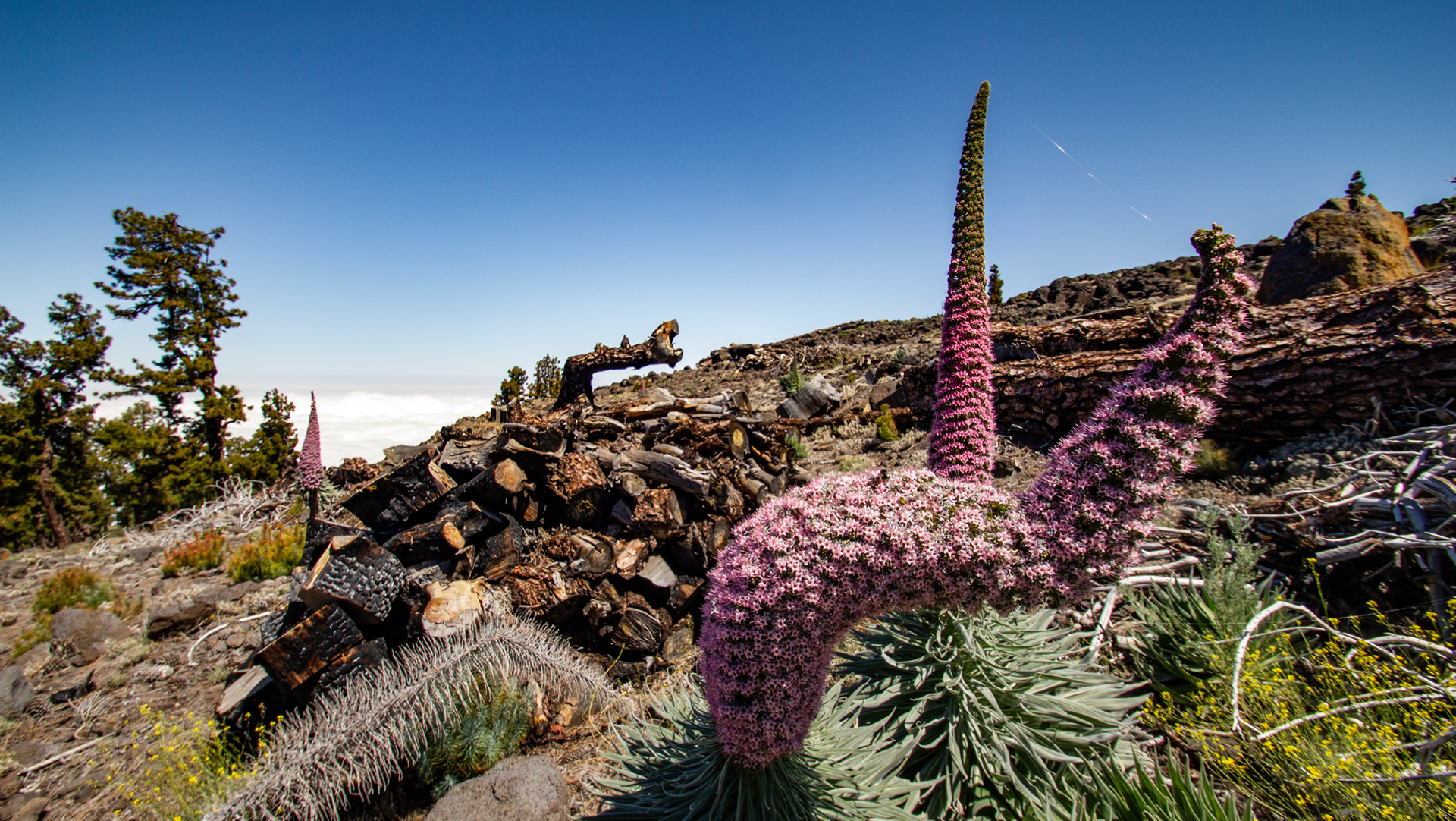
Those wishing to visit Roque de los Muchachos can reach it via the winding LP-4 road. As parking at the summit is limited and clouds frequently form during the day, arriving early in the morning is highly recommended.
Ecologically Unique
The various Tajinaste species vividly illustrate the extraordinary diversity of La Palma’s vegetation zones. While the Tajinaste rosada and the Tajinaste azul are adapted to the dry high-mountain climate above the trade wind clouds, the giant viper’s bugloss grows exclusively in the humid laurel forests. Together with the endemic pines, codeso shrubs, and other high-altitude plants, they shape the unique landscapes of the Isla Bonita.
La Palma’s Tajinaste bloom ranks among the most impressive natural events in the Canary Islands. Pink flower spikes on the summits, deep-blue endemics among the rocks, and towering flower spikes in ancient laurel forests make the island a paradise for nature lovers and botanists.
A Botanical Masterpiece Above the Clouds
La Palma’s Tajinaste bloom is the most colourful natural spectacle in the entire Canary Islands. With several endemic species set against a high-mountain landscape above the clouds, this blooming window lasts just a few weeks. Anyone travelling in May or June should have Roque de los Muchachos on their list.
Frequently Asked Questions
When does the Tajinaste bloom on La Palma?
Where is the best place to experience the Tajinaste bloom?
Which Tajinaste species are endemic to La Palma?
What is the best time to travel for the Tajinaste bloom?
Is there a red Tajinaste on La Palma like on Tenerife?
This article is based on the on-the-ground knowledge of the Gequo editorial team – publishers of the Reisezeit hiking guides and operators of Sunhikes.com. Last updated: May 2026