The Dragon Tree: La Palma’s Most Ancient Natural Heritage
Some call it the dragon tree because its resin runs red as blood. Some say it’s because when you cut off a branch — like a dragon — new shoots always grow back. The truth is: nobody really knows. But the name Dracaena draco has accompanied this tree for centuries. The dragon tree can live longer than many human-built structures and political empires of Europe, and on La Palma it stands as one of the most impressive symbols of the island’s extraordinary natural history.
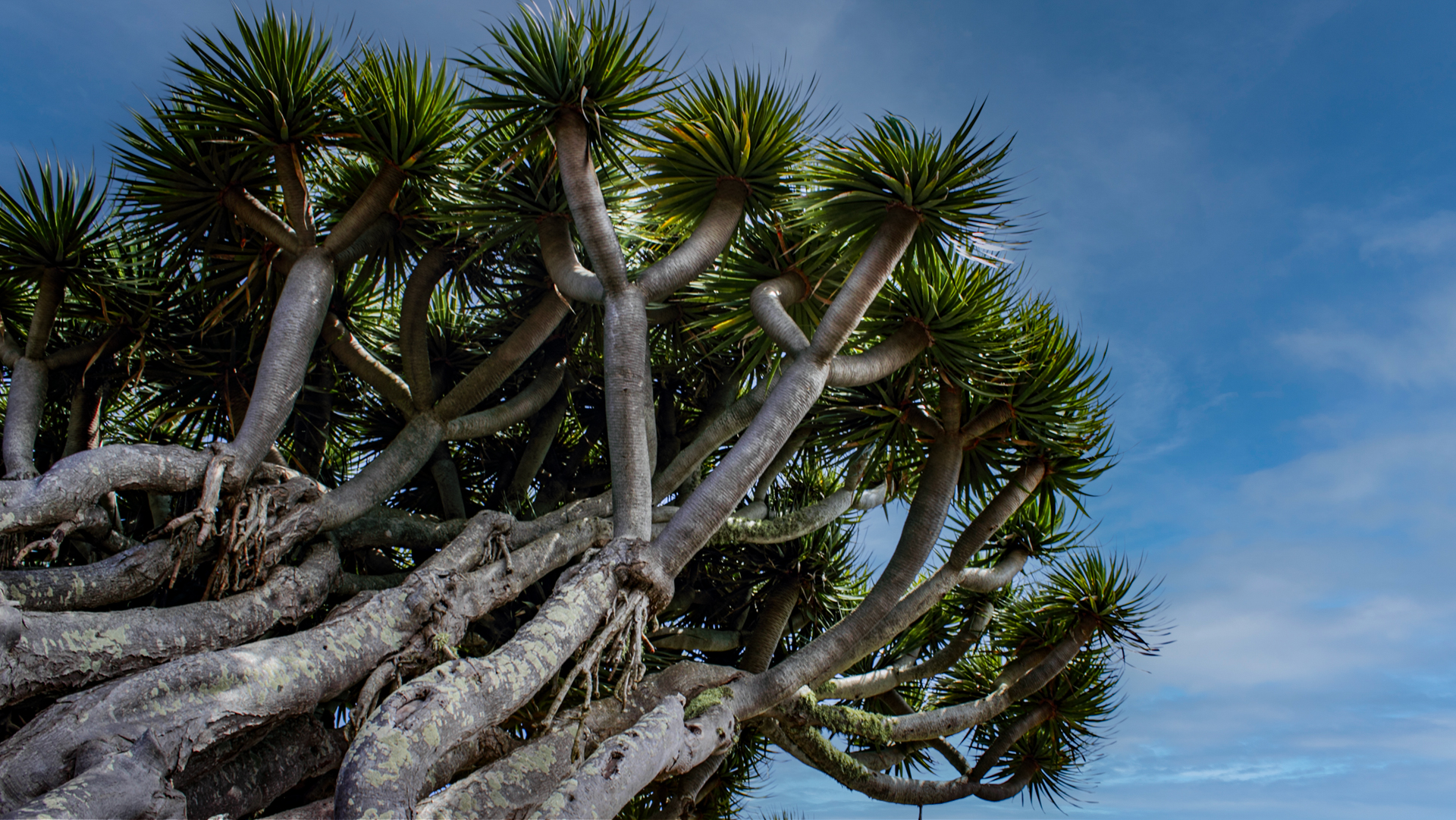
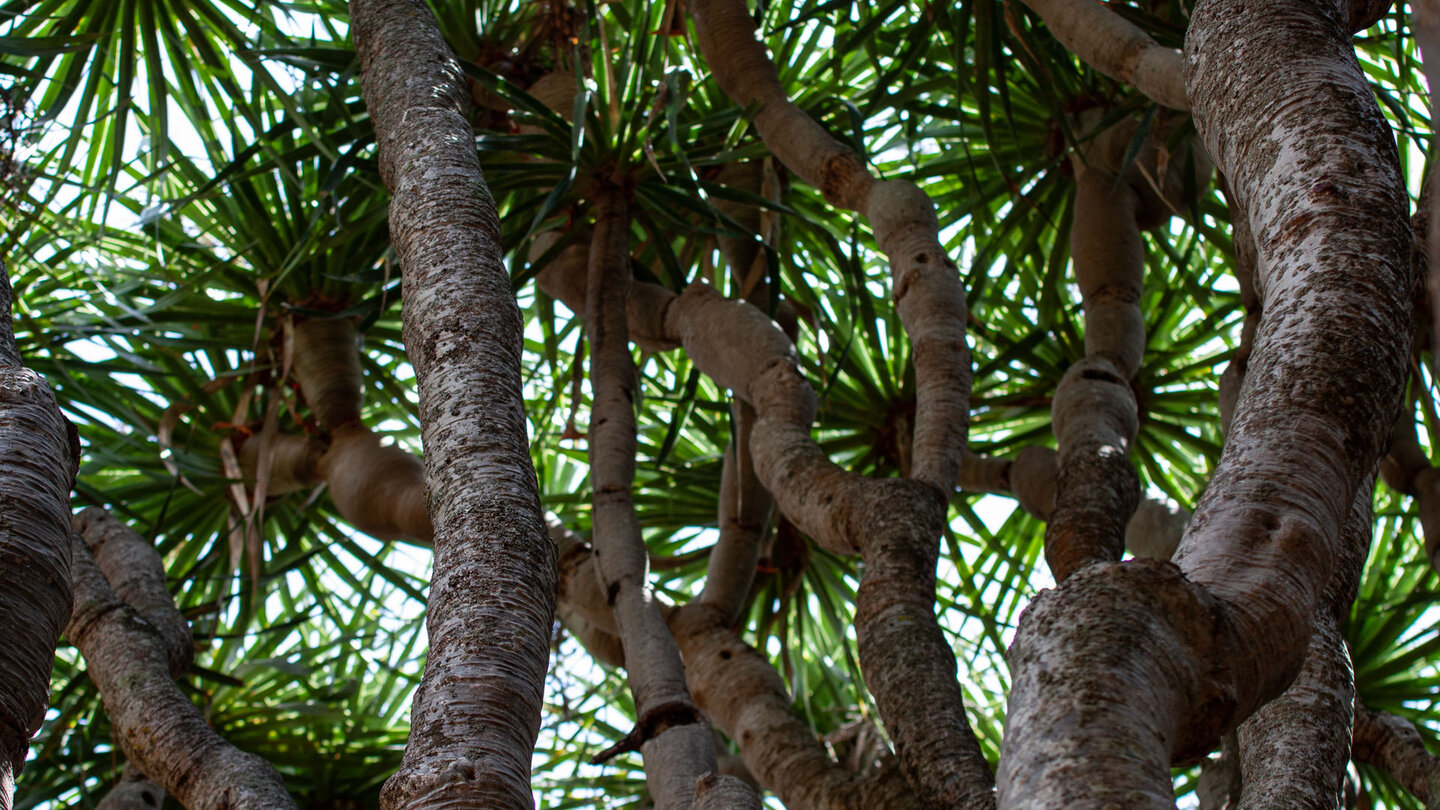
The dragon tree belongs to the asparagus family (Asparagaceae) and is botanically not a classic tree species but a monocot — a plant with a single seed leaf and no true secondary (wood-forming) growth. This is precisely what makes determining its age so difficult: the drago does not form annual rings like an ordinary deciduous tree. While you can count its branching points, this method provides only approximate clues.
Biology of the Dragon Tree
The trunk is thick, cylindrical, and covered with a reddish-brown bark. In its youth, the drago grows first as a single, unbranched stem. Only after about 15 to 30 years does it form its first branching — a process that coincides with the first flowering. Thereafter, the dragon tree blooms at irregular intervals of roughly 10 to 15 years. Each flowering initiates a new branching and allows the characteristic umbrella-shaped crown to keep growing. The flowers are greenish-white and elongated; later, cherry-sized brown-orange berries develop.
The dark-red resin of the dragon tree is called dragon’s blood and has been used since antiquity and the Middle Ages for healing salves, pigments, and lacquers. The indigenous people of La Palma, the Benahoaritas, likely used the resin for medicinal purposes and ritual applications. Later, dragon’s blood was traded by European merchants as a valuable raw material. It became especially famous as a natural dye and component of high-quality lacquers. Even the legendary luthier Antonio Stradivari is believed to have used dragon’s blood to stain and finish his world-famous violins.
The Most Beautiful Dragon Tree Locations on La Palma
Las Tricias, in the municipality of Garafía, is the island’s premier location. The hiking trail to the Cuevas de Buracas passes hundreds of specimens, some with crown diametres of more than ten metres. At the Mirador de Los Dragos in Puntagorda stands one of the island’s most celebrated old specimens. The imposing tree was secured with retaining walls after a storm in 1993 and is today one of the most impressive natural monuments in the northwest.
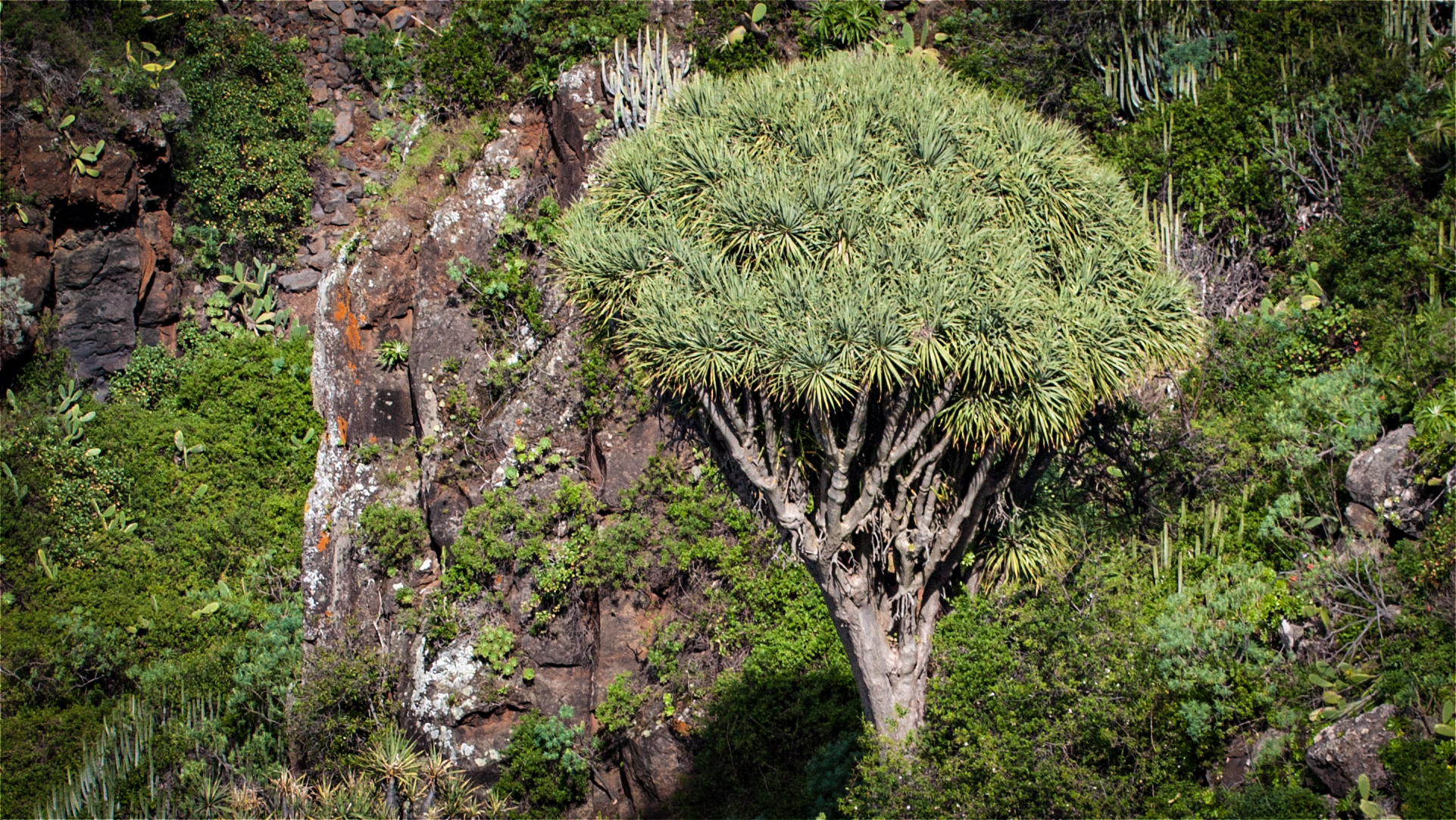
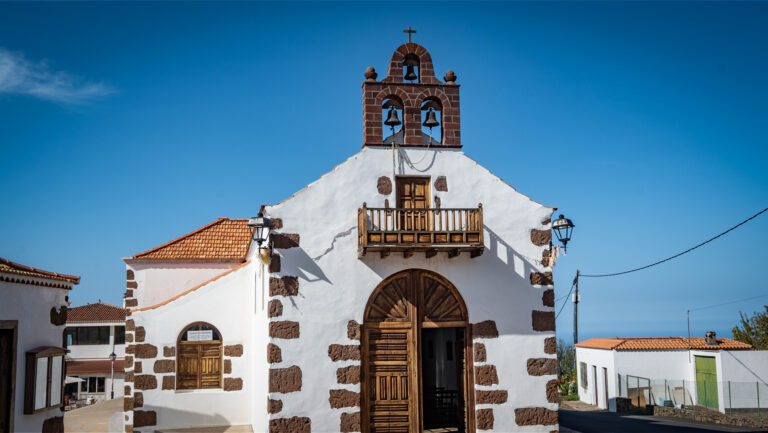
El Tablado also has several large dragon trees that define the village scene. Almost every village in Garafía has its drago in front of the church or on the village square — a living emblem of a tradition that reaches further back than the Spanish language on this island.
Conclusion
The dragon tree is La Palma’s living memory — older than tourism, older than the roads, older than most human recollections on this island. Las Tricias is to the dragon tree what Stonehenge is to megalithic culture: a place where the depth of natural history and human history becomes visible.
Frequently Asked Questions
How old can a dragon tree get?
Where can you find the most beautiful dragon trees on La Palma?
Does the dragon tree only grow on La Palma?
Why is the dragon tree called the dragon tree?
Why doesn't the dragon tree form annual growth rings?
This article is based on the on-the-ground knowledge of the Gequo editorial team – publishers of the Reisezeit hiking guides and operators of Sunhikes.com. Last updated: May 2026