Santa Cruz de La Palma: The Capital That Never Lost Its Splendor
Founded on May 3, 1493 by Alonso Fernández de Lugo, Santa Cruz de La Palma quickly grew into one of the most important Atlantic trading ports of the 16th century. The layout of the old town still reflects that era: Calle O’Daly recalls the Irish merchants who settled here, Calle Van Dalle the Dutch traders who followed. The city was rich, cosmopolitan, and self-confident — and much of that character has survived to the present day.
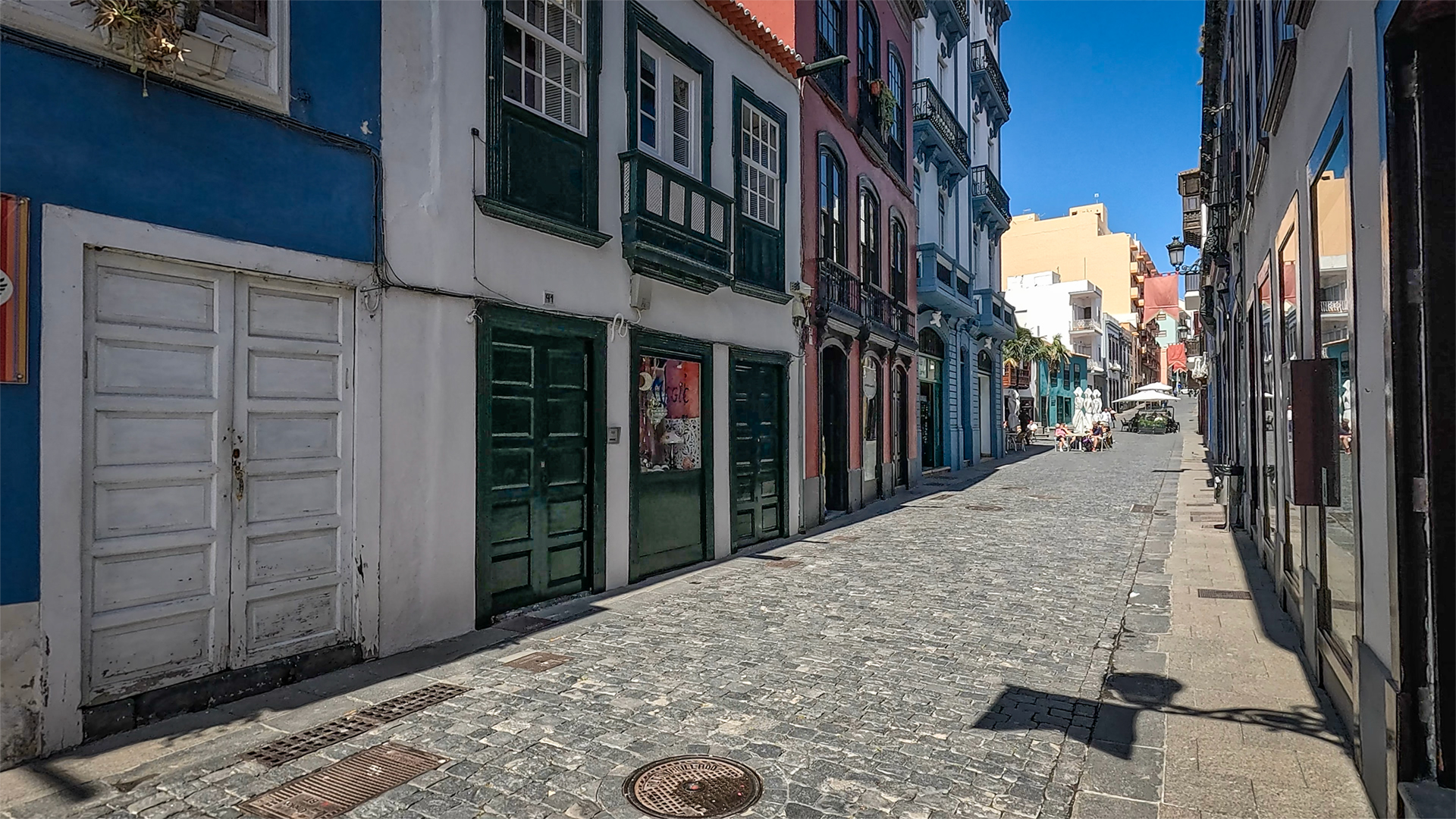
Nearly 20,000 residents in a listed historic city, just 10 minutes from SPC airport — an architectural density spanning four centuries found nowhere else on the island. The old town is compact enough to explore on foot, but dense enough to fill a full day without covering the same street twice.
Plaza España — The Renaissance Heart of the City
The Plaza de España is the centre of everything. The Ayuntamiento (town hall), built between 1559 and 1563 under Philip II, is considered the finest Renaissance building in the Canary Islands: four round arches on the ground floor, an upper gallery, and a carved stone facade that has barely changed in 450 years. Calle O’Daly, the pedestrian street that runs from the plaza toward the sea, remains the main shopping street — lined with historic storefronts and 18th-century merchant houses.
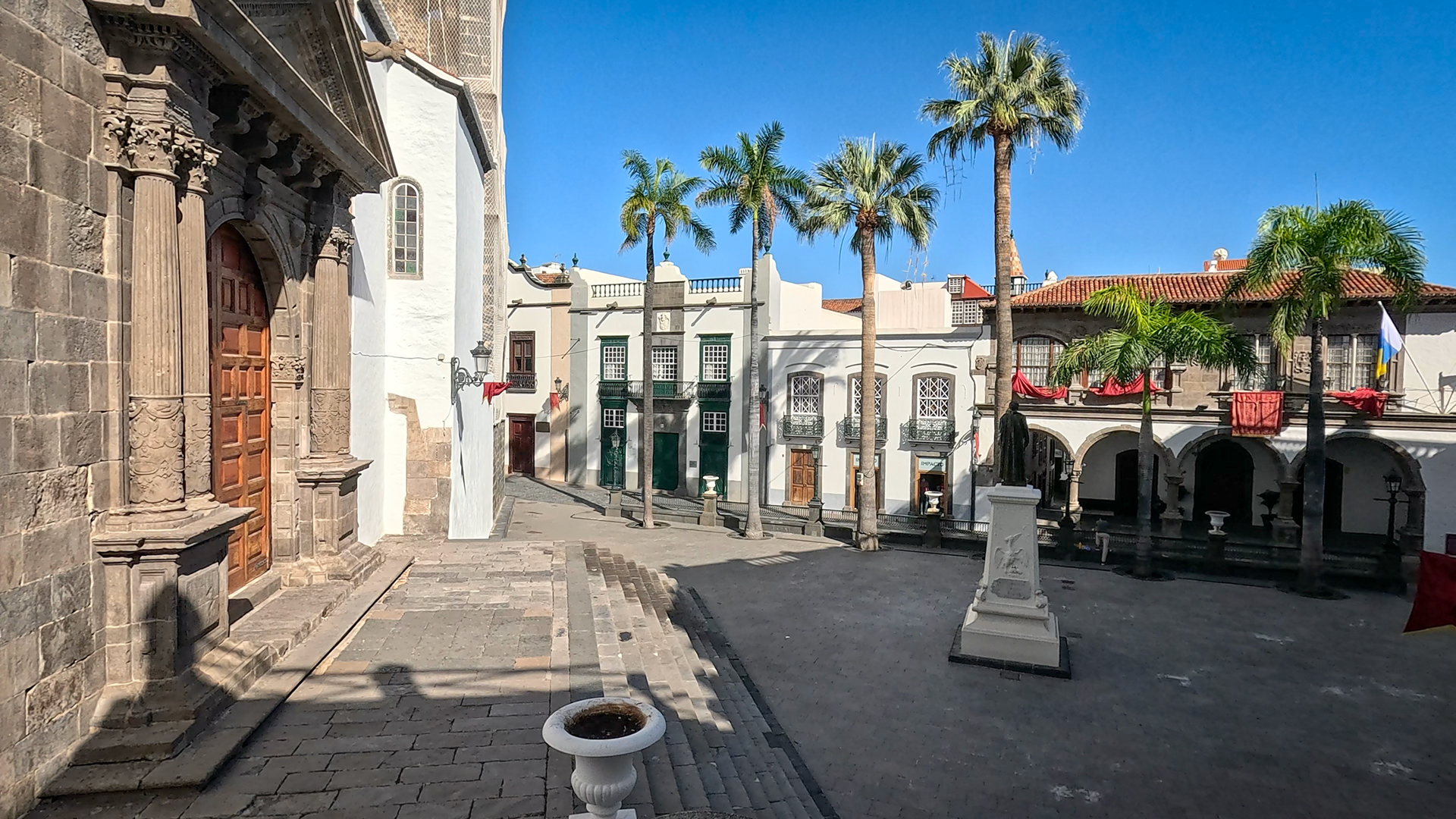
Beside the plaza stands the Iglesia de El Salvador, with its Renaissance portal from the 16th century, a Mudéjar coffered ceiling, and rare pine wood panel paintings. The fountain in the atrium dates from 1588. Allow at least half a day for a proper old town walk — the density of sights per street is unusually high for a city this size.
Balcones Típicos — Woodcarving That Defines the Cityscape
The Avenida Marítima is lined with what have become the city’s most iconic feature: the Balcones Típicos, the elaborately carved wooden balconies with their latticed screens (Celosías). The style was introduced by Portuguese and Andalusian craftsmen and reflects a Moorish-Mediterranean tradition of privacy and shade. No two balconies are identical — each is a hand-carved original, produced by local master craftsmen for the houses of prosperous merchants and traders.
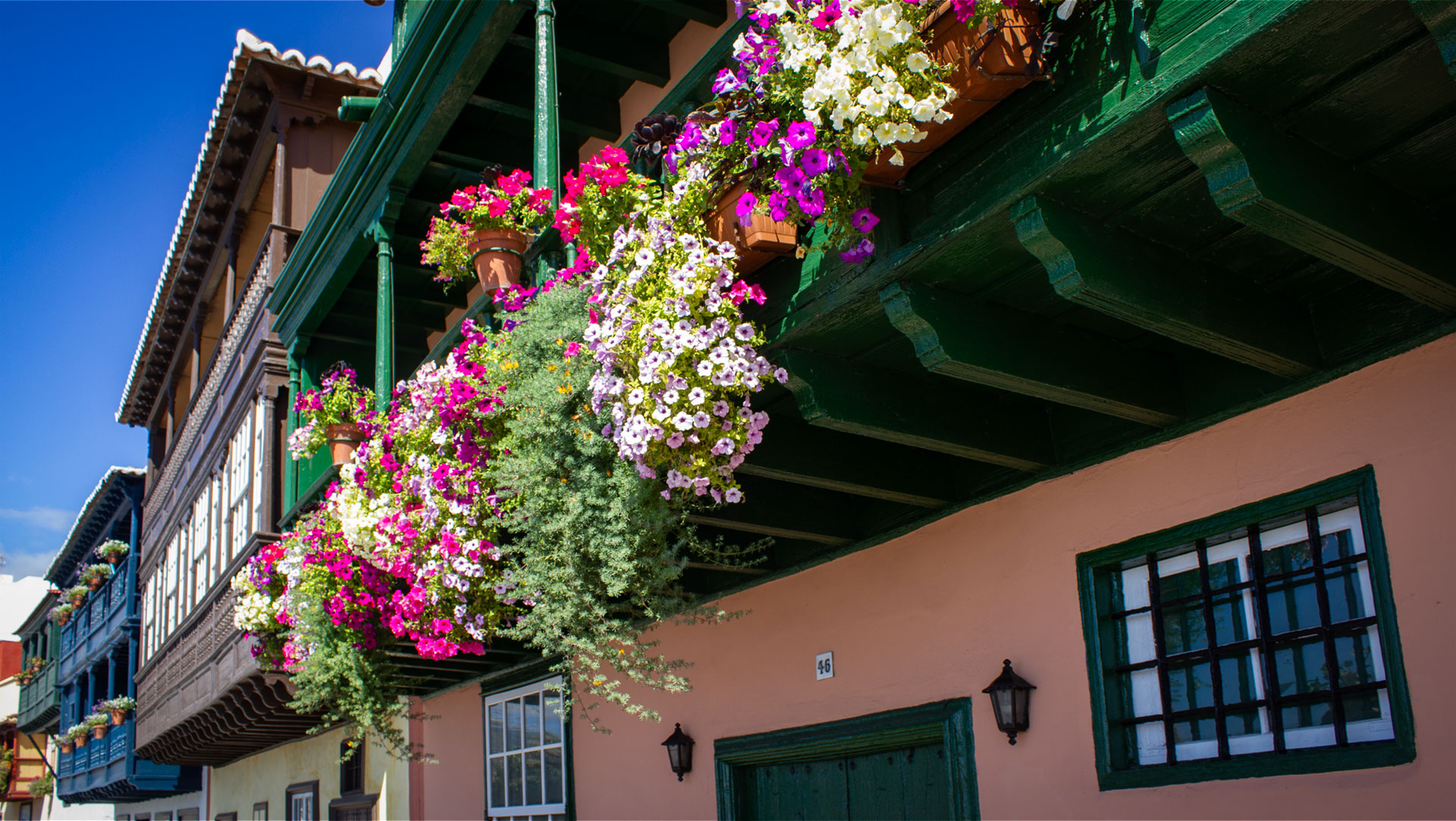
The balconies originally faced the sea — the promenade was created much later, filling in the former shoreline. Today they look onto what was once the water, giving the waterfront promenade its unmistakable appearance. They are protected as a heritage element but are not UNESCO-listed. Most are still in active use, with everyday Palmero life taking place just behind the carved screens.
The best time to see them is early morning, when the light strikes the facades from the east and the wood glows in warm amber tones. The Balcones Típicos are not limited to the Avenida Marítima — they appear throughout the old town alleys as well, sometimes tucked above narrow doorways or wrapping around corner buildings.
The Castles — Traces of a Wealthy Trading Port
The Castillo de Santa Catalina was built from 1585 onward by order of Philip II, designed by the military architect Leonardo Torriani. Its construction was a direct response to the raid of 1553, when the French privateer François Le Clerc — nicknamed “Pata de Palo” (Pegleg) — sacked and burned much of the city, making off with considerable wealth.
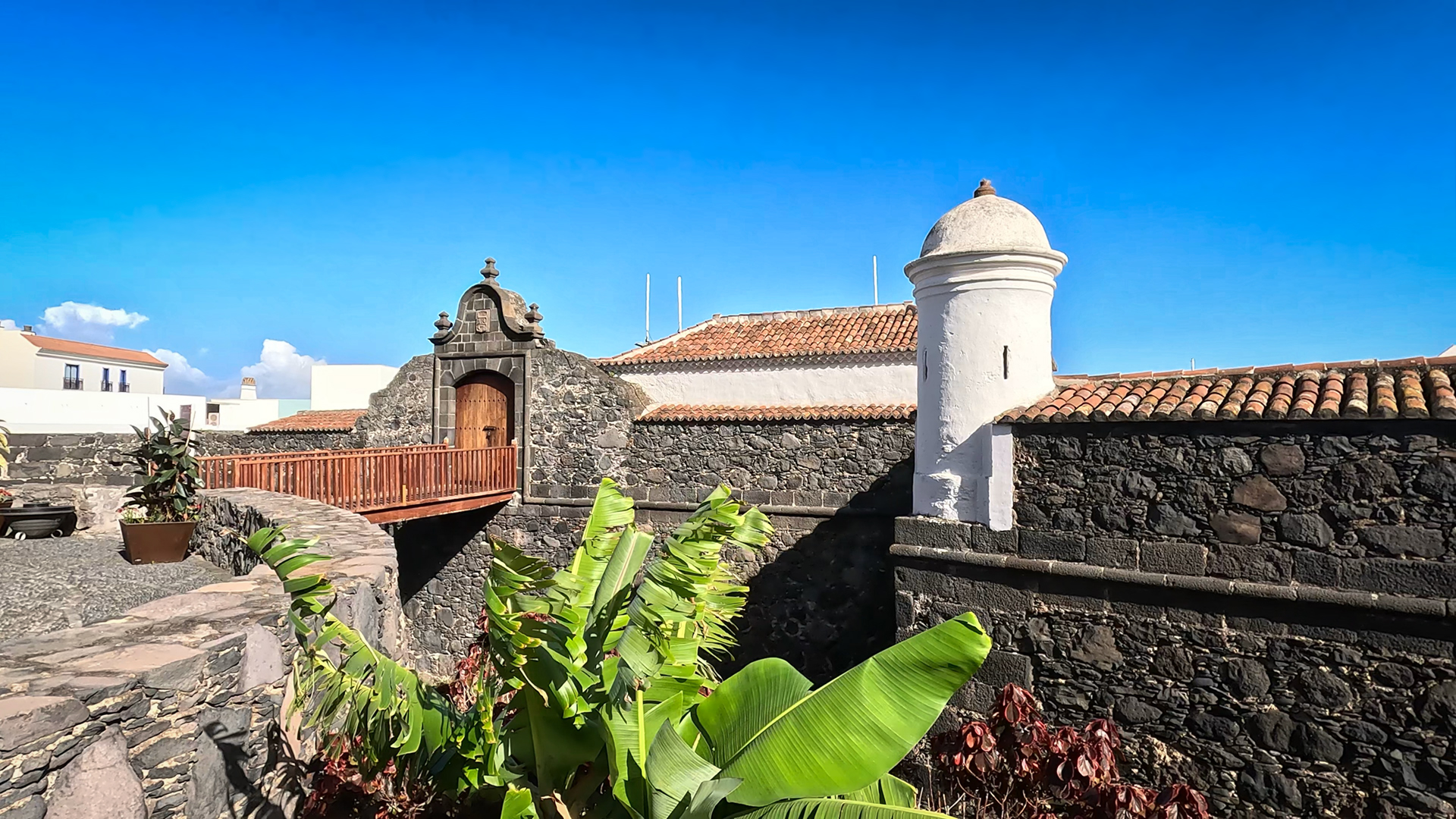
The star-shaped fortress successfully repelled a second major attack in 1585, when Francis Drake attempted to raid the city. Standing on the small hill above the old town, it offers a clear view over both the historic centre and the bay — and a good sense of how seriously the city took its own defence.
The Castillo de la Virgen, visible on the hillside above the city, is not a colonial fort — it was built in the early 20th century as a decorative stone structure. It plays a symbolic role in the Bajada de la Virgen de las Nieves festival: the statue of the patron saint is received here during the ceremonial procession down from her sanctuary.
Carnival of the Indianos – Powder, Music, and Caribbean Memories
The Día de los Indianos is celebrated every year on Carnival Monday — and it is unlike any other carnival event in Europe. Thousands of people dress in white linen suits and fill the streets to celebrate the return of the Indianos: emigrants who left La Palma in the 19th century for Cuba or Venezuela, and came back wealthy.
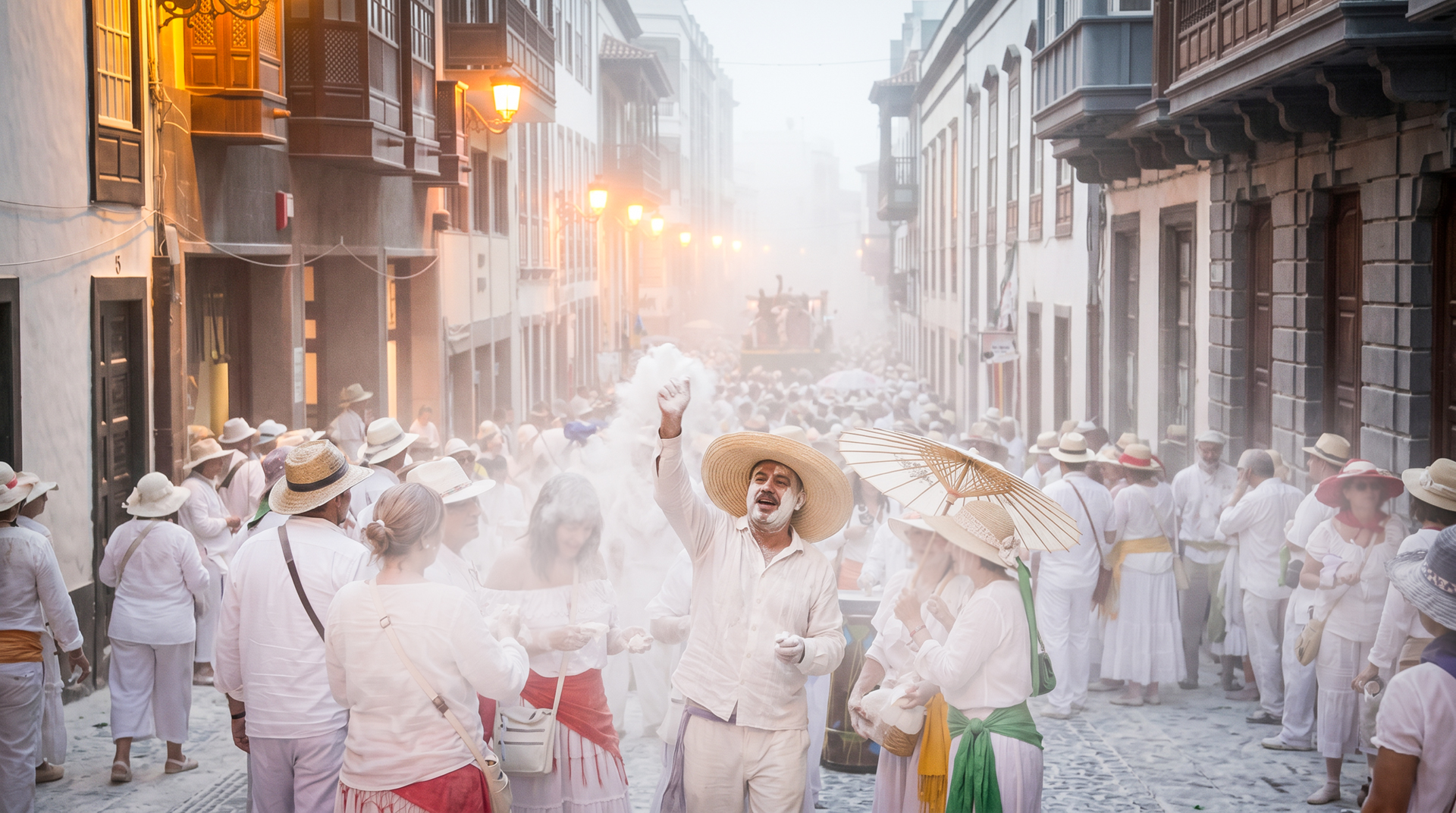
The central ritual is the powder battle, in which participants shower each other with talcum powder (polvos de talco). The white powder is a humorous tribute to the elegant appearance of the returning Indianos, who arrived from Havana and Caracas dressed in immaculate white. The event has grown into one of the largest carnival celebrations in the Canary Islands, with Cuban music, rum, and a collective memory of a history that shaped the island deeply.
The Bajada de la Virgen de las Nieves – The Island’s Greatest Festival
The Bajada de la Virgen de las Nieves is the most significant festival on La Palma, and one of the largest religious and cultural events in the entire Canary Islands. Every five years, the statue of the patron saint — Our Lady of the Snows — is carried from her sanctuary, the Santuario de Nuestra Señora de las Nieves in the hills above the city, down to Santa Cruz. Bajada means “descent,” and the procession through the city is the culmination of weeks of festivities, street performances, and communal celebration.
Particularly famous is the Danza de los Enanos (Dance of the Dwarfs), a unique performance in which men dressed in historic scholarly costumes gradually transform into small, dancing figures. The performance is considered one of the most distinctive cultural experiences in the Canary Islands.
The origins of the festival go back to the 17th century. The Bajada has been held at regular intervals since 1680, blending religious tradition with the strong sense of community of the Palmeros. Tens of thousands of visitors come to the island for this event — which is why accommodation, rental cars, and ferry connections for a Bajada year should be booked well in advance. The next Bajada de la Virgen de las Nieves will take place in 2030.
Museums and Culinary Discoveries
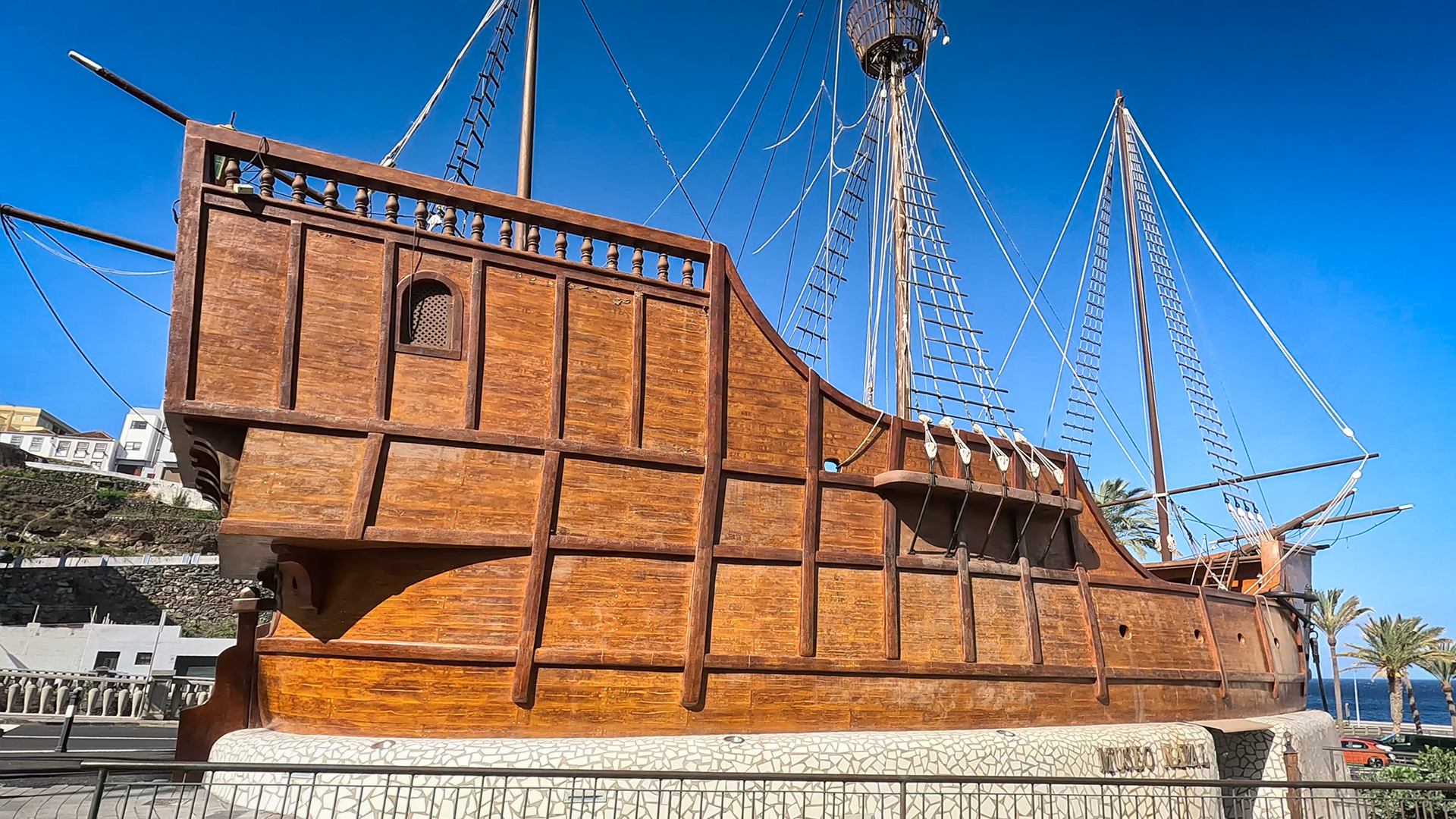
The Museo Naval on the Avenida Marítima houses a full-scale replica of the Santa María, the flagship of Christopher Columbus. Columbus himself never set foot on La Palma — he stopped at La Gomera — but the connection to the Atlantic trade of that era is real. The museum is compact but substantial: navigational instruments, sea charts, scale models. The Museo Insular in the former Franciscan monastery of San Francisco is dedicated to natural history and the island’s past. The monastery’s cloister alone is worth the visit — a quiet place in the middle of the city, where the noise of carnival feels very far away.
For everyday shopping: the Mercado Municipal in the city centre offers fresh fruit, vegetables, cheese, and local specialities. Best visited in the morning, when all vendors are present and you can get more fresh papaya for very little money than you can reasonably eat. Near the Plaza Alameda, there are also several small cafés with homemade pastries and what may well be the best barraquito outside of a Canarian family kitchen.
| Location | East coast of La Palma · 10 min from SPC airport |
|---|---|
| Parking | Teneguía parking garage (paid) · free beach parking lot north of the city |
| Market | Mercado Municipal — fruit, vegetables, cheese, local produce |
| Ferry | Daily connections to Tenerife (Los Cristianos) as well as the neighbouring islands La Gomera and Gran Canaria. |
| Best Time | Morning, when the light hits the facades from the east |
| Beach | Large, fine black sand city beach (Playa de Santa Cruz) right on the Avenida Marítima. |
A Living Testament to Atlantic History
Santa Cruz de La Palma is La Palma’s cultural memory — carved in stone, cut from pine wood, celebrated in flour and music. Anyone who wants to understand the island starts here. Allow at least half a day for the old town; those who go deeper tend to stay the whole day.
Frequently Asked Questions
Is there a swimming beach right in Santa Cruz de La Palma?
Is Santa Cruz de La Palma the largest city on the island?
Is the old town of Santa Cruz de La Palma a UNESCO World Heritage Site?
When does the Día de los Indianos take place?
How do you get to Santa Cruz de La Palma, and which sights should you not miss?
Where is the best place to park in Santa Cruz de La Palma?
This article is based on the on-the-ground knowledge of the Gequo editorial team – publishers of the Reisezeit hiking guides and operators of Sunhikes.com. Last updated: May 2026