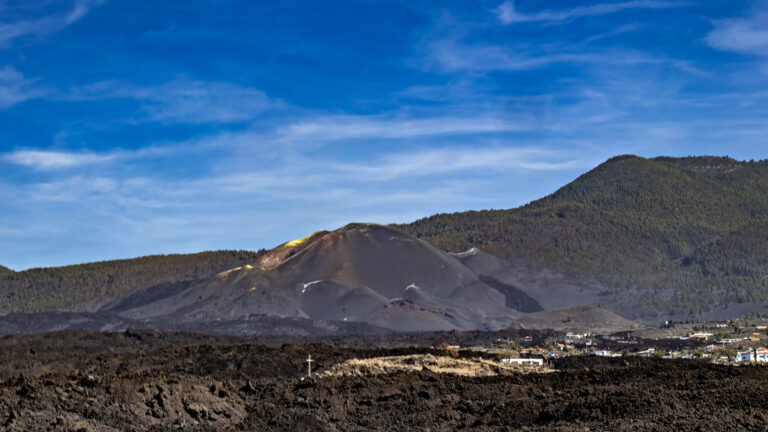
La Palma’s Lizards: Fast, Shy, and Everywhere
You’re standing on a lava ridge, a warm wind against your face — and suddenly something darts across the rock. Lightning fast. Soundless. Perfectly camouflaged. Welcome to the wild side of La Palma. The island has a reputation for being relatively quiet in terms of terrestrial wildlife. But look closely, and you’ll find real nature — and no creature is more commonly encountered than the lizard.
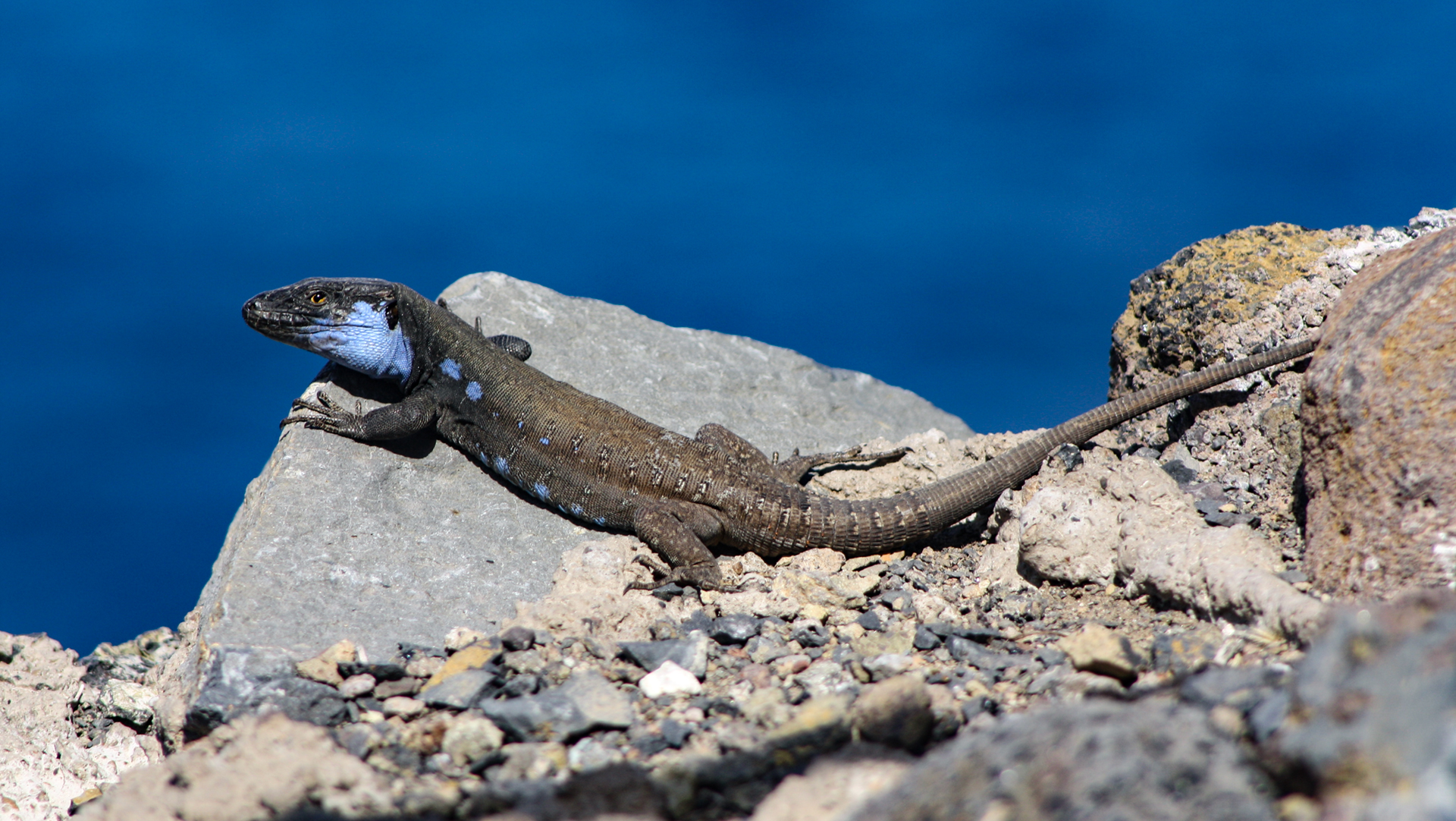
La Palma is home to several native reptile species. Most commonly encountered is the La Palma subspecies of the Canary Islands lizard (Gallotia galloti palmea). Also present are the Canary gecko (Tarentola delalandii), the western Canary skink (Chalcides viridanus), and occasionally sea turtles off the coast. There are no venomous reptiles or snakes on the island.
The La Palma Lizard (Gallotia galloti palmea)
Gallotia galloti palmea is the lizard you’ll encounter most often on La Palma. It basks on lava rocks, dry-stone walls, and cliffs, or vanishes in a flash between basalt blocks. The palmea subspecies is found exclusively on La Palma, making it one of the island’s endemic animal species.
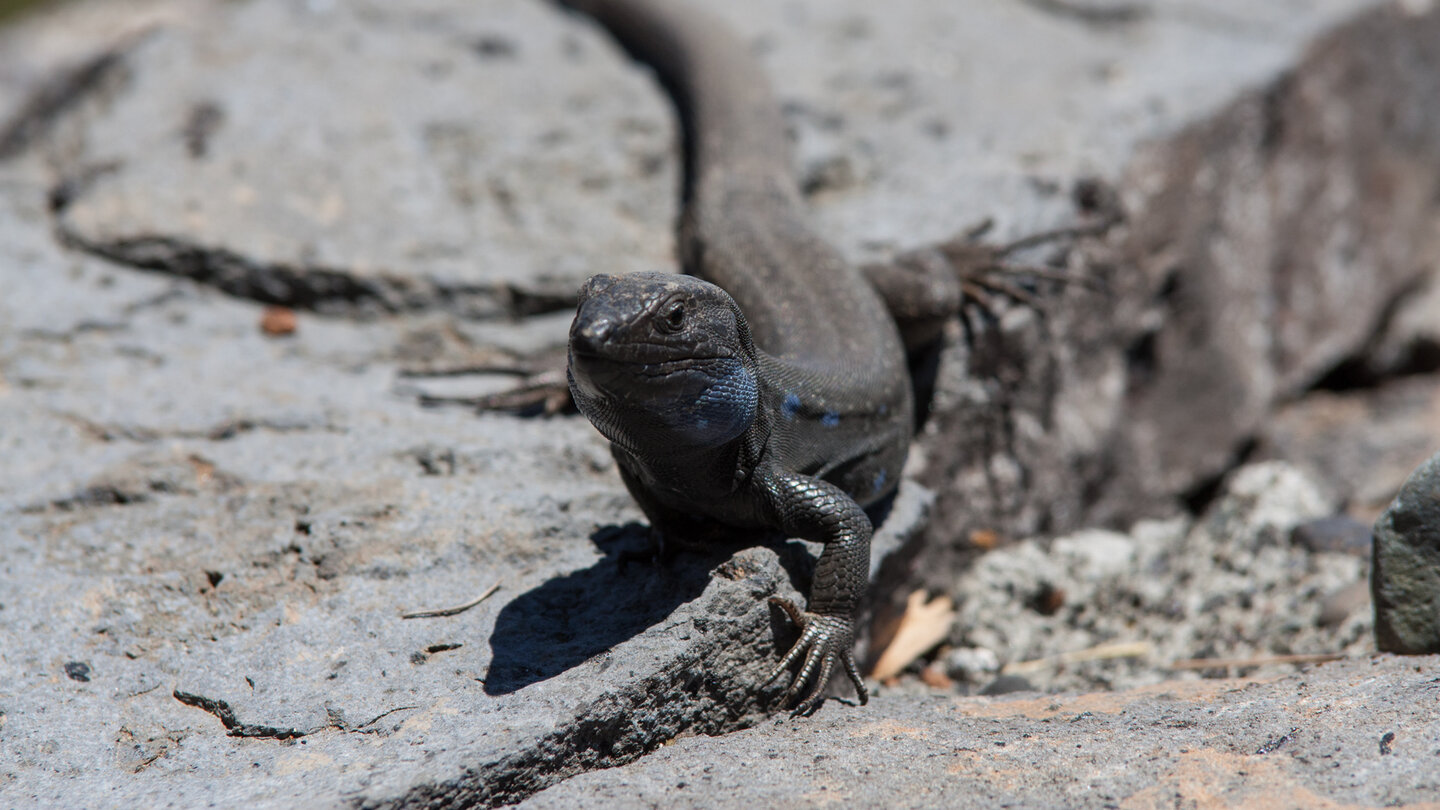
Males reach a total length of up to 30 centimetres. During mating season, the intensely blue-coloured cheeks and throat stand out vividly against the dark volcanic rock. Females and juveniles are considerably more subdued in colour, showing predominantly brown to olive-grey patterning.
To observe the animals up close, simply sit still for a few minutes; before long, they usually emerge from their hiding spots again. Dry-stone walls, older lava fields, and the hiking trails around Las Tricias or the Mirador de Los Dragos are particularly good observation spots.
Fun Fact
Canary Islands lizards are remarkably curious. If you sit motionless for a few minutes, they often come back and approach surprisingly close. Many hikers are able to photograph them wonderfully without disturbing the animals.
Geckos: The Invisible Housemates
Geckos are a familiar sight on La Palma. The most common native species is the Canary gecko (Tarentola delalandii). In some coastal towns, the introduced Moorish gecko (Tarentola mauritanica) has also established itself. Especially after sunset, geckos cling to house walls, fences, or near lights, hunting mosquitoes, moths, and other insects. They are completely harmless, move silently, and play an important role in natural pest control.
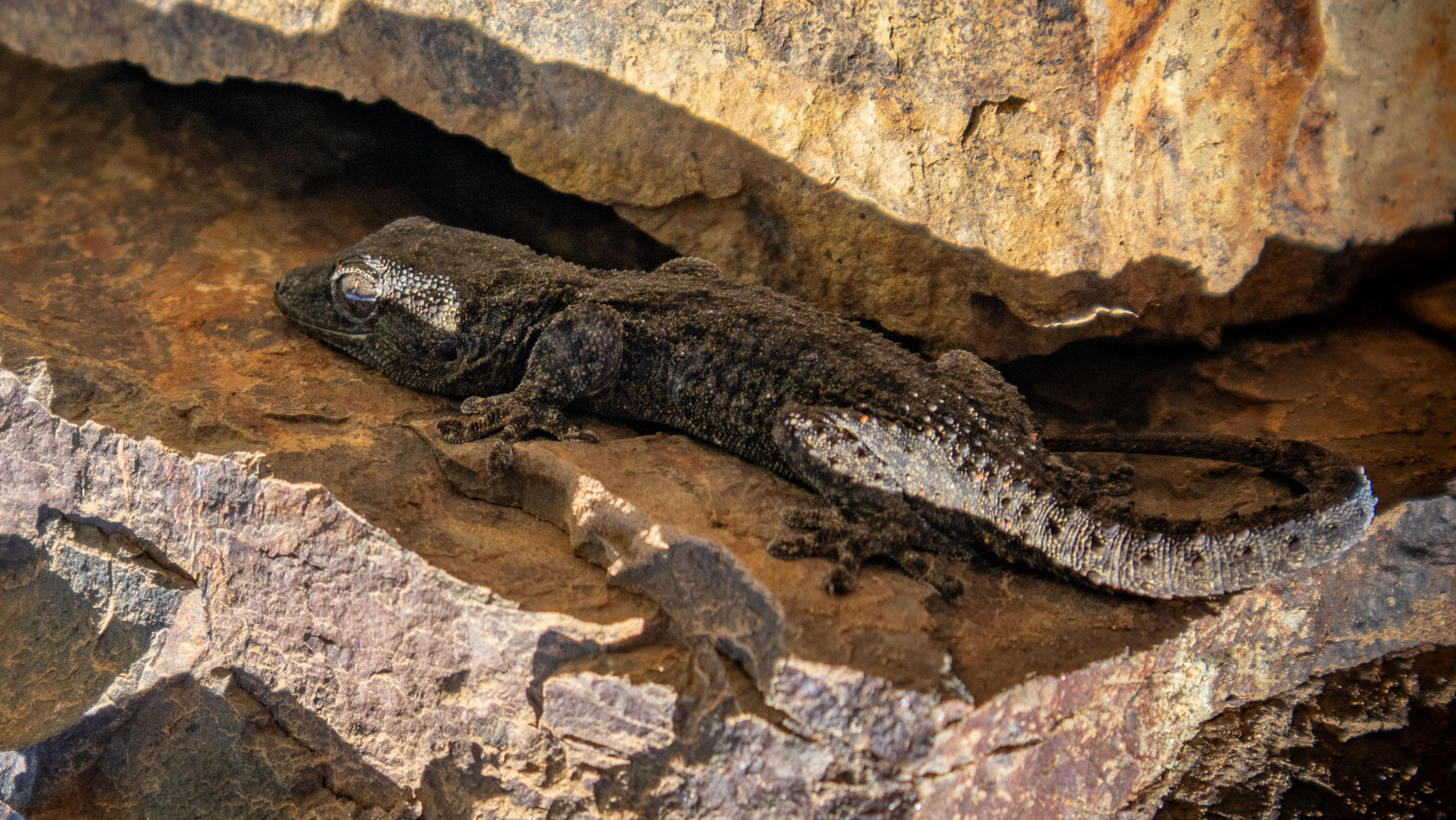
With some luck, you may also spot the western Canary skink (Chalcides viridanus). Its elongated body with small legs gives it an almost snake-like appearance. It usually lives hidden under rocks or in dense vegetation and is therefore far less commonly spotted than the lizards.
Conclusion
La Palma’s lizards are among the most impressive wildlife on the island. Whether on lava rock, dry-stone walls, or sunny hiking trails — the blue-coloured males of Gallotia galloti palmea are a defining sight. Together with geckos and skinks, they showcase just how unique the wildlife of the Isla Bonita truly is.
Frequently Asked Questions
Which lizards live on La Palma?
Are the blue lizards dangerous?
Are there snakes on La Palma?
Where are the best places to spot lizards?
What do lizards and geckos eat?
This article is based on the on-the-ground knowledge of the Gequo editorial team – publishers of the Reisezeit hiking guides and operators of Sunhikes.com. Last updated: May 2026