La Palma Nature: The Green Island of the Atlantic
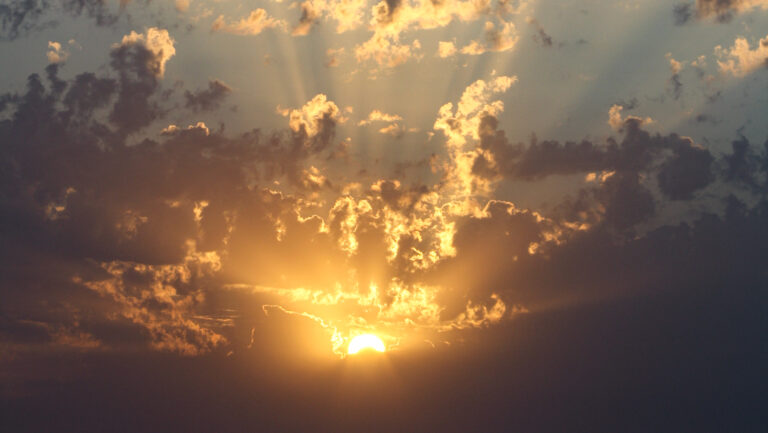
La Palma has not a single wide sandy beach, no shallow lagoons, and no Teide. What La Palma has is something different: the Caldera de Taburiente National Park — one of the largest erosion calderas in the world. Ancient Laurisilva laurel forests. A volcano that erupted as recently as 2021. And a night sky so clear it holds Starlight Reserve certification. Nature here is not a backdrop. It is the main attraction.
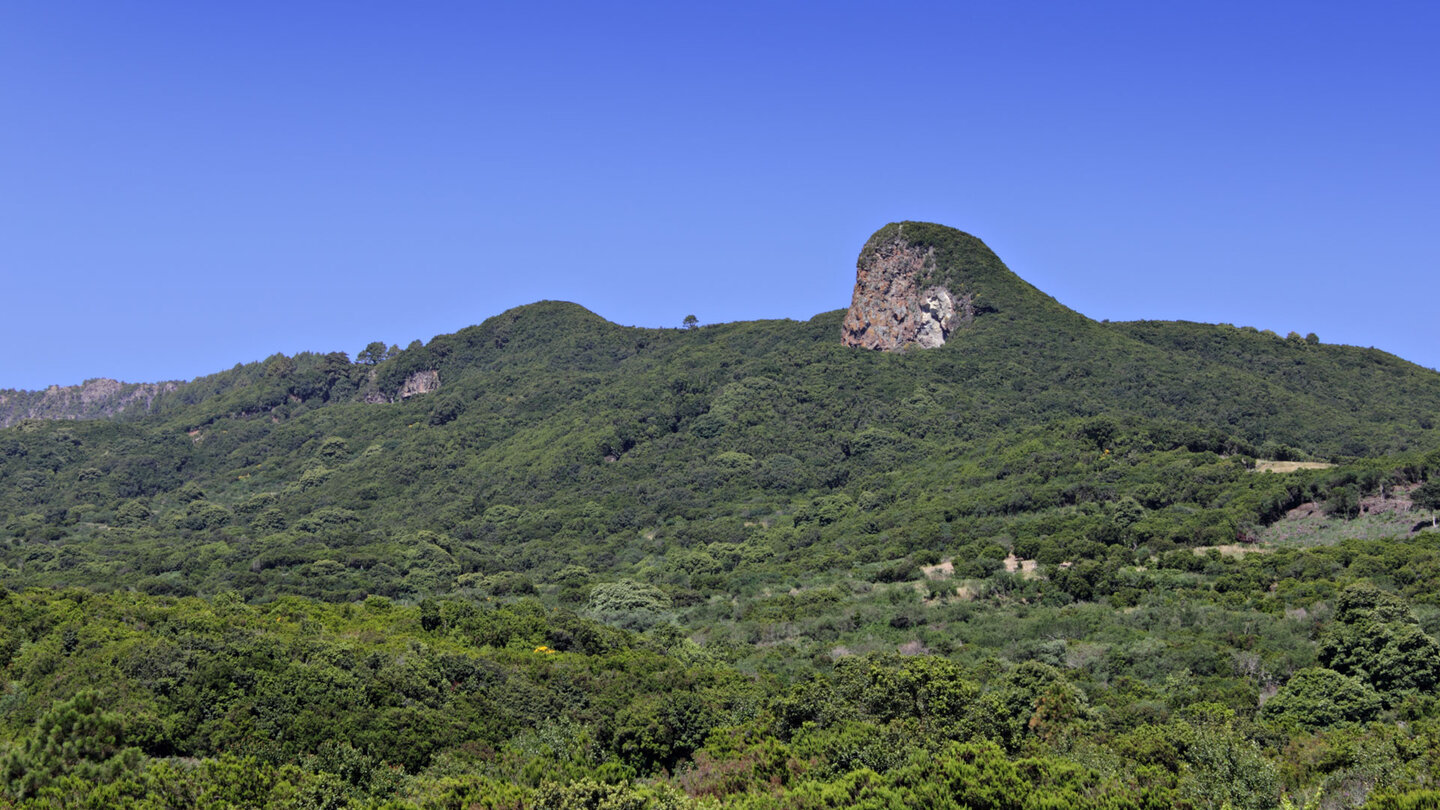
La Palma — the Green Island — wears that name rightfully. It is the most species-rich and most intensively protected of the Canary Islands, with one national park, one natural park, several nature reserves, and UNESCO Biosphere Reserve status for the entire island. Over a third of the island’s surface is under some form of legal protection. Few other Atlantic islands pack subtropical coasts, ancient pine forests, deeply incised barrancos, cloud forests, and alpine volcanic landscapes reaching above 2,400 metres into such a small area.
Key Nature Highlights at a Glance
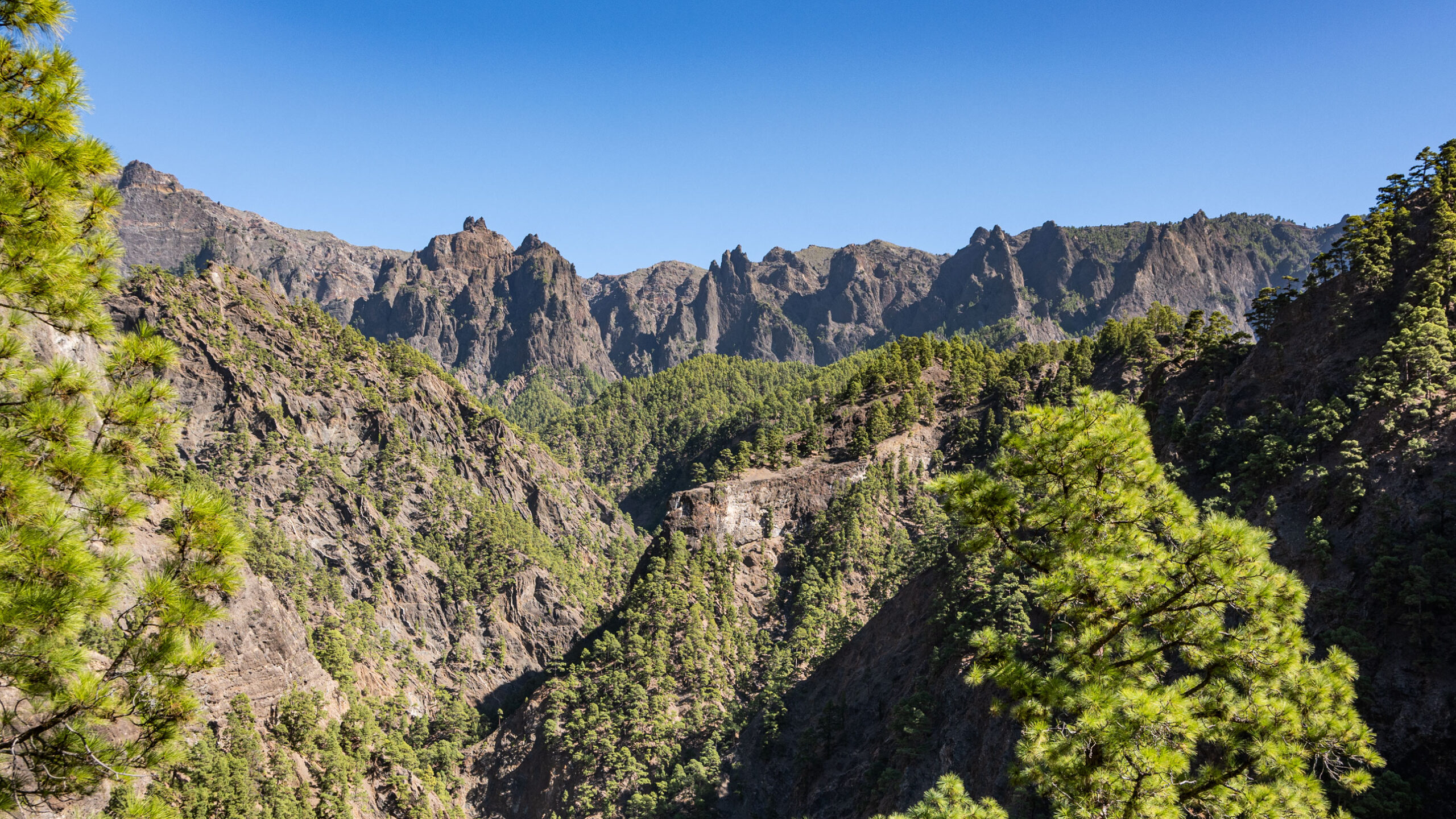
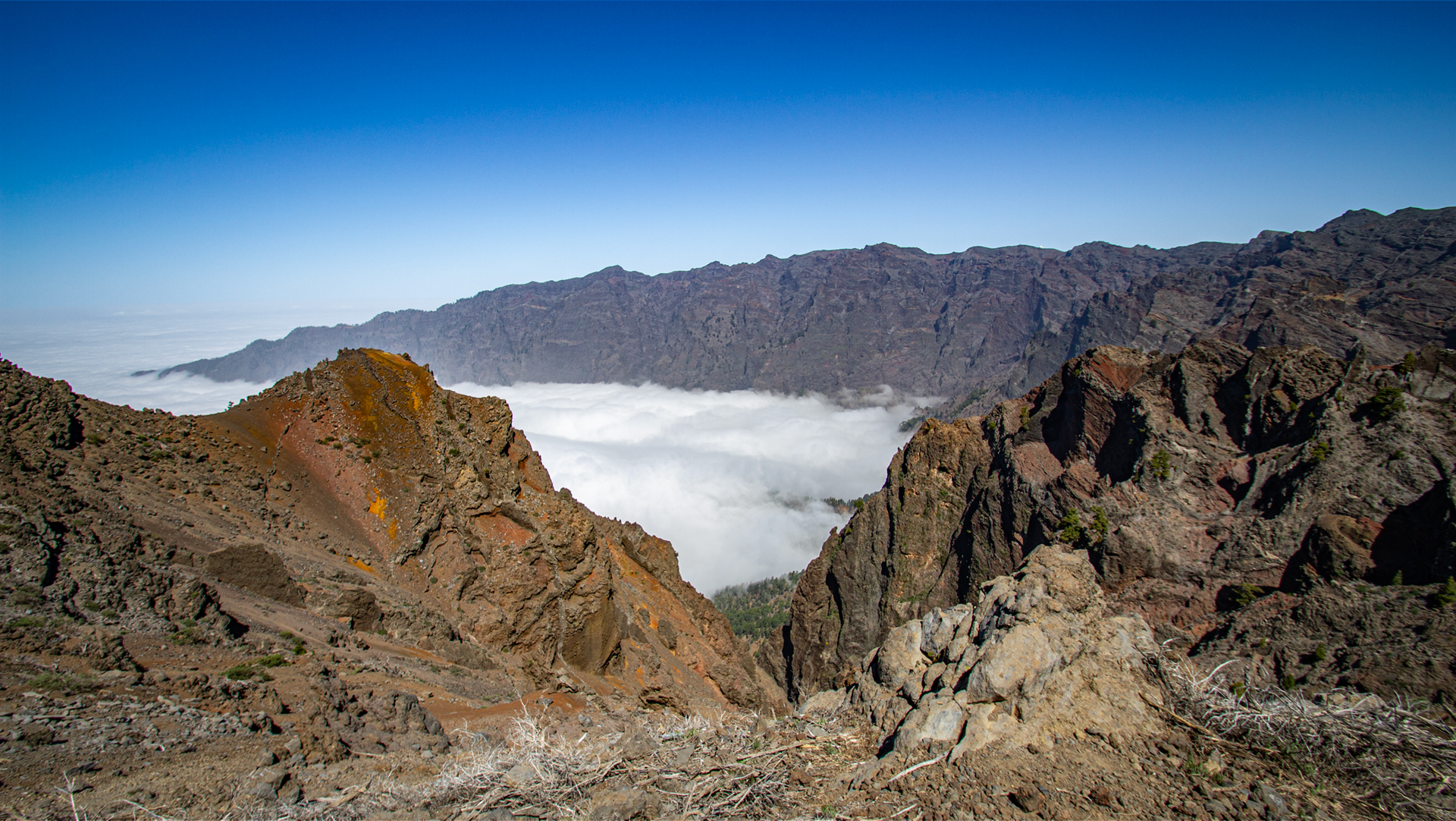
Caldera de Taburiente (National Park since 1954): an approximately 8-kilometre erosion crater whose near-circular mountain basin ranks among the most impressive landscapes in the Canary Islands — a hiking paradise and site of the sacred rock Roque Idafe. La Cumbrecita, which requires advance reservation, is the most popular entry point.
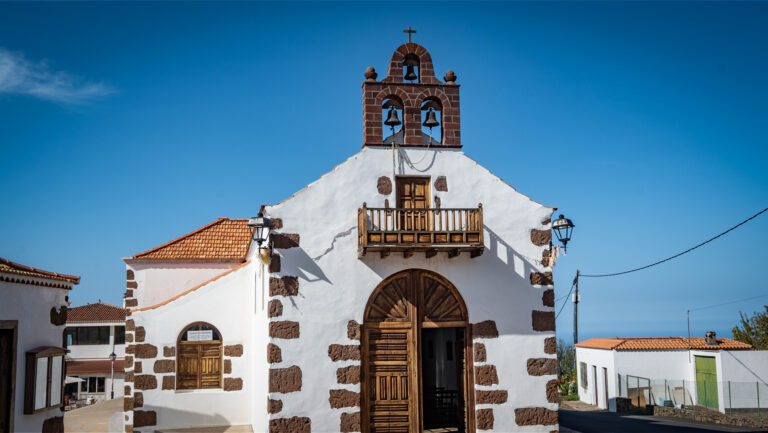
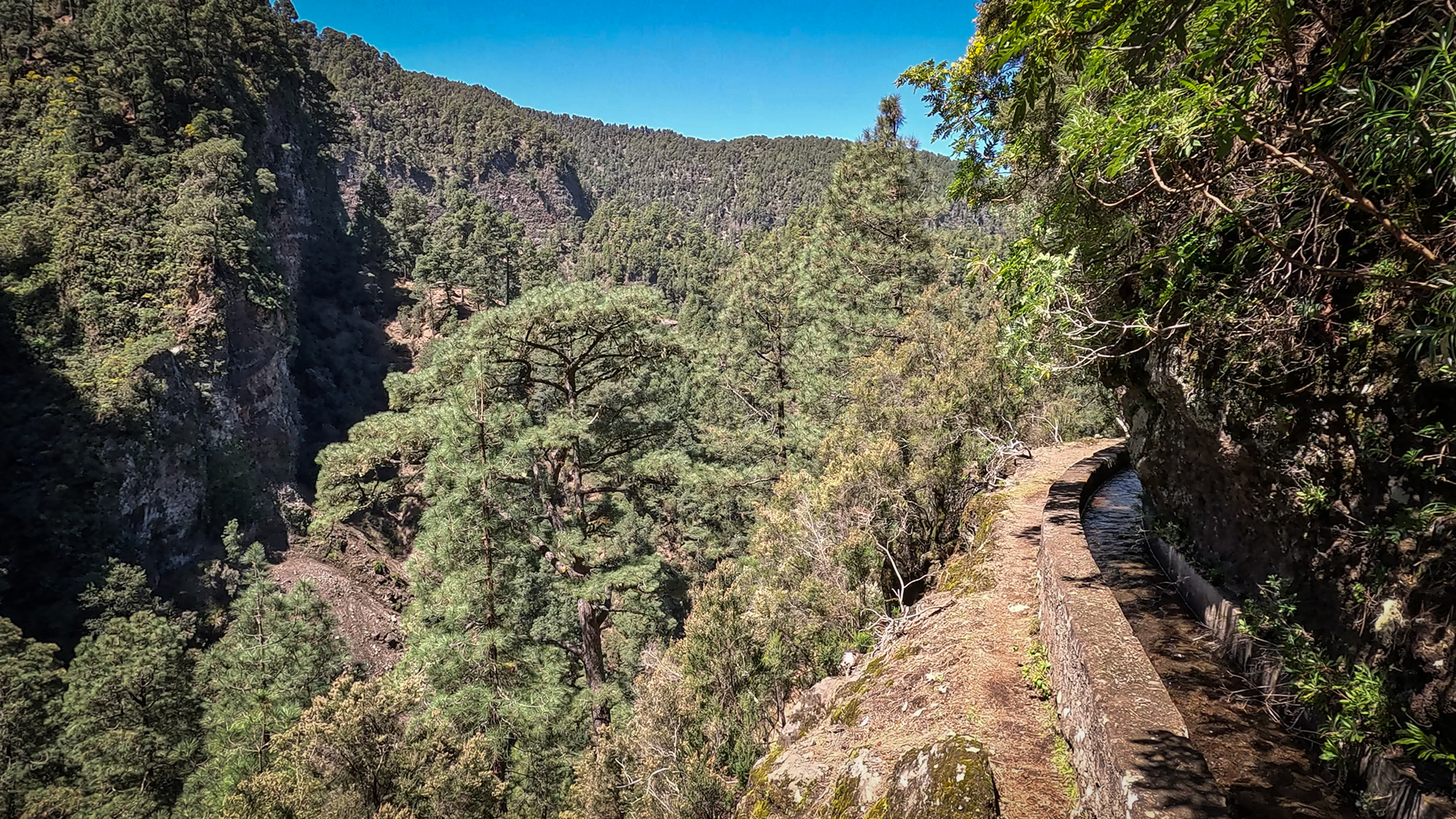
Laurel Forest Los Tilos (UNESCO Biosphere Reserve 1983): A living fossil of the ancient tertiary rainforest, home to the rare endemic Bolle’s pigeon (Columba bollii) and the white-tailed laurel pigeon (Columba junoniae), two characteristic bird species of the Canarian laurel forests — hike to the Marcos y Cordero springs. The trail passes through several water-carrying tunnels; a torch and waterproof clothing are essential. As the path may be temporarily closed after heavy rain or rockfall, check current conditions before setting out. Shared off-road taxis are often used to reach the starting point.
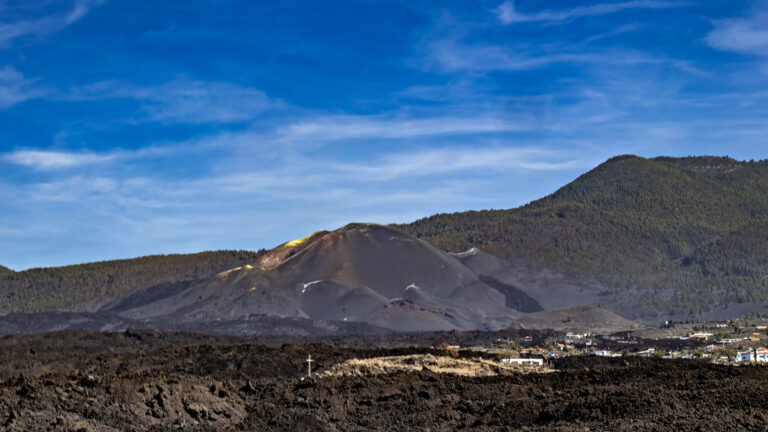
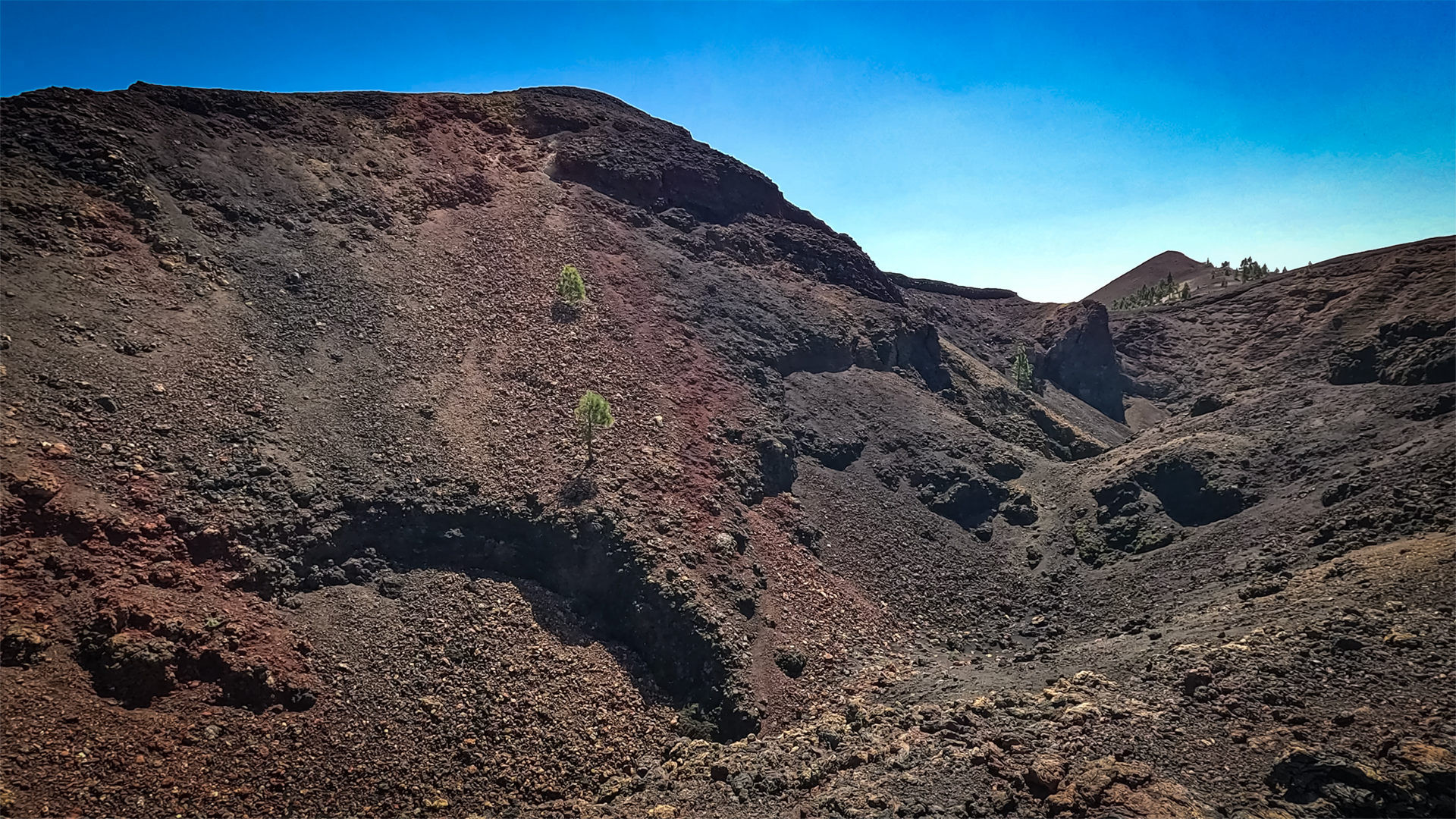
Cumbre Vieja (Natural Park): active volcanic ridge, Ruta de los Volcanes, Tajogaite 2021. Roque de los Muchachos (2,426 m): highest point, observatory, Starlight Reserve.
Small on Paper, Extraordinary in Scale
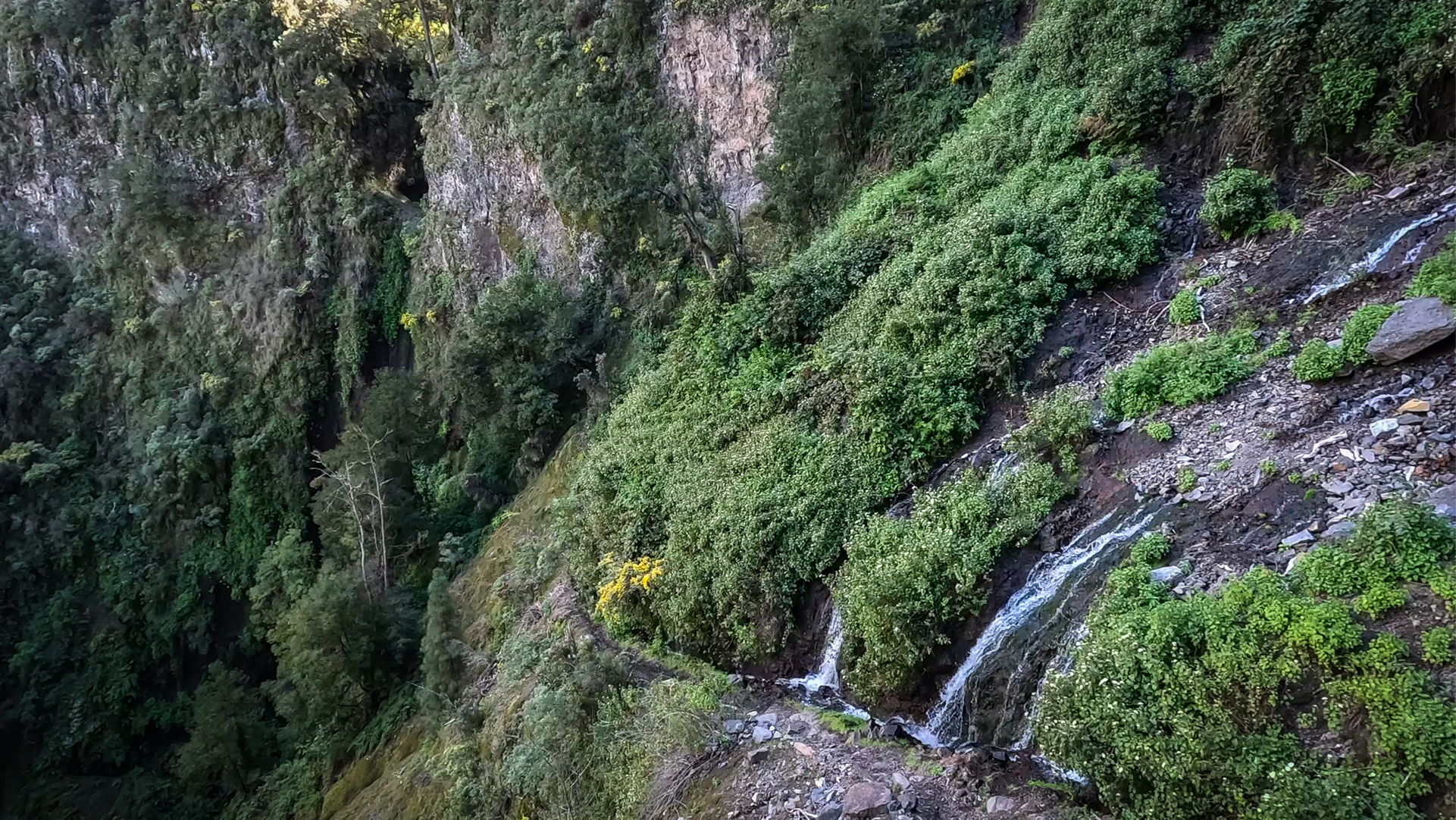
La Palma’s nature has two faces: the eastern side is moist, green, and shaped by laurel forests — the trade winds bring clouds that pile up against the mountains. The western side is sunny, dry, and marked by banana plantations and lava fields. The same mountain ridge that creates this climate division also makes La Palma one of the most dramatic islands in the Atlantic.
The Cloud Cascade of the Cumbre Nueva
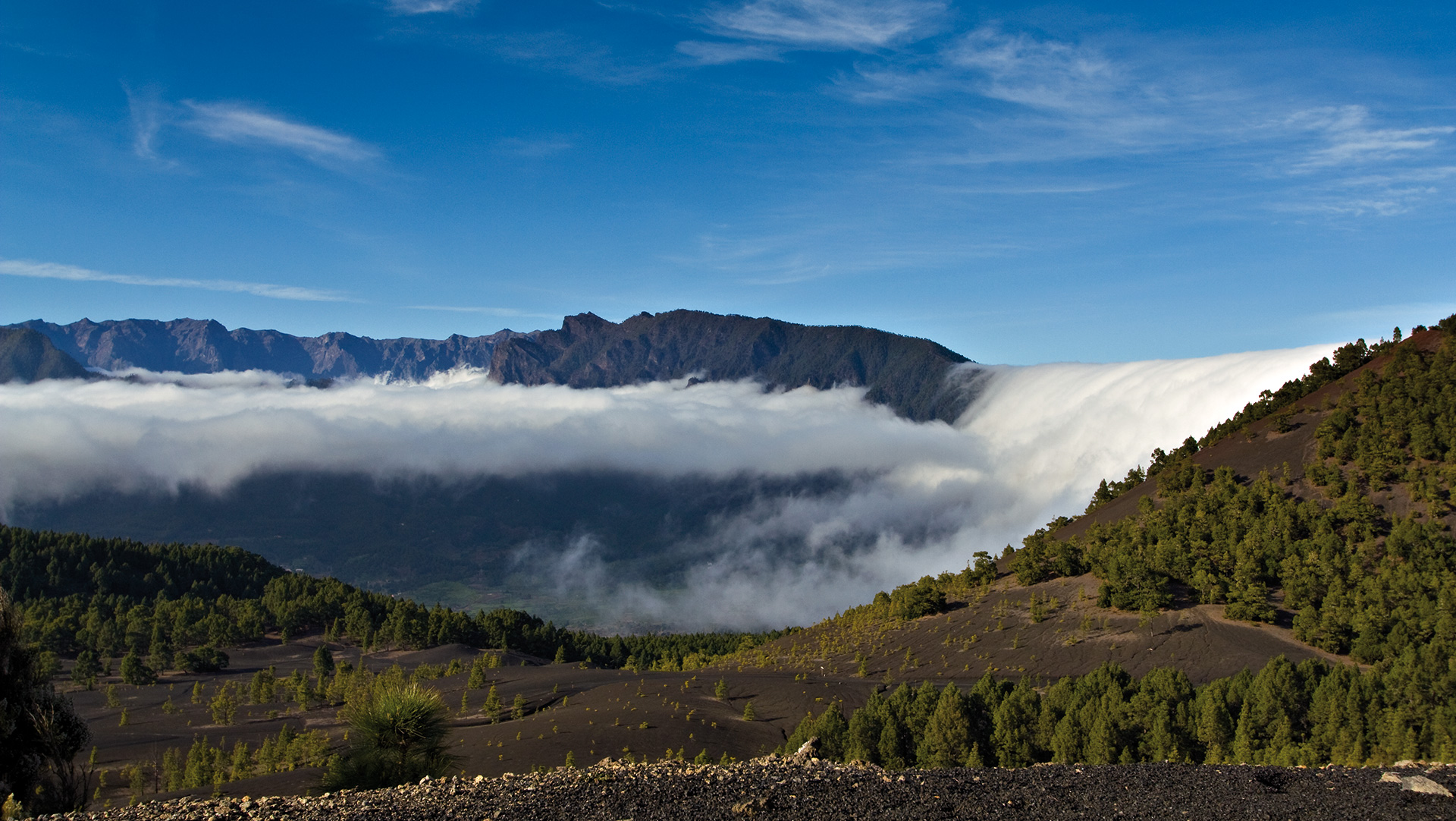
A particularly impressive natural phenomenon is the so-called cloud cascade (Cascada de Nubes). Moist trade wind clouds rise on the eastern side of La Palma, cross the Cumbre Nueva ridge, then flow like an enormous fog waterfall over the mountain edge towards the west. This spectacle is best seen from viewpoints along the Cumbre Nueva and ranks among the island’s most spectacular weather phenomena.
Who is La Palma the Right Island For?
La Palma is for those who seek nature — not as a backdrop, but as the main event. Hikers find 1,000 kilometres of marked trails. Astronomers find the best night sky in Europe. Divers find lava formations and clear water. Botanists find plants found nowhere else on Earth. And anyone who simply wants to breathe and look finds a landscape that never stops surprising.
Alpine Blooms in the Highlands
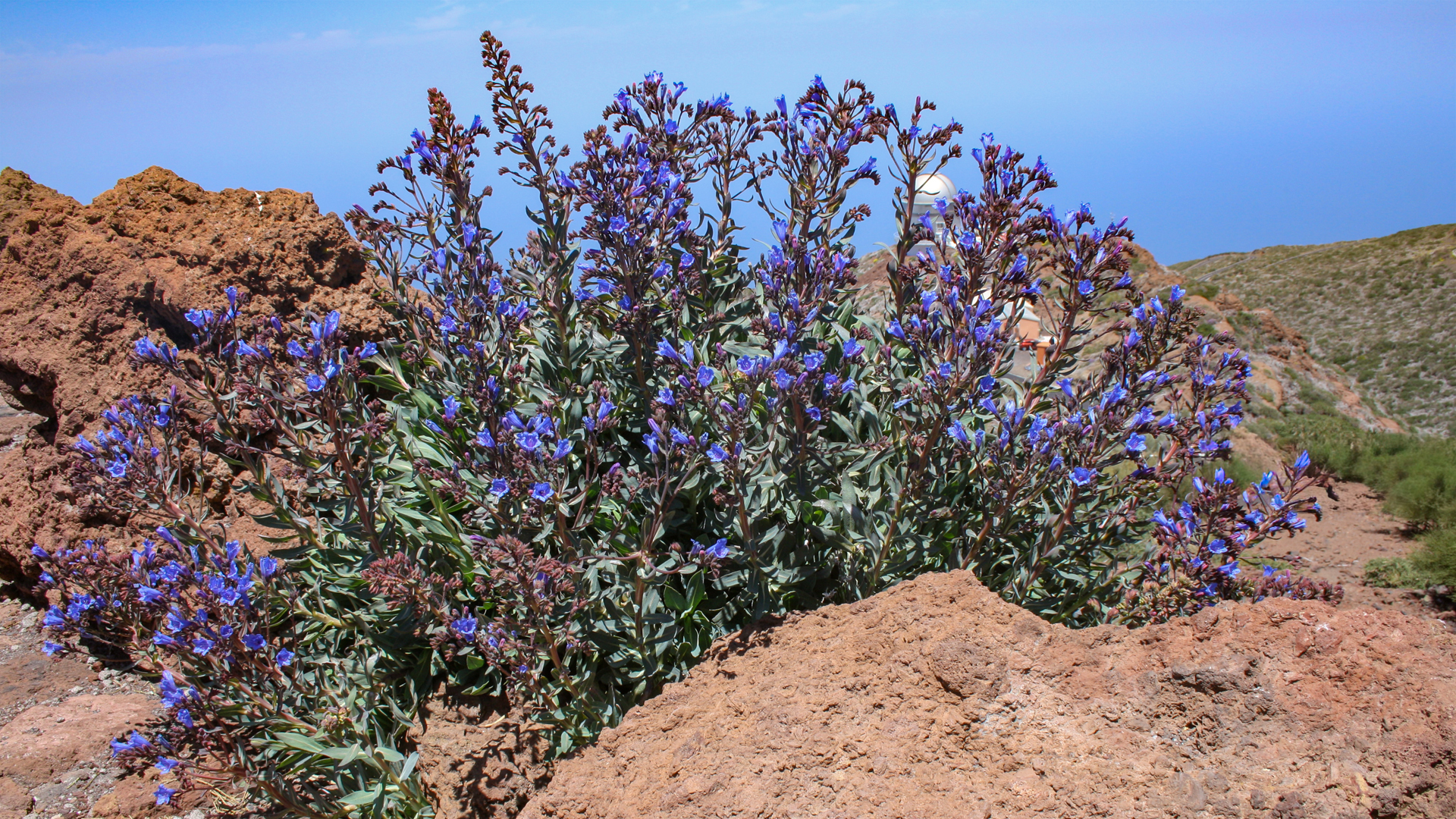
In spring, numerous endemic plants transform the rugged volcanic landscapes around Roque de los Muchachos into a surprisingly colourful mountain world. Particularly striking are the blue viper’s bugloss (Echium webbii) and various endemic broom species, which bloom in intense yellow and white against the black lava rock. Many of these plants are found exclusively in the Canary Islands and have adapted to the extreme conditions at high altitudes.
| National Park | Caldera de Taburiente (since 1954) · Reservation required for La Cumbrecita |
|---|---|
| Biosphere | Entire island UNESCO Biosphere Reserve since 2002 |
| Night Sky | World’s first Starlight Reserve (2012) · best night sky in Europe |
| Volcano | Tajogaite 2021 — youngest volcano in the Canary Islands |
Conclusion: The Green Island of the Atlantic
La Palma is the Canary Island for everyone who values nature over sandy beaches. national park, laurel forest, volcanoes, starry skies — nowhere else in the archipelago packs so much nature into such a small area.
Frequently Asked Questions
Why is La Palma called the Green Island?
What is the Starlight Reserve on La Palma?
What is the cloud cascade (Cascada de Nubes)?
This article is based on the on-the-ground knowledge of the Gequo editorial team – publishers of the Reisezeit hiking guides and operators of Sunhikes.com. Last updated: May 2026