The Coastal Landscape of La Palma: Black, Steep, and Unforgettable
La Palma is the steepest volcanic island in the world — and nowhere is that more apparent than at the coast. Where other islands slope gently into the sea, La Palma’s cliffs plunge almost vertically into the Atlantic. Black lava rock, shaped by millions of years of surf, forms a coastline that could hardly be more rugged or dramatic. No soft sand invites you to linger, no shallow water to wade through. The coast here is a spectacle — not a beach resort.
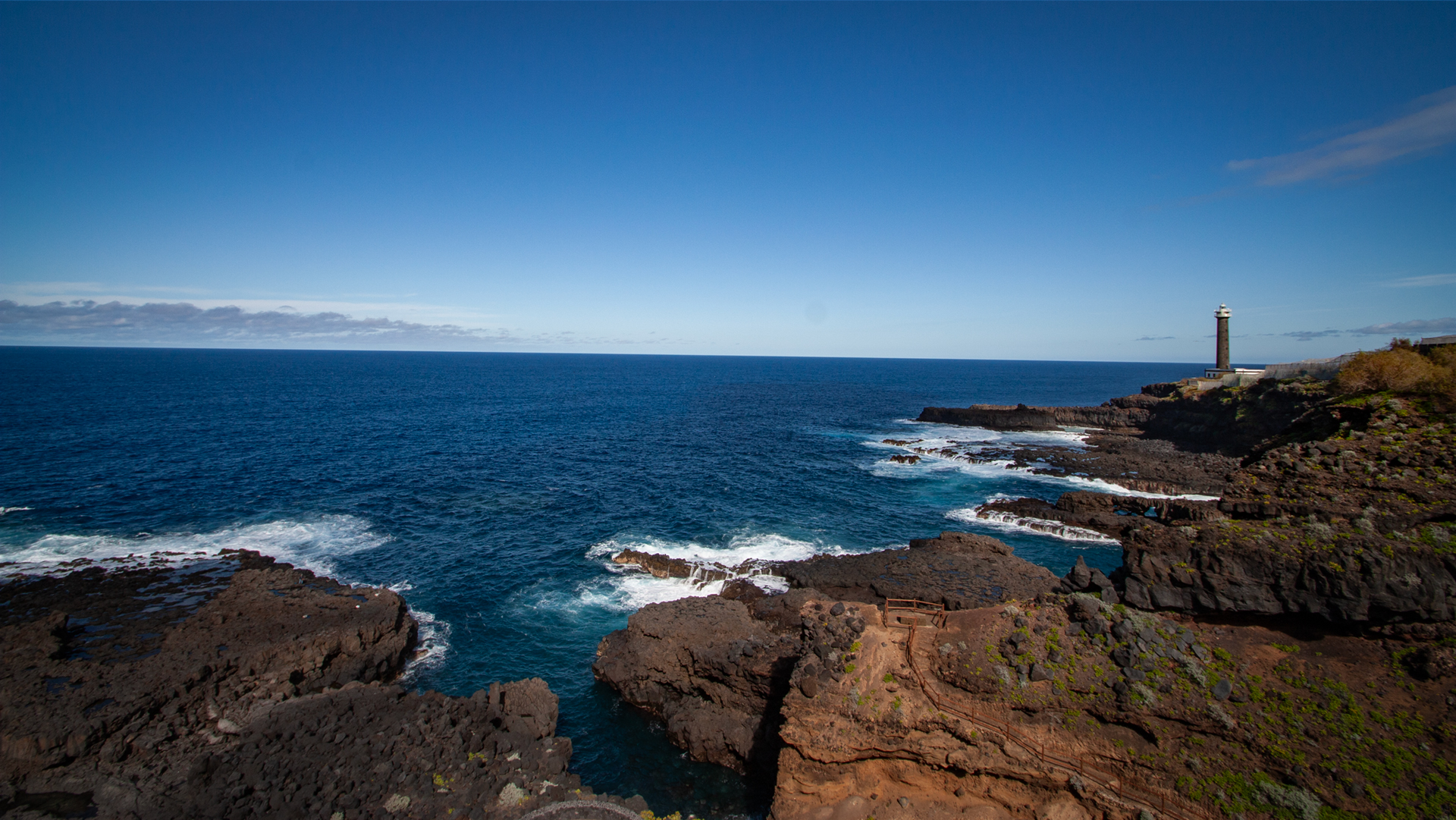
And yet it is one of the island’s greatest natural wonders. Drive along the roads that hug the cliffs, descend to one of the remote coves, stand at the sea on an early morning and watch the waves crash against the black rocks — and you understand that La Palma owes no one pleasantness. It simply is what it is.
The Northeast Coast: Green, Moist, Inaccessible
The northeast coast between Santa Cruz and Barlovento is the moistest and greenest side of La Palma. Here trade wind clouds pile up against the mountains, and the water they bring shapes a vegetation that feels more like Ireland than the Canary Islands. Deep barrancos cut the coast into sections; between them, steep slopes offer no hiking but spectacular views.
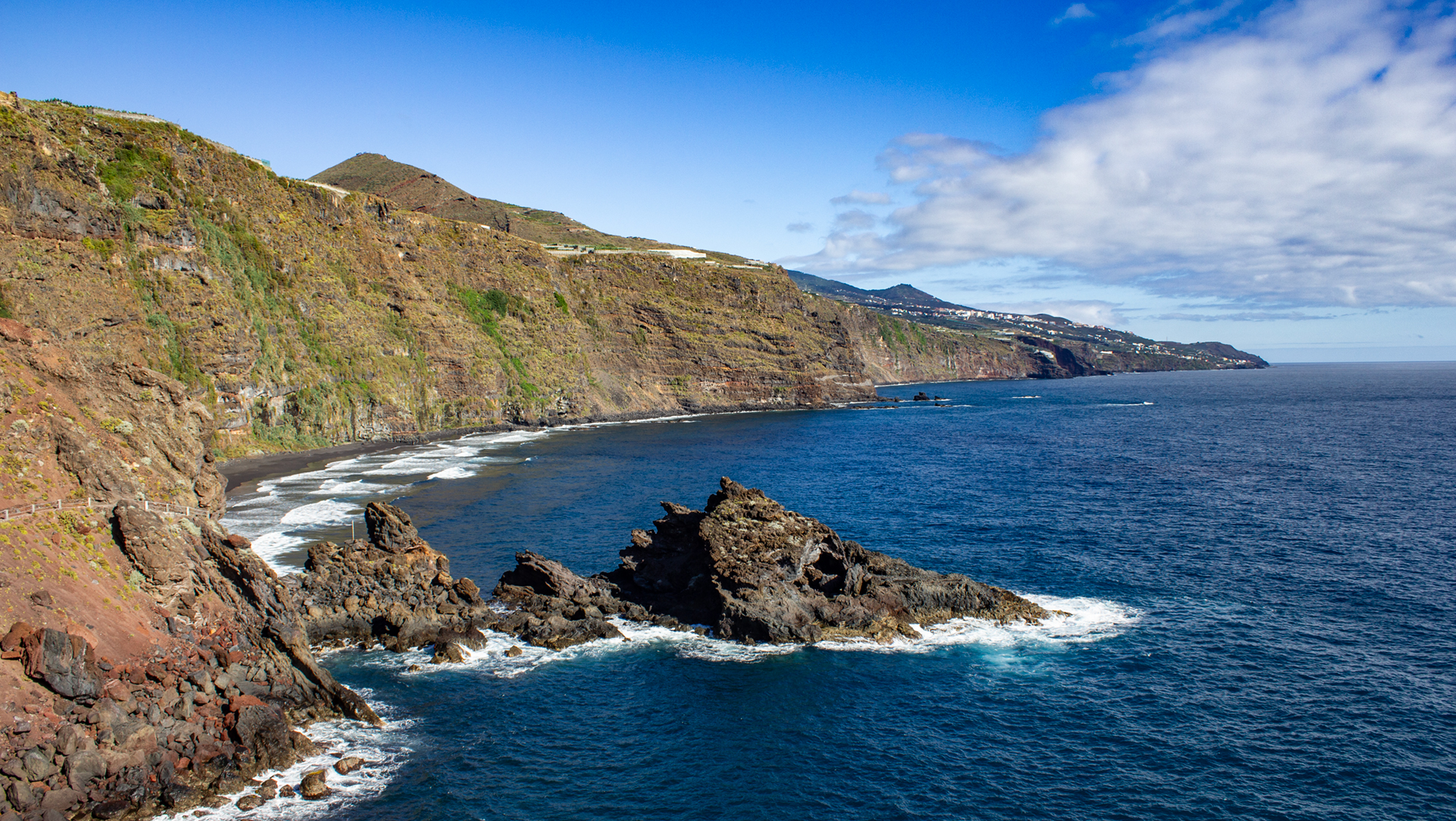
The West Coast: Volcano and Sun
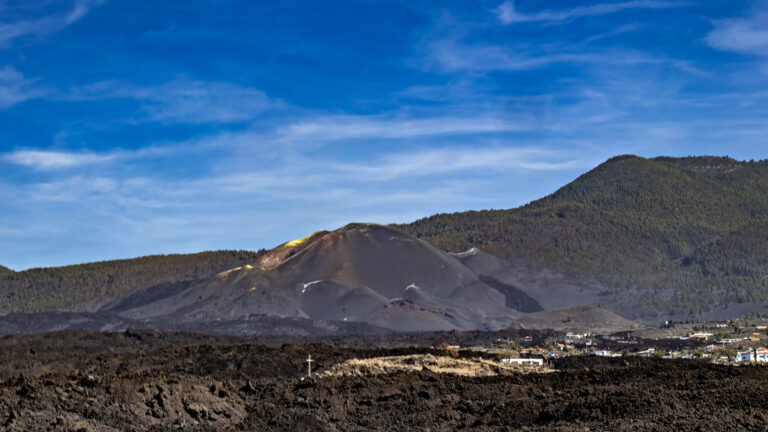
The west coast between Tazacorte and Fuencaliente forms La Palma’s sunniest and driest coastal stretch. Old and new lava flows define the landscape. The 2021 Tajogaite eruption permanently altered the southern west coast: two new peninsulas — the so-called fajanas — now jut into the sea where the coastline once ran. The young lava platforms are still sharp-edged and almost vegetation-free; only over decades will surf and weathering shape them into new rock landscapes, with Puerto Naos and Tazacorte remaining the main beach resorts along this reshaped coastline.
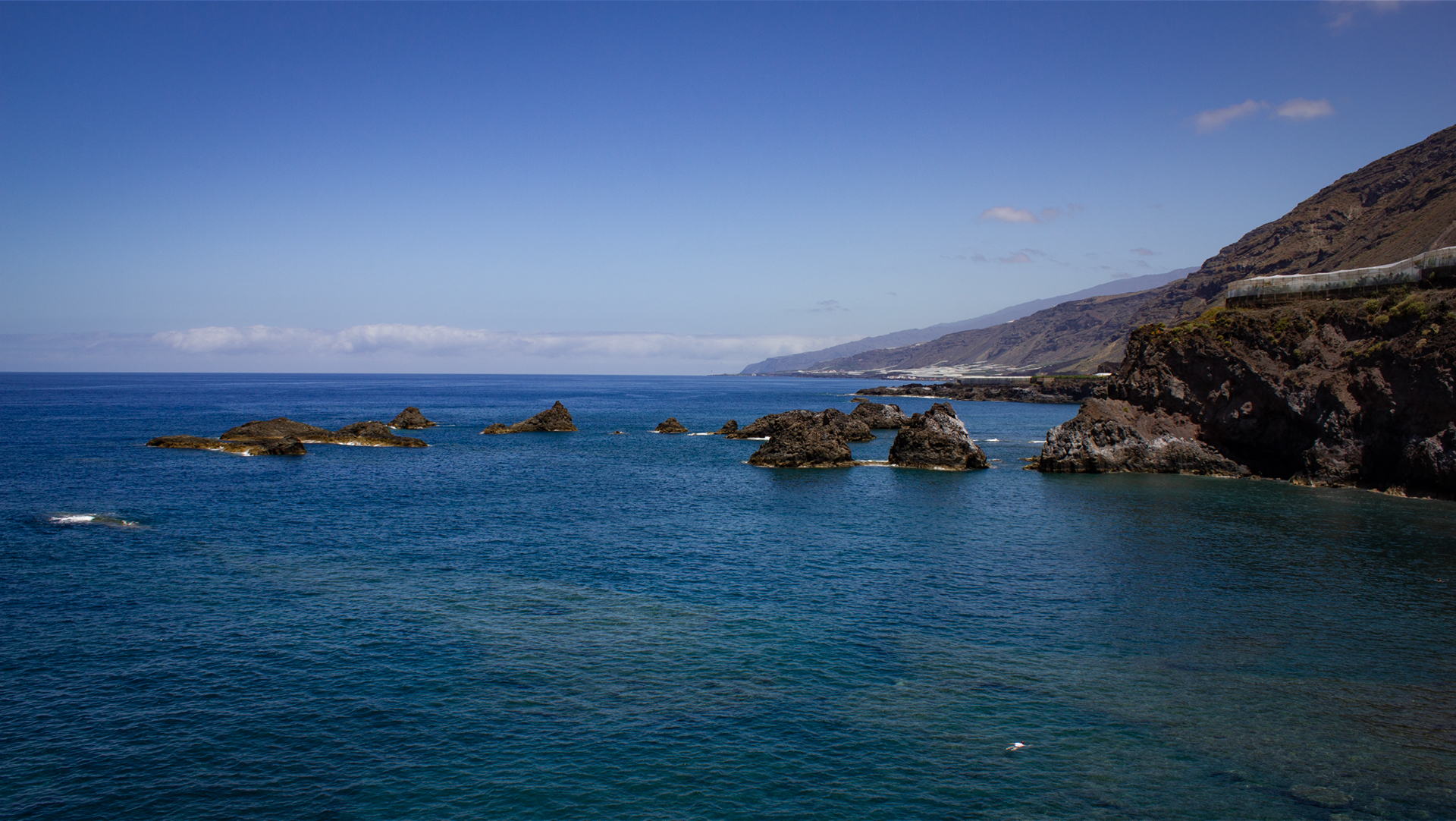
The North and Northwest Coast: The Island’s Wildest Corner
From Barlovento, along the steep cliffs of Garafía down to Tijarafe, stretches the most pristine and inaccessible stretch of coastline on La Palma. Here, cliff faces up to several hundred metres high drop almost vertically into the Atlantic. Many areas can only be reached via hiking trails. The historic natural harbours – including Puerto Talavera, Puerto de Garafía and the spectacular Porís de Candelaria in Tijarafe – are testament to a time when the sea was often the island’s most important transport route.
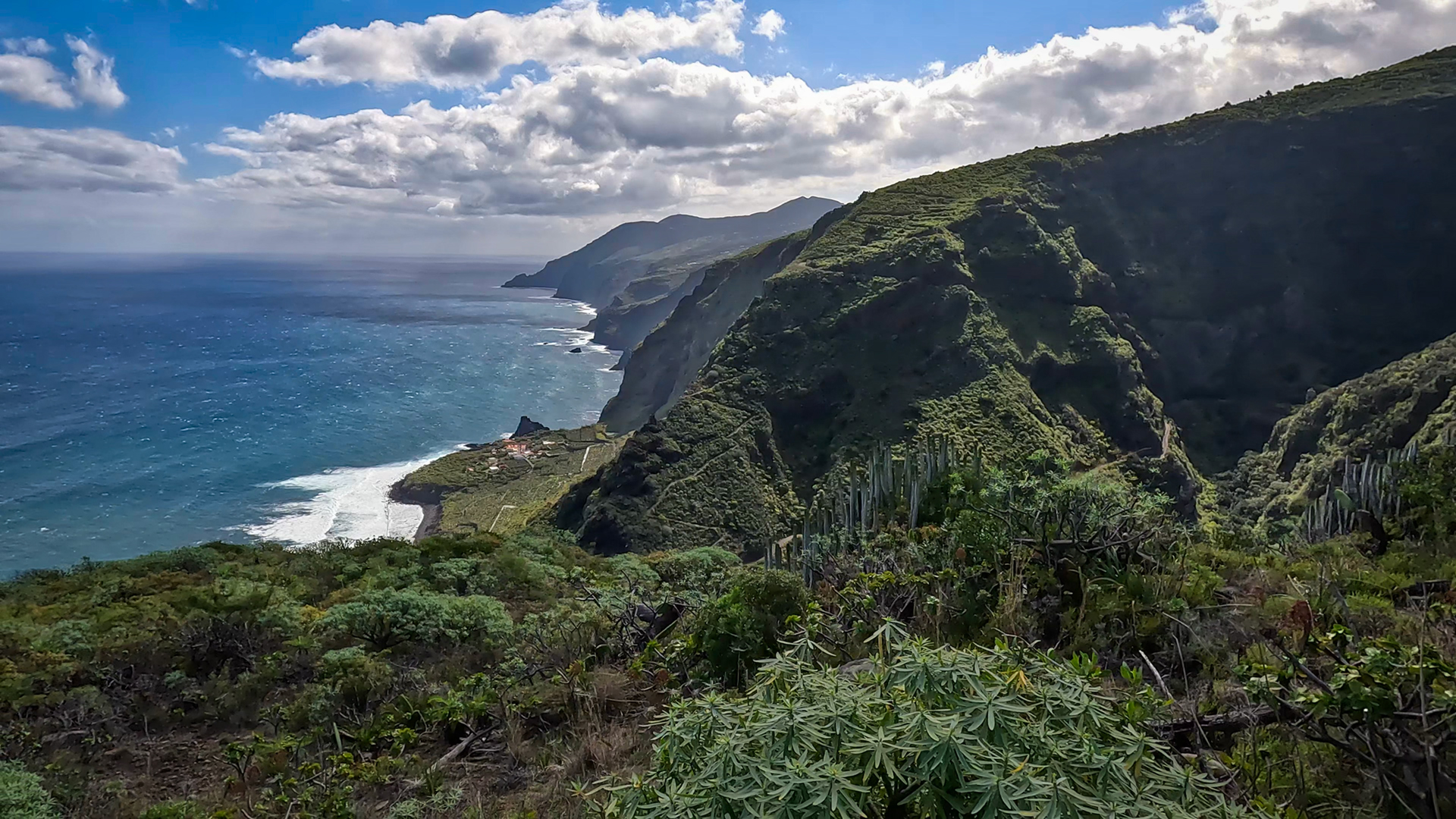
Vegetation of the Coastal Zone
Typical plants of the coastal zone are succulents: stonecrop relatives and spurge species that store water in their fleshy stems. The candelabra spurge (Euphorbia canariensis) is the most distinctive representative and can grow up to three metres tall. Canarian date palms (Phoenix canariensis) grow mainly from about 200 metres elevation upward, forming the transition between the dry coastal vegetation and the cultivated zones.
La Palma’s Volcanic Coastline
La Palma’s coast is raw, volcanic, and unlike anywhere else. Those who embrace this — not expecting sandy beaches, but seeking dramatic scenery — will find one of the most memorable coastlines in the entire Atlantic.
Frequently Asked Questions
Are there sandy beaches on La Palma?
Why is the coast of La Palma so steep?
Are there natural sea pools on La Palma?
Why are there so few long sandy beaches on La Palma?
What are fajanas?
This article is based on the on-the-ground knowledge of the Gequo editorial team – publishers of the Reisezeit hiking guides and operators of Sunhikes.com. Last updated: May 2026