A walking tour through the old town of Santa Cruz de La Palma
Santa Cruz de La Palma is one of the best-preserved colonial towns in Spain – and one of the few old towns in the Canary Islands that deserves a self-guided walking tour. The history of the island’s capital unfolds across a 2-3 km route taking roughly 1.5 to 2.5 hours: Plaza de España, Church of El Salvador, Balcones Típicos, Calle O’Daly, Museo Naval, forts, La Recova market and the island museum.
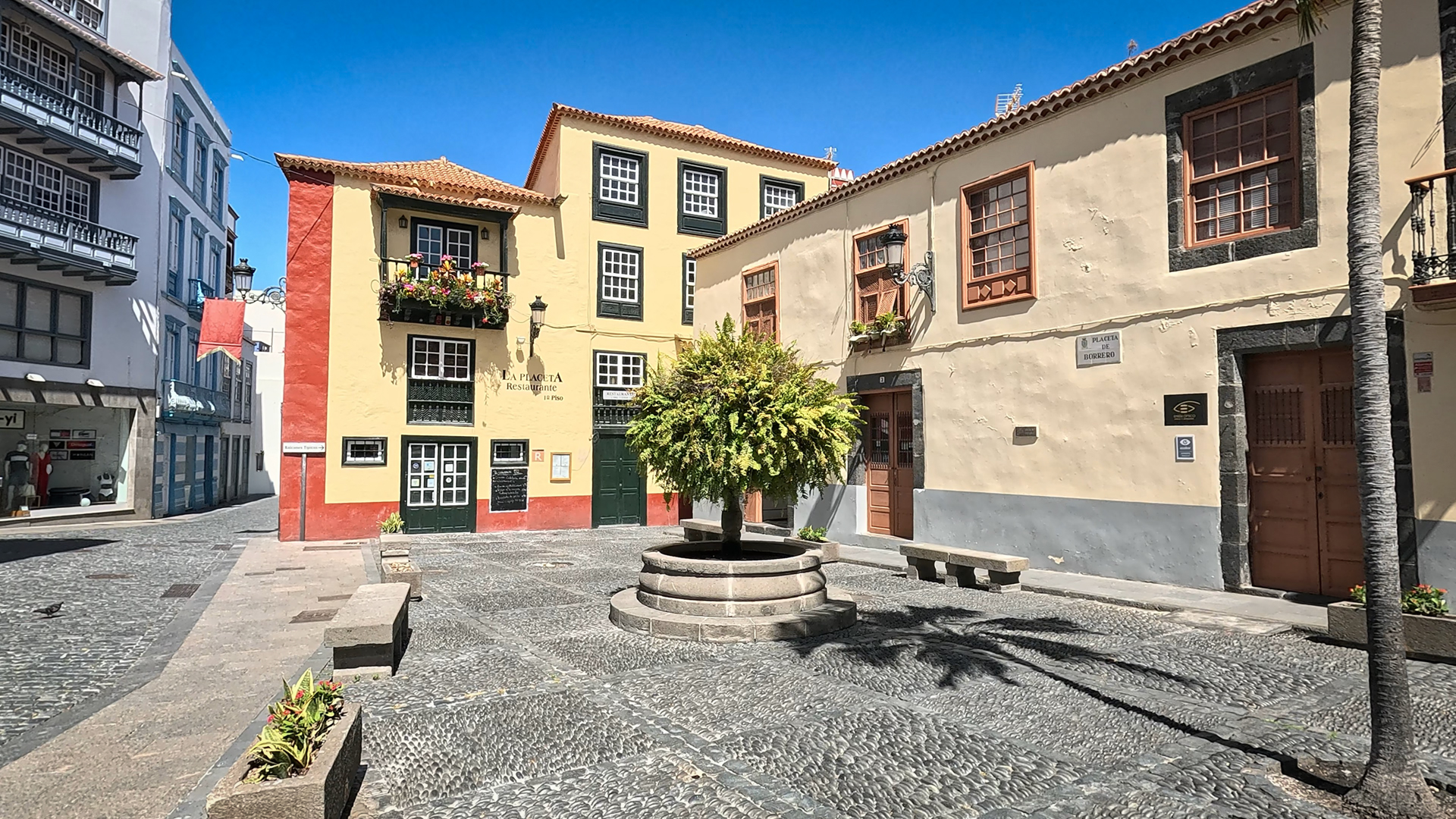
Santa Cruz de La Palma was the third largest port in Spain in the 16th century – after Seville and Antwerp. The trade routes between Europe, America and Africa passed through this port. This heritage continues to define the architecture today: the colonial wooden balconies show Portuguese and Flemish influence, the churches have Flemish altar carvings, and the replica of the Santa María echoes the era of maritime exploration.
This city walk is not a classic hiking trail, but it is the best introduction to La Palma: To know Santa Cruz is to understand the island.
The walk at a glance
| Starting Point | Plaza de España — Town Hall and Iglesia El Salvador |
|---|---|
| End Point | Avenida Marítima or Castillo de Santa Catalina |
| Distance | approx. 2–3 km (depending on detours) |
| Duration | 1:30–2:30 hours (without museum visits) |
| Difficulty | very easy — flat old town |
| Highlights | Plaza de España, Balcones Típicos, Calle O’Daly, Museo Naval, Castles, La Recova |
| Best Time | Morning or afternoon — siesta at midday |
| Tourist Office | Tourist information on Plaza de España |
The highlights in detail
Plaza de España: the historic heart
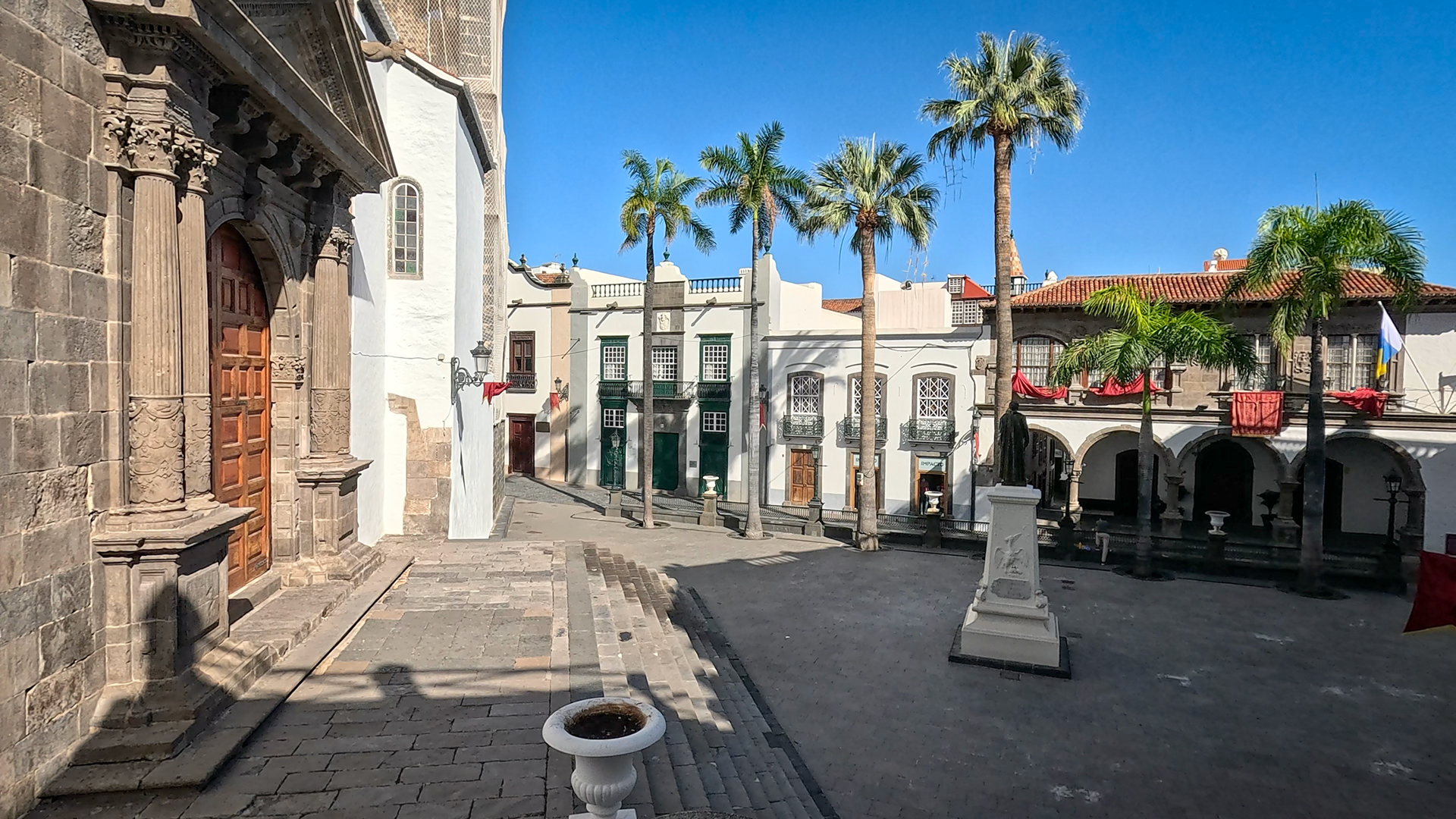
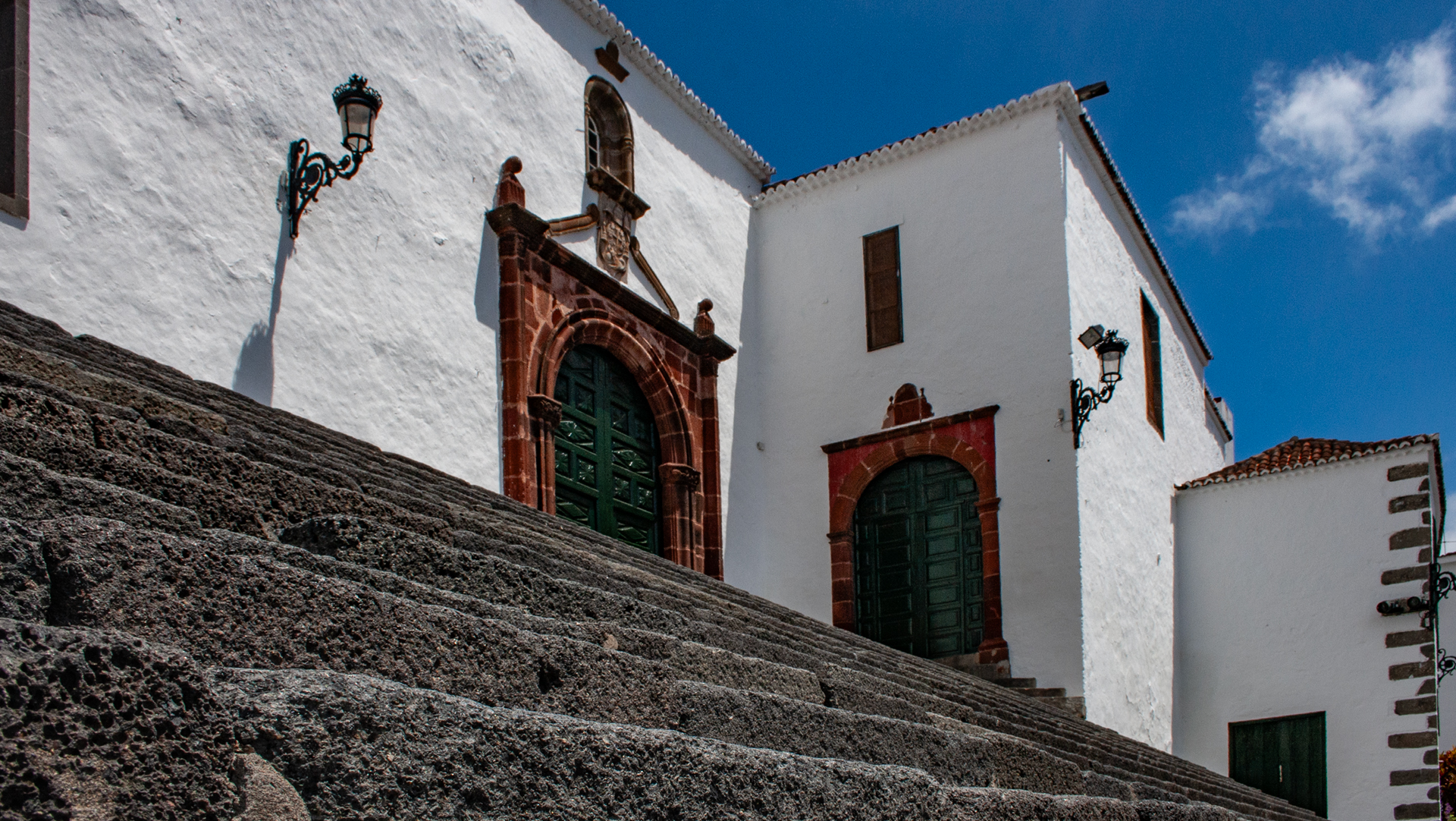
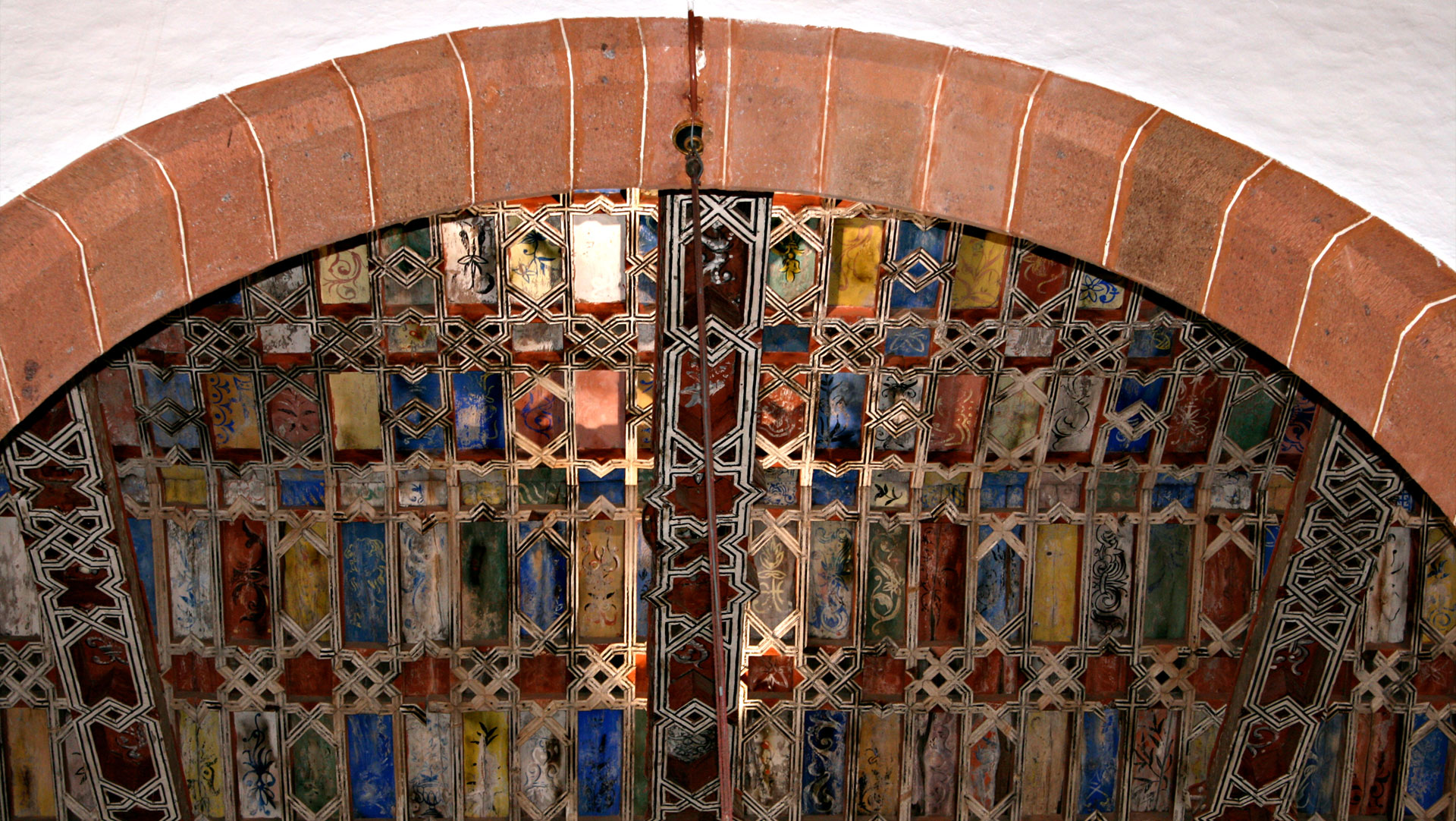
The Plaza de España is the centre of the city. The Church of El Salvador (15th/16th century) with its coffered ceiling, the town hall – built after its destruction by the French pirate Leclerq in 1553 – and the stone fountain form a colonial architectural ensemble that is unrivalled in Spain. The town hall of Santa Cruz de La Palma is considered the first democratically elected town hall in Spain (1773).
Calle O’Daly and Balcones Típicos
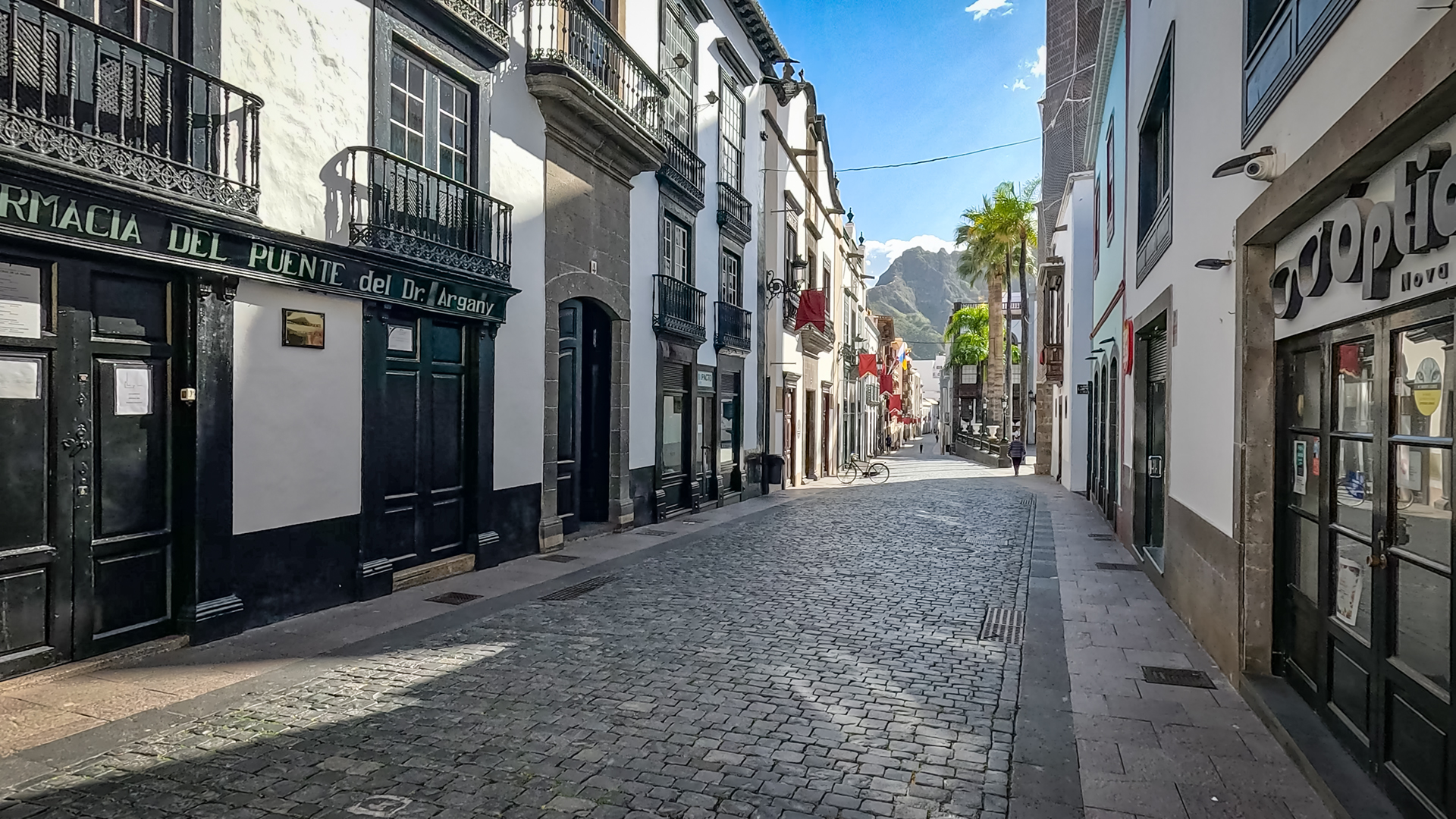
Calle O’Daly – the main pedestrian street directly on the sea – features the most iconic balcones típicos: wooden, carved balconies with turned balusters that define the city’s skyline. No two balconies are the same – type of wood, construction, floral decoration and colour vary from house to house. The balconies have Portuguese, Flemish and Canarian influences. The Avenida Marítima with its long row of balconies is the most photographed motif in the city.
Museo Naval: the Santa María
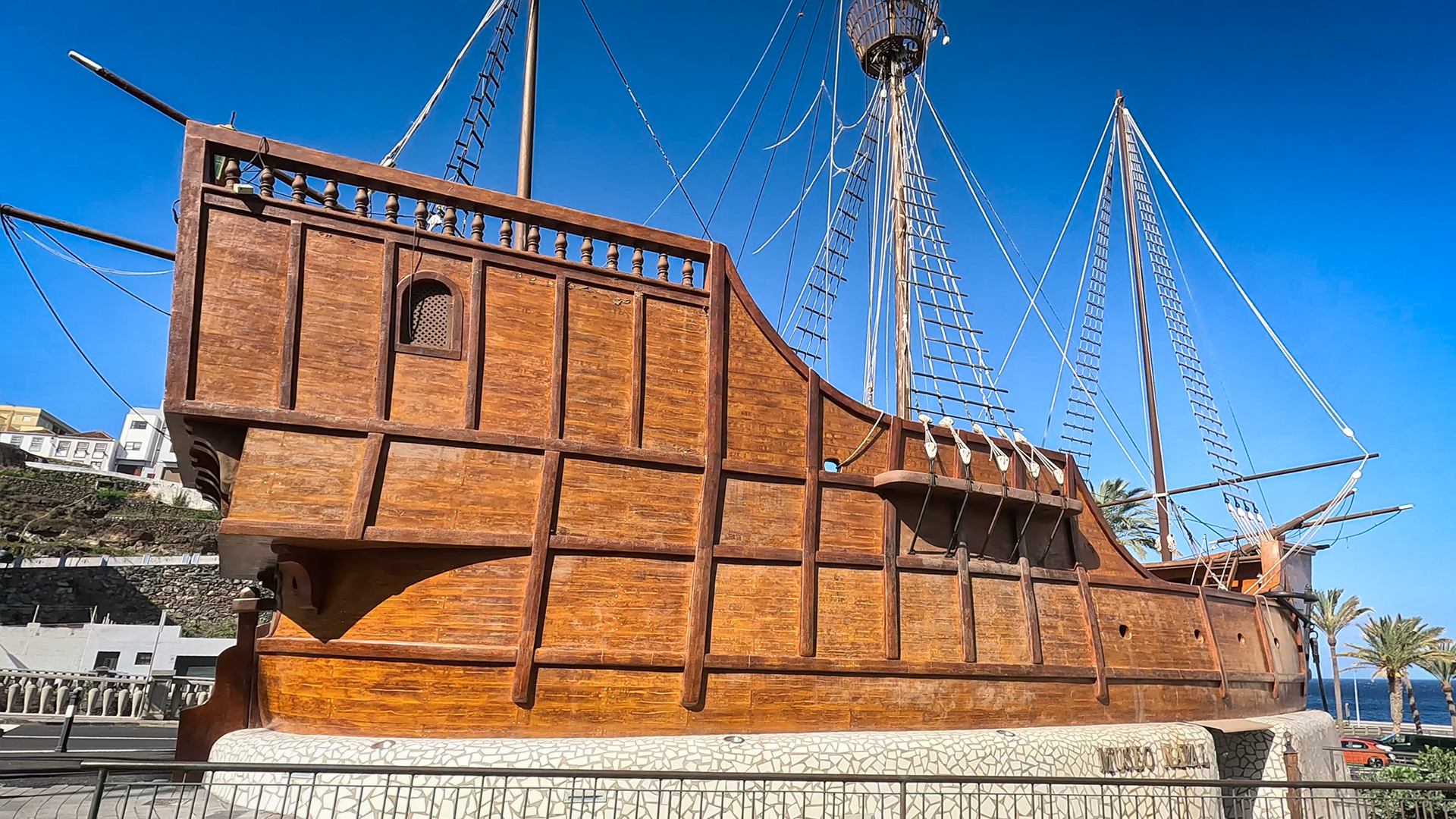
The Museo Naval is housed inside a faithful replica of the flagship that Columbus used on his voyage of discovery in 1492. The Santa María is moored at the port of Santa Cruz and is open to the public. The museum inside documents the history of the voyages of discovery and the role of the Canary Islands as a stopover. Next to the Museo Naval: the El Enano monument.
Castles and city fortifications
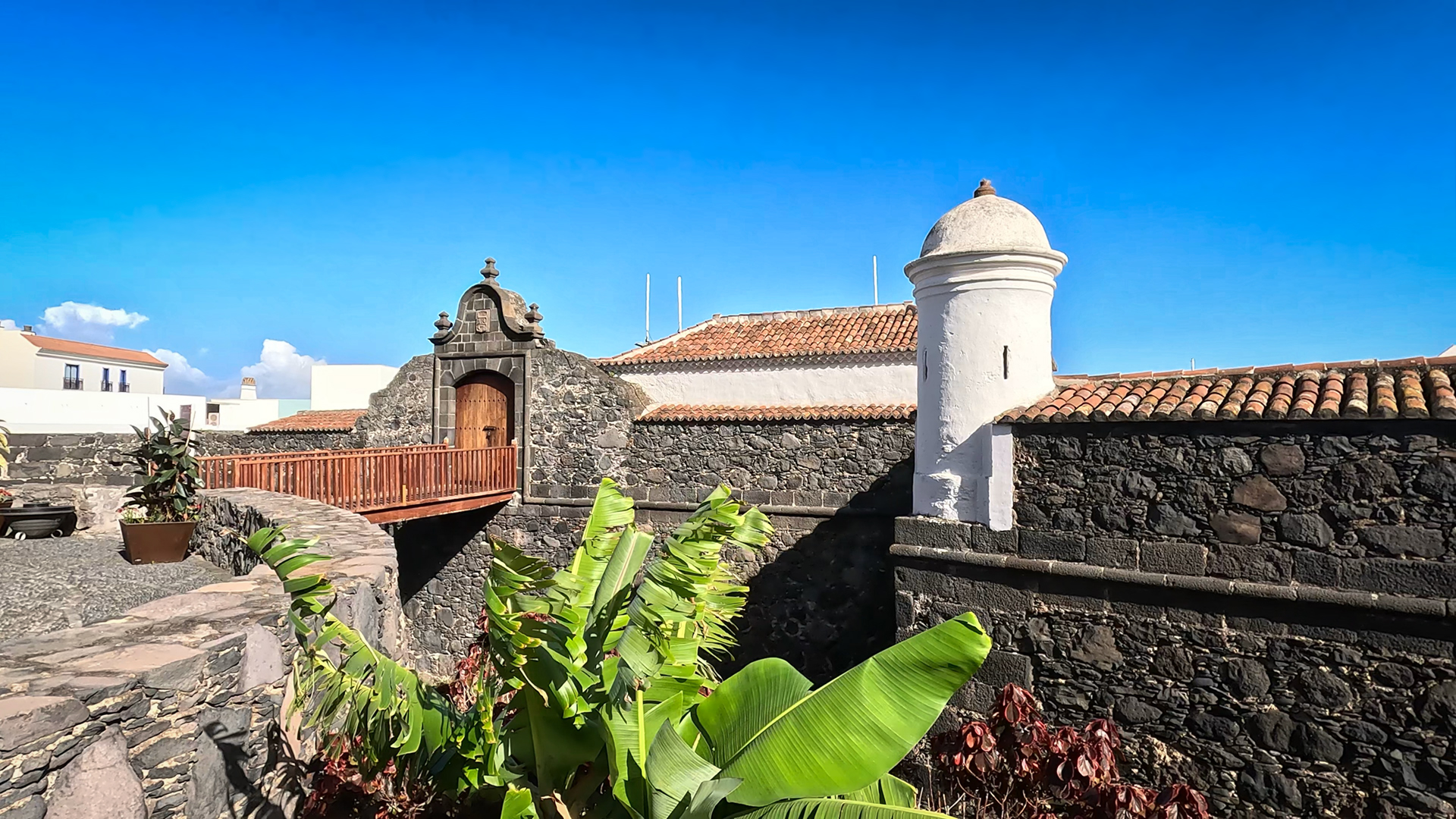
Santa Cruz de La Palma once had several forts to defend against pirates. The Castillo de Santa Catalina (17th century) is one of the best preserved — an example of military architecture in the Canary Islands. The Castillo de la Virgen is located on the northern outskirts of the city.
La Recova: the traditional market
La Recova, the traditional market of Santa Cruz, is a lively place with local specialities: cheese from Garafía, local honeys, Canarian vegetables, handicrafts. In the morning, stallholders open early — ideal as a first stop of the day. La Recova offers a condensed taste of La Palma’s culinary heritage.
The colonial history of Santa Cruz de La Palma
The importance of Santa Cruz de La Palma as the third largest port in Spain in the 16th century explains the exceptional quality of the city’s architecture. Traders from Portugal, Flanders, England and America settled here and brought their building traditions with them. The wooden balconies show Portuguese carving techniques, the church furnishings show Flemish painting and carving. This cultural mix is not as visible in any other city in the Canary Islands as in Santa Cruz de La Palma.
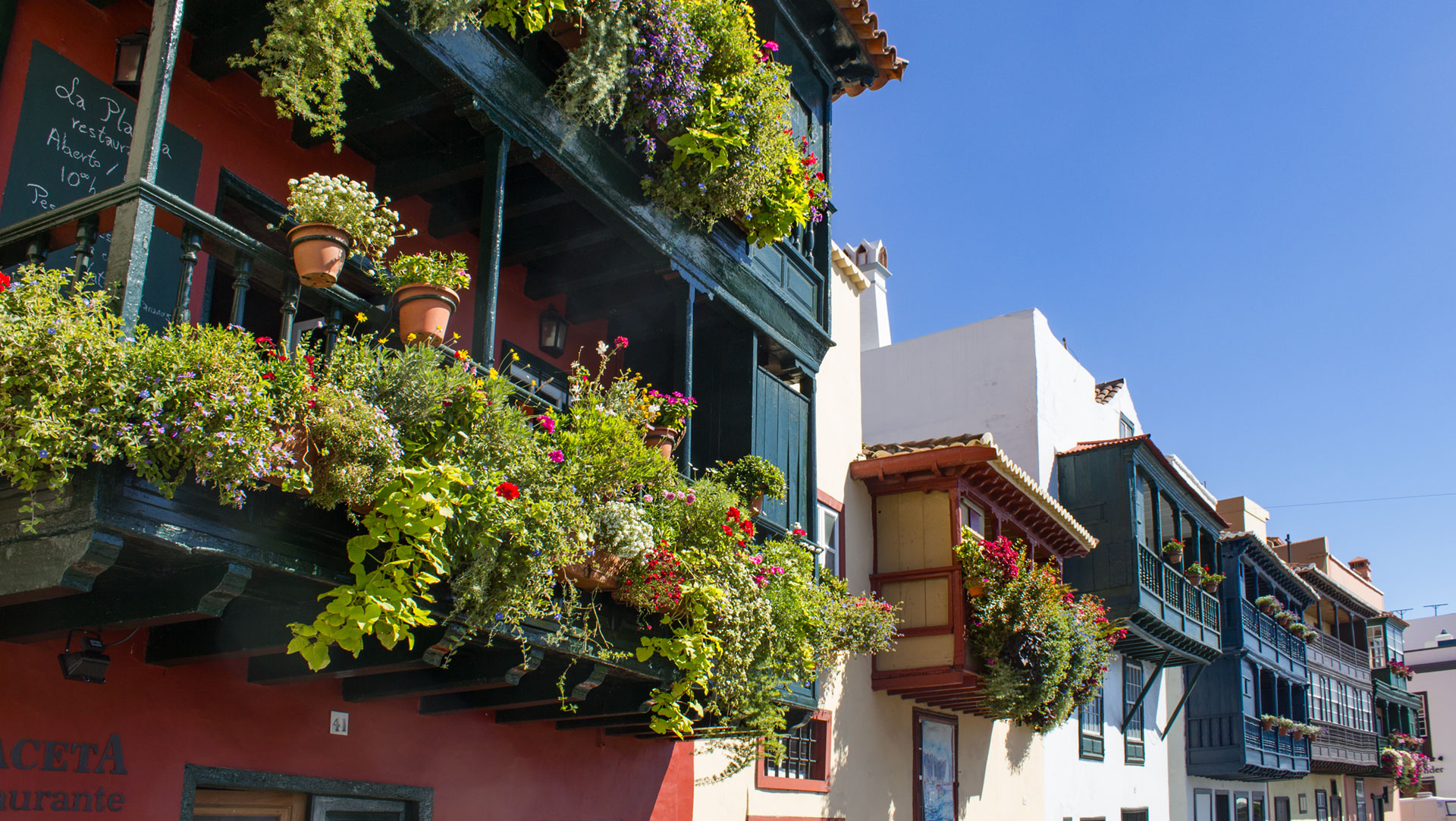
The pirate Leclerq destroyed large parts of the city in 1553 – which paradoxically proved to be a blessing in disguise: the reconstruction took place in the heyday of Canarian colonial construction, and the new Santa Cruz became a model example of this era. The houses that now line Calle O’Daly and Plaza de España were built after the attack. The most painful event in the city’s history created its most beautiful legacy.
Teatro Circo de Marte
The Teatro Circo de Marte, opened in 1871, is a cultural highlight on the island. Designated as a Canary Islands cultural heritage site, it serves as a venue for concerts, plays and cultural events. The interior — neoclassical, with original wooden parquet and Victorian details — is well worth a visit. Anyone staying overnight in Santa Cruz should check the event program in advance.
Best travel time
| Season | Character | Note |
|---|---|---|
| All year round | The old town is accessible year-round | No seasonal difference |
| Spring | Flower decoration on balconies at its peak | Best photos of the Balcones Típicos |
| Winter/December | Pre-Christmas decor; Illumination on Plaza | Atmospheric evening walk |
| Summer | Busy with tourists; Café life | Evening walks are particularly beautiful |
Combinable tours
| Tour | Data | Character |
|---|---|---|
| GR-130 Stage 1: Santa Cruz – Puntallana | 11.4 km, moderate | Leave the outskirts of the city – coastal hike |
| PR-LP 3: Pico de la Nieve → Santa Cruz | 13.6 km, moderate | A 2,239 m descent into the city |
| GR-130 Stage 8: Villa de Mazo – Santa Cruz | 12 km, moderate | Arrival in the city after circumnavigating the island |
Practical Tips
Tourist office in Plaza de España for city maps.
La Recova: open in the morning.
Museo Naval: Check opening times in advance.
Lunch (1:00 p.m. – 4:00 p.m.): Siesta — many shops closed, quiet walk possible.
Evening: Calle O’Daly and harbour promenade lively.
Frequently Asked Questions
What is the best time for the city walk?
What are Balcones Típicos?
Piracy and Santa Cruz’s history of resistance
Santa Cruz de La Palma has a dramatic history of pirate attacks. In 1553 the city was largely destroyed by the French pirate François Leclerq (also known as Pie de Palo – wooden leg). The reconstruction created today’s cityscape. In 1585, Francis Drake tried to take Santa Cruz with 23 ships – and failed due to the determined defense. This resistance is still part of the city’s self-image today.
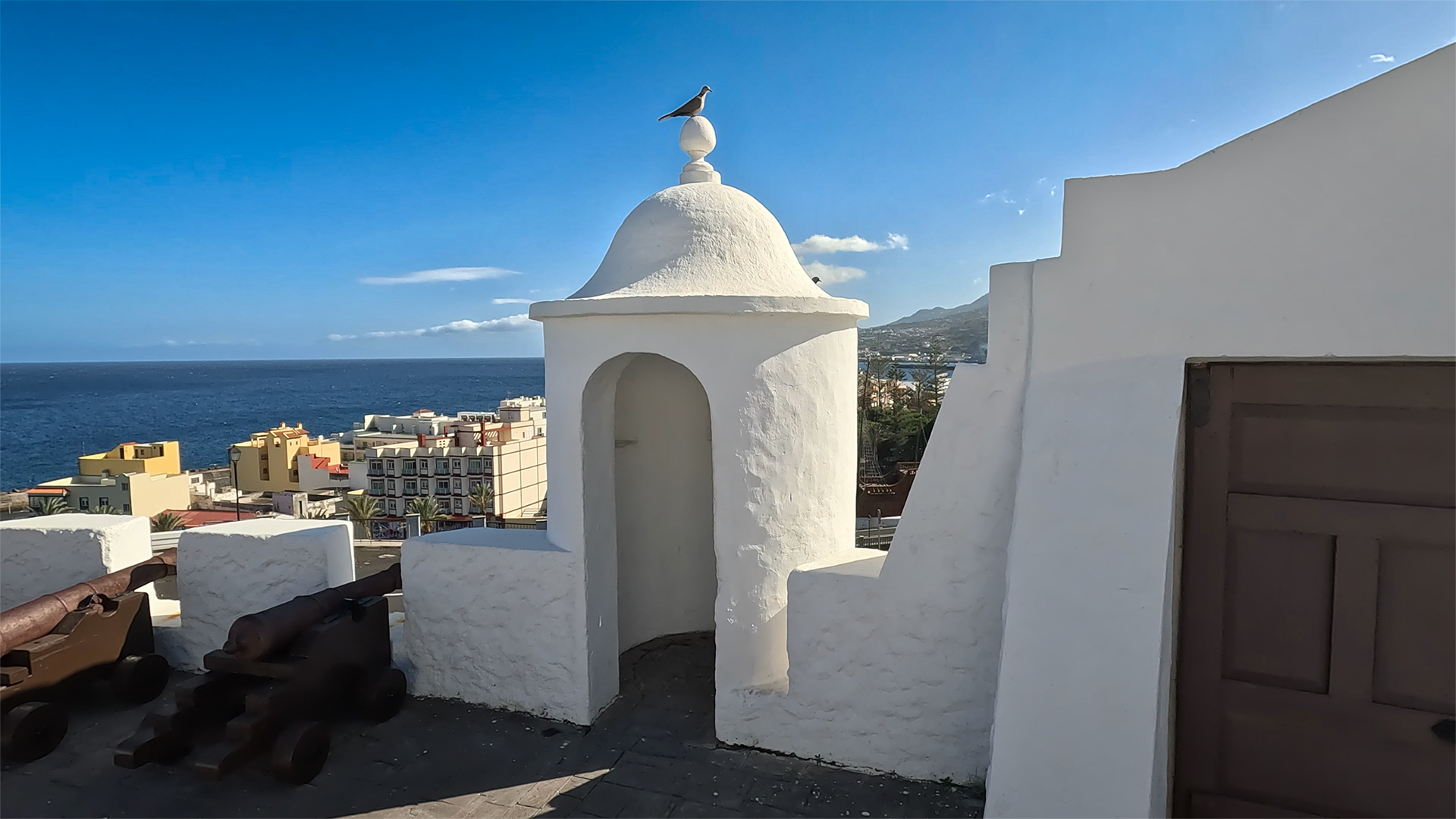
The castles that defied Drake and later pirates are still visible today: Castillo de Santa Catalina on the coast, Castillo de la Virgen on the northern edge of the city. This military architecture from the 16th and 17th centuries stands directly on the promenade – and transforms this walk into a journey through Canarian coastal defence.
The Royal Cosmological Society
The Real Sociedad Cosmológica – the Royal Cosmological Society – is one of the oldest cultural societies in La Palma and an institution that has shaped the intellectual life of the island’s capital since the 19th century. Its building on Plaza de España is part of the city walk. The society promotes science, art and culture and has its own library. Anyone who wants to understand Santa Cruz will better understand it through the lens of this institution: a colonial city boasting a strong sense of intellectual pride.
If you combine the city walk with a hike: The GR-130 Stage 1 (Santa Cruz – Puntallana) (11.4 km) starts from the Plaza de España — you can do the city walk in the morning and start the first GR-130 stage in the afternoon (or the following day). This is the perfect introduction for first-time visitors to La Palma: First understand the city, then discover the island.
Calle O’Daly deserves its own note: it is the oldest shopping street in Santa Cruz and is one of the few Canarian pedestrian zones that have completely preserved their historical architecture. It is named after an Irish merchant family that lived here in the 18th century – an example of the international merchant history of Santa Cruz de La Palma. The shops in the O’Daly offer local products: gofio, Palmero cheese, Canarian liqueurs, handicrafts.
The Corpus Christi festival is one of the most important festivals in Santa Cruz de La Palma and the entire island. In the week before Corpus Christi, the streets are laid out with colourful flower, sand, and dyed-salt mosaics (alfombras). The Church of El Salvador and the Plaza de España are the central places of this festival. If you are on La Palma during Corpus Christi week, you should take the city walk exactly then: the alfombras are only visible for a few hours before the rain or the procession washes them away. This is the most ephemeral and impressive display of craftsmanship on La Palma.
This article is based on the on-the-ground knowledge of the Gequo editorial team – publishers of the Reisezeit hiking guides and operators of Sunhikes.com. Last updated: May 2026