Miel de Palma – Liquid Gold from the Palm Trunk
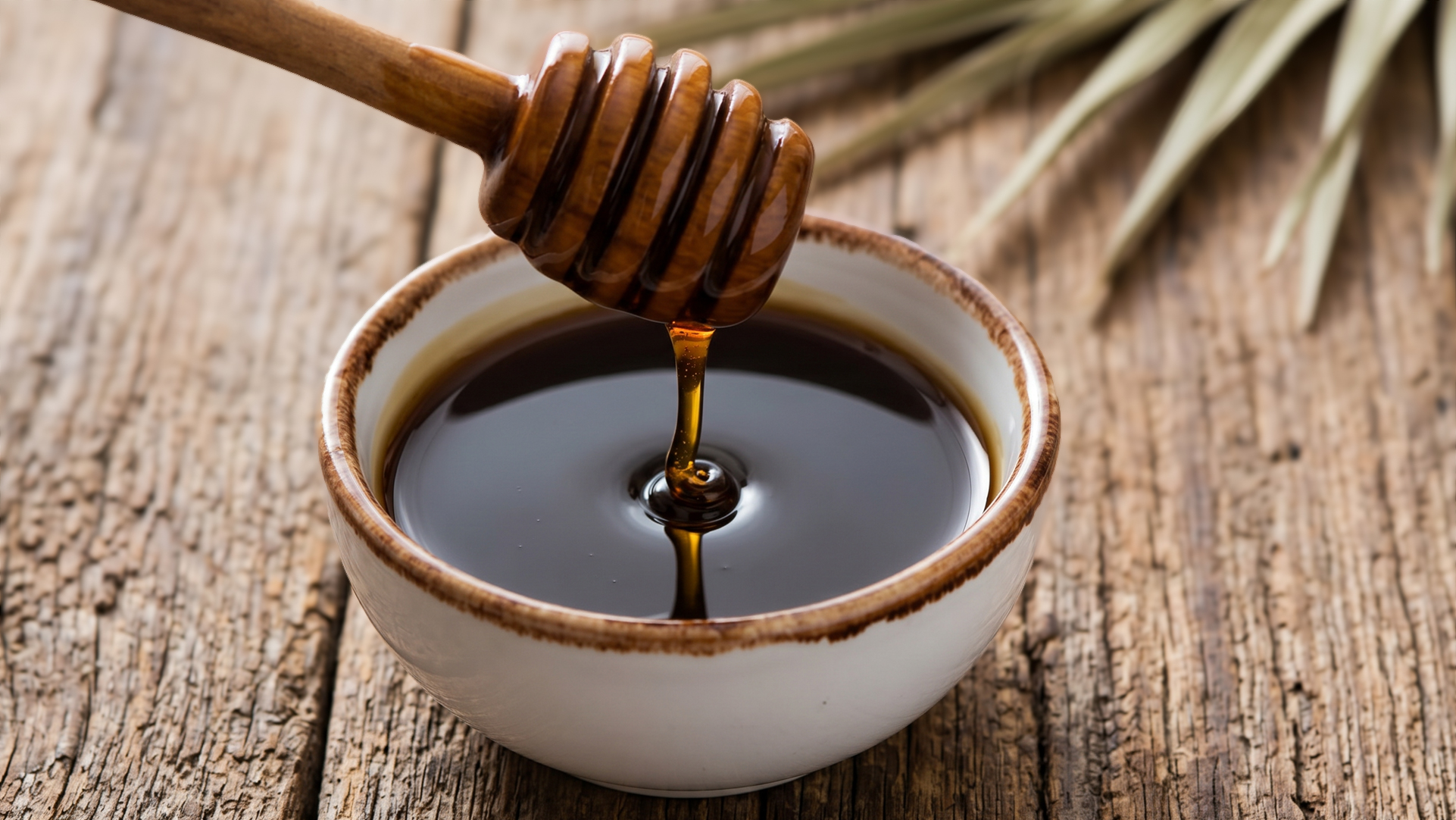
Miel de Palma is not honey. That sounds like a limitation — but it’s actually a distinction. While honey is always honey, Miel de Palma is something that exists in this form on only a handful of islands in the world: a syrup made from the fresh sap of the Canary Island date palm (Phoenix canariensis), cooked down into a dark brown, thick, caramel-resinous concentrate that captures La Palma in a single spoonful.
The Benahoaritas — the indigenous people of La Palma — knew Miel de Palma long before the Spanish Conquest. They tapped the palm sap and used it as a sweetener, as an energy source on long mountain treks, and as an ingredient in the simple highland cuisine. Despite its ancient roots, it remains an enduring fixture in La Palma’s kitchen today.
The palm syrup available today comes almost entirely from the neighbouring island of La Gomera, where it is one of the most celebrated traditional specialities. On La Palma, however, it is a staple of many regional dishes and widely available in supermarkets, specialty food stores, and restaurants.
How Miel de Palma Is Made
Harvesting palm syrup is pure handcraft. A skilled Guarapero climbs into the crown of the Canary Island date palm and carefully cuts the young growth area. Overnight, the sweet palm sap — the Guarapo — drips into a collection vessel. The sap is then gently simmered for several hours until the aromatic, dark brown syrup forms. The palm is never felled and can regenerate after a rest period.
The result is a dark brown syrup with the consistency of liquid caramel and an aroma that simultaneously recalls maple syrup, caramel, pine resin, and a hint of the sea. One tree yields 20–30 liters of syrup per season.
How to Use Miel de Palma
The classic Canarian breakfast: gofio (toasted grain flour) stirred with a little water into a porridge, sweetened with Miel de Palma. This isn’t a nostalgic retro trend — it’s the breakfast that people in La Palma’s mountain villages have eaten for as long as La Palma has existed.
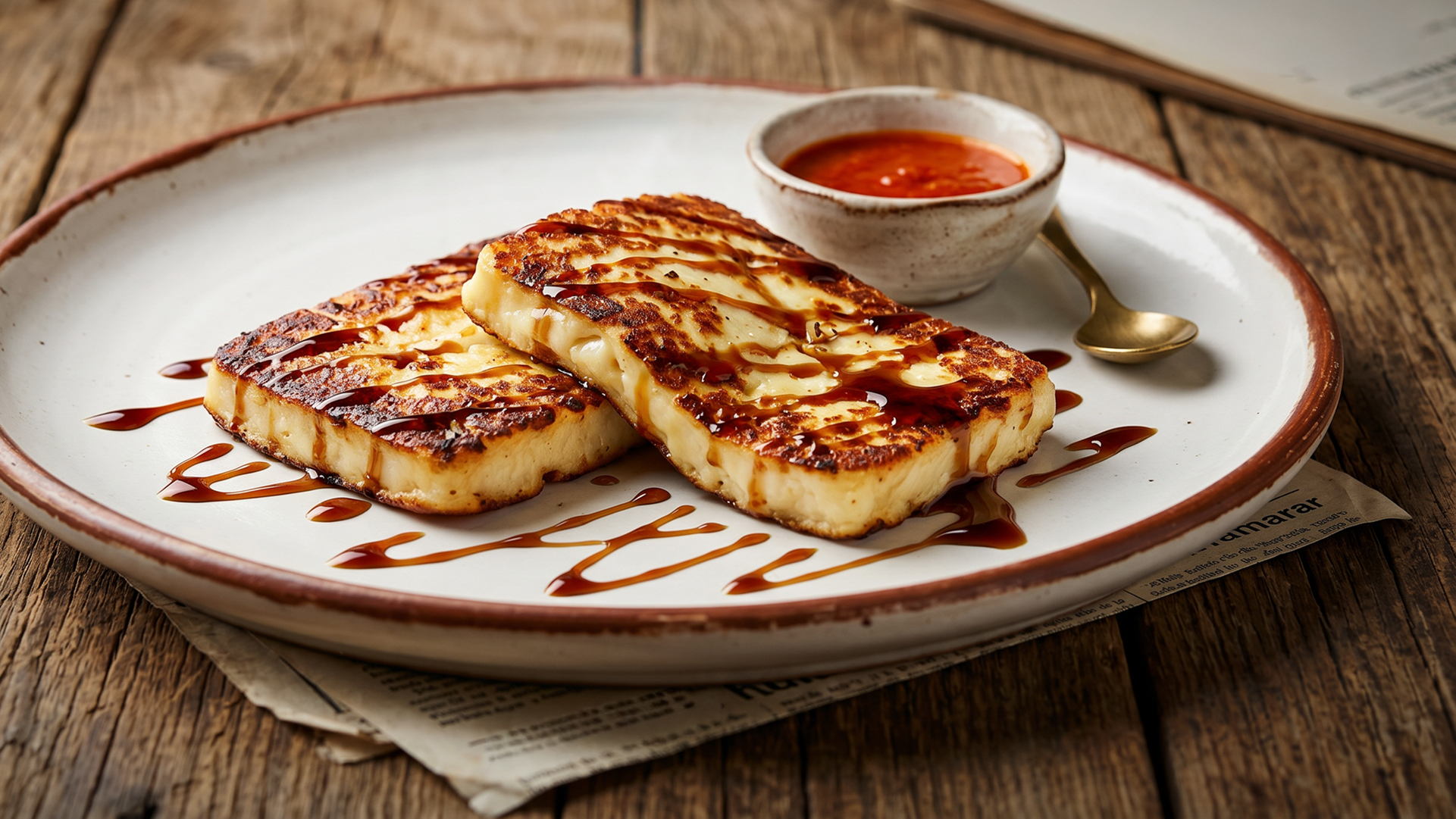
- On queso asado — a finishing drizzle on grilled goat cheese that makes the dish complete.
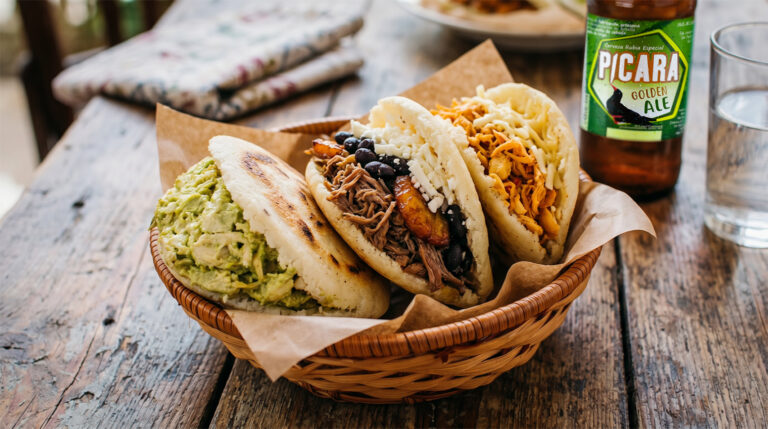
- As a glaze for fried plantains — one minute in the pan, a splash of Miel de Palma, done.
- In yogurt, granola, and vinaigrettes — wherever you’d reach for honey, palm syrup goes further.
- In Canarian desserts — the base for bienmesabe and Príncipe Alberto.
- On bread with butter — once you’ve had it this way, you’ll keep buying Miel de Palma.
Where to Buy Miel de Palma
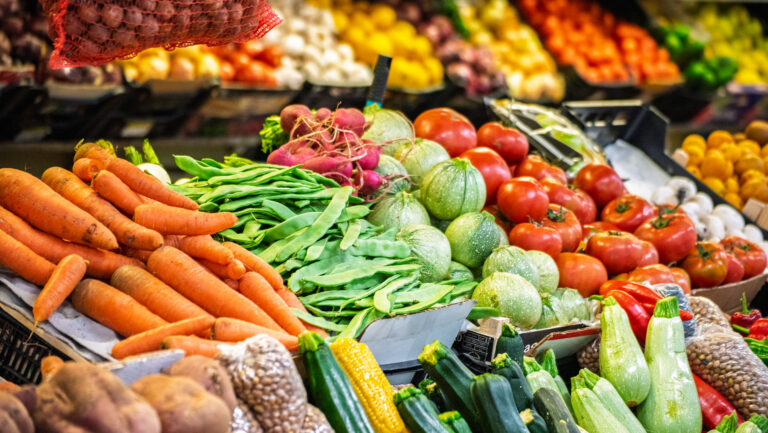
- Farmers’ markets — the best source on La Palma; nearly every market carries it.
- Specialty food shops & supermarkets — HiperDino and Spar stock it as a standard shelf item. A 250 ml bottle typically costs between €5 and €8.
- As a souvenir — ideal: affordable, compact, long-lasting (stays good for several years in cool, dark storage), and for anyone who loves to cook, a genuine find. Rarely available in specialty food stores back home.
Frequently Asked Questions (FAQ)
What is the difference between Miel de Palma and maple syrup?
Is Miel de Palma real honey?
Where does Miel de Palma come from?
What does Miel de Palma taste like?
What does Miel de Palma pair well with?
Can I take Miel de Palma home?
Why is Miel de Palma relatively expensive?
This article is based on the on-the-ground knowledge of the Gequo editorial team – publishers of the Reisezeit hiking guides and operators of Sunhikes.com. Last updated: May 2026