Guachinche – The Place Nobody Knows and Everyone Should Find
On La Palma there is a way of eating that resists any modern marketing logic. No fuss, no carefully curated Instagram strategy – just honest tradition. A traditional guachinche – or a down-to-earth bodeguita – is an informal wine tavern that opens when the winemaker has his own wine to serve.
Originally this concept comes from the neighbouring island of Tenerife, where there is even a dedicated Canarian decree: a traditional guachinche may only open there as long as its own wine lasts. On La Palma this spirit has become equally established. Whether in rustic bodegas or in beloved local favourites that now proudly carry the name (such as the well-known Guachinche Palmero in Mazo or the Guachinche El Pobre in Tazacorte) – the principle stays the same: uncomplicated, hearty, and authentic.
Anyone who reads this and thinks it sounds like a romantic remnant from another era – is right. Guachinches are exactly that. They are also the most honest eating experience La Palma has to offer.
What to Expect at a Guachinche
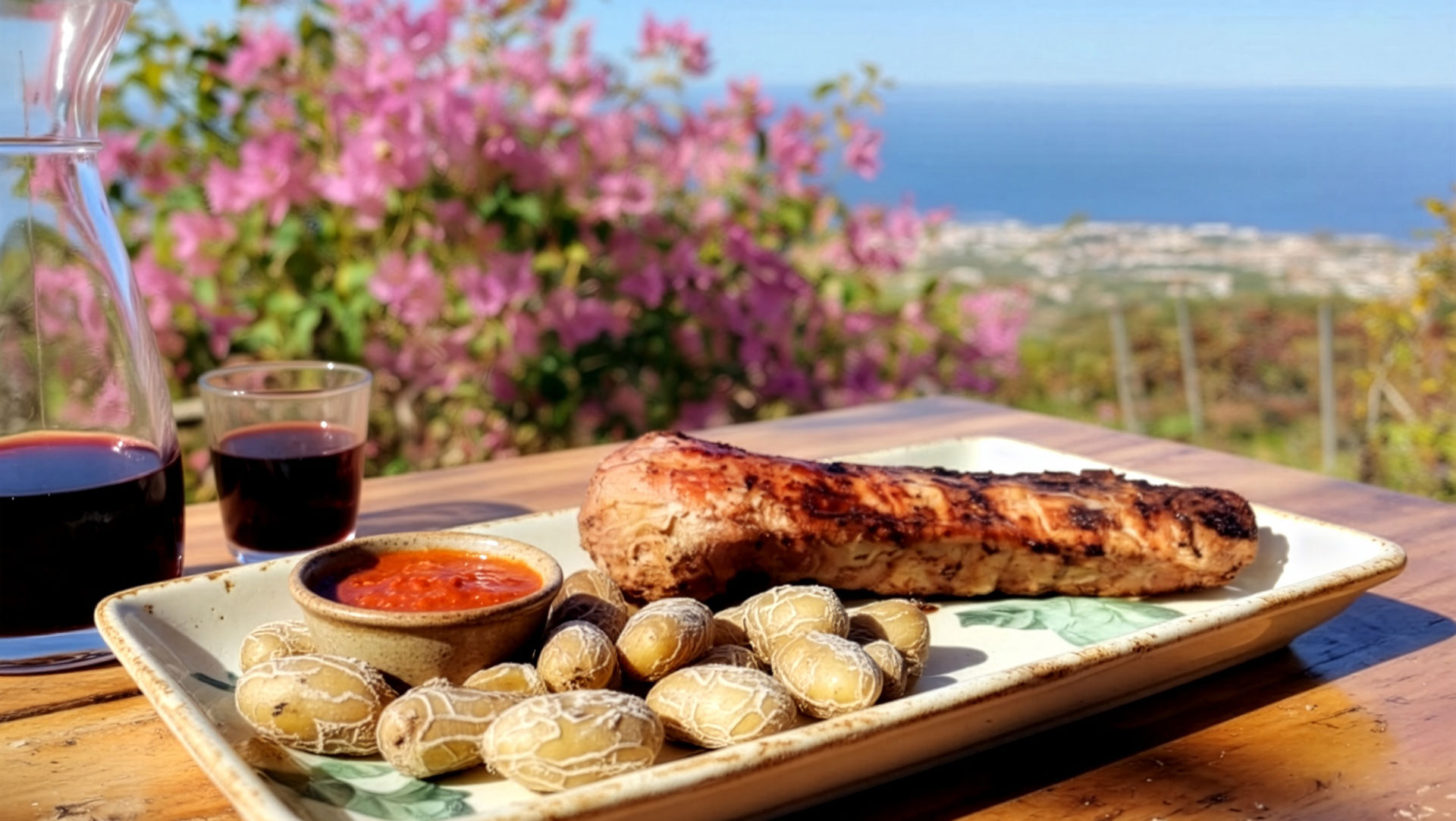
A wooden table. Maybe a waxed tablecloth. A glass taken from the shelf, not from a serving trolley. And then: unfiltered, young, and remarkably direct wine straight from the barrel. Papas arrugadas from the pot. Whatever was cooked that day – carne de fiesta, rancho canario, conejo en salmorejo – that is what there is. There is no menu. You ask what is available, and you eat that.
The bill is surprisingly low. Not tourist cheap – genuinely cheap. €15–20 for two people with wine is not unusual. Not because the guachinche is a budget restaurant, but because it is not a business model. It is a local winemaker serving his own production.
The Social Dimension – What a Guachinche Really Is
At a guachinche you share tables. With the couple from the neighbouring village, with the retiree who comes every Tuesday, or with the family celebrating the grandmother’s birthday. The line between host and guest is fluid. The host who pours the wine will often sit down for a moment. The conversation drifts from the last harvest to banana prices and the stories of the island.
This is not a staged performance of authenticity – it is the real everyday life of La Palma, which has no reason to hide and therefore no reason to exclude visitors. Those who arrive with openness are rewarded with genuine hospitality.
How to Find a Good Guachinche on La Palma
Some of the best-known addresses, such as Guachinche Palmero in Mazo, are easy to find today. For the truly hidden gems, the best approach is: ask! At the supermarket, at the farmers market, or with the neighbours at the finca. This works surprisingly well.
The best time: fall and winter, after the harvest. When the new wine has fermented and is being served, it is high season for traditional tavern visits. In the wine-growing areas of La Palma – around Fuencaliente, Mazo, or Garafia – the chances of unforgettable discoveries are greatest.
Frequently Asked Questions (FAQ)
How do you find a guachinche without speaking Spanish?
Did the guachinche concept originally come from La Palma?
How do you find the best insider tips?
This article is based on the on-the-ground knowledge of the Gequo editorial team – publishers of the Reisezeit hiking guides and operators of Sunhikes.com. Last updated: May 2026