Puntagorda – When La Palma Turns White in February
At the end of January, beginning of February, when the coastal towns still look brown and dusty, the almond trees blossom in Puntagorda. Thousands of trees on the terraces and slopes above the sea open their white and pale-pink blossoms all at once – a change of colour that transforms the northwest coast of La Palma in an instant. The spectacle alone makes the journey worthwhile.
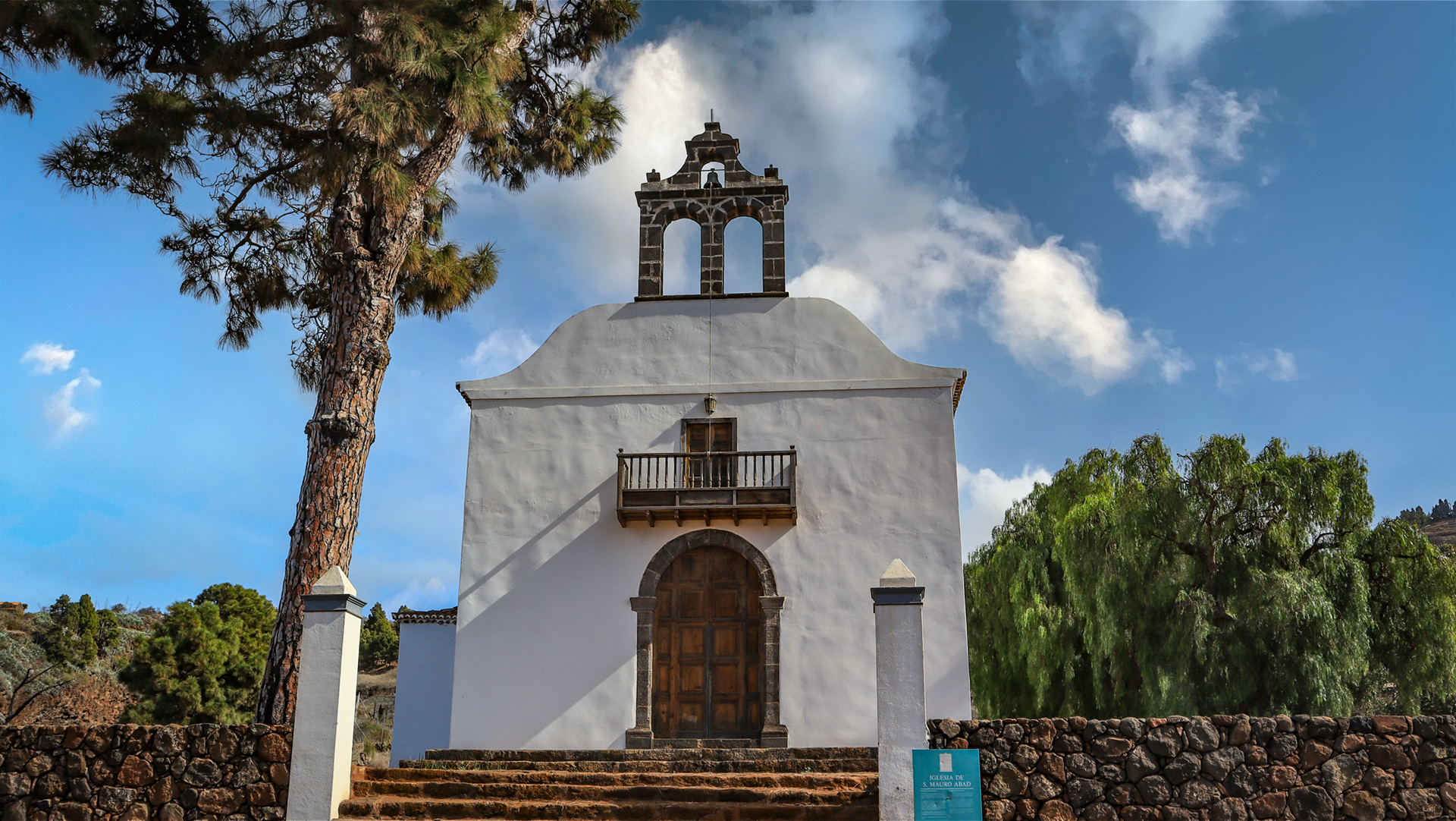
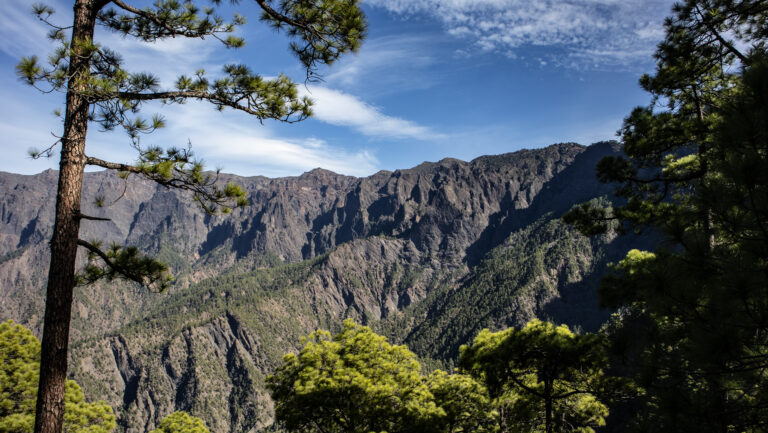
Puntagorda is one of the smallest municipalities on La Palma. The mountain village lies at an elevation of around 600 to 700 meters in a pine forest zone between Los Llanos de Aridane and Garafía – on the leeward west side, which gives it more sunshine than the towns on the north coast. It is precisely this combination of altitude, sun and cool winter nights that gives the almond trees the conditions they need for their early blossom.
The Almond Blossom – When and Where
The almonds in Puntagorda typically bloom between late January and mid-February. The exact timing depends on the winter weather – a mild December can bring the blossom forward, a cold winter can delay it. Those who want to be sure should plan their trip for the first weeks of February and check the current state beforehand with the Puntagorda municipal office or on local social media channels.
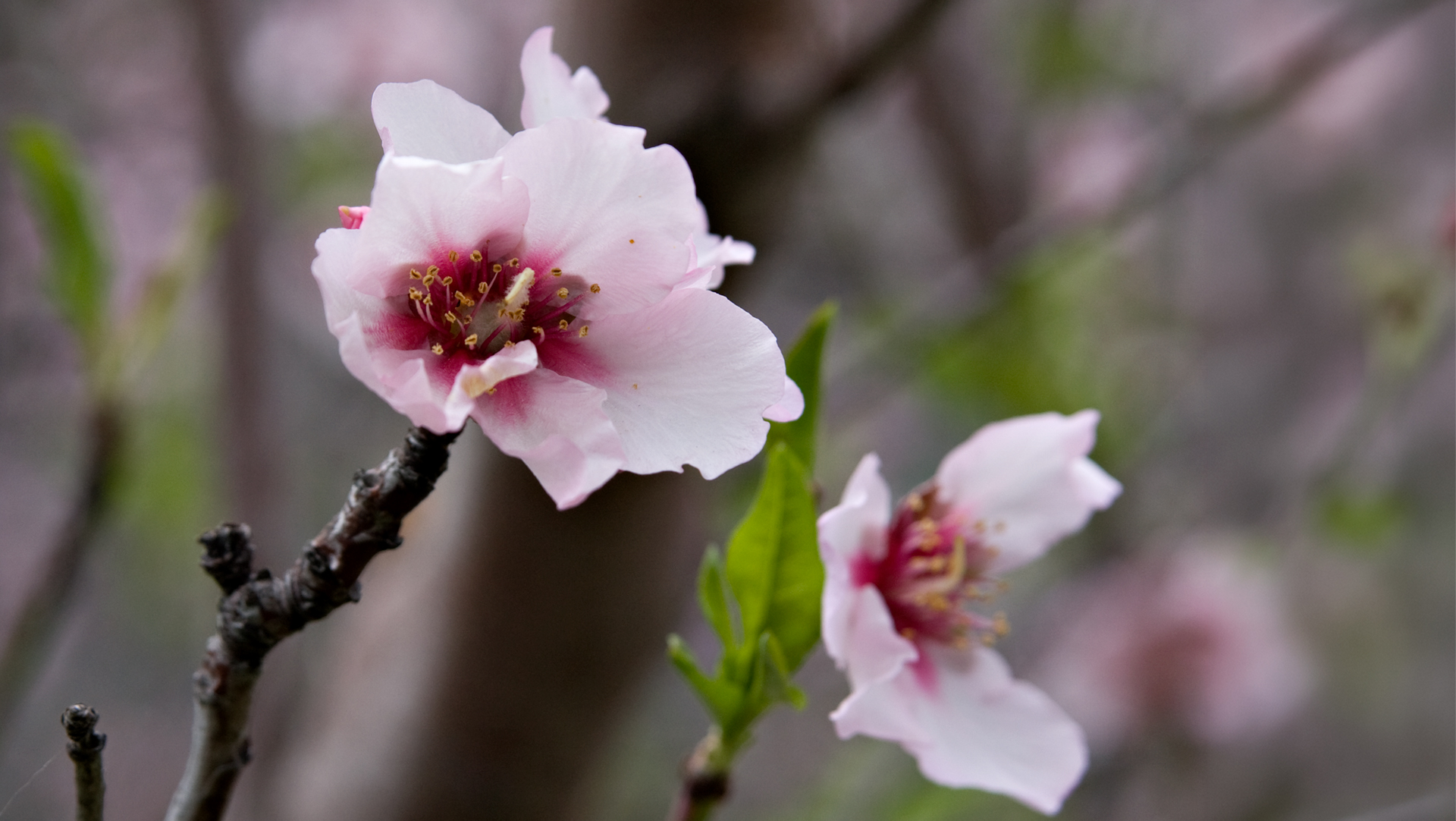
The most beautiful almond blossom fields lie on the terraces below the village centre and along the access roads. A walk through the slopes – with no fixed route, simply following the trees – is the best way to experience the blossom. Early in the morning, when the ground is still frosty and the blossoms glow in the first light, the sight is at its most striking.
Winemaking in Puntagorda
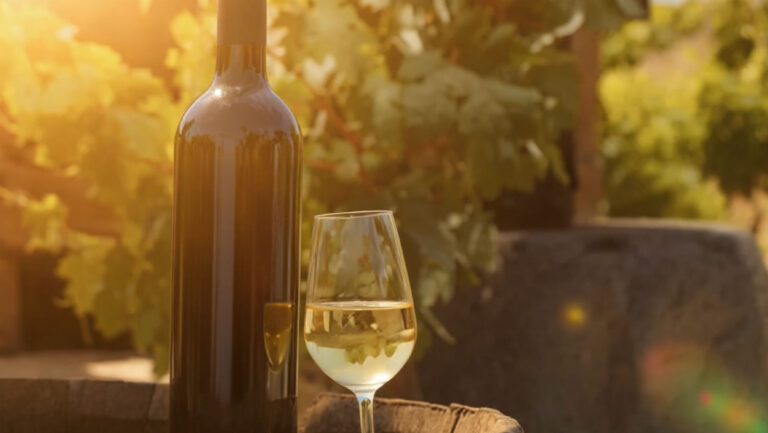
Besides the almonds, Puntagorda is known for its wine growing. The vines grow on black volcanic soil within dry-stone terrace walls – the classic Canarian bancal system. The wines from this area – mainly Listán Negro and Negramoll for reds, Albillo and Listán Blanco for whites – have a mineral character that comes from the volcanic soil.
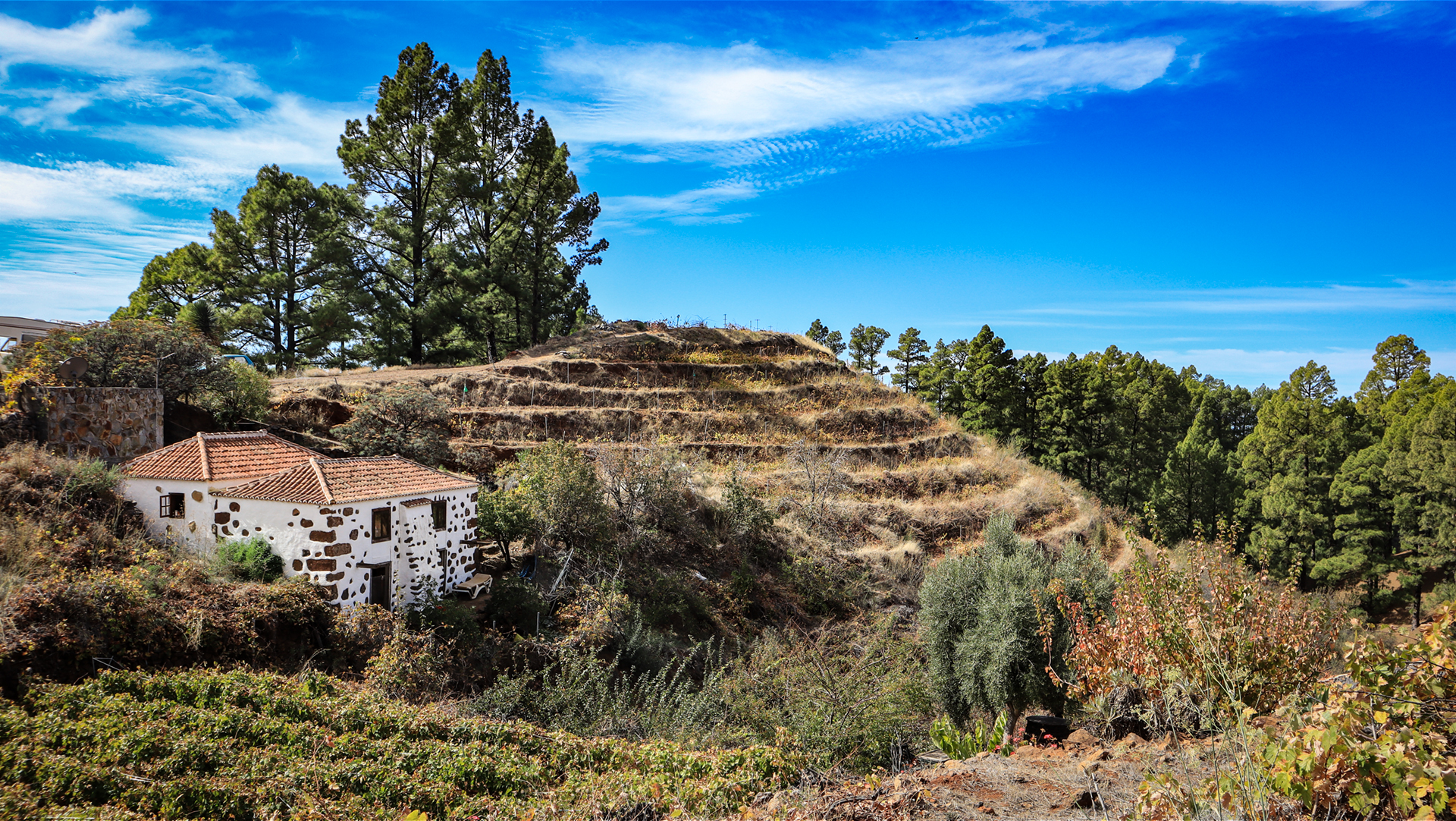
The Mercadillo de Puntagorda takes place on Saturdays and Sundays and is one of the most popular on La Palma: local farmers sell wine, cheese, honey, almonds and handmade produce. Combined with the almond blossom, the market makes for one of the most complete day trips La Palma has to offer.
Hiking from Puntagorda
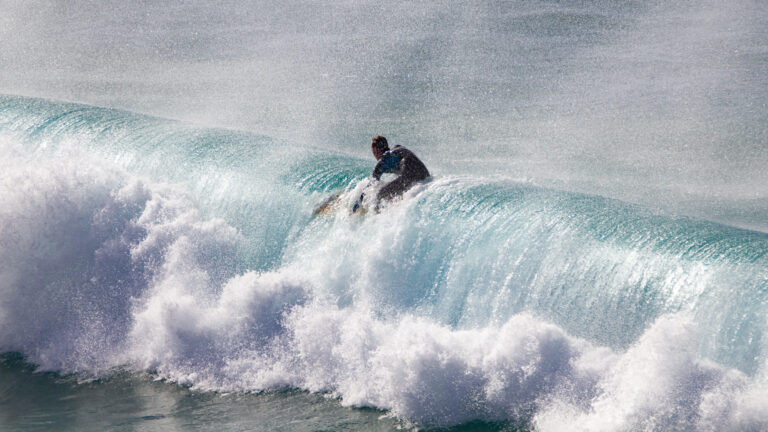
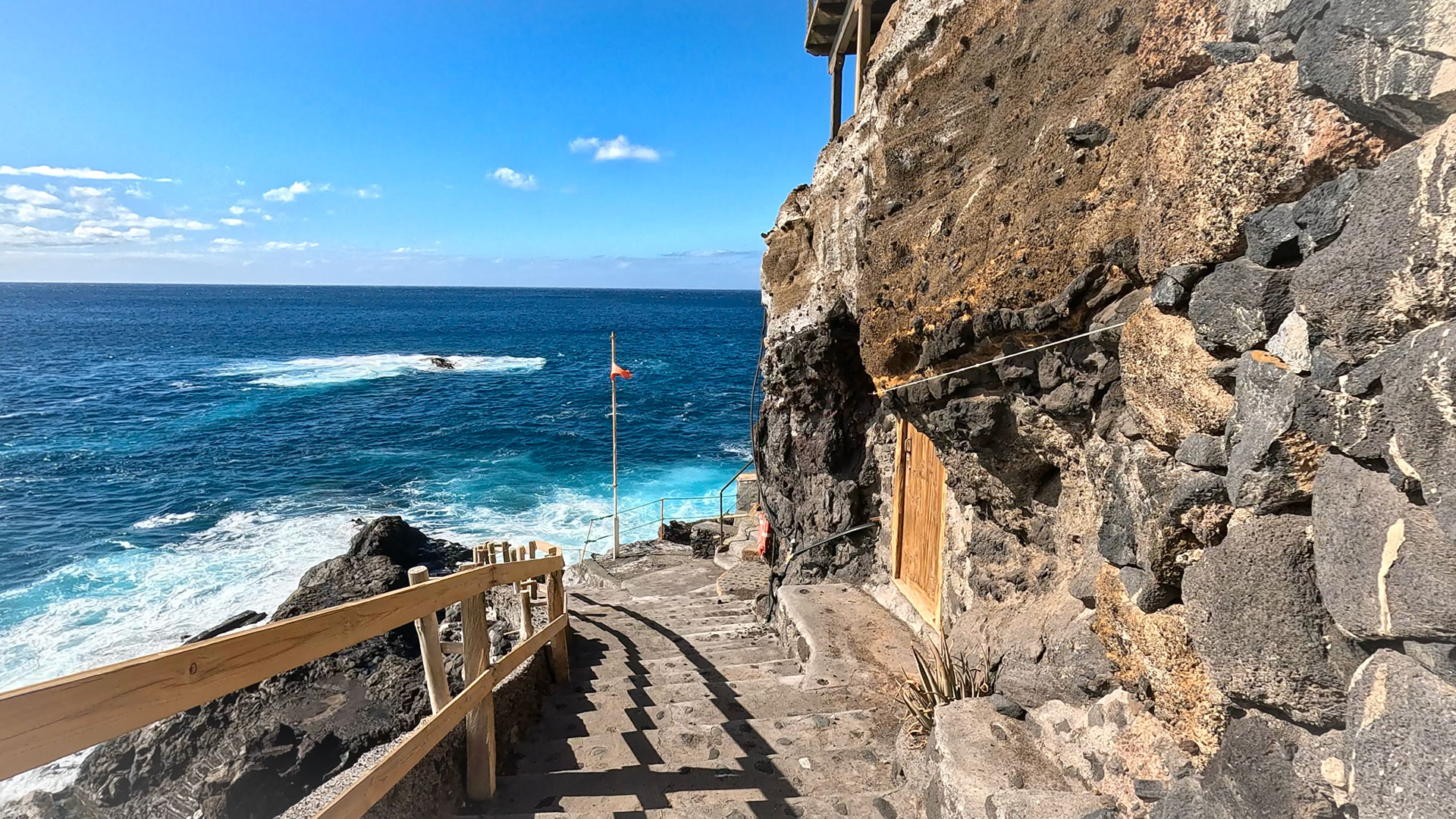
Puntagorda is also the starting point for several hiking routes. Route PR LP 11.2 leads down to the Puerto de Puntagorda – an old fishing harbour on the west coast with a natural pool and spectacular surf. The descent has an elevation change of around 600 meters and is demanding; the old path through pine forest and spurge scrub is unique.
Visitor Information
Puntagorda: Municipality in northwestern La Palma, approx. 900 m in elevation
Almond Blossom: late January to mid-February – timing varies
Mercadillo: Saturdays and Sundays
Puerto de Puntagorda hike: PR LP 11.2 – demanding, 600 m descent
Getting there from Los Llanos: LP-1 towards the north – approx. 25 min.
Accommodation: Clariso: 19 holiday homes in Puntagorda
Accommodation in Puntagorda
Puntagorda offers 19 verified holiday homes on Clariso – one of the largest selections for such a small village. Many properties have sea views or are set among the almond groves and vineyards: Holiday Homes in Puntagorda on Clariso
Practical Tips for Your Visit
Getting There for the Almond Blossom Festival
During the almond blossom festival, Puntagorda is one of the busiest places on the island. The village centre is partly closed to traffic or only accessible on a limited basis. Follow the signposted car parks on the edge of the village or, if possible, use the bus connections to Puntagorda. This helps you avoid long delays and hunting for a parking spot.
Bienmesabe – the Sweet Canarian Speciality
A visit during the almond blossom season wouldn’t be complete without trying bienmesabe. This traditional Canarian dessert is made from ground almonds, honey, egg yolk, sugar and a hint of lemon. It is especially popular served with vanilla ice cream or other desserts – a must for anyone wanting to try a regional speciality.
Experiencing the Almond Blossom on Foot
Those wishing to enjoy the blossoming almond trees in peace and quiet should plan a hike. Particularly popular is the Ruta de los Almendros (SL-PG 60), which passes through the most beautiful almond groves around Puntagorda and repeatedly opens up wonderful views of the northwest coast.
Photography Tip: Capturing the Almond Blossom Perfectly
The best photos are taken early in the morning or in the late afternoon during the so-called golden hour. The warm sunlight then bathes the white and pink blossoms in a particularly atmospheric light and creates soft contrasts. At the same time, the trails and viewpoints are usually much quieter than around midday.
For impressive panoramic shots, it’s worth capturing a view over the blossoming almond groves with the Atlantic in the background. Those wanting to photograph the blossoms in detail will find the best subjects along the Ruta de los Almendros (SL-PG 60), where numerous old almond trees line the path.
Frequently Asked Questions (FAQ)
When exactly do the almond trees bloom in Puntagorda?
Is there a festival for the almond blossom in Puntagorda?
Which specialities should I try?
Are there hiking trails through the almond groves?
The Pine Forest of Puntagorda
Puntagorda sits in the middle of La Palma’s pine forest belt – at an elevation of 900 meters, where the Canarian pine dominates the landscape. The forest offers shade and a pleasant microclimate even in summer.
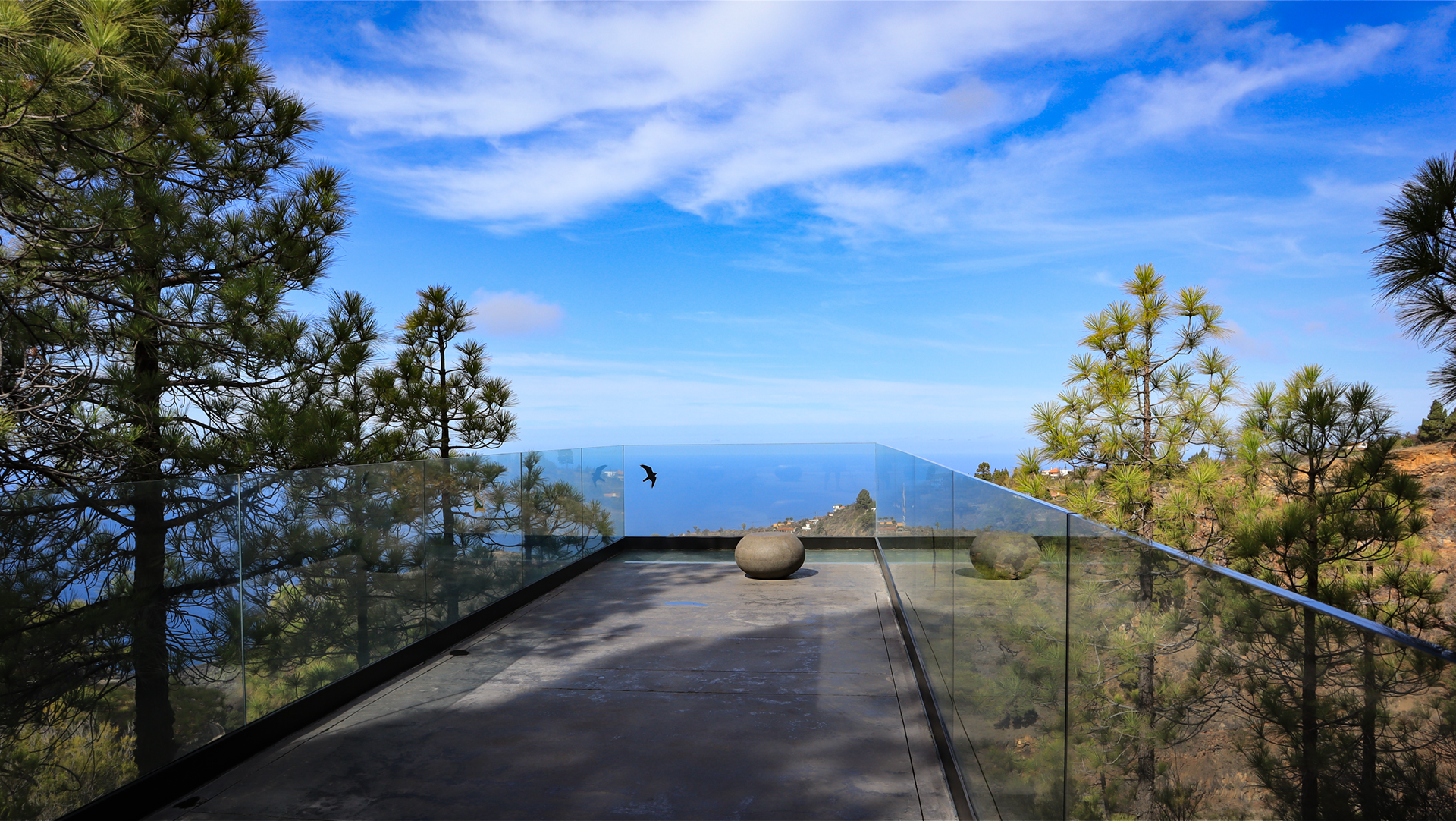
The Canarian pine is a fire-adapted species – it resprouts from the bark after fires, an ability unknown in other tree species. After the last major wildfire on La Palma, which affected parts of the pine forest in 2016, the regenerative power and the new shoots can be observed directly.
Sunset over the Atlantic
Puntagorda lies on the west side of La Palma – a location that makes the village one of the island’s best spots for sunsets. From the edge of the village and from several nearby viewpoints, you can watch the sun sink directly into the Atlantic. In winter, when the trade wind clouds sit low, this produces displays of colour that are hard to beat.
This article is based on the on-the-ground knowledge of the Gequo editorial team – publishers of the Reisezeit hiking guides and operators of Sunhikes.com. Last updated: May 2026