Balcones Típicos – La Palma’s Wooden Landmarks
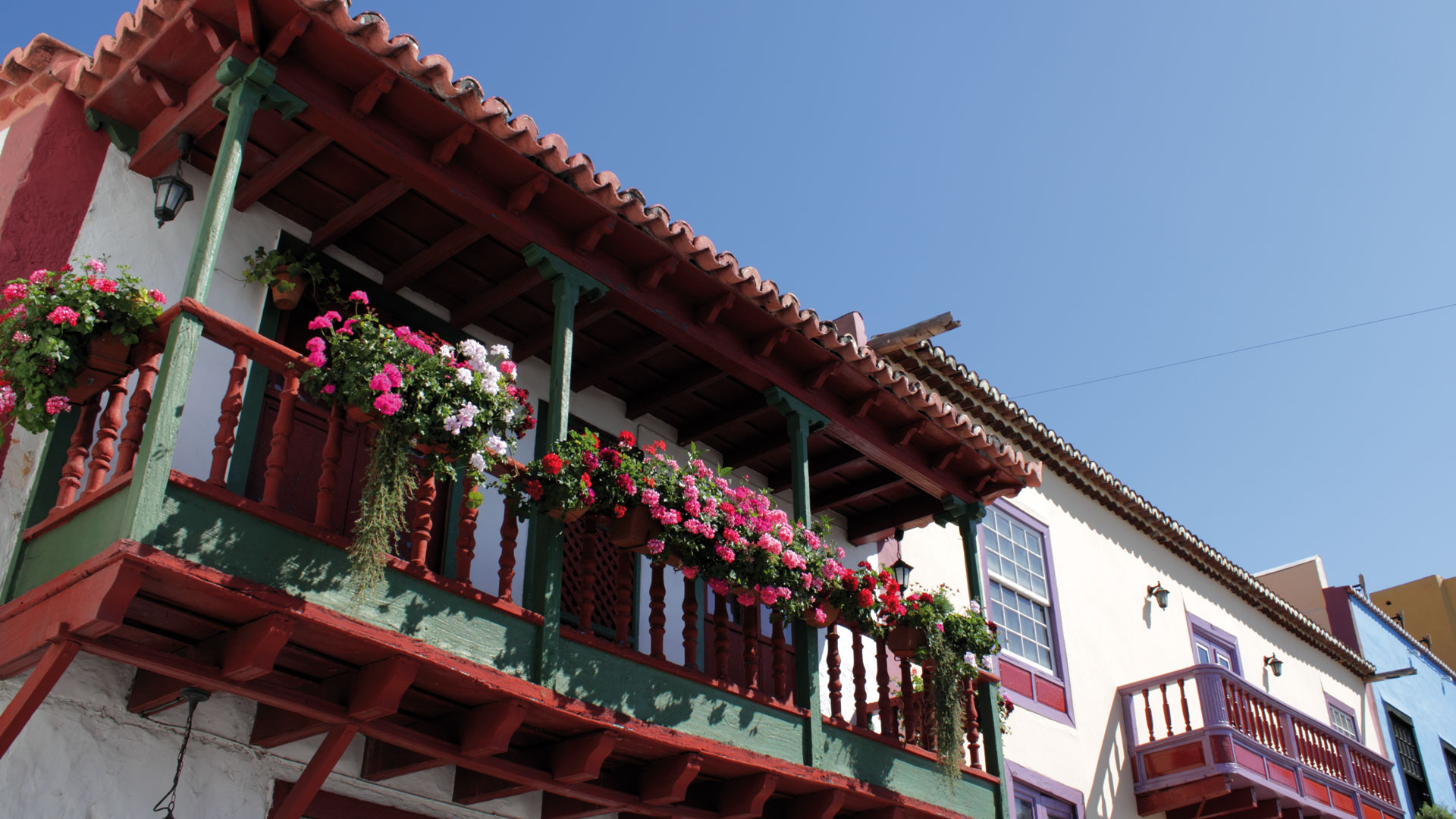
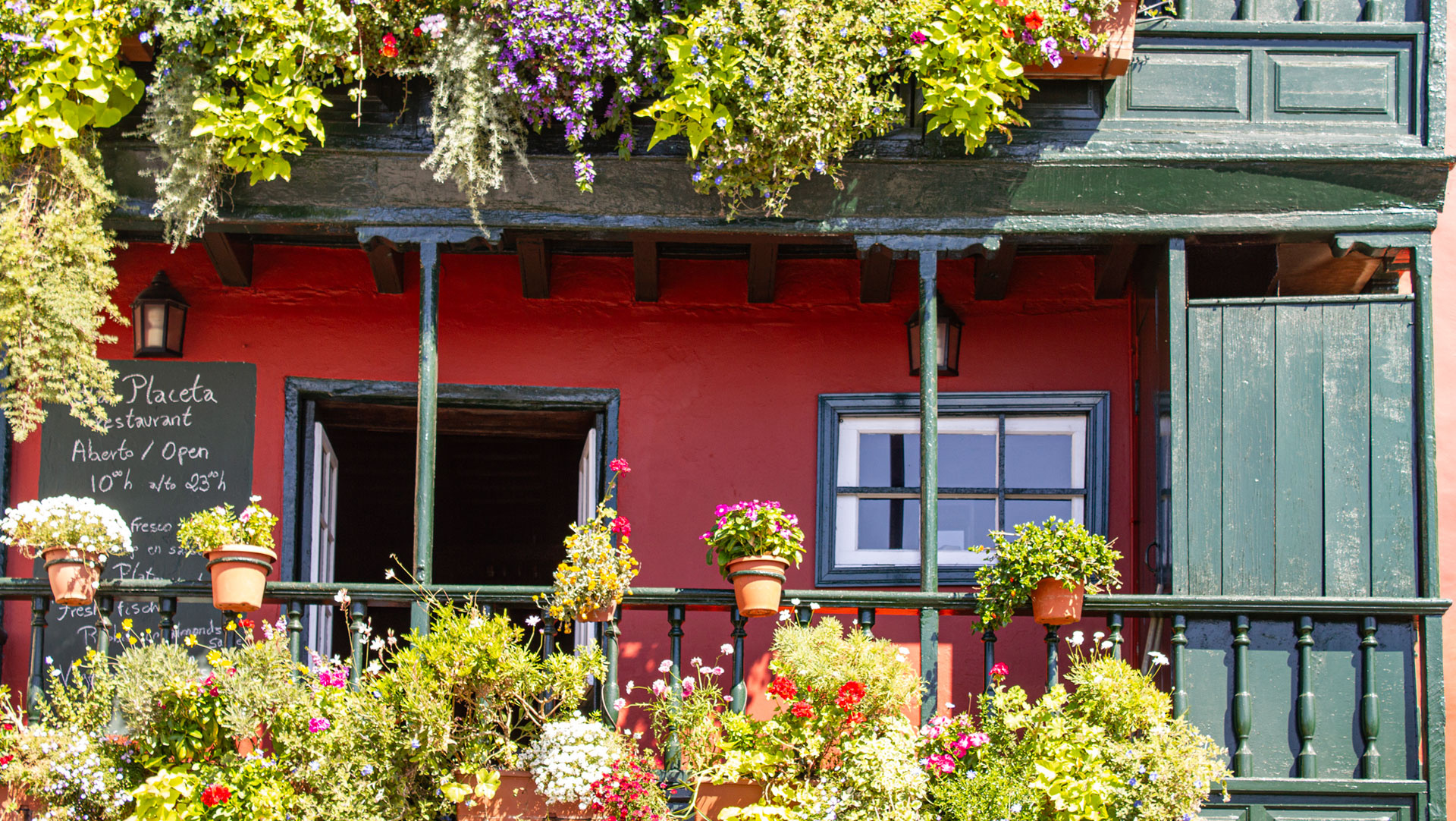
Along the Avenida Marítima in Santa Cruz de La Palma stand the most famous facades in the Canary Islands: a row of historic colonial houses with elaborately carved wooden balconies – the Balcones Típicos.
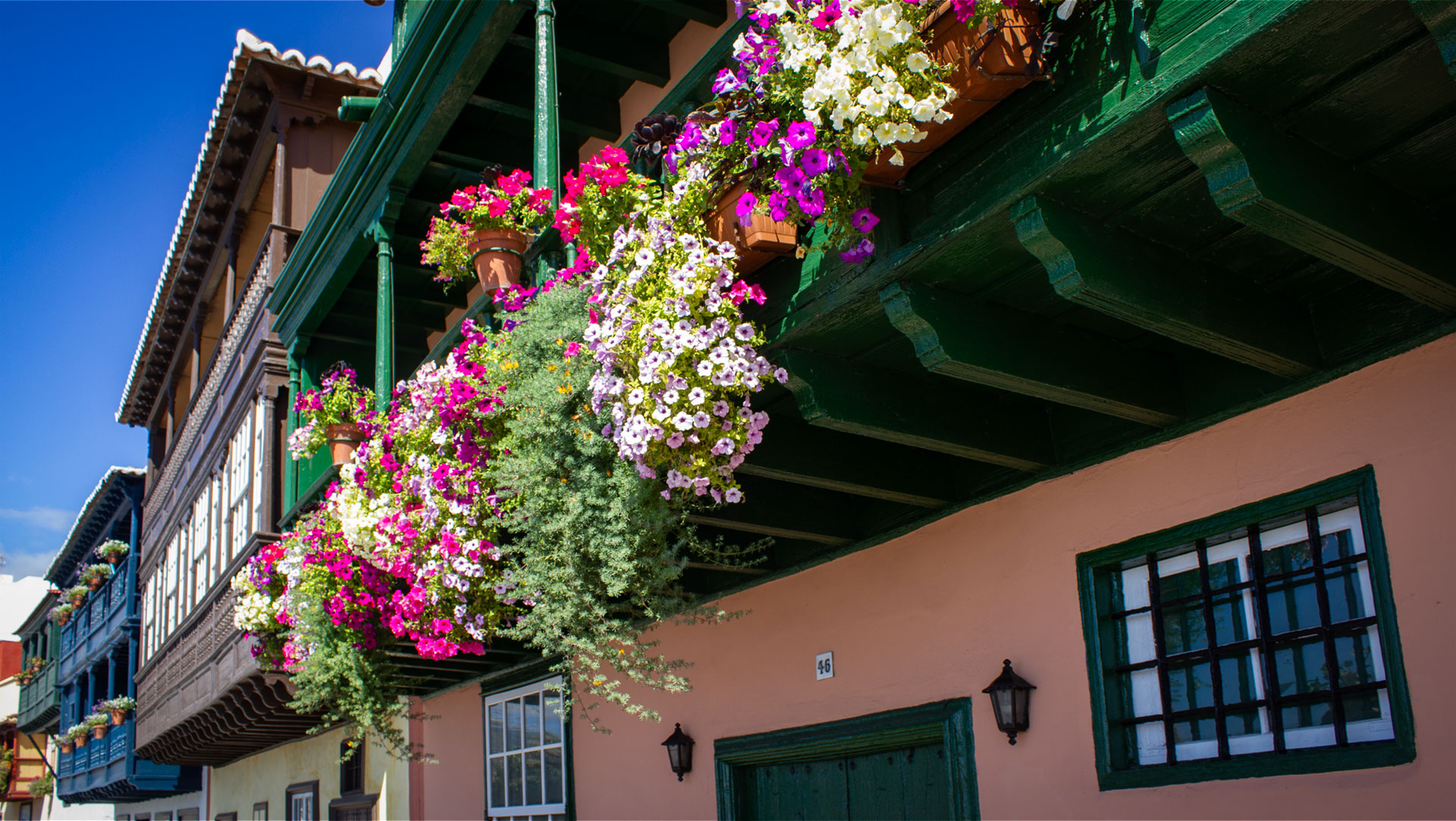
What makes them special is their combination of craft quality, historical depth and sheer number. Nowhere else in the Canary Islands does such a dense ensemble of traditional wooden balconies survive.
History and Function
The Balcones Típicos date back to the 16th to 18th centuries, when Santa Cruz de La Palma was one of the most important ports in the Atlantic. Wealthy merchants had the balconies built as storage space – goods were stored up high, away from the humidity.
The earlier balconies were fully enclosed: fine wooden latticework from top to bottom, sometimes reaching over two floors. This allowed the inhabitants to look out while remaining unseen from the street.
The Portuguese Carpenters
The Balcones Típicos were significantly shaped by Portuguese immigrants who brought their joinery traditions to La Palma. The elaborate decorations – turned balusters, carved cornices, lattice panels – reflect Iberian craftsmanship of the early modern period.
Practical Tips for Your Visit
Combine with a Stroll Through the Old Town
The Balcones de la Avenida Marítima are right in the historic centre. They are just a few minutes’ walk from the Plaza de España, the Iglesia El Salvador and the Castillo de Santa Catalina.
A Living Cultural Heritage
The characteristic wooden balconies are maintained by their owners and heritage authorities. Many have been restored with original materials – Canarian pine, traditional joinery methods.
UNESCO Recognition
The Canarian Balcones Típicos – with La Palma as their most significant ensemble – are recognized by UNESCO as part of the Canary Islands’ Intangible Cultural Heritage.
The Best Photo Spots
The best light is usually in the morning through early afternoon. Stand on the seaside promenade and photograph the facades from across the street – this gives the full line of balconies.
The highest concentration is on Avenida Marítima – the seafront promenade that runs parallel to the harbour. The most photographed section is between the Plaza de la Alameda and the Castillo de Santa Catalina.
Best light for photos: early morning, when the sun hits the facades from the east and the green paint glows.
Insider tip for photographers: After sunset the balconies are beautifully lit. The combination of the illuminated row of houses and the waterfront promenade creates particularly atmospheric shots during the blue hour.
| Best Angle | From the harbour / ferry terminal (entire row) |
|---|---|
| Best Light | Morning (east light on the facades) |
| Location | Avenida Marítima, Santa Cruz de La Palma |
| Accessible | Open 24/7, free admission |
| Combine With | Castillo de Santa Catalina + Castillo de La Virgen |
| Parking & Getting There | Harbour car park, Avenida Marítima |
Frequently Asked Questions (FAQ)
Why are the balconies usually painted mountain green?
Can you view the balconies from the inside?
When do you get the best photos of the Balcones?
Why do the houses have such large wooden balconies?
Can the Balcones be combined well with other sights?
From Wood to Landmark – The Transformation of the Balconies
During the 19th and 20th centuries the balconies lost their original storage function. The refrigerator, solid walls and changing lifestyles made them superfluous as practical spaces. What remained was their aesthetic value.
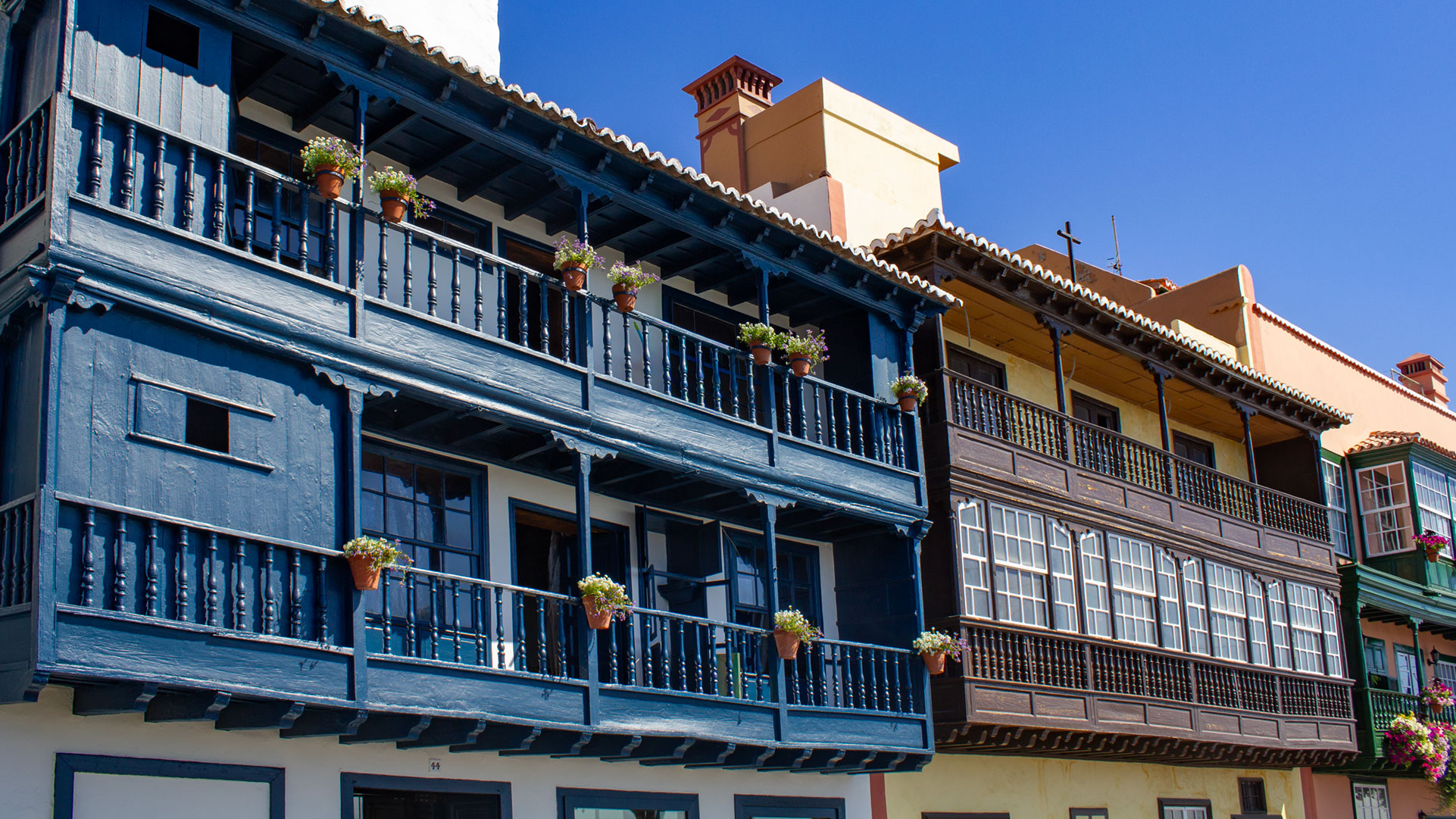
Today the remaining original balcony houses are listed by the municipality and the island council and carefully maintained. New constructions in the historic zone must conform to the traditional style.
Other Places with Beautiful Balconies on La Palma
The densest row of balcony facades is on the Avenida Marítima in Santa Cruz de La Palma – but other towns and villages on the island also have fine examples: Los Llanos de Aridane, El Paso and Tijarafe all have traditional wooden balconies worth seeking out.
This article is based on the on-site knowledge of the Gequo editorial team – publishers of the Reisezeit Hiking Guides and operators of Sunhikes.com. As of: May 2026