Playa del Faro – Pebble Beach beneath the Lighthouses
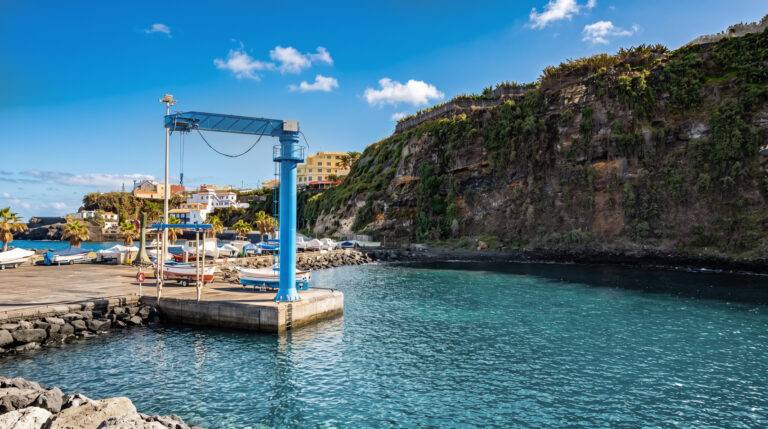
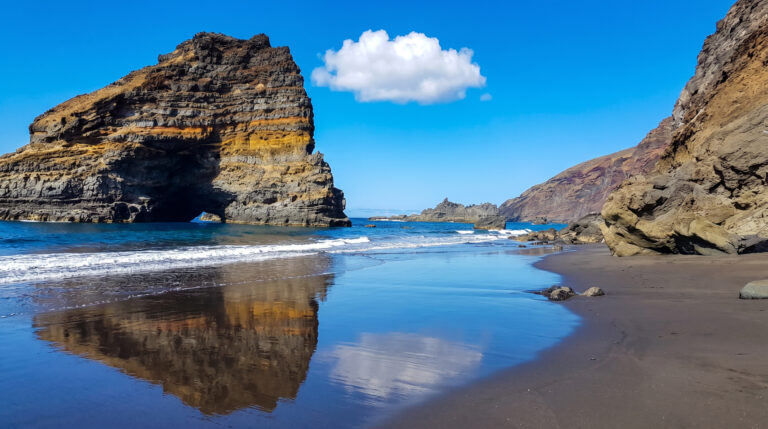
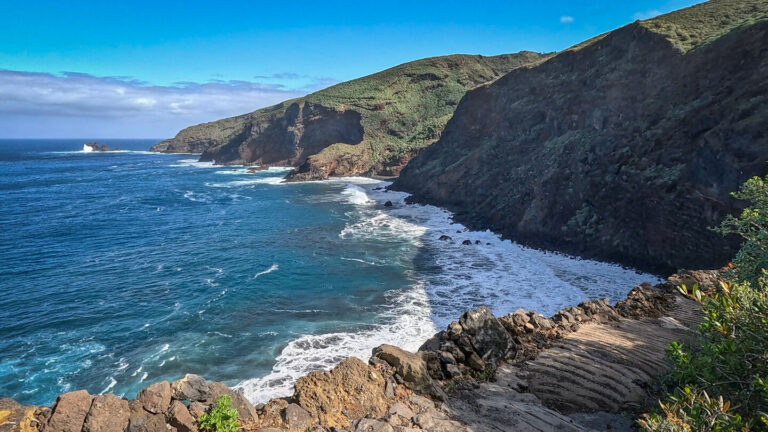
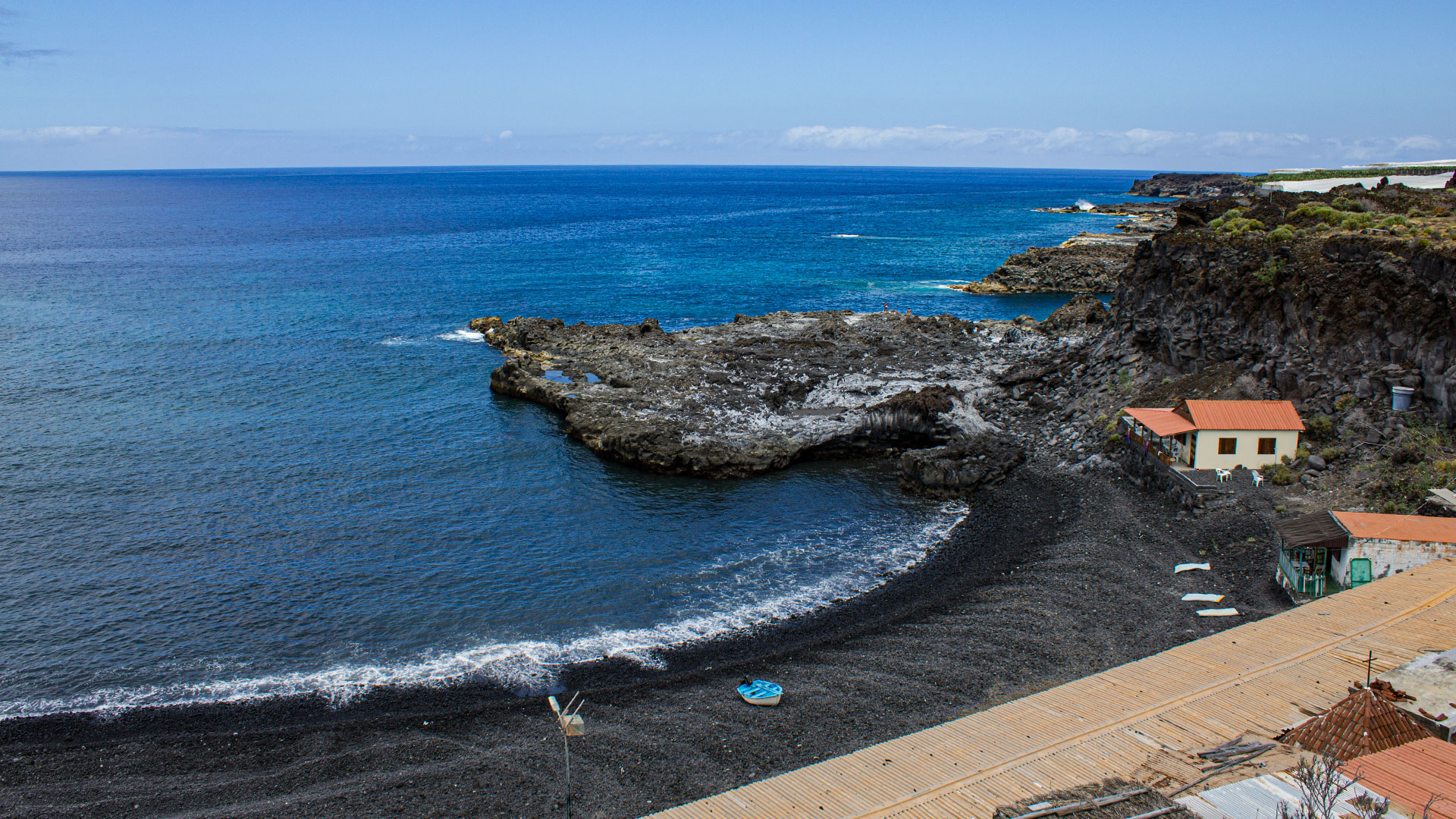
At the very southern tip of La Palma, below the two lighthouses of Fuencaliente, lies Playa del Faro. Small, pebbly, and unpretentious — yet easily one of the most memorable beaches on the island. Not for its size or facilities, but for its setting: lighthouse above, Atlantic ahead, lava cliffs left and right.
A Pebble Beach with Character
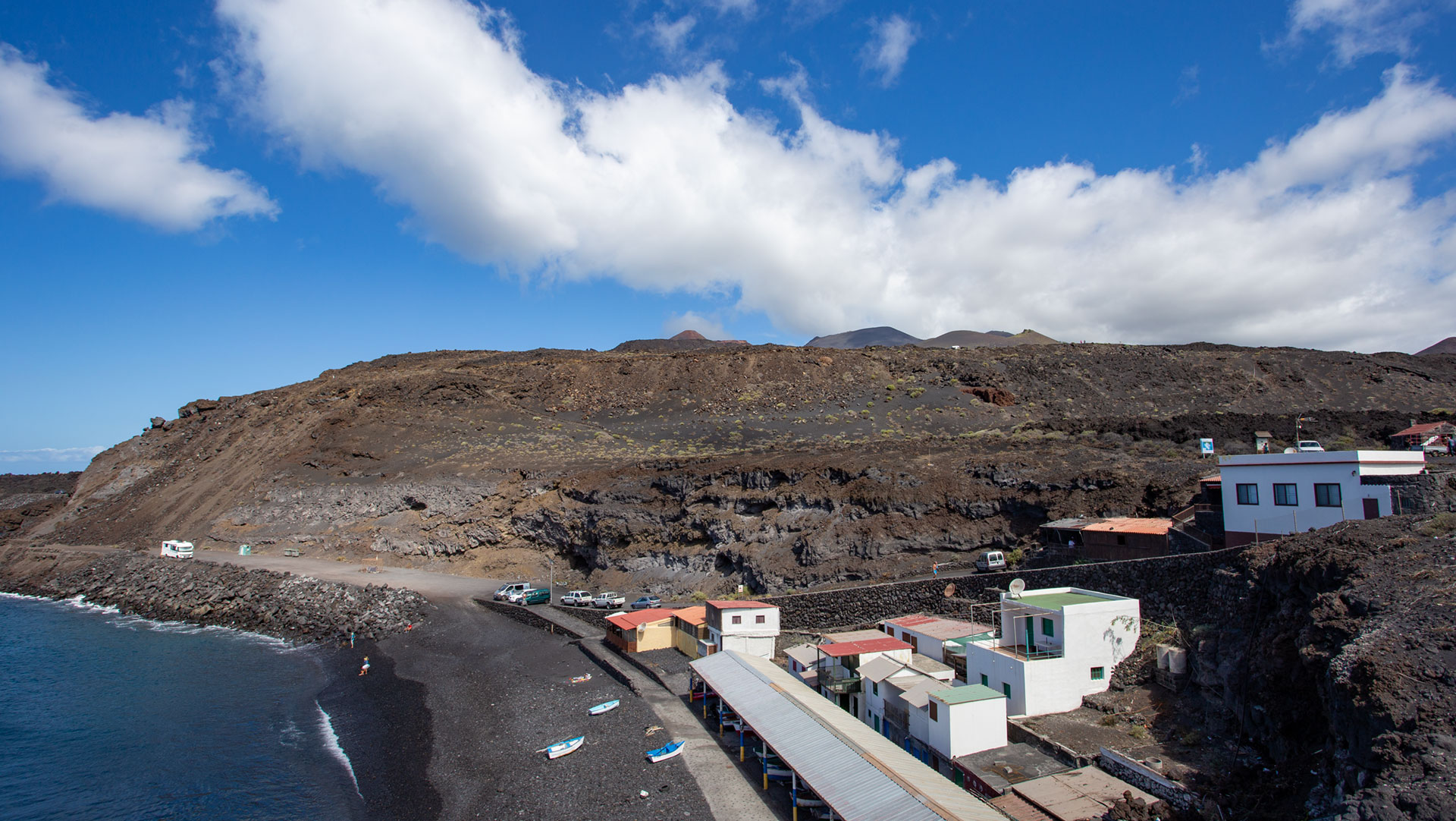
Playa del Faro is small. The pebbles are coarse and making water shoes absolute essential — walking barefoot across the pebbles is a quick recipe for regret. But this simplicity is part of the appeal: no tourist infrastructure, no sun loungers, no crowds. Directly above lies a small fishing village that is well visited on nice days.
Nestled in the village is a local fish bar serving fresh daily catches alongside chilled local wine – with views of the lighthouses and the roaring Atlantic. Lapas on lava stone, vinagrillo with mojo, a glass of local white wine: that is the cuisine of the southern tip, simple and good. Anyone who returns hungrier than expected after the beach visit is in exactly the right place. Tip: As the kiosk usually closes in the late afternoon, it is ideal for a leisurely lunch.
Swimming & Safety
The beach flags give daily information about swimming conditions:
Green: Swimming conditions are safe.
Yellow: Caution – waves or currents. Children and weak swimmers should stay on land.
Red: Swimming strictly prohibited. Ignoring this warning is life-threatening.
Water shoes are essential – the pebble bed is sharp and painful when walking barefoot.
No lifeguard service on site. Watch for currents, especially with onshore wind.
The Lighthouses of Fuencaliente
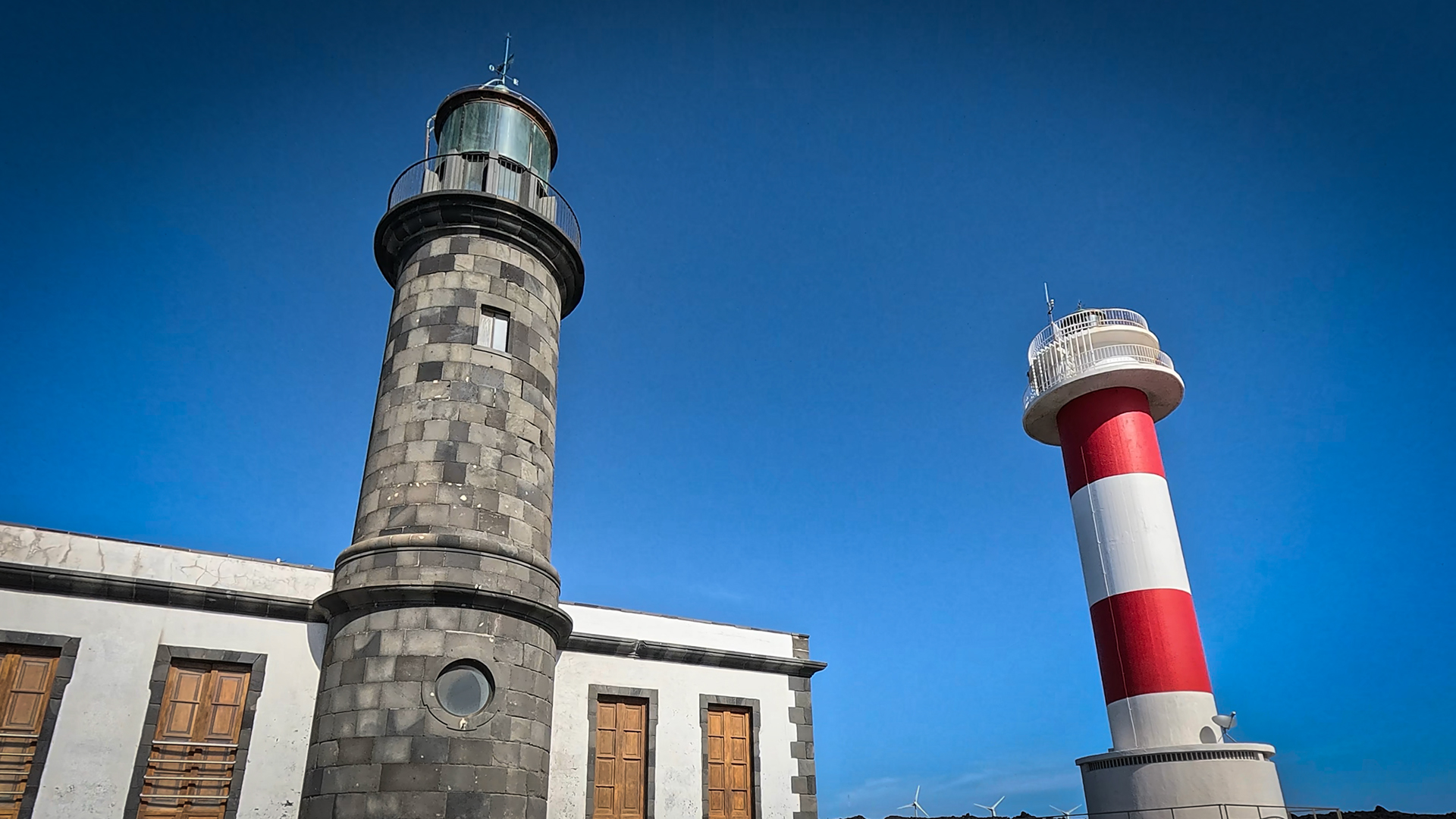
Directly above Playa del Faro stand the two lighthouses of Fuencaliente: the old, stone-built lighthouse from the 19th century and the modern new building beside it. From the footpath between the towers, you have one of the widest panoramic views on the island – on a clear day as far as La Gomera, El Hierro and Tenerife with the Teide.
The Salinas de Fuencaliente, the historic seawater salt pans, are also in the immediate vicinity. The combination of beach, lighthouses and salt pans makes the southern tip one of the most compact and impressive excursion destinations on La Palma.
| Location | Southern tip of La Palma, municipality of Fuencaliente, below the lighthouses |
|---|---|
| Beach | Small pebble beach with coarse lava gravel |
| Water shoes | Essential – the gravel is sharp |
| Facilities | Small fishing settlement above; simple bar serving fresh fish |
| Lighthouses | Old and new Faro de Fuencaliente directly above – panoramic views |
| Combine with | Salinas de Fuencaliente · Playa Echentive · Volcán San Antonio |
History: Two Lighthouses, One Coast
The old lighthouse of Fuencaliente dates from the late 19th century and was put into operation in 1903. When the Teneguía volcano erupted in 1971, the molten lava stopped a whisker away from the structure, but the severe seismic tremors badly damaged the historic stone tower. As the structure remained permanently unstable, a new concrete tower twice as high was built directly beside it in 1985. Today the old tower stands as a historic monument next to its modern successor – a rare sight combining volcanic history and maritime history in a single frame. From the terrace between the two towers, one of La Palma’s widest panoramic views opens up: to the east, where La Gomera and El Hierro are visible on a clear day.
Hiking along the South Coast: Two Directions, Two Worlds
From the lighthouses at the southern tip, the paths split into two completely different worlds. Heading east, you stay at sea level: skirting the gleaming basins of the salt pans, you follow the wild coastline northward to the lonely Playa de las Cabras, framed by lava rock and old fishing paths.
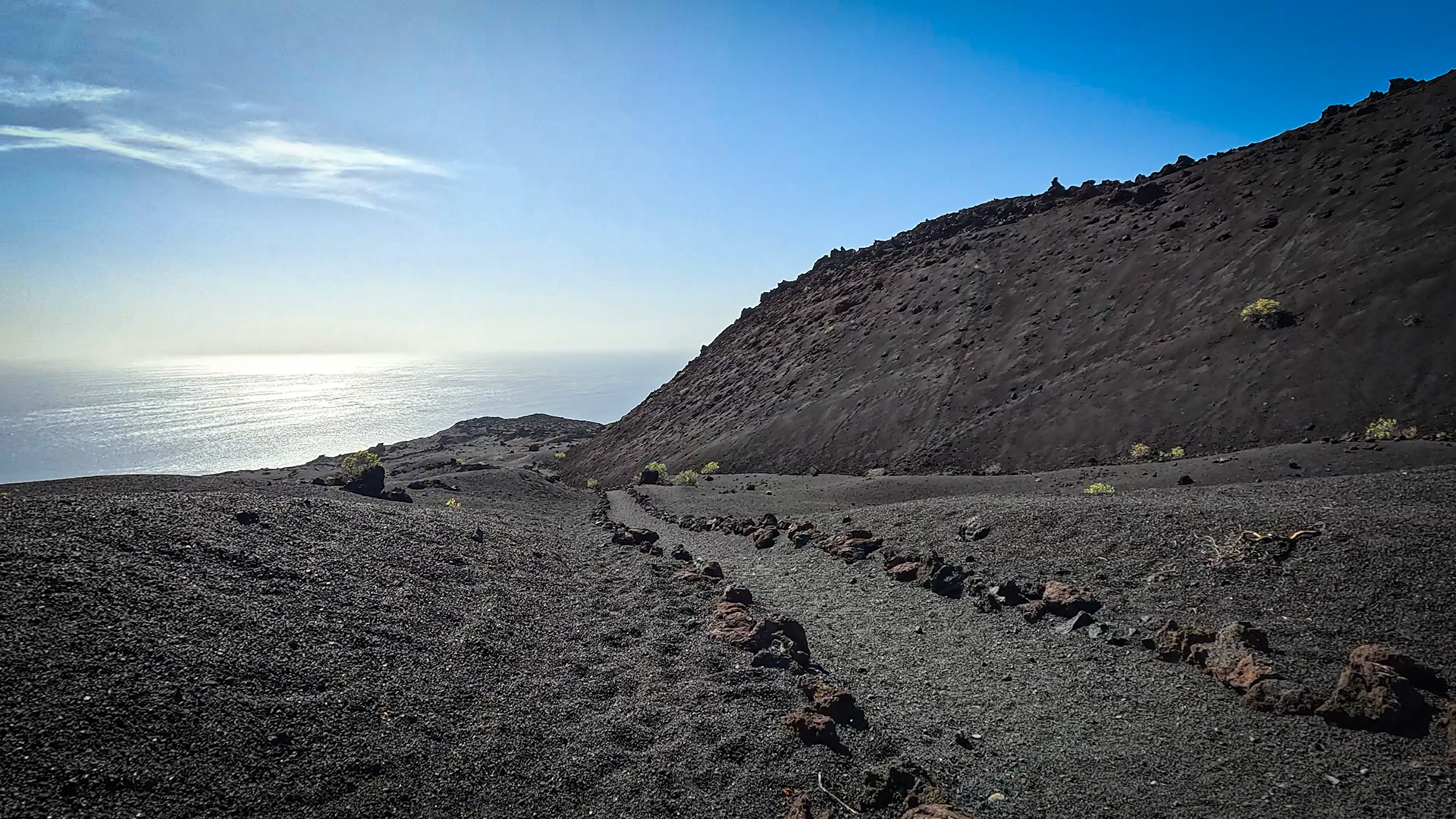
If heading northwest from the lighthouses instead, you leave the ocean behind and ascend steeply along the GR-131 trail into the stark volcanic landscape. Through deep, pitch-black ash fields, you hike first up to the younger crater of Volcán de Teneguía and then on to the mighty, pine-covered crater rim of Volcán San Antonio. The terrain is varied, the paths sometimes demanding – sturdy footwear is also essential equipment here.
Getting There and Practical Tips
From the main road in the south, the steep coastal road LP-2071 leads to the destination, signposted to the car park directly at the lighthouses. Due to the winding mountain roads, allow plenty of time for the journey: from both Santa Cruz in the east and Los Llanos de Aridane in the west it takes about 45 to 55 minutes each. As the roads are fully paved and well maintained, a hire car is definitely the most comfortable option for this excursion.
The path to Playa del Faro is short and straightforward – from the car park at the lighthouses you walk down on foot in just a few minutes. Faro de Fuencaliente stands on public land and is freely accessible. No entry fee, no ticket – just the Atlantic and the view.
Natural Monument Los Volcanes de Teneguía: In the Footsteps of Primordial Forces
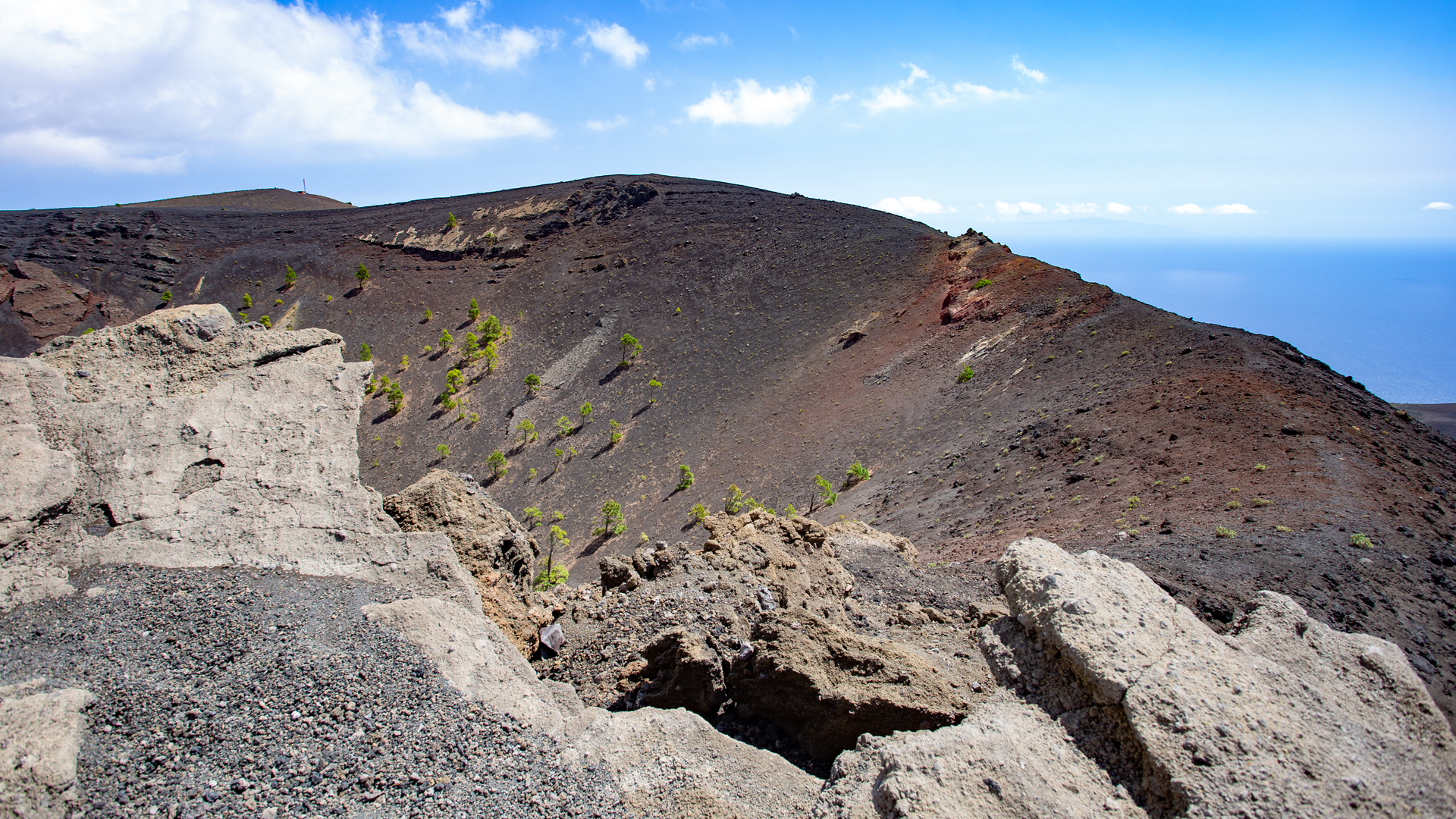
About 15 to 20 driving minutes from Playa del Faro, the natural monument Los Volcanes de Teneguía looms with its two mighty craters above the southern tip. At Volcán San Antonio, a secured path leads to part of the crater rim, from where you enjoy a view into the depths of the pine-covered basin and across the entire south coast. Noticeably steeper and wilder is the younger neighbour Teneguía, which formed as recently as 1971: it can be reached via a short hike through the pitch-black ash landscape. Combined with Playa del Faro and the colourful salt pans, this makes for a fascinating and extensive day trip to the geologically most dramatic corner of La Palma.
Sal de Teneguía: The Salt beside the Beach
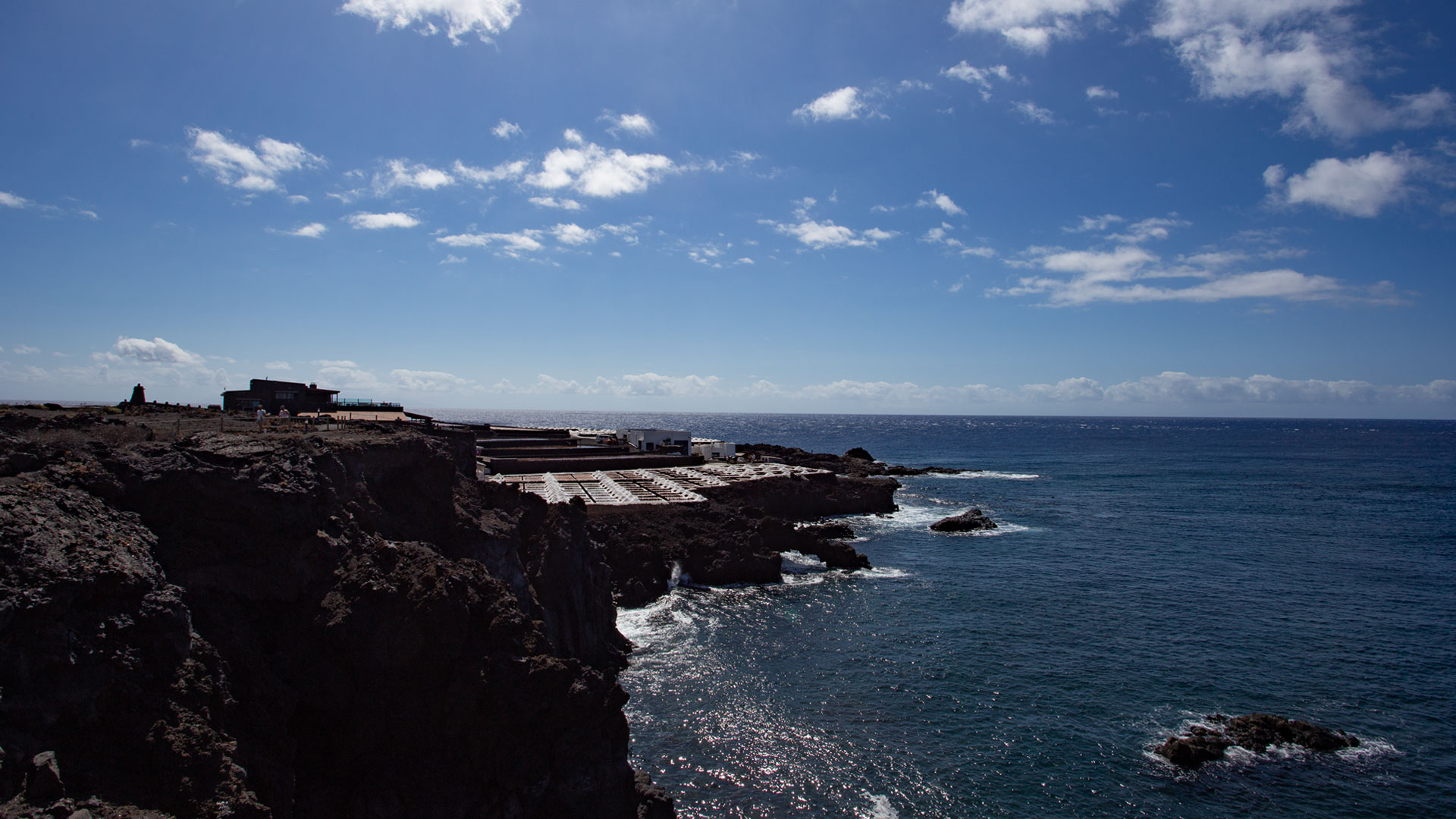
Next to the beach, at the base of the lighthouse cliff, lie the Salinas de Fuencaliente. Here Sal de Teneguía is harvested – by hand, in shallow basins, using a method unchanged for centuries. The salt is well known throughout the Canary Islands and found in many restaurants on the island. A short walk from Playa del Faro to the salt pans and back takes barely half an hour.
Best Time to Visit Fuencaliente
Thanks to the mild coastal climate, La Palma’s southern tip is an excellent year-round destination. In winter, temperatures here are around 20 degrees, while the north coast is often under trade wind clouds; in Fuencaliente the sun almost always shines. This makes Playa del Faro an attractive destination even in December and January – when other beaches across La Palma might be blanketed in cloud, the southern tip often basks in sunshine. Water temperatures of 19 to 22 degrees make swimming in winter possible too.
Playa del Faro in the Daily Schedule
The ideal day plan for Playa del Faro: arrive in the morning, when the car park at the lighthouses is still empty. Descend to the beach. Swim – or just look. Climb back up. Brief visit to the lighthouses. Walk along the salt pans. Lunch in the fishing village. In the afternoon, continue to the volcano craters or vineyards.
Conclusion: Playa del Faro
Small, pebbly, unforgettable: Playa del Faro is not a comfort beach – it is the beach at the end of the island, beneath the lighthouses, looking out to sea.
Pack your water shoes, order fish, look at the lighthouse: that is the plan for half a day at the southern tip of La Palma.
Frequently Asked Questions
How did Playa del Faro get its name?
Do you really need water shoes?
Is there somewhere to eat nearby?
What else is worth seeing nearby?
This article is based on the on-the-ground knowledge of the Gequo editorial team – publishers of the Reisezeit hiking guides and operators of Sunhikes.com. Last updated: May 2026