Playa de Nogales – Black Natural Beach in the Northeast
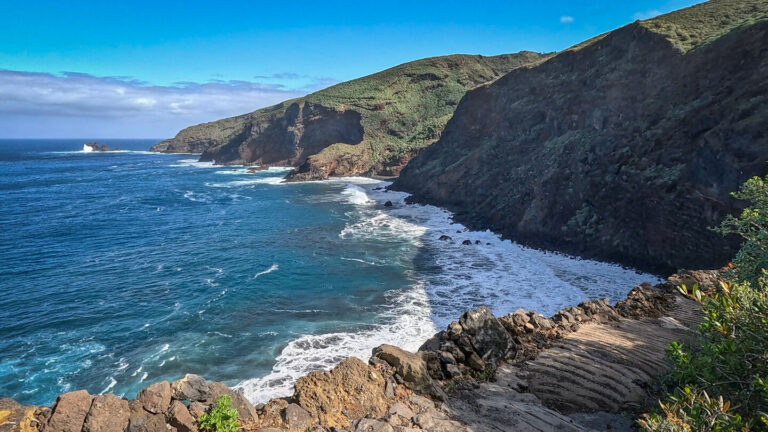
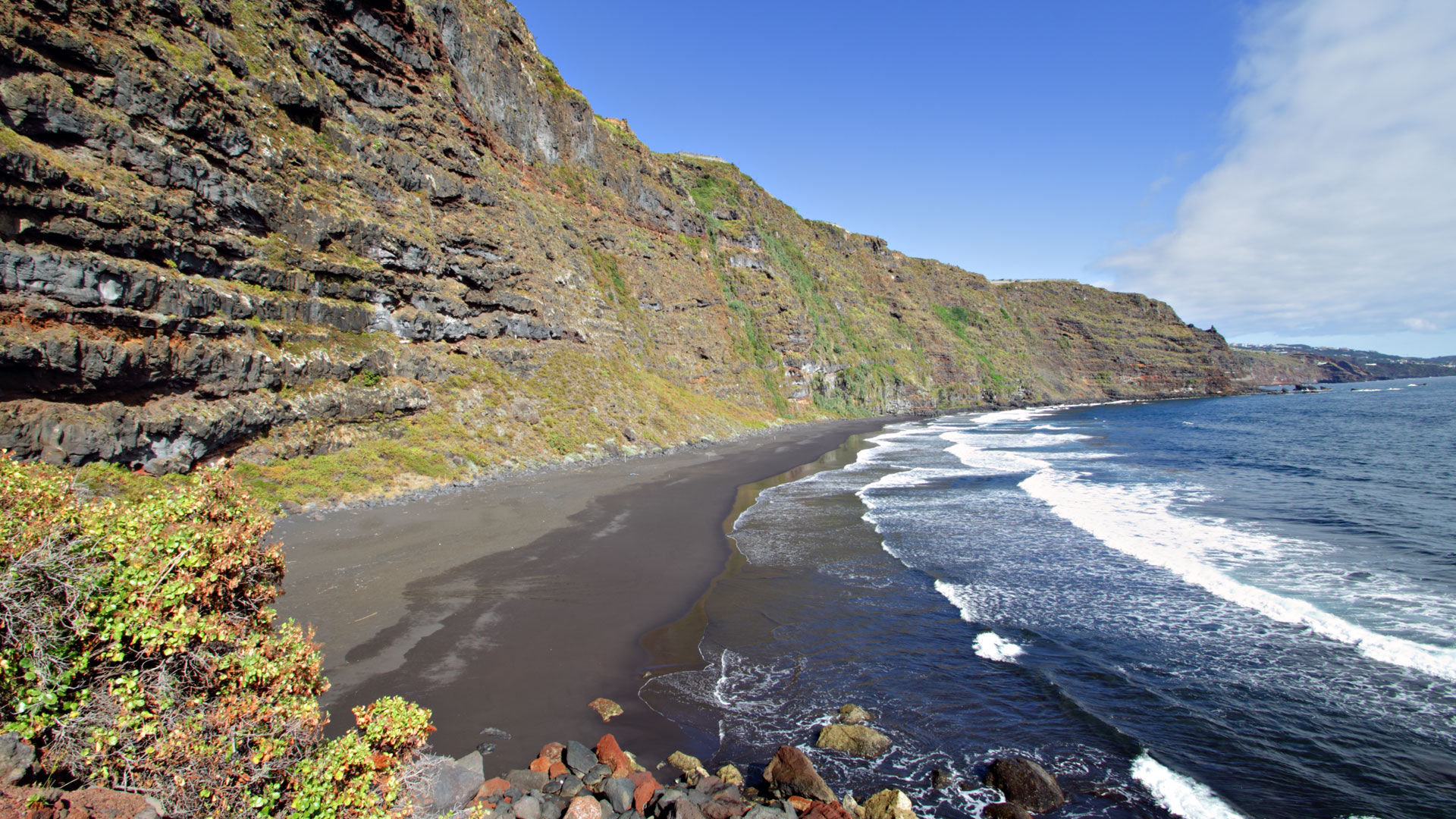
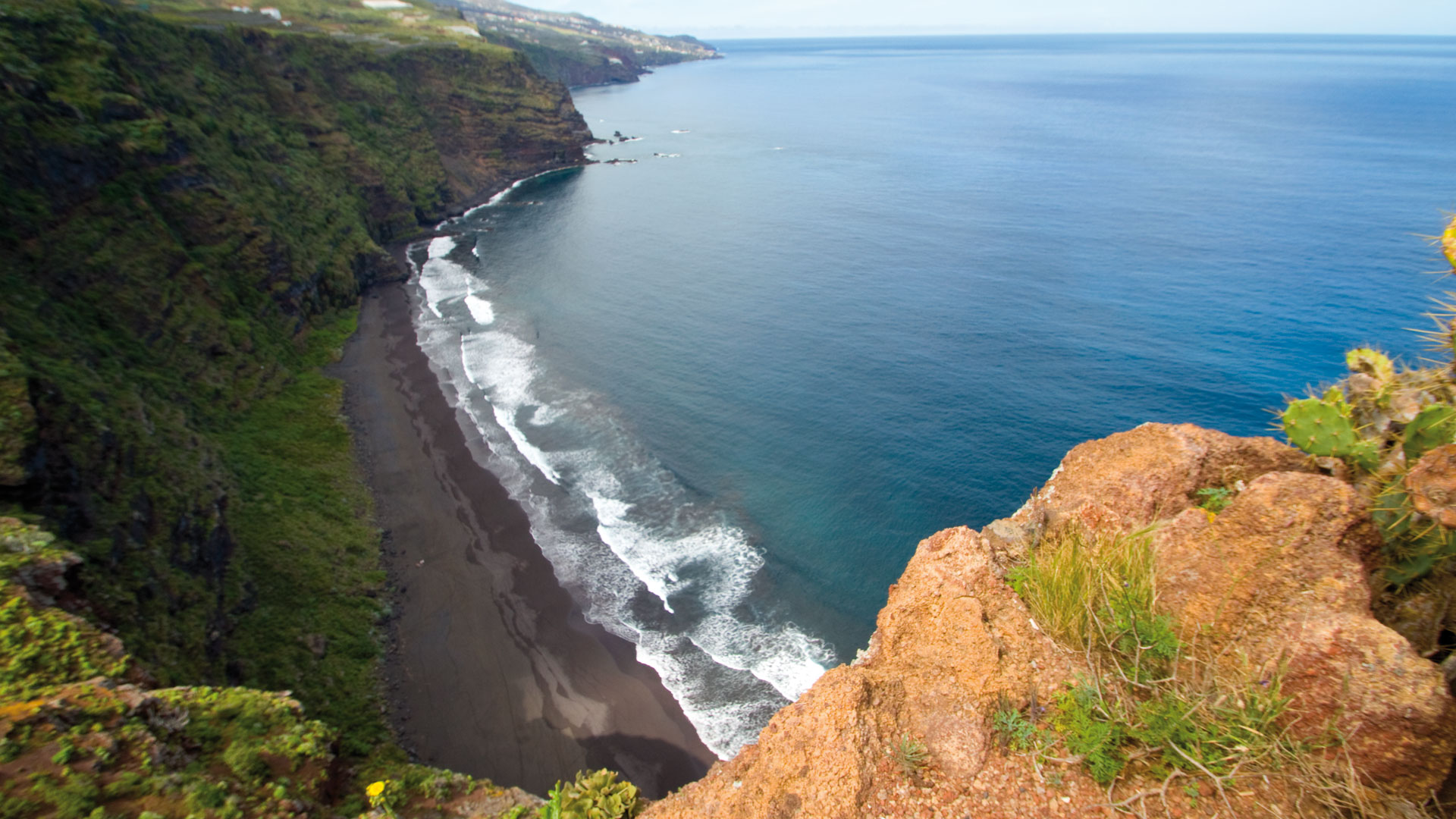
The wild green cliff face rises steeply behind Playa de Nogales, providing ideal wind protection. At the same time it means that from midday no sun reaches here any more. Those who want to make the most of the sunshine should set off in the early morning hours – and then enjoy one of La Palma’s most unspoilt beaches entirely for themselves.
A Beach You Have to Earn
Playa de Nogales lies north of Puntallana in the northeast of the island. It is reached via the coastal road through banana plantations. The car park is at the bottom of the steep descent — from there, a narrow, steep path leads down for around 15 minutes. Before you reach the black sand, you pass the entrance to the sea cave Cueva del Infierno.
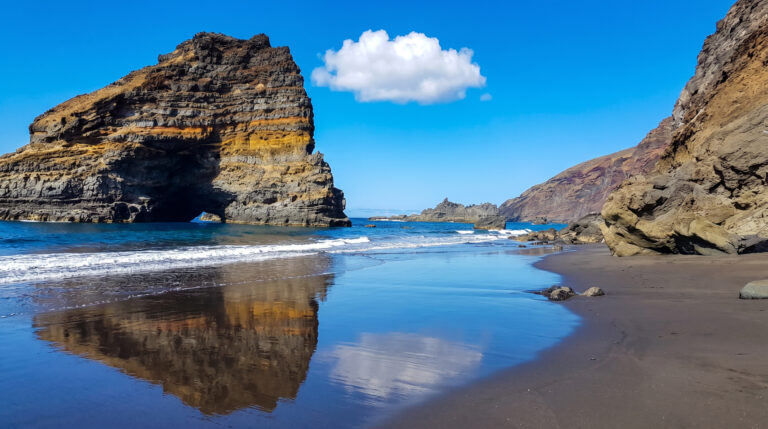
Those who make the effort to descend are rewarded: the beach stretches about 500 metres along the coast – narrow, 20 to 30 metres wide, surrounded by cliffs and groups of rocks. At the foot of the slopes the otherwise very fine black sand is covered with rubble.
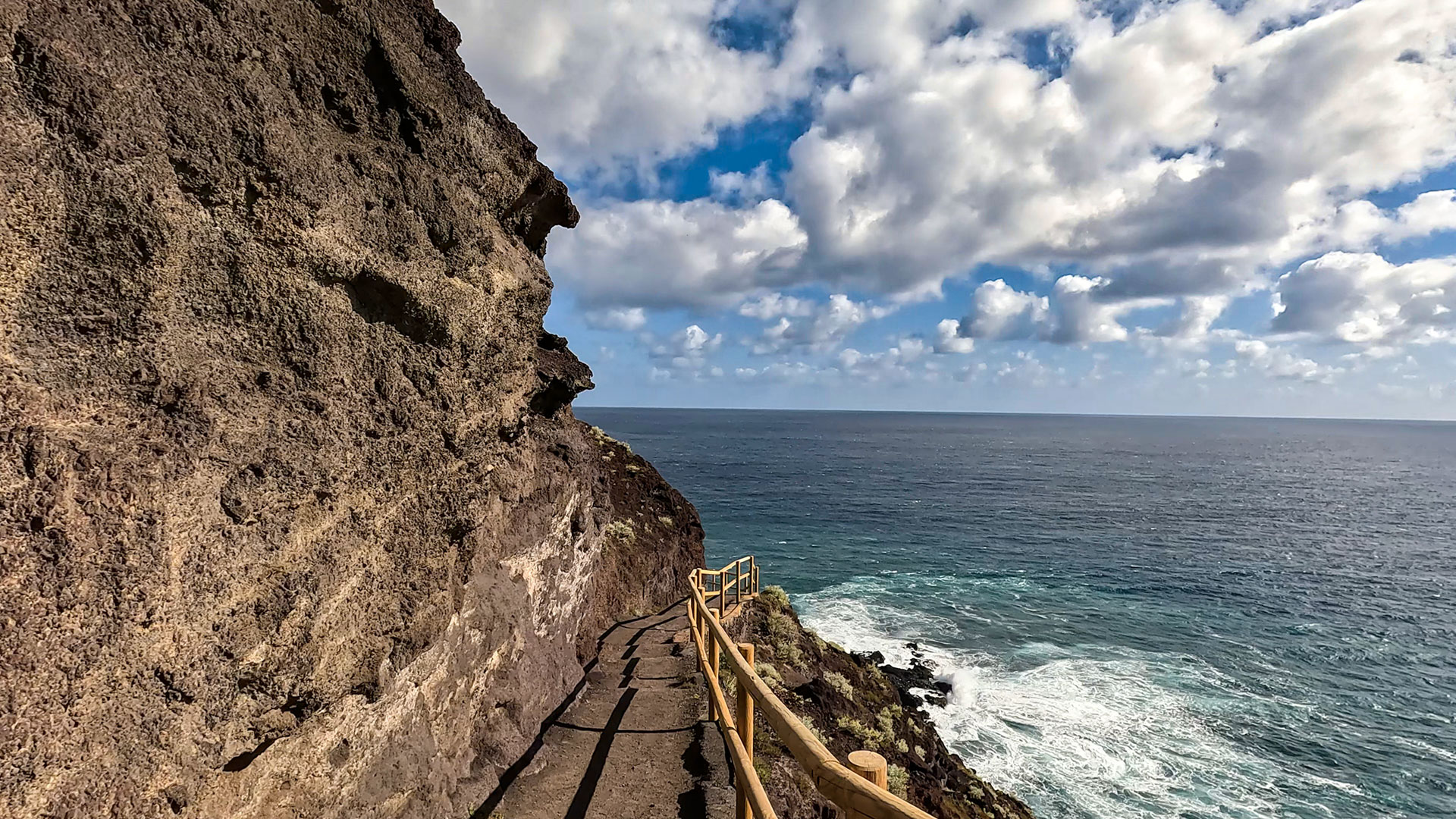
The Sunhikes video of Playa de Nogales shows the beach, the cliff face and the descent path – a good first impression before taking on the 15-minute hike.
Swimming & Safety
Strong undercurrents even at calm surfaces. When there is a heavy swell, swimming is life-threatening. If in doubt, stay on the beach.
No lifeguard service on site. No beach flags – responsibility lies entirely with visitors. For experienced swimmers only.
The Window of Sunshine
Directly behind the beach a cliff face of almost 500 metres rises up – impressively imposing, but with a quirk: as it lies to the west, it casts its shadow over the entire bay as the day progresses. In winter the shadow often reaches the beach by midday; at the height of summer it stays sunny until about 2 or 3 pm. Those who benefit most are the early risers: arriving around 9 or 10 in the morning, you catch the perfect window of sunshine, share this magical place with hardly anyone, and enjoy the wild setting in complete peace.
| Location | North of Puntallana, northeast coast of La Palma |
|---|---|
| Beach | Approx. 500 m, black sand with boulders, 20–30 m wide |
| Access | Car park – then 15 min steep path down |
| Sun | Morning sun – shaded by cliff from midday |
| Lifeguards | None – swim at your own risk |
| Suitable for | Experienced swimmers only; surfers, nature lovers |
| Highlight | Entrance to Cueva del Infierno along the descent path |
Surfing at Playa de Nogales
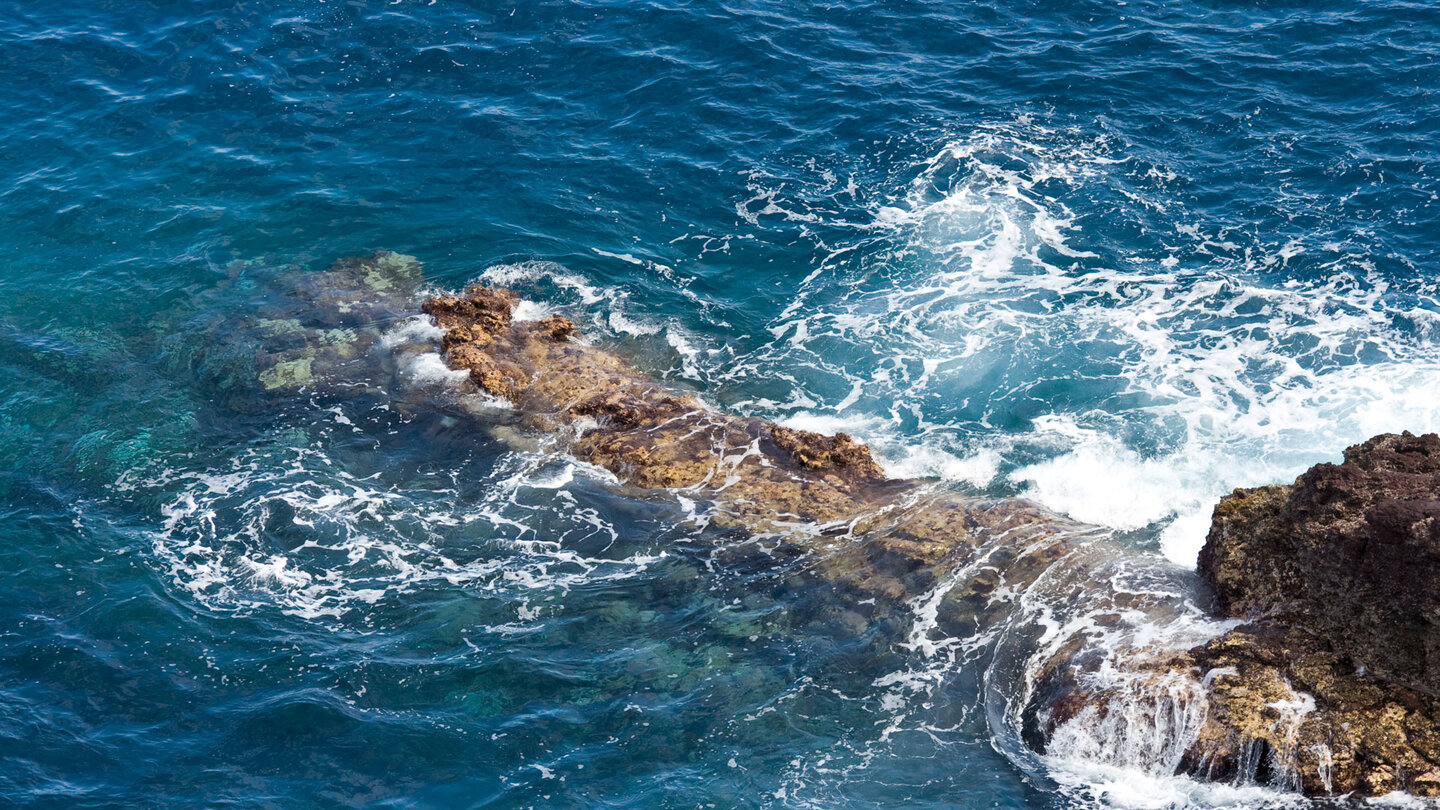
Surfers value Playa de Nogales for its waves. The surf breaks along the rock edges of the bays in a way that attracts experienced wave riders – not as big as in Tazacorte, but powerful enough for a decent session. Playa de Nogales is not a regular surf spot with a school or hire service; those who want to surf bring their own board.
The Cueva del Infierno
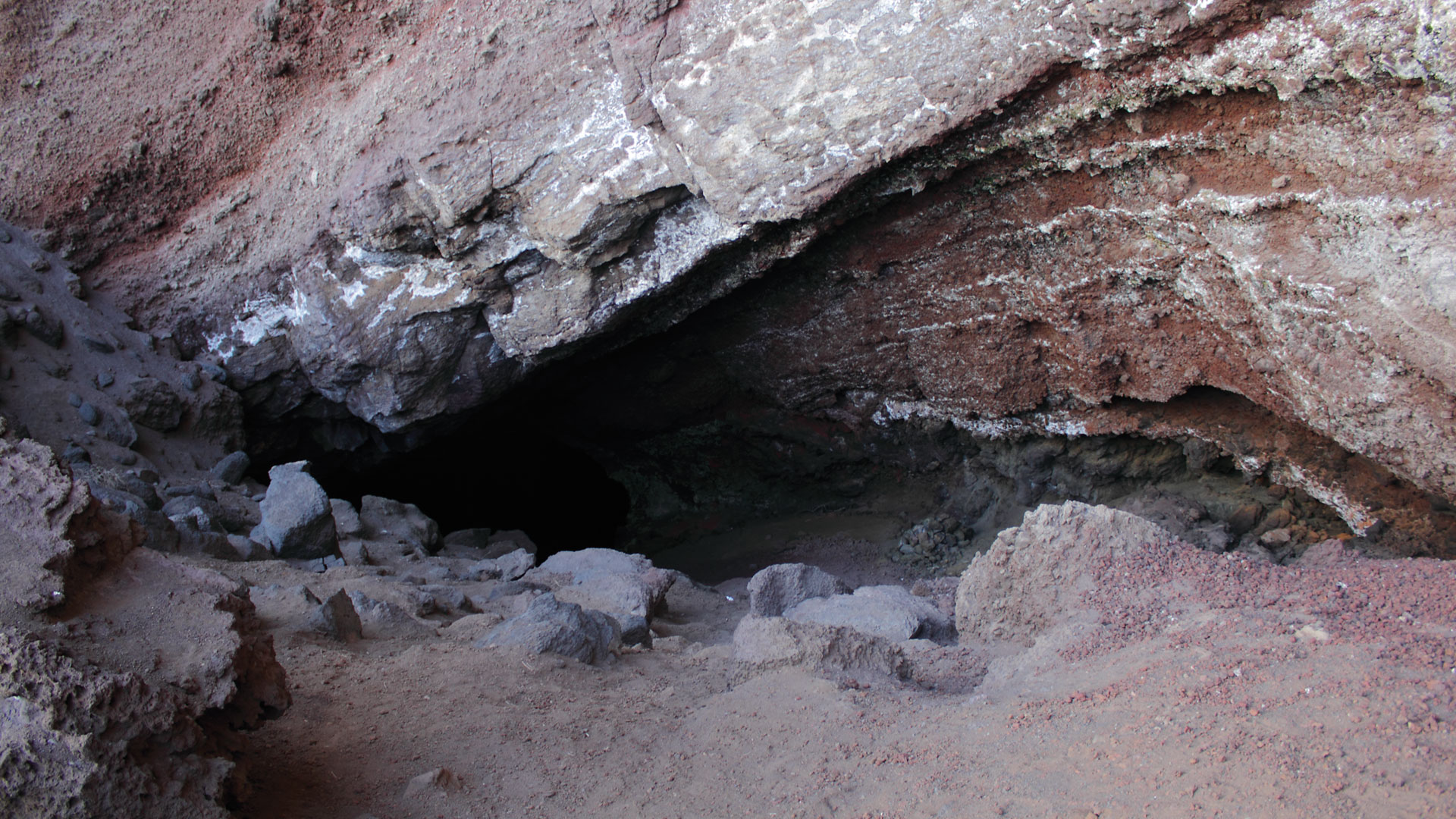
On the descent path to Playa de Nogales, just before reaching the black sand, you pass the entrance to the Cueva del Infierno – the Cave of Hell. A lava tube extending from the cliff to the sea opens here to the coast. The cave is not regularly accessible, but the entrance is clearly visible from outside. Geologically it is interesting: a direct passage from the interior of the cliff to the Atlantic, formed when molten lava flowed through an already cooled outer shell.
Puntallana: The Village above the Beach
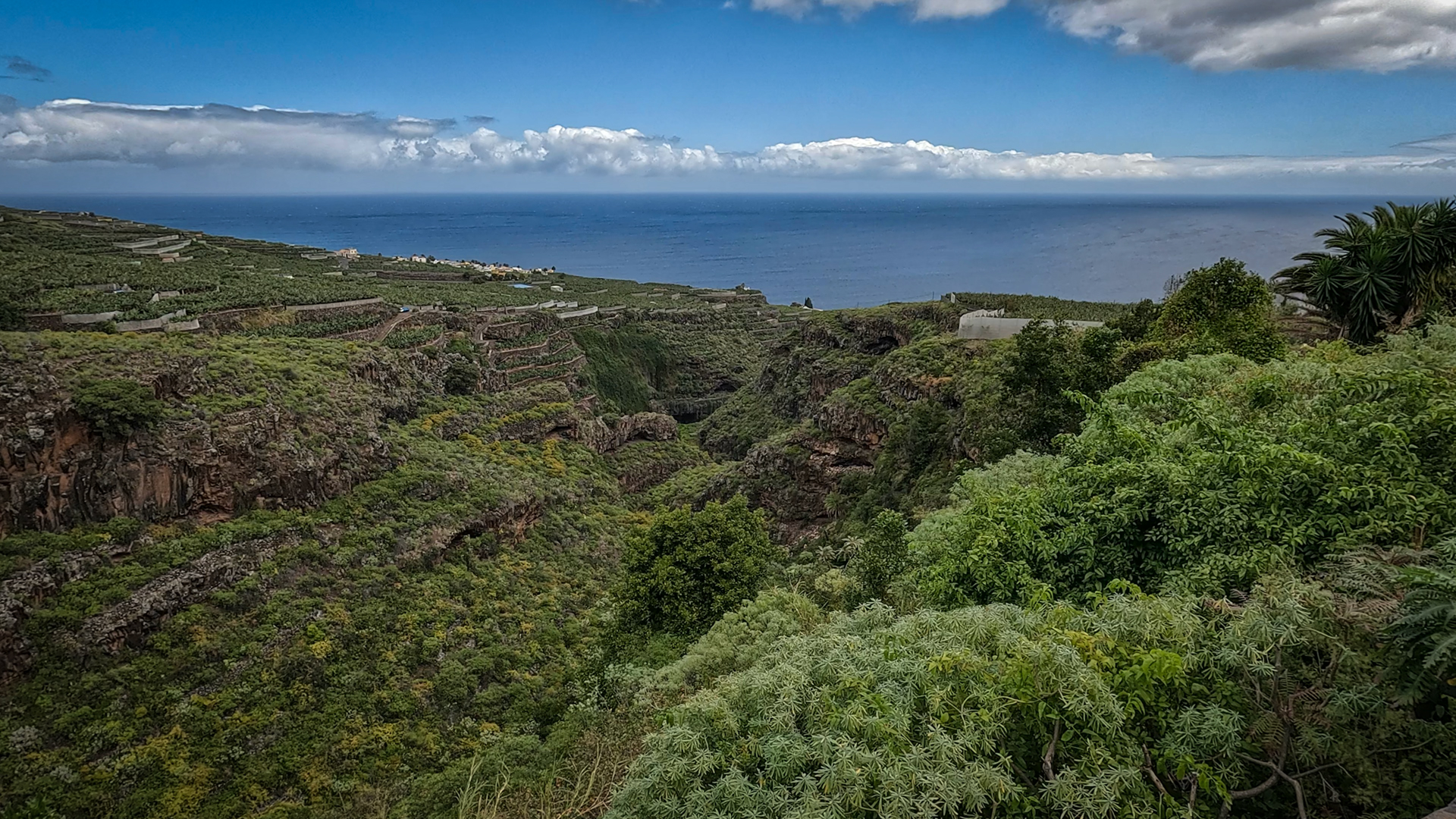
The car park for Playa de Nogales lies in the municipal area of Puntallana – one of the greenest villages on La Palma. The village itself sits on the plateau above the beach, surrounded by banana plantations and laurel forests. The drive from the main road LP-1 to the coastal car park passes through a landscape typical of the northeast: lushly green, with the scent of damp humus and banana leaves.
Northeast Coast: Green, Wild, Undiscovered
The northeast coast of La Palma is the roughest yet most lush side of the island. Trade wind clouds meet the mountains here first, releasing as drizzle and mist that saturates the laurel forests. The coast below is steep and barely accessible – Playa de Nogales is one of the few beaches you can reach at all. Hardly any tourists, hardly any infrastructure, hardly any comfort – but an authenticity that has disappeared from the major Canary Islands.
Bird Watching on the Northeast Coast
The northeast coast of La Palma is a paradise for birdwatchers. Where dense laurel forests, moist ravines and open Atlantic coastline interlock, unique habitats are created for endemic species. Deep in the forest the approachable La Palma chaffinch flits through the undergrowth, while at the cliffs around Playa de Nogales a completely different scene prevails: Canary Islands pipits dash low over the rocks, kestrels circle in the updrafts, and the calls of the protected red-billed choughs echo off the cliff faces. Those who venture the steep descent to the beach at dawn, while the coast is still completely still, are rewarded with a true nature concert at the cliffs.
Practical: Getting There, Equipment and Descent
The descent path to Playa de Nogales demands attention. The path is narrow, partly slippery and exposed in some places. Sturdy footwear is not a recommendation but a requirement. Those wearing sandals or flip-flops should turn back. One way the descent takes about 15 minutes; the ascent back takes a little longer. In summer, when the cliff face quickly casts shadows, an early start is recommended – those at the car park by 9 am have sun and time.
Those setting off for Playa de Nogales should be well prepared, as tourist infrastructure is nowhere to be found here. Water, sun protection, snacks and sturdy footwear are essentials – the nearest well-stocked supermarket is in the village centre of Puntallana, a 10-minute drive from the cliff car park.
Cubo de la Galga and the Laurel Forest
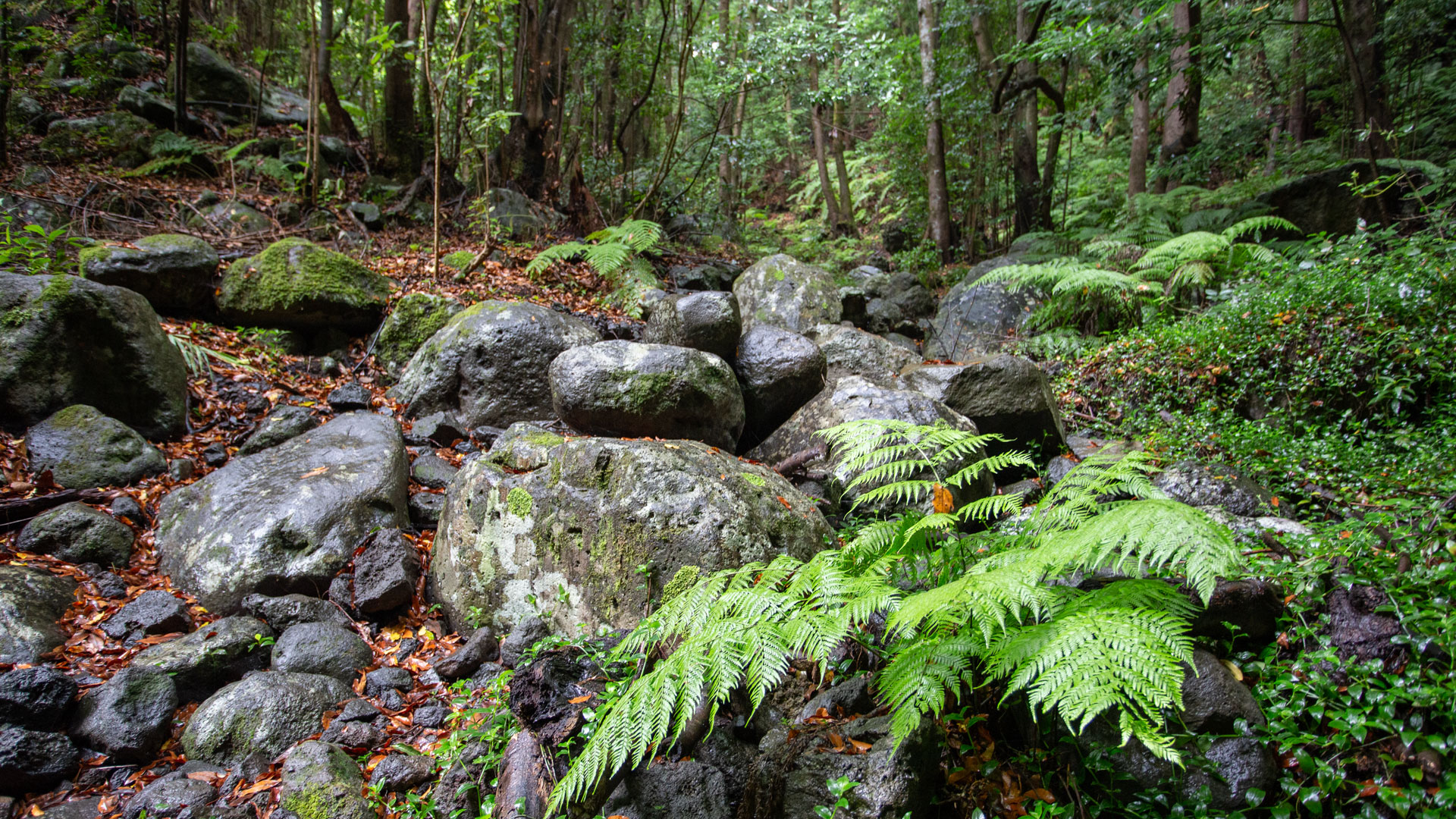
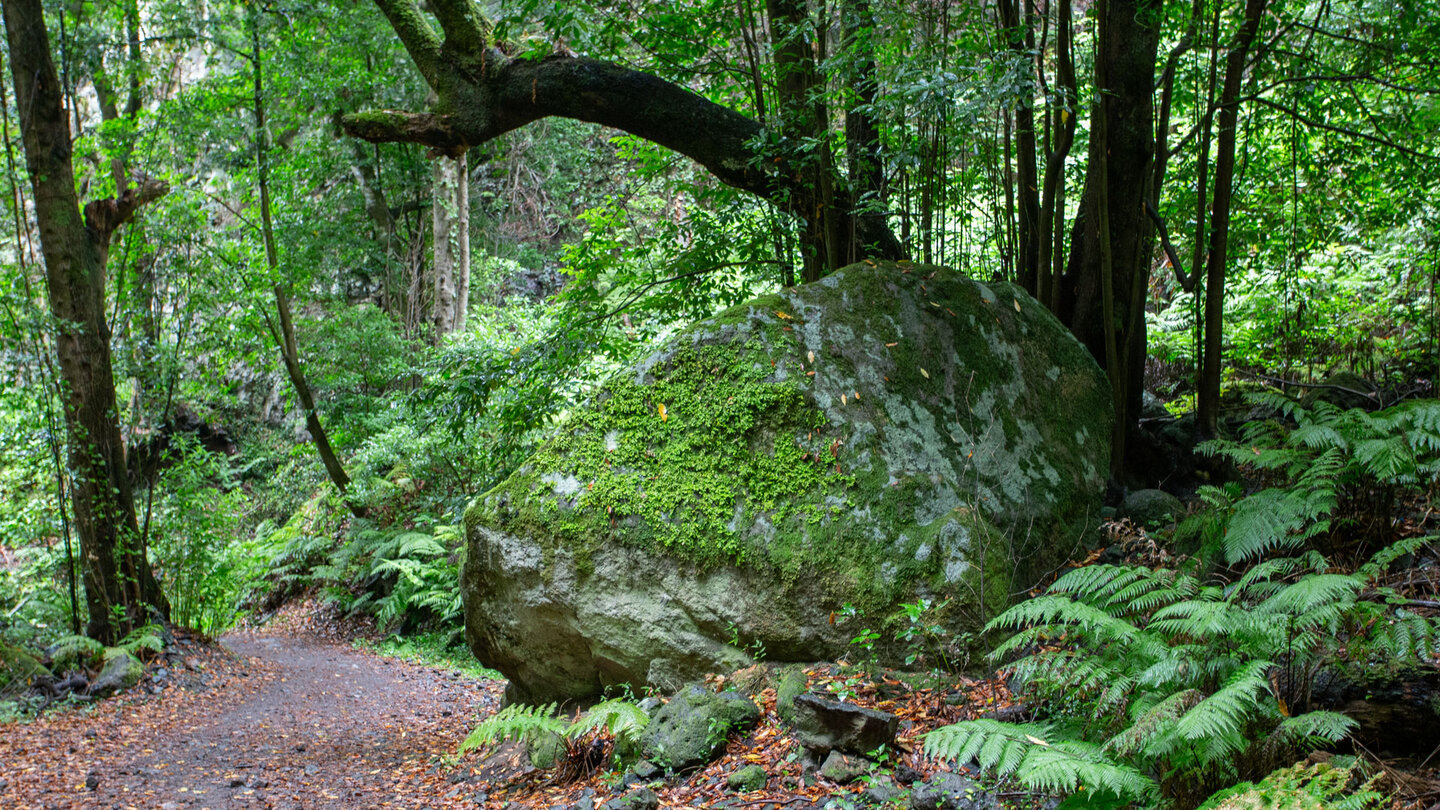
A few kilometres west of Playa de Nogales a completely different world opens up: Cubo de la Galga, an ancient laurel forest, dense and green, part of the UNESCO Biosphere Reserve together with Los Tilos. Like a living tunnel of ferns, lianas and centuries-old trees, the circular trail winds deep into a secluded ravine.
Those who start the morning at the rugged volcanic beach of Nogales and let the day wind down in the shady thicket of Cubo de la Galga experience La Palma in its two faces: wild and salty on one side, damp and jungle-green on the other. It is precisely this contrast that makes the northeast of the island so special.
Hiking from Puntallana: Along the Old Royal Path
From Puntallana, you can not only descend to the beach – the village also serves as a starting point for hikes along the wild northeast coast. Northward from the village centre runs the historic royal path GR-130, excellently waymarked, which winds in serpentines through original cultural landscapes and deep ravines such as the monumental Barranco de la Galga.
A popular section lasting two to three hours leads to the magnificent viewpoint Mirador de San Bartolo. With good fitness, this excursion can even be combined with a morning detour to Playa de Nogales – though the subsequent ascent from the ravines in the midday sun is demanding. An early start, sturdy footwear and sufficient drinking water are mandatory for this combination.
Playa de Nogales: A Glimpse of Local Life
For the island, Playa de Nogales is far more than just scenery – it is firmly part of the daily life of its residents. Especially at weekends during the summer, families from Puntallana and neighbouring villages descend to the coast; for the Palmeros this beach is a familiar place of everyday life, not a destination for long-distance travellers.
During the week the wild bay is usually all yours, while at weekends the genuine, unfiltered coastal life reveals itself. Here you can see how people on La Palma use their beach – without sun loungers, without umbrellas, without an app.
Conclusion: Playa de Nogales
Playa de Nogales is not a beach for a relaxed holiday day with a sun lounger – it is a natural beach in its original state that you have to earn first.
The 15-minute descent is the entry ticket: those who take it on find 500 metres of black sand, hardly any tourists, and a wildness that is rarely found on the east coast of La Palma.
Essential for everyone who wants to experience La Palma beyond the manicured bathing facilities – and can set their alarm early.
Frequently Asked Questions
How do you get to Playa de Nogales?
Is it safe to swim at Playa de Nogales?
When does Playa de Nogales get sun?
What is the Cueva del Infierno?
This article is based on the on-the-ground knowledge of the Gequo editorial team – publishers of the Reisezeit hiking guides and operators of Sunhikes.com. Last updated: May 2026