El Aljibe – Turquoise Rock Pools and Thermal Spring
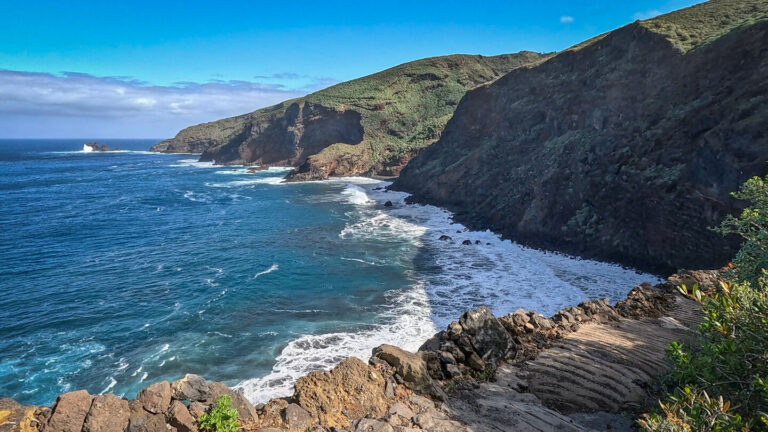
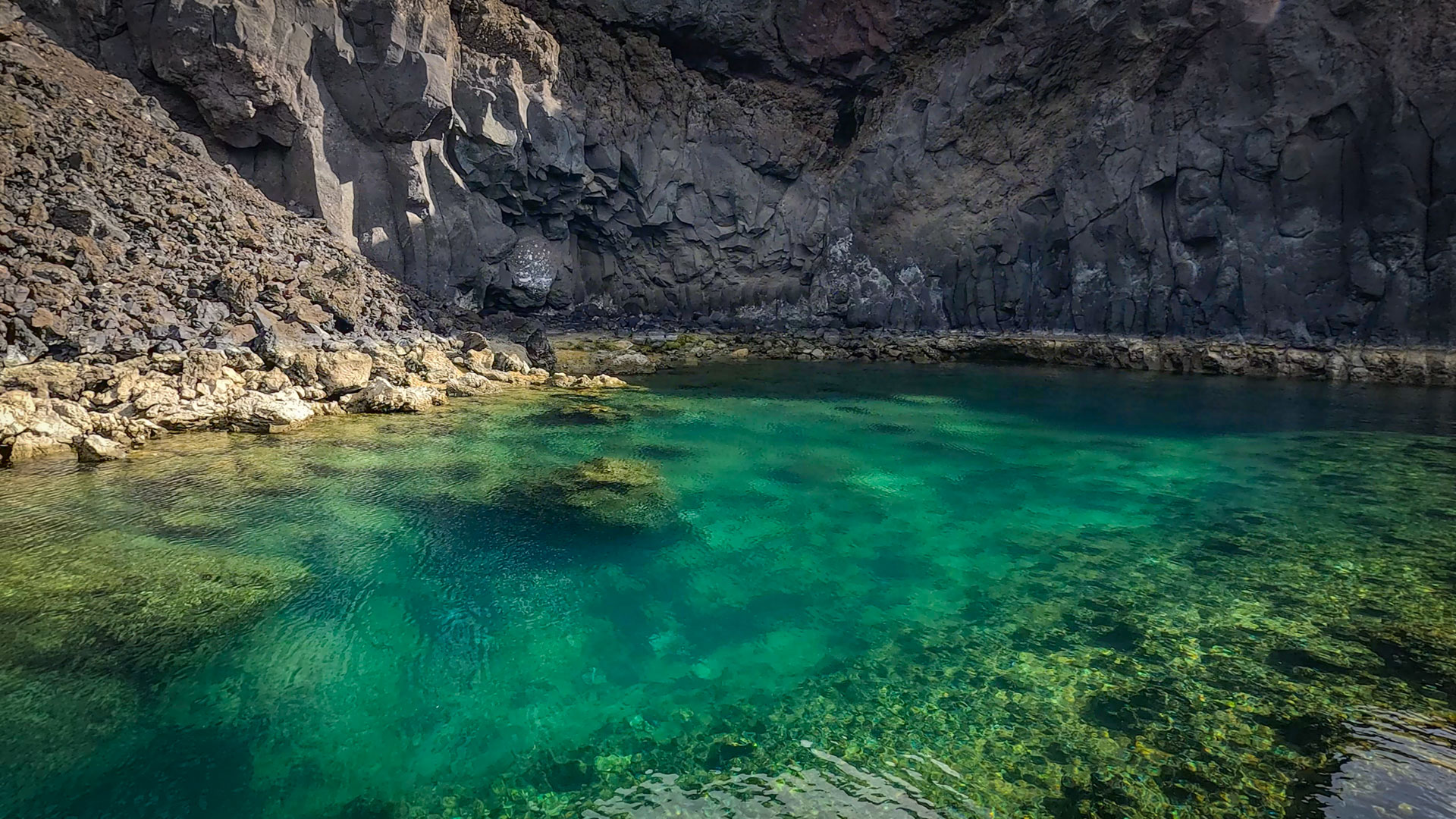
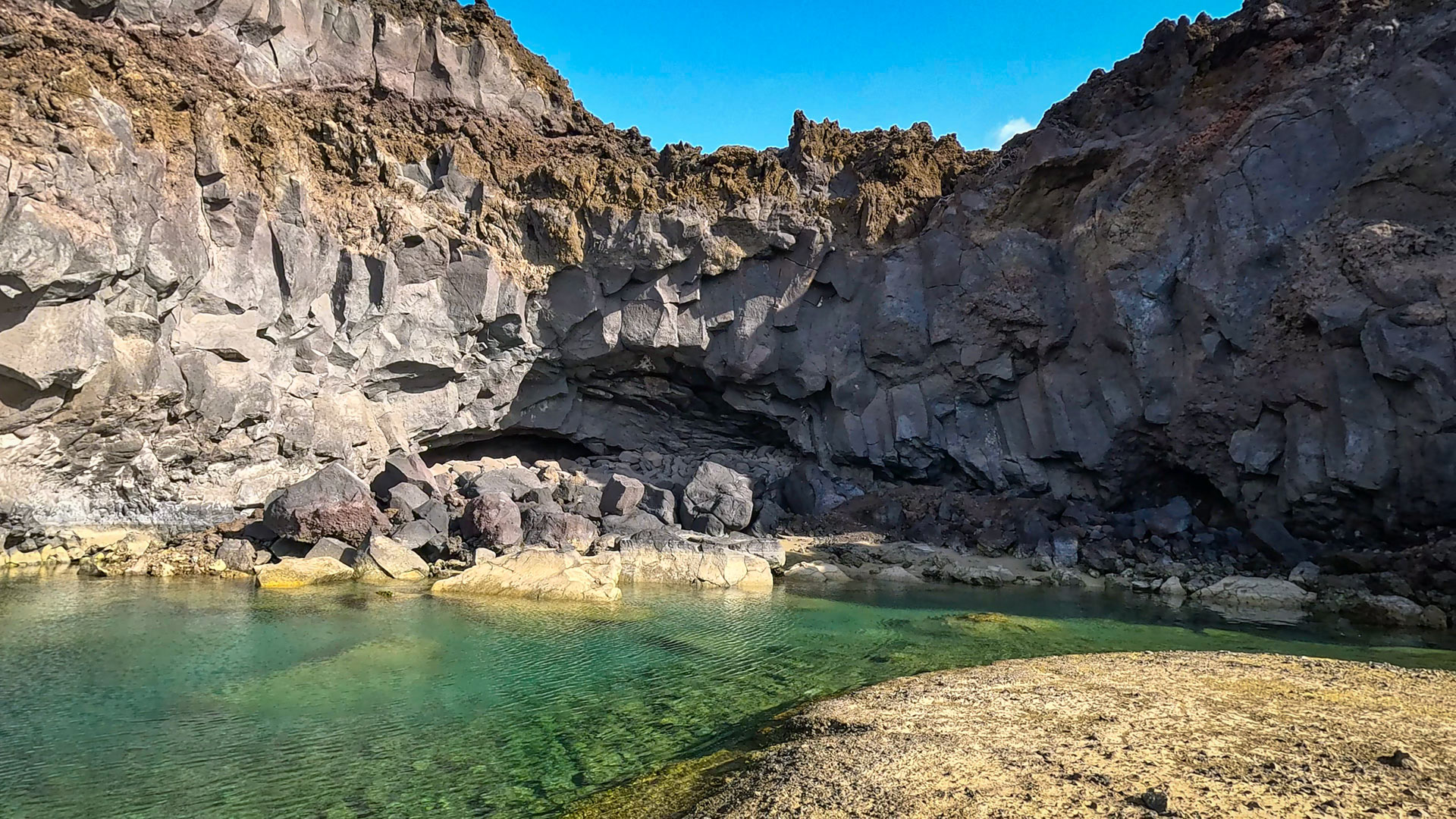
There are places on La Palma where you instinctively fall quiet. El Aljibe is one of them. Turquoise-green water resting in natural rock pools, surrounded by black volcanic stone – and beneath it, invisible, the warmth of the earth itself. Nestled amid the pitch-black lava fields created by the Teneguía volcano in 1971, the natural pools of El Aljibe are sheltered and extraordinary. While outside the Atlantic surf crashes wildly against the cliffs, the tides regularly fill these natural basins with fresh, crystal-clear seawater. In the shallow, wind-protected pools, the Canarian sun warms the water pleasantly throughout the day.
A Natural Wonder on the Volcanic Shore
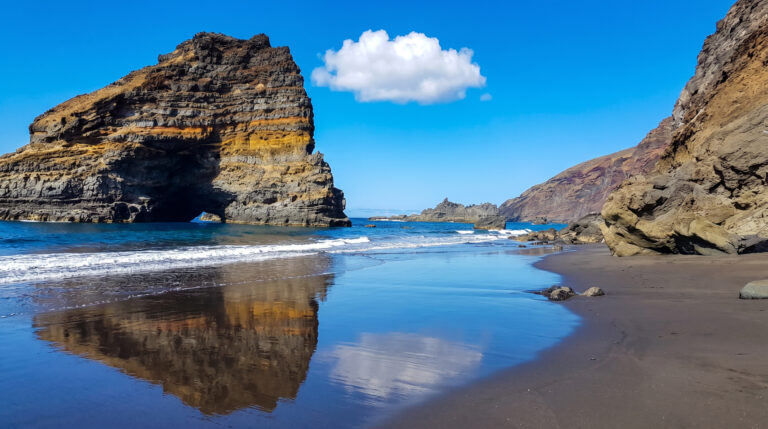
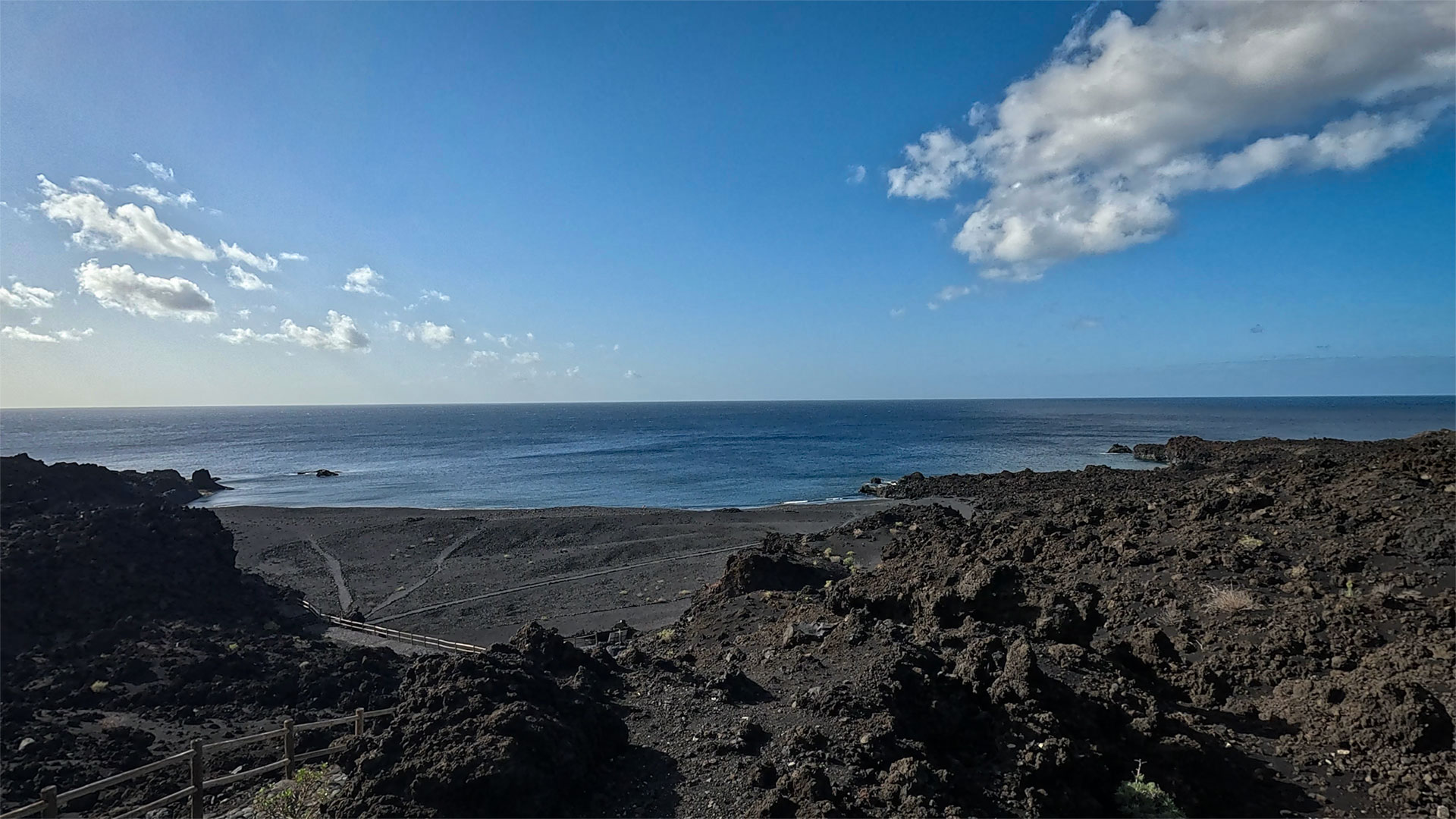
The natural pools of El Aljibe are tucked away at the foot of the cliffs to the right of Playa Echentive beach (also known as Playa Nueva) – the black volcanic sand beach created by the 1971 Teneguía eruption. The basins are shaped by natural volcanic rock; the water inside is salty and so clear that every detail is visible beneath the surface.
The experience is different from an open beach: quieter, more intimate, almost meditative. You drift in the warm salty water, gaze at the volcanic coastal landscape and listen to the distant sea. Anyone who knows Fuencaliente only for its lighthouse has yet to discover this place.
Swimming & Safety
The pools are surrounded by sharp-edged lava rocks – water shoes are essential.
The water is volcanically influenced and can be warmer than the open sea.
Always keep a close eye on small children – no safety barriers.
No lifeguard on site. Watch the tides: at high tide the water can rise quickly.
Best Time to Visit
At weekends El Aljibe is popular with locals – on weekdays you can often have the pools almost to yourself. The best time: morning, when the light falls low across the black rocks and the turquoise water glows, before others arrive. In winter, when the north coast of La Palma is under cloud, the southern tip is often still sunny and warm.
Getting There and Combining Visits
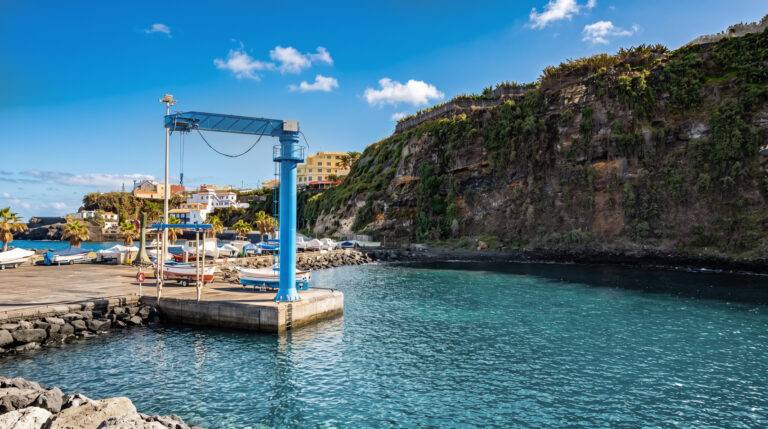
Located right on the LP-2071 coastal road, Playa de Echentive is easy to reach: the famous Fuencaliente lighthouses and the salt pans (Salinas) are just a stone’s throw away. A well-built stone staircase leads from the car park down to the bay. Combined with a walk to the lighthouse, the salt pans, the Volcán San Antonio and Teneguía, and Playa Echentive, a half-day excursion is well worthwhile.
| Location | Southern tip of La Palma, municipality of Fuencaliente, near the lighthouses |
|---|---|
| Pools | Natural pools in the volcanic lava rock |
| Water temperature | Warmer than the open sea – influenced by volcanic activity |
| Water shoes | Essential – the lava rock is sharp-edged |
| Facilities | None – completely natural |
| Best time | Weekday mornings; open year-round |
| Combine with | Volcanoes San Antonio and Teneguía · Faro de Fuencaliente · Salt pans · Playa Echentive |
The Salinas de Fuencaliente
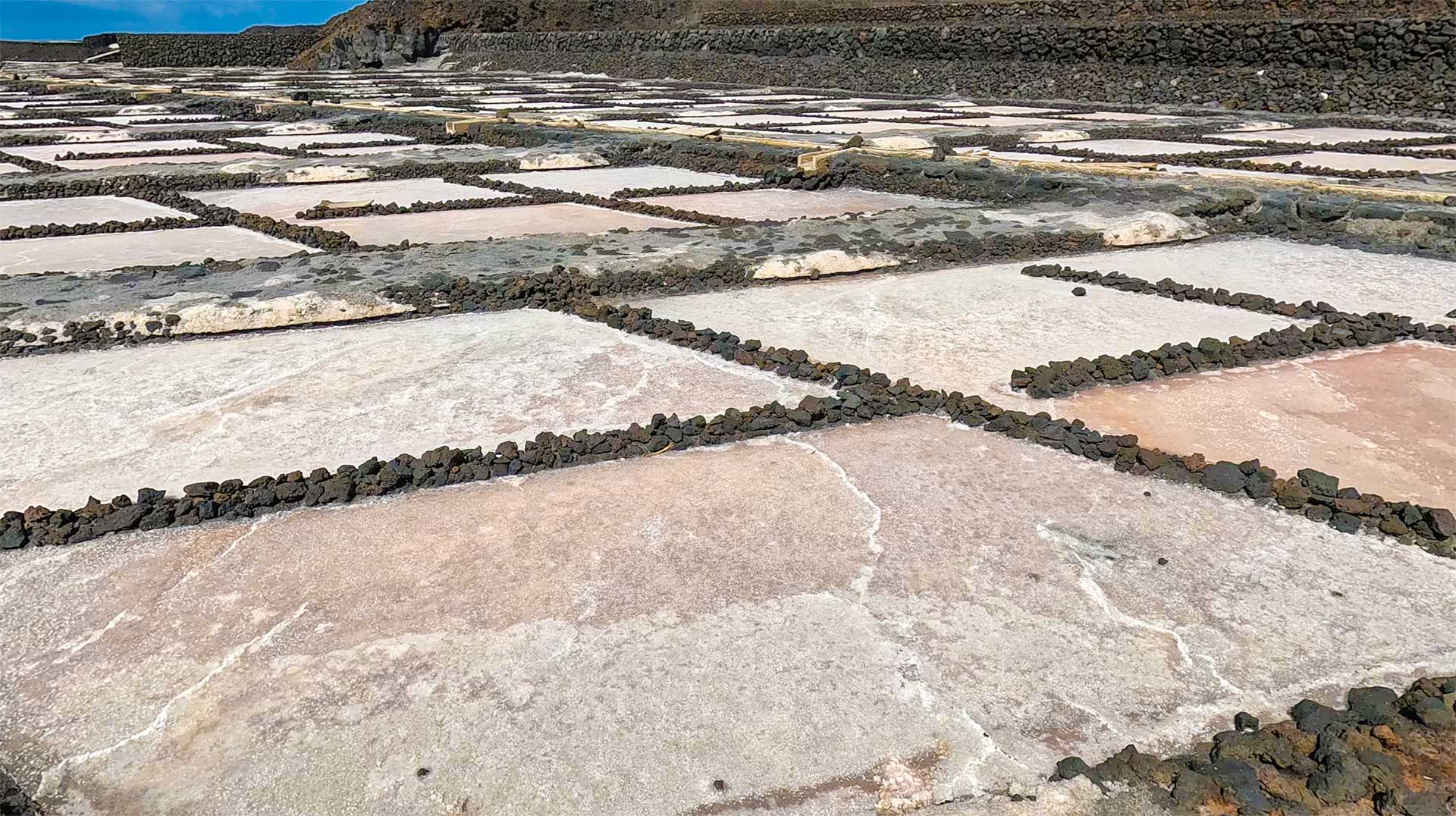
Near El Aljibe lie the Salinas de Fuencaliente – historic seawater salt pans where the famous Sal de Teneguía is harvested by hand, following ancient tradition. Fuencaliente salt is well known across the Canary Islands and used in many of the island’s restaurants. The salt pans are now a nature reserve and resting place for migratory birds; an information trail with displays beside the salt basins explains the history of salt production.
The Fuente Santa Thermal Spring: Volcanic Heat from Below
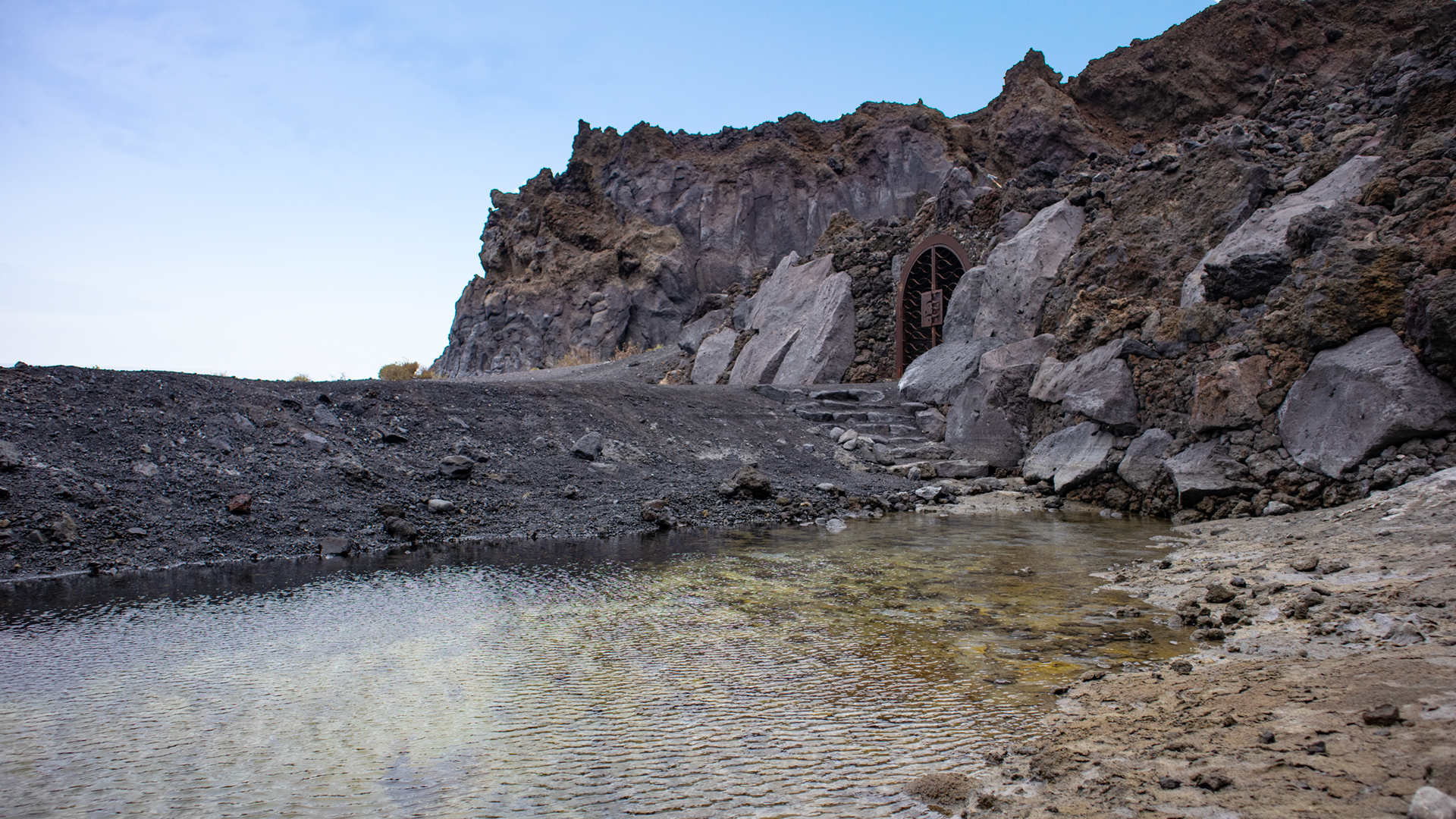
Deep inside an artificially dug gallery, the legendary Fuente Santa healing spring emerges, its mineral-rich water heated to 45–60 °C by volcanic activity.
The spa town of the same name in the 16th and 17th centuries – originally called Fuente Caliente and the namesake of the municipality of Fuencaliente – attracted patients from across Europe and the Americas thanks to its reputed healing powers for skin diseases, rheumatism, arthritis and leprosy, and was considered one of the most important places in the Canary Islands. In 1677, the eruption of Volcán San Antonio buried the spring beneath massive lava flows. For 328 years it remained only a legend, despite numerous search attempts. It was not until 2005 that a Spanish engineering team made the breakthrough: a 200-metre tunnel into the basalt cliffs of Playa de Echentive led to the hot, healing water. Analysis confirmed its high content of chloride, sodium, CO₂ and minerals – ideal for medical applications.
Best Time to Visit Fuencaliente
Fuencaliente is La Palma’s sunniest destination all year round. The municipality lies in the rain shadow of the Cumbre Vieja mountain range – clouds from the north and northeast are stopped before they reach the southern tip. In winter, when Puntallana and Barlovento are shrouded in mist, Fuencaliente often basks in sunshine. This makes El Aljibe an attractive winter destination too.
The Volcanically Active Southern Tip
The southern tip of La Palma is geologically one of the most active zones on the island. Fuencaliente lies at the end of the Cumbre Vieja – the mountain range that runs from south to north across the island and made headlines again in 2021 with the Tajogaite eruption.
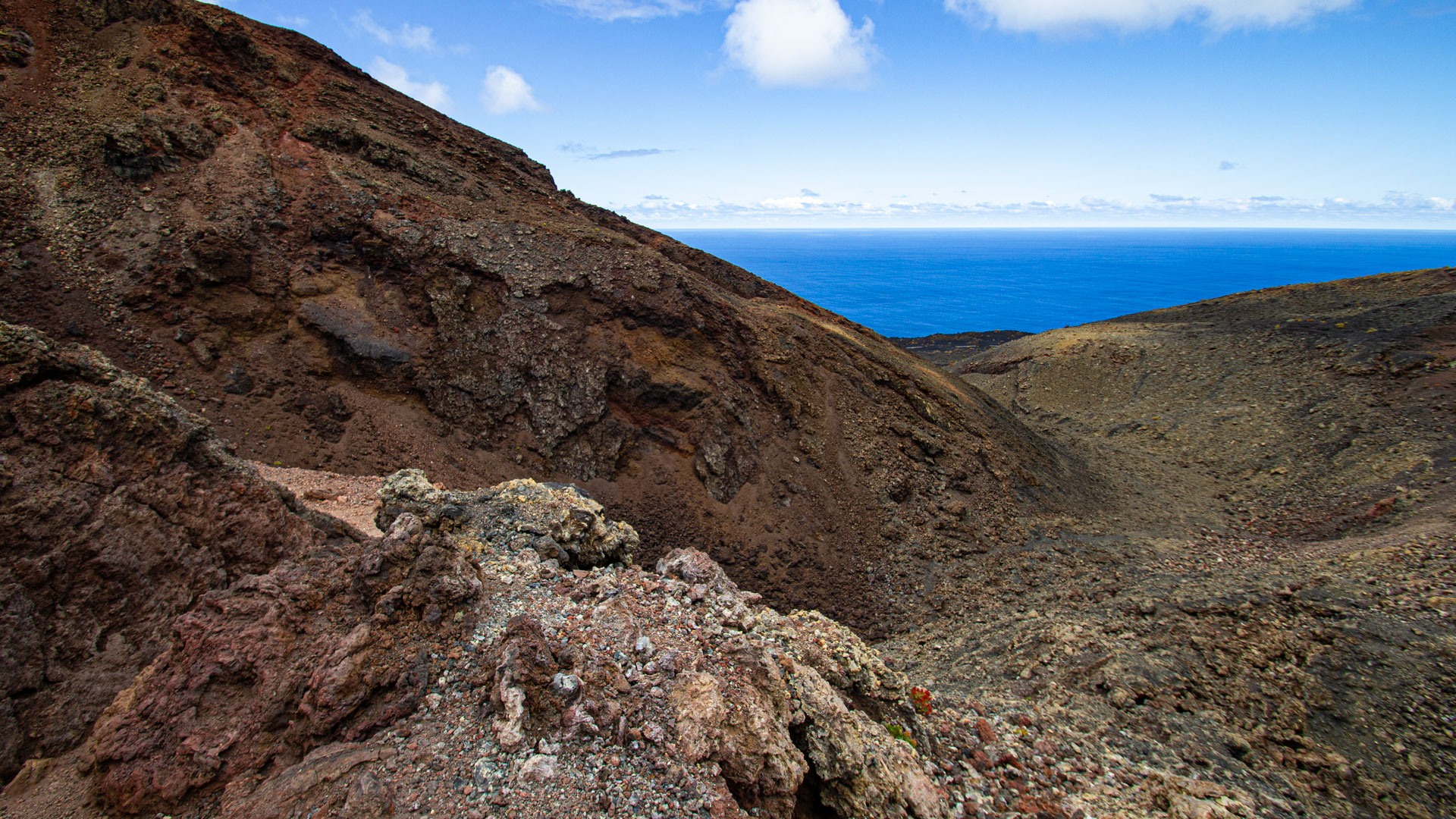
Combined Visit: Half a Day at the Southern Tip
The highlights of La Palma’s southern tip can be combined in a compact half-day excursion. Recommended order: morning hours at El Aljibe (calmest water, best light), then a walk to the Salinas de Fuencaliente (visitor centre usually opens from 10 am), on to the lighthouses (views and photos), to the Volcán San Antonio visitor centre, and in the afternoon to Playa Echentive or Playa del Faro. The full excursion takes around four to five hours and takes in some of La Palma’s most impressive landscapes.
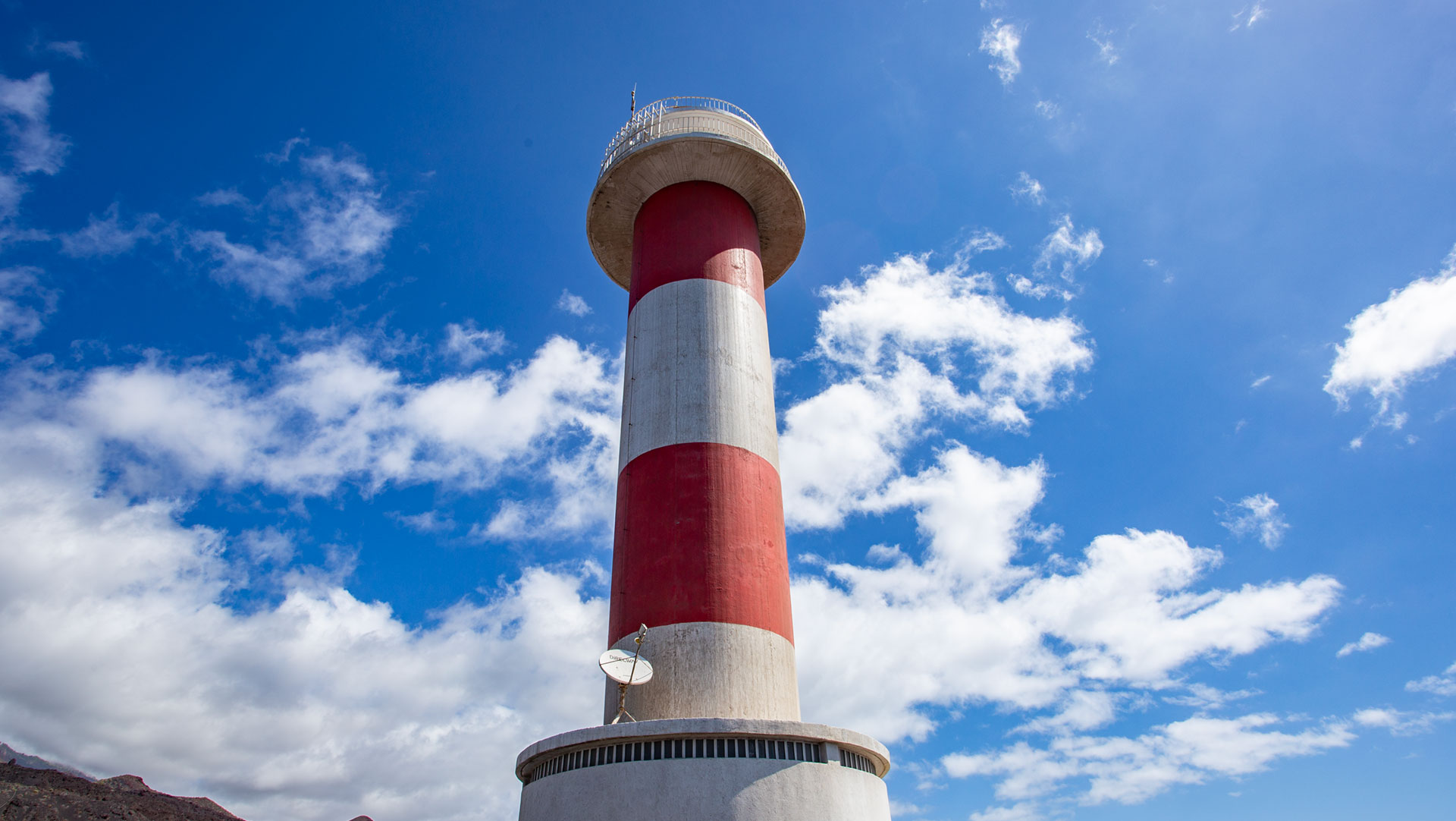
El Aljibe for Photographers
The volcanic landscape around El Aljibe is a photographer’s dream. The emerald-green water set against black lava rock, the lighthouses in the background, occasionally a crab in the foreground – the result is images that set La Palma apart from all other Canary Islands. The best light comes in the afternoon, when the sun is still low and illuminates the water from the west. Those who bring an underwater camera will find additional subjects in the pools: the light refracts through the clear water in a way that is particularly effective against the shallow sea floor.
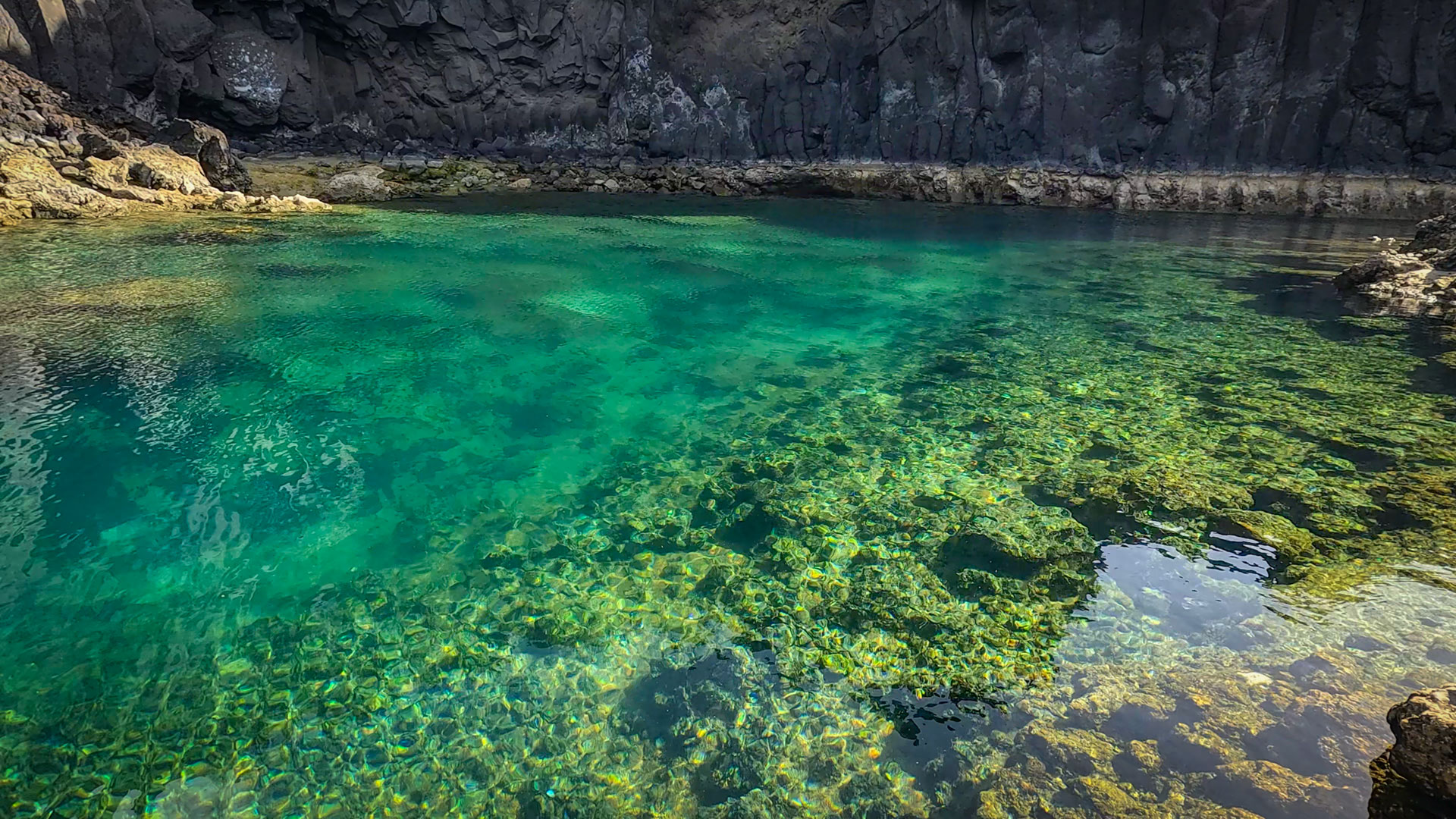
Nature Conservation at the Southern Tip
The coastline around El Aljibe falls partly within the protected area of the Cumbre Vieja y Teneguía Natural Park. This means: plants may not be picked, animals must not be disturbed, and rocks must not be damaged. The lava rock is more fragile than it looks – scratches and damage caused by careless walking take decades to heal. Anyone using the pools moves as a guest in an ecosystem that without this protected status would long since have been overwhelmed by tourism.
First-time visitors to El Aljibe should know one basic rule: the pools are natural, not maintained. The water comes directly from the sea and is neither filtered nor chemically treated. The clarity of the water and its warmth come from the tides and the volcanic heat beneath – not from human intervention. That is the difference from a public swimming pool. Those who can accept this will experience nature of rare quality.
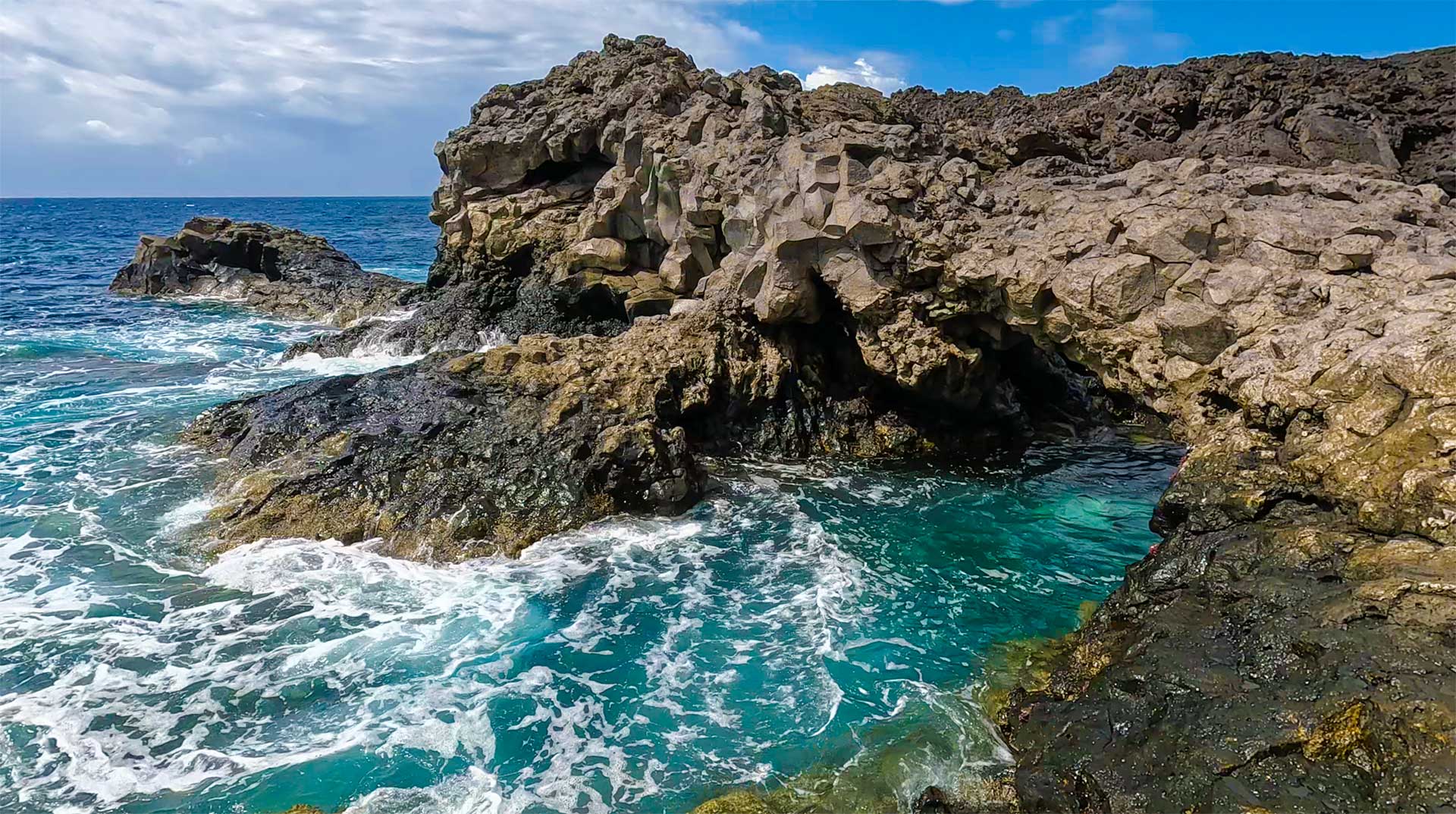
El Aljibe is a place that explains La Palma. Not the volcanoes, not the hiking trails, not the observatory – but this small pool at the southern tip, where the water is warmer than expected, the rock blacker than imagined and the silence more complete than anywhere else on the island. Those who know El Aljibe know a part of La Palma that most visitors miss.
Conclusion: El Aljibe
El Aljibe is the quiet secret of the southern tip: warm water in volcanic rock, turquoise colours and almost always tranquillity.
No tourist facilities, no infrastructure, no crowds – instead a natural experience that is hard to describe and easy to live.
Pack water shoes, come in the morning, stay long.
Frequently Asked Questions
What is El Aljibe?
Do you need water shoes at El Aljibe?
How do you get to El Aljibe?
Can you combine El Aljibe with other sights?
This article is based on the on-the-ground knowledge of the Gequo editorial team – publishers of the Reisezeit hiking guides and operators of Sunhikes.com. Last updated: May 2026