Puerto de Puntagorda – Rock Pools and Sea Caves
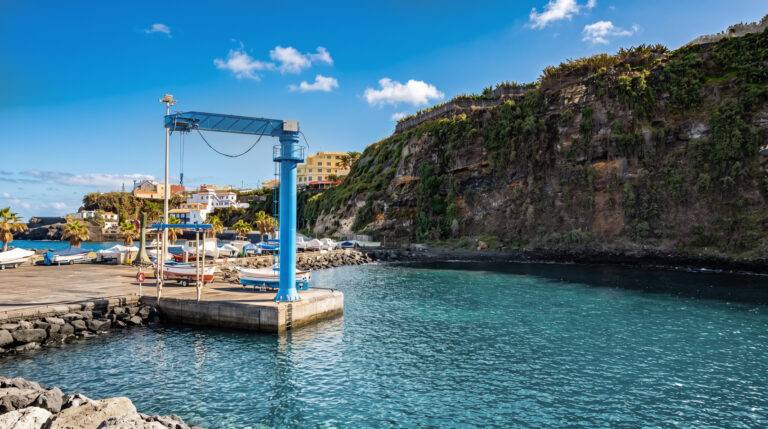
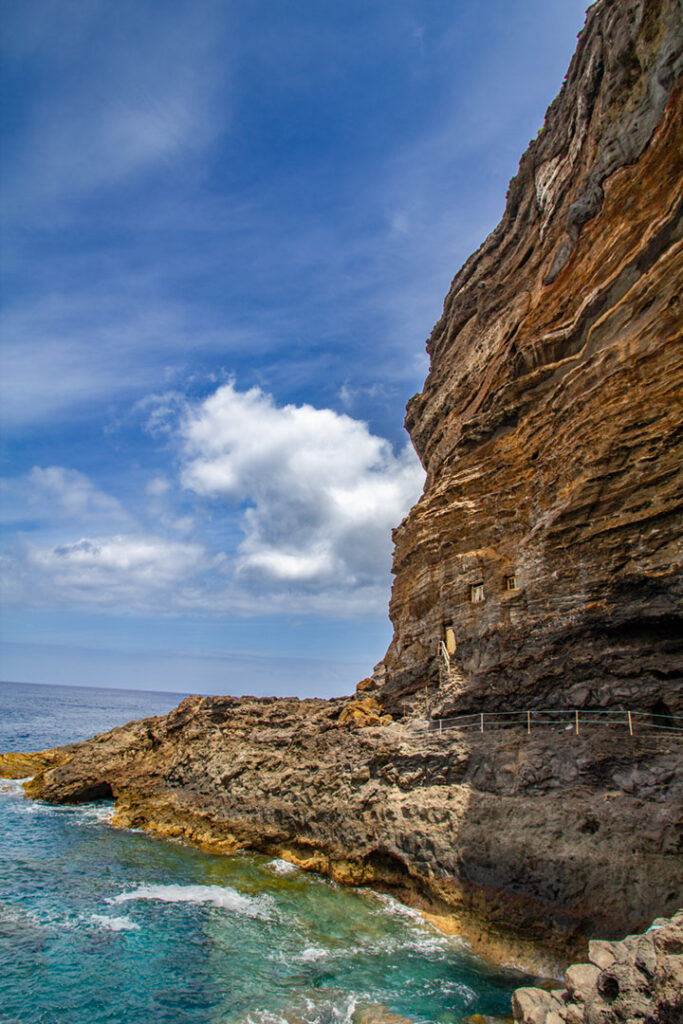
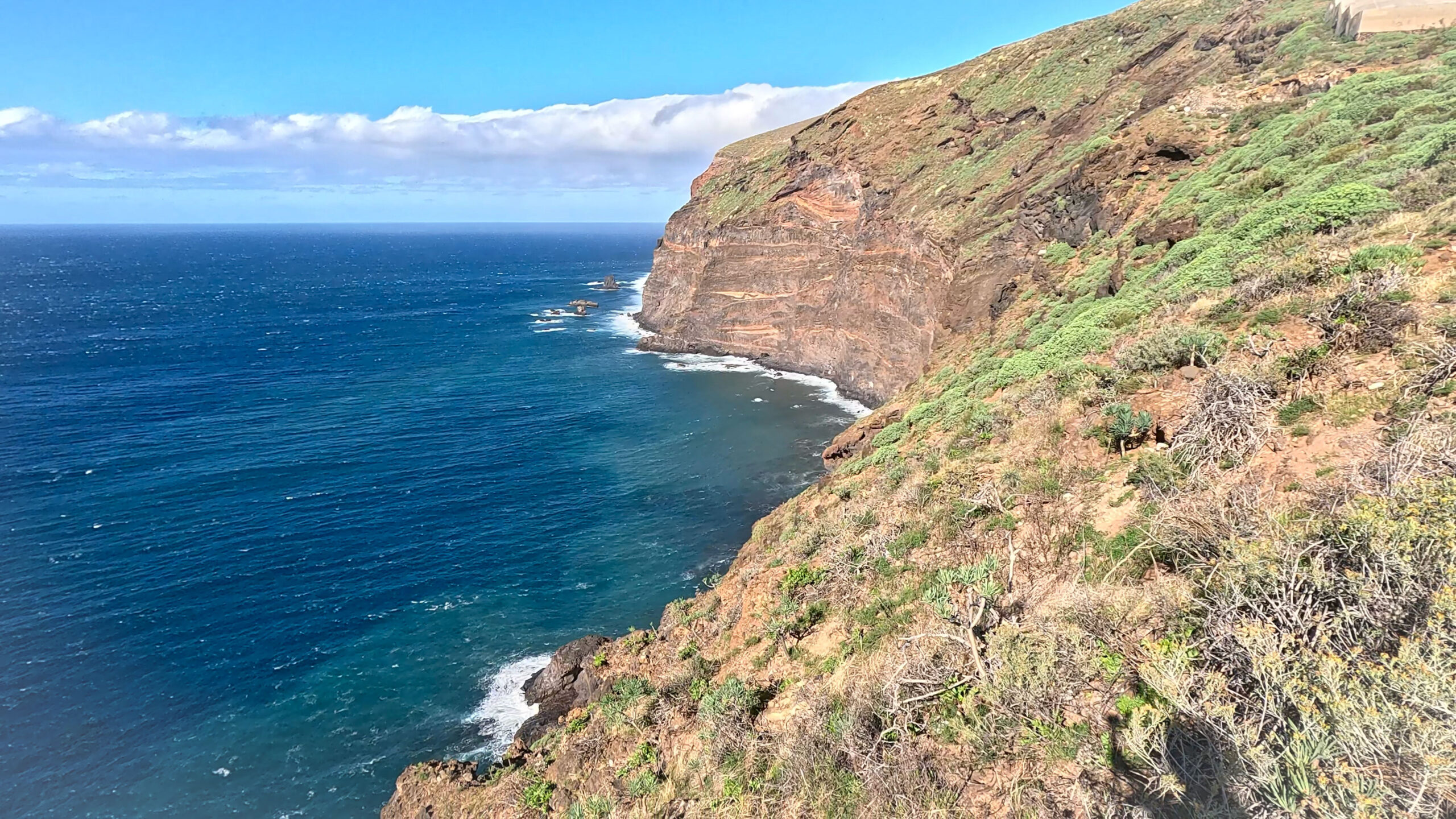
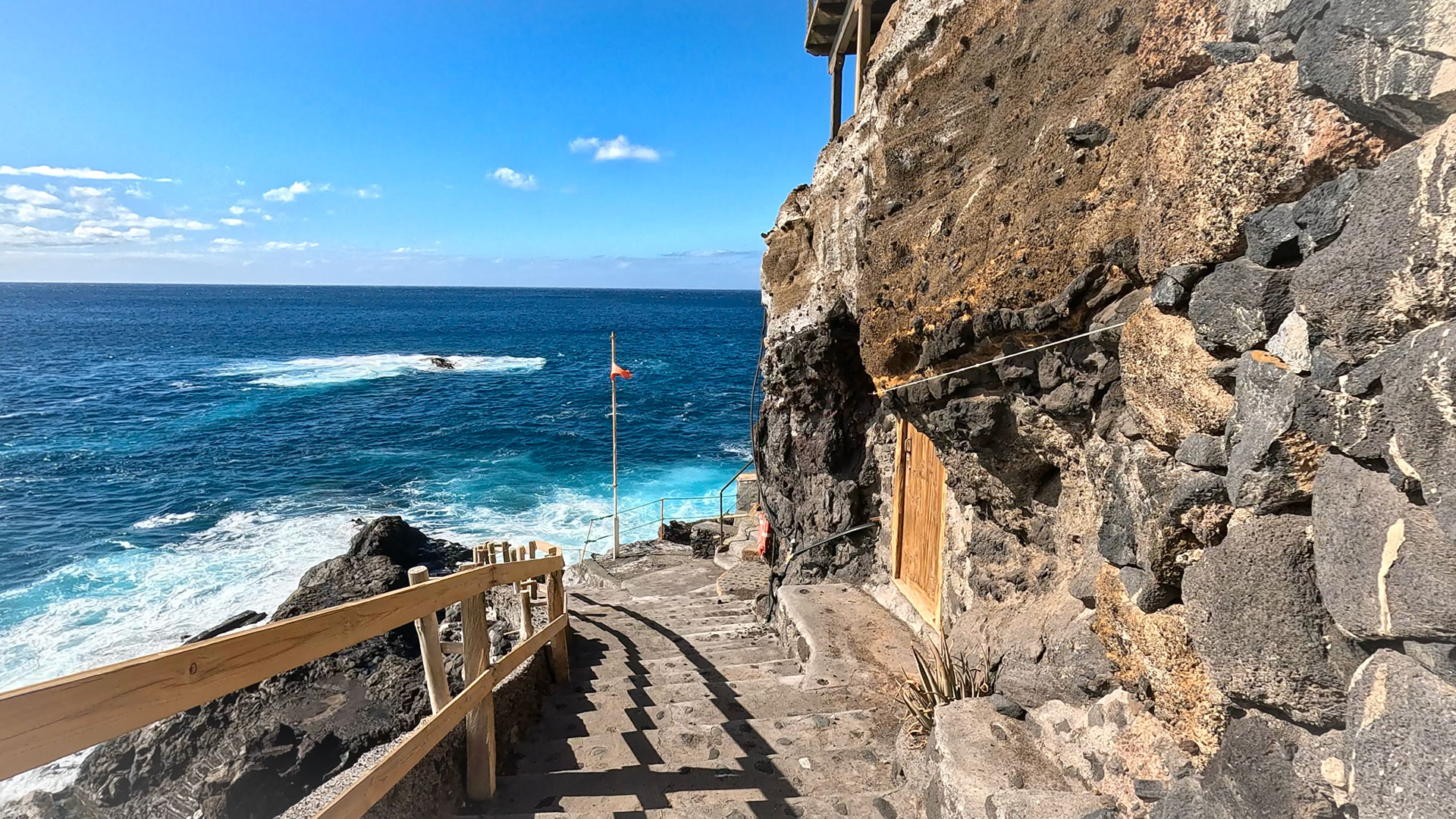
La Palma’s north-west is a different chapter. Puntagorda, known for its almond groves and the silence of its high plateau, also has a coastline — and it is so remote that many visitors never discover it. Puerto de Puntagorda is not a harbour in the classic sense; it is a small rock landing at the foot of the cliff coast, featuring natural seawater pools formed by lava rock, and caves that the water has carved into the stone. Beneath a massive overhanging cliff wall, locals built their huts directly into the rock — not a place you stumble upon, but one that lets you find it.
The Descent: Steep, Rewarding, Solitary
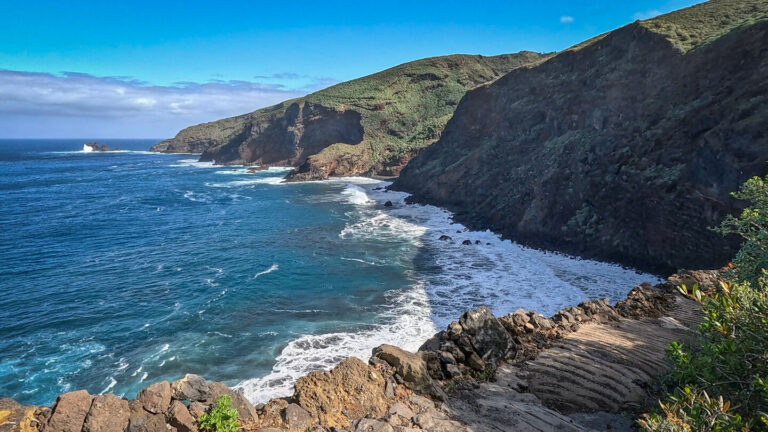
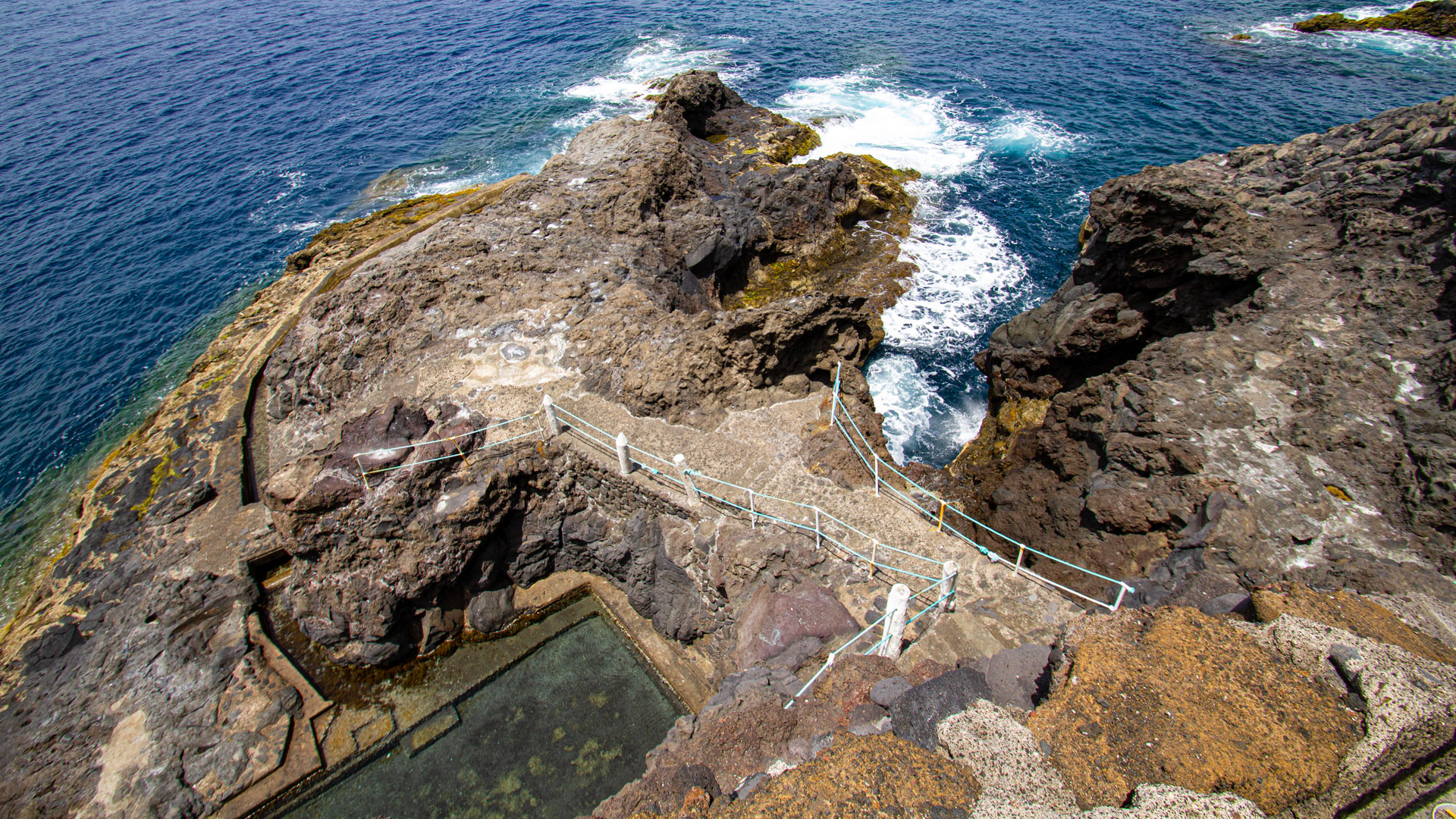
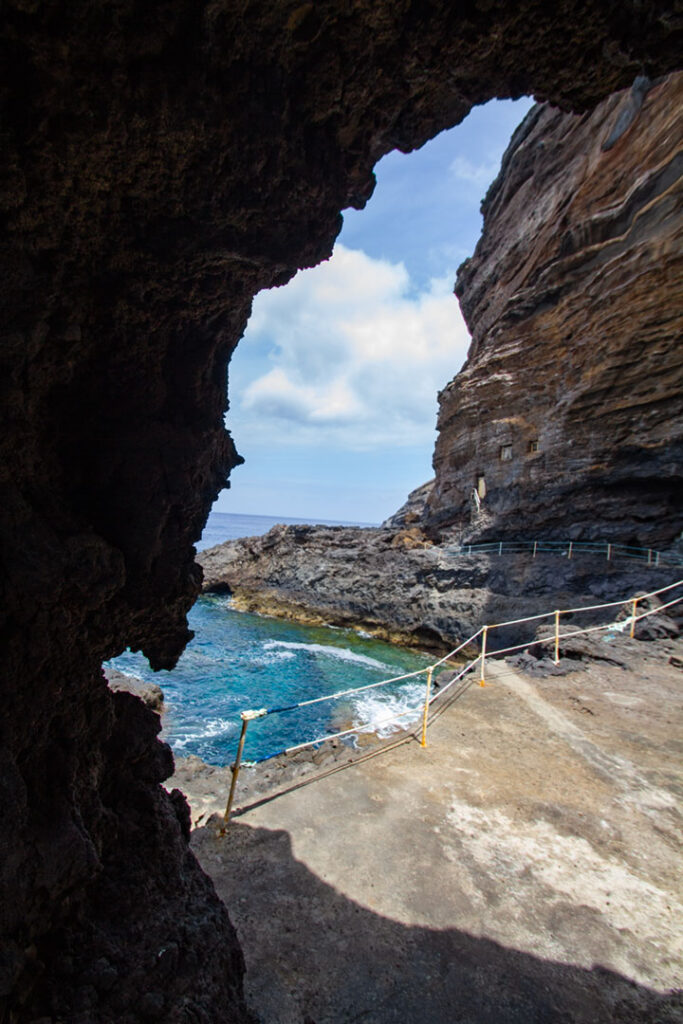
La Palma’s north-west coast is steep. The descent to Puerto de Puntagorda follows stairs and paths requiring sure footing and some stamina. Sturdy footwear is not a recommendation — it is a requirement. What awaits at the bottom: natural rock pools filled with clear Atlantic water, sea caves reaching into the stone, and a view over the open ocean that demands silence.
Swimming & Safety
No lifeguard on site. Suitable for experienced swimmers only, and strictly in calm seas.
The descent is steep and demanding — sturdy footwear essential.
At high tide the pools can be flooded by waves.
The Seawater Pools
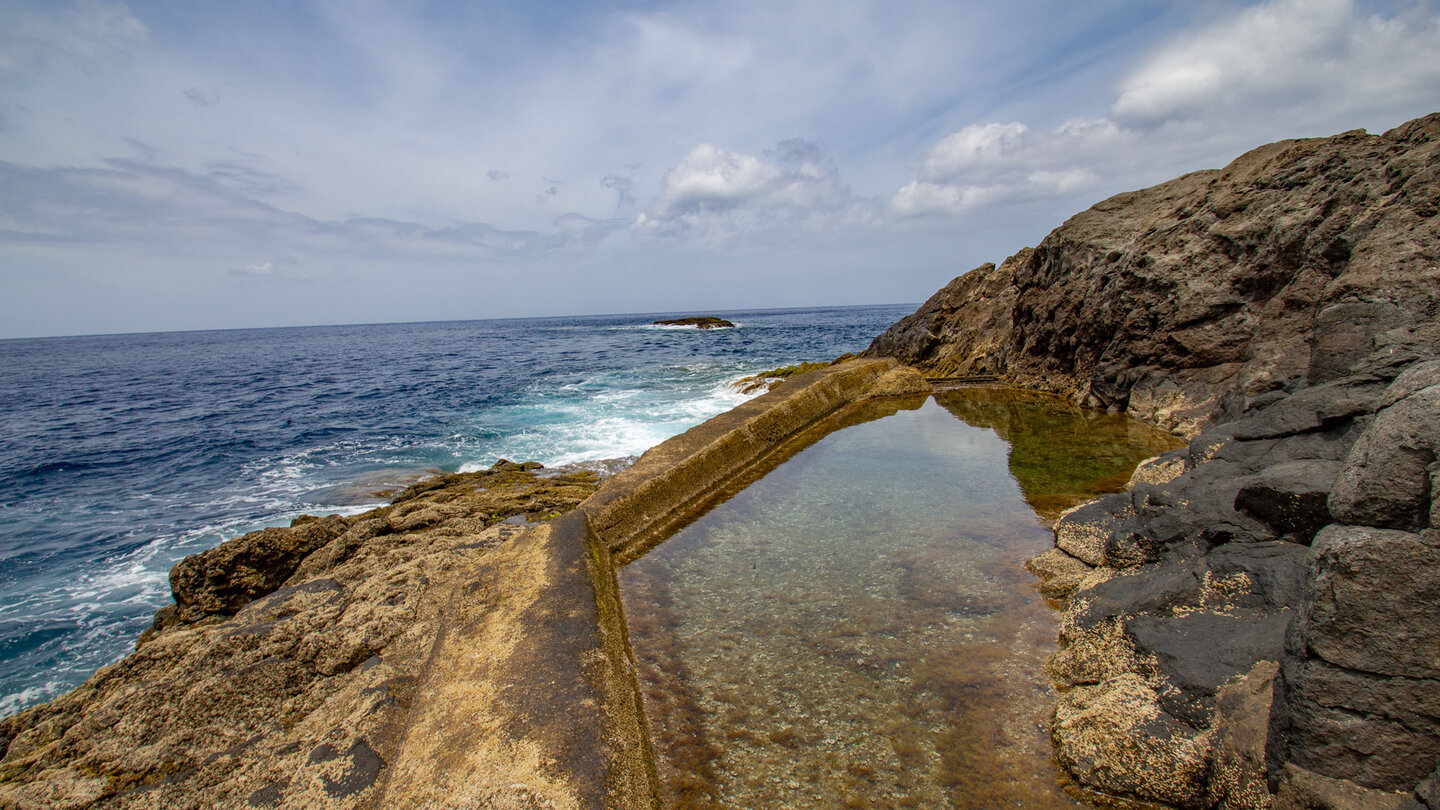
The natural pools in the lava rock are the heart of Puerto de Puntagorda. Turquoise Atlantic water fills the hollows in the stone, replenished by the tides. In calm seas, the pools are ideal for swimming — clear, cool, sheltered. In rougher conditions they become dangerous: the surf then crashes over the rock edges and makes swimming impossible.
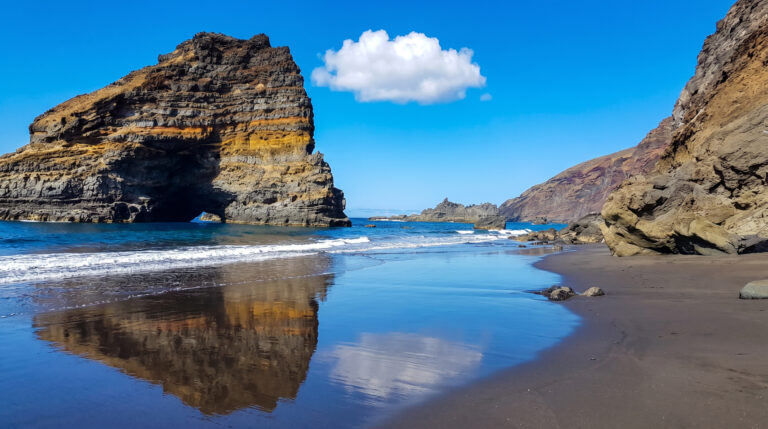
The sea caves at the edge of the coastal stretch are the second highlight — dark, polished by water, with the sound of the sea as a constant companion. These caves are not a tourist attraction; they are the result of millennia of wave action.
Puntagorda: Almonds, Wine and Views
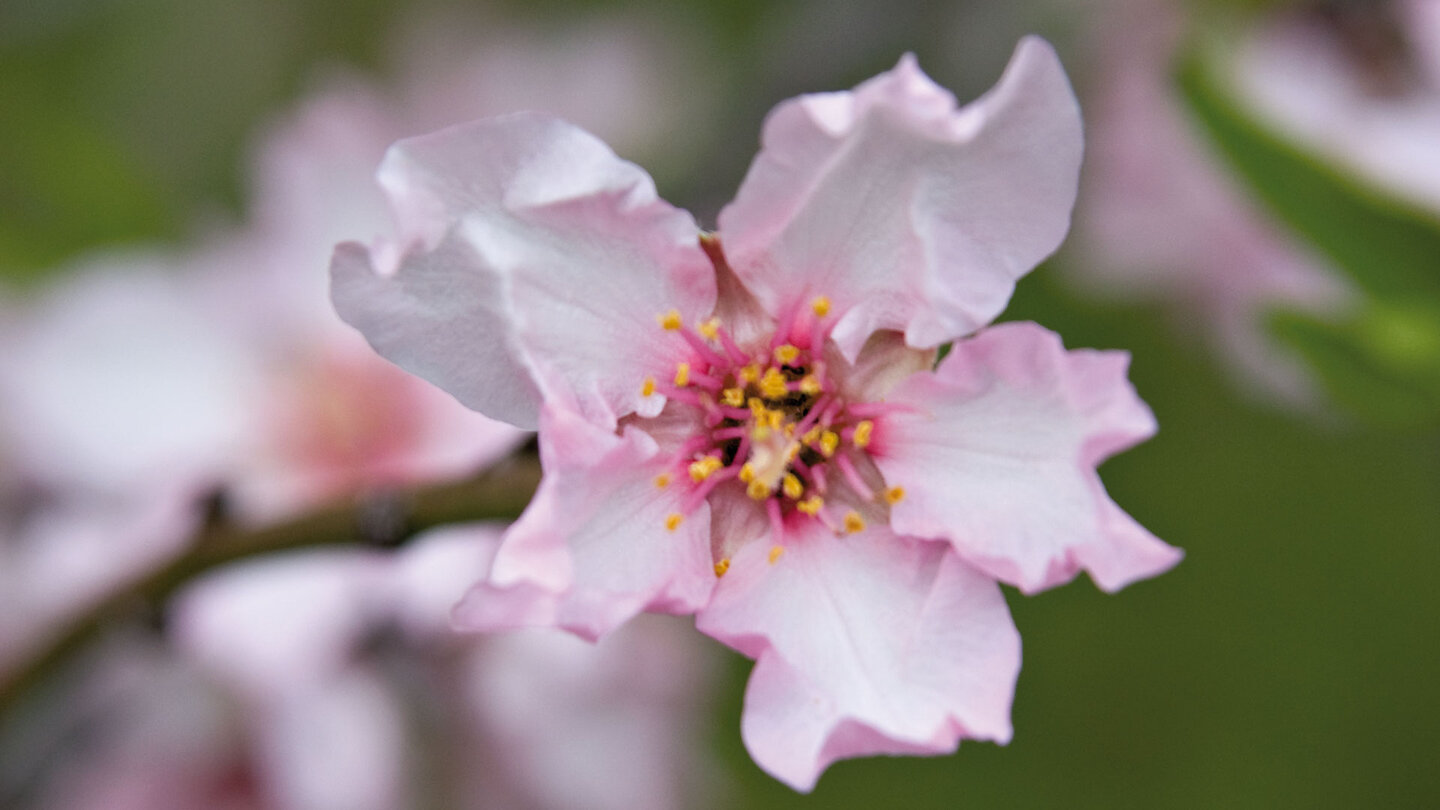
Up on the high plateau lies Puntagorda — a village that puts La Palma on the map in February with its almond blossom. Then the almond groves bloom in white-pink clouds, making the north-west the most sought-after photography spot on the island. Throughout the year Puntagorda also offers one of La Palma’s widest panoramic views. Coast and village together make one of the best all-round excursions in the less-visited north-west.
| Location | North-west coast of La Palma, municipality of Puntagorda |
|---|---|
| Pools | Natural seawater pools in the lava rock |
| Access | Steep descent path – sure-footedness and sturdy footwear required |
| Atmosphere | One of the most remote coastal spots on the island |
| Lifeguard | None – swim at your own risk |
| Combine with | Almond blossom Puntagorda (Feb) · GR-130 Coastal Path · Mirador |
| Accommodation | Clariso Puntagorda (19 houses) |
Accommodation in Puntagorda
Puntagorda offers a surprisingly wide selection of accommodation: 19 holiday homes, many with sea views and a pool. Anyone wanting to use the northwest coast as a base – close to Puerto de Puntagorda, the Pirate’s Cove and the GR-130 – will find a good selection here. Book via Clariso Puntagorda.
The GR-130: Coastal Trail from Puntagorda
The long-distance trail GR-130 runs along the coast of Puntagorda, connecting Puerto de Puntagorda with the Pirate’s Cove Porís de Candelaria to the south and Puerto de Garafía to the north. Those walking the GR-130 see the north-west coast on foot — from above on the cliffs and from below at the seawater pools. The section from Puntagorda to the Pirate’s Cove is considered one of the wildest and most impressive coastal walking stages in the Canary Islands.
The Cave Dwellings at the Coast
Puerto de Puntagorda also has, like the other old harbours of the north-west coast, traces of earlier inhabitants. Small fishing huts and niches carved into the rock that served as simple shelters are visible along the coastal stretch. These simple structures are a reminder that the coast was once the only connection to the outside world for the people of Puntagorda — before roads linked the villages and the sea lost its role as a lifeline.
Turquoise Water in a Harsh Setting
The most striking feature at Puerto de Puntagorda is the colour of the water. The Seawater Pools shimmer in a turquoise you’d usually find at the west coast spots of La Palma – here, nestled into the rugged cliffs of the northwest, it feels even more unexpected. The clear water, the black lava rock all around, the wide Atlantic beyond: anyone who has seen this will understand why La Palma is more than its well-known beaches.
Nature Protection: La Palma’s North-West Coast
La Palma’s north-west coast, of which Puerto de Puntagorda is part, is under strict nature protection. Visitors must stick to marked paths, picking plants is prohibited, and approaching cliff edges is forbidden for safety reasons. The steep cliffs are unstable — lava rock exposed to millennia of weathering can break away at any disturbance. Those who stick to marked paths and treat nature with respect experience a coastline that deserves this protection.
Best Time to Visit the North-West Coast
La Palma’s north-west sits, in terms of weather, between the west and north coasts. It enjoys more hours of sunshine than the north but fewer than on the pure west coast. In winter, clouds from the north can reach the high plateau. Summer is reliably sunny. The almond blossom in February makes Puntagorda the most visited spot in the municipality — Puerto de Puntagorda down at the coast then also sees more visitors.
Puerto de Puntagorda is the answer to a question many La Palma visitors don’t think to ask: what is here that exists nowhere else? The answer is: precisely this. Natural seawater pools in the lava rock of a cliff coast accessible only on foot, in a municipality that smells of almond blossom in February and radiates a silence throughout the year that differs fundamentally from the island’s busier parts. That is Puerto de Puntagorda.
Equipment for the Descent
Sturdy hiking footwear is essential for the descent to Puerto de Puntagorda. No flip-flops, no sandals. A well-maintained but steep zigzag path leads down the cliff face. For those counting: it is just over 400 steps to sea level. Those bringing water, sunscreen and snacks are well equipped for a half-day at the coast. Don’t forget a towel — and the camera: the seawater pools in turquoise light are one of the north-west’s most photogenic subjects.
Puerto de Puntagorda is one of those places on La Palma you only find if you actively look. A steep path leading downward, and at the end: turquoise water in brown rock, silence, and the feeling of having found something most others have missed.
Conclusion: Puerto de Puntagorda
Puerto de Puntagorda is La Palma’s most secluded coastal gem: natural seawater pools, rock caves.
The descent is demanding, but the reward is immense: silence, crystal-clear water, and a coastal landscape that feels completely untouched.
Combined with the almond blossom in February, Puntagorda is one of the most rewarding excursions in the northwest of La Palma.
Frequently Asked Questions
How do you get to Puerto de Puntagorda?
When is the almond blossom in Puntagorda?
Is it safe to swim at Puerto de Puntagorda?
This article is based on the on-the-ground knowledge of the Gequo editorial team – publishers of the Reisezeit hiking guides and operators of Sunhikes.com. Last updated: May 2026