Playa de Tazacorte – Two Beaches at the Fishing Harbour
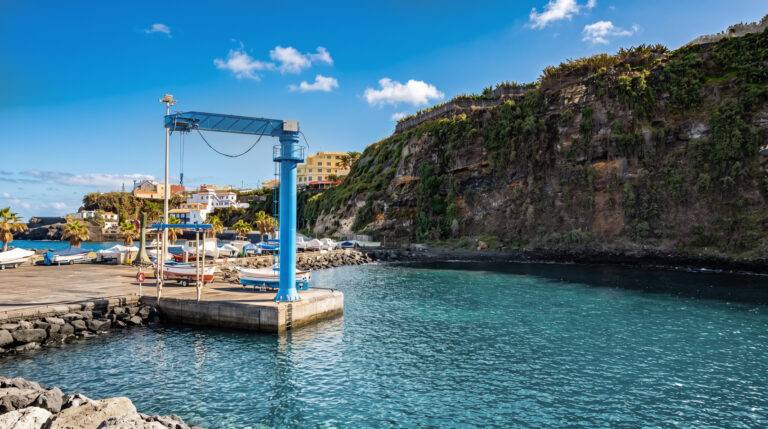
The road to Tazacorte goes downward. Always downward, through hairpin bends cut into the steep western slope of the island, past banana plantations whose leaves rattle in the wind – until the ocean is suddenly very close and the harbour opens up like a small world of its own. Puerto de Tazacorte, home to two beaches that enchant in their own quiet way.
Two Beaches, One Harbour
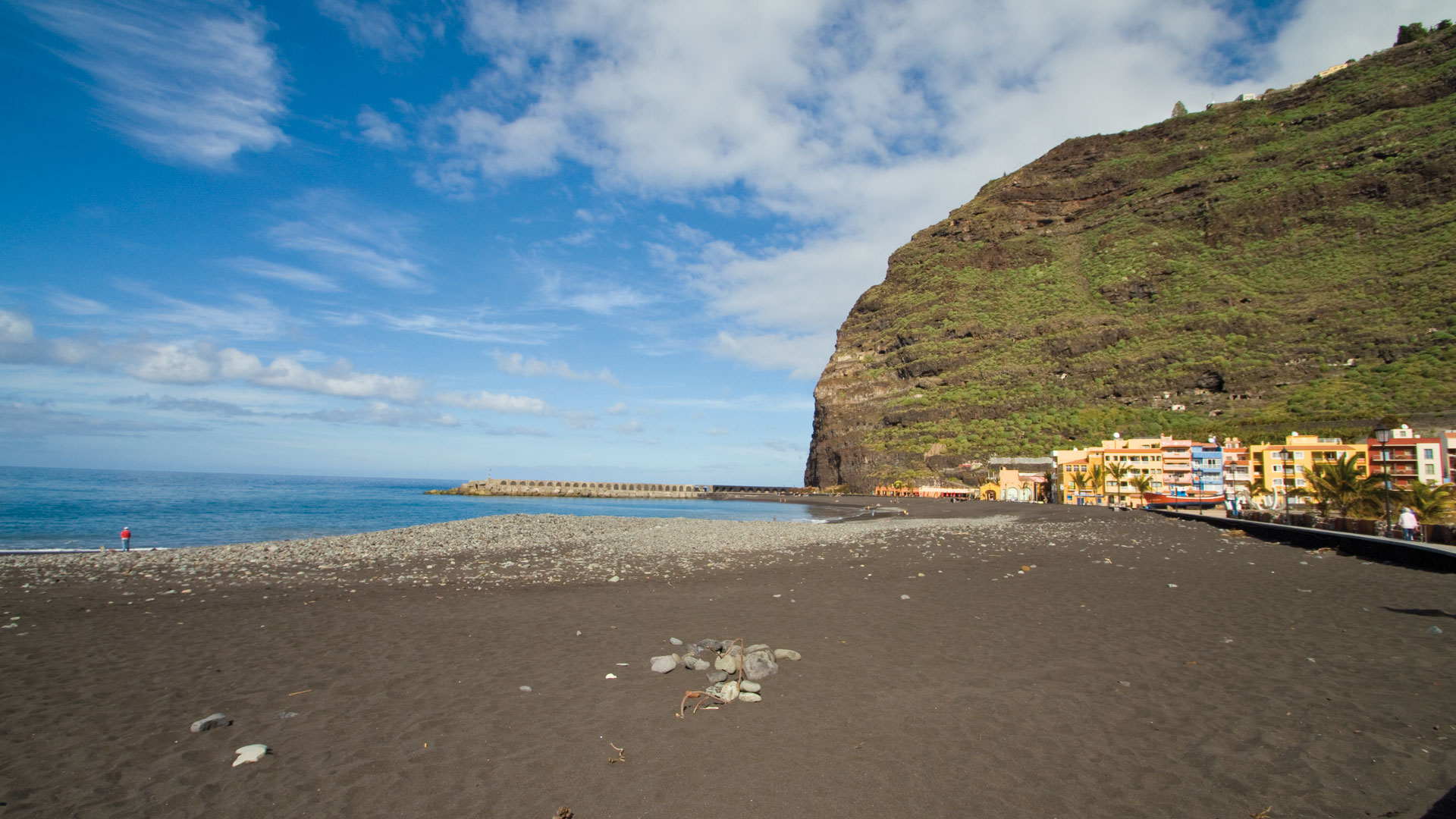
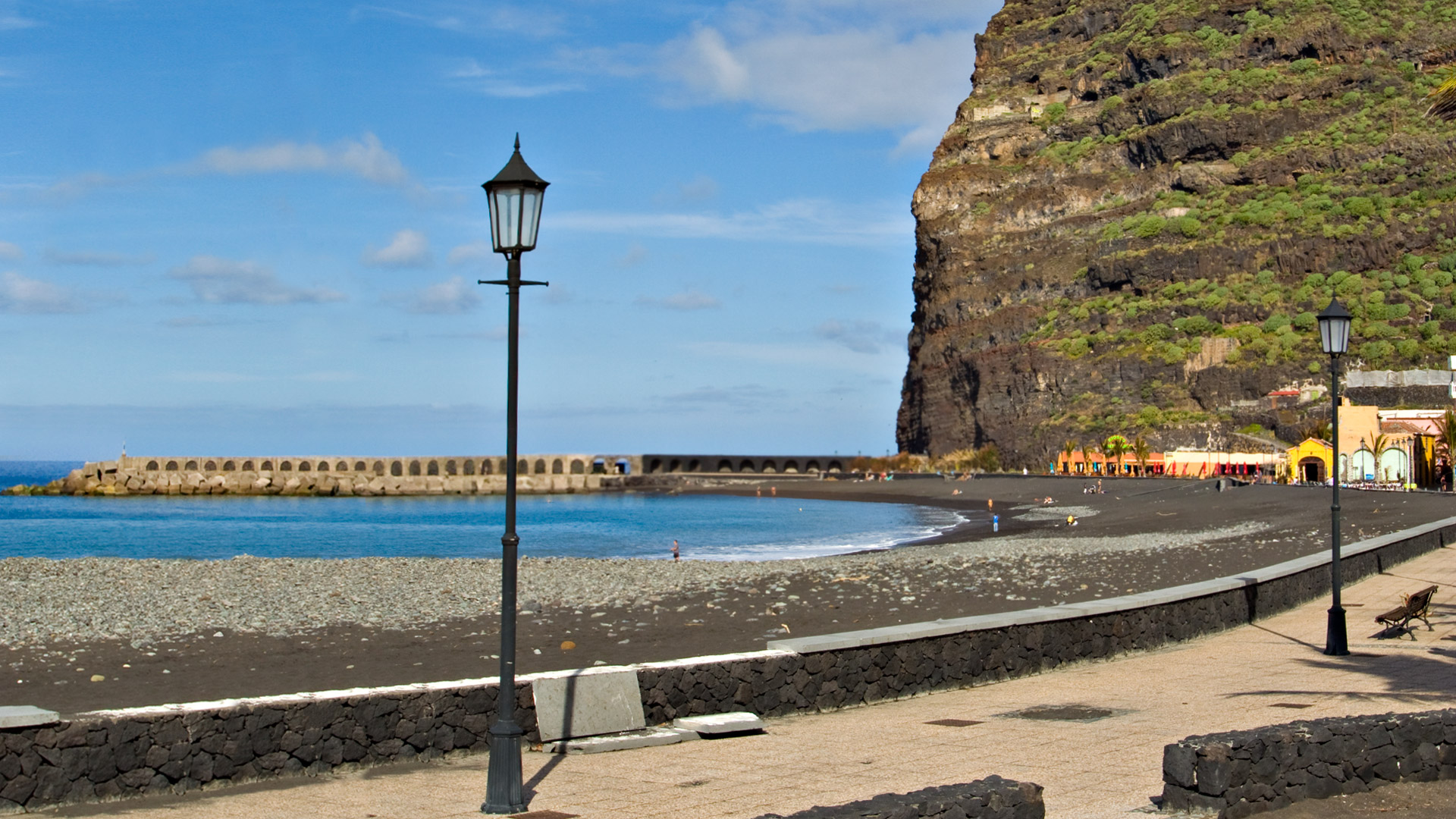
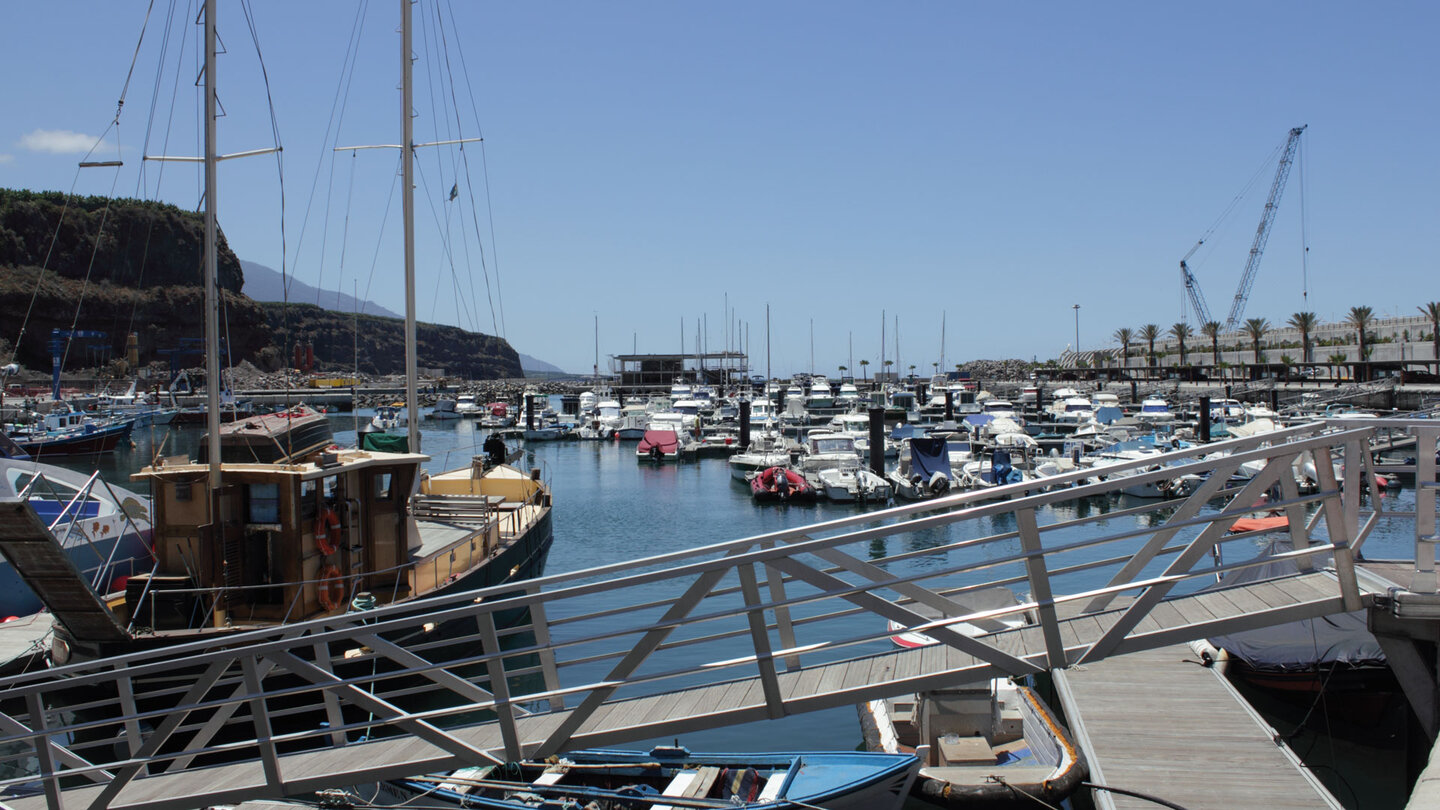
Where the Barranco de las Angustias meets the Atlantic, life pulses in the harbour of Tazacorte. Right next door lies the Playa de Tazacorte, also known to many as Playa del Puerto – one of the widest, most sun-blessed beaches on the island. Black volcanic sand meets maritime bustle here: fishing boats rock in the water, yachts moor up, and the smell of fresh fish drifts from the restaurants along the promenade.
A massive concrete sea wall shields the bay from the open sea and tames the Atlantic waves – one reason why swimming here is particularly safe. No wonder everyone meets on the beach: locals on their lunch break, families with children in the sand, and day-trippers setting off on whale-watching tours from here. The water is calm, clear and sheltered – perfect for swimming and simply being there.
Swimming & Safety
The beach flags give daily information about swimming conditions:
Green: Safe swimming conditions.
Yellow: Caution — waves or current. Children and less confident swimmers should stay ashore.
Red: Swimming strictly prohibited. Ignoring this is life-threatening and carries a fine.
Purple/Violet: Warning: jellyfish (Portuguese man-o’-war) or algae in the water.
Observe beach flags for both sections separately. With onshore wind the surf can become stronger even in Playa del Puerto.
Playa Grande is fully exposed to the Atlantic. For experienced swimmers only. The Playa del Puerto behind the harbour wall is considerably calmer – suitable for families and children.
Playa del Puerto – The Sheltered Family Beach
Playa del Puerto lies at the former fishing harbour of Tazacorte and is adorned by a pretty waterfront promenade with colourful, typically Canarian houses. Thanks to the old harbour wall, the surf here is comparatively moderate – particularly suitable for families with children. Access is barrier-free via a ramp.
Playa Grande – The Open Atlantic Beach
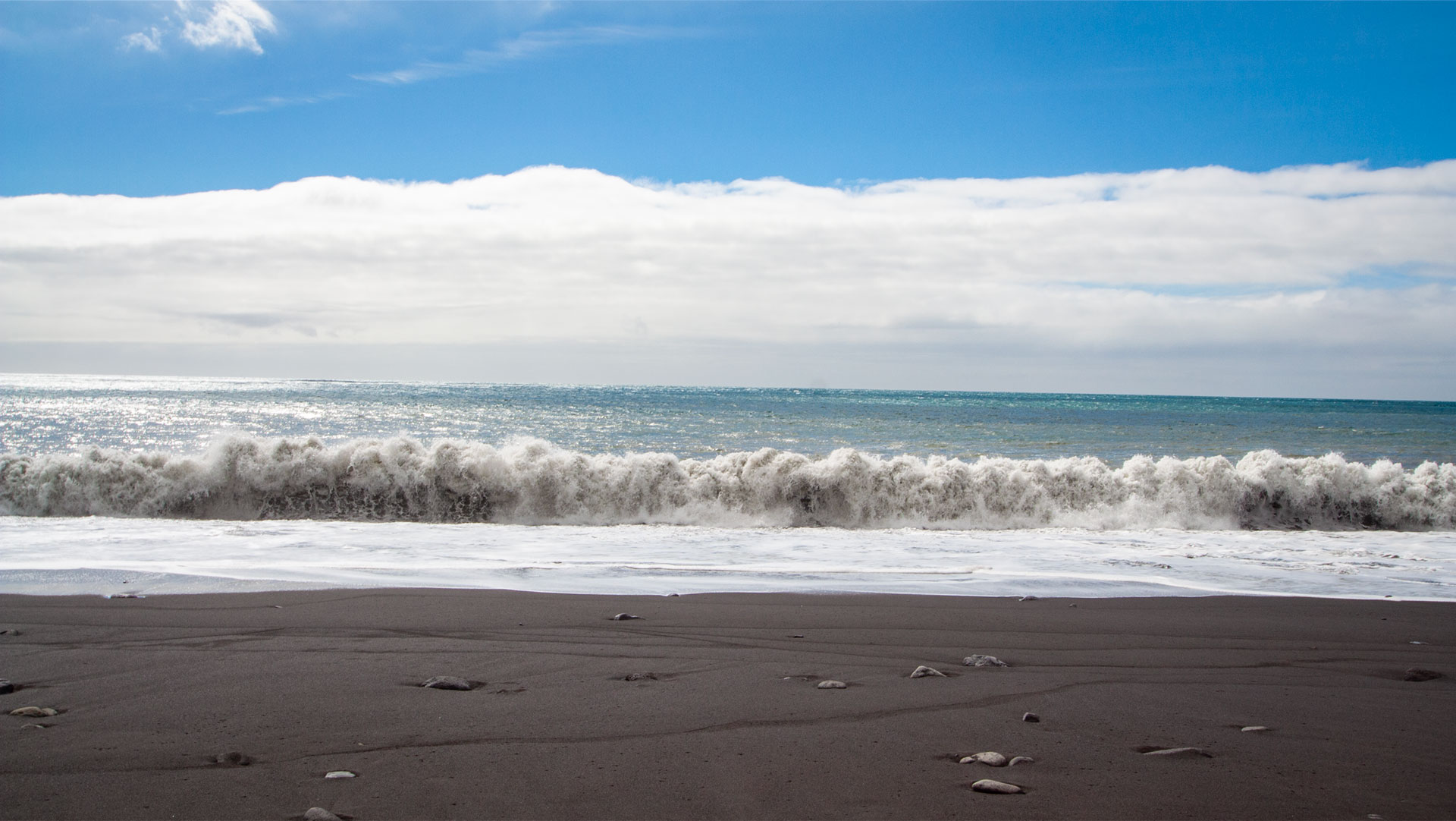
Playa Grande lies outside the harbour dam and is fully exposed to the Atlantic. 500 metres of black volcanic sand, 50 metres wide, strongly shaped by waves. Popular with surfers; for relaxed swimming Playa del Puerto is the better choice.
| Location | Puerto de Tazacorte, approx. 3 km from Tazacorte village centre |
|---|---|
| Playa del Puerto | Sheltered by harbour wall, moderate surf, ramp available |
| Playa Grande | 500 m, exposed, waves, popular with surfers |
| Facilities | Fish restaurants, bars, boat hire, sun loungers |
| Parking | At the harbour, free of charge |
| Boat Tours | Cueva Bonita, whale watching, motorboat hire |
Accommodation in Tazacorte
Book holiday homes directly via Clariso Tazacorte.
Boat Tours from Puerto de Tazacorte
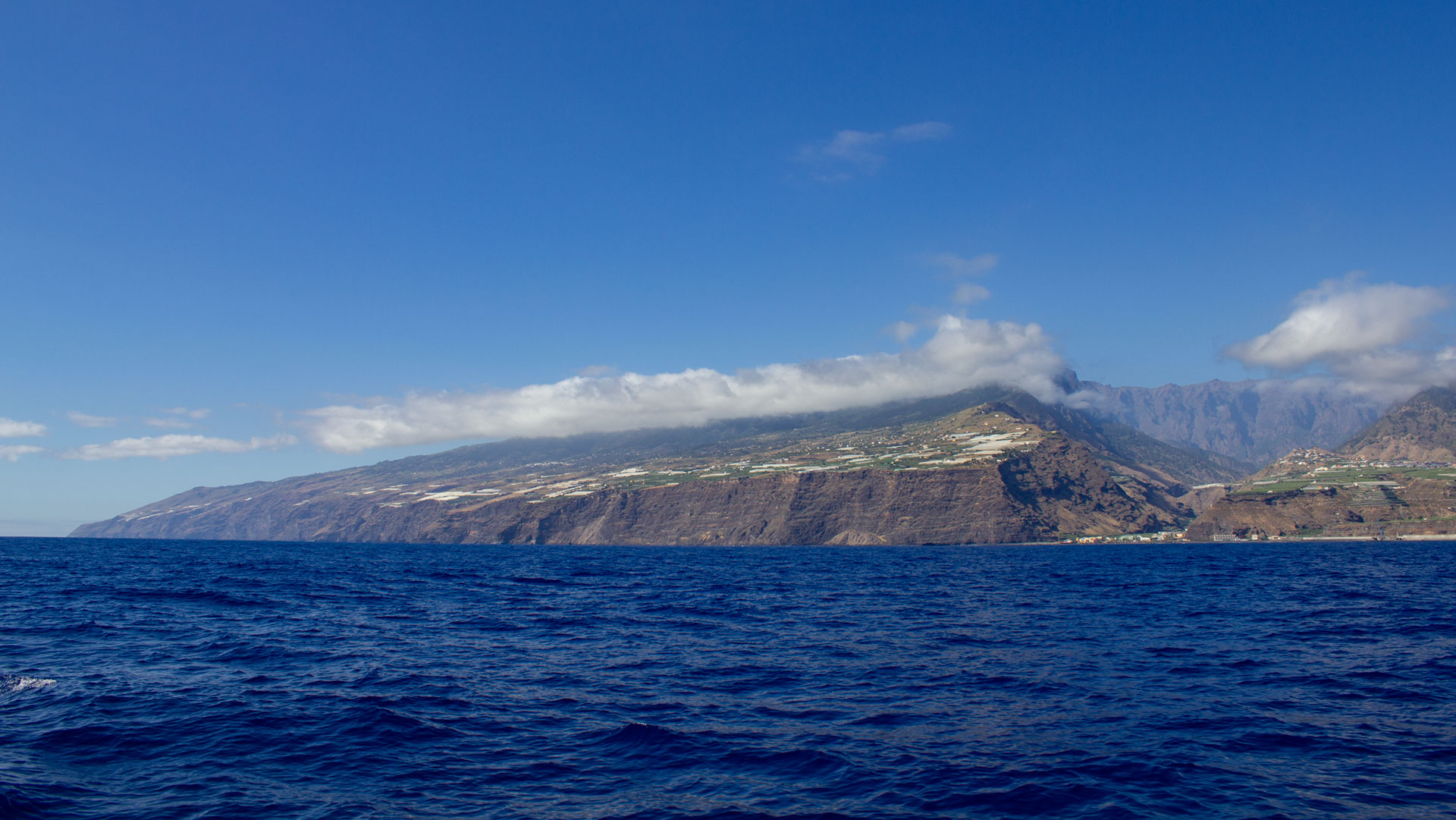
From Puerto de Tazacorte, some of La Palma’s finest boat tours depart: to the Cueva Bonita, the spectacular sea cave accessible only by boat, and on whale-watching excursions where dolphins and whales can be spotted in the deep waters off the west coast.
Snorkelling and Diving in Tazacorte
The water off Puerto de Tazacorte is clear and rich with life. The lava rock formations around the harbour create habitats for parrotfish, moray eels, octopus and occasionally small sharks. Divers appreciate the visibility, which can reach several dozen metres in calm seas. Snorkelling equipment is available locally; guided dives can be booked with local operators.
Water Sports: Kayak Tours along the Steep Coast
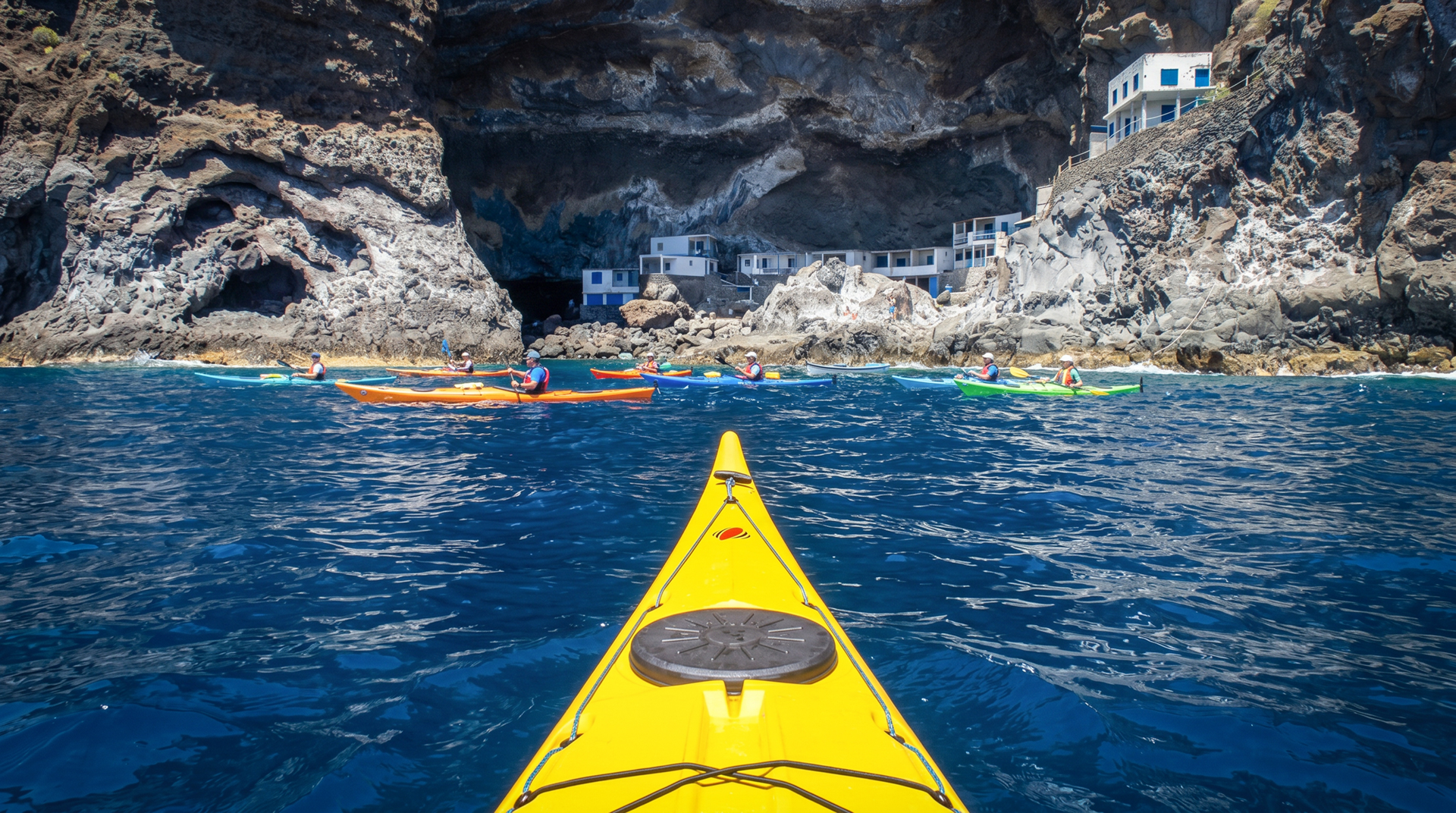
Guided kayak tours along the steep coast depart from Puerto de Tazacorte. The northern route runs along the cliff face below the Mirador del Time, in and out of caves. The southern route heads towards Puerto Naos – a calm or adrenaline-charged affair depending on the swell. Both tours are led by local operators and last two to four hours. Those who prefer to paddle alone can hire a kayak in the harbour and explore the nearby coastline independently.
The Harbour as Stage
Puerto de Tazacorte lives not only at the beach, but from the harbour. In the mornings, when the fishermen return and unload their catch, an everyday life unfolds that has nothing to do with tourism. Seagulls, nets, the smell of diesel, the creaking of boats – this is not a performance for visitors, but the real work of a fishing community that has lived from the Atlantic for centuries. Those who rise early experience this harbour in its most honest form.
Mirador del Time: The View from Above
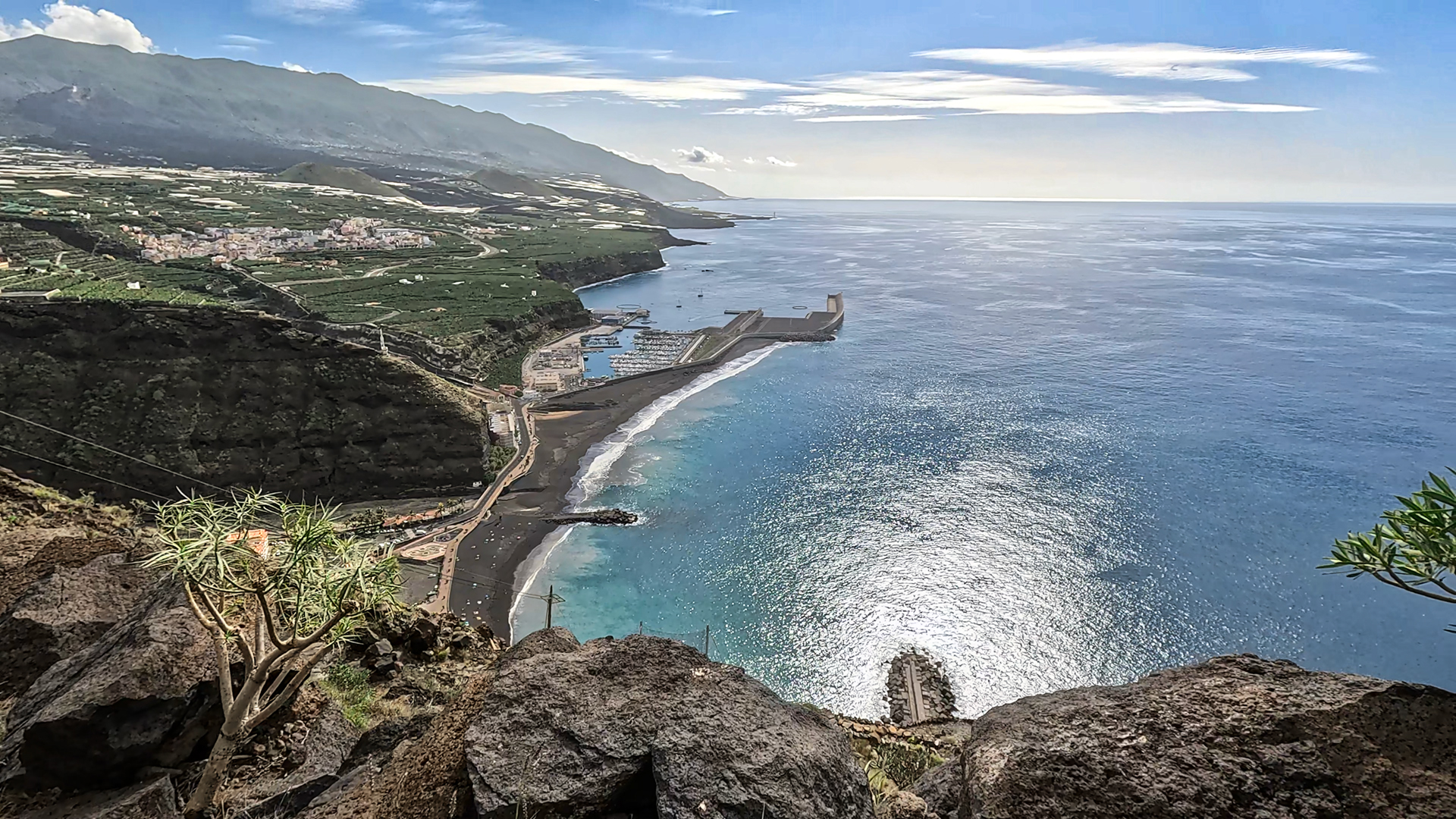
Directly behind the houses of Puerto de Tazacorte a gigantic cliff face rises up. At the top of the cliff sits the Mirador del Time – one of the most spectacular viewpoints on La Palma. From there you overlook the entire Aridane valley, the banana plantations, the coast from Tazacorte to Puerto Naos, and on clear days as far as the neighbouring islands. The mirador is reachable in 15 minutes by car from the harbour and fits perfectly as an addition to a beach visit.
Gastronomy: Fish Straight from the Boat
Tazacorte has the best seafood on La Palma – and that is no exaggeration. What lands on the plate was still in the net that morning. The restaurants at the harbour serve fish specialities that are hard to find on the other Canary Islands: Vinagrillo, Sama Roja, Cherne and the ever-present limpets. With papas arrugadas and a glass of Canarian white wine. The atmosphere in the restaurants is uncomplicated and lively, the food fresh and direct. Those who have eaten here once understand why fishing harbours are not tourist traps but places with genuine character.
The Aridane Valley: Bananas, Wine and Sunshine
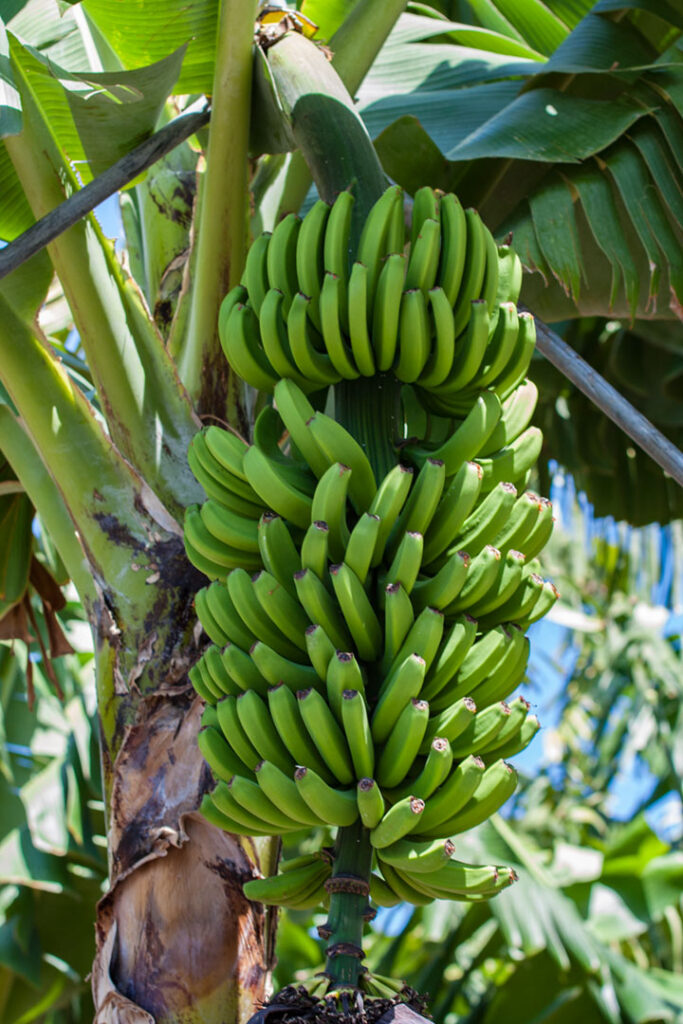
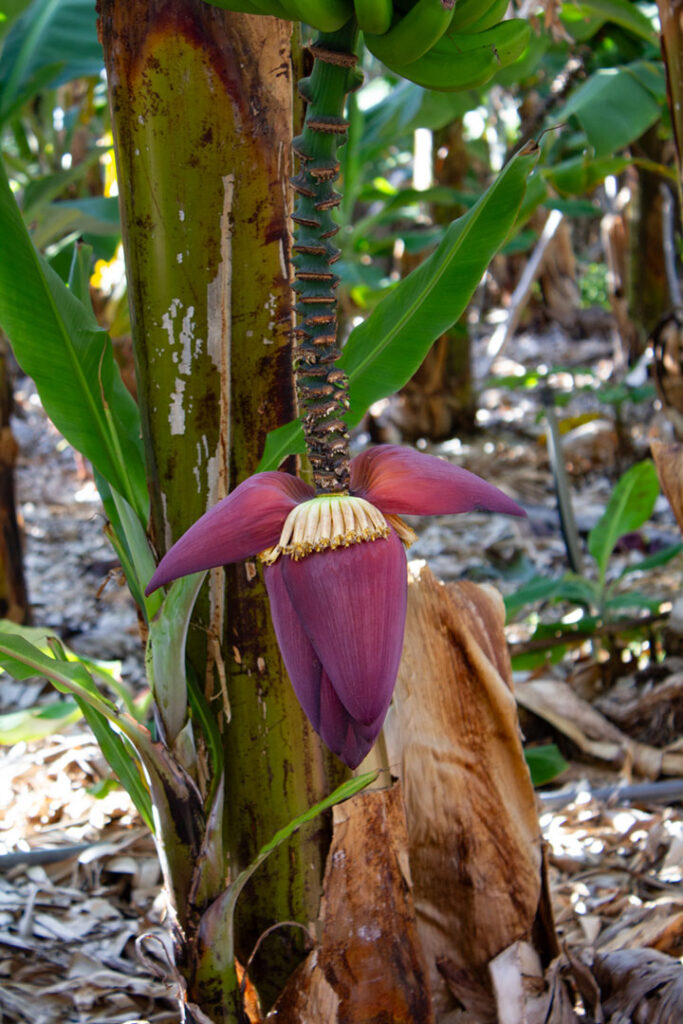
The harbour of Tazacorte lies at the foot of the Aridane valley – the most fertile and sunniest valley on La Palma. From the coast you can see the terraced slopes with banana plantations, vineyards and avocado groves stretching up towards the Cumbre Vieja. The Plátano Canario, the Canarian banana, is grown in large quantities in the Aridane valley and is one of the few branded products that make La Palma known worldwide. Those who breakfast at the harbour often see the transport ships loading banana crates.
Travel Season Tazacorte
Tazacorte and Puerto Naos are the sunniest places on La Palma – with around 300 sunny days per year, the west coast lies in the rain shadow of the mountains and is attractive year-round. In winter, when the north coast lies under trade wind clouds, the sun often shines here. Water temperatures of 20 to 24 degrees allow swimming all year. Contrary to what one might expect, winter is not a quiet off-season but is particularly popular with European hikers and long-stay holidaymakers – there are often more visitors in January than in June.
Conclusion: Playa de Tazacorte
Two Beaches, One Harbour, fresh fish, and the finest setting for boat tours: Puerto de Tazacorte is one of La Palma’s most vibrant coastal towns.
The difference from Puerto Naos: here the fishing village flair is still genuine. The atmosphere at the harbour, the restaurants, the everyday bustle – this makes Tazacorte more than just a beach.
Particularly recommended for all those who want to experience beach and fishing village atmosphere in one.
Frequently Asked Questions
What is the difference between Playa del Puerto and Playa Grande?
Can you book boat tours from Tazacorte?
What do the beach flags mean at Tazacorte?
Is there parking at Puerto de Tazacorte?
This article is based on the on-the-ground knowledge of the Gequo editorial team – publishers of the Reisezeit hiking guides and operators of Sunhikes.com. Last updated: May 2026