Calima, Trade Wind Clouds and Snow: La Palma’s Weather Phenomena
The weather on La Palma follows no single script. The island is a weather laboratory: Atlantic trade winds meet volcanic peaks, African Saharan dust meets the humid Atlantic, and above the clouds shines a sun that, just a few kilometres further on, is hidden by fog. For travellers, this means: understand the weather, and you experience La Palma differently.
The Trade Wind Clouds: A Border Between Two Worlds
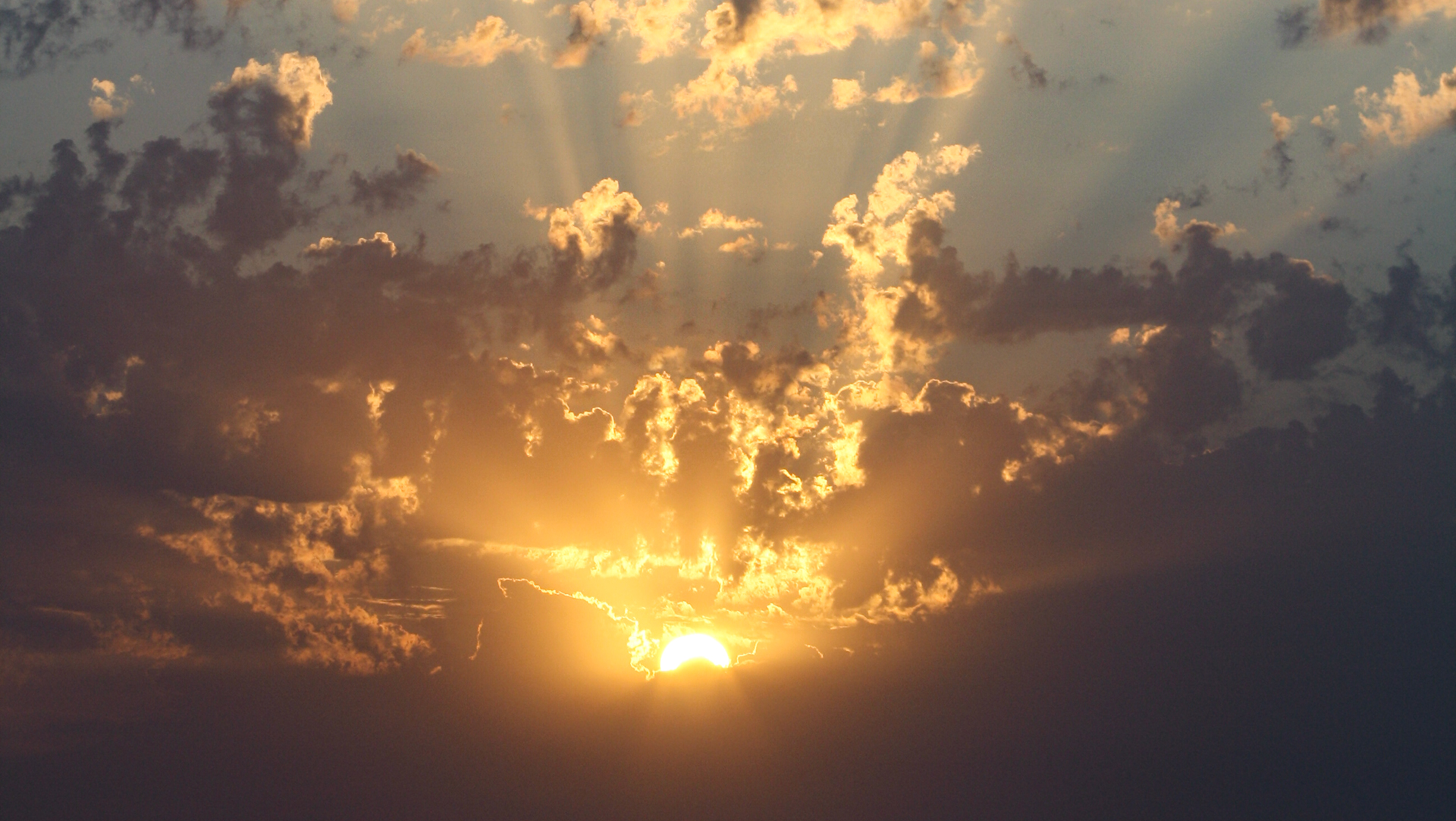
The most striking weather phenomenon on La Palma is the northeast trade wind clouds. They come from the Atlantic, hit the mountains and stay — on the windward side that faces them, that is, in the northeast. The boundary of this cloud layer, the so-called inversion layer, usually lies between 1,000 and 1,400 metres altitude. Above it: brilliant blue sky, dry air, temperatures of 15–20°C. Below it: fog, moisture, sometimes gentle rain.
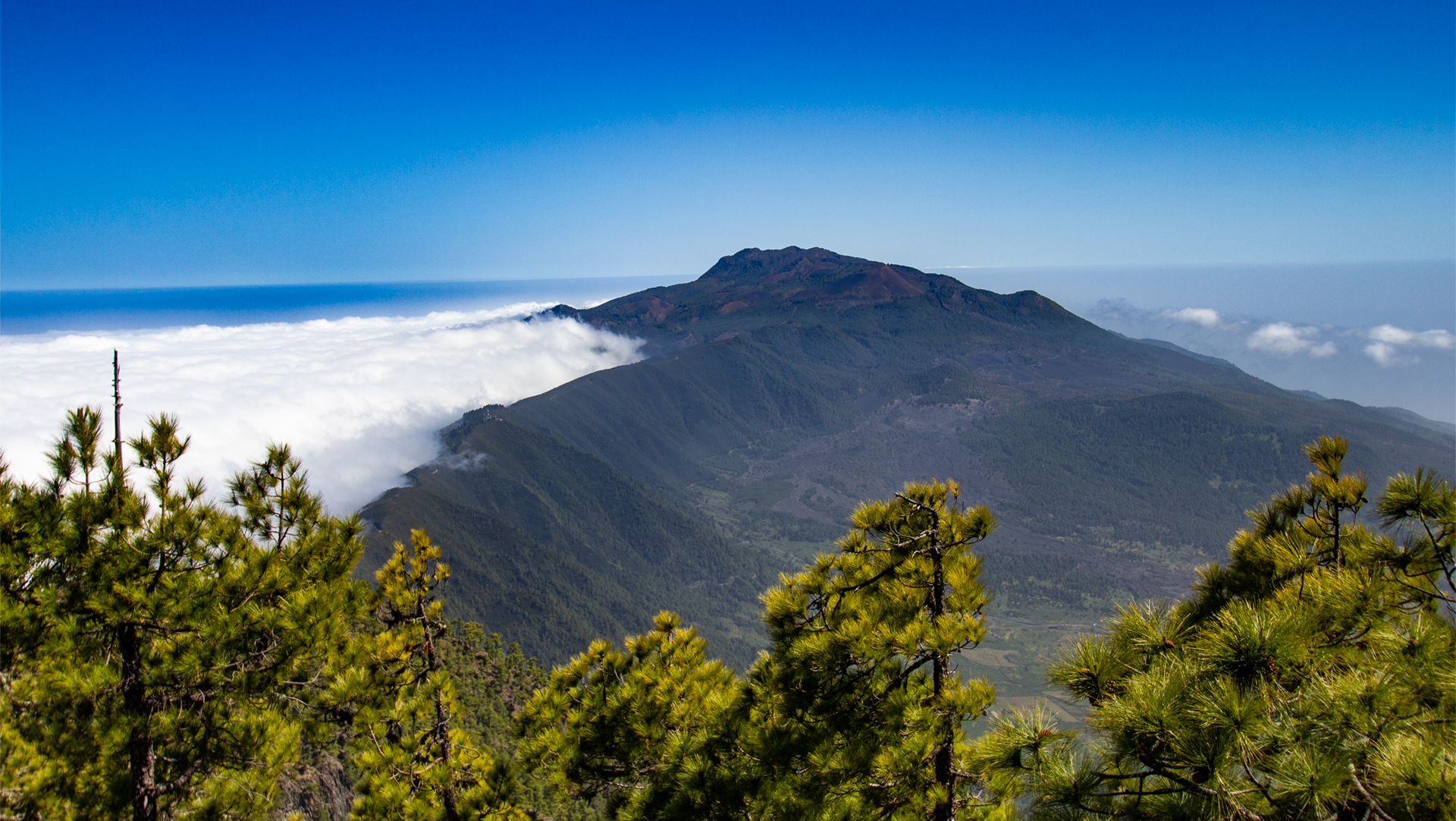
This phenomenon is most vividly experienced at the Cumbre tunnel. Anyone driving from Santa Cruz (east side, clouds) through the tunnel and emerging on the other side in El Paso switches in minutes from autumn weather into sunshine. In the vast majority of cases, this natural shortcut works — and it is the most impressive weather experiment you can do on La Palma.
The Calima: When the Sahara Reaches the Island
Once or twice a year a calima reaches La Palma. Tonnes of Saharan dust are carried across the Atlantic by dry easterly winds; the air turns dry and dusty, visibility becomes hazy, colours go flat. Temperatures during a calima can rise above 40°C. The air smells sweetly dusty, similar to dry hay.
A calima typically lasts two to four days. During this time, outdoor physical activity is not recommended, as the dust particles are fine enough to penetrate the lungs and body temperature rises quickly even with moderate exertion, while wildfire risk also climbs during this period.
Snow and Frost in the High Mountains
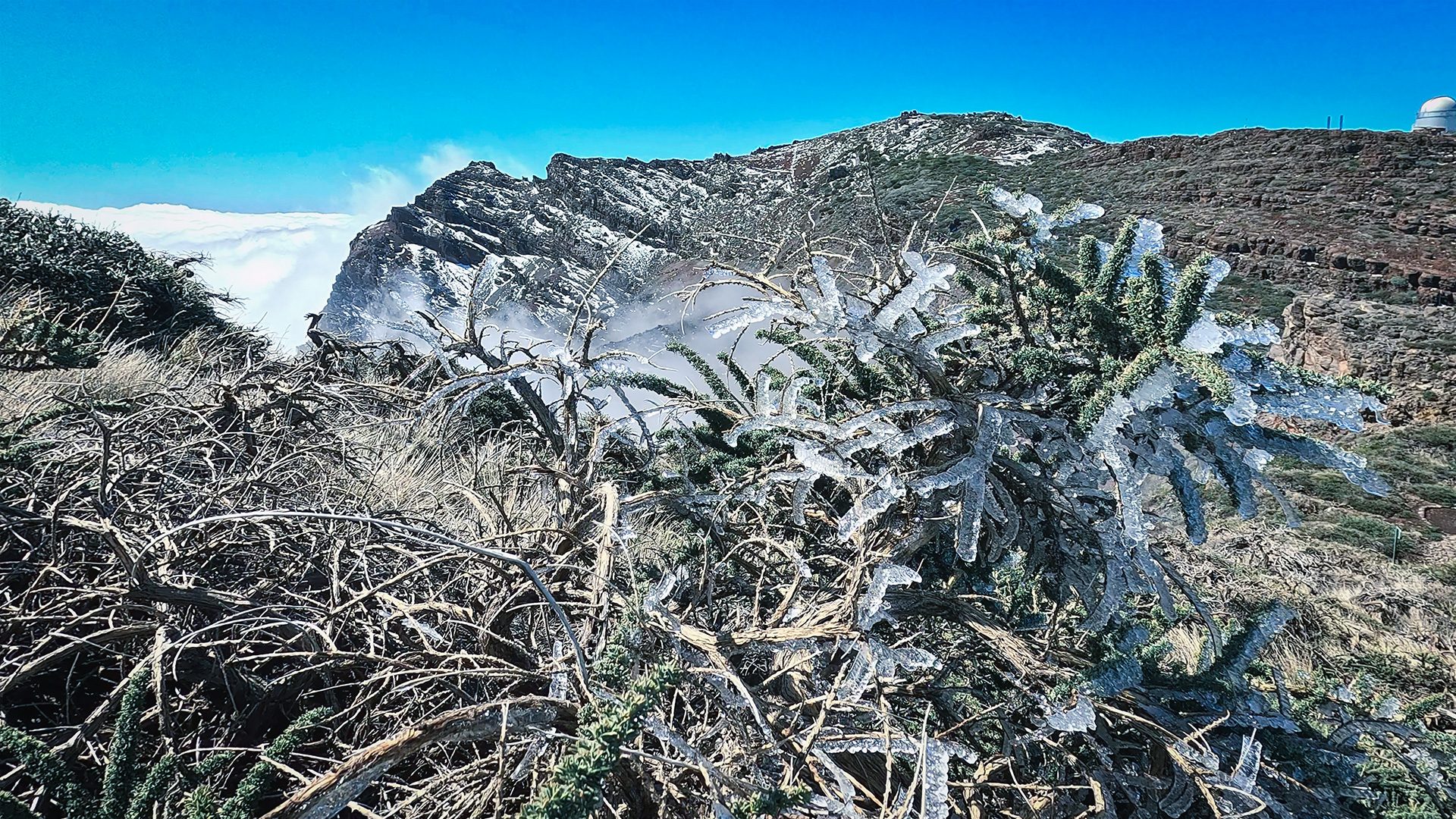
On the Roque de los Muchachos (2,426 m), snowfall and frost can occur from November to February. This is unusual for Canary Islands clichés — but real: the LP-4 road is closed in icy conditions, and the observatory operates under winter conditions year-round. In summer, temperatures at the summit of 5–10°C are entirely possible on night-time stargazing tours.
Understanding La Palma’s Microclimates
La Palma’s weather phenomena are part of the island’s character. Anyone who knows the tunnel as a weather experiment, knows how to ride out a calima, and uses the trade wind clouds as a navigation aid, travels La Palma with a deeper understanding.
Frequently Asked Questions
What is a calima?
When are the trade wind clouds at their strongest?
Can it really snow on La Palma?
This article is based on the on-the-ground knowledge of the Gequo editorial team – publishers of the Reisezeit hiking guides and operators of Sunhikes.com. Last updated: May 2026