San Andrés: Picturesque Village Square and Historic Fishing Harbour
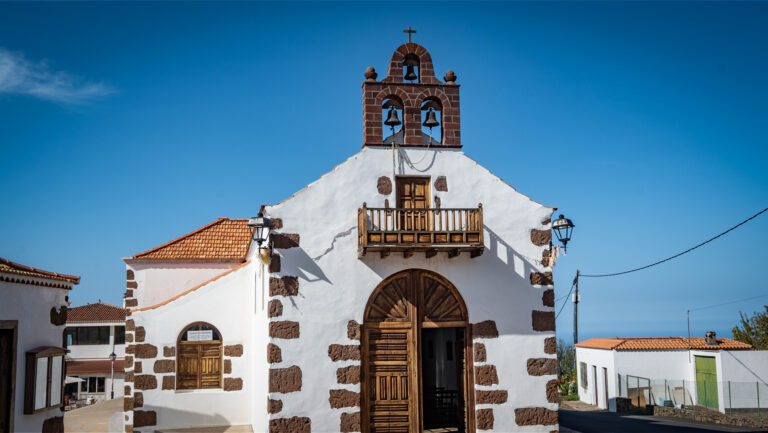
San Andrés is the older and smaller of the two settlements in the municipality of San Andrés y Sauces. Around the historic plaza with the Iglesia de San Andrés Apóstol, the stone fountain, and the beautifully preserved Canarian houses with their wooden balconies, you’ll find one of La Palma’s most beautiful village centres. Behind the historic facades, lush banana plantations already begin — they almost completely surround the village and give it its unmistakable character.
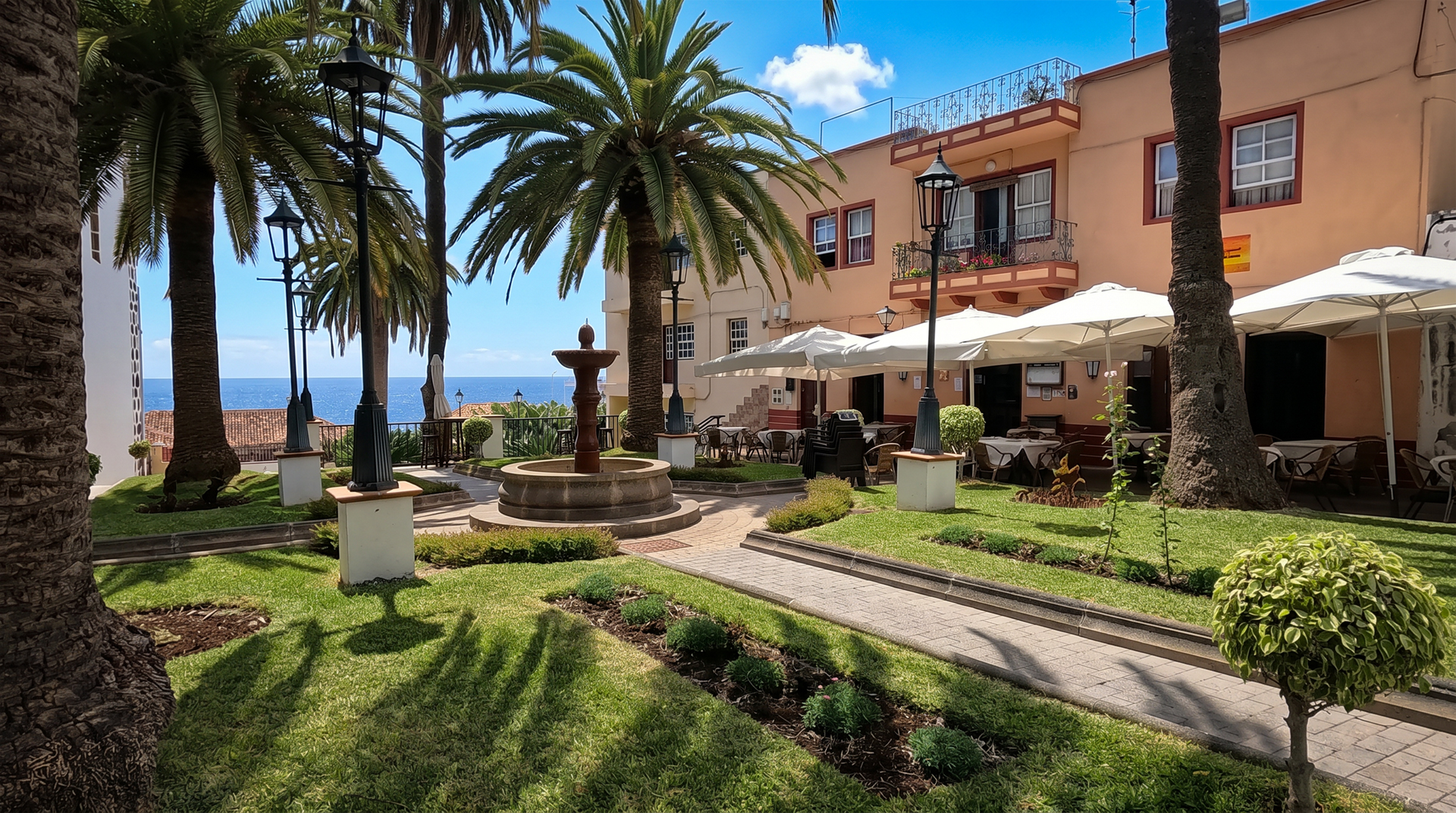
Just a few steps from the church square begins the Paseo Marítimo, one of the most beautiful walking paths in northern La Palma. The largely flat coastal trail follows part of the historic Camino Real de la Costa (GR-130), which once connected the villages along the north coast. Today it pleasantly links the historic village centre with the seawater pools Charco Azul and leads past traces of the island’s history to the fishing harbour Puerto de Espíndola.
The Iglesia San Andrés Apóstol
The church dates back to the early 16th century and ranks among the oldest places of worship on La Palma. Behind its modest facade, you’ll find intricately carved wooden ceilings in the Mudéjar style, historic altars, and numerous sacred works of art. For centuries, the church has shaped the village’s character and remains its cultural heart to this day.
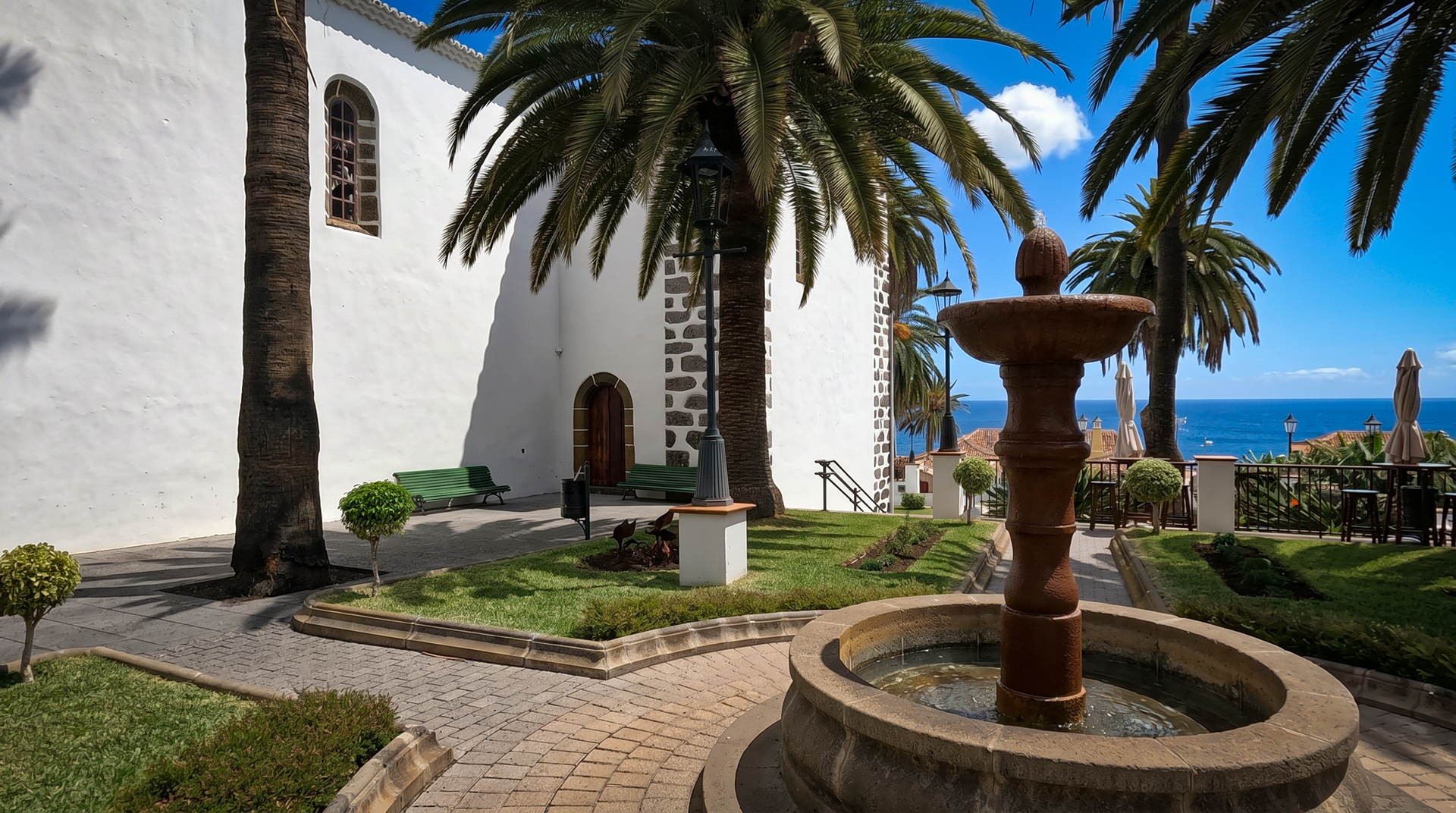
Dining Around the Plaza
Several excellent restaurants surround the historic church square — with a reputation that reaches well beyond the village. Fresh fish, seafood, and traditional Canarian dishes share the menu with modern interpretations of regional cuisine. Dining on the plaza is one of the most enjoyable ways to soak in the unique atmosphere of San Andrés.
The Coastal Path: La Cuevita and the Horno de Cal
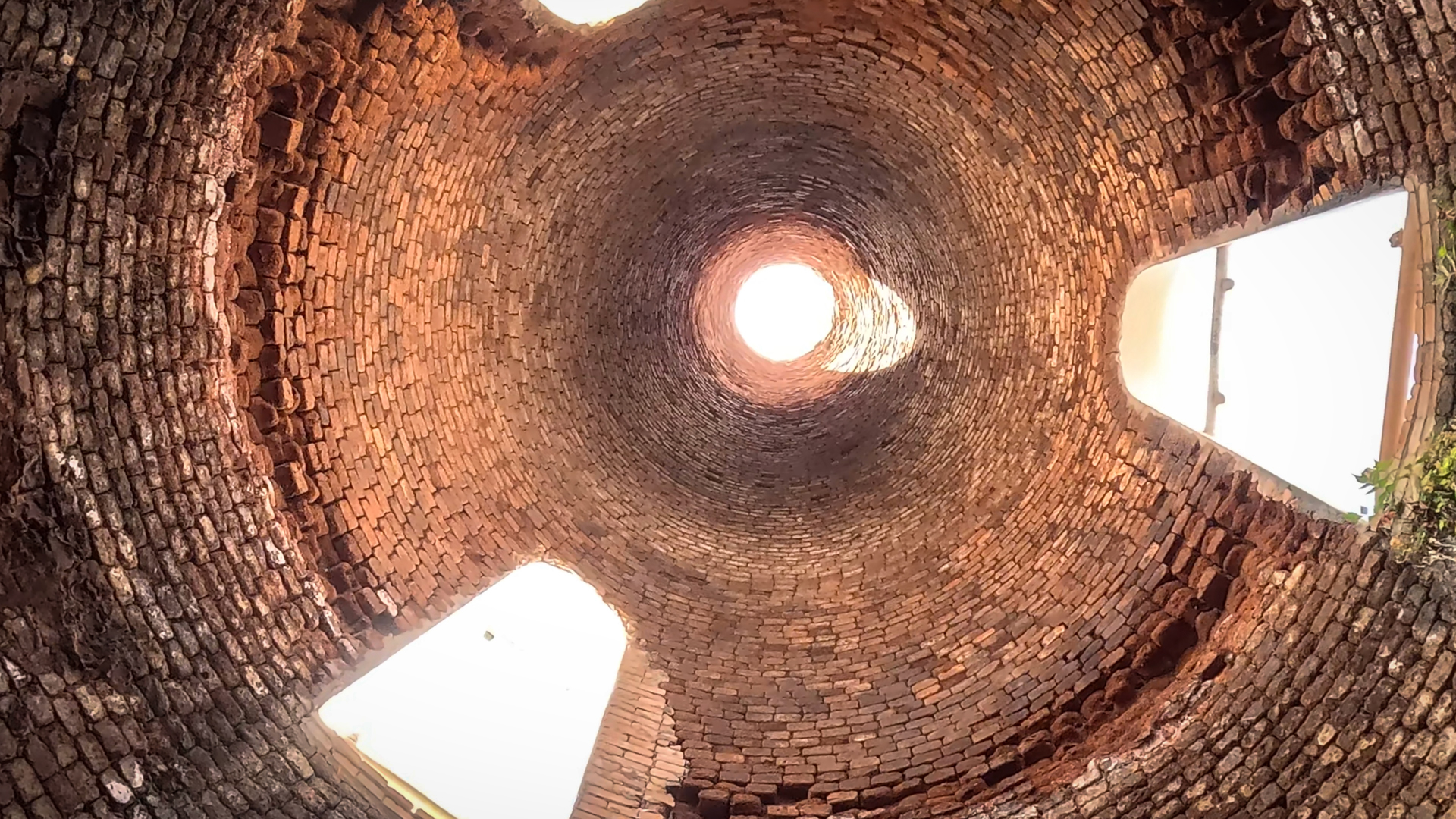
From the historic village centre, the largely flat Paseo Marítimo follows the coast northward. Just a few minutes along the way, you reach the restored Horno de Cal, a historic lime kiln that recalls the era when limestone was fired here for use in construction and agriculture. This distinctive structure is one of the most important industrial monuments on the north coast.
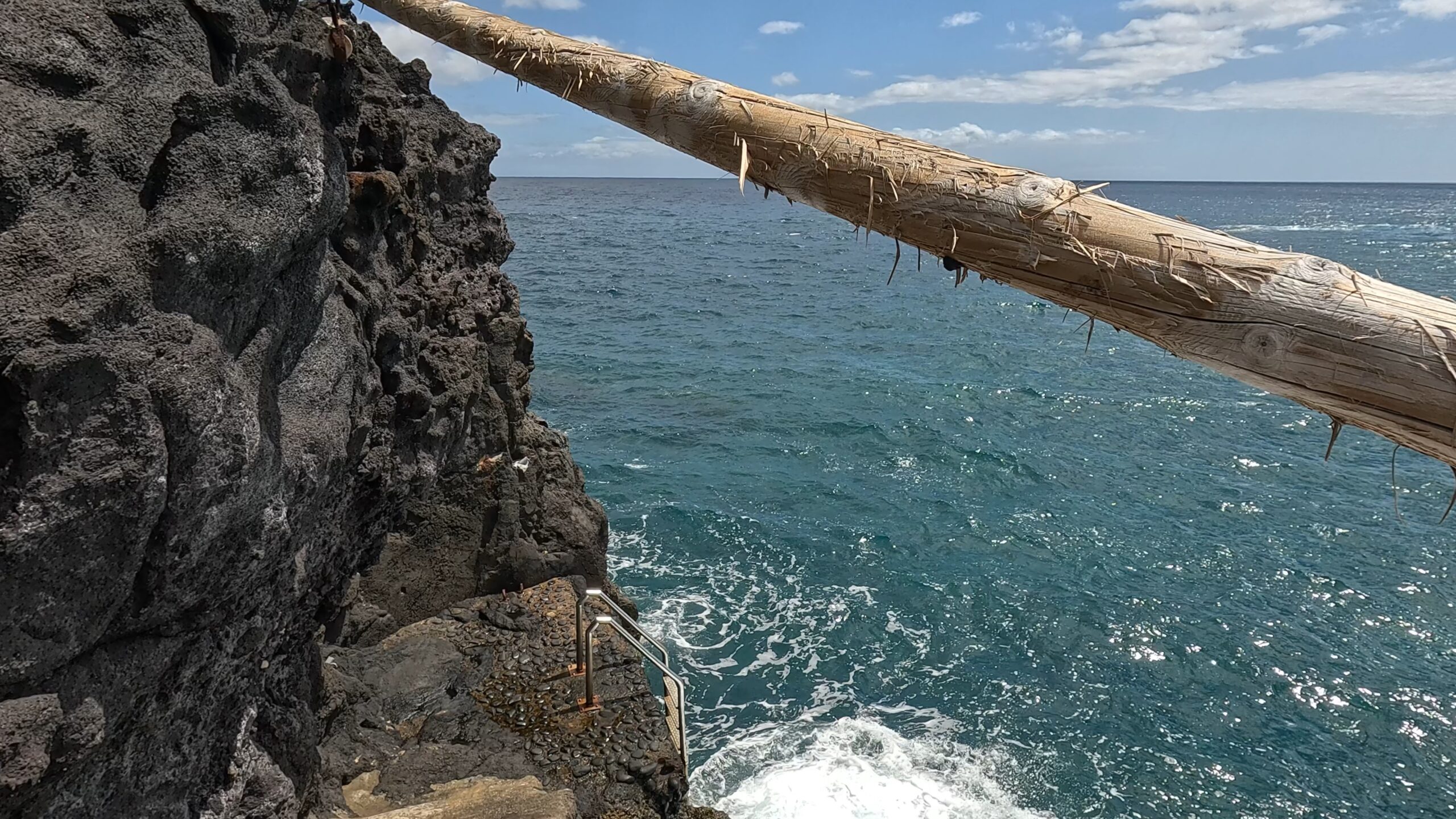
A short distance farther lies La Cuevita, the original harbour of San Andrés. Before the current Puerto de Espíndola was built, fishing boats docked here. Today the small, sheltered cove is popular mainly with locals. A fixed ladder allows direct access to the crystal-clear Atlantic water when the sea is calm.
Charco Azul – Swimming in the Famous Seawater Pools
Continuing north along the Paseo Marítimo, you reach the Charco Azul seawater pools — one of La Palma’s most famous swimming spots. The natural lava pools have been carefully developed and now offer sheltered seawater pools with sun terraces, showers, and accessible entrances.
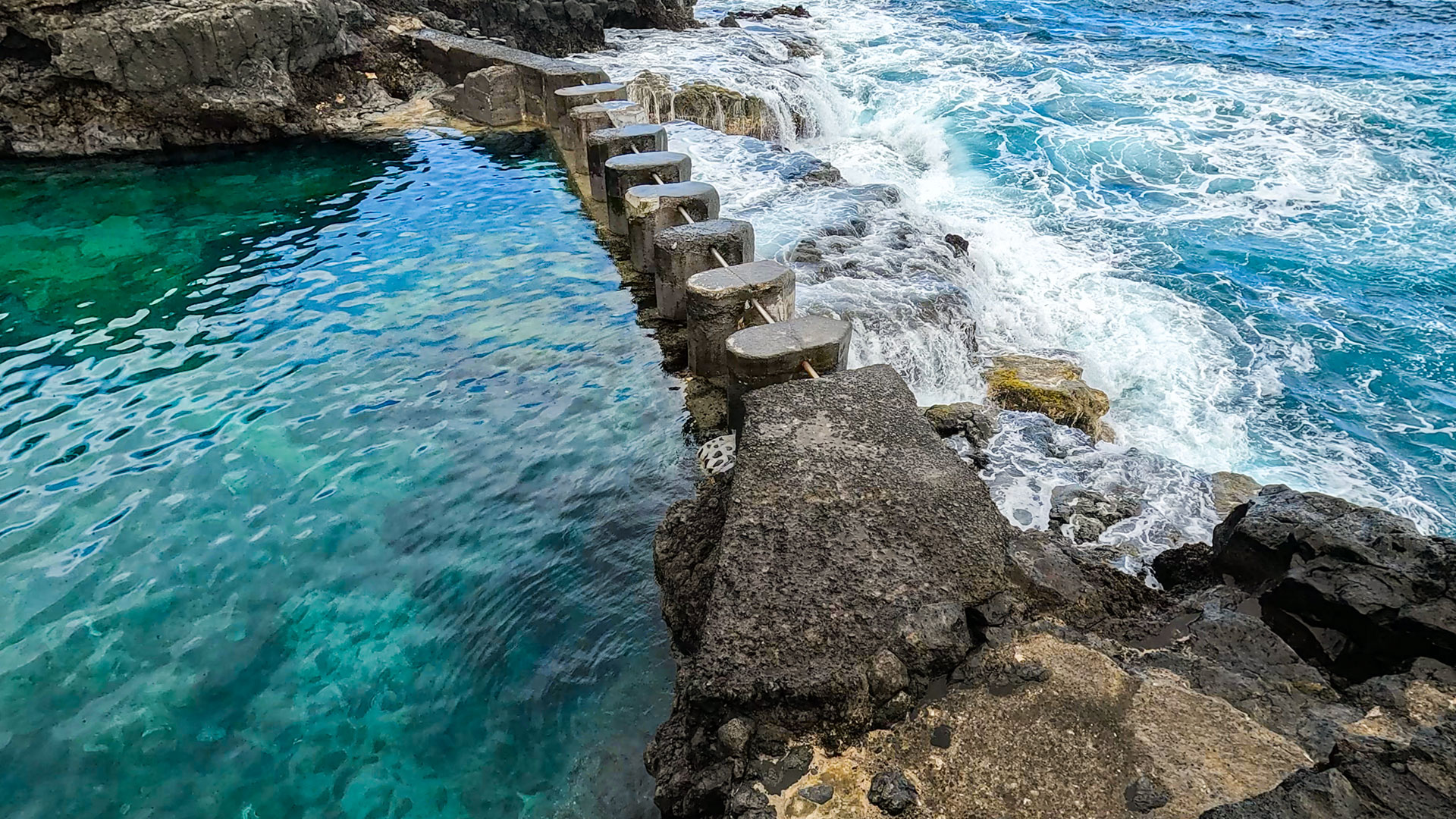
On calm days in particular, Charco Azul is a popular spot for swimming and relaxing. The facility combines the raw lava rock of the coastline with modern infrastructure and offers beautiful views of the Atlantic.
Puerto de Espíndola and Sugarcane Rum
Just above the seawater pools Charco Azul lies the historic Destilerías Aldea. For generations, the famous Ron Aldea as well as traditional aguardiente has been distilled here from locally grown sugarcane. The distillery is one of the last of its kind in the Canary Islands and preserves a craft with centuries of tradition on La Palma. Visitors can learn about the production process and taste the various rum specialities on-site.
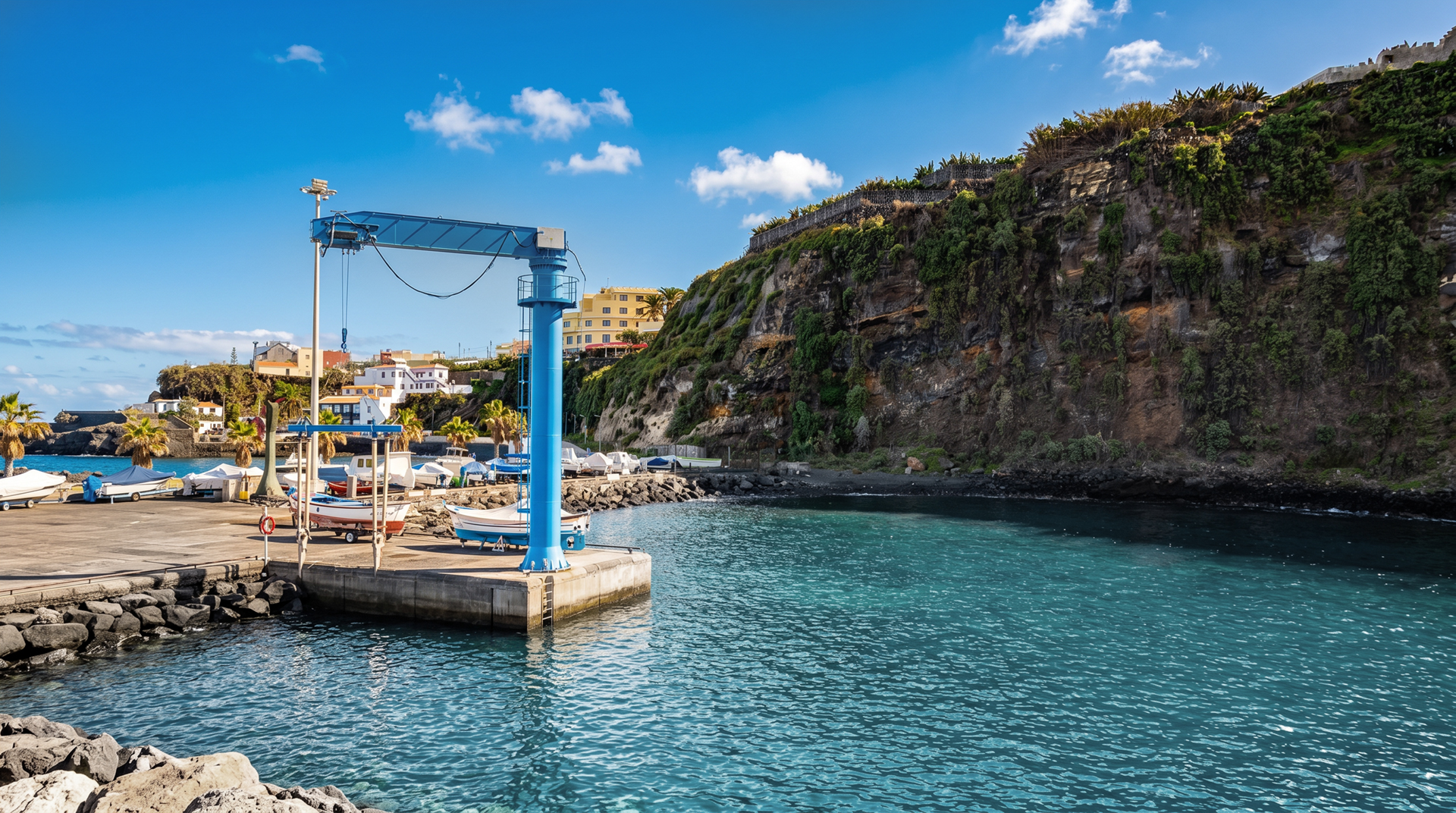
Just a few minutes’ walk farther north lies the small fishing harbour Puerto de Espíndola, still used by local fishermen today. Right next to the harbour is a sheltered beach of dark sand and pebbles, particularly inviting on calm days. From the jetty, you’ll enjoy beautiful views of the steep coastline and the Atlantic — a picturesque end to the coastal walk.
Summary:
San Andrés uniquely combines historic architecture, lush banana plantations, and the rugged Atlantic coastline. Thanks to the coastal path, the village centre, Charco Azul, and Puerto de Espíndola can all be explored on foot — one of the finest combinations of culture, nature, and swimming in northern La Palma.
Frequently Asked Questions
What are the main attractions in San Andrés?
Are there restaurants in San Andrés?
How far is San Andrés from Santa Cruz de La Palma?
Can you walk between San Andrés and Charco Azul?
Is San Andrés worth visiting even without a beach holiday?
Is San Andrés good for walking?
This article is based on the on-the-ground knowledge of the Gequo editorial team – publishers of the Reisezeit hiking guides and operators of Sunhikes.com. Last updated: May 2026