La Palma’s Spurge Plants: Survival as an Art Form
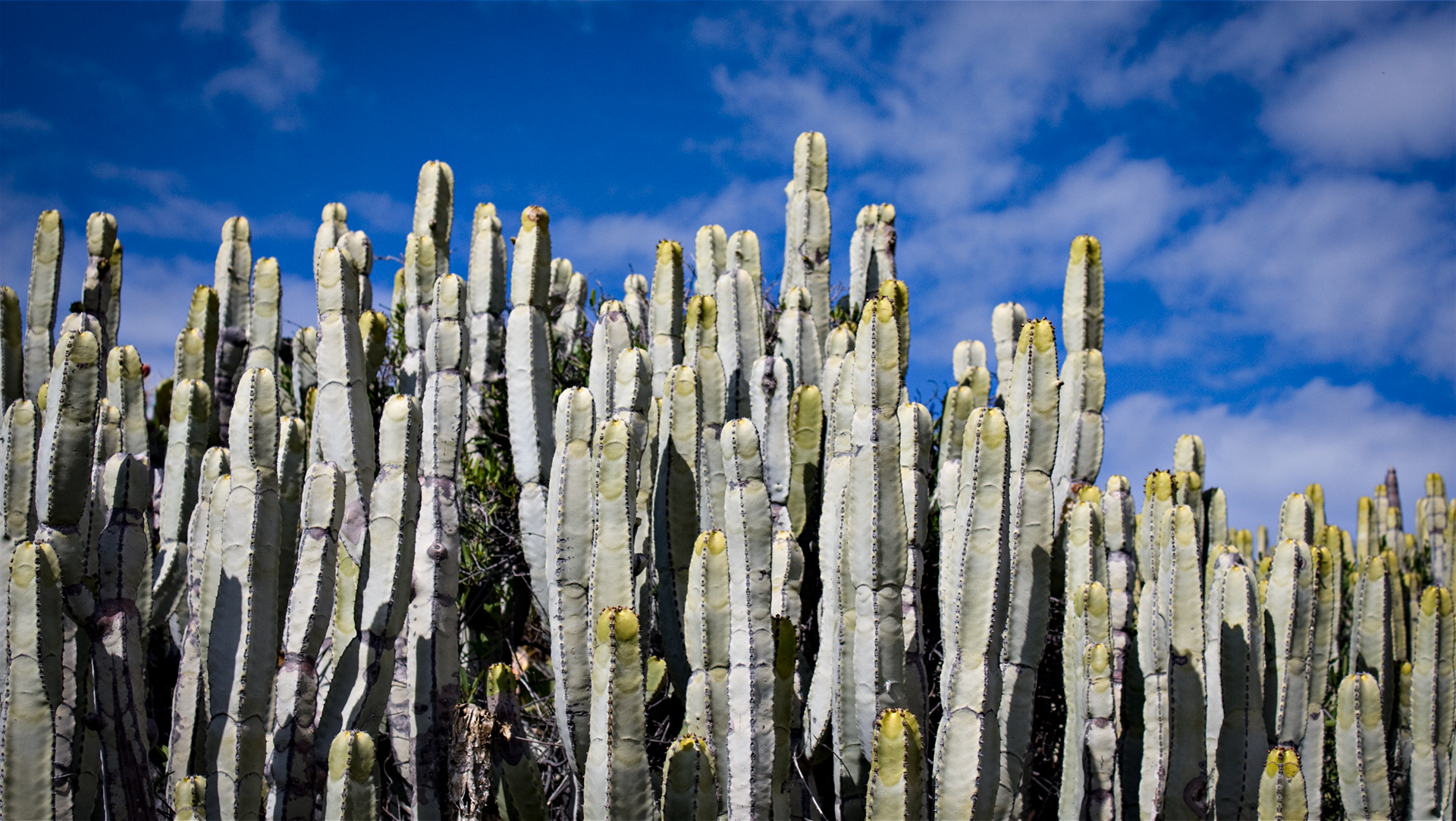
First-time visitors travelling along La Palma’s coast often notice peculiar plants by the roadside: upright, multi-branched plants with green rods that have no leaves and resemble giant candelabras in shape. These are spurge plants — euphorbias — and they are among the great adaptation masters of the dry, salty coastal climate of the Canary Islands. While they are easily mistaken for cacti, they are botanically distinct: cacti come from the Americas; euphorbias are of African origin. But under similar selective pressure, they have developed similar forms — an instructive example of convergent evolution.
The Candelabra Spurge (Euphorbia canariensis)
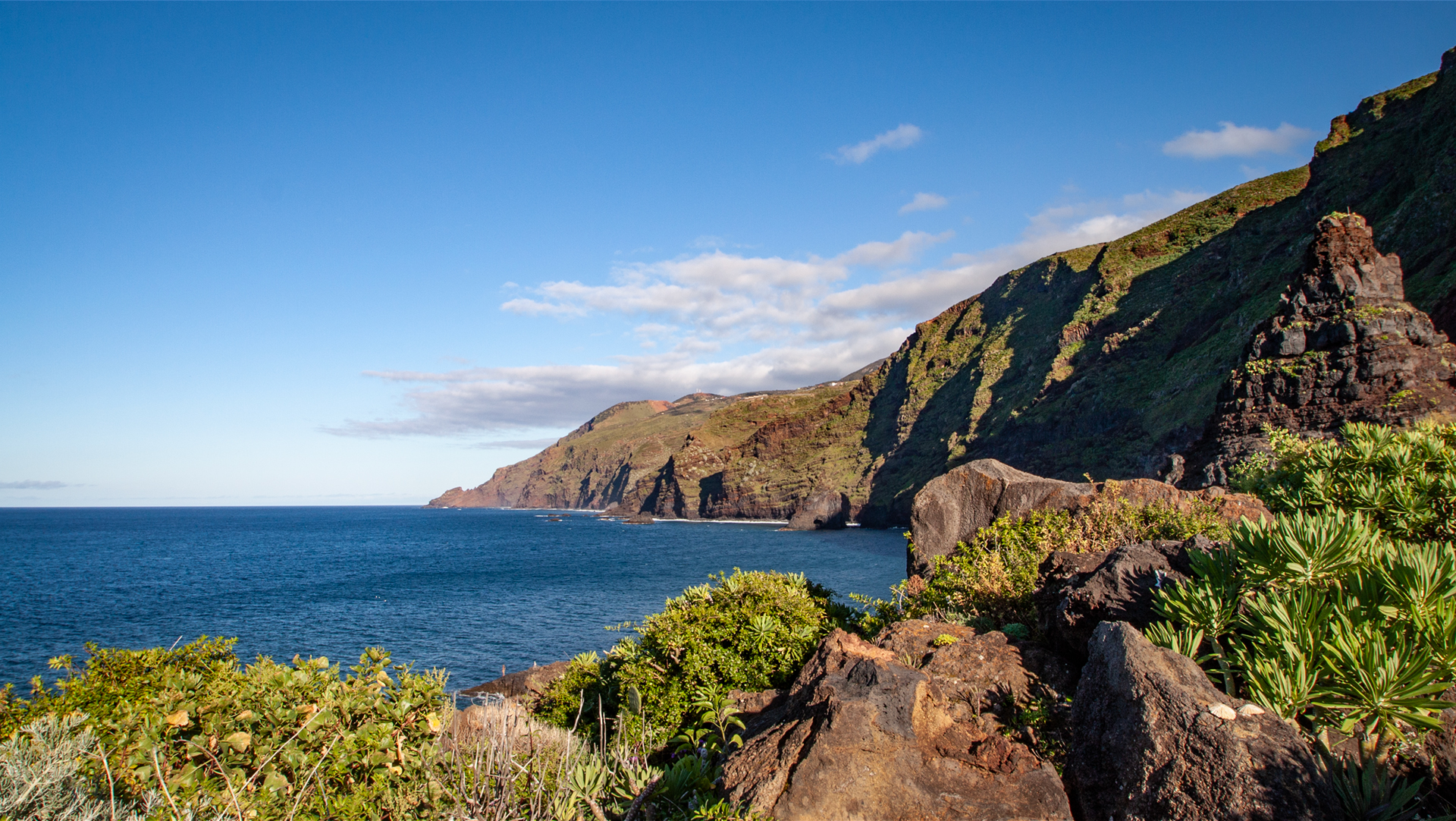
The Candelabra Spurge is the flagship species of Canary Island flora. On La Palma it defines the coastal zone up to about 500 metres altitude. Its multi-branched, upright stems can reach up to four metres in height, often covering entire hillsides in ideal conditions. The whitish latex is toxic and should not be touched — it can cause skin irritation and eye pain.
Tabaiba and the Other Spurge Species
Besides the Candelabra Spurge, La Palma is home to several Tabaiba species. The Sweet Tabaiba (Euphorbia balsamifera) was historically used by the Benahoaritas, the island’s indigenous inhabitants. Its latex was used, among other things, to seal vessels. It is considered one of the pioneer plants of dry coastal and lava areas and colonizes even young volcanic landscapes.
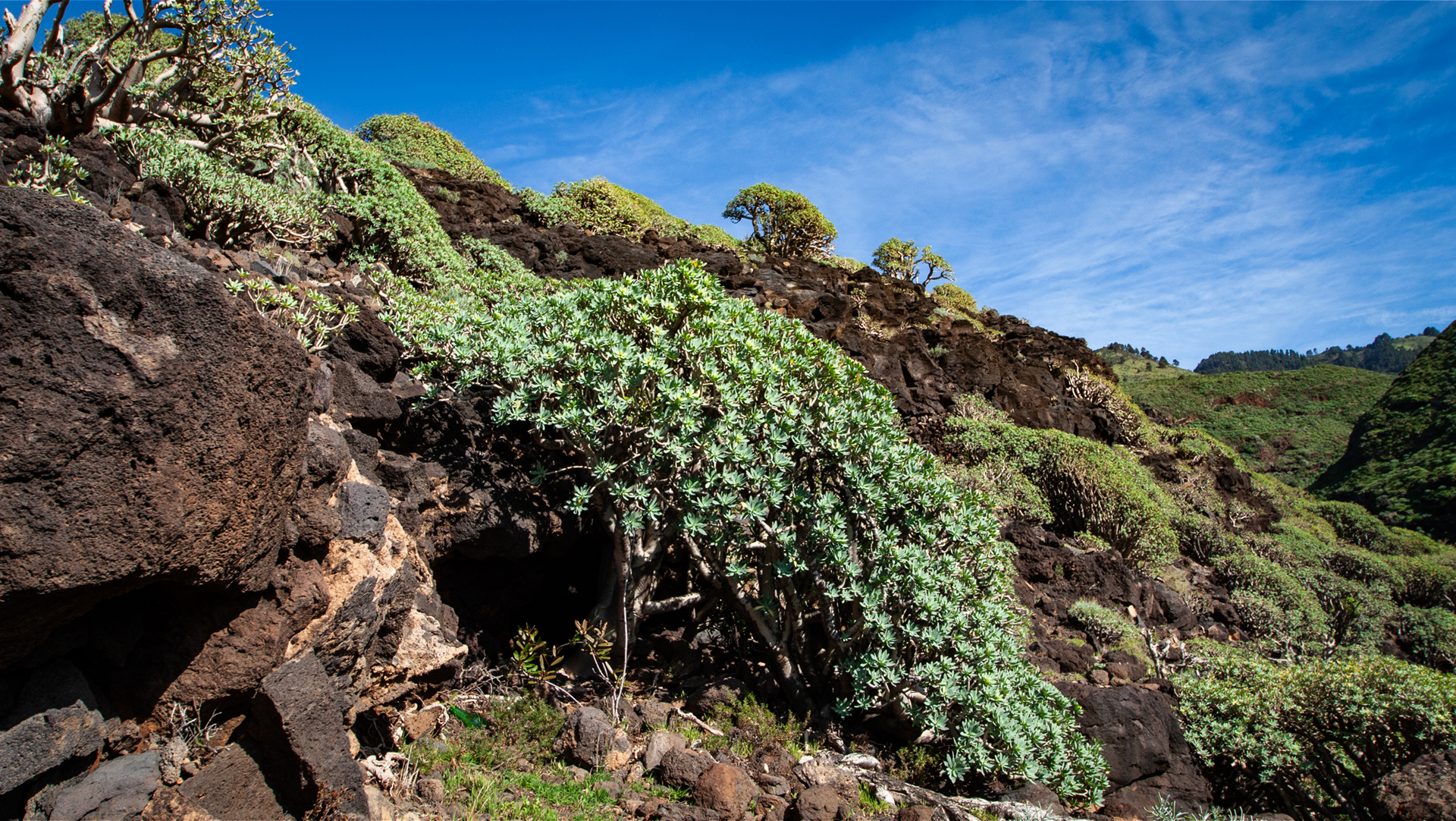
In dry coastal regions, the spurge zone gradually gives way to heat-tolerant vegetation, including wild olives, palms, and Savin junipers. Only in the moist north and northeast slopes does the laurel forest take over. Other notable species include the Tree Spurge (Euphorbia obtusifolia, also known as Euphorbia regis-jubae) and numerous endemic Aeoniums. These characteristic rosette plants delight with their decorative leaves and mostly white to yellow flower clusters. More than 35 Aeonium species are native to the Canary Islands, many found exclusively on individual islands and under special protection.
Conclusion:
The spurges are among the first plants one encounters on the coasts of La Palma — and at the same time among the most fascinating inhabitants of the island’s dry regions. Their extraordinary ability to adapt to heat and drought, their historical importance’s history, and their important role in the ecosystem make them one of the most characteristic plant communities of the Canary Islands.
Frequently Asked Questions
Are Spurge Plants on La Palma Poisonous?
Where Do Spurge Plants Grow on La Palma?
Are Spurge Plants Cacti?
Which Aeoniums Grow on La Palma?
Why Are Spurge Plants So Important for La Palma?
This article is based on the on-the-ground knowledge of the Gequo editorial team – publishers of the Reisezeit hiking guides and operators of Sunhikes.com. Last updated: May 2026