Playa Echentive – Black Beach on the Teneguía Lava Field
At the southern tip of La Palma, where the Fuencaliente lighthouses mark the horizon and the island’s youngest lava lies bare and black, lies Playa Echentive. Not a beach idyll in the classic sense – but a place that draws its beauty from a different source: the silence, the vastness, and the awareness of standing on new land.
Beach on Fresh Lava
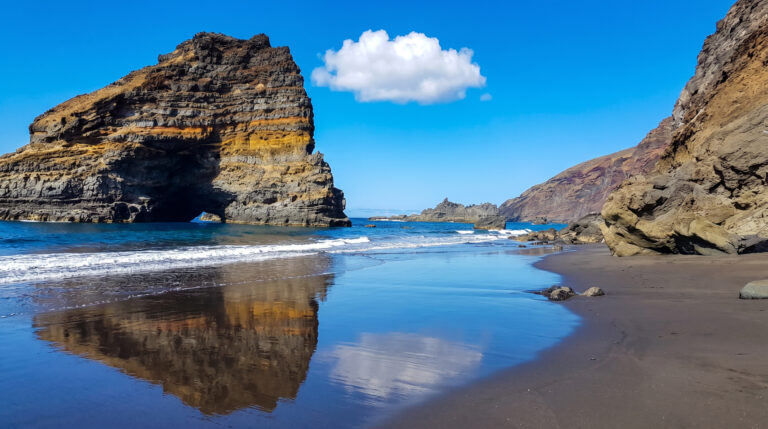
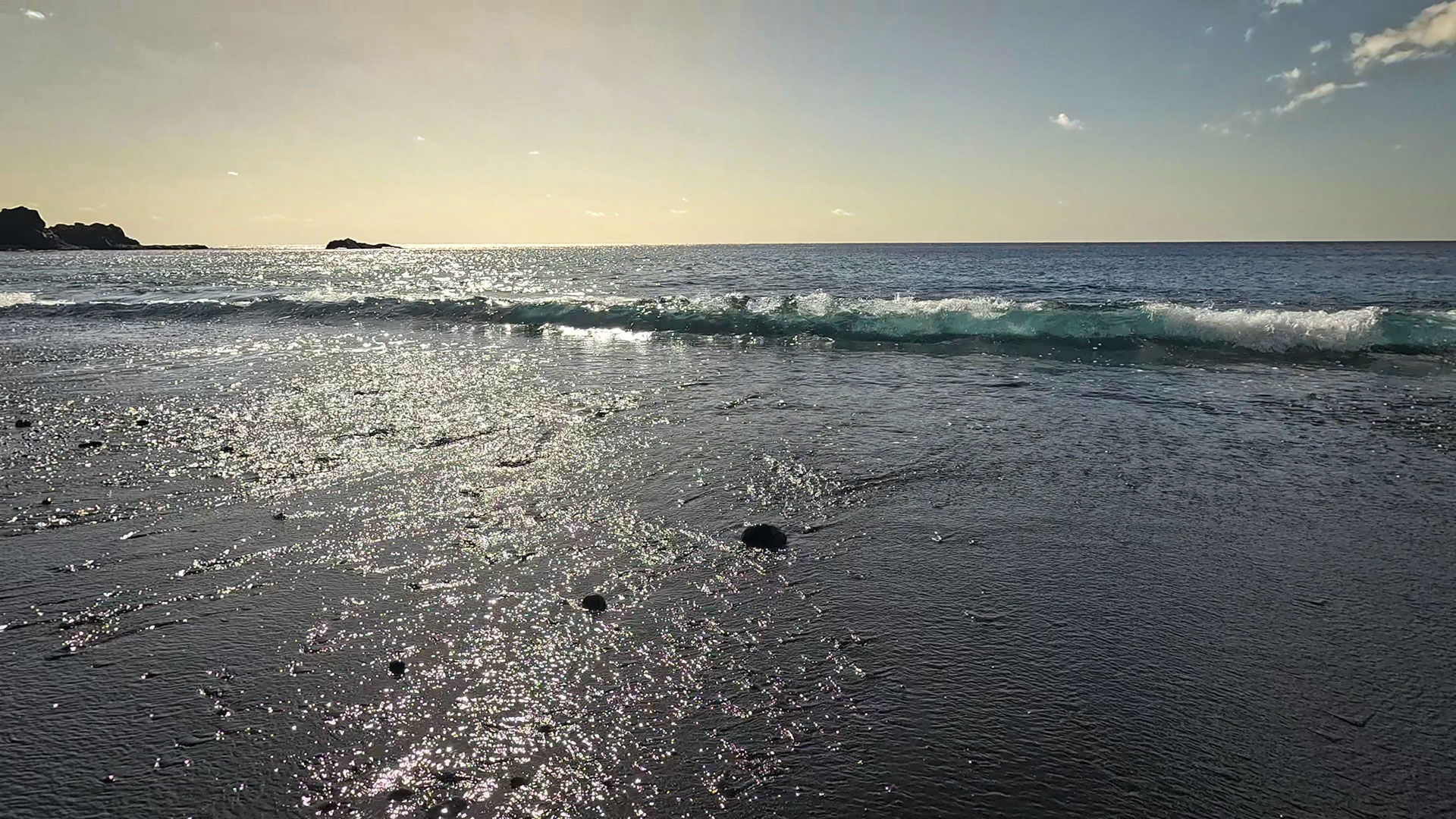
Playa Echentive lies on a lava tongue formed during the Teneguía volcano eruption of 1971 – the last eruption before the Tajogaite in 2021. A long stairway leads from the car park down to this young black shore: pebbly, dark, interspersed with volcanic rock.
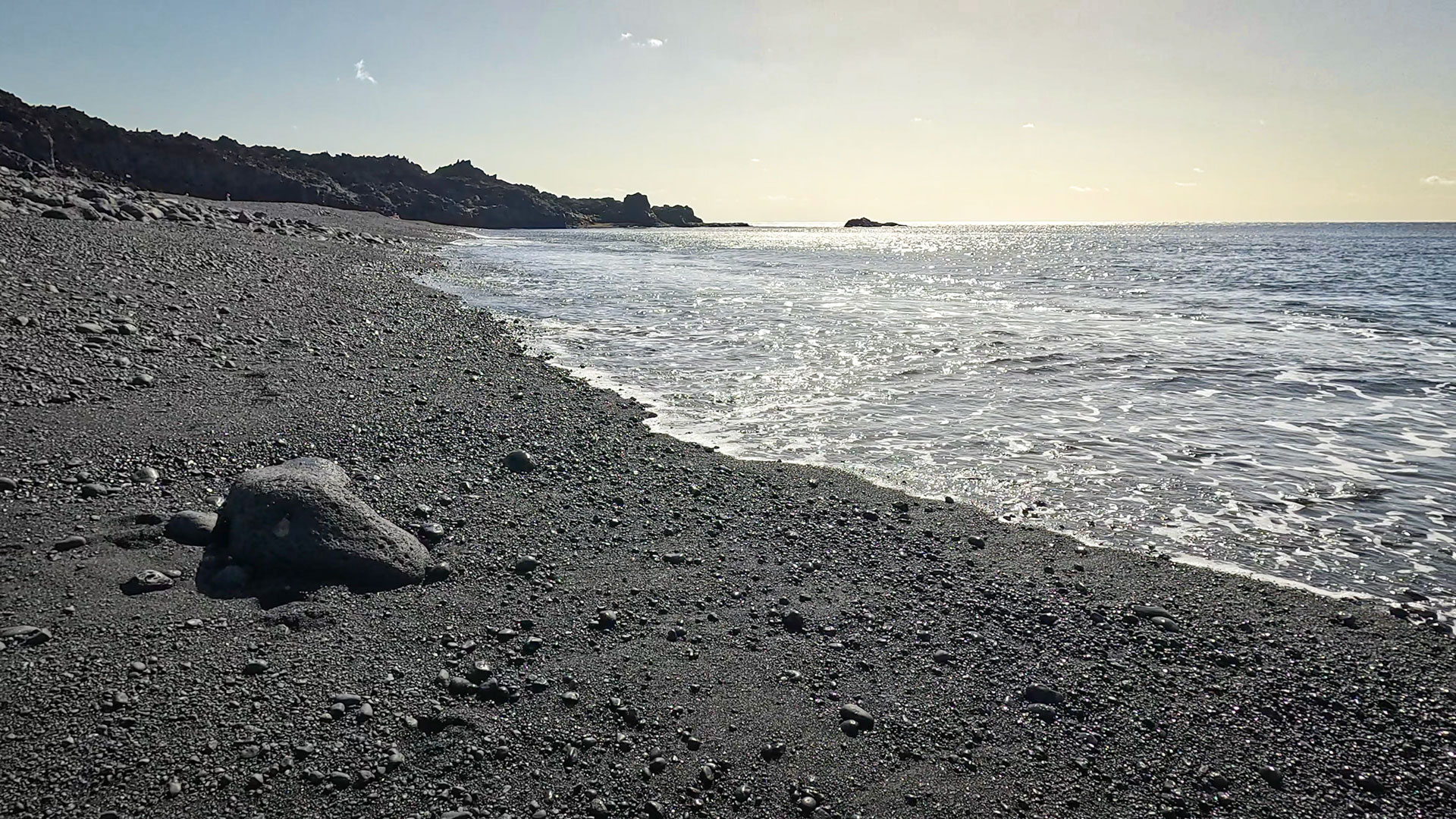
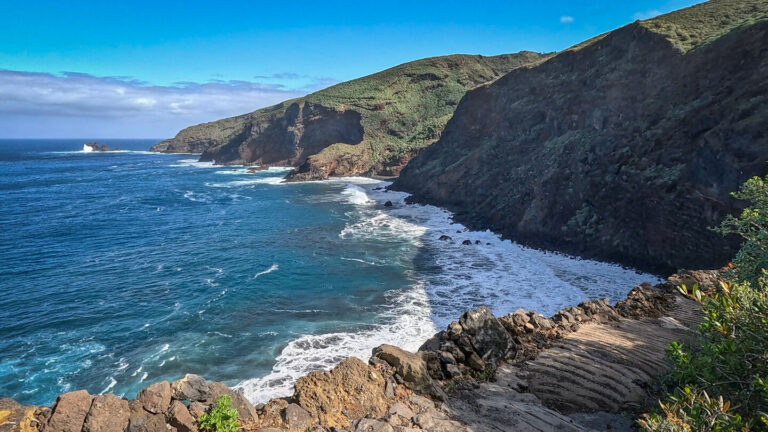
At the southern tip of La Palma a bizarre volcanic landscape opens up. The lighthouses of Fuencaliente stand high on the cliff above. The setting is unique on La Palma – you feel far removed from everyday life, in the middle of a black primordial landscape barely a few decades old.
Swimming & Safety
The beach flags give daily information about swimming conditions:
Green: Safe swimming conditions.
Yellow: Caution – waves or current. Children and less confident swimmers should stay ashore.
Red: Swimming strictly prohibited. Ignoring flag warnings is life-threatening.
Playa Echentive is often calm due to its sheltered southwest position – but always watch out for currents.
No shade – sun protection absolutely required. No lifeguard service on site.
Water shoes recommended: the ground is pebbly and sharp.
Location & Atmosphere
The southwest position makes Playa Echentive comparatively sheltered from the wind – an unusual feature for a beach so openly exposed. This also makes it worth visiting in winter, when other beaches on the west coast are marked by waves and wind. Sunny days in winter are almost guaranteed at the southern tip.
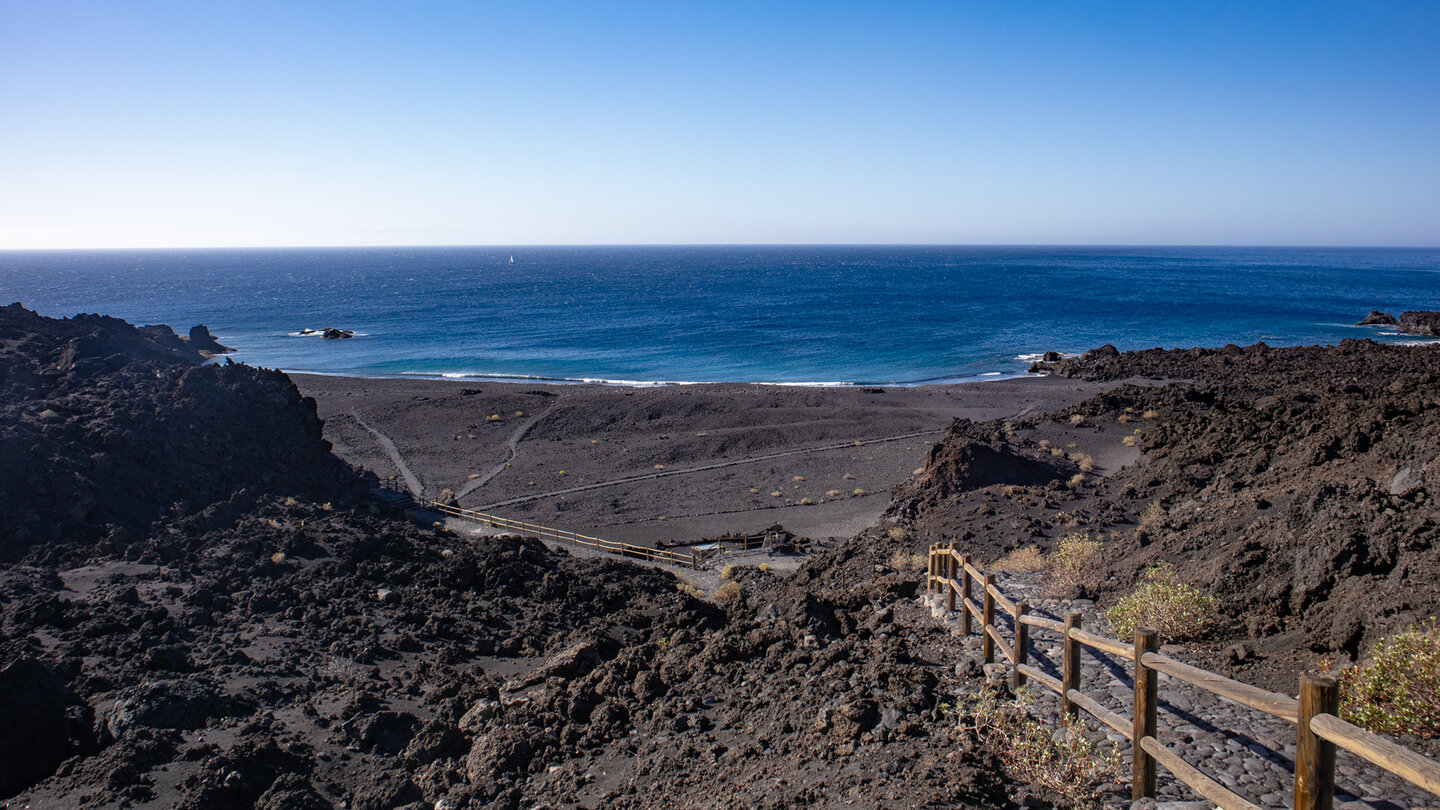
Despite its quality, the beach receives few visitors. The journey and the descent via the ramp deter casual visitors – those who make the effort usually have the lava tongue almost to themselves.
| Location | Southern tip of La Palma, municipality of Fuencaliente, near the lighthouses |
|---|---|
| Beach | Pebbly black volcanic sand on the Teneguía lava field (1971) |
| Access | Ramp from the car park above |
| Wind | Sheltered and often calm – pleasant even in winter |
| Facilities | No kiosk, no sunbeds – completely natural |
| Sun protection | No shade – sunscreen essential |
| Ideal to Combine With | Fuencaliente lighthouses · Salinas de Fuencaliente |
El Aljibe: Sheltered Swimming in Volcanic Rock
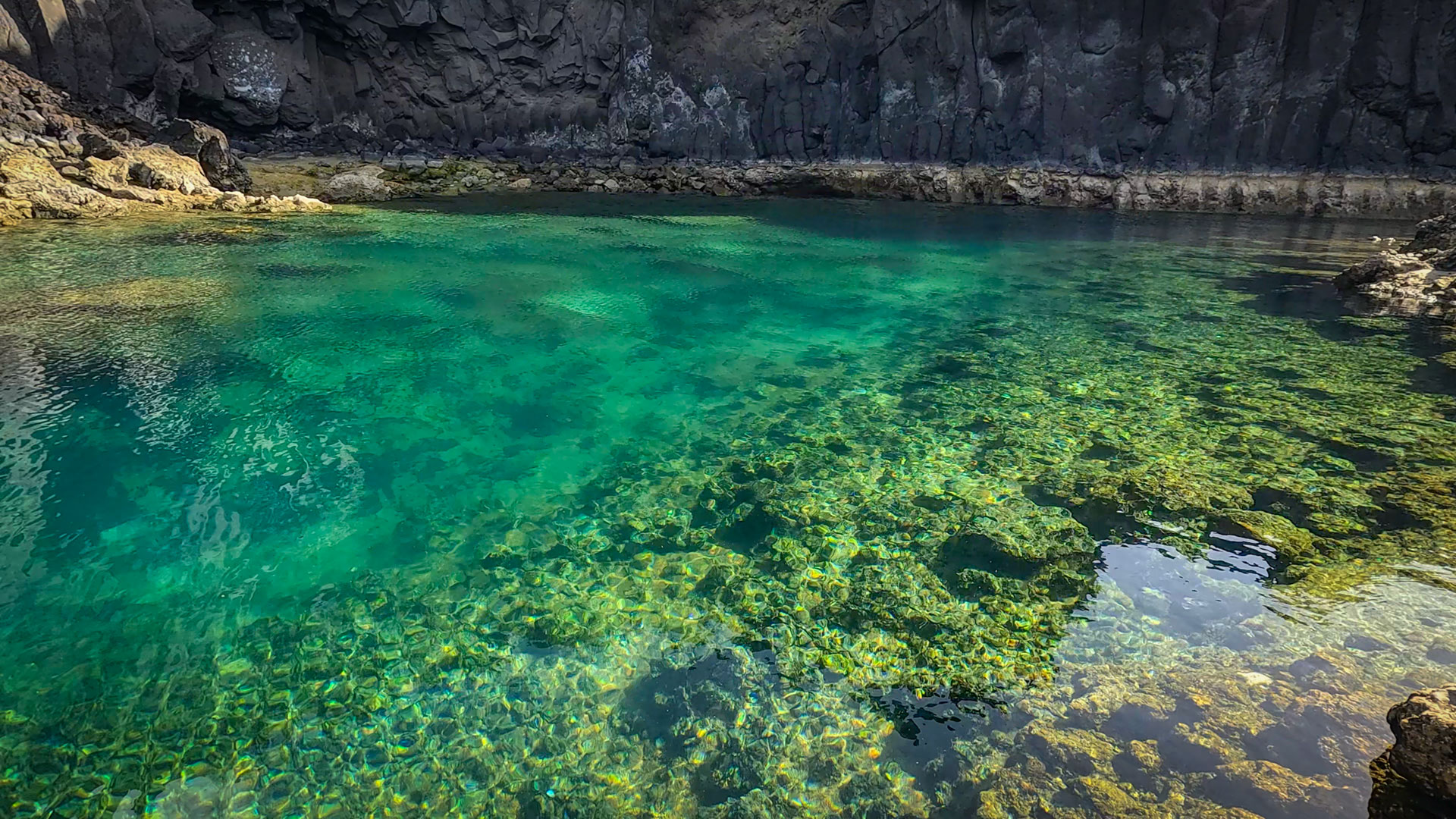
Hidden at the foot of the cliffs lie the natural pools El Aljibe at Playa Echentive. The tides fill the basins with clear, salty seawater that the sun pleasantly warms during the day. Surrounded by black volcanic rock, the spot offers a peaceful, almost meditative bathing experience away from the open Atlantic.
Best Time to Visit and Climate
The southern tip of La Palma is one of the sunniest corners of the island. Fuencaliente benefits from the rain shadow of the Cumbre Vieja – the mountain range blocks clouds coming from the north. In winter, sunny days here are almost guaranteed, while the north coast is under clouds. This makes the southern tip particularly attractive for winter visitors.
Photographer’s Tip: Light and Volcanic Landscape
Playa Echentive is one of La Palma’s most photogenic subjects. In the morning, when the light falls flat across the black lava and the lighthouses stand in backlight, images emerge that need almost no editing. In the evening, as the sun sinks behind the Atlantic and the lava rock glows orange and red, a different mood opens up. For photographers, it is worth coming twice.
Volcán Teneguía: History Beneath Your Feet
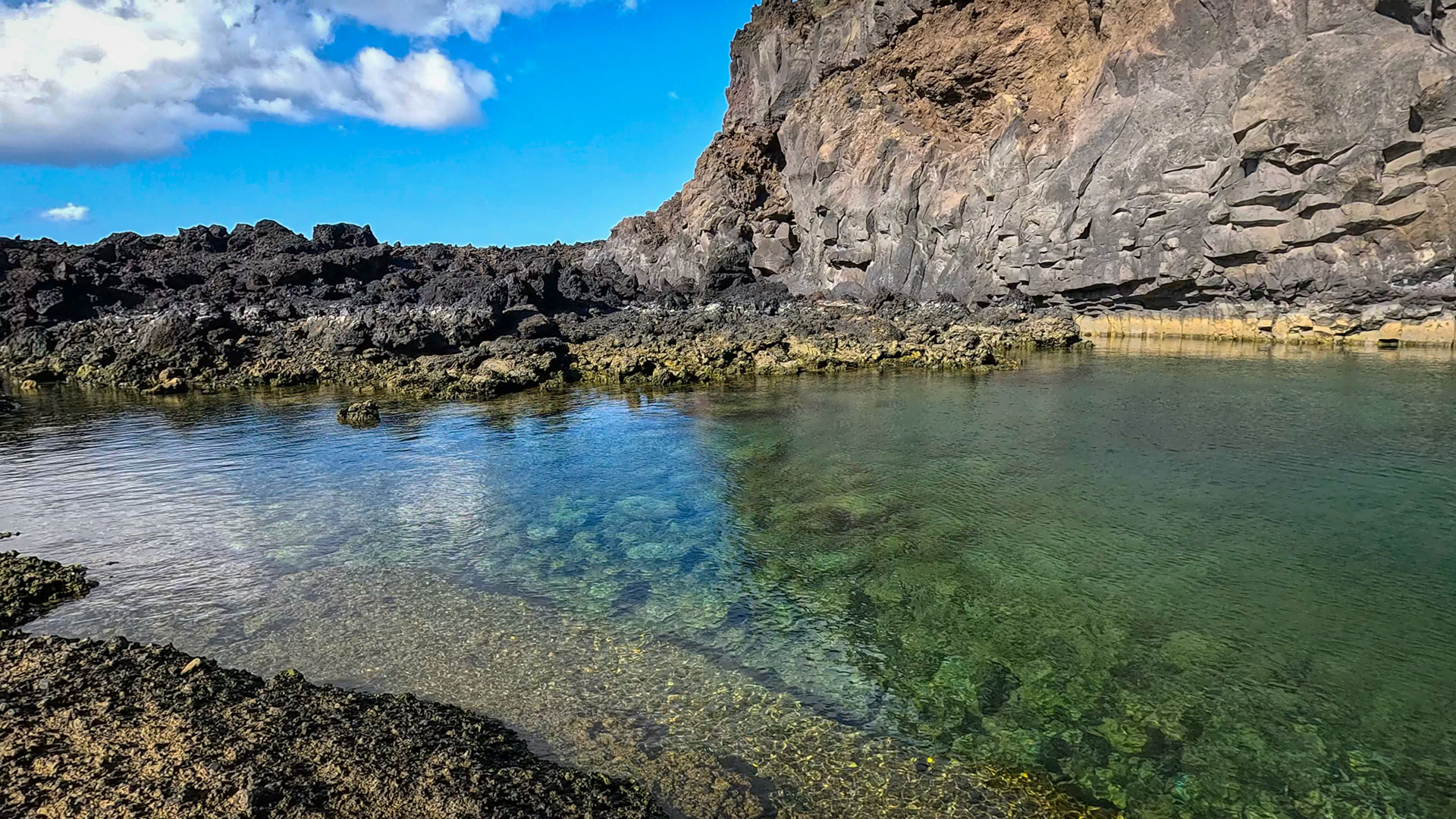
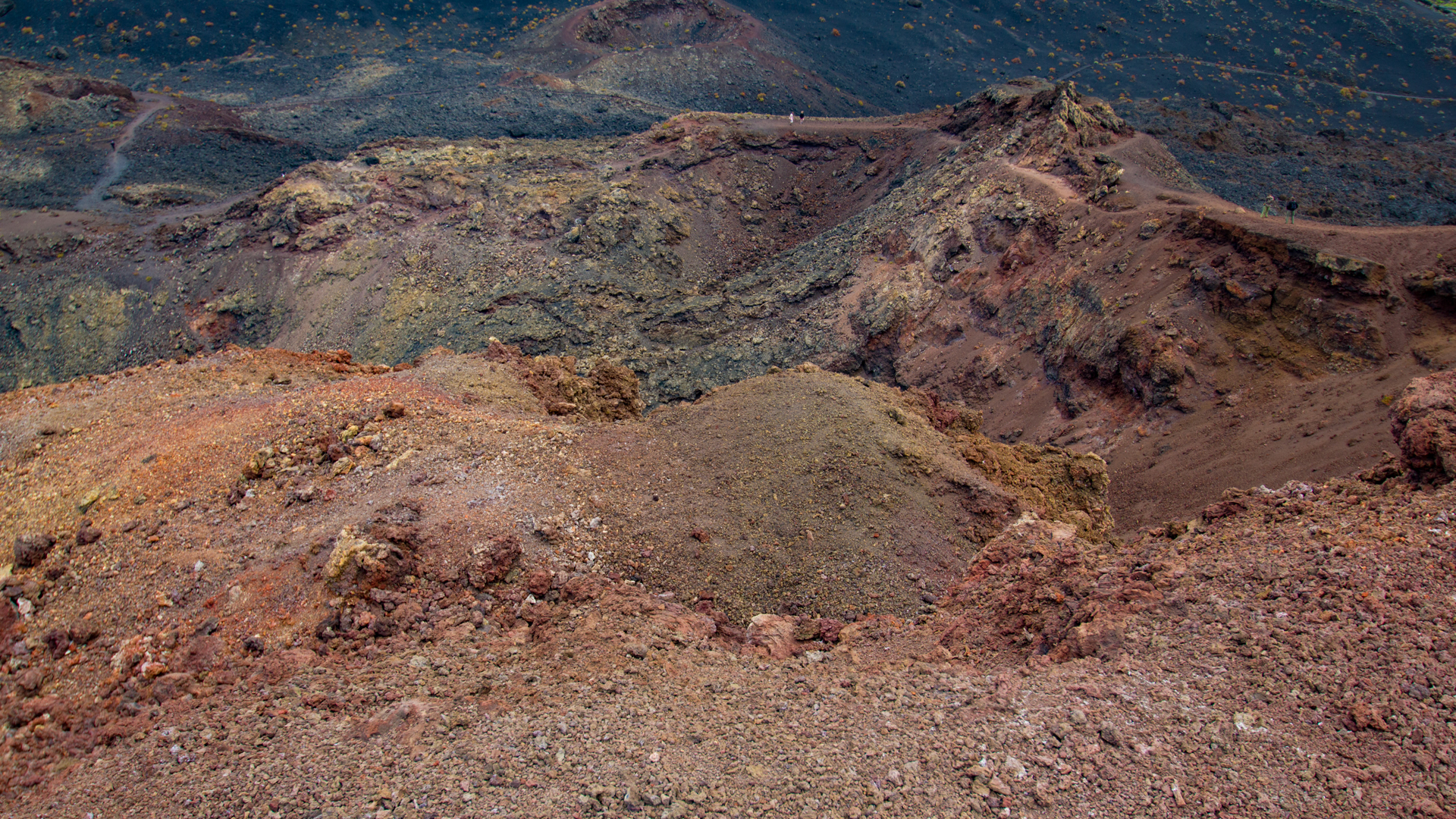
On 26 October 1971, a volcanic eruption began at the southern tip of La Palma that lasted 24 days and created new land. Teneguía is La Palma’s youngest volcano before the Tajogaite in 2021 – and its lava field remains an open-air geological museum to this day. The lava tongue on which Playa Echentive lies is the most direct result: sea and lava met, the water was vaporised, the rock solidified in fractions of a second. The hiking trail up to the Teneguía crater is well worth combining with a beach visit.
Salinas de Fuencaliente: Salt by Hand
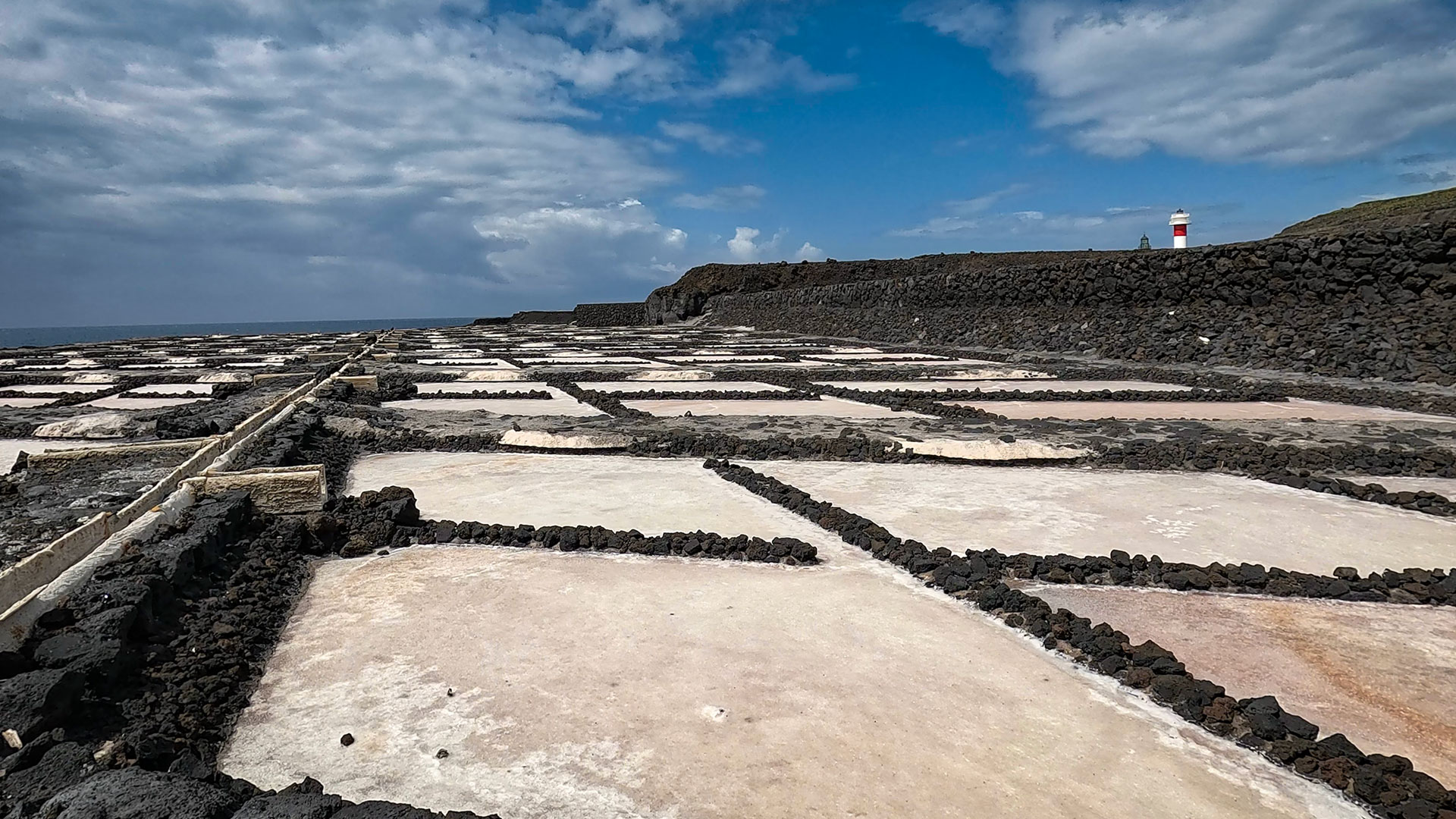
The Salinas de Fuencaliente, near Playa Echentive, are one of the last traditional seawater salt pans in the Canary Islands. Sal de Teneguía is harvested here by hand: seawater flows into shallow basins, evaporates in the sun, and the remaining salt is gathered with wooden rakes. The process is unchanged from centuries ago. The salt is available in Canarian specialty shops and found in many restaurants on the island. The brand is called Sal Marina Teneguía, named as a tribute to the 1971 volcanic eruption.
Hiking to the Southern Tip
The volcanic descent hike from San Antonio via Teneguía to the lighthouse is an absolute highlight. As it is a one-way route, it is recommended to park the car at the lighthouse and take the bus (line 23) or a taxi to the starting point in Los Canarios.
The starting point is the Volcán San Antonio visitor centre at around 650 metres above sea level; the destination is the Faro & Salinas de Fuencaliente at sea level. The route is about 7.5 kilometres long and requires a walking time of around 2.5 to 3.5 hours without longer breaks. There are about 30 metres of ascent and around 650 metres of descent – take care of your joints on the way down. The difficulty level is moderate: technically straightforward, but requiring sure-footedness on loose lava sand. The trail is marked throughout in red and white as the GR-131.
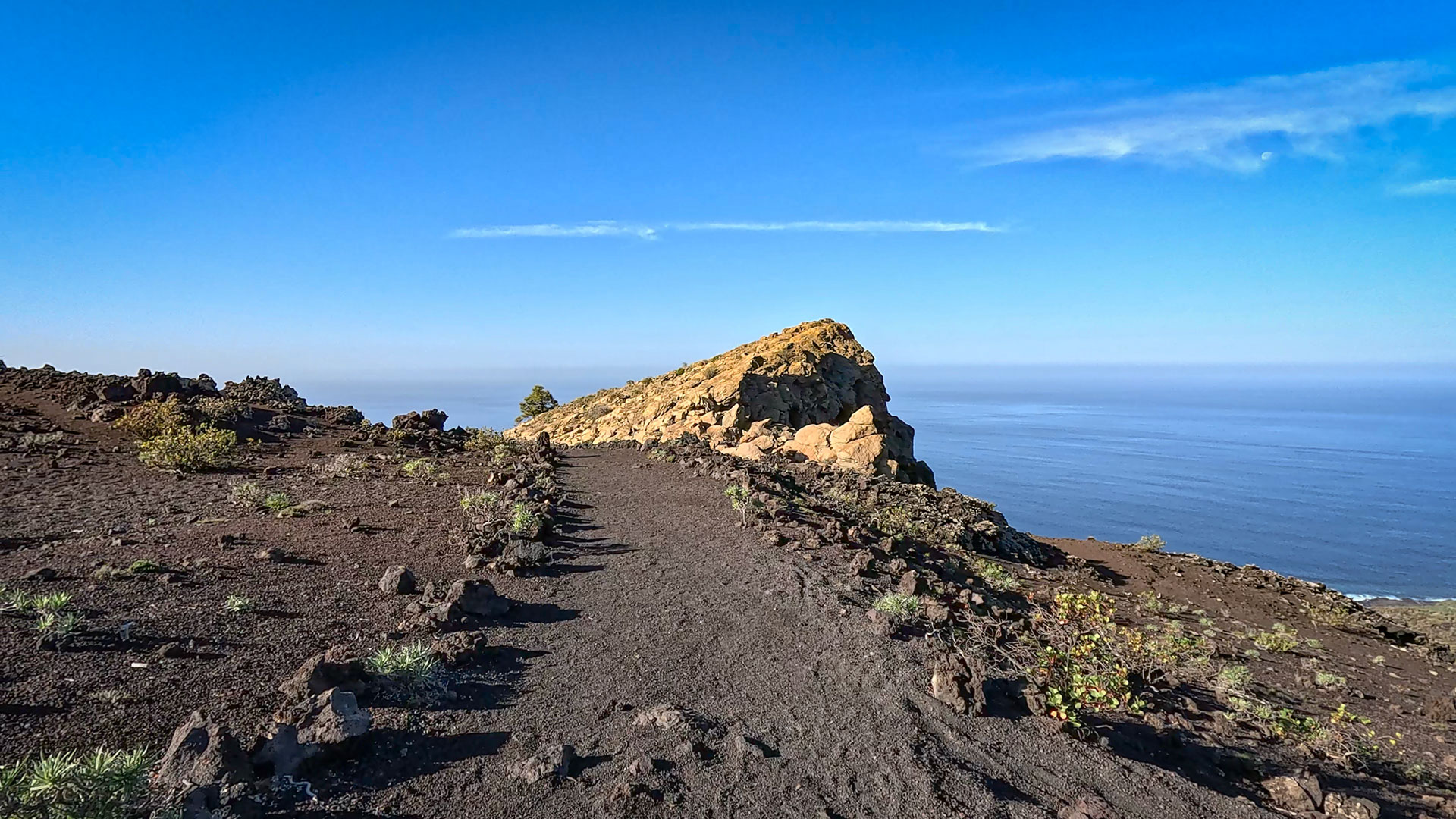
The route gives an overview of the entire south coast: lava rocks, salt pans, lighthouse, sea. On a clear day, El Hierro, La Gomera and even Tenerife with the Teide are visible from here. Anyone who starts the day at the beach and ends with the lighthouse walk has experienced the southern tip of La Palma in its full atmosphere.
Accommodation Nearby
For accommodation, the nearby towns of Los Llanos de Aridane or Villa de Mazo are recommended – both reachable within 20 to 30 minutes by car. Those specifically wanting to stay at the southern tip will find some holiday apartments directly in Fuencaliente or in the small hamlet of Las Indias. The choice is limited, but the tranquillity is unbeatable – on weekdays, Fuencaliente after dark is as quiet as almost nowhere else on La Palma.
Playa Echentive in Winter
The southern tip of La Palma is particularly attractive in winter. Fuencaliente lies in the rain shadow of the mountains – while the northeast is under clouds, the sun shines here. This makes Playa Echentive one of the few beaches on La Palma that reliably offers sunshine in January and February. The water temperature drops to 19 to 21 degrees – sufficient for experienced swimmers. And the lava field, shimmering with heat in summer, looks even more dramatic in winter light.
Combination: Southern Tip as a Day Trip
Playa Echentive combines ideally with the other attractions of the southern tip: lighthouses, salt pans, volcanoes San Antonio and Teneguía, and the Bodega Teneguía are all within a few kilometres. A full day trip starts in the morning at Playa Echentive, leads via the salt pans to the lighthouses, then to the crater, and ends in the afternoon with a wine tasting. Those with more time head back to Los Llanos de Aridane – the island’s largest town, 45–50 minutes away, with one of La Palma’s most lively markets.
Summary: Playa Echentive
Playa Echentive is not a beach for the classic sunny day – it is a place with history beneath your feet.
Lava from 1971, lighthouses at your back, salt pans nearby and hardly a soul in sight: those who seek that find it here.
Particularly recommended in combination with the lighthouses and salt pans of Fuencaliente.
Frequently Asked Questions
What makes Playa Echentive special?
How do you get to Playa Echentive?
Is Playa Echentive suitable for children?
What are the Salinas de Fuencaliente?
This article is based on the on-the-ground knowledge of the Gequo editorial team – publishers of the Reisezeit hiking guides and operators of Sunhikes.com. Last updated: May 2026