Charco Azul – Natural Seawater Pools near San Andrés
Charco Azul means blue lagoon – or, more modestly translated, blue puddle. What lies behind the name is one of La Palma’s most beautiful natural lidos: three seawater pools in lava rock, sheltered from the Atlantic surf, located between San Andrés and Puerto Espíndola. Calm, well-maintained and popular – especially with locals.
Three Pools in the Lava Rock: Charco Azul
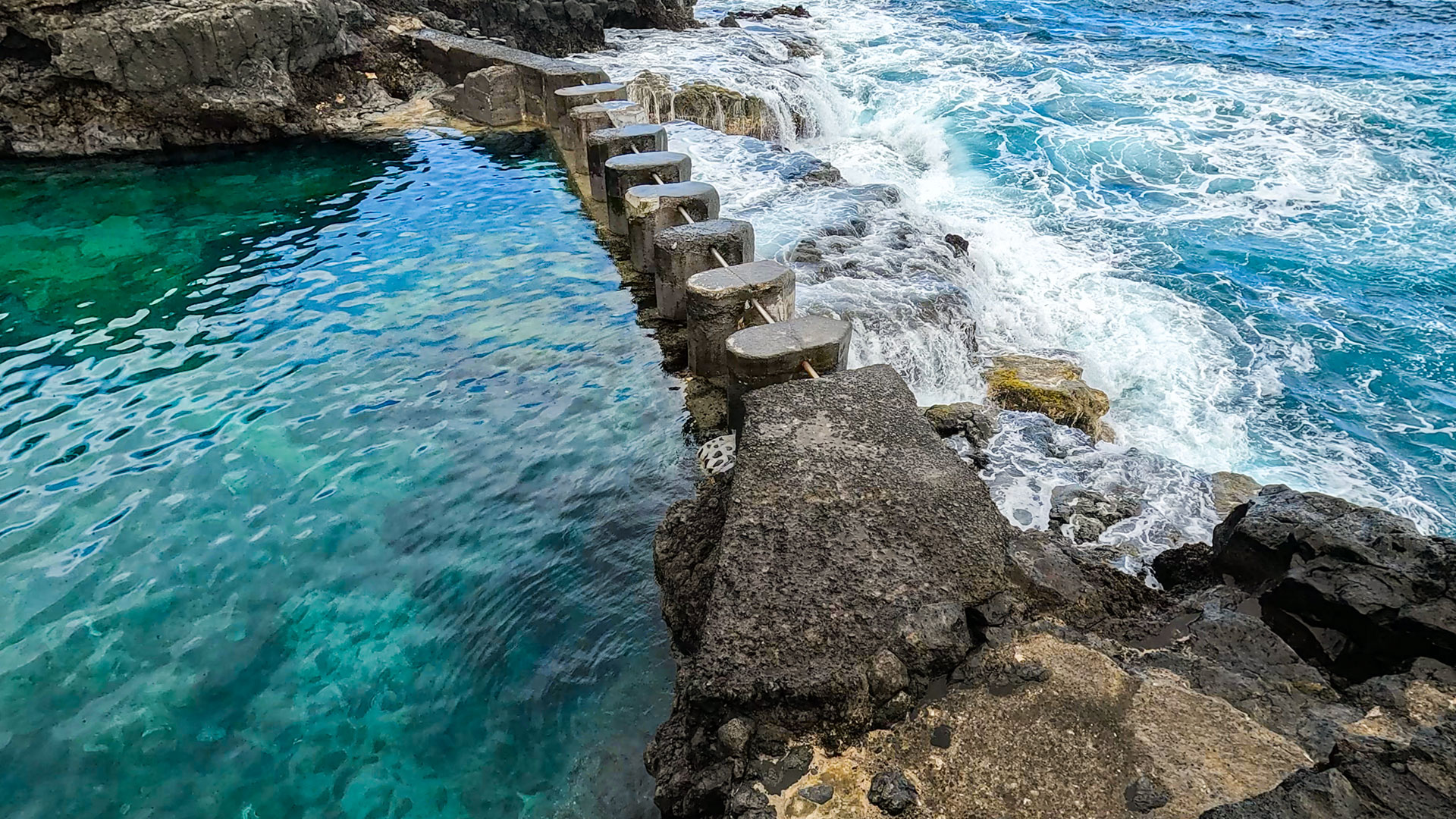
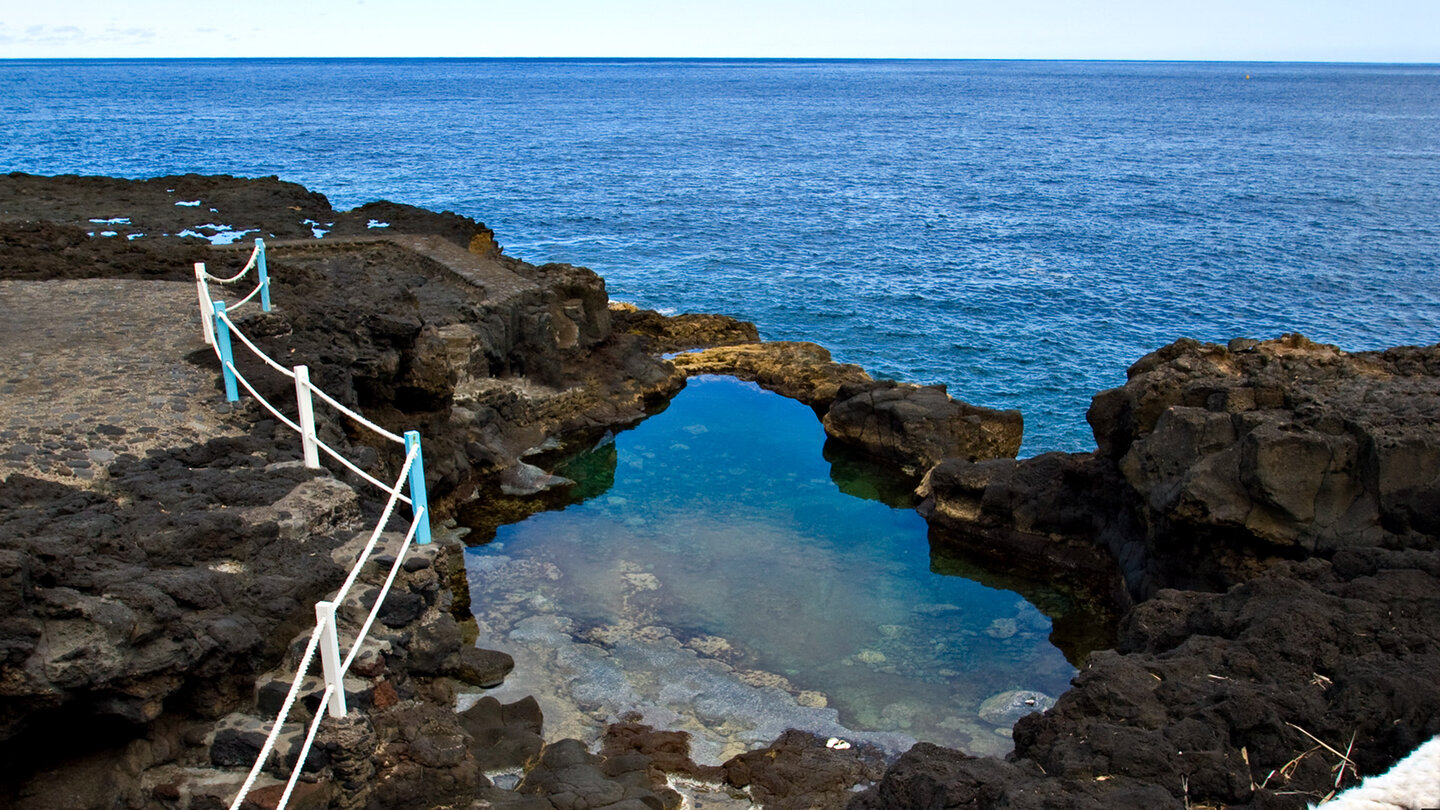
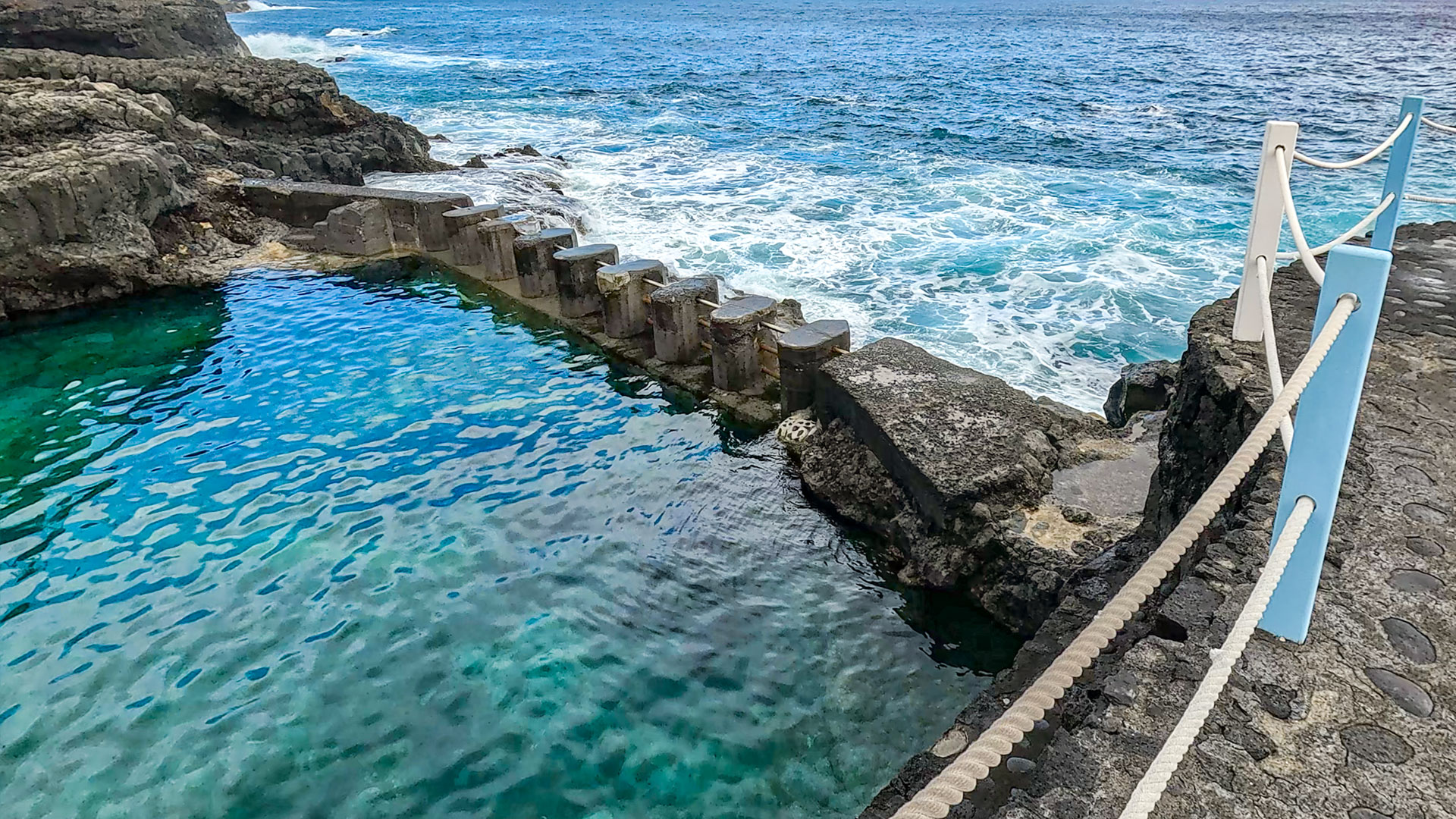
Along the Paseo Marítimo de San Andrés seafront promenade lie the natural swimming pools of Charco Azul. The usually powerful surf along this stretch of coast has been reduced with breakwaters, and the pools are separated from the open sea by concrete walls. Three areas have been created: a large swimming pool, a small children’s pool and the Charco de las Damas – the Ladies’ Lagoon.
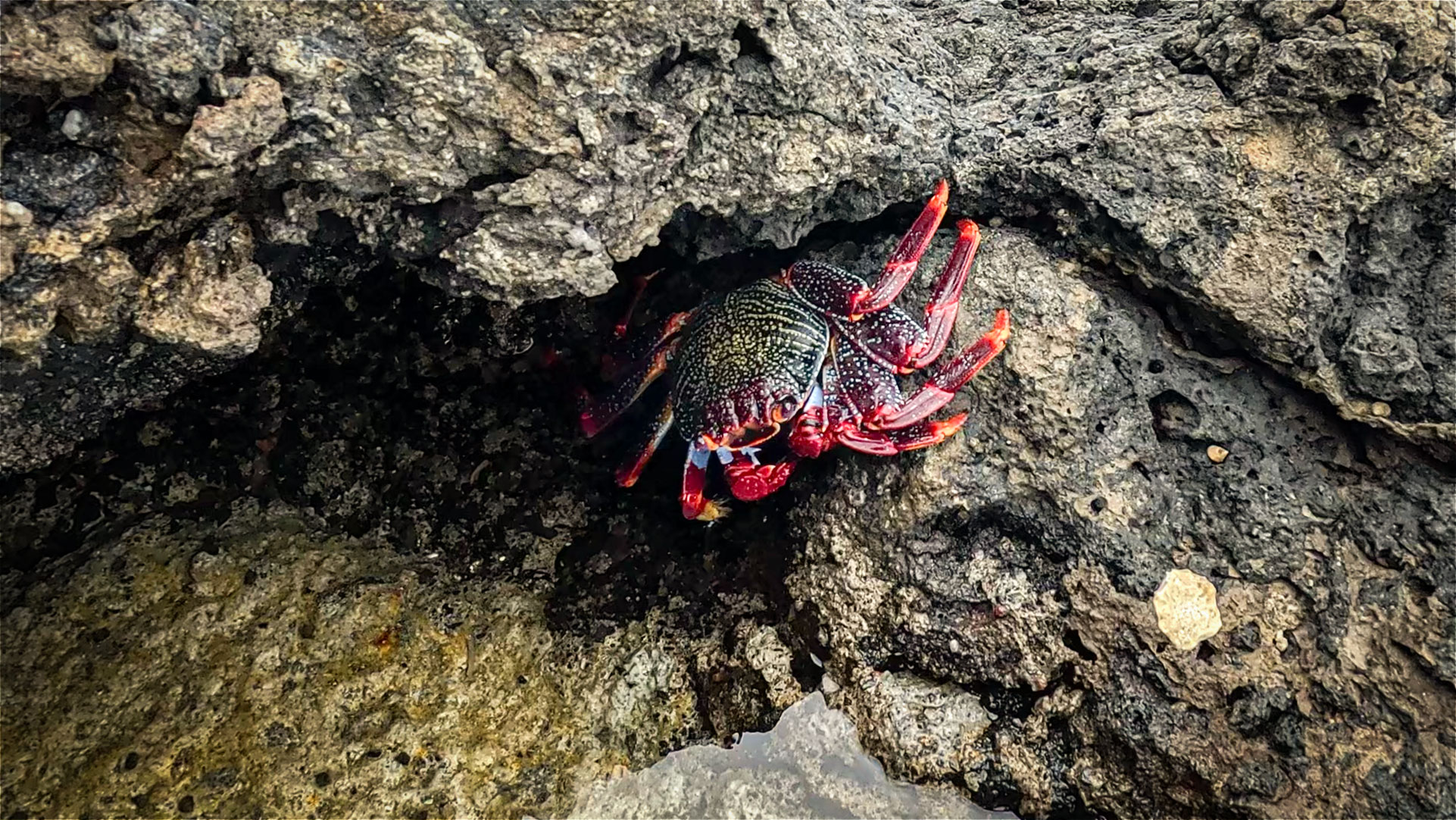
The pools are enclosed by lava rock and supplied with fresh seawater depending on the tide and surf. On the porous lava rocks around the pools, small black and red crabs scuttle about – a quiet reminder that you are sitting in the Atlantic’s living space, not at a municipal swimming pool.
Swimming & Safety
The beach flags give daily information about swimming conditions:
Green: Swimming conditions are safe.
Yellow: Caution — waves or current. Keep children on shore.
Red: Swimming strictly prohibited. Ignoring this warning is life-threatening.
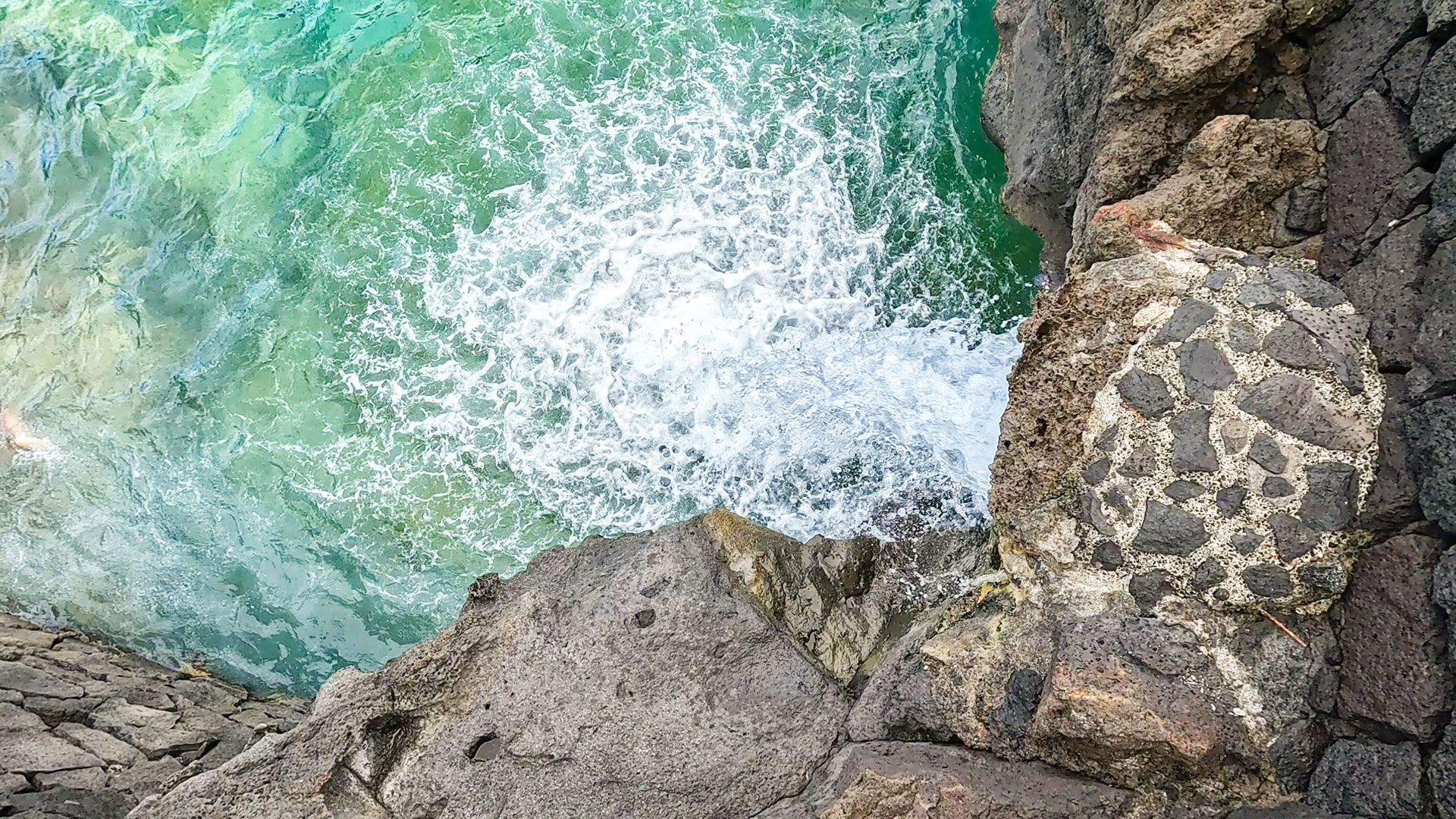
At high tide and strong surf, waves break over the seawall – swimming is then strongly discouraged.
On calm days the pools offer safe and family-friendly bathing.
Facilities and Infrastructure
For a natural lido, the facility is generously equipped: expansive sunbathing terraces, changing rooms, showers, toilets and a small children’s playground are all available. Since access is completely public and free of charge, bringing your own picnic is no problem. Those who prefer to be served will find right above the pools a rustic Canarian restaurant with a fantastic sea-view terrace, where freshly caught fish is served.
On summer weekends the pools are lively, with local families especially drawn here. Those seeking peace and quiet are better off coming on a weekday or outside the main season.
Location and Getting There
From the historic centre of San Andrés, a road lined with banana plantations leads down to Charco Azul in just a few minutes; a large car park is available right at the facility. Those who prefer to walk can alternatively take a scenic cliff path to the lido. Despite its popularity, the wild north-east of La Palma has preserved its authentic, unspoilt character here.
| Location | Promenade Paseo Marítimo de San Andrés, between San Andrés and Puerto Espíndola |
|---|---|
| Pools | 1 large swimming pool + 1 children’s pool + Charco de las Damas |
| Seawater | Replenished naturally by tides and surf |
| Facilities | Sunshades, loungers, showers, changing rooms, playground, restaurant |
| Best for | Families, children, recreational swimmers |
| Crowds | Very busy on summer weekends |
| Getting there | From San Andrés via the banana plantation road to the coast |
The Natural Facility
Instead of fighting against the elements, Charco Azul relies on natural materials, organic forms and harmonious integration into the coastline – a prime example of sustainable Canarian design. The restaurant, sunbathing terraces and curved paths respect the rugged, pitch-black lava rock rather than concealing it. The volcanic rock formations have been cleverly integrated as natural walls and windbreaks, so that the facility feels like an organic part of the wild cliff coast.
San Andrés and the North-East Coast
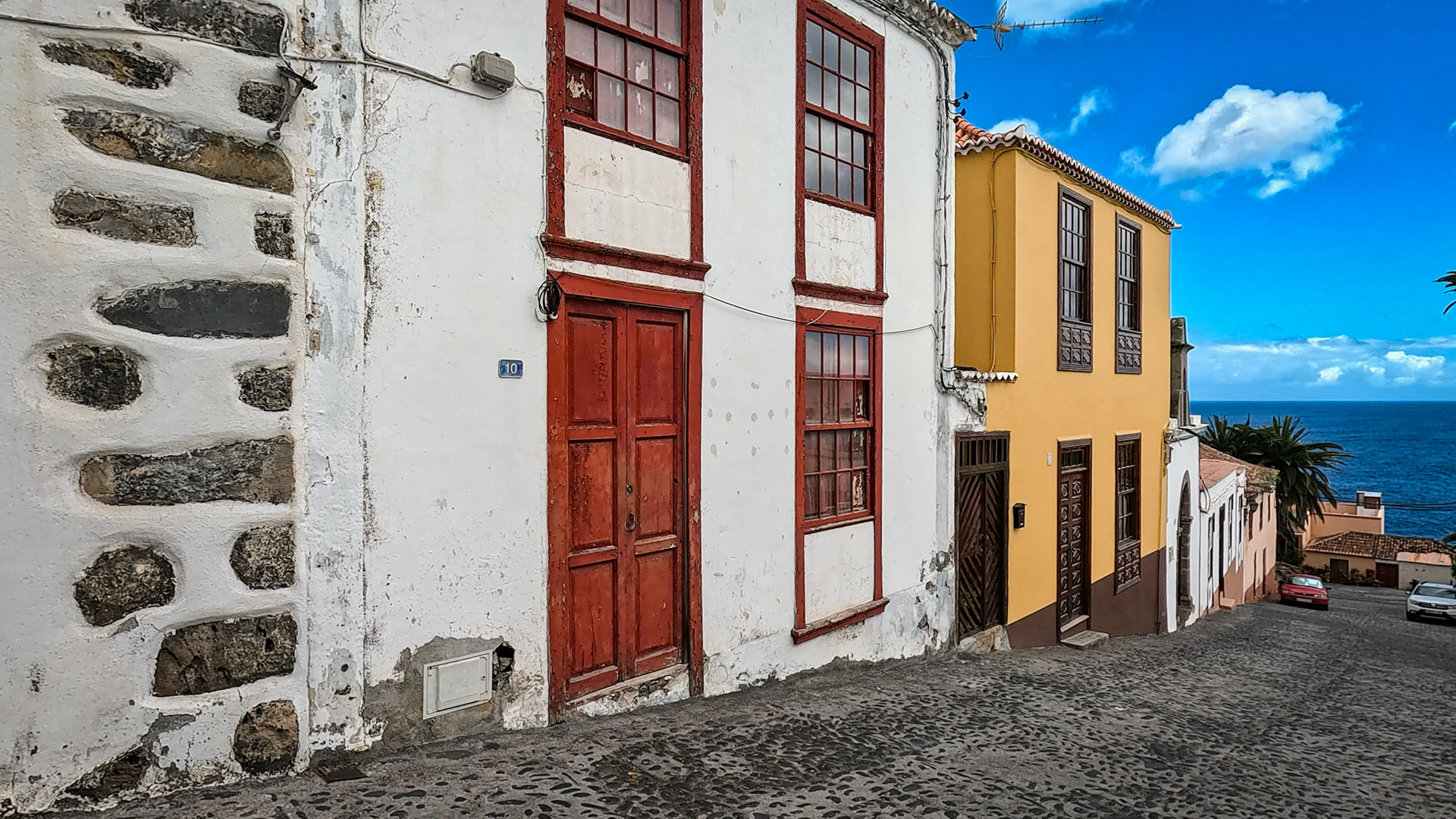
San Andrés lies in the most fertile part of La Palma. The north-east coast is green and humid year-round, shaped by extensive banana plantations and the nearby laurel forests. A true jewel is the historic centre of San Andrés: cobblestone alleys, listed colonial manor houses and an idyllic plaza give it a wonderfully authentic character. Together with the scenic coastal walking trail and the small fishing harbour of Puerto Espíndola, the nearby Charco Azul natural lido forms the perfect starting point for an extensive day of discovery in this region.
Puerto Espíndola – the Neighbouring Harbour
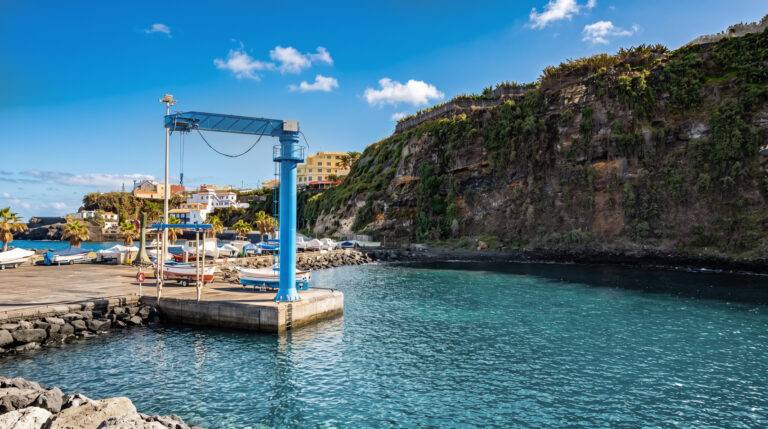
Right next to Charco Azul lies Puerto Espíndola, one of La Palma’s most characterful small harbours. Fishermen repair nets, colourful boats bob in the water. The harbour basin is open to swimmers – the water here is deeper and clearer than in the Charco Azul pools. A short detour is always worthwhile.
The Tides: When Are Conditions at Their Best?
The bathing experience at Charco Azul depends strongly on tides and wave action. With calm seas and a moderate water level, swimming in the pools is pleasant and safe. It becomes particularly appealing at incoming tide or moderate high tide, when the waves gently wash over the boundary walls and fill the pools with fresh, crystal-clear Atlantic water. In strong storms and high surf, however, the waves break with enormous force over the seawall and turn the pools into churned-up, dangerous spray – at which point a strict swimming ban applies.
The Los Tilos Laurel Forest Nearby
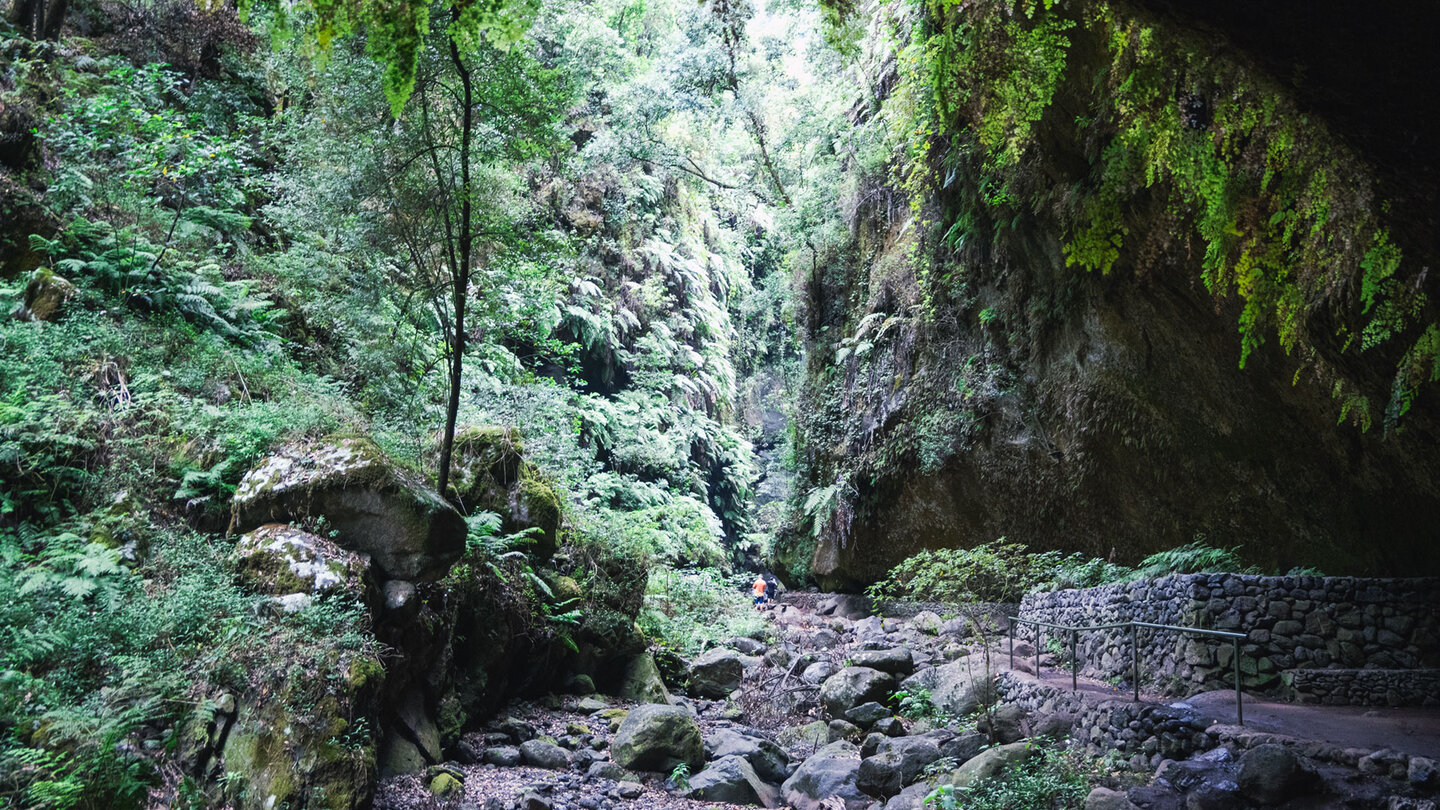
A few kilometres from San Andrés lies the UNESCO Biosphere Reserve of Los Tilos – one of the last intact laurel forests in the world. The hiking trail through the ravine, past waterfalls and old irrigation tunnels, is one of La Palma’s most impressive. Combining a visit to the Charco Azul natural lido with a laurel forest hike in Los Tilos turns a day trip to the north-east into a complete experience.
Getting There and Accommodation
The best way to reach San Andrés is via the main road LP-1, which runs along La Palma’s east coast from south to north. At Los Sauces, the coastal road LP-104 branches off, leading directly down into the village and to the well-signposted Charco Azul. By hire car from Santa Cruz, the drive along the well-developed road takes around 20 to 25 minutes.
For accommodation: the largest selection of hotels and holiday apartments is found in nearby Santa Cruz or in the more touristy places to the east. Those who prefer to stay directly in the wild north-east will find charming traditional rural holiday homes (casas rurales) and occasional apartments in San Andrés, Los Sauces or Barlovento – the choice is limited, but the peace and quiet all the greater.
Charco Azul for Families
Charco Azul is one of the most family-friendly bathing spots on the island. The children’s pool is shallow and protected by the lava dam. The playground is right at the facility. Showers and changing rooms are available. Lifeguards are on duty during high season. The restaurant above does not offer explicit children’s menus, but has enough choice for young guests with fish croquettes, chips or squid rings.
Opening Hours and Admission
Charco Azul can be visited year-round, free of charge and without admission. The municipally owned sanitary facilities are reliably open during the day; the opening hours of the adjacent restaurant can vary however – those intent on having lunch there should briefly check the current hours in advance. During the main season from July to September, weekends in particular fill up. A weekday is therefore recommended for a relaxed restaurant visit: quieter, with shorter waiting times, at the same consistent quality of freshly caught fish. The flag situation always requires attention – a red flag means swimming is life-threatening and strictly prohibited.
Seawater Lidos Compared
La Palma has several natural seawater lidos: Charco Azul in San Andrés, La Fajana near Barlovento and smaller pools along the coast. Charco Azul is the most well-known and best-equipped. La Fajana is wilder and somewhat more remote. Those with time should visit both – they are around 15–20 minutes’ drive apart and complement each other well: Charco Azul for comfort and infrastructure, La Fajana for wildness and tranquillity. Visiting both in one day is possible, but requires an early start.
Conclusion: Charco Azul
Charco Azul is the most beautiful natural lido on the north-east coast – with three seawater pools in lava rock, a children’s pool, good infrastructure and a restaurant with a view.
No sandy beach, but no compromise either: those who want to combine swimming with a natural setting without sacrificing comfort are in exactly the right place here.
Particularly recommended for families and all those who want to discover the quiet, unspoilt La Palma in the north-east.
Frequently Asked Questions
What does Charco Azul mean?
Is Charco Azul suitable for children?
Is there a restaurant at Charco Azul?
When is Charco Azul at its quietest?
This article is based on the on-the-ground knowledge of the Gequo editorial team – publishers of the Reisezeit hiking guides and operators of Sunhikes.com. Last updated: May 2026