La Fajana – Natural Seawater Pools near Barlovento
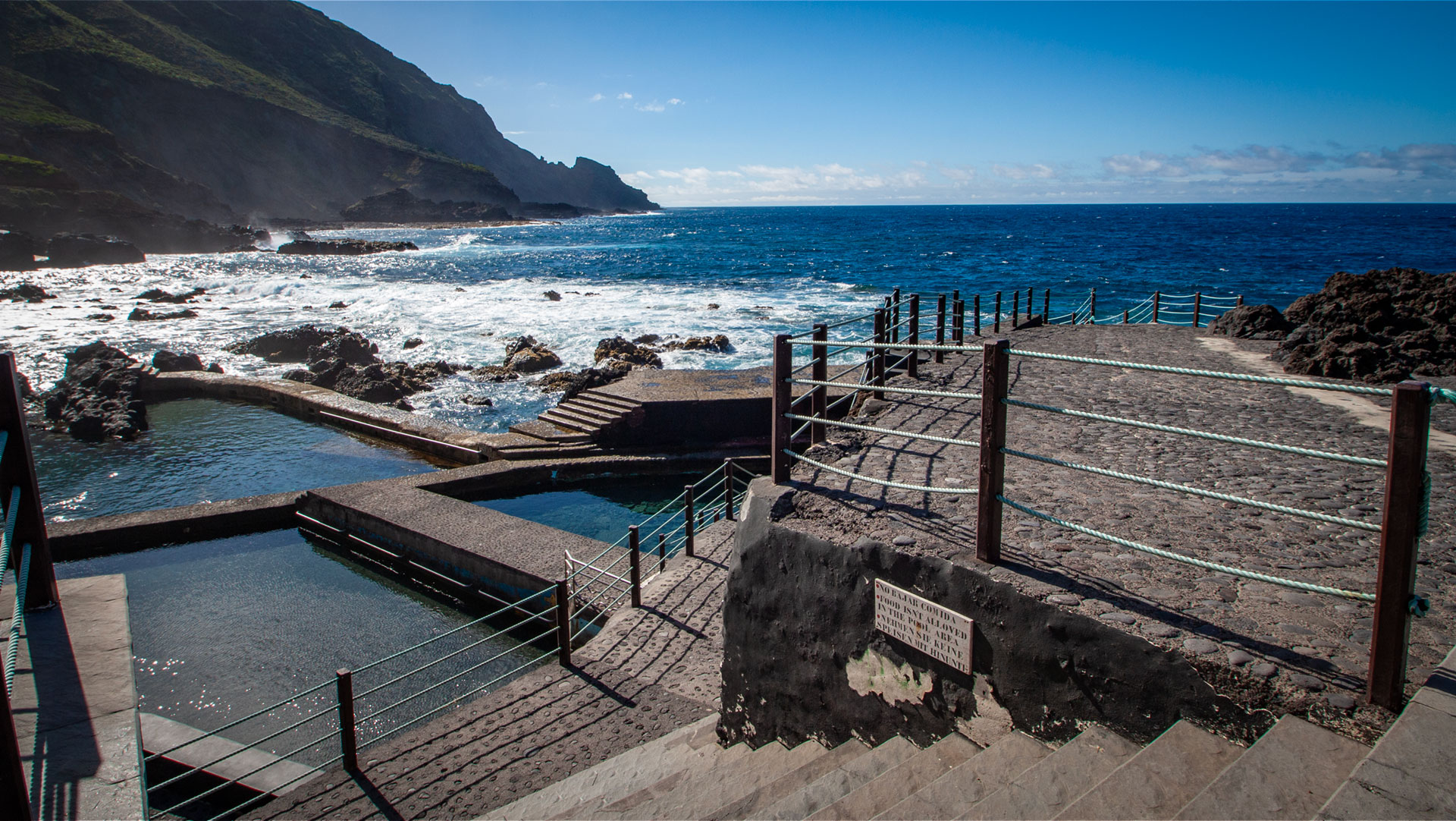
In the north-east of La Palma, a few kilometres from Barlovento, lies one of the island’s most hidden bathing delights: the Piscinas de La Fajana. Three natural swimming pools carved in lava rock, competing daily with the Atlantic surf – and on calm days one of the finest and least-known natural lidos in the Canary Islands.
Three Pools, One Ocean
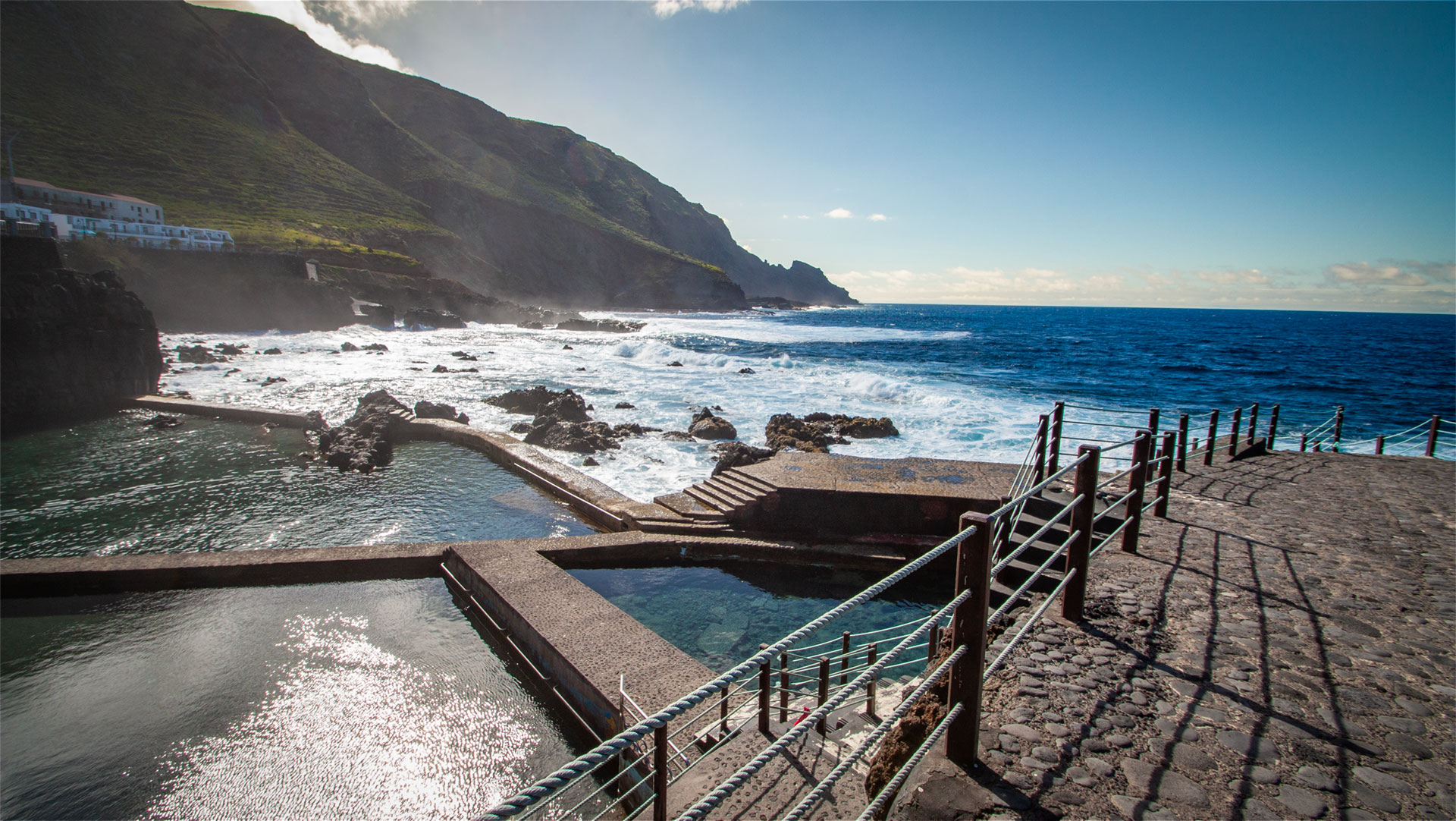
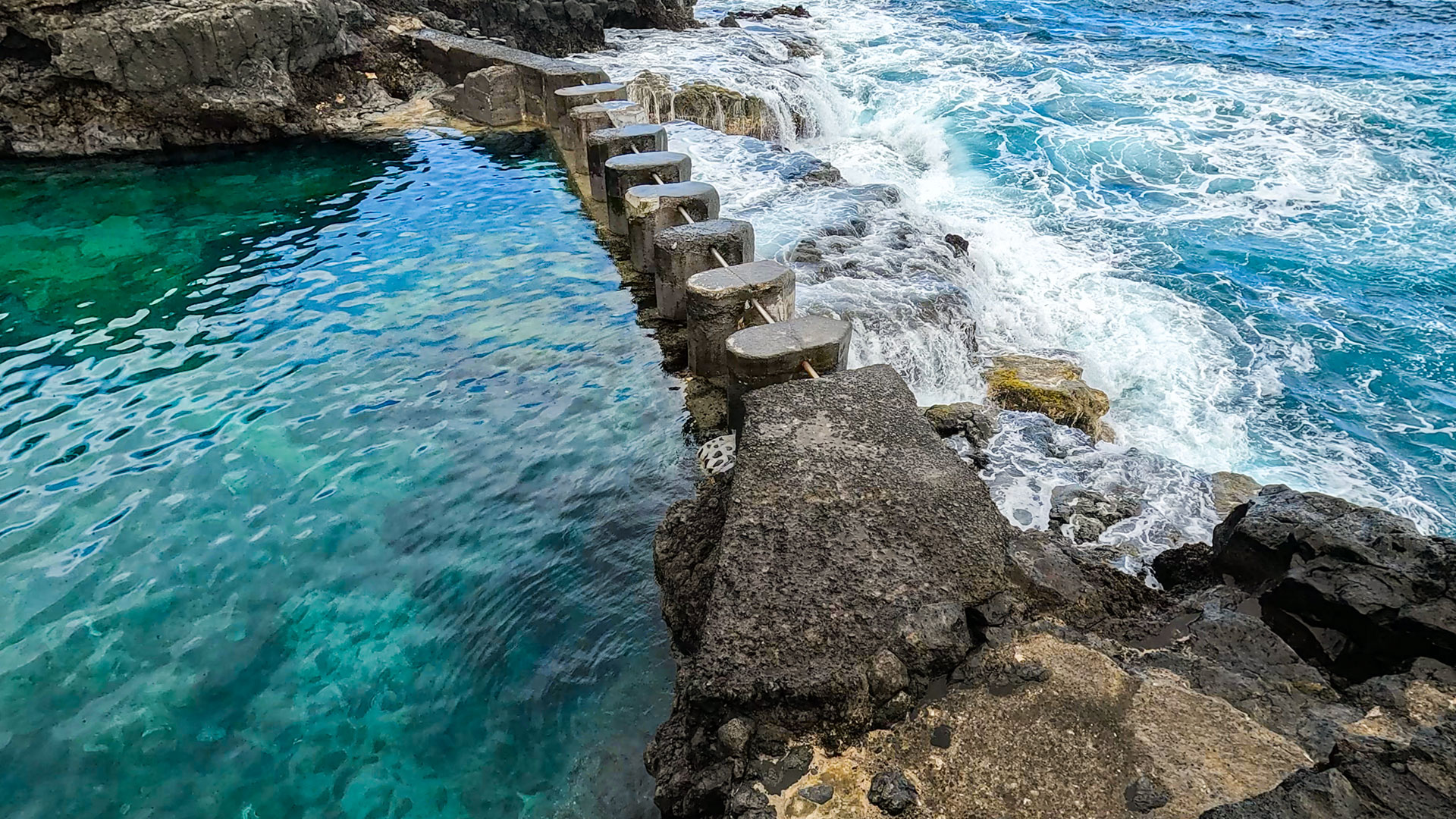
At high tide the natural bays in the lava rock are washed over by the surf – this fills the pools with fresh seawater. When the surf is strong, swimming is strongly discouraged: the waves then break over the seawall and make the pools dangerous. On calm days, however, the three pools offer ideal, sheltered refreshment – the water is clear, cool and straight from the Atlantic.
Around the pools stretches the wild lava cliff of the north coast. The sunbathing areas are hewn into the rock, sunshades are set up. The entire facility has the character of a natural lido that has adapted to the landscape – not the other way around.
Swimming & Safety
At high tide and strong surf, waves break over the seawall – swimming is then life-threatening.
Always check the flag situation before entering the water.
Facilities and the Restaurant
La Fajana is well equipped: Sun lounger areas, parasols, changing rooms, showers, and a kiosk make for a pleasant day at the water. Right beside the seawater pools is a restaurant with architecture strongly reminiscent of César Manrique’s style, blending harmoniously into the volcanic landscape. Prices are somewhat higher, but the location alone makes a visit worthwhile. Those who prefer to bring a picnic can enjoy it on the terraced sun lounger areas – only inside the restaurant itself is consuming your own food not permitted.
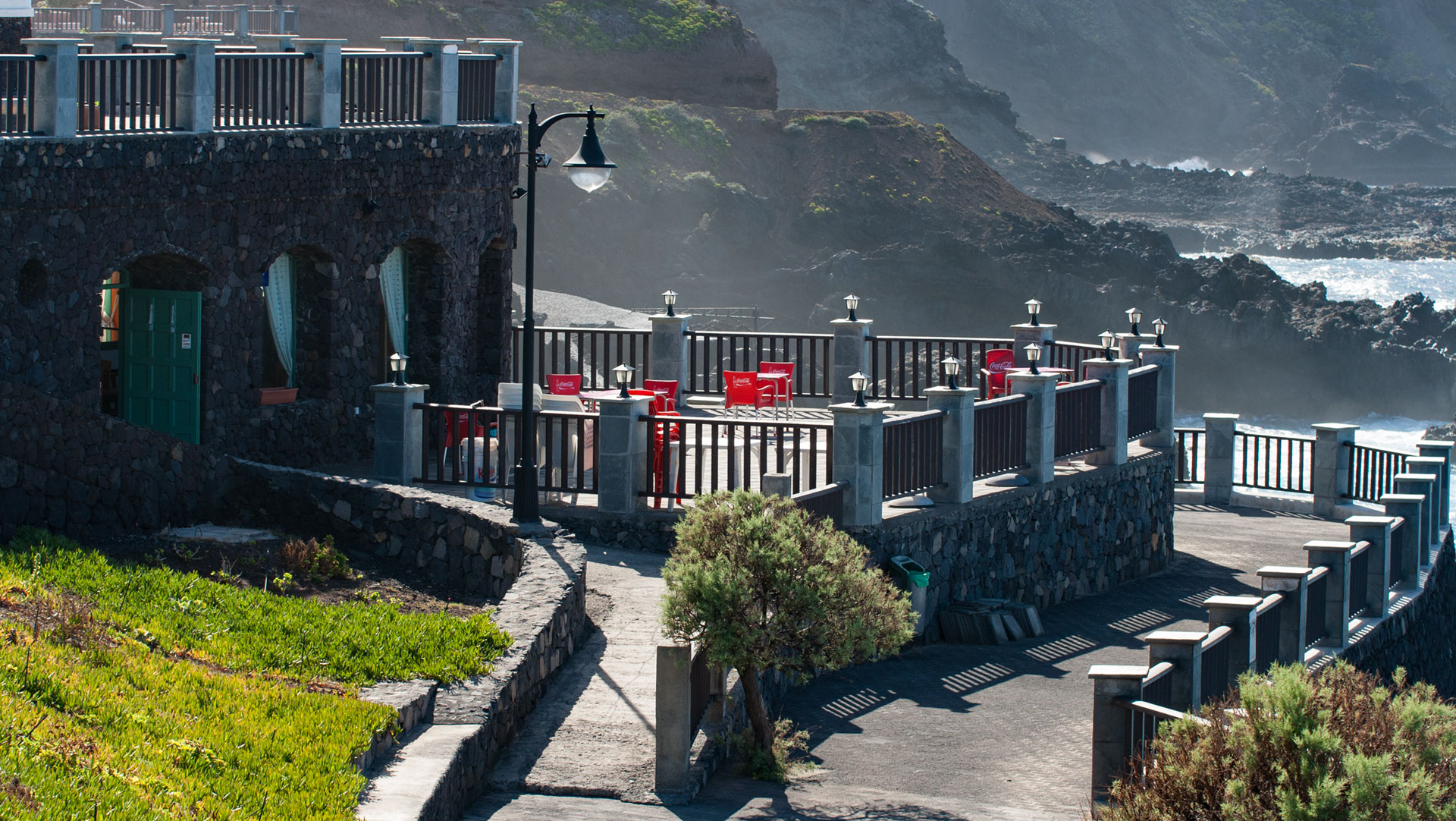
Because Barlovento lies in the remote north-east of La Palma, La Fajana was long spared from mass tourism. Visitors appreciate exactly that: the peace and quiet, the absence of souvenir stalls, the feeling of being somewhere that has not yet changed.
| Location | North-east coast of La Palma, near Barlovento, municipality of Barlovento |
|---|---|
| Pools | 3 natural seawater pools carved into the lava rock |
| Seawater | Surf-fed, replenished daily |
| Facilities | Sunshades, loungers, showers, changing rooms, kiosk, restaurant |
| Restaurant | César Manrique style; prices on the higher side |
| Best for | Those seeking tranquillity, nature lovers, families on calm days |
| Combine with | Barlovento · Tea plantation · Puerto Espíndola |
Barlovento: The Quietest Place on La Palma
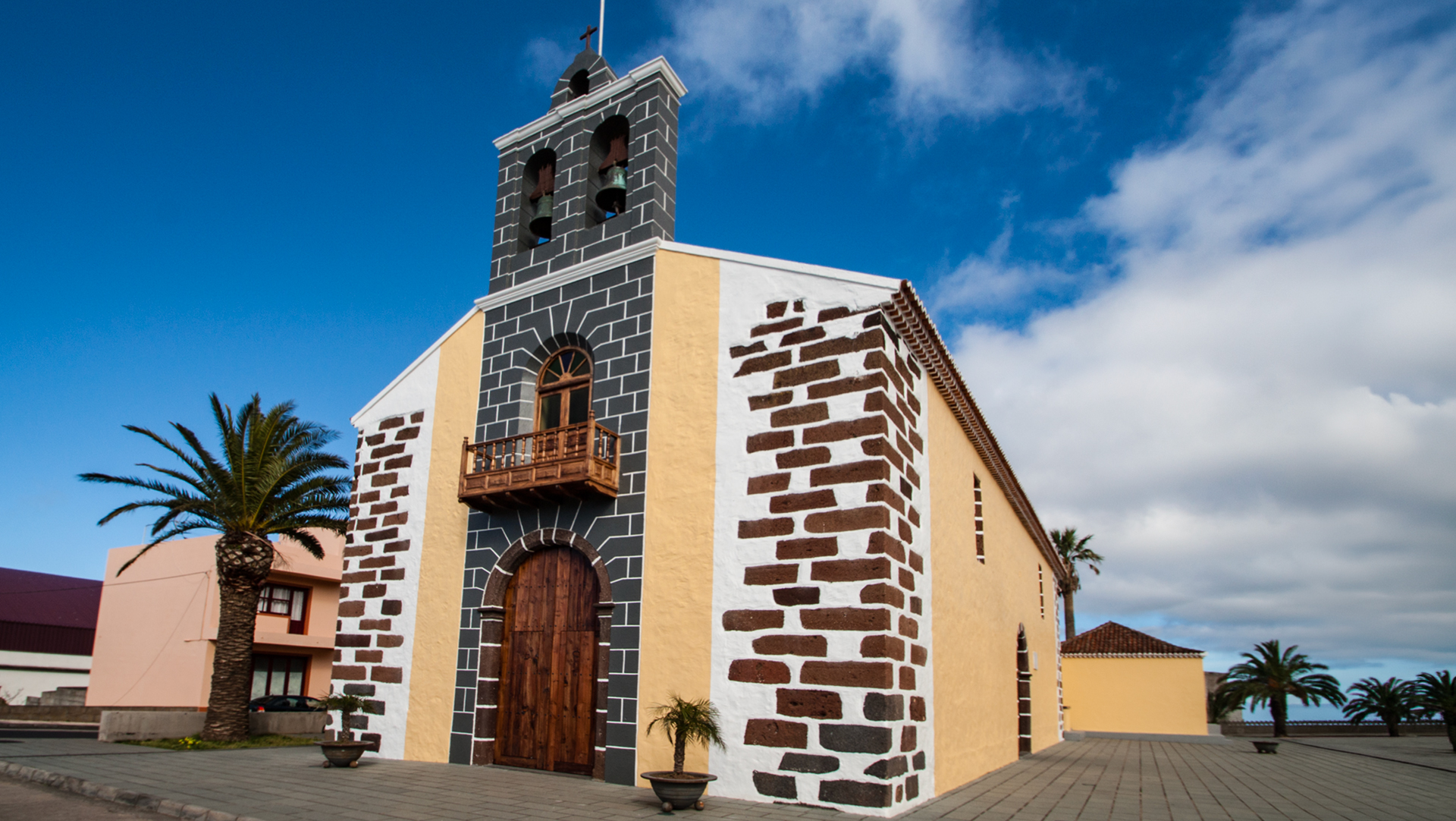
Barlovento lies at the northernmost point of La Palma – from here it is even further to the next large town than from any other coastal village on the island. What sounds like isolation is for many the real attraction: no tourist crowds, no high season bustle, instead the slow pace of life of a Canarian rural community.
Wild Coast: La Fajana and the Atlantic
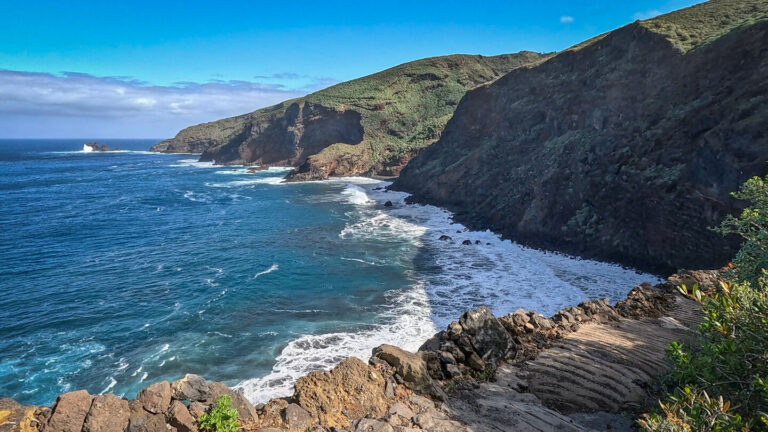
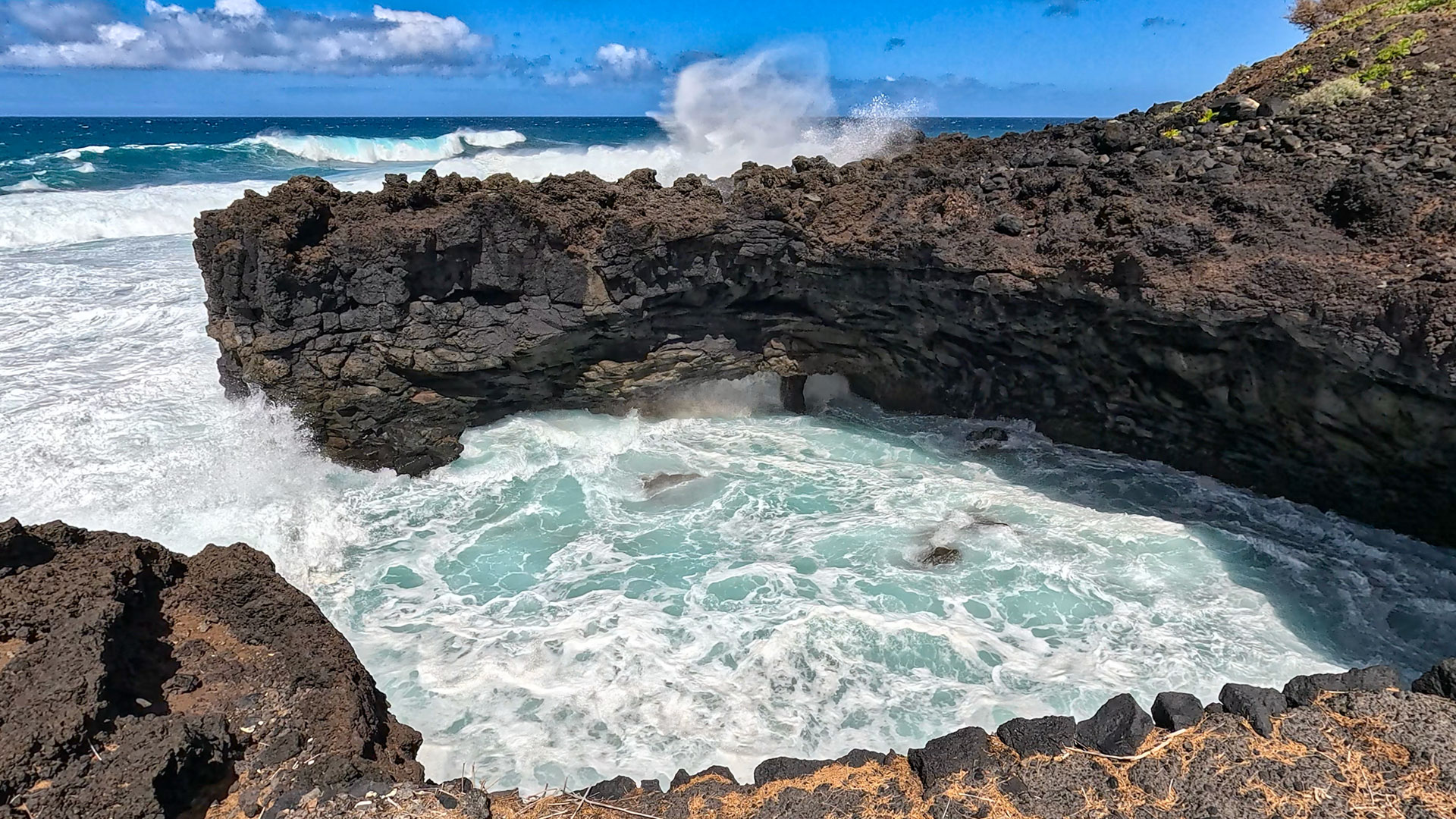
The north coast of La Palma is the wildest on the island. The Atlantic arrives here unchecked from the open ocean, the cliffs are high, and the wind is constant. La Fajana sits in the middle of this wildness – sheltered enough for a natural swim, open enough to feel the power of the sea. On stormy days, when the waves crash over the dam, simply watching is an experience in itself.
The Roque de la Fajana
Above the natural lido, the Roque de la Fajana rises from the terrain – a lava rock promontory with one of the wildest views on the north coast. From the top you can see the three pools like small puddles in the vast dark blue of the Atlantic. The short climb to the rock takes barely ten minutes and is worthwhile as a counterpart to the bathing visit below.
Hiking on the North Coast
La Fajana lies on a spectacular stretch of the rugged north coast, known for its demanding hiking trails. From the natural lido, a steep ascent leads up to the centre of Barlovento, offering breathtaking views down to the Atlantic spray.
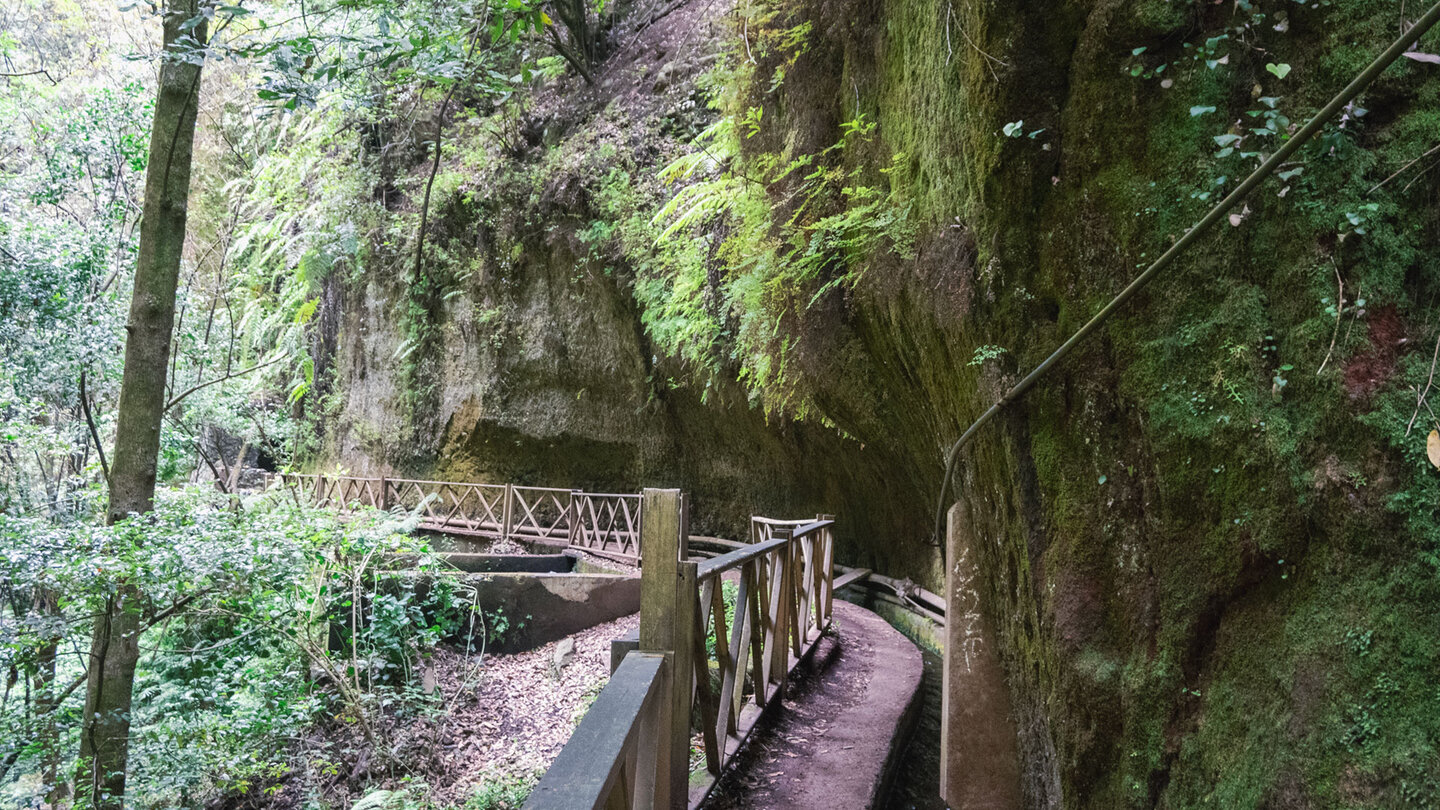
Those who follow the old royal trail GR-130 along the coastline to the south-east hike through deep ravines towards San Andrés y Sauces, from where you can venture deeper into the Los Tilos laurel forest biosphere reserve with its mystical waterfalls. The routes along the north coast demand absolute sure-footedness and sturdy footwear due to the steep elevation changes, but reward with unspoilt wildness.
Wild Coast: Cliffs and Surf
The north coast of La Palma is the island’s most rugged. The Atlantic comes here unimpeded from the open ocean, the cliffs are high, the wind constant. La Fajana lies right in the midst of this wildness – sheltered enough for a natural lido, open enough to feel the power of the sea. When the surf is rough, watching the waves break over the seawall is an experience in itself. Those who want to photograph should visit at high swell for the interplay between waves and lava rock.
Getting There and Practical Information
La Fajana is tucked away on the wild north-east coast, just a few kilometres south of Barlovento. Those arriving by car follow the signs from the LP-1 onto a steep but well-surfaced side road – at the top, ample parking spaces await right beside the pools. Allow around 45 to 50 minutes by car from Santa Cruz de La Palma.
A hire car remains the most comfortable option for getting here. Without your own vehicle, bus line 100, which runs hourly, brings travellers from Santa Cruz to Barlovento; from the final stop you walk down to the sea on a steep but scenically rewarding path. A detour to the village centre of Barlovento is particularly worthwhile at weekends – The local Mercadillo is well worth a visit, offering regional produce, crisp mountain air, and sweeping views across the surrounding banana plantations.
La Fajana Throughout the Year
La Fajana is open year-round, but conditions vary. In summer, with calm seas, the three pools are ideal for swimming – warm, clear and sheltered. In winter the north coast can be rough: waves crash over the seawall, the pools are churned up and swimming is dangerous. Spring is the quietest time of year: the water cools slightly, trade-wind clouds drift over the cliffs, and on weekdays you have the place almost to yourself. For those seeking tranquillity, La Fajana in April or May is the ideal time.
Comparison: La Fajana and Charco Azul
La Fajana and Charco Azul are La Palma’s two main natural lidos – similar in facilities, different in atmosphere. Charco Azul lies in the north-east near San Andrés, is somewhat easier to reach and receives more visitors. La Fajana lies further afield near Barlovento, has fewer visitors and a wilder coastal setting. Both have a restaurant, sunshades and pools in lava rock. Those wishing to combine both in one excursion should plan for a full day out: Charco Azul in the morning, La Fajana in the afternoon – or vice versa. The drive between the two takes around 30 minutes.
Conclusion: La Fajana
La Fajana is the natural lido of the remote north – wilder, quieter and less touristy than Charco Azul, but with similar facilities and a restaurant that makes the journey worthwhile.
Those who come on a quiet day have three seawater pools, a lava cliff and half the Atlantic almost to themselves.
Essential for all those who want to experience La Palma beyond the well-trodden tourist paths.
Frequently Asked Questions
When is it safe to swim at La Fajana?
Is there a restaurant at La Fajana?
How does La Fajana differ from Charco Azul?
What else is worth visiting nearby?
This article is based on the on-the-ground knowledge of the Gequo editorial team – publishers of the Reisezeit hiking guides and operators of Sunhikes.com. Last updated: May 2026