Playa de Las Cabras – Secluded Beach near Fuencaliente
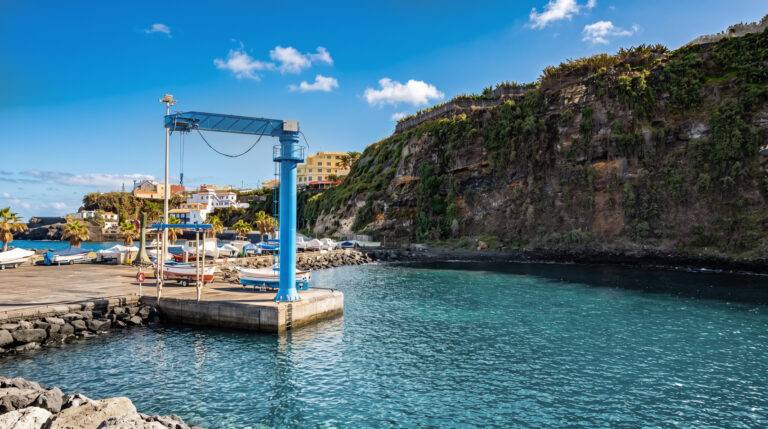
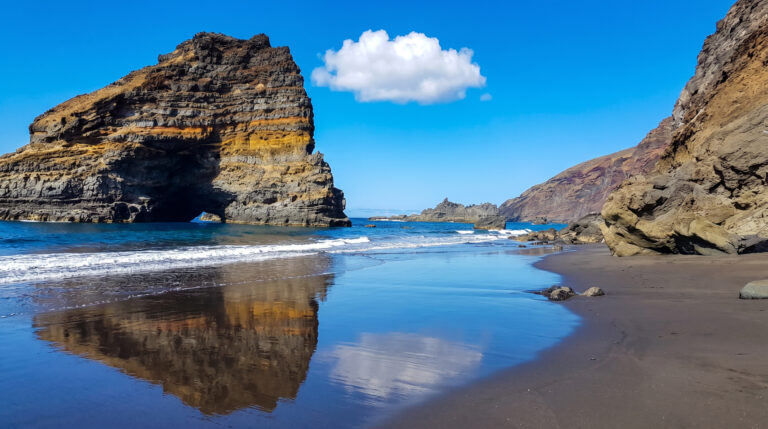
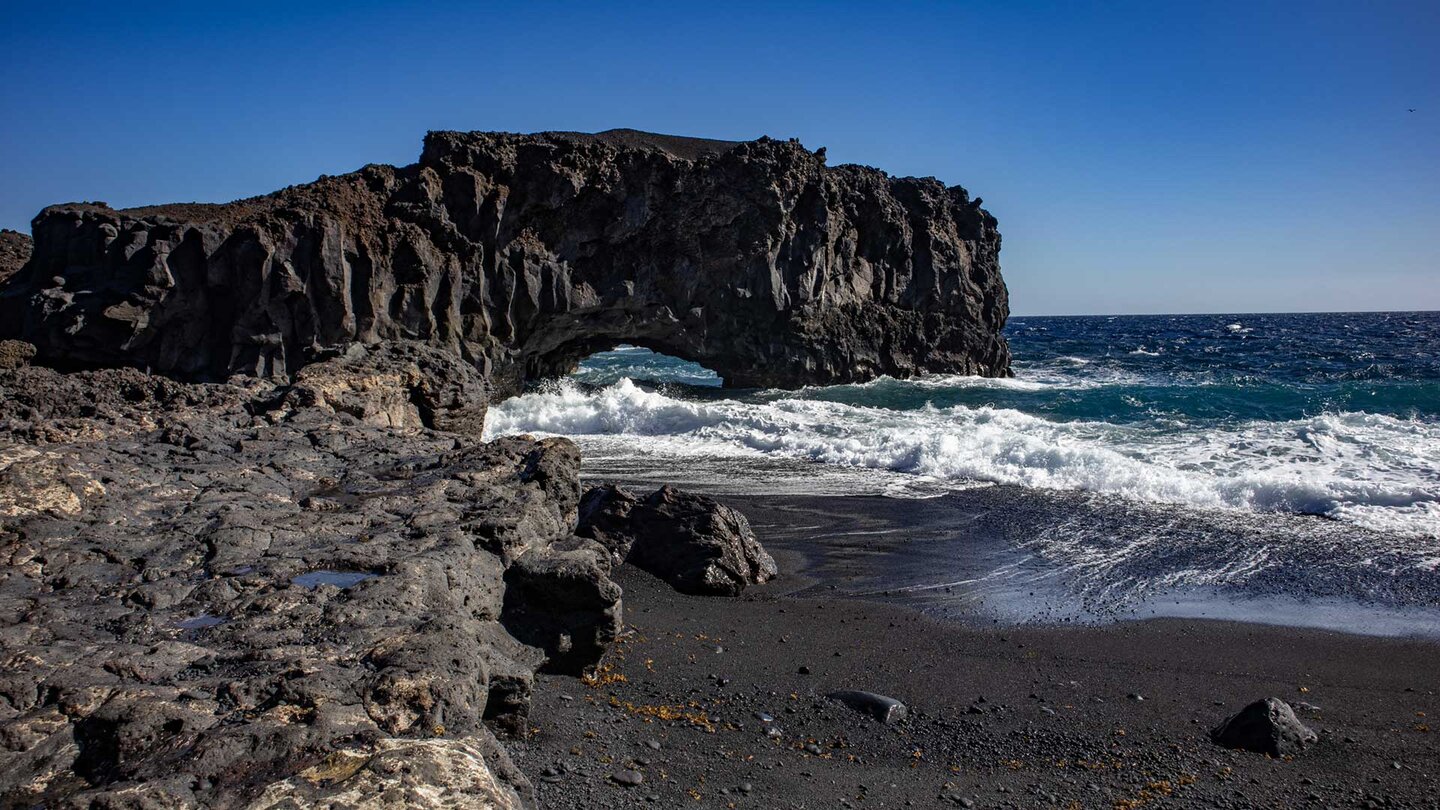
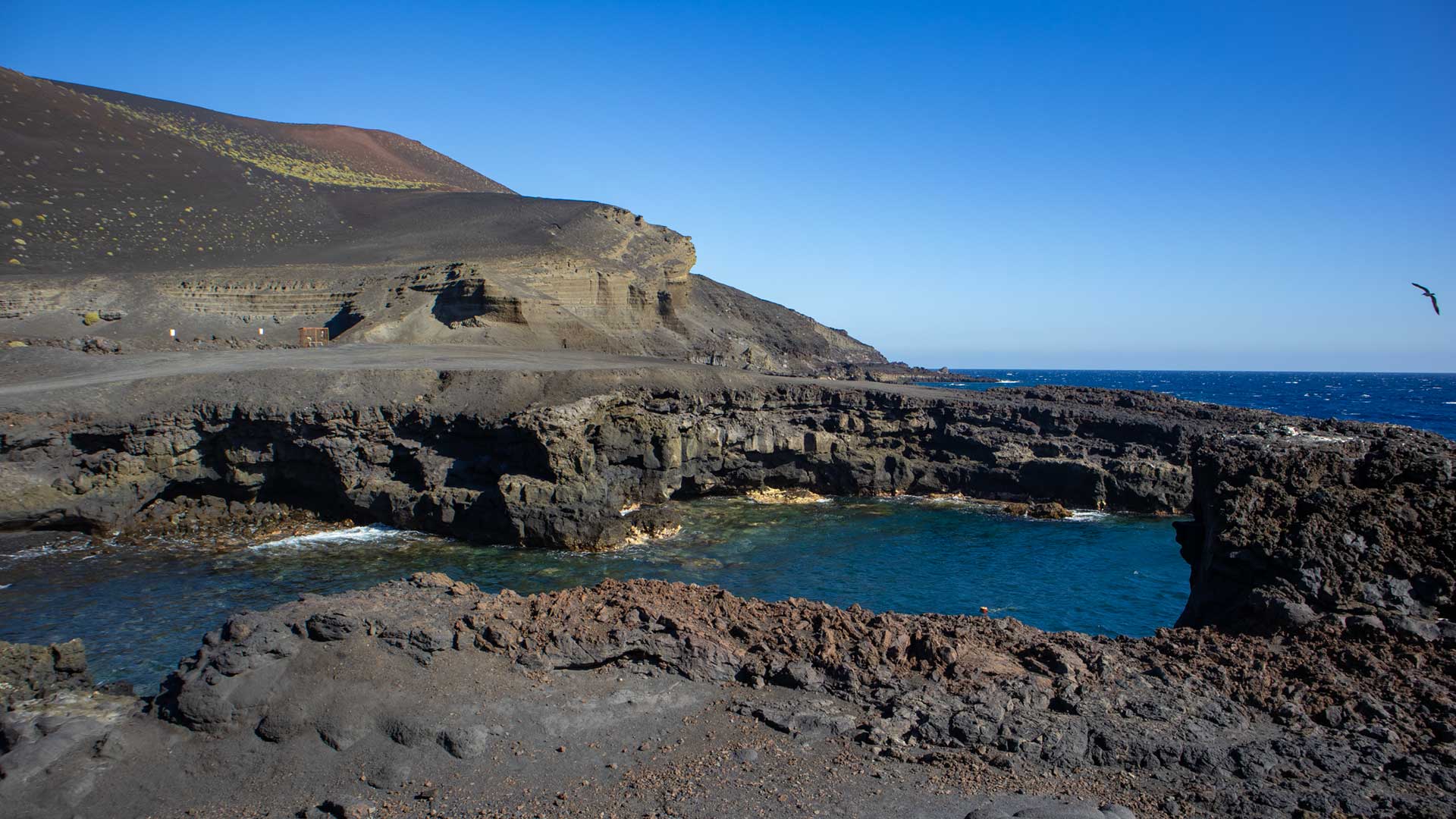
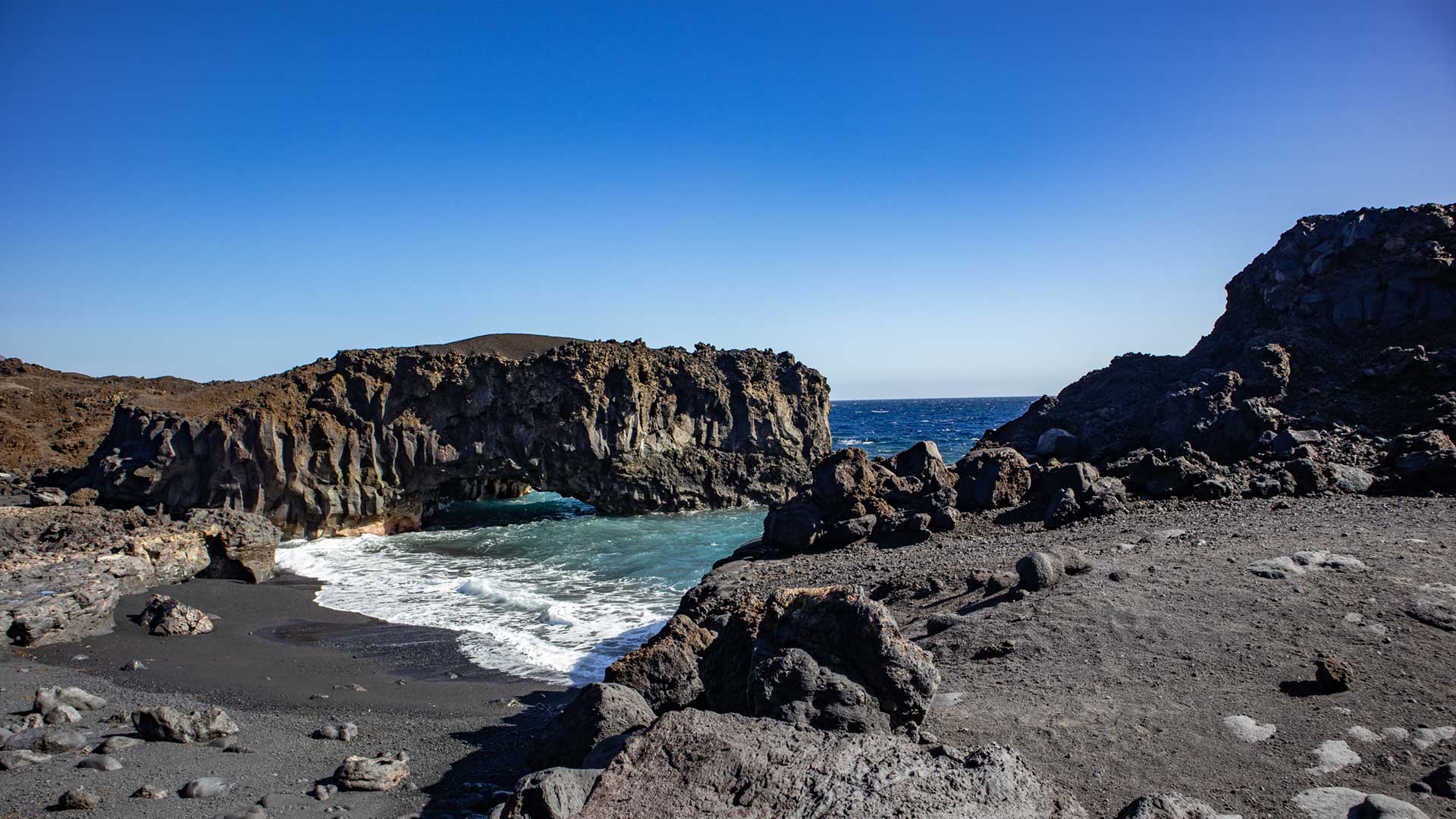
Right at the bottom, at the very south, where the natural monument of the Volcanes de Teneguía meets the sea, lies a bay you do not find by accident: Playa de Las Cabras. Forty metres long, twenty wide, framed by jagged lava rocks – small enough to give the feeling of absolute solitude, large enough to swim and snorkel.
Hidden, but Reachable
From the Faro de Fuencaliente, the island’s southernmost lighthouse, a gravel track leads to the bay. A small car park sits right at the beach. The route is adventurous but presents no special obstacles for a standard vehicle. What you find there: crystal-clear water, dark lava sand, a bay of primeval stillness.
Swimming & Safety
No rescue service, no infrastructure. For experienced swimmers only.
Water shoes essential – lava rock and pebble seabed.
Unspoilt and Quiet
Playa de Las Cabras remains largely untouched. There are no facilities, no infrastructure, and no lifeguards. Swimming is possible in moderate surf. For snorkellers, it is worth looking below the surface: the water over lava rock is clear, the fish life typical for the south coast.
Special Location
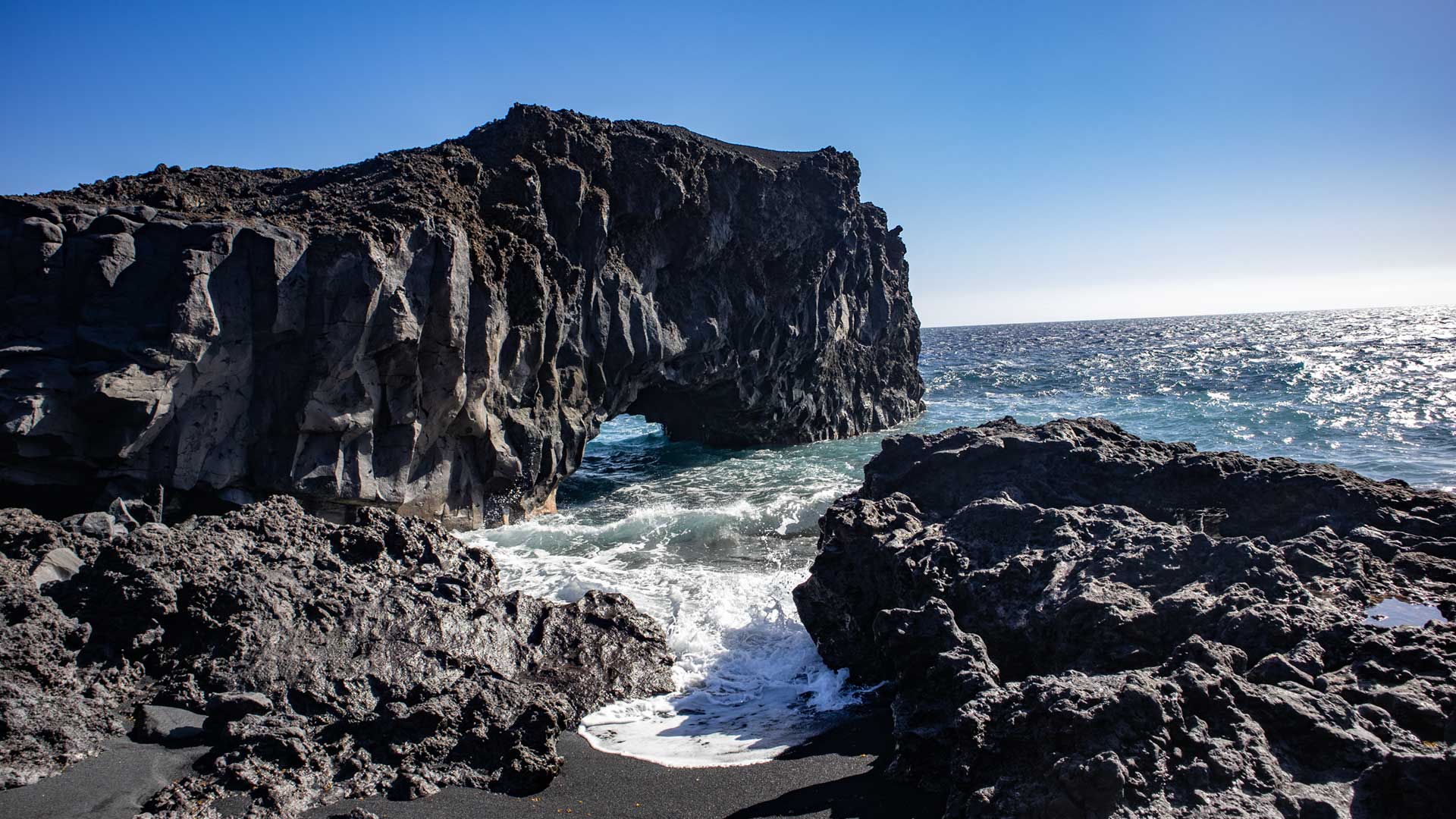
The bay is sheltered by the Punta de Las Cabras, a small peninsula that calms the sea slightlyigt. Looking back from here towards La Palma’s steep coastline, you see the island in its most elemental form: black, steep, silent. The remoteness of Playa de Las Cabras is not an absence of something – it is the invitation to escape the noise for a moment.
Combining with the Southern Tip
Playa de Las Cabras lies on the way to the lighthouses of Fuencaliente – a detour fits naturally into any trip to the southern tip. Combined with El Aljibe, Playa Echentive, the salt pans and the volcano craters of San Antonio and Teneguía, it makes a complete half-day excursion into the southernmost part of La Palma.
| Location | Southern tip of La Palma, municipality of Fuencaliente, near the lighthouse |
|---|---|
| Beach | Small cove, approx. 40×20 m, dark lava sand |
| Access | Gravel track from the lighthouse; car park right at the beach |
| Facilities | None – completely natural |
| Lifeguard | None – swim at your own risk |
| Best for | Experienced swimmers, snorkellers, solitude seekers |
| Combine with | Faro de Fuencaliente · El Aljibe · Salt pans · Teneguía |
Underwater Fauna
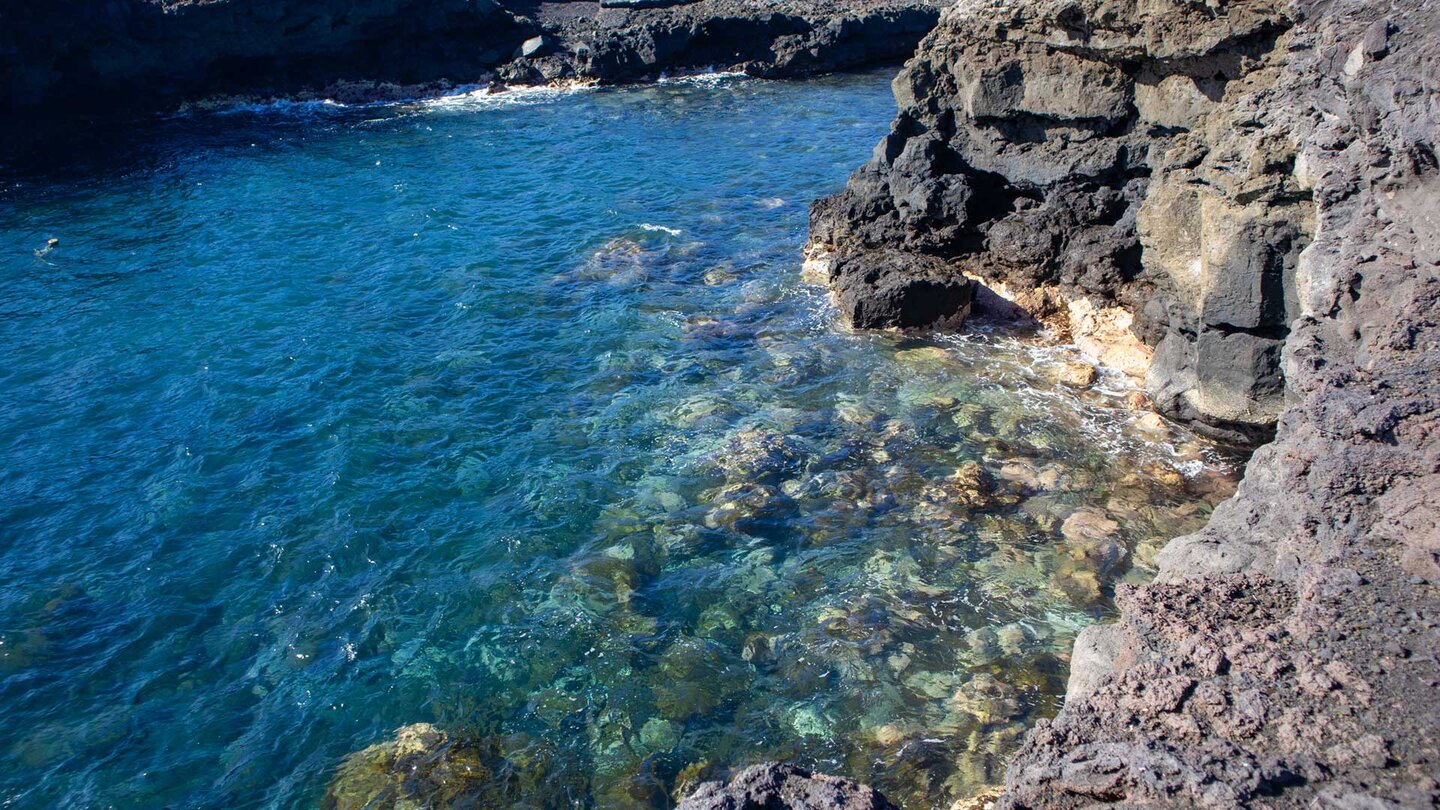
The water around Punta de Las Cabras is one of the richest in fish along the south coast of La Palma. The combination of lava rock, sandy seabed and moderate surf creates habitat for a variety of Canarian species: parrotfish, moray eels, octopuses, damselfish and occasional rays. Those who come with mask and snorkel will find one of the most rewarding underwater views on the island.
Dive Spot Punta de Las Cabras
Punta de Las Cabras is world-famous in the diving community. Just off the coast, the seabed breaks away at a sheer wall and drops spectacularly from 15 to over 40 metres – an impressive underwater shelf. The exposed position at La Palma’s southern tip and the strong currents regularly attract breathtaking marine life: tuna, manta rays, mackerel and barracuda are frequently spotted in the crystal-clear water. Due to the currents and the rocky entry, this is a dive site for experienced divers.
Cumbre Vieja Natural Park
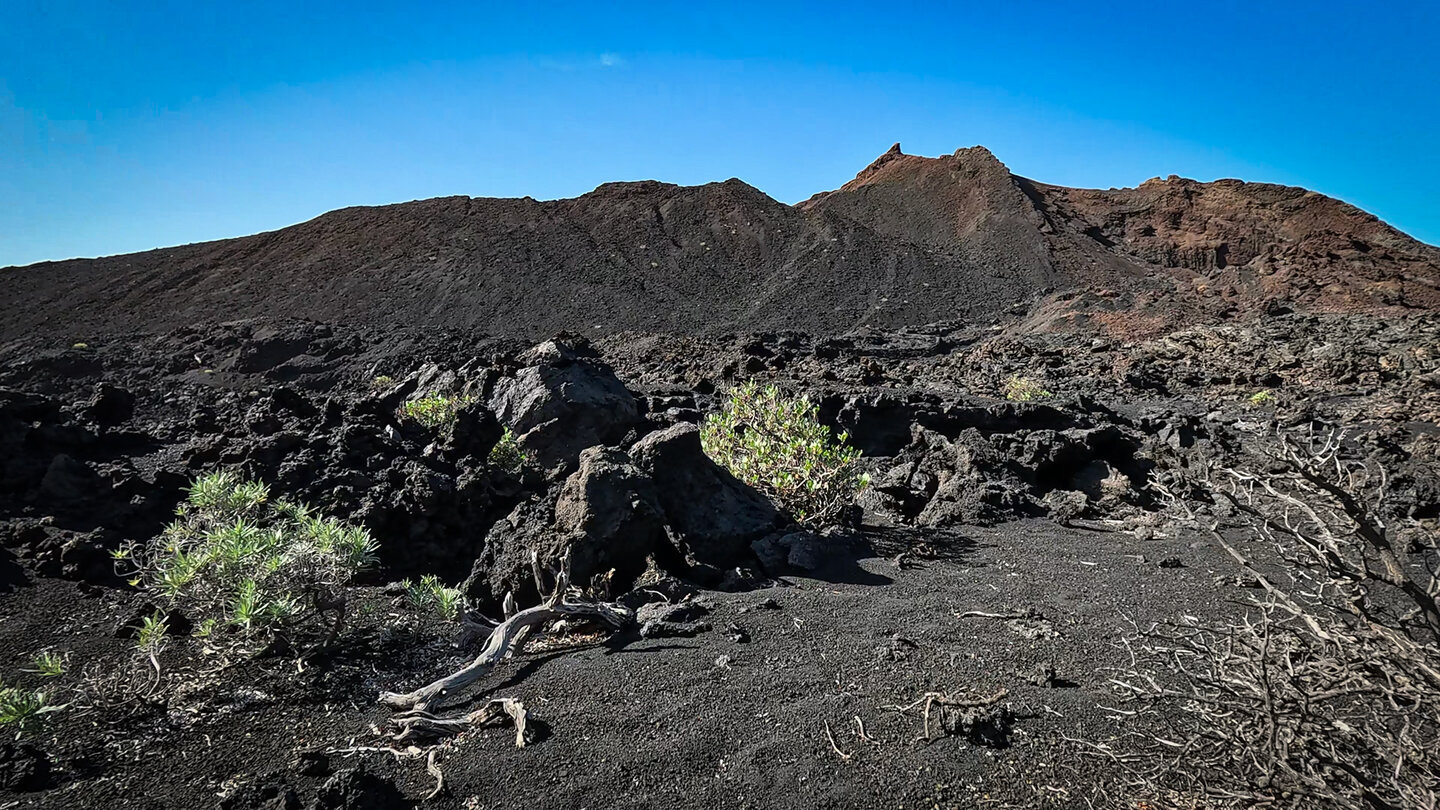
Playa de Las Cabras lies at the southern edge of the Cumbre Vieja Natural Park – one of the most significant protected areas in the Canary Islands. The park encompasses the southern mountain range of the island with its pine forests, volcanic craters and the most recent lava field from the Tajogaite eruption in 2021. Visitors to the bay are literally at the edge of this volcanic landscape, where nature remains untouched.
Exploring Fuencaliente on Foot
From Playa de Las Cabras, coastal paths lead to Punta de Las Cabras and on to the lighthouses. The Punta itself is a small peninsula of black lava rock jutting into the sea. From its tip you see the bay from above: the clear water, the dark sand, the surrounding rocks. This view explains better than any description why the bay is called Las Cabras – goats once grazed on the lava rocks here.
Best Time to Visit and Climate in Fuencaliente
Fuencaliente is La Palma’s sunniest destination year-round. The municipality lies in the rain shadow of the Cumbre Vieja mountain range, which blocks clouds coming from the north. While the north coast sits beneath trade wind clouds, the sun shines in Fuencaliente almost every day. This makes Playa de Las Cabras an attractive destination even in December and January – when other beaches on La Palma are affected by clouds and wind.
When is Playa de Las Cabras at its Quietest?
On weekdays outside the summer months Playa de Las Cabras is almost always completely deserted. On summer weekends locals from Fuencaliente and Los Llanos arrive – then the small bay can quickly feel crowded, although in absolute terms it is not. Those who want guaranteed solitude come on a weekday before 10 in the morning. The descent is short, the water is often at its clearest early in the morning.
The Coast as a Hiking Trail
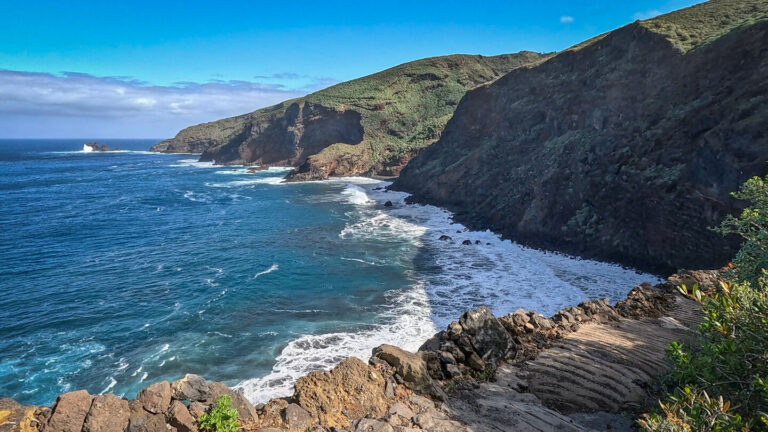
From Playa de Las Cabras, a coastal path leads to Punta de Las Cabras and on to the lighthouses. The route takes 30 to 45 minutes depending on pace and is moderately demanding. The path is partially exposed and requires sure footing. The views of the steep coast and back towards the bay make the effort worthwhile. Those who walk the whole way from Playa de Las Cabras to the lighthouses see La Palma’s southern tip from a perspective few visitors know.
Equipment and Supplies
There is no infrastructure at Playa de Las Cabras. Water, sun protection, snacks and water shoes must be brought along. A small supermarket can be found in Fuencaliente, a few minutes’ drive away. Those who set off early and plan to spend the afternoon at the bay should bring sufficient supplies – the next shopping option is not nearby. For the drive along the gravel track, a vehicle with good ground clearance is recommended.
Cumbre Vieja Natural Park y Teneguía
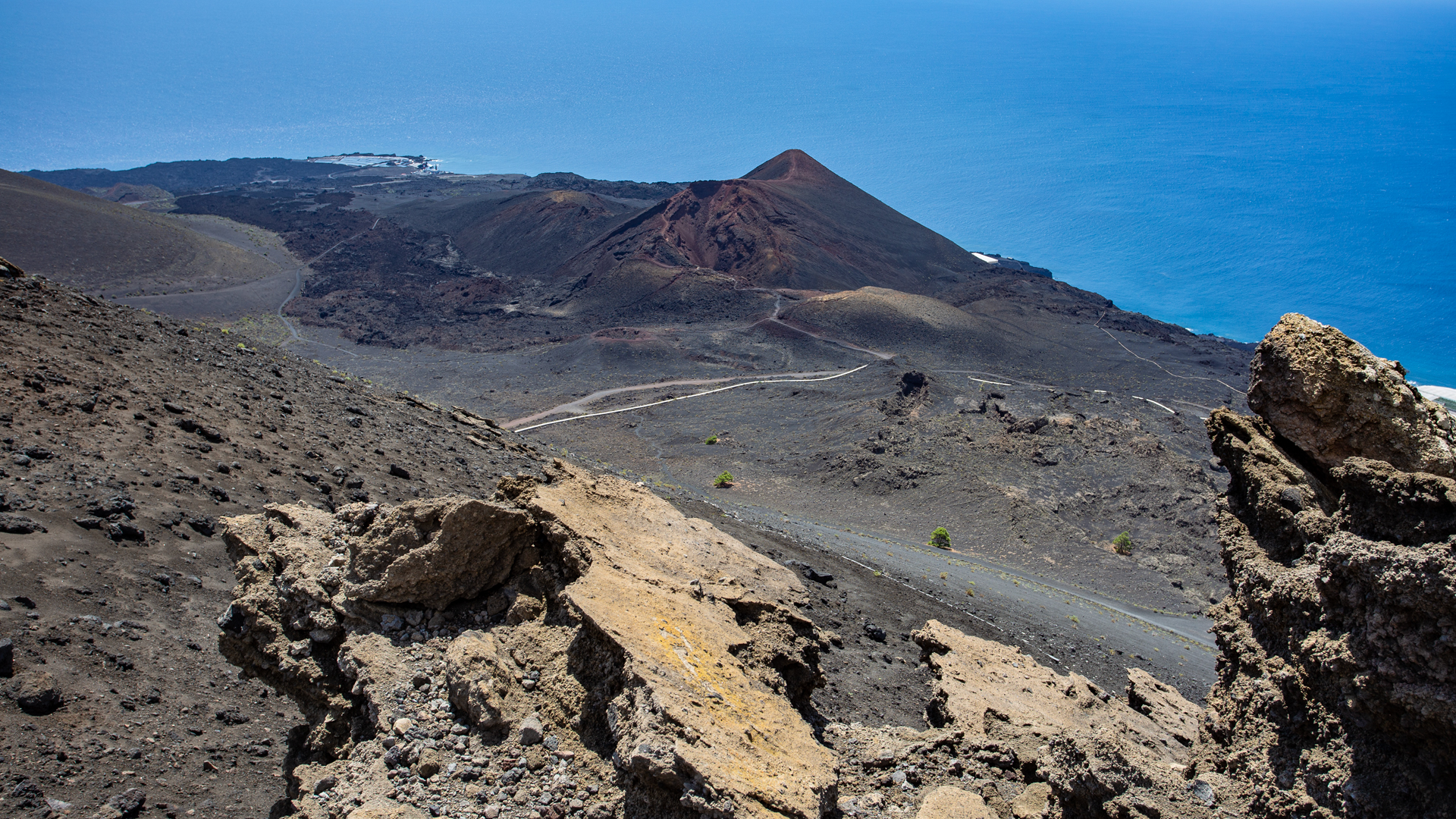
Playa de Las Cabras lies at the edge of the Cumbre Vieja y Teneguía Natural Park. The park protects the volcanic landscape of the southern tip, including the craters, lava fields and coastal sections. Leaving marked paths is prohibited and plants may not be picked. The natural park rules apply at the beach too: no fires, no noise after dark, no camping. The natural character of the bay – the clear water, the undisturbed fish life, the untouched sand – is a direct result of this protection.
Die Playa de Las Cabras is one of those La Palma places you only discover on your second or third trip. Not because it is hard to find, but because first-time visitors tend to work through the bigger beaches. Those who return head for the small bays – and find what sets La Palma apart from all other Canary Islands: an authenticity that is not staged, but simply there.
The route to Playa de Las Cabras passes through a landscape that could itself be the destination. The gravel track through the volcanic scenery, the view of the coast from above, the slow approach to the sea – these are not obstacles on the way to the beach, but the beach itself in another form. La Palma is an island where the journey is always part of the destination. Cabras is a particularly good example of this.
Conclusion: Playa de Las Cabras
Playa de Las Cabras is La Palma’s quiet south beach: small, unspoilt, almost always deserted.
Those visiting the lighthouses of Fuencaliente should take the few hundred metres of gravel track – the bay below is the best argument for extending the excursion.
Frequently Asked Questions
How do you get to Playa de Las Cabras?
Is Playa de Las Cabras safe for swimming?
Is there any shade or facilities at the beach?
Why is the beach called Las Cabras?
This article is based on the on-the-ground knowledge of the Gequo editorial team – publishers of the Reisezeit hiking guides and operators of Sunhikes.com. Last updated: May 2026