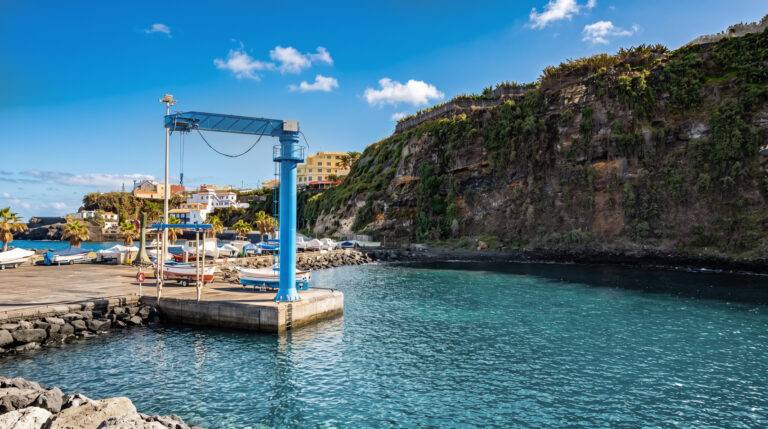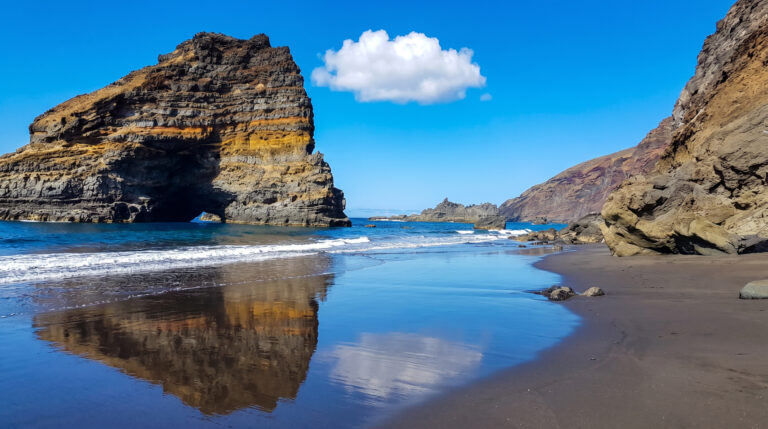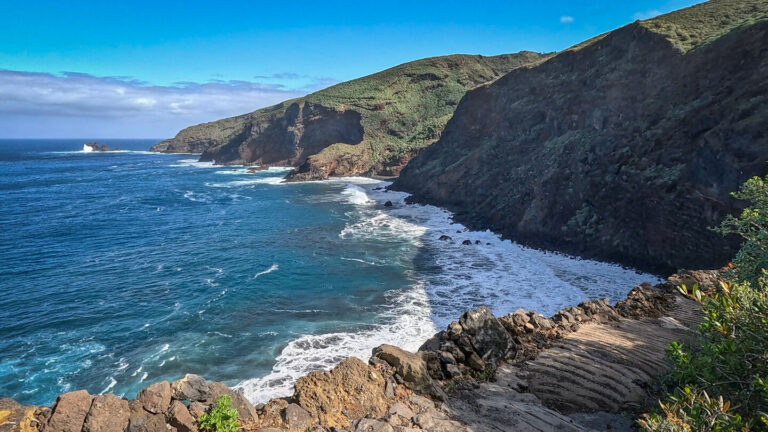
Playa de Bajamar – City Beach of Santa Cruz
Those who explore the old town of Santa Cruz de La Palma and still want to swim at the end of the day don’t need to go far. Alongside the better-known Playa Santa Cruz de La Palma, the island capital has a second city beach: Playa de Bajamar, tucked into the urban coastal strip between the harbour and the promenade.
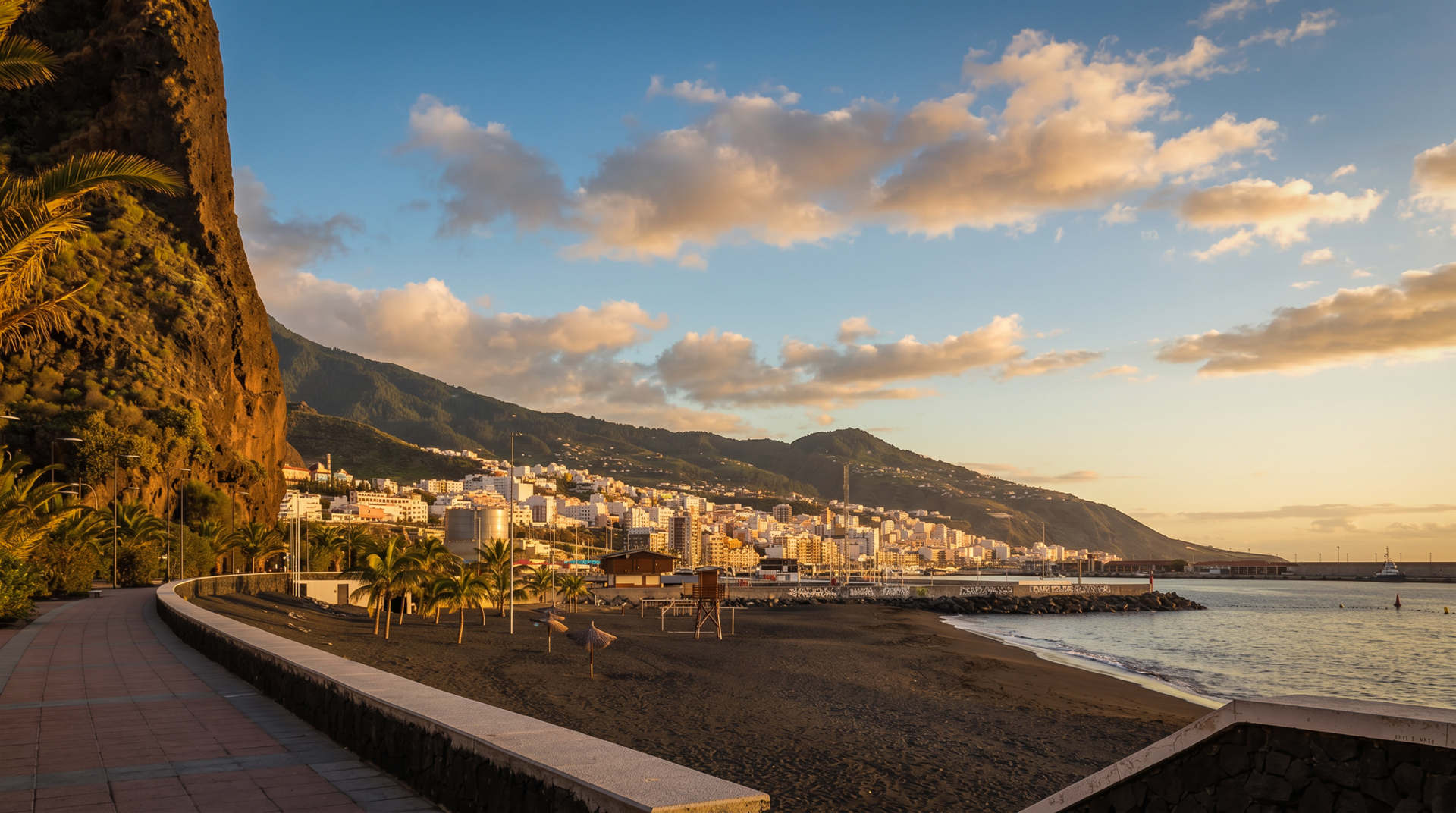
The Second City Beach
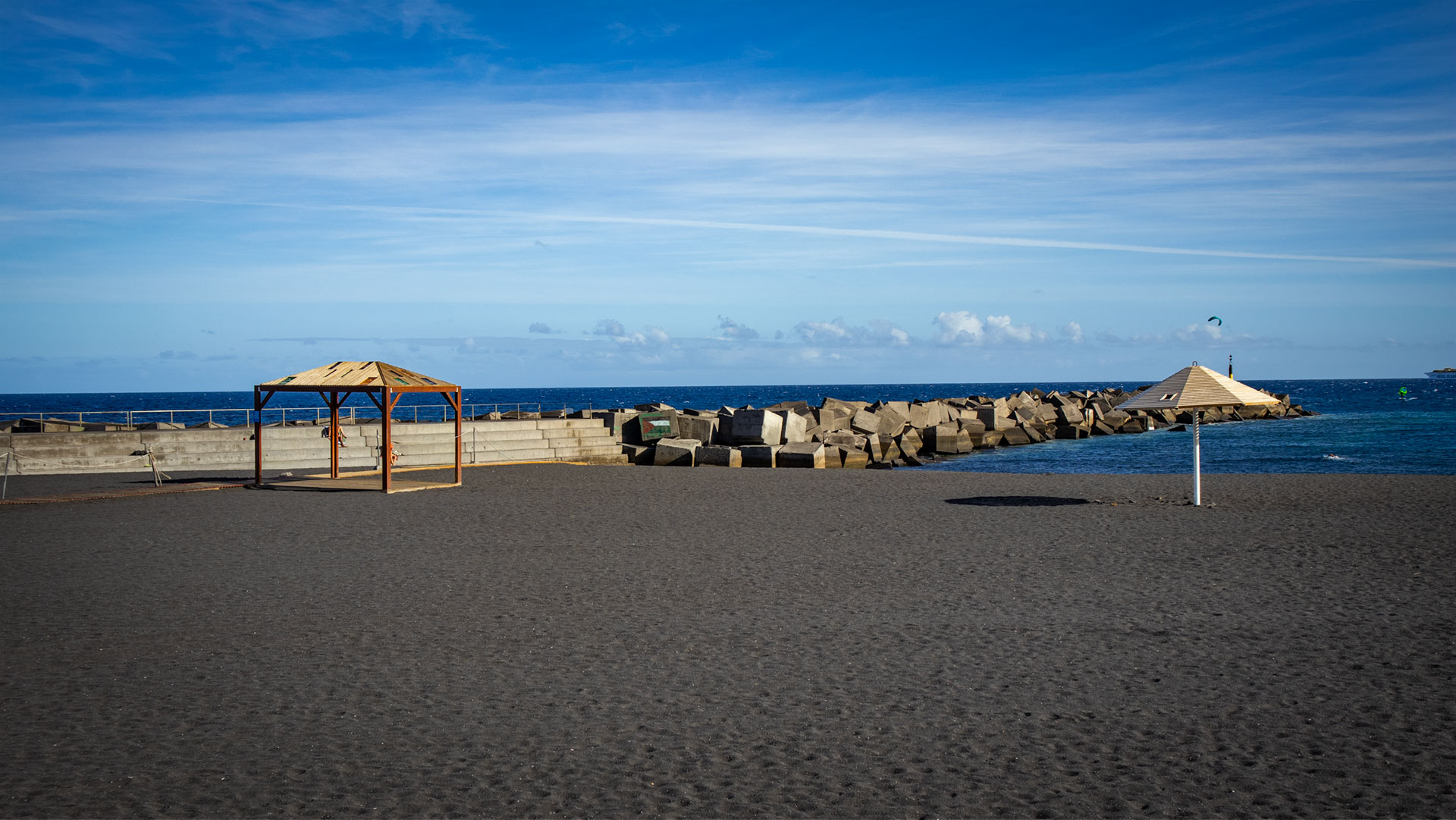
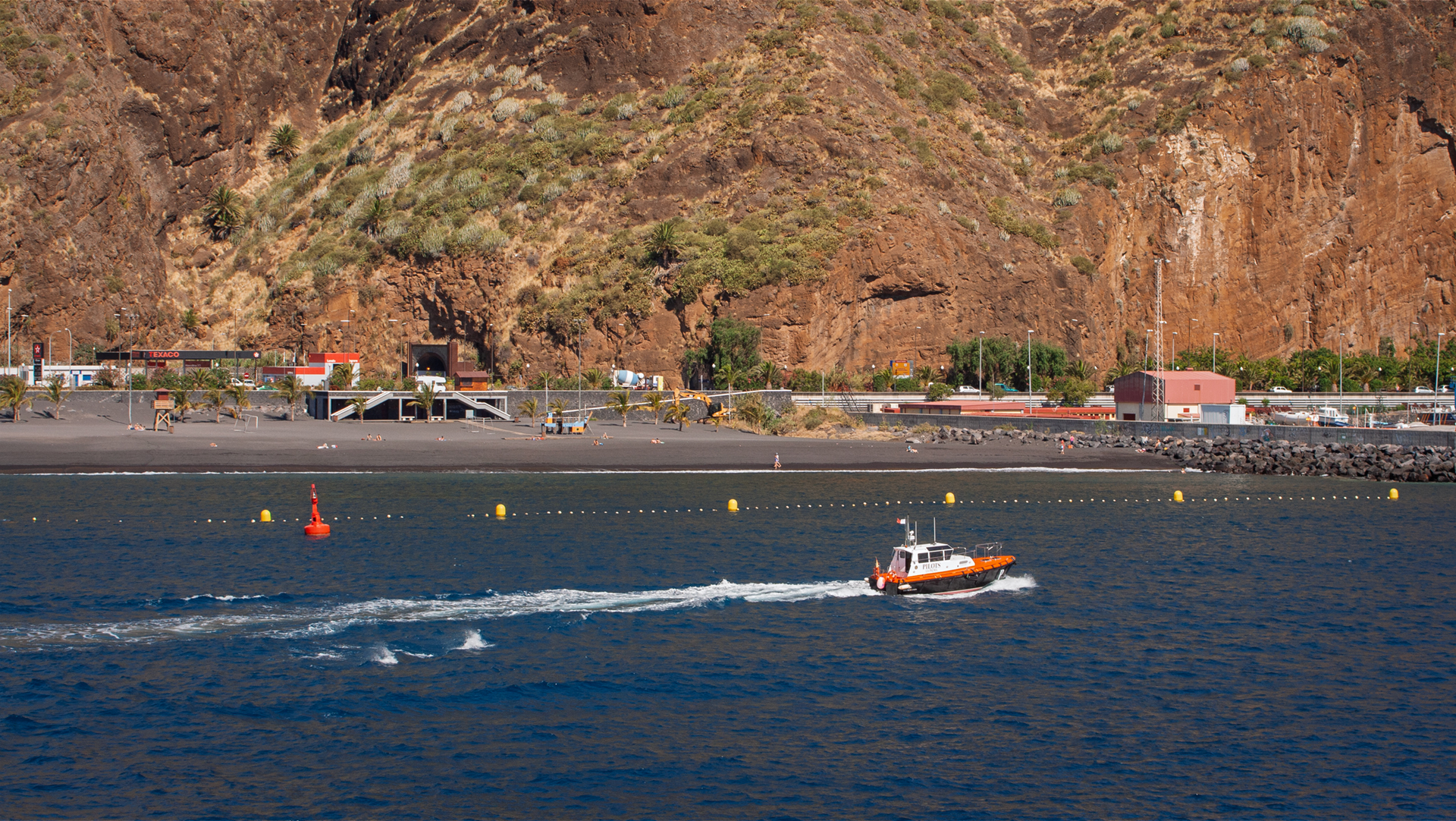
Playa de Bajamar is small, black-sanded and without notable tourist infrastructure. What sets it apart is the same quality as Playa de Santa Cruz de La Palma: its location. A few minutes’ walk from the historic old town, from the balconies of the Avenida Marítima and from the harbour, it is the beach for those staying in Santa Cruz who want a quick dip in the Atlantic each day.
Lying directly at the outer harbour wall, the water here is often calmer than at the open main beach — ideal for the quick dip that locals favour. The water is the same as everywhere on the east coast — cool, clear, with occasional surf in onshore winds. Lifeguards are deployed in high season.
Swimming & Safety
Beach flags give daily information on swimming conditions:
Green: Safe swimming possible.
Yellow: Caution – waves or currents. Children and weak swimmers should stay ashore.
Red: Swimming strictly prohibited. Ignoring this is life-threatening.
Lifeguard on duty in high season. Outside of season, swim at your own risk.
With onshore easterly winds, surf can increase.
Exploring Santa Cruz: What to Find Nearby
The old town of Santa Cruz de La Palma is one of the finest in the Canary Islands — and it lies within walking distance of the beach. The 16th-century Iglesia El Salvador, the town hall with its Renaissance portico, the Avenida Marítima with its colourful wooden balconies: these sights can be covered in a two to three hour walk.
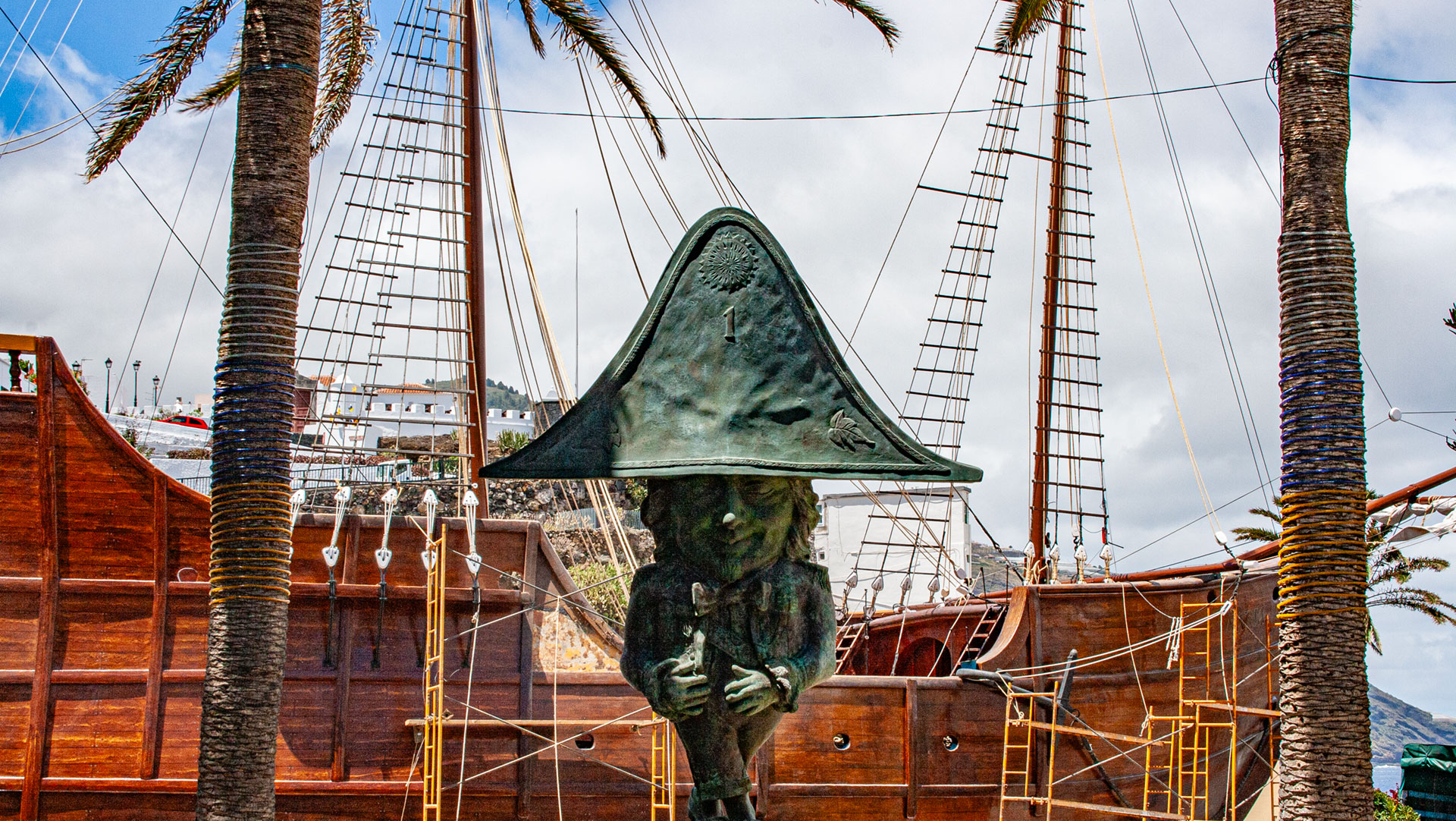
The ship museum in the old town displays a replica of the Santa María — Columbus’s ship of 1492. La Palma was one of the most important ports of the New World at the time, and the museum explains this forgotten significance. A visit takes about an hour and adds historical context to the city walk.
For a Full Day at the Beach
Playa de Bajamar is not the beach for a full day by the sea. Those planning extended beach hours head to Los Cancajos — five kilometres south, with full infrastructure and an EU Blue Flag. Bajamar is the complement to a city visit: beach stroll in the morning, old town at midday, harbour promenade in the evening. In that combination it is ideal.
| Location | Town area of Santa Cruz de La Palma, east coast |
|---|---|
| Beach | Small black sand beach, urban setting |
| Facilities | Lifeguard in high season; promenade alongside |
| Old town | Walkable – about 20 min on foot |
| For all-day swimming | Better: Playa de Los Cancajos (5 km south) |
| Parking | Car parks at the port of Santa Cruz |
History: Santa Cruz as a World Trade Port
Santa Cruz de La Palma was one of the most significant ports of the Spanish Crown domains in the 16th and early 17th centuries. Ships bound for the Americas stopped at La Palma — for water, provisions and the exchange of goods. This maritime flourishing is the reason for the colonial architecture that still defines the city’s character. The houses you see during the beach walk were built by merchants who traded with the New World. Playa de Bajamar lies at the edge of this history.
The Harbour Promenade: Strolling with a View
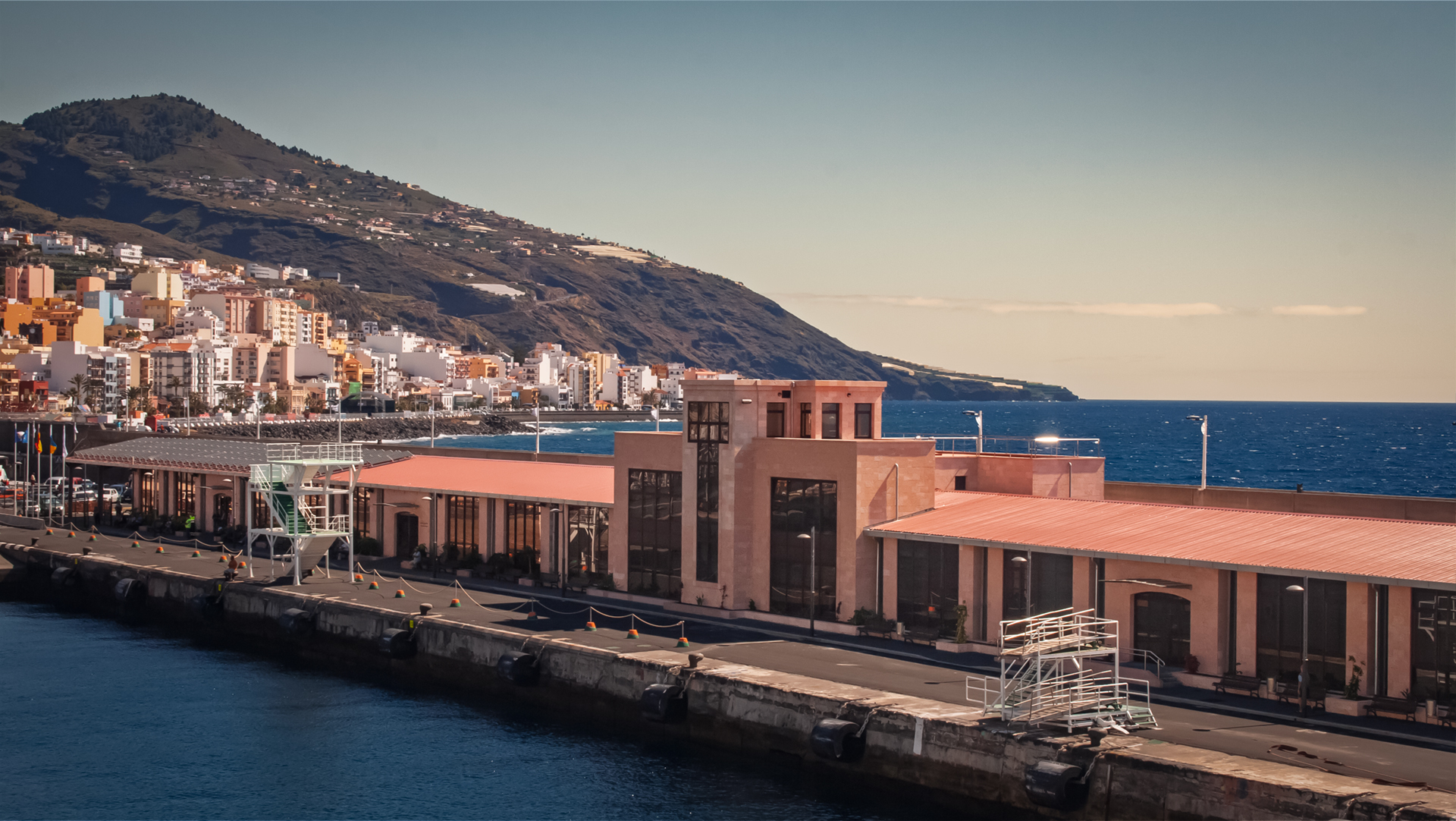
The harbour promenade of Santa Cruz de La Palma is one of the liveliest in the Canary Islands. In the morning, pensioners, schoolchildren and tourists share the same benches. In the evening the paseo begins — the Canarian evening stroll, where you walk without destination and meet acquaintances who are also walking without destination. The promenade runs directly past Playa de Bajamar, connecting the beach with the harbour basin, the historic centre and the bar terraces lining the Avenida Marítima.
Festivals and Events in Santa Cruz
Santa Cruz is the capital of festival culture on La Palma. The carnival — officially the finest in the Canaries outside Tenerife and Gran Canaria — transforms the city into a sea of colour in February. The highlight is the Día de Los Indianos on carnival Monday: thousands dress in white and cover each other with talcum powder, in memory of the emigrants who returned wealthy from Cuba. The Corpus Christi festival and the patron saint days of the various churches fill the calendar throughout the year. Those on the island during festival time have the shortest walk from Playa de Bajamar to the festival centres.
Every five years, the Bajada de la Virgen de las Nieves also takes place — La Palma’s largest popular festival, in which the statue of the patron saint is carried in a long procession into the city.
Tip: The Real Castillo de Santa Catalina
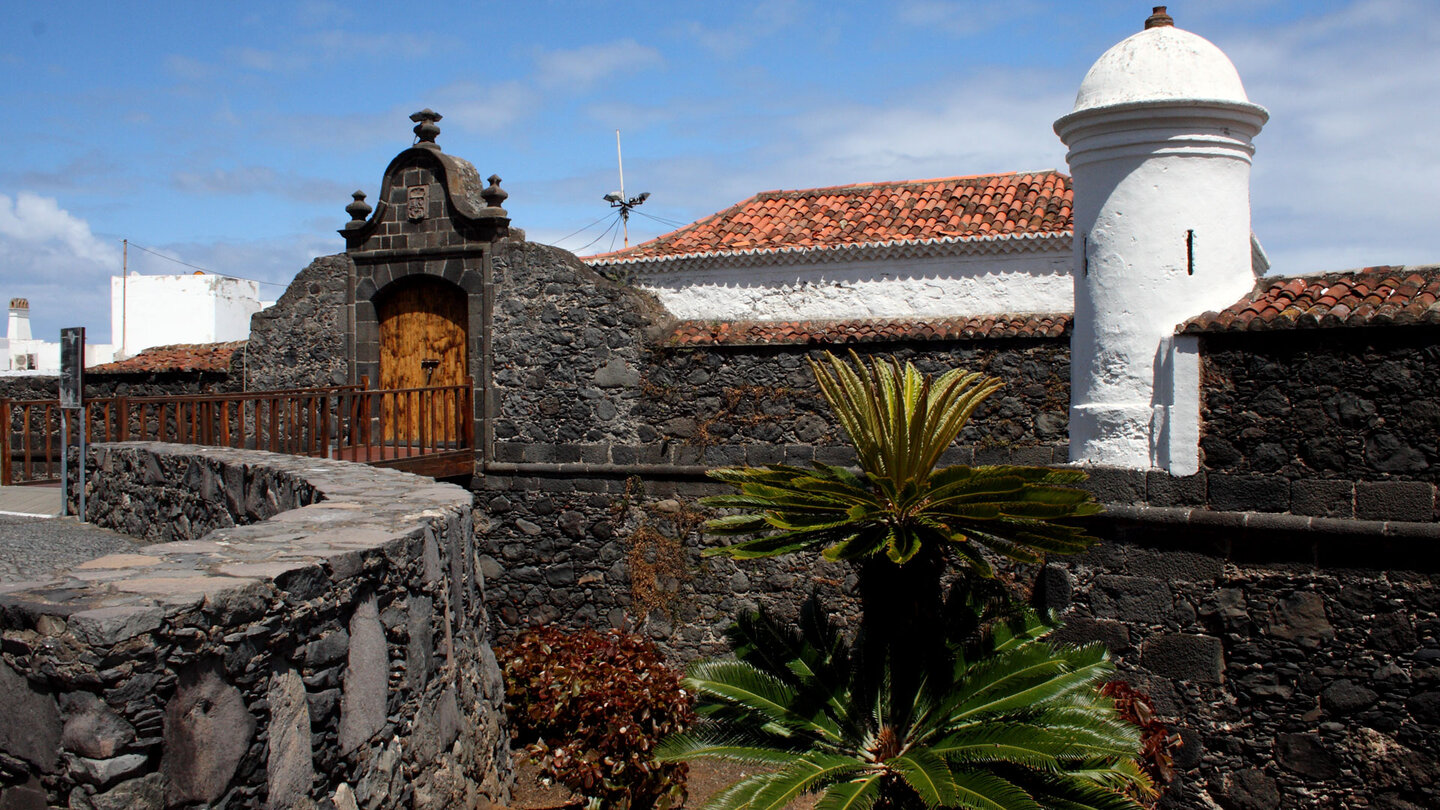
Right on the Avenida Marítima in Santa Cruz, a few minutes’ walk from Playa de Bajamar, stands the Real Castillo de Santa Catalina — a 17th-century defensive fortification built to protect against pirate raids. The fortress is now open as a museum, offering a glimpse into the island’s military history — a fitting final stop on a beach day in Santa Cruz.
The Carnival of Santa Cruz
The Carnival of Santa Cruz de La Palma is considered one of the most beautiful in the Canaries – after the famous carnival of Santa Cruz de Tenerife. In February, the streets of the old town transform into a stage for parades, costumes and music groups that celebrate for days. During this time, Playa de Bajamar is surrounded by the festivities – the beach isn’t the heart of the carnival, but you can hear the music and smell the food from every point along the coast. If you’re on La Palma in February, you’ll see Santa Cruz at its liveliest.
Accommodation in Santa Cruz de La Palma
Santa Cruz has La Palma’s largest hotel selection — from simple guesthouses to city hotels with harbour views. Those staying in Santa Cruz have everything within walking distance from Playa de Bajamar: old town, museum, harbour, restaurant. For a beach holiday in high season, Los Cancajos is recommended — five kilometres south, with more beach and fuller infrastructure. For a city trip with a beach bonus, Santa Cruz itself is the best base.
Those wondering whether Santa Cruz makes a good base on La Palma get a first answer at Playa de Bajamar: yes. Not because of the beach — which is modest. But because of the combination of city, harbour, history and sea, concentrated here in a density no other place on the island offers. Beaches exist all over La Palma. Santa Cruz exists only once.
Practical Tips
A visit to Playa de Bajamar needs little planning. Parking at the harbour of Santa Cruz, old town within walking distance, restaurants and cafés close by. Towel, sun cream, swimwear — nothing more needed. Those wanting more beach afterwards head to Los Cancajos. Those wanting more city stay in Santa Cruz.
Santa Cruz de La Palma is the island’s capital — and deserves a day of its own. Combining the old town, the museum, the harbour and the beach gives you one of the Canaries’ most complete cities. Playa de Bajamar is not the highlight, but the right conclusion: a quick dip after a long city walk, legs in the Atlantic, gaze on the harbour wall and the south of the city. That is Santa Cruz.
Playa de Bajamar is no longer a hidden gem – but it’s not an overcrowded tourist attraction either. It is the everyday beach of a lively capital, used equally by locals and visitors alike. If you know Santa Cruz, you know the Bajamar too. And once you know the Bajamar, you’ll want to come back.
Summary: Playa de Bajamar
Playa de Bajamar is Santa Cruz’s second city beach – practical, charming, and right next to one of the most beautiful old towns in the Canaries.
Not a beach for a full day, but the perfect end to a city walk.
If you’re visiting Santa Cruz, the beach comes as part of the package.
Frequently Asked Questions
What is the difference between Playa de Bajamar and Playa de Santa Cruz?
Are there lifeguards?
How do you get to Santa Cruz?
Is a full-day trip to Santa Cruz worth it?
This article is based on the on-the-ground knowledge of the Gequo editorial team – publishers of the Reisezeit hiking guides and operators of Sunhikes.com. Last updated: May 2026