Rain or Sunshine? – La Palma’s Dual Climate
You can be sitting in thick drizzle on La Palma and risk sunburn a ten-minute drive away. What sounds like a meteorological curiosity is everyday reality here. La Palma has a pronounced dual climate: a wet, lushly green eastern side and a sun-drenched, warm western side – separated by the island’s powerful volcanic ridge, which rises to 2,426 metres.
The North-East Trade Wind – Director of the Island’s Climate
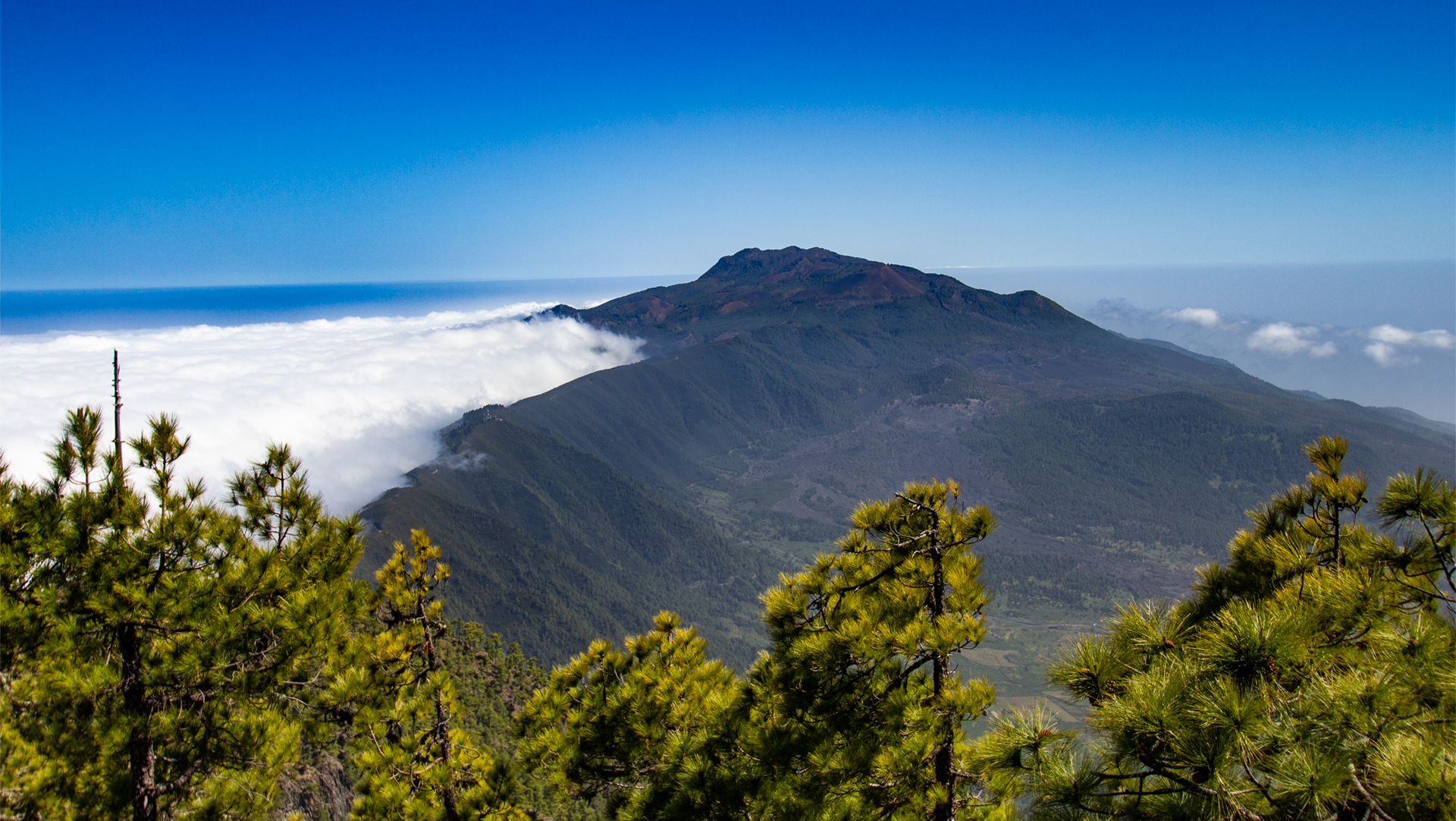
The north-east trade wind governs the weather on La Palma. This consistent wind carries moist air masses from the Atlantic onto the steep northern and eastern slopes of the island. There the clouds rise, cool, and release their rain. On the leeward western side the air descends again, warms up, and produces considerably drier and sunnier conditions – a classic föhn effect.
The result is striking: while the east coast around Santa Cruz de La Palma or Los Cancajos is often overcast or rainy, Tazacorte and Puerto Naos often enjoy days of brilliant sunshine even in winter. The west coast is one of the sunniest regions in the entire Atlantic.
The Inversion Layer – the Famous Sea of Clouds
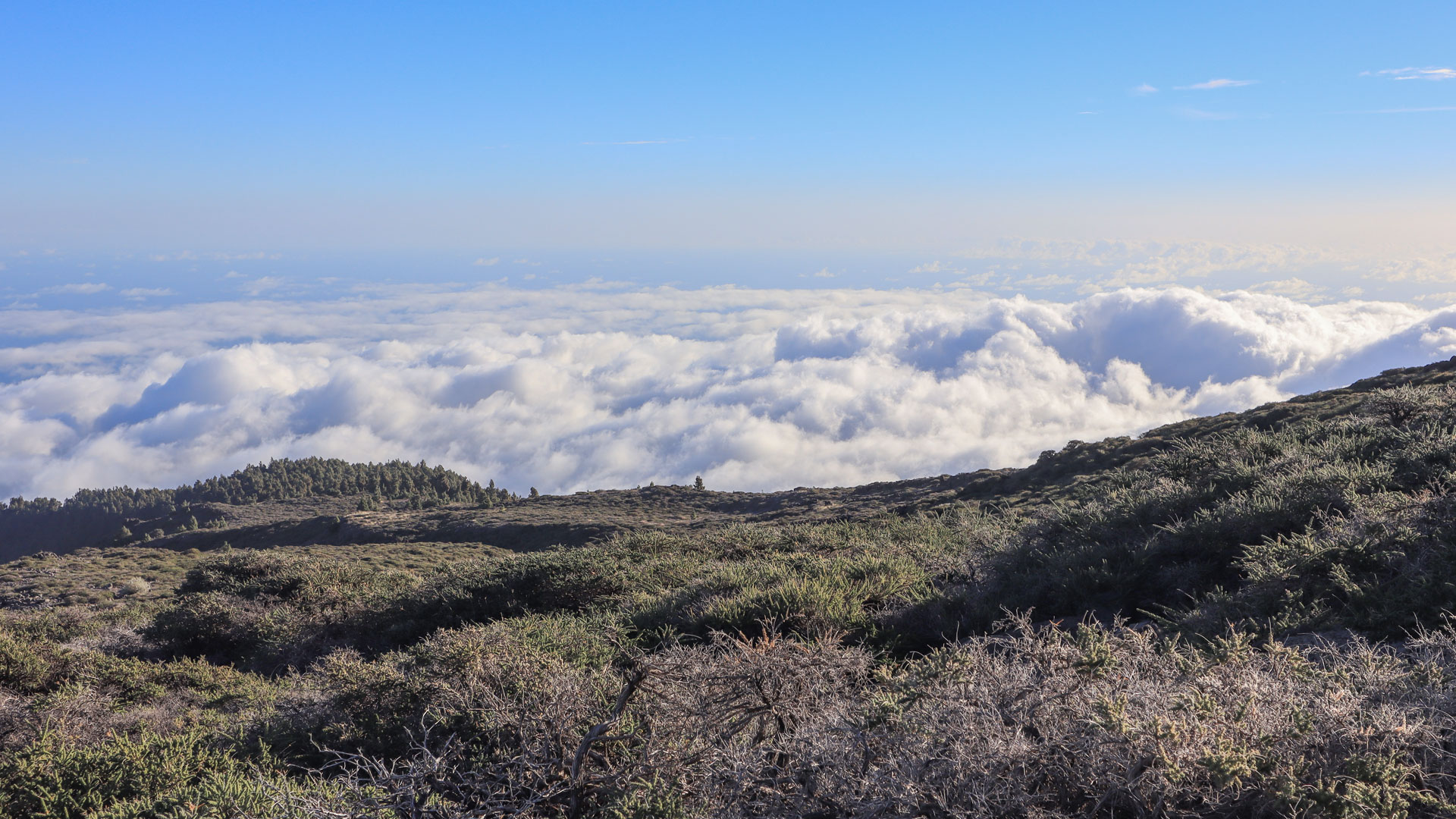
At an altitude of around 1,000 to 1,200 metres, a stable inversion layer often forms. It holds the moist trade wind clouds below, while above it the sky is usually brilliantly clear.
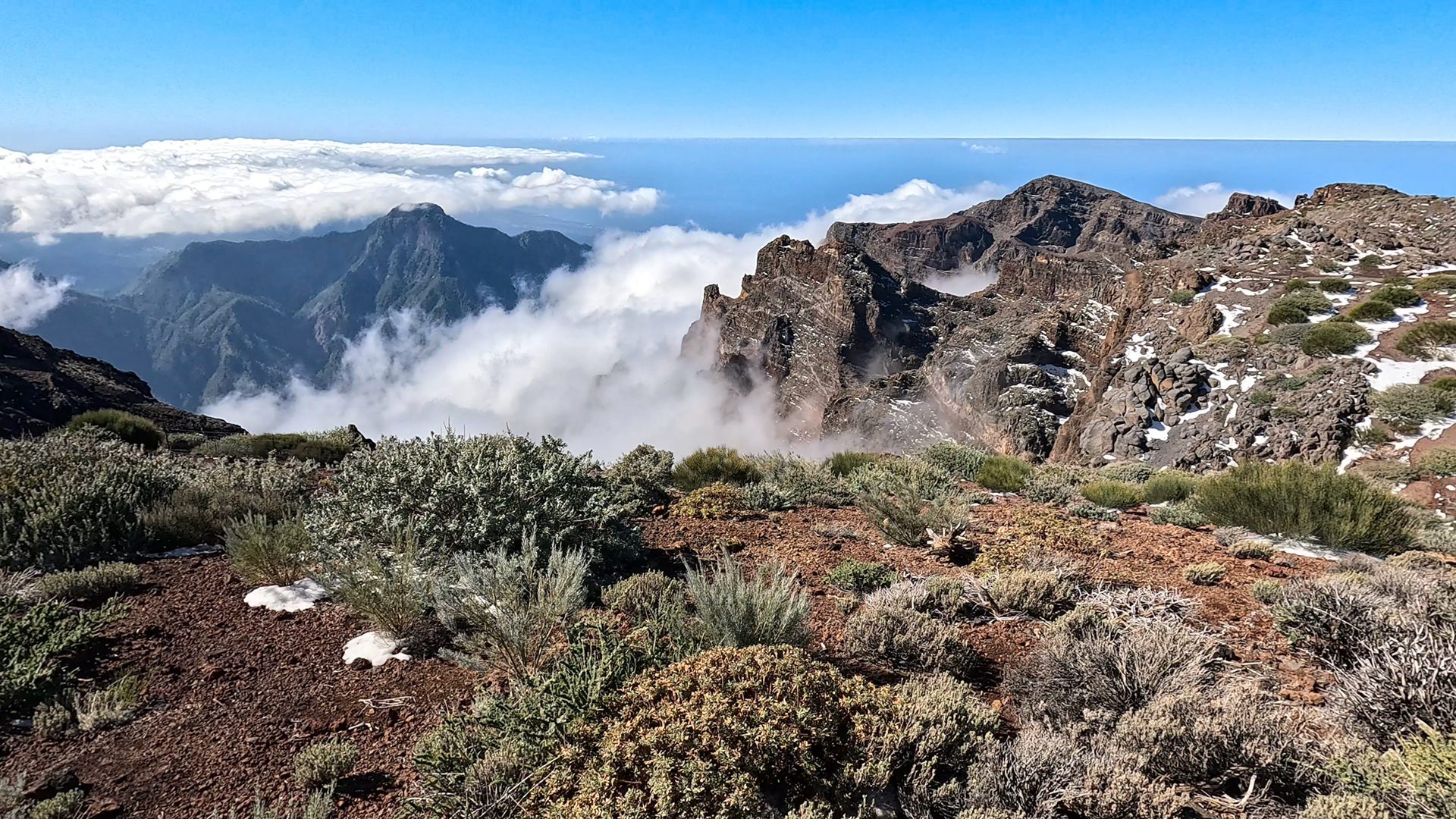
Driving up to the Roque de los Muchachos, you experience one of the Canary Islands’ most spectacular natural phenomena: a deep blue sky stretches above the peaks, while below it an apparently endless white sea of cloud spreads out.
The Tunnel Effect – Into a Different Climate Zone in Minutes
The Cumbre tunnel connects the east and west sides of the island directly. It is not unusual to enter the tunnel on the east side in light drizzle and emerge on the west side a few minutes later in brilliant sunshine.
Many locals plan their leisure time around this: if the weather looks grey and cool in the east, a short drive through the tunnel is often enough to spend the afternoon on a sunny beach on the west coast.
The Calima – When the Sahara Comes to Visit
Several times a year, La Palma is reached by a calima. A dry easterly airflow carries hot air and fine Saharan dust all the way to the Canary Islands. Within a few hours, temperatures can rise to 35 or even above 40 degrees. At the same time, visibility becomes milky and hazy, the air takes on a dry, sandy character, and the sun appears only as a pale disc. A calima typically lasts two to four days.
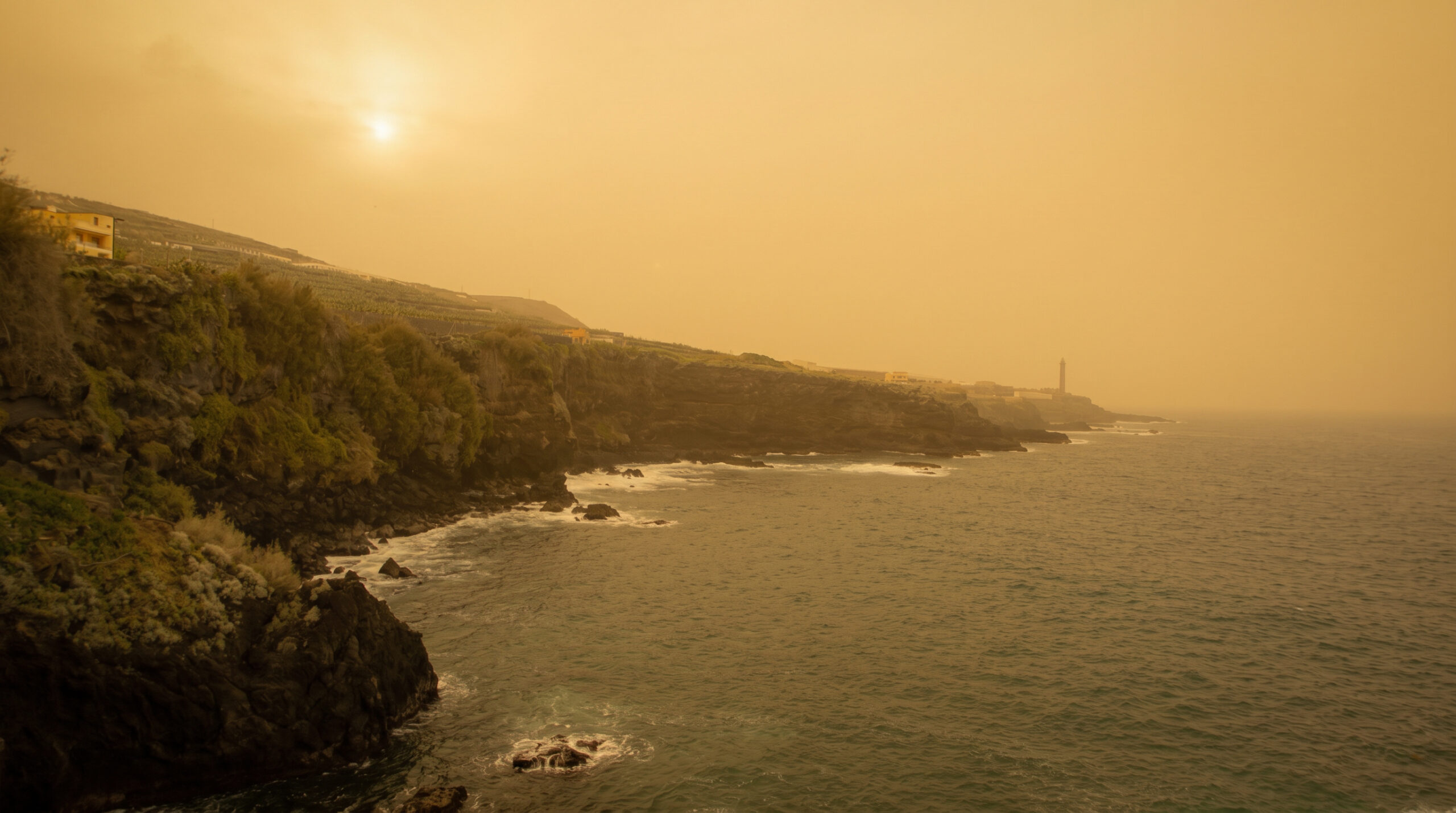
⚠️ Important Note:
During a calima, long walks and strenuous physical activity should be avoided as far as possible. The fine dust particles put strain on the airways, and the risk of wildfires rises significantly. On the positive side, calimas often produce spectacular sunsets with intensely orange light.
Climate Guide by Destination and Activity
| Destination / Region | Best Time | Climate Note |
|---|---|---|
| West coast (Tazacorte, Puerto Naos) | Year-round | Sunniest region on the island; ideal for a winter break. |
| East coast (Santa Cruz, Los Cancajos) | Spring to autumn | More changeable in winter; pleasantly mild in summer. |
| High mountains (Roque de los Muchachos) | April to October | Snow, ice, storms, and road closures possible in winter. |
| Laurel forests (north and north-east) | October to April | Wettest season; perfect conditions for lush green woodland. |
| Hiking generally | March–May and Sept–Nov | Pleasant temperatures and mostly stable weather conditions. |
Snow on La Palma – Not a Myth
Above around 2,200 metres, La Palma can reliably expect snow in winter – and this typically happens several times in the cold season. The summit of the Roque de los Muchachos is occasionally blanketed in January and February. In severe winter conditions, the mountain road LP-4 is promptly closed to traffic for safety reasons.
For visitors from northern Europe, this creates a completely surreal experience: in the morning you are sitting on a black sand beach in a T-shirt in mild temperatures, and by the afternoon you are looking at a deeply snow-covered mountain ridge in the middle of the Atlantic.
Frequently Asked Questions (FAQ)
Which side of La Palma is sunniest in winter?
Does it really snow on La Palma?
How large are the temperature differences between the coast and the mountains?
Why does La Palma have such varied climate zones?
When is the best time for hiking on La Palma?
This article is based on the on-the-ground knowledge of the Gequo editorial team – publishers of the Reisezeit hiking guides and operators of Sunhikes.com. Last updated: May 2026