Hire Car La Palma 2026 – The Complete Guide
La Palma is an island where a hire car is not a luxury but a necessity. The bus network is surprisingly good for a Canary Island – but if you want to be at the Roque de los Muchachos at dawn, or visit a mountain bar in the evening, you won’t get far without your own vehicle. Anyone who really wants to explore the island should book early and get it right.
Local Providers: Better Than the Big Chains
On La Palma, local hire car providers are almost always the better choice. They usually offer transparent all-in prices including comprehensive insurance without excess – something that with international chains often costs extra. The four best local providers:
| Acoron Rent a Car | 4.9/5 – Very quick processing (under 3 min), near-new vehicles, transparent pricing |
|---|---|
| Rent A Car Pemai | 4.8/5 – Over 35 years’ experience; offices in Santa Cruz, Los Cancajos and Puerto Naos |
| Cicar | 4.1–4.8/5 – Canarian market leader, stations at the airport and harbour, second driver included |
| PlusCar | Excellent ratings – handover directly in the car park, often from approx. €20/day incl. comprehensive insurance |
Prices 2026: What a Hire Car Costs
Prices fluctuate considerably by season. An overview for a small car (VW Polo or Fiat 500):
| Budget | PlusCar & Hertz deals: from €11–25/day possible |
|---|---|
| Mid-range | Cicar, TopCar & Thrifty: approx. €25–40/day incl. comprehensive insurance |
| International | Europcar, Avis & Sixt: often from €40–55/day, sometimes high deposits |
| High season | Christmas, Easter, summer holidays: considerably more expensive – book early |
What to Watch Out for When Booking
Comprehensive insurance without excess is the most important point. With local providers like Cicar or Acoron this is usually included in the base price – with international chains it often isn’t. Check what the contract says before signing.
Fuel policy: the best option is full-to-full – you return the car with the same fuel level as when you collected it. Pre-fill options always cost more than your actual consumption.
Important: Off-Road Prohibition
Virtually no hire car contract on La Palma permits driving on unsurfaced roads.
The off-road prohibition also applies to forest tracks, gravel roads and the route to Los Brecitos.
In the event of damage on such roads, insurance cover is void – even with comprehensive insurance.
For Los Brecitos and the Caldera, there are licensed 4×4 shared taxi services that operate legally and with experience.
Credit Card or Debit Card?
Large providers such as Avis, Hertz or Europcar almost always require a genuine credit card in the driver’s name to block the deposit. Without a credit card you either won’t get the car or will have to purchase an expensive supplementary insurance.
Local providers like Cicar or PlusCar often accept debit cards or even cash – because they include comprehensive insurance without excess and don’t need to block a large deposit. Those without a credit card should book with a local provider.
Comparing and Booking Hire Cars Online
For price comparison, portals such as DiscoverCars or Check24 work well. They compare offers from local and international car hire companies and display prices, rental conditions and insurance options clearly.
Especially in the high season, it is advisable to book the hire car as early as possible – ideally four to six weeks before the start of the trip. The vehicle selection is usually larger then and prices are often lower than for a last-minute booking.
Before booking, however, you should not only look at the price, but also check the rental conditions carefully. Particularly important are the fuel policy, insurance cover, possible additional charges, and the payment and deposit conditions.
Automatic or Manual?
On La Palma, manual cars are the norm and usually the most affordable option. Those with little experience changing gear on steep gradients or winding mountain roads will often find an automatic more relaxing. As automatic models are available in smaller numbers, early reservation is particularly advisable in the high season.
Vehicle Collection: Document Any Damage
Take a few minutes when collecting the vehicle and check it carefully. Photograph or film any existing scratches, dents and damage – ideally all around the car and inside too. Also check whether these are already noted in the handover report. This avoids any misunderstandings at return.
Practical: Pick-up and Return
Airport: Counters in the arrivals hall; online reservation strongly recommended
Santa Cruz: Often more choice and shorter queues than at the airport
Los Cancajos: Pemai has a station here – convenient for holiday guests
Puerto Naos: Pemai station on the west side – ideal for a west coast holiday
Return: Usually free between stations on the same island
Comprehensive Insurance Without Excess – What to Watch Out For
Comprehensive insurance sounds like complete protection – but it’s not quite that simple. With local providers like Cicar or Acoron, comprehensive insurance without excess generally means that in the event of a normal accident, no excess applies. Nevertheless – as with any insurance – certain exclusions apply. Damage caused by driving on unauthorised roads, gross negligence or breaches of the rental conditions is usually not covered.
With international car hire companies the differences can be even greater: depending on the tariff, the underside, mirrors, windows or vehicle interior may not be automatically covered. It is therefore worth reading the insurance conditions before signing and checking exactly which damage is actually covered.
Depending on the provider, certain types of damage and events may be excluded despite comprehensive insurance. These can include tyre and wheel damage, lost keys, misfuelling or towing costs. Some hire car companies offer extended cover for an additional charge. A glance at the rental conditions is always worthwhile.
Particularities on La Palma: What You Need to Know
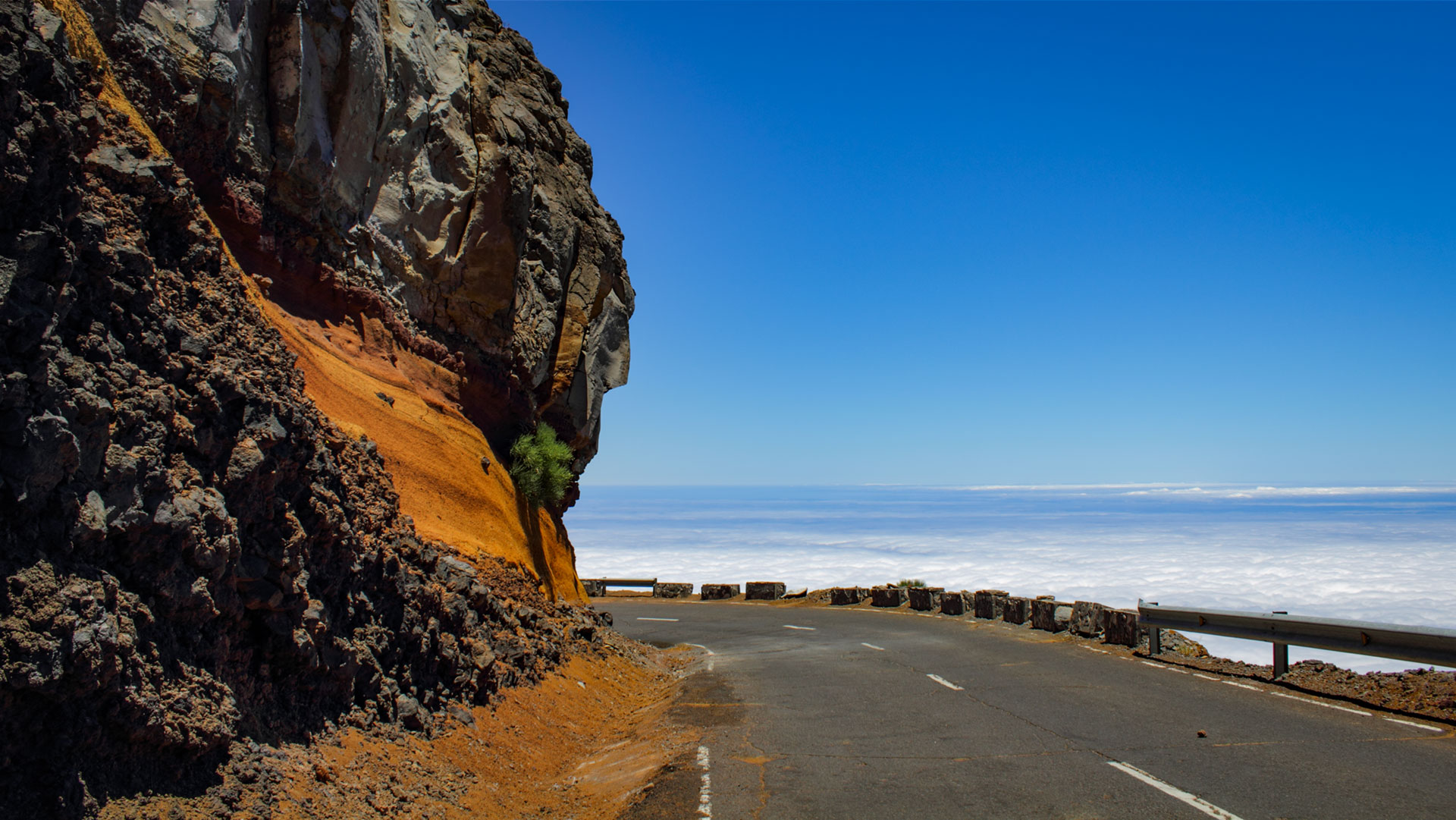
La Palma has one feature that surprises many visitors: the roads are narrow and winding. What is a simple manoeuvring problem on flat terrain can become a challenge on a mountain pass. Anyone who has never driven on narrow mountain roads should choose a small vehicle. A small car (category A or B) is perfectly sufficient for 95% of all roads on La Palma. SUVs and large vehicles only make sense if you are specifically planning to use a licensed 4×4 service for the Caldera.
Diesel, Petrol or Electric?
The petrol station network on La Palma is well developed for a small island. In Santa Cruz de La Palma, Los Llanos de Aridane, El Paso or Fuencaliente there are reliable filling stations. In the more remote regions of the north and northwest, such as Garafía or Barlovento, you should fill up in good time.
Electric cars are available on La Palma, but the public charging network is still relatively sparse. There is also the island’s particular topography to consider: many visitors make day trips through the mountains and ravines, covering only 150 to 250 kilometres in total, but gaining between 5,000 and 10,000 metres in elevation. This increases energy consumption considerably more than on the flatter Canary Islands such as Fuerteventura or Lanzarote.
Those who want to travel without worrying about charging will generally find a petrol or diesel vehicle more practical for now. Those opting for an electric car should plan their route and charging options in advance – especially for longer mountain excursions.
Conclusion
Summary: Renting a Car on La Palma
Local providers are almost always better than international chains: more transparent pricing, comprehensive insurance included, friendly service.
Book early, check the comprehensive cover, respect the off-road prohibition – then a hire car is the key to the whole island.
Frequently Asked Questions
Which hire car provider is best on La Palma?
Do I need a credit card for the hire car?
What is the off-road prohibition?
When should you book?
Can I take the hire car by ferry to a neighbouring island (e.g. Tenerife)?
What minimum age and driving experience is required?
What happens with one-way rentals (e.g. pick-up at the airport, return at the port)?
This article is based on the on-the-ground knowledge of the Gequo editorial team – publishers of the Reisezeit hiking guides and operators of Sunhikes.com. Last updated: May 2026