Observatorio del Roque de los Muchachos – Where the World Reads the Stars
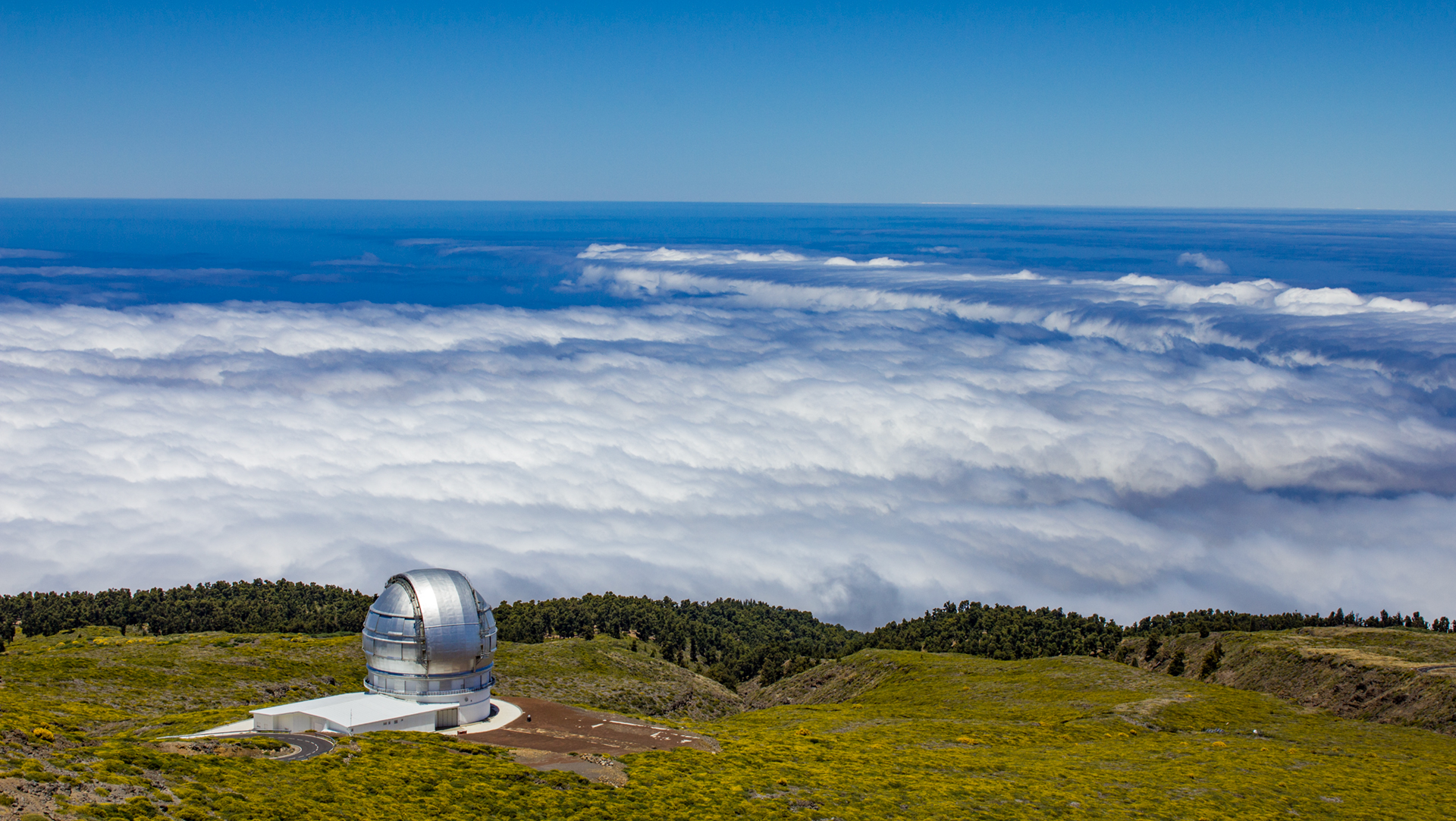
At 2,426 metres above sea level, above the clouds, they stand like silent sentinels: the domes of the Observatorio del Roque de los Muchachos (ORM), one of the world’s most important astrophysical research facilities. More than 20 telescopes from over 20 nations are installed here. The centrepiece is the Gran Telescopio Canarias (GTC) – with a primary mirror of 10.4 metres, the largest single-mirror telescope on Earth.
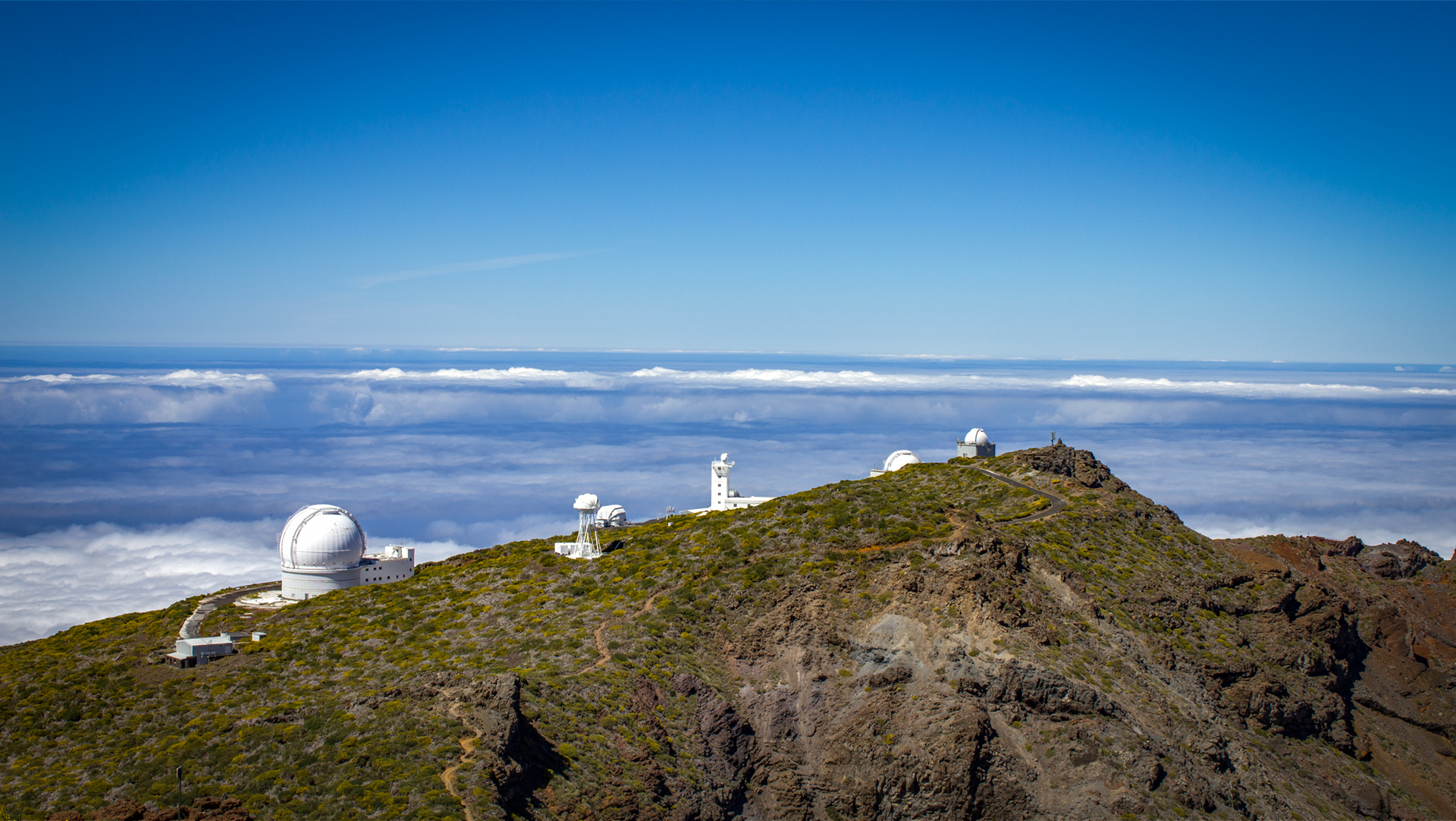
What sets the ORM apart from other observatories are its atmospheric conditions: over 300 clear nights per year, stable air above the trade wind inversion layer, and minimal light pollution thanks to La Palma’s Starlight protection law. This site was not chosen by chance – it was selected after years of location research by the Instituto de Astrofísica de Canarias.
The Gran Telescopio Canarias
At a construction cost of 130 million euros, the GTC is the most expensive and powerful telescope of its kind. Its 10.4-metre mirror consists of 36 hexagonal segments that together achieve a light-gathering capacity equivalent to around 4 million human pupils. Theoretically, this would make a burning candle visible at a distance of around 10,000 kilometres.
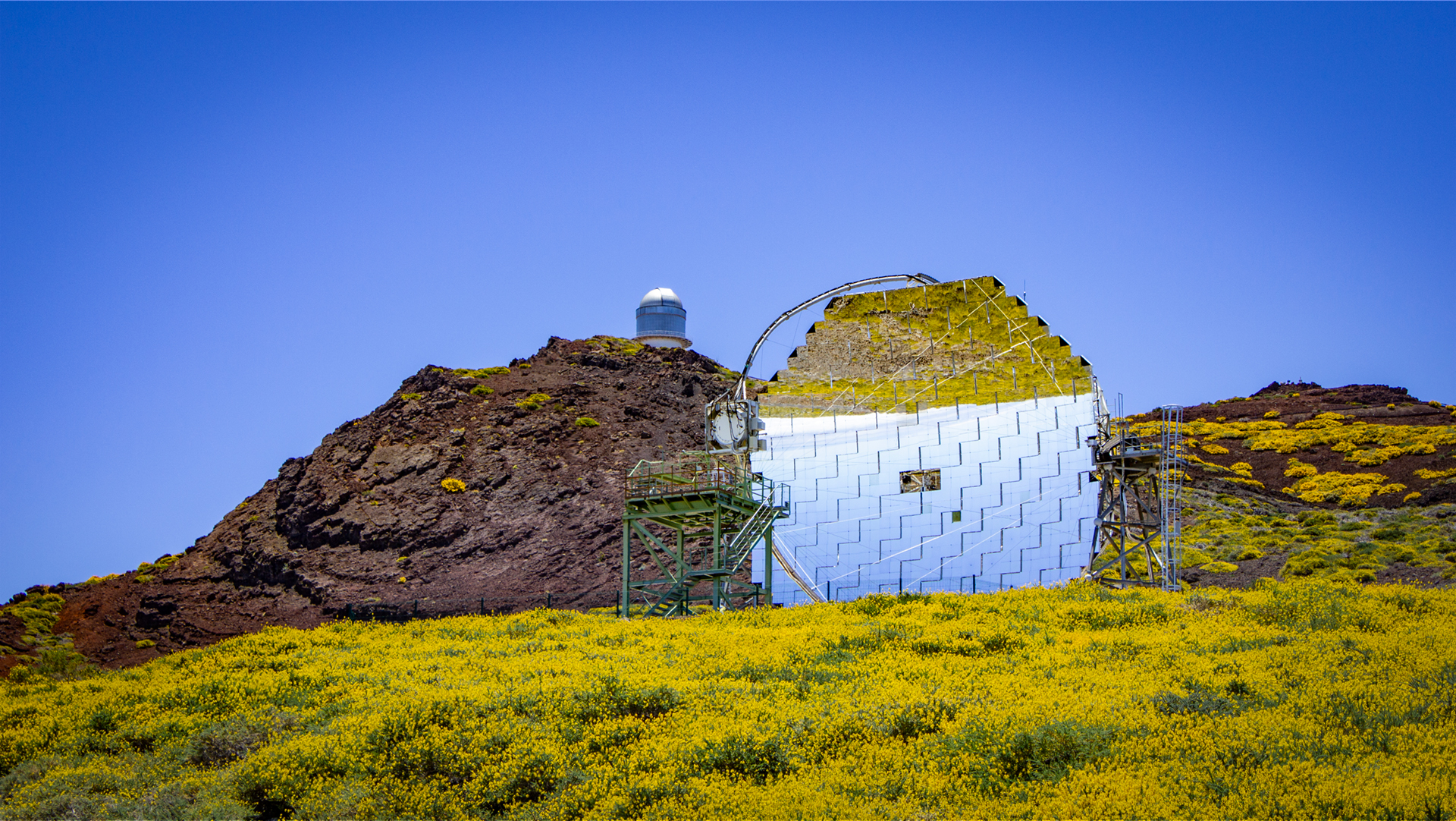
Alongside the GTC, the ORM houses other important instruments: the William Herschel Telescope (4.2 m), the MAGIC gamma-ray telescope (which detects high-energy gamma radiation from space), the Telescopio Nazionale Galileo and dozens more. Each of these instruments represents a different window into the universe.
Science at the Roque de los Muchachos
The Roque de los Muchachos Observatory houses more than optical telescopes. The MAGIC twin telescope (Major Atmospheric Gamma-ray Imaging Cherenkov) detects high-energy gamma radiation from cosmic sources such as supernovae, black holes, and gamma-ray bursts. These instruments open a window into the universe that optical telescopes fundamentally cannot see.
Guided Tours and Visits
The observatory is not a public park but an active research facility. Guided visits are possible during the day – the telescopes are used for research at night. The Instituto de Astrofísica de Canarias (IAC) offers official guided tours. Advance booking is mandatory and places are limited.
Specialist operators such as Ad Astra La Palma and LaPalmaStars.com also offer guided astronomy tours – both daytime visits to the observatory and night-time stargazing at designated locations. Special rules apply for night tours: no white light, no smartphones without a red light filter.
Practical Information for Your Visit
Observatorio del Roque de los Muchachos: LP-4, km 37, La Palma
Guided tours: bookable via IAC: iac.es
Tour cost: approx. 20–40 € depending on provider
Minimum age: 12 years (safety regulation in the domes)
Clothing: warm layers and a windbreaker are ESSENTIAL
Driving time from Los Llanos: approx. 1 hr 50 min (LP-3 via El Paso, then LP-4)
Driving time from Santa Cruz: approx. 1 hour 15 min (LP-1, then LP-4)
Winter closure: LP-4 closed in snow/ice – check in advance
Infobox: Experiencing the Observatory in Person
Where to book? AstroLaPalma via LaPalmaStars.com (English-language tours) or Ad Astra La Palma via AdAstraLaPalma.com (scientific guided tours)
When to book? 4–8 weeks in advance – no on-the-spot booking possible
Minimum age: from 6 / 12 years old
Meeting point: Visitor Centre carpark, 2,150 m altitude
Getting there: from the coast (Santa Cruz/Los Llanos) at least 1.5 hours
Clothing: warm jacket & sturdy shoes – cool even in summer, mandatory inside the air-conditioned domes
La Palma as a Starlight Reserve
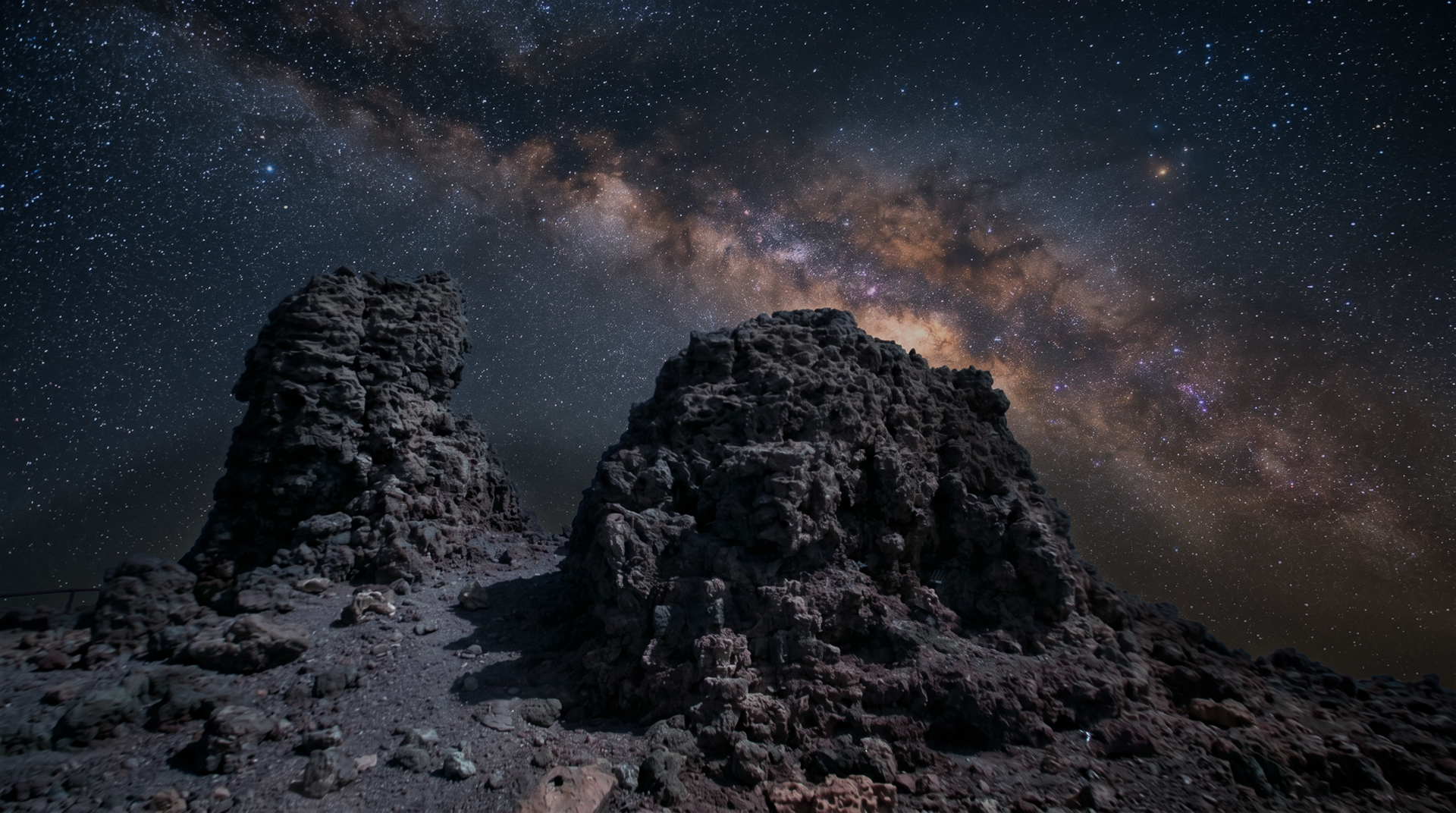
La Palma has been the world’s first official Starlight Reserve of UNESCO and the IAC since 2002. This means the entire island is subject to a strict lighting protection law. Street lamps, advertising lights and public buildings must comply with specific light spectra and emission directions. The result is one of the darkest night skies in Europe – visible even from the coast.
Important for Stargazers!
To protect the scientific work on the summit, the access barrier to the Roque de los Muchachos/telescope area is strictly closed every evening between 8 p.m. (in winter sometimes from 7 p.m.) and 7 a.m.. If you’re heading up to watch the sunset over the sea of clouds, plan to leave the summit area immediately afterwards. The mountain road LP-4 itself is not affected and remains passable.
La Palma’s Starlight Law
La Palma is the only region in the world with its own dedicated sky protection law. The Sky Protection Law (Ley del Cielo) of 1988 – the first of its kind worldwide – regulates the intensity, spectrum and emission direction of all artificial light sources on the island. Street lamps must shine downwards, with no light pollution upwards.
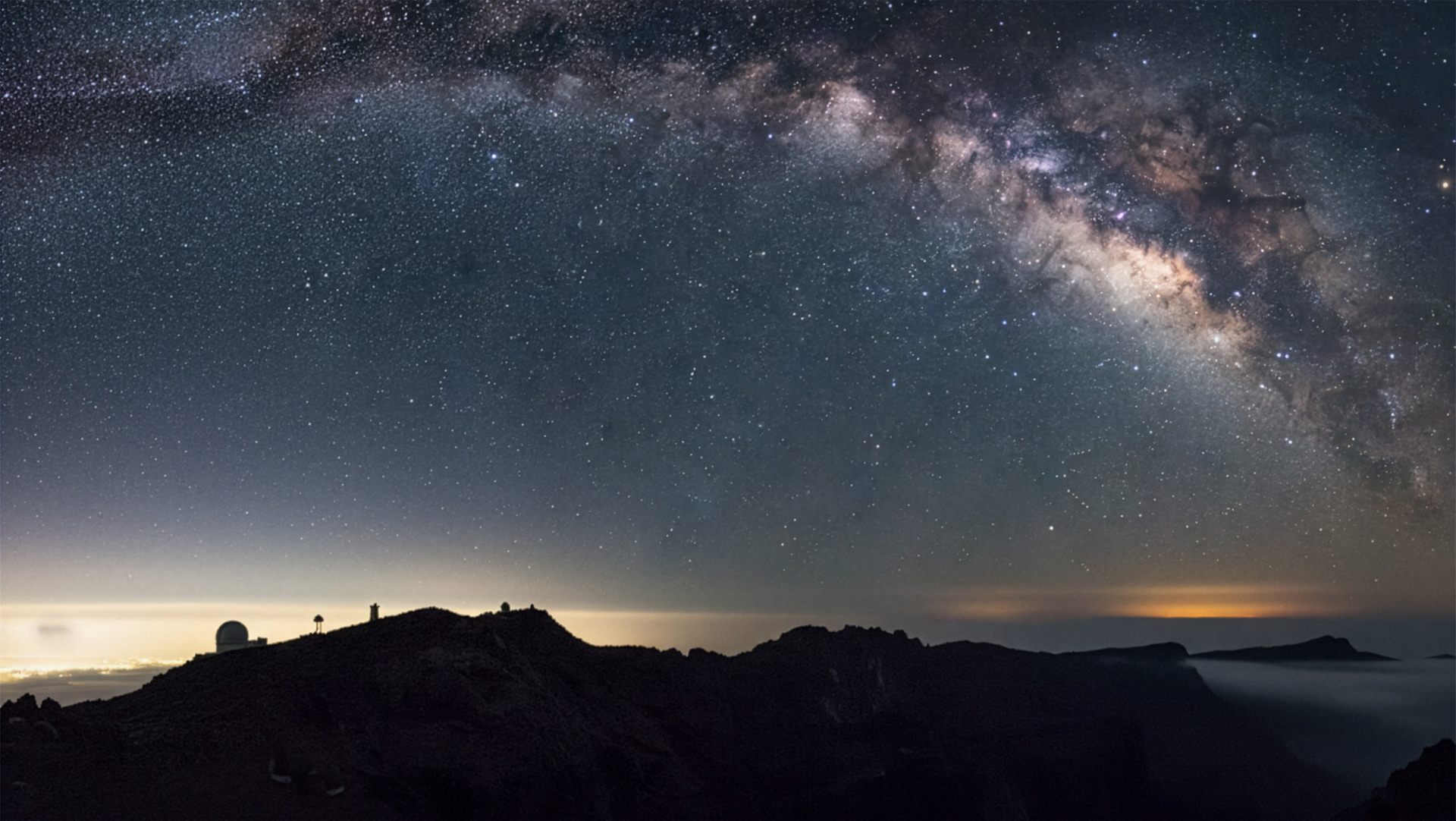
The result is visible: even from the coast, the Milky Way can be seen clearly on La Palma in good weather – something that is no longer possible from most inhabited places in Europe. For astronomy enthusiasts, this legislation is a unique feature that has made the island famous worldwide.
Stargazing for Amateur Astronomers
With good binoculars or a small telescope, the Milky Way on La Palma can be observed with a clarity that is barely possible on the European mainland. The best months: October to March, when the nights are long and the atmosphere is particularly stable.
As the observatory itself is closed at night, La Palma has set up more than 15 official Miradores Astronómicos – freely accessible viewpoints with information boards on constellations and planet trails, distributed across the whole island.
Particularly recommended: the Mirador del Llano del Jable near El Paso, at 1,340 metres amid pine forests and famous for its cloud-free view of the Milky Way thanks to its position above the trade wind cloud layer; the coastal Mirador de San Borondón near Tazacorte, ideal for those who want to escape the mountain cold and observe the constellations directly above the ocean; and the Mirador del Molino near Barlovento in the green north, where a historic windmill provides astrophotographers with a world-famous foreground subject.
If you don’t bring your own telescope, booking a guided stargazing session is your best option, for example with LaPalmaStars.com – the guides bring professional telescopes and explain astronomy in a clear, accessible way.
The Cherenkov Telescope Array (CTA), the next-generation gamma-ray observatory, is being partly built at the Roque de los Muchachos. Once complete, La Palma will become the world’s most important site for high-energy astrophysics. Choosing this location is a testament to the island’s extraordinary atmosphere.
Practical Tips for Your Visit
Visitor Centre: Gateway to the World of Stars
Before or after the drive to the summit, a stop at the visitor centre at the Roque de los Muchachos is well worth it. Interactive exhibits showcase everything you need to know about the extraordinary conditions on La Palma and the observatory’s significance for international astronomy.
Telescopes Only With Prior Booking
Many visitors expect to be able to spontaneously tour the famous telescopes such as the Gran Telescopio Canarias (GTC) from inside. This is not possible. The telescope installations are research instruments and can only be visited as part of organised guided tours with advance booking. Those who drive to the summit without a reservation can only view the impressive domes and facilities from the outside.
Don’t Underestimate the Altitude Climate
The Roque de los Muchachos sits at around 2,400 metres altitude – placing it in a completely different climate zone from the coast. Even in summer it can be windy and noticeably cooler here. In winter, snow, ice and temporary closures of the approach road LP-4 are possible. A warm, windproof jacket should therefore always be packed.
Stargazing at Night
The professional observatory site is not freely accessible at night. To prevent astronomical observations from being disrupted by artificial light, the telescope area remains closed to visitors. For holidaymakers there are instead designated astronomical viewpoints (Miradores Astronómicos) and guided stargazing tours at suitable locations.
Photography Tip: Telescopes and Sea of Clouds
The best photographs are often taken in the early morning or late afternoon, when the large telescope domes are bathed in warm light, while below the summit the famous sea of clouds (Mar de Nubes) often spreads out. Particularly striking is the combination of futuristic observatories, volcanic landscape and an endless view of the Atlantic.
Frequently Asked Questions (FAQ)
Can you just visit the Gran Telescopio Canarias?
How often is there an open day?
Is a night trip to the Roque worth it?
Can you drive to the observatory at night to stargaze?
What clothing do I need at the Roque de los Muchachos?
Why is La Palma such an important location for astronomy?
This article is based on the on-the-ground knowledge of the Gequo editorial team – publishers of the Reisezeit hiking guides and operators of Sunhikes.com. Last updated: May 2026