Castillo de La Virgen – Where La Palma Defended Itself Against the Pirates
In the 16th century, Santa Cruz de La Palma was one of the most important ports of the Spanish Empire. Wealth attracted pirates. Francis Drake, the Dutch privateer Pieter van der Does – the coast of La Palma was a coveted target. The answer was stone and cannon: the Castillo de La Virgen, built at the end of the Plaza Alameda on a rocky spur east of the city wall.
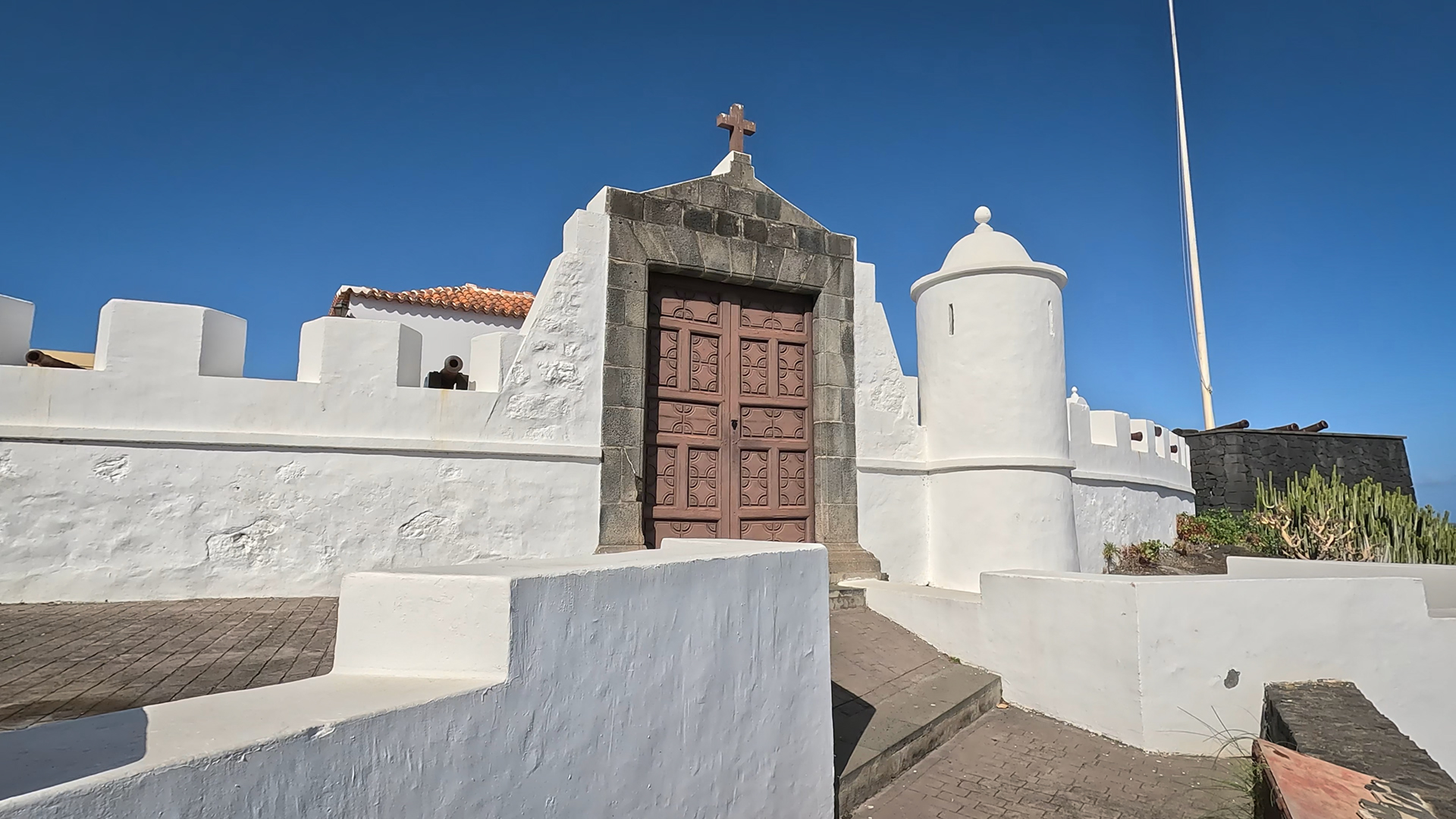
Today the Castillo is one of the most striking silhouettes of Santa Cruz de La Palma. The fortress is no longer fully intact – parts were dismantled or rebuilt over the centuries – but what remains tells a story of defence, faith and the importance of this small island capital to the Spanish empire.
A local insider tip for a quieter side of the city: While the Balcones and the waterfront promenade are often busy, the area around the Castillo de la Virgen and La Encarnación offers a noticeably quieter, more original Santa Cruz, with narrow lanes, old houses and wonderful views.
From the Castillo over the City
The climb up to the Castillo de La Virgen is worthwhile not only for the building itself, but also for the view: from the ramparts you can see the whole of the Avenida Marítima, the harbour, the Balcones Típicos and the sea. In the morning, when the first light hits the town, this perspective is particularly beautiful.
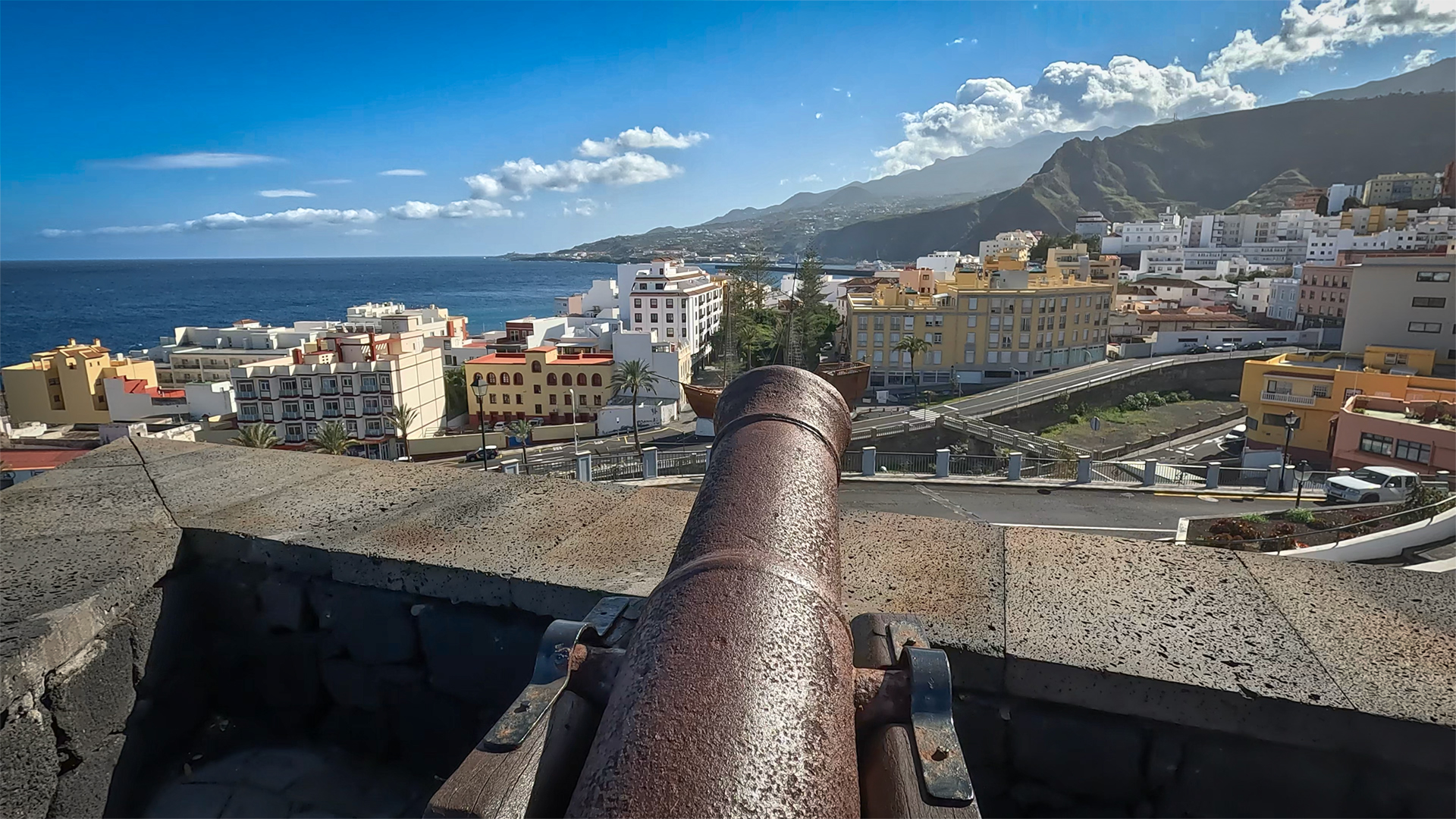
The path up leads through the historic quarter east of the main axis – narrow lanes, old mansions, steps. Those exploring the town on foot take this climb as part of an old-town walking loop: Plaza de España – Calle O’Daly – Castillo de La Virgen – Castillo de Santa Catalina.
History and Piracy
The two castles of Santa Cruz de La Palma share a common history of defence. The city was attacked several times by pirates and privateers in the 16th and 17th centuries. The most famous attack: in 1553, the French corsair François le Clerc (known as Pie de Palo – Peg Leg) plundered Santa Cruz and extorted a ransom. As a result, the defence system was significantly expanded.
| Castillo de La Virgen | Plaza Alameda, Santa Cruz de La Palma |
|---|---|
| Built | 16th century |
| Opening hours | variable – outer grounds freely accessible |
| Admission | free (exterior viewing) |
| Ascent | approx. 15 minutes from the Avenida Marítima |
| Combination | Castillo de Santa Catalina (10-minute walk) |
Practical Tips for Your Visit
The Climb Is Well Worth It
The Castillo de la Virgen sits above Santa Cruz de La Palma and rewards the climb with a beautiful view over the historic town and the Atlantic. Those who enjoy walking can reach the fortress via the picturesque lanes and steps of the old quarter of La Encarnación. The path is partly steep, but gives an authentic impression of the historic townscape.
Those who would rather avoid the climb can also reach the fortress by car or taxi via the access road from the upper part of the district.
Combine with the Barrio de La Encarnación
Right next to the Castillo lies the quiet Plaza de la Encarnación with the church of the same name. This historic square is one of the oldest parts of Santa Cruz de La Palma. According to tradition, the first Mass was celebrated here after the conquest of the island in 1493.
Best Time for Photographers
A visit is especially atmospheric in the late afternoon during the golden hour. The warm sunlight then bathes the colourful houses of the old town, the harbour and the surrounding coastal landscape in a particularly beautiful light. Cruise ships in the harbour can also be photographed impressively from up here.
Frequently Asked Questions (FAQ)
Can you visit the inside of the Castillo de La Virgen?
How do you combine both castles?
How do you get to the Castillo de la Virgen?
When is the Castillo de la Virgen especially interesting?
Can the visit be combined with other sights?
Were there actual pirate attacks on Santa Cruz?
Yes. The castles were built largely in response to real attacks. In 1553, French corsair François le Clerc (known as Pie de Palo) sacked the town; Sir Francis Drake followed in 1585. See the History section above for the full story.
Santa Cruz de La Palma as a UNESCO Candidate
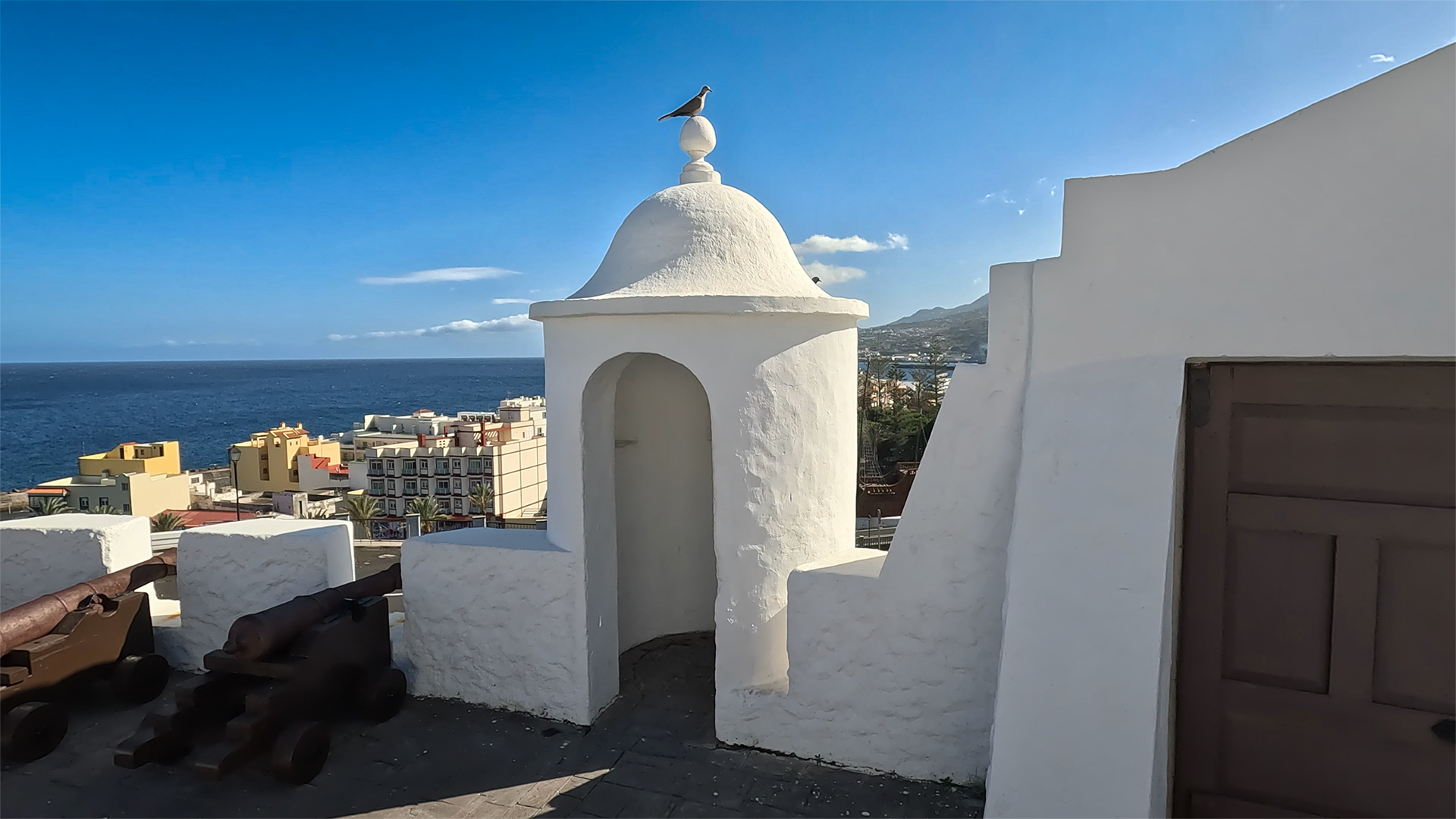
The historic old town of Santa Cruz de La Palma is on Spain’s tentative list for UNESCO World Heritage status. The combination of Renaissance architecture, colonial trading houses, Gothic church portals and the unique Balcones Típicos forms a historic ensemble unmatched in the Spanish-speaking world. A visit to the Castillo de La Virgen is part of this story.
This article is based on the on-the-ground knowledge of the Gequo editorial team – publishers of the Reisezeit hiking guides and operators of Sunhikes.com. Last updated: May 2026