Roque de los Muchachos – Above the Clouds, at the Edge of the Caldera
You drive up the serpentines of the LP-4 and just as you begin to wonder if the road will ever end, it delivers you to a world above the clouds. The pine forest recedes, the clouds suddenly lie beneath you, and then you are at 2,426 metres – the highest point on La Palma, at the Roque de los Muchachos, where the air is so clear you feel you could reach out and touch Tenerife.
The Highest Peak on the Island
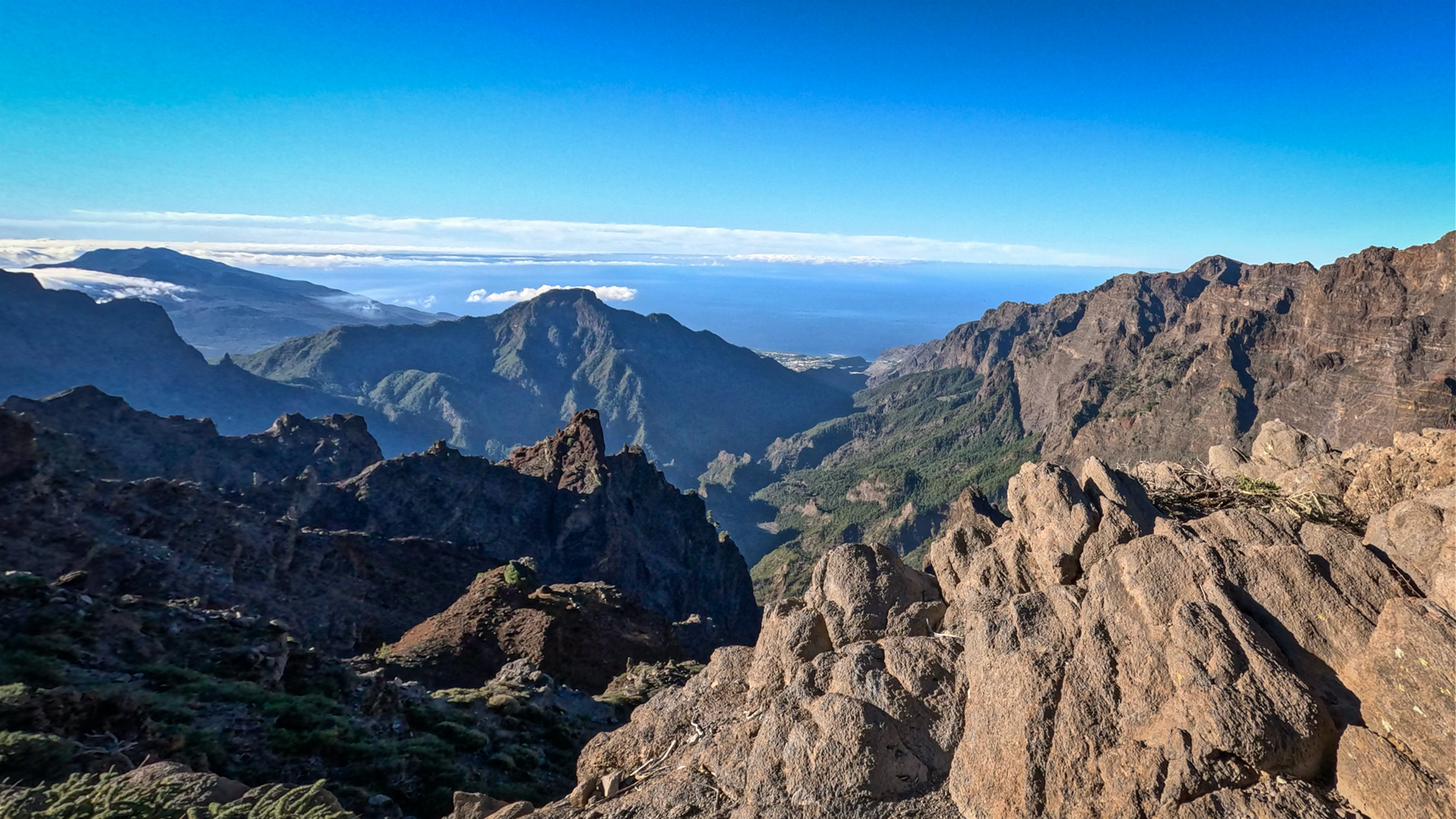
The Roque de los Muchachos is not just the highest point on La Palma – it is also the place from which you best understand the island. On one side the Caldera de Taburiente drops almost sheer into the depths, on the other the sea stretches to the horizon, flanked by the silhouettes of the neighbouring islands. In good visibility you can see Tenerife, La Gomera, El Hierro – and sometimes, in exceptional clarity, even Gran Canaria.
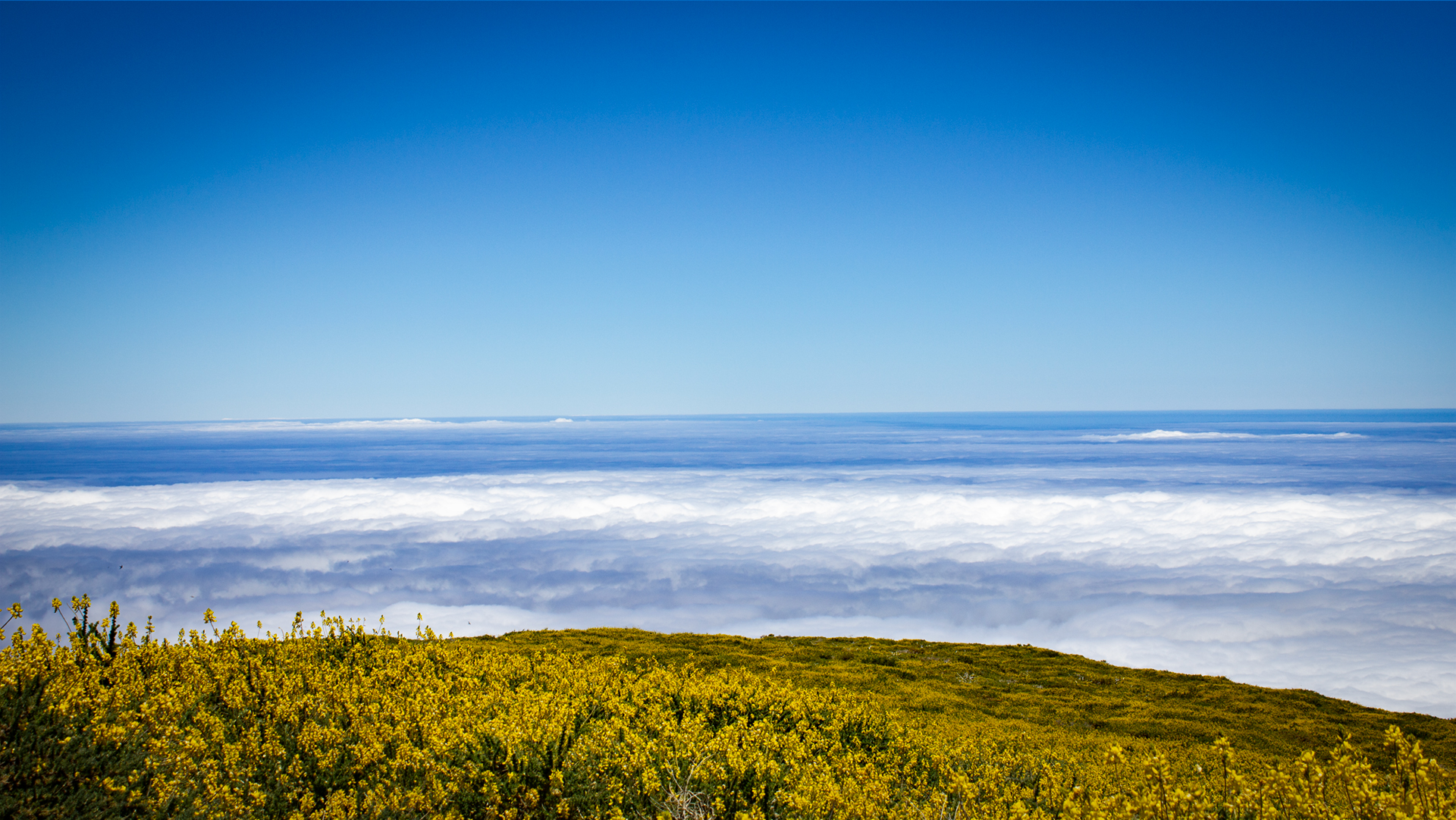
The Sea of Clouds at Your Feet
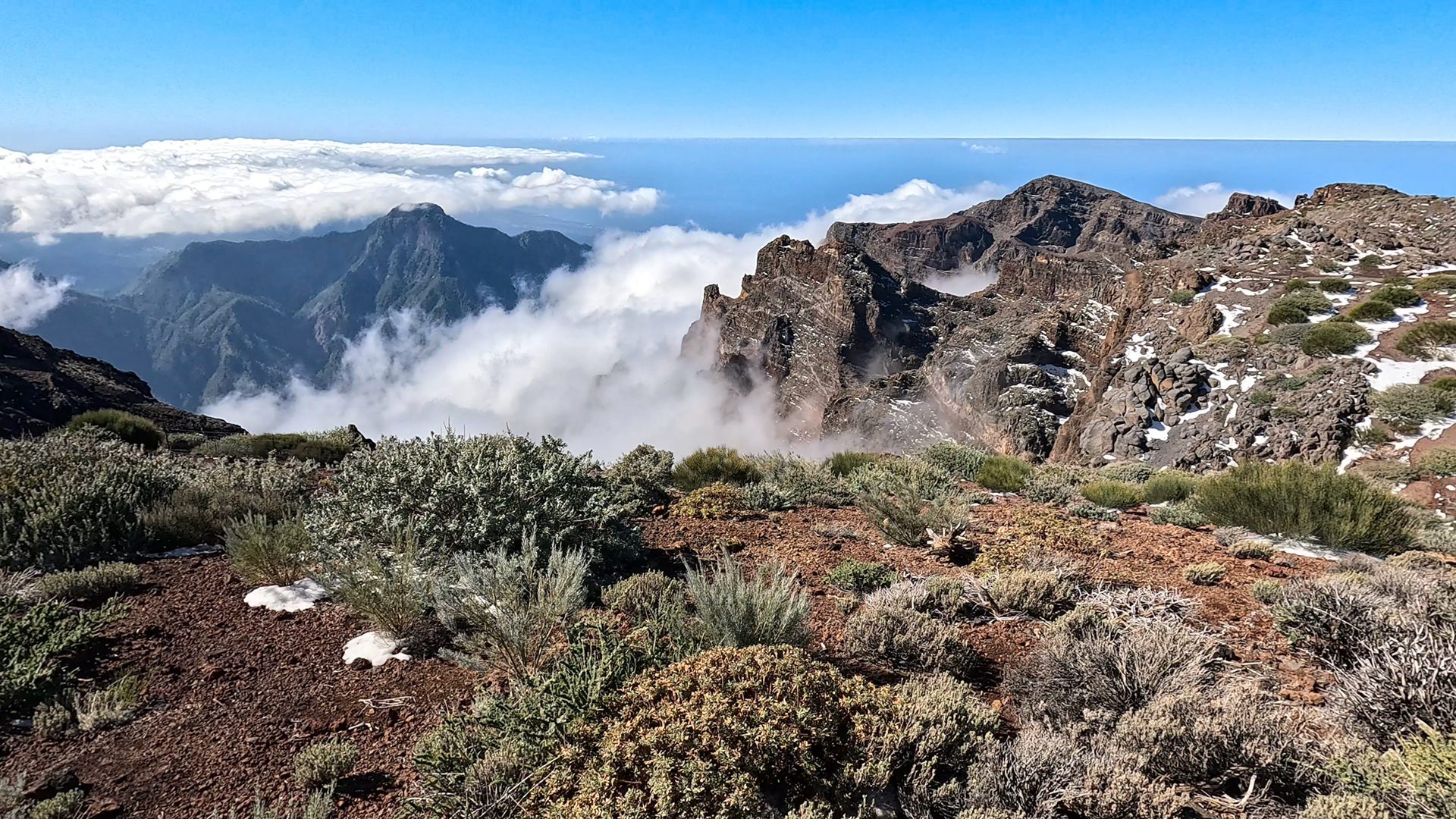
The trade-wind clouds that surround the island pile up against the slopes – and those who reach the summit early enough stand above them. The sea of clouds is one of the most photogenic spectacles La Palma has to offer: a white sea beneath a blue sky, from which the peaks of neighbouring islands rise like islands from another world. The drive from Los Llanos takes around one hour and 45 minutes – starting early is worth it.
The Observatorio del Roque de los Muchachos
The summit plateau houses some of the world’s most important telescopes, operated by a consortium of over 20 nations. The Gran Telescopio Canarias (GTC), with a mirror diameter of 10.4 metres, is the largest single-mirror telescope on Earth. Alongside it stand the William Herschel Telescope, the MAGIC gamma-ray telescope and dozens of other instruments – a concentration of astronomical research unrivalled anywhere in the world.
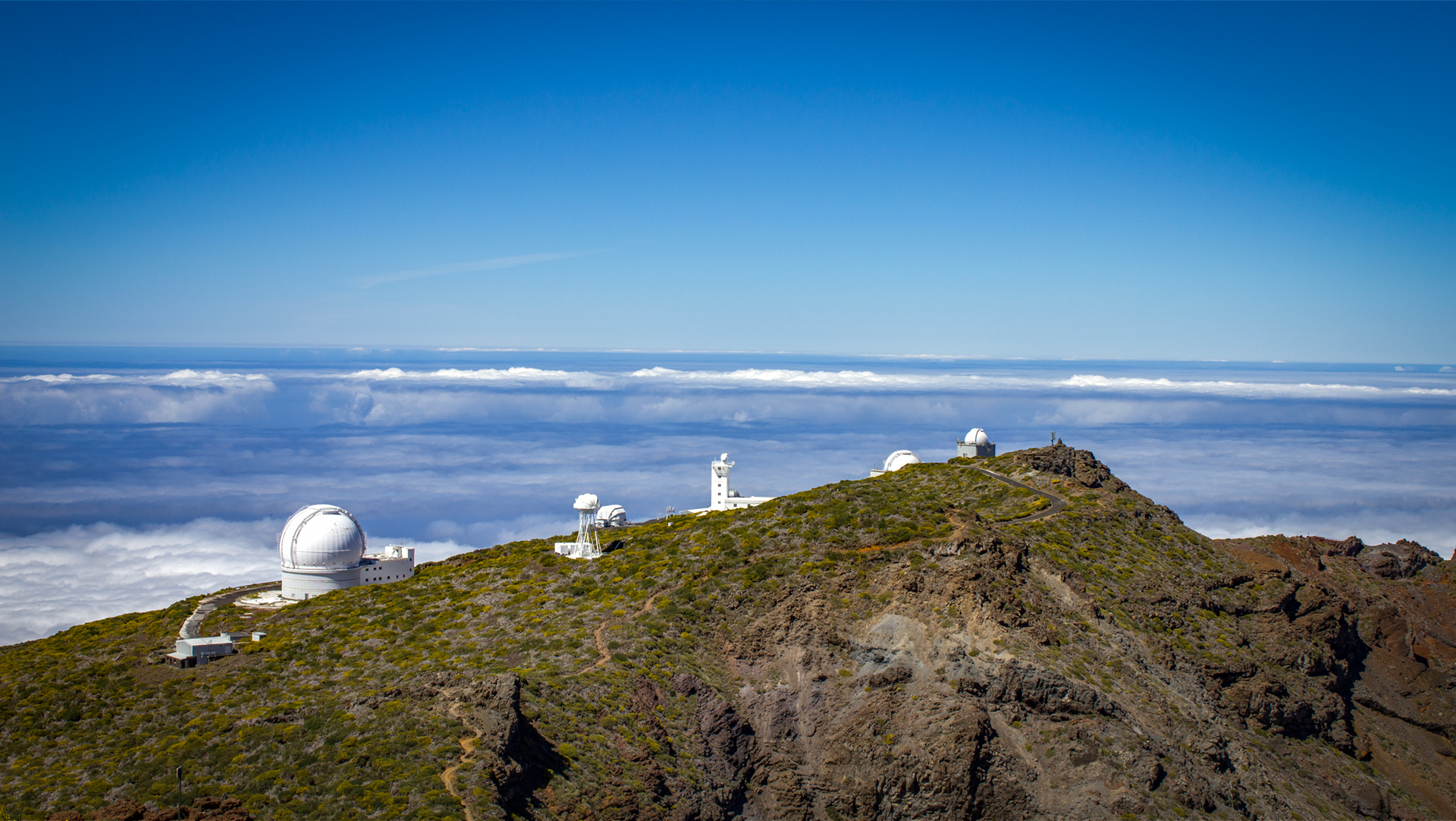
The decisive factor for the site is the extraordinary atmospheric conditions: more than 300 clear nights a year, minimal humidity and the position above the trade-wind inversion layer make La Palma’s summit one of the best observing sites in the northern hemisphere.
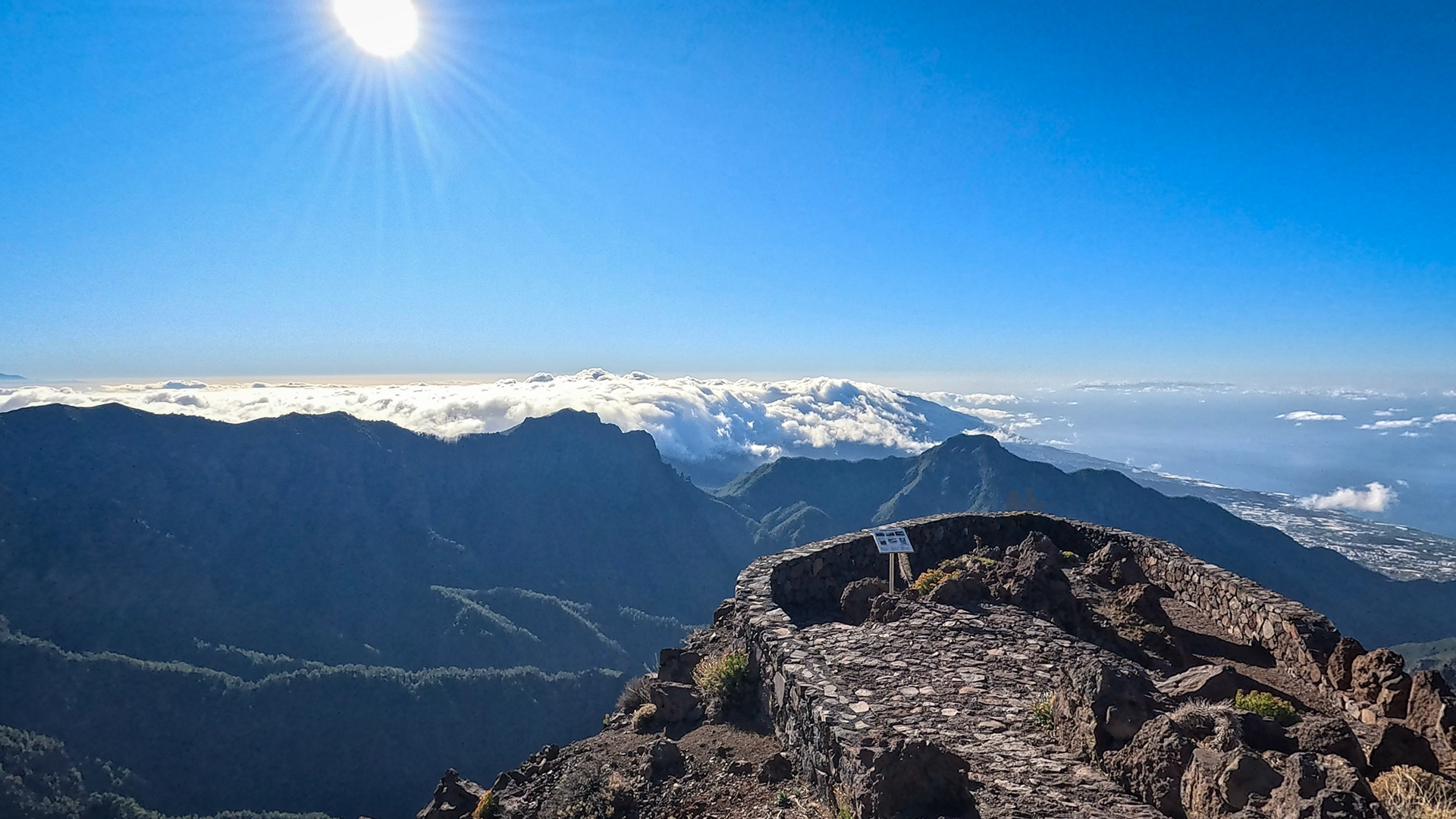
The Espigón del Roque – Viewing Platform at the Precipice
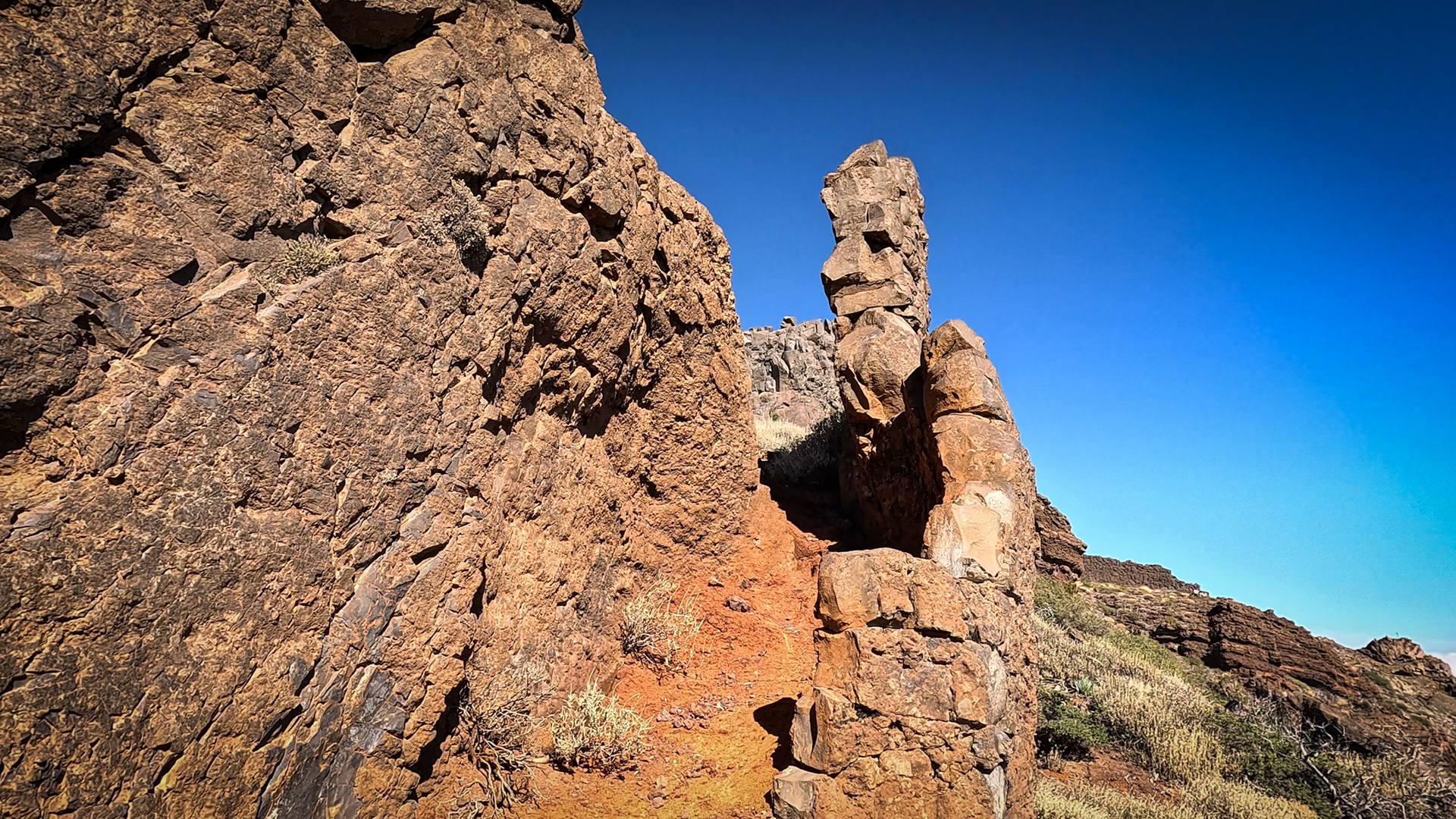
A short footpath leads directly from the summit area to the Espigón del Roque, a narrow rocky promontory with a small viewing platform. From here a 360-degree panorama opens up that is unique on La Palma: on one side the deep drop into the Caldera de Taburiente with its rising bands of cloud, on the other the sea of clouds above the Atlantic.
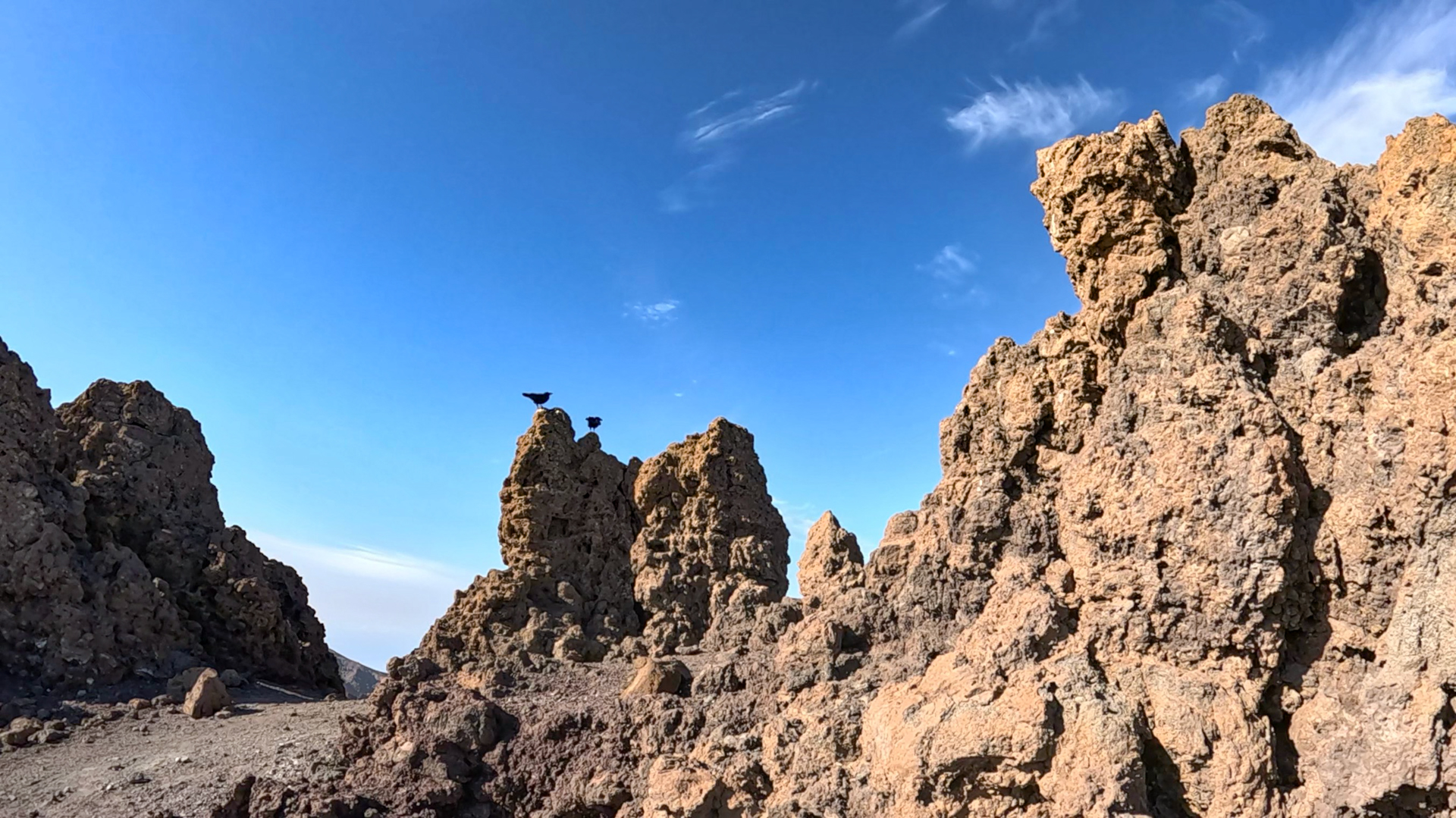
Ravens and red-billed choughs are faithful companions on the path to the Espigón. The ravens approach visitors readily in hopes of something edible. They are as much a part of the summit fauna as the telescopes are of the landscape.
Hiking Routes from the Summit
The Roque de los Muchachos is not just a destination in itself, but also the starting and turning point of several hiking routes. The PR-LP 12 leads from the summit all the way to Tijarafe and on its way through pine forests, high-plateau vegetation and rugged ravines offers a unique cross-section of La Palma’s landscape.
The GR-131 El Bastón connects the Roque de los Muchachos via the entire length of the island with the harbour of Puerto de Tazacorte. This multi-day long-distance route is one of the great mountain adventures that La Palma has to offer.
Practical Information for the Summit Visit
Altitude: 2,426 m a.s.l.
Reservation: not required
Road: Mountain road LP-4
Drive time from Los Llanos: approx. 1 h 50 min (LP-3 via El Paso, then LP-4)
Drive time from Santa Cruz: approx. 1 h 15 min (LP-1, then LP-4)
Temperature: 5–15°C year-round, almost always windy
Visitor Centre Roque de los Muchachos: LP-4, km 37 – astronomy exhibitions, at just under 2,150 m altitude
Weather and cold warning: Warm clothing, wind protection and sturdy footwear are essential even when it’s 30°C on the coast. In winter the access road LP-4 is occasionally closed due to snow or ice – check conditions in advance.
Stargazing at the Roque de los Muchachos
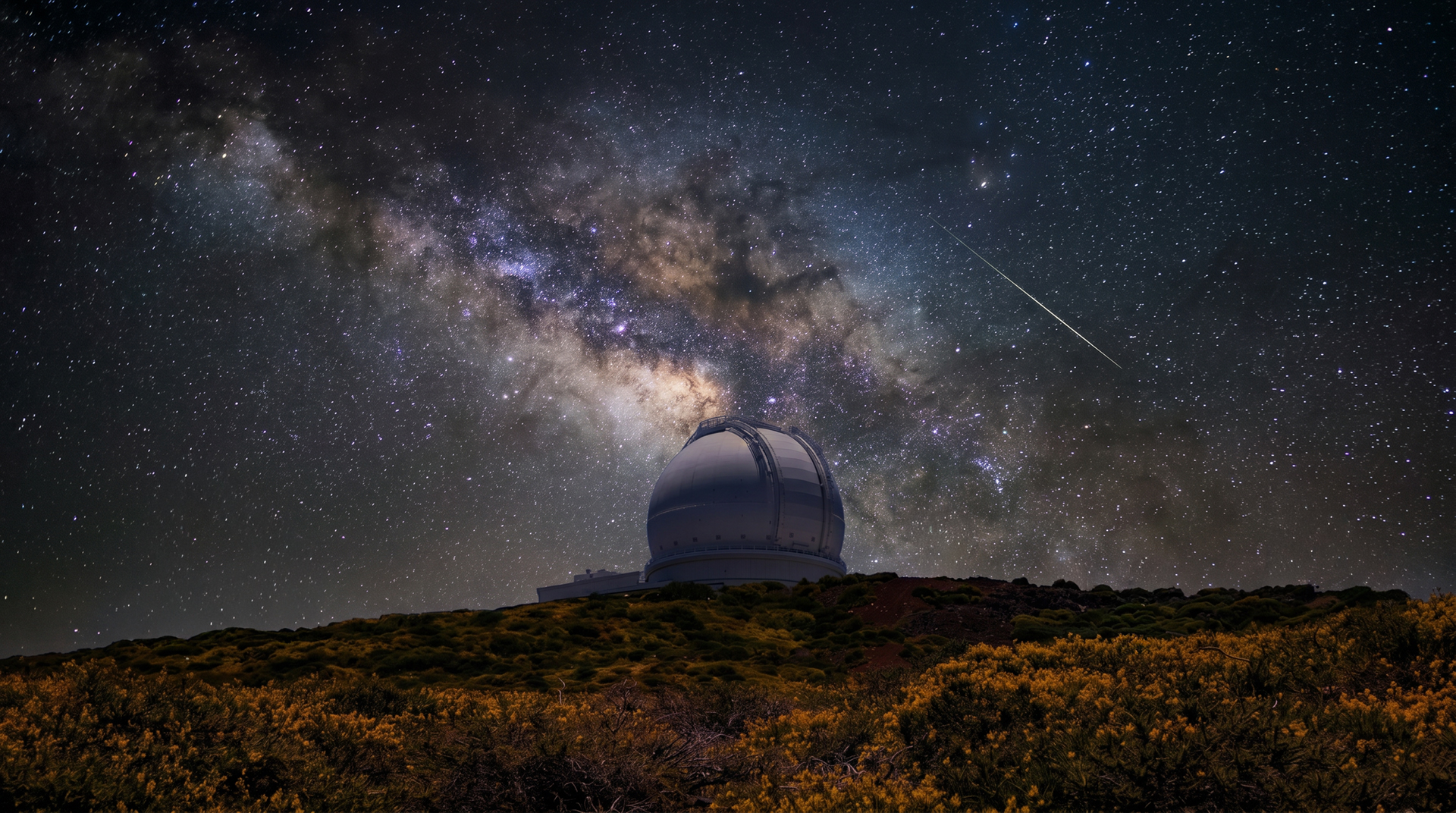
La Palma has been an official UNESCO Starlight Reserve since 2002 – the first place in the world with this status. The Roque de los Muchachos is the heart of this reserve: more than 300 clear nights a year, absolute darkness and its position above the sea of clouds make it one of the best stargazing sites in the northern hemisphere.
Guided Tours and Visits
The Centro de Visitantes del Roque de los Muchachos at just under 2,150 metres is accessible via the LP-4 and offers an interactive museum that gives an insight into astronomical research without prior booking. Entrance 15 euros.
Guided tours of the actual observatory take place on specific dates – advance booking required. The stargazing tours are among the most impressive nocturnal experiences La Palma has to offer.
Infobox: Experiencing the Observatory in Person
Where to book? AstroLaPalma via LaPalmaStars.com (German-language tours) or Ad Astra La Palma via AdAstraLaPalma.com (scientific guided tours)
When to book? 4–8 weeks in advance – on-site booking not possible
Minimum age: from 6 or 12 years
Meeting point: Centro de Visitantes car park, 2,100 m altitude
Getting there: from the coast (Santa Cruz/Los Llanos) at least 1.5 hrs drive
Clothing: warm jacket & sturdy shoes – cool even in summer
Important for Stargazers!
To protect the scientific work at the summit, the barrier to the Roque de los Muchachos is kept strictly closed every evening between 8 p.m. (in winter sometimes from 7 p.m.) and 7 a.m. Those wishing to watch the sunset above the sea of clouds should therefore leave the plateau directly afterwards. The mountain pass road LP-4 itself remains unaffected and continues to be passable.
What Grows Around the Summit
At 2,400 metres little grows – but what does grow is remarkable. The tajinaste (Echium wildpretii) is one of La Palma’s most iconic plants and blooms only at 1,800–2,400 metres altitude: an up to 3-metre-tall, bright-pink candle-like flower that in May and June seems to set the high-mountain landscape ablaze. Those who visit during the flowering season – late April to early June – witness a botanical spectacle unique in Europe.
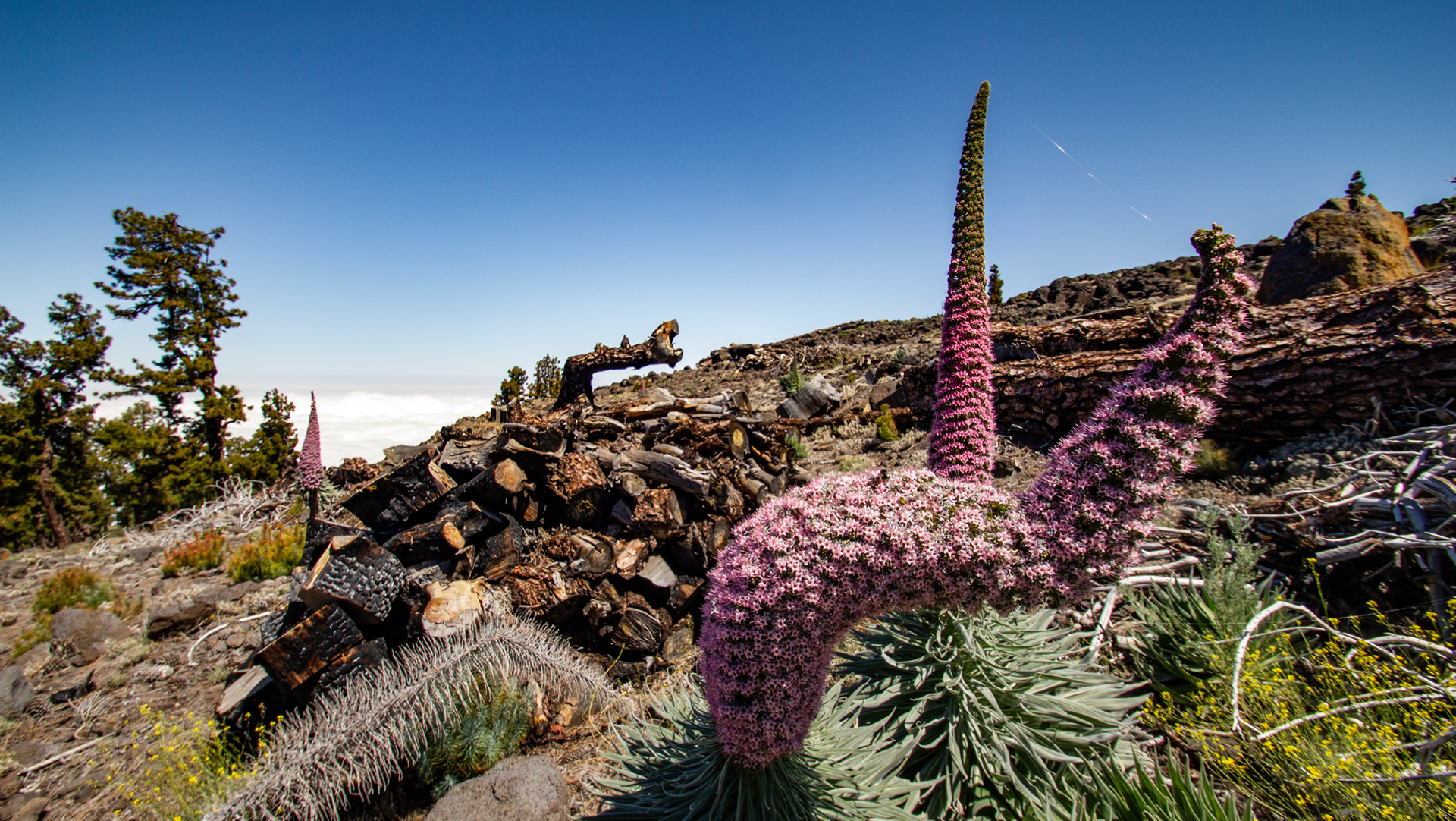
Alongside the tajinaste, the slopes below the summit also host the blue viper’s bugloss (Echium webbii), which is endemic to La Palma. The Canary Island pine grows up to about 1,900 metres; above that begins the alpine high-mountain zone with grass heathland and rock plants adapted to the summit climate.
Tip: For tajinaste photos: late April to mid-June, as early in the morning as possible – the pink flower spikes glow in the first sunlight before the wind picks up and clouds roll in.
The Summit Through the Year
The Roque de los Muchachos is worth visiting all year round – but the seasons change the experience fundamentally. In spring (April to June) the tajinaste blooms at altitude: an up to three-metre-tall, bright-pink candle-like flower that transforms the slopes below the summit into a colour spectacle unique in Europe. The tajinaste flowering season is for many visitors the main reason to visit La Palma in May or June.
In autumn and winter the nights are longest – ideal for stargazing. The atmosphere is particularly stable at this time, the visibility clear, and the sea of clouds lies low and even. For astronomy enthusiasts, October to March is the best season at the summit.
Holiday Accommodation in the Summit Area
The right accommodation makes half the planning for tours around the Roque de los Muchachos. Via the island-wide specialist portal Clariso.eu you will find an excellent selection of handpicked fincas – depending on your planned route, it is worth looking carefully at location.
Those planning long-distance routes such as the ridge traverse (GR-131, stage 1) are well placed on the west coast around Tijarafe or in the north of the island: from there the mountain road climbs quickly to the roof of La Palma. Those who want to head directly into the heart of the Caldera de Taburiente National Park or start the famous volcano route from the Refugio del Pilar forest and campsite will find the central municipality of El Paso the ideal base.
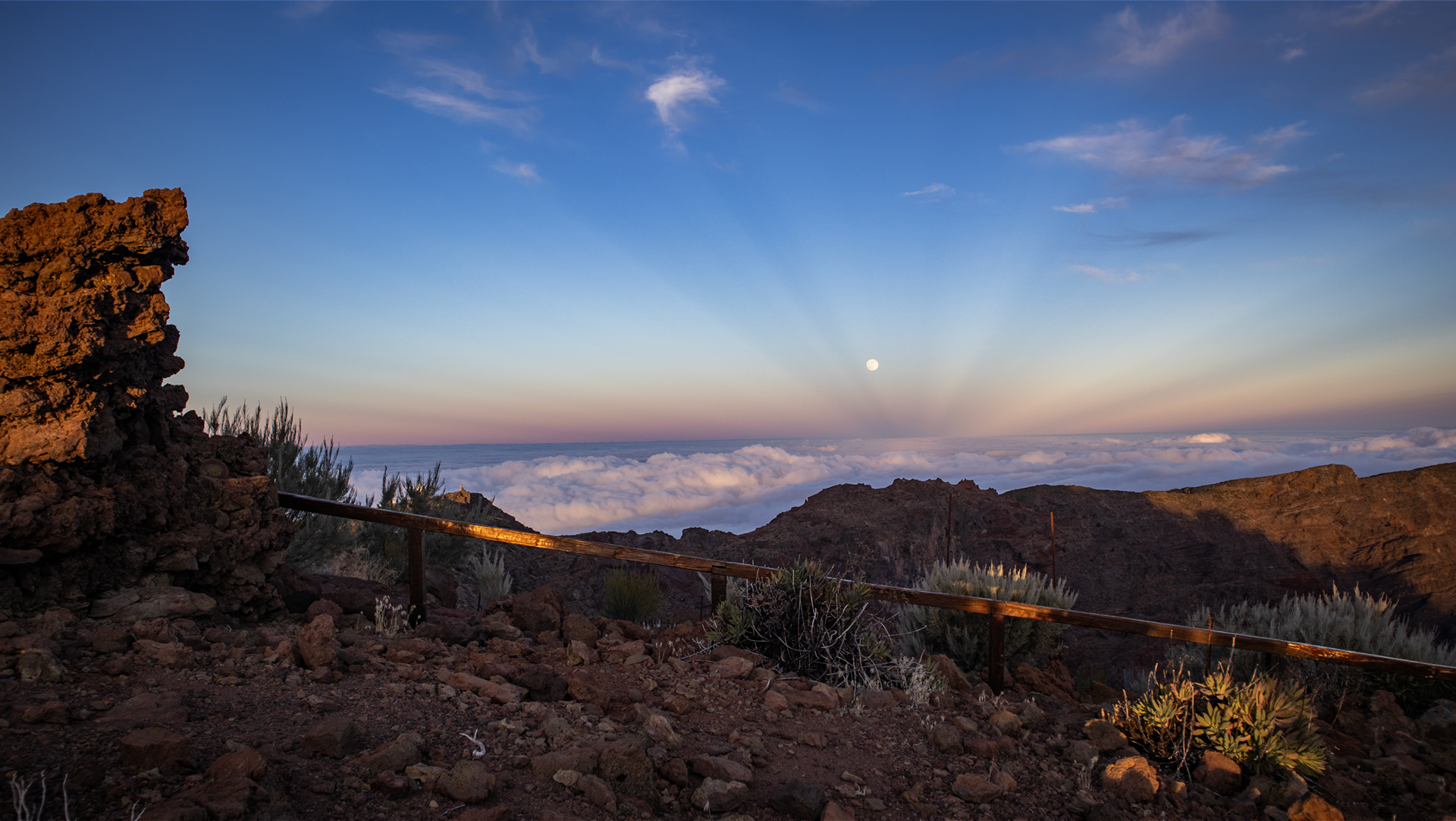
An evening visit shortly before sunset is highly recommended at the Roque de los Muchachos. As the sun sinks in the west, the rock walls of the caldera and the sea of clouds are bathed in a play of colour – orange, pink and violet – while the telescope domes on the plateau cast long shadows across the high-mountain landscape. Those who stay until dusk witness the first starry sky above La Palma shortly afterwards – no artificial lighting, just the clear Atlantic sky in full glory.
The Drive up the LP-4
The drive to the Roque de los Muchachos is an experience in itself. The LP-4 winds from Santa Cruz over more than 40 kilometres of bends from 400 metres up to 2,400 metres – through pine forests, over high plateaus, past bizarre lava formations.
In winter the LP-4 may be closed due to snow or ice – check the weather in advance. The Cabildo de La Palma website is a good source for current road conditions. The drive is also possible in fog as long as you go slowly and carefully – sometimes you drive through the clouds and emerge at the summit into brilliant sunshine.
Practical Tips for the Summit Visit
The temperature shock: anyone lying by the pool in Tazacorte in a T-shirt who spontaneously decides to drive up to the Roque is in for a surprise. The difference between the coast and the summit is often 15–20 degrees Celsius – and at 2,426 metres there is almost always wind, which pushes the feels-like temperature down further. Layering is not a metaphor: fleece jacket, windproof jacket, one extra layer. In winter it can snow at the summit while T-shirt weather prevails below.
Ear pressure and altitude: the ascent from the coast to 2,426 metres within just over an hour can be physically noticeable for some: ear pressure, mild dizziness or headaches can occur – even in people who do not usually experience altitude problems. Those who are sensitive should drive up more slowly and take short breaks. Keep an eye on children and older companions.
Concentration on the serpentine road: the LP-4 is narrow, winding and steep. On the way up you pass slopes that leave no margin for error. Slow down, anticipate oncoming traffic early, keep your hands on the wheel – and enjoy the panorama only at the viewpoints, not while driving.
Conclusion: Roque de los Muchachos
The Roque de los Muchachos is a must for every visitor to La Palma. The island’s highest point combines dramatic mountain scenery with one of the world’s most important observatories. Pack warm clothing, set off early – and allow a little extra time for the Espigón del Roque.
Frequently Asked Questions (FAQ)
Is a reservation required for the Roque de los Muchachos?
Can you visit the observatory from the inside?
When is the best time to visit the summit?
Is there food and drink available at the summit?
Can I drive up spontaneously or do I need to check anything in advance?
Can the altitude of 2,400 metres be a problem for me?
Can I just walk up to the telescopes?
This article is based on the on-the-ground knowledge of the Gequo editorial team – publishers of the Reisezeit hiking guides and operators of Sunhikes.com. Last updated: May 2026