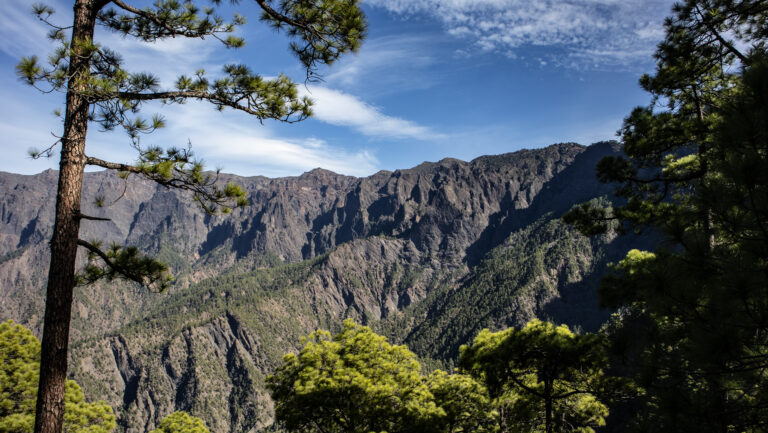
Marcos y Cordero – Through Thirteen Tunnels to the Island’s Springs
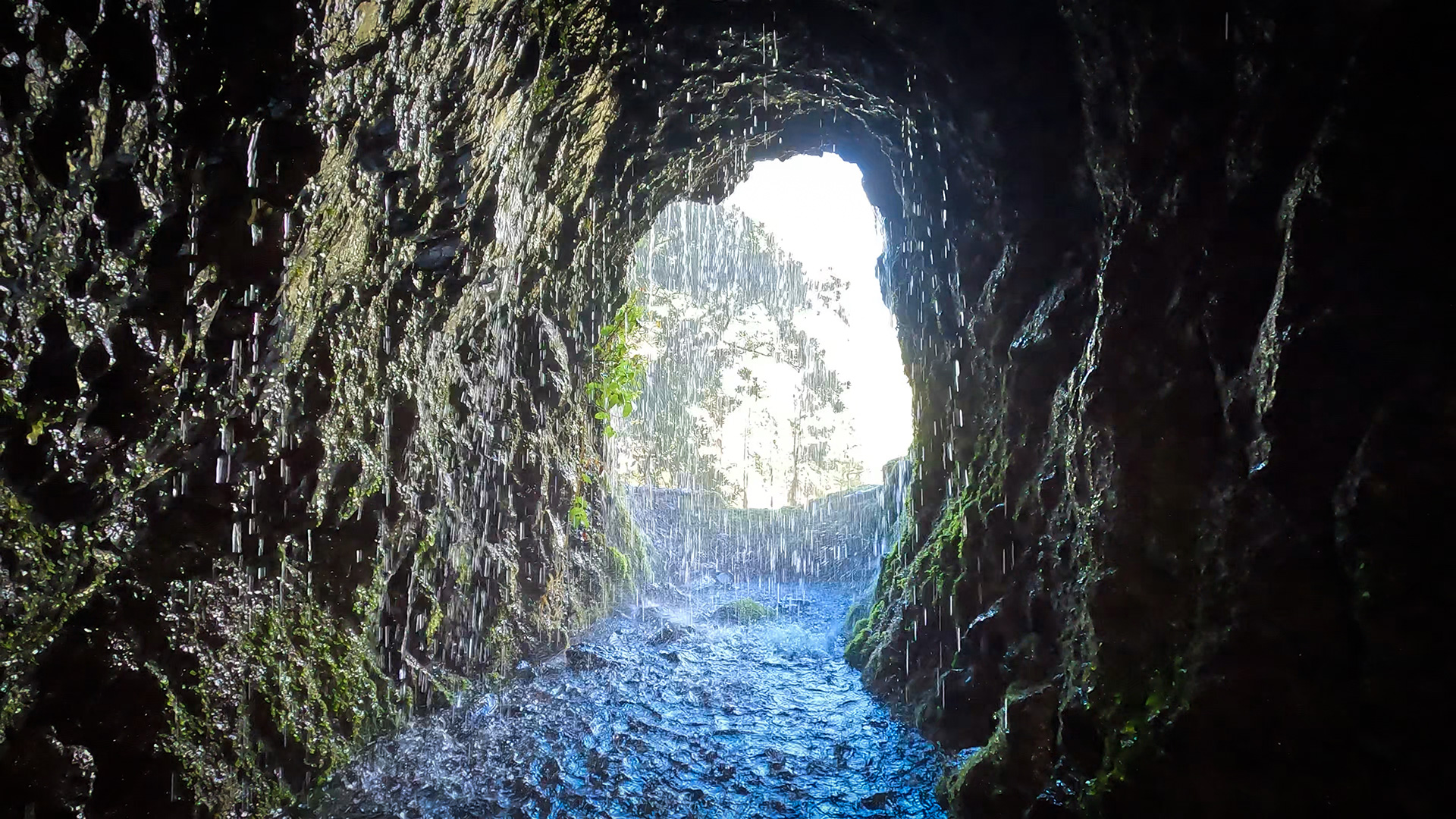
It begins with a tunnel. You step into cool darkness, drops fall from the ceiling, the light at the far end seems far away – and then you’re inside, in the middle of one of the strangest and most beautiful excursions La Palma has to offer. Marcos y Cordero is not a viewpoint, not a museum, not a sight in the classic sense. It is a path through the interior of the mountain, along ancient water channels, through thirteen tunnels blasted into the rock – leading to the seven springs that have watered the green north of La Palma for centuries.
A Water Channel from Another Era
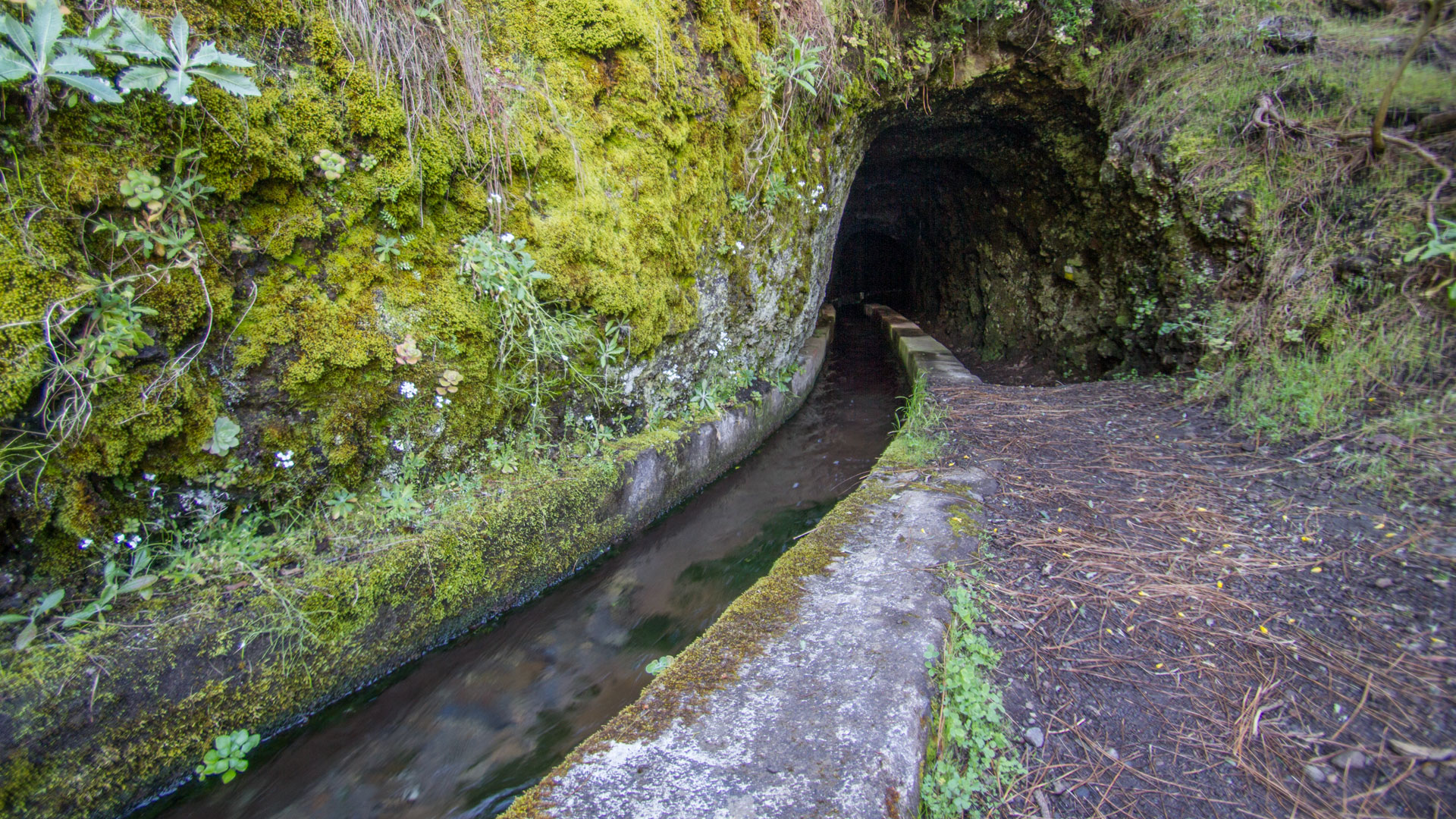
The acequias – La Palma’s irrigation channels – are a feat of engineering of impressive simplicity. They carry spring water from the humid northeast of the island through the mountain ridge to the drier west side, where the banana plantations and the population need the water. Marcos y Cordero is the starting point of the most important of these systems – and the hike along the channels is at the same time a walk through the island’s agricultural history.
These channels are still actively used today. As you walk along, the water flows beside you – calm, steady, on its way west. It is a rare experience to encounter a functioning historical irrigation system up close, one that has no museum character because it is simply still needed.
The Way Through the Tunnels
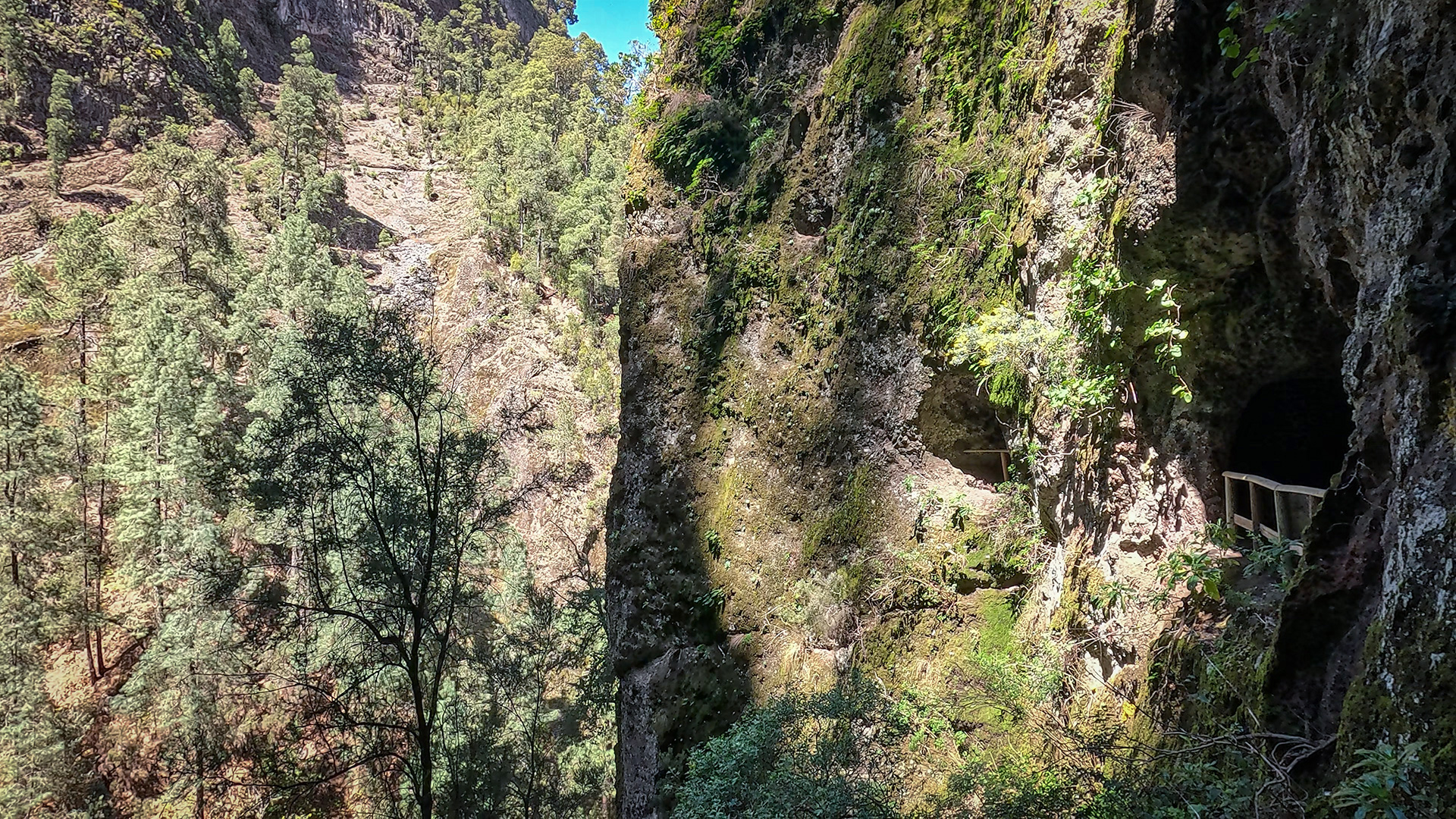
You pass through thirteen tunnels on the way to the springs – some just a few metres long, bright needle-holes in the rock face, others long and dark, where you can easily lose your bearings. A headlamp is essential – the tunnels are not lit. The moments between the tunnels, when the laurel forest comes back into view and light falls through the canopy, are among the most beautiful impressions this island has to offer.
The Marcos y Cordero Springs
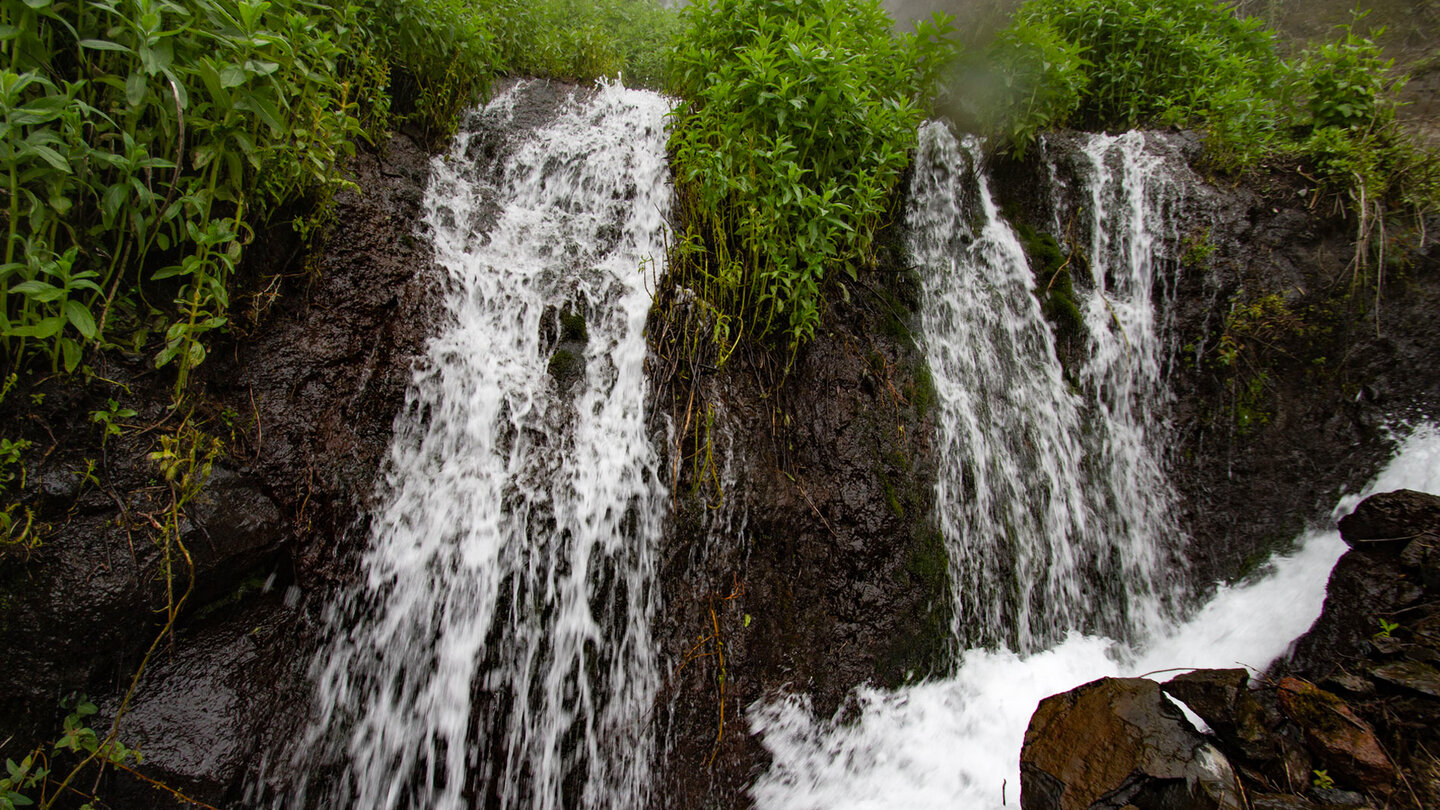
At the end of the trail, in the heart of the laurel forest, lie the Marcos y Cordero springs: seven outlets of water that emerge quietly and unassumingly from the rock. After the walk through the tunnels, they seem almost modest. But they are the reason the north of La Palma is so green – and the reason this trail exists at all. The water that emerges here from the mountain supplies large parts of the west coast via the acequias.
Flora Along the Way
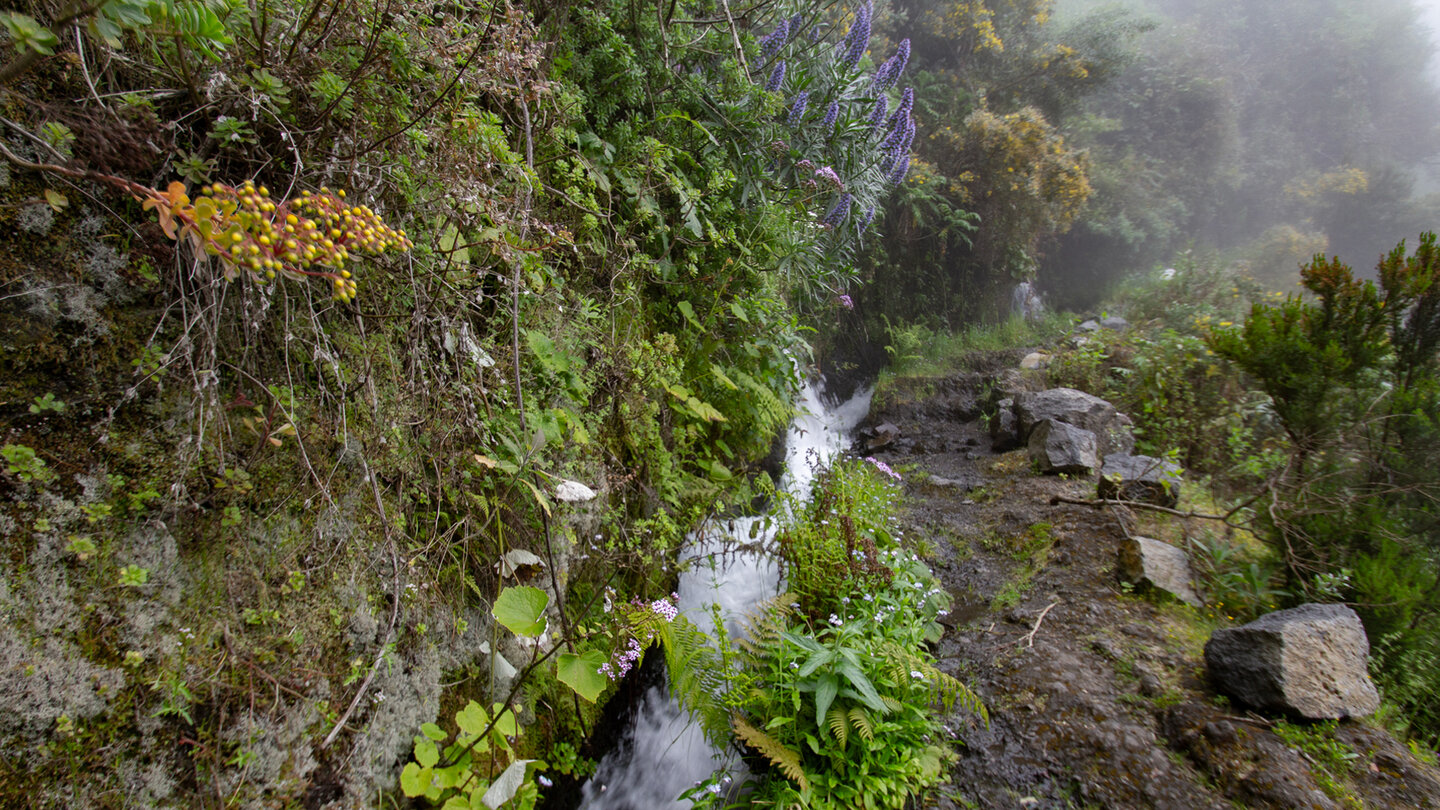
The character of the forest along this stretch is extraordinary: laurel, til, viñátigo and erica grow so densely that hardly any light reaches the trail floor. Ferns taller than a person, moss covering every stone, and the ever-present dripping of water from the foliage make the atmosphere feel almost unreal. Experiencing this laurel forest is one of the quiet highlights of any visit to La Palma.
Planning and Preparation
The hike to the springs is no stroll. The PR LP 4.1 route is around 11 kilometres long, has some elevation gain, and takes 4–5 hours depending on pace. Good footwear, enough water and food are essential – there is nowhere to stop along the way. And don’t forget a headlamp.
A good alternative for anyone who wants to avoid the full route: the PR LP 4.1 trail passes the first tunnels and some of the most beautiful sections of forest after just a few kilometres. You don’t need to complete the full descent to Los Tilos through the Barranco del Agua to experience this.
Frequently Asked Questions (FAQs)
How difficult is the trail to the Marcos y Cordero springs?
Do you really need a headlamp?
Can you walk the route in winter?
How does the shuttle to Casa del Monte work?
Is the tour suitable for people with claustrophobia?
How do I check whether the route is currently open?
Do you have to walk the full 11 km?
History of the Acequias on La Palma
La Palma is an island with a water distribution problem: the humid north and northeast receive plenty of rainfall, while the dry west and south need water for agriculture. The solution the islanders developed over centuries is the acequias – a branching network of water channels that is still in operation today. The route to the Marcos y Cordero springs follows one of the oldest parts of this system.
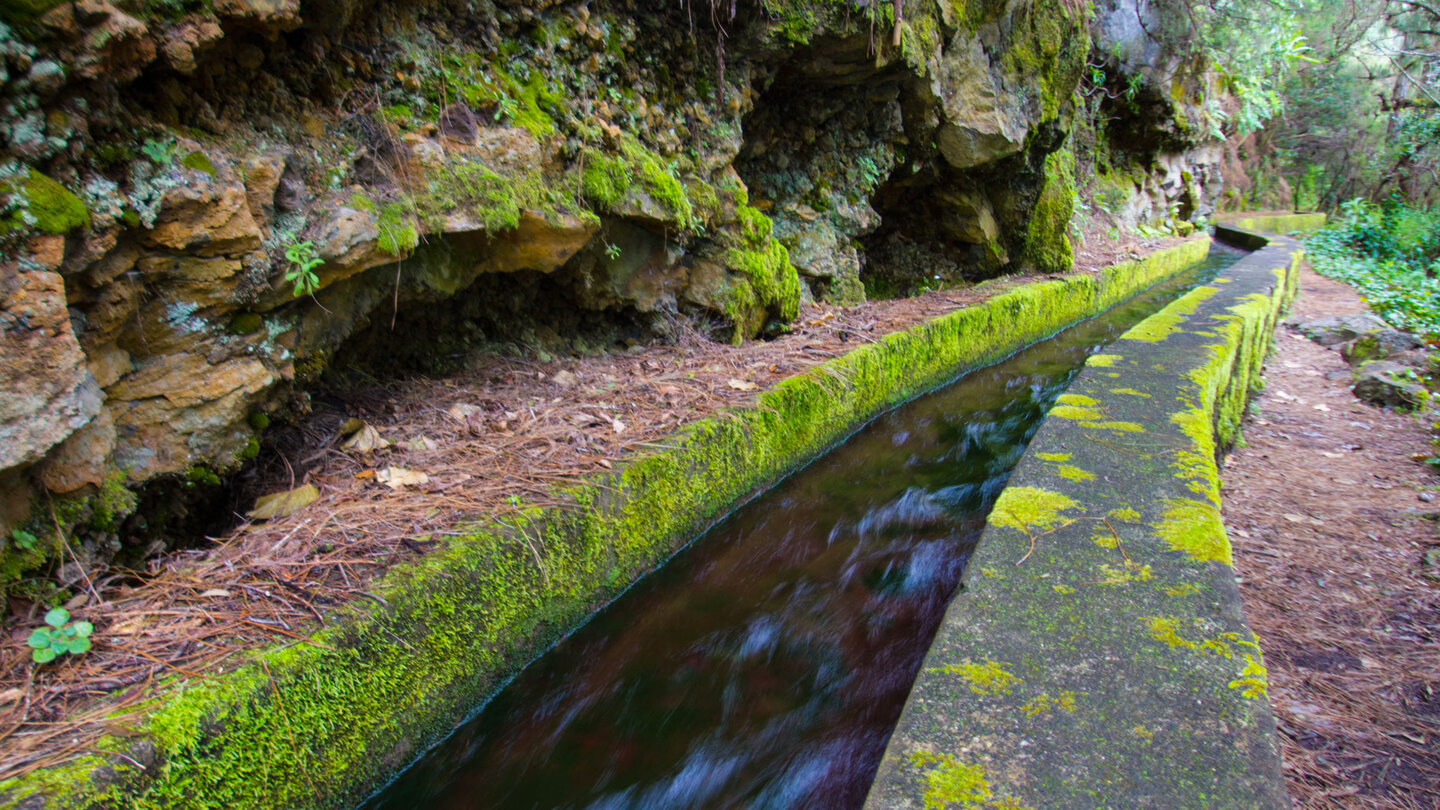
The first documented acequia network on La Palma dates back to the 16th century. At that time, the springs of the north were first systematically captured and the water channelled via canals, tunnels and aqueducts to the west side of the island – mainly for the sugarcane plantations, later for wine and banana growing. Anyone standing at the Marcos y Cordero springs today is standing at one of the points of origin of this long history.
Packing for the Tour
For the full tour to the springs you need the right equipment. The most important items: a headlamp (not optional – some tunnels are completely dark), waterproof hiking boots (the trail can be wet), a rain jacket (the laurel forest drips constantly, even in overcast weather without rain), enough water (at least 2 litres per person) and something to eat.
The route is 11 kilometres long. Plan for 4–5 hours, more if you take lots of breaks. Allow a bit more time for the return leg than the outward one. There is no food or drink available along the way, and no mobile signal – you need to be fully self-sufficient.
Guided Tours to the Springs
Anyone who doesn’t want to hike to the Marcos y Cordero springs alone, or who wants to learn more about the history of the acequias and the botany of the laurel forest, can find guided tours with local nature guides on GetYourGuide. A guide explains the botanical richness of the forest and points out details that are easy to miss on your own.
Overnight Stay in the Region
San Andrés y Sauces and Los Tilos are good bases. For accommodation nearby, Barlovento in the north or the area around Santa Cruz in the east are recommended – both offer holiday homes with access to La Palma’s green northeast.
Practical Tips & Safety
Essential Gear: What You Really Need
A headlamp is not a nice-to-have but a hard requirement. In the long, unlit tunnels it is pitch black – a phone light is not enough for the uneven, wet ground, and you need both hands free. A waterproof rain jacket comes into its own by tunnel 12 at the latest, when the laurel forest drips incessantly. Additionally, if you book a guided tour, you’re often given a helmet – and should wear it. The low tunnel ceilings and the unstable terrain along the sides make head protection sensible, not excessive.
Take the shuttle instead of driving: Leave your car at the Los Tilos visitor centre, take an early-morning booked 4×4 shared taxi up to the starting point at Casa del Monte (approx. 1,300 m) – then hike back down at a relaxed pace through the tunnels and the laurel forest to your car. The track up is unpaved and steep; anyone attempting it with a standard rental car risks damage and voiding their insurance cover. The taxi solves this problem and turns an exhausting loop into an elegant point-to-point hike.
Vertigo and Claustrophobia: In places, the trail runs along narrow channel walls with a drop alongside – sure-footedness is not an exaggeration here. Anyone prone to panic attacks in confined spaces should realistically assess the long tunnels beforehand: some are dark, damp and long. The full version of the tour is not suitable for small children.
Check Trail Status Beforehand
The terrain is steep and unstable – landslides, rockfalls and slope collapses regularly lead to official partial closures, sometimes with little advance notice. Before setting out, it’s worth checking the official Senderos de La Palma website (senderosdelapalma.es), which lists current closures. It’s easy to avoid the disappointment of a closed barrier.
A Day at Marcos y Cordero – Timing
A complete excursion to the Marcos y Cordero springs – the drive from Santa Cruz, the hike there and back with breaks, the return journey – takes a full day. Setting off early is recommended: the early morning hours in the laurel forest, when mist still hangs between the trees and the birds start their chorus, are the most atmospheric. From midday onwards, groups from Santa Cruz sometimes arrive, making the trail a little busier.
Anyone who wants to make the tour less demanding can walk just as far as the first tunnels – about 2–3 kilometres from the car park – and then turn back. Even this shorter version gives a good impression of the character of the forest and the historic irrigation system. Half a day is enough for this shorter version, and it is also manageable for less experienced hikers.
Conclusion: Marcos y Cordero
Marcos y Cordero is one of the most original excursion experiences on La Palma. Thirteen tunnels, an active irrigation system dating back to the 16th century, seven quiet springs in the heart of the laurel forest – and in between, a forest landscape unlike anything else in Europe. Pack a headlamp, start early.
This article is based on the on-the-ground knowledge of the Gequo editorial team – publishers of the Reisezeit hiking guides and operators of Sunhikes.com. Last updated: May 2026