Cueva Bonita – The Beautiful Cave
Six kilometres north of Puerto de Tazacorte, where the steep coast of the Barranco del Jurado meets the sea, a grotto opens up in the black basalt rock. It has two entrances, but only one is reachable by boat. Sail inside, and you’ll understand at once why it’s called la Cueva Bonita – the beautiful cave.
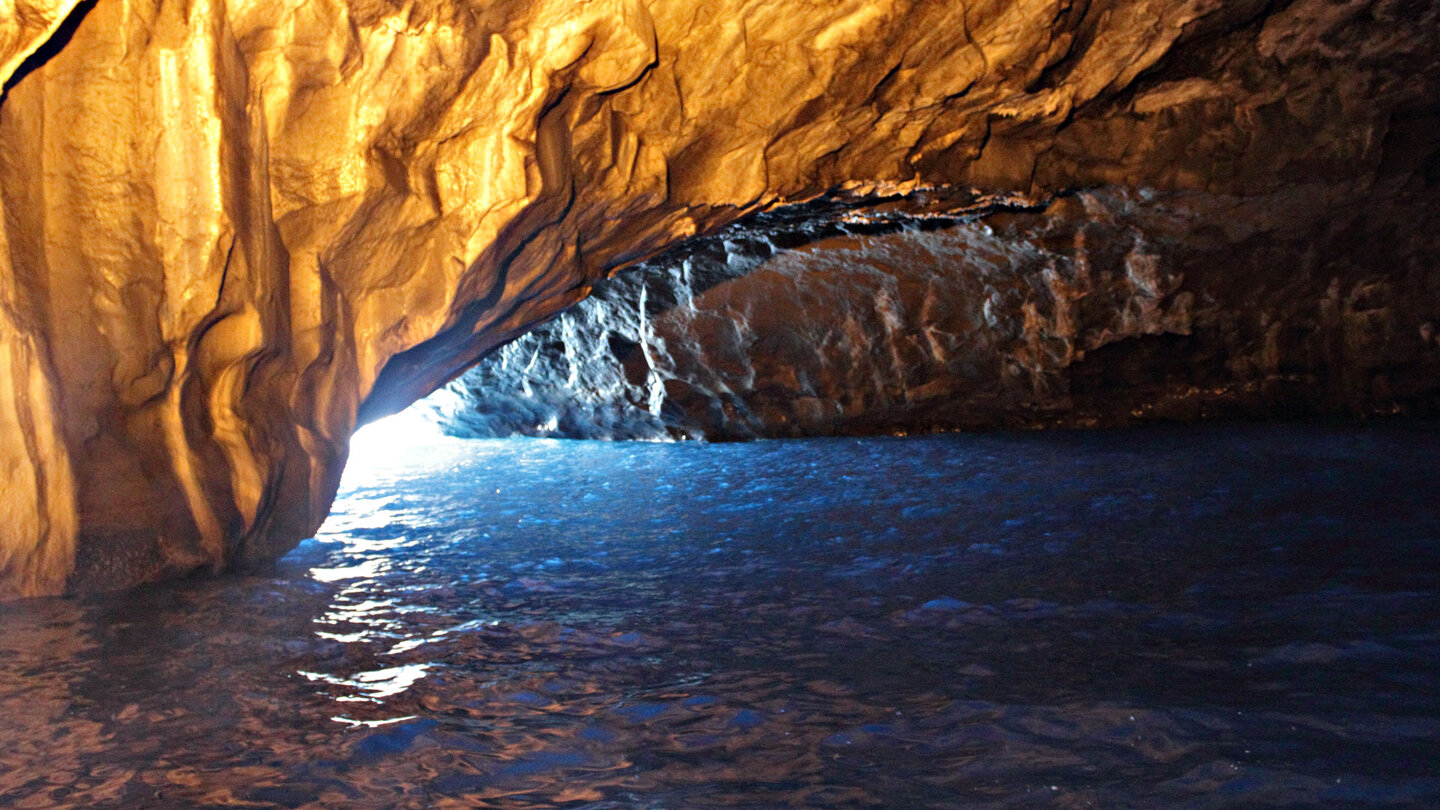
The water shifts to a deep blue, the basalt walls curve overhead above the boat, and when the afternoon sun finds just the right angle, the mineral veins in the rock burst into a play of orange, yellow and green. Geologists and marine researchers consider the grotto unique – not just for the colours in the stone, but for the shapes the Atlantic has carved into the rock over thousands of years.
By Boat Only – A Unique Feature
Cueva Bonita is completely inaccessible by land – there are no roads or hiking trails leading to the cave mouth. The only way in is by water: a boat setting out from the harbour at Tazacorte, running along the steep coastline until it slips into the grotto itself. This exclusivity is what makes the trip one of La Palma’s most memorable natural experiences.
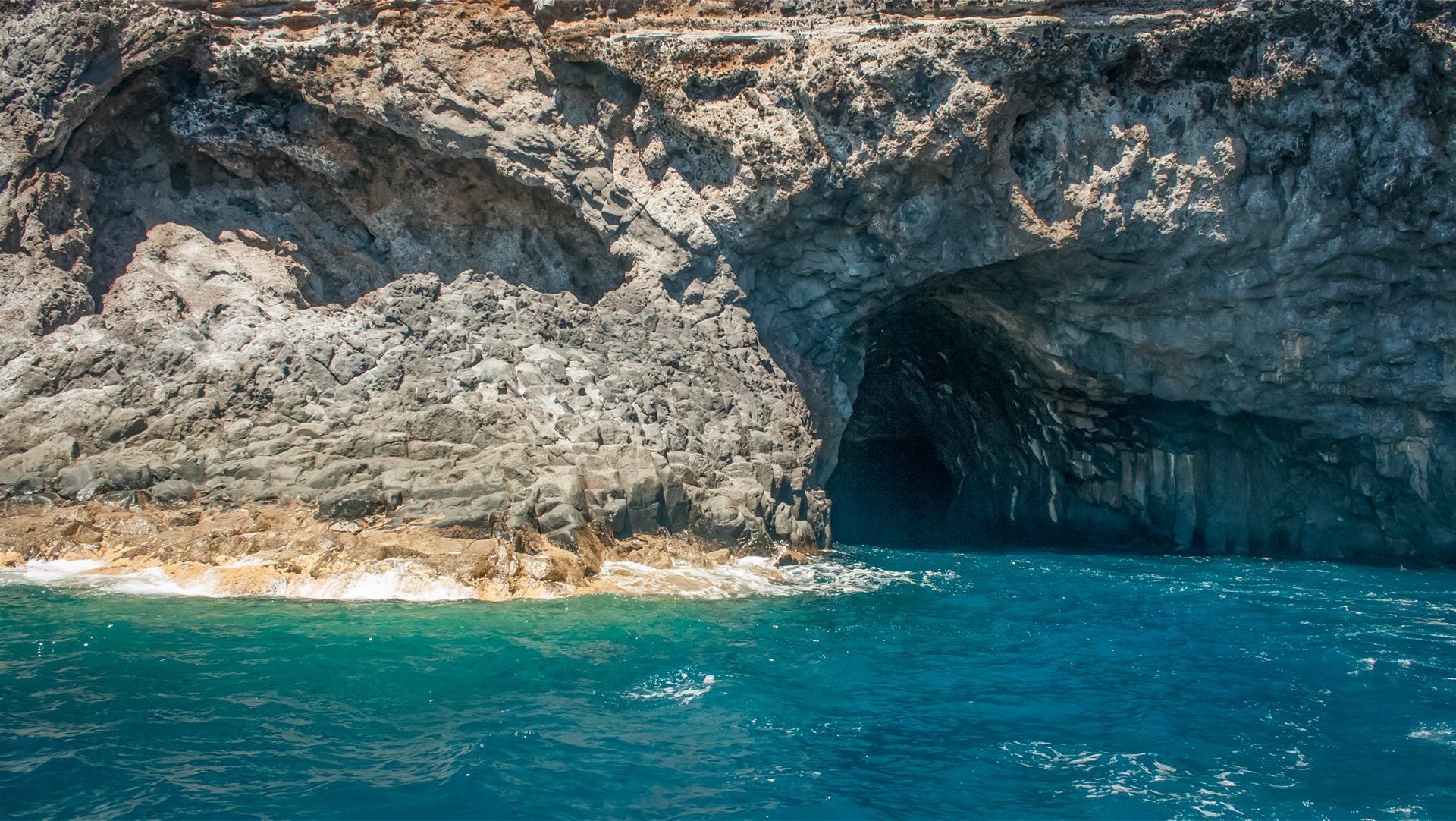
Local fishermen still tell the legend: anyone caught inside the Cueva Bonita by pursuers could escape through the second entrance, Punta del Moro – now sealed – invisible to anyone waiting outside. Whether it’s true, no one knows. But it gives the grotto a layer of history beyond its geology.
The Light Show in the Afternoon
The best time to visit the Cueva Bonita is early afternoon. When the sun comes in from the west at just the right angle, its rays pierce the surface of the water and cast coloured reflections across the cave walls. The effect lasts only a few minutes – but it’s the shot most photographers come for.
In the morning, the cave holds a quieter beauty, bathed in soft, diffuse light – calmer, bluer, more contemplative. In the afternoon, the play of colour is far more intense. Given the choice, take the afternoon tour.
Good to Know: Cueva Bonita or Porís de Candelaria?
Cueva Bonita is often confused with the Porís de Candelaria. In fact, they’re two completely different destinations. Porís de Candelaria is a small settlement of the area’s characteristic white-and-blue houses, tucked into a sheltered rocky cove and reachable via a hiking trail. Cueva Bonita, by contrast, is a natural sea cave with no buildings at all. It lies a little further south along the steep coast and can only be reached from the water – by boat or kayak.
Boat Tours from Tazacorte
Almost every boat tour from Tazacorte includes the Cueva Bonita on its route. The standard itinerary follows the steep coastline, stops at coves that are otherwise impossible to reach, takes in the Tajogaite lava delta from the water, and finishes by sailing into the cave itself. The whole trip takes around 3 hours.
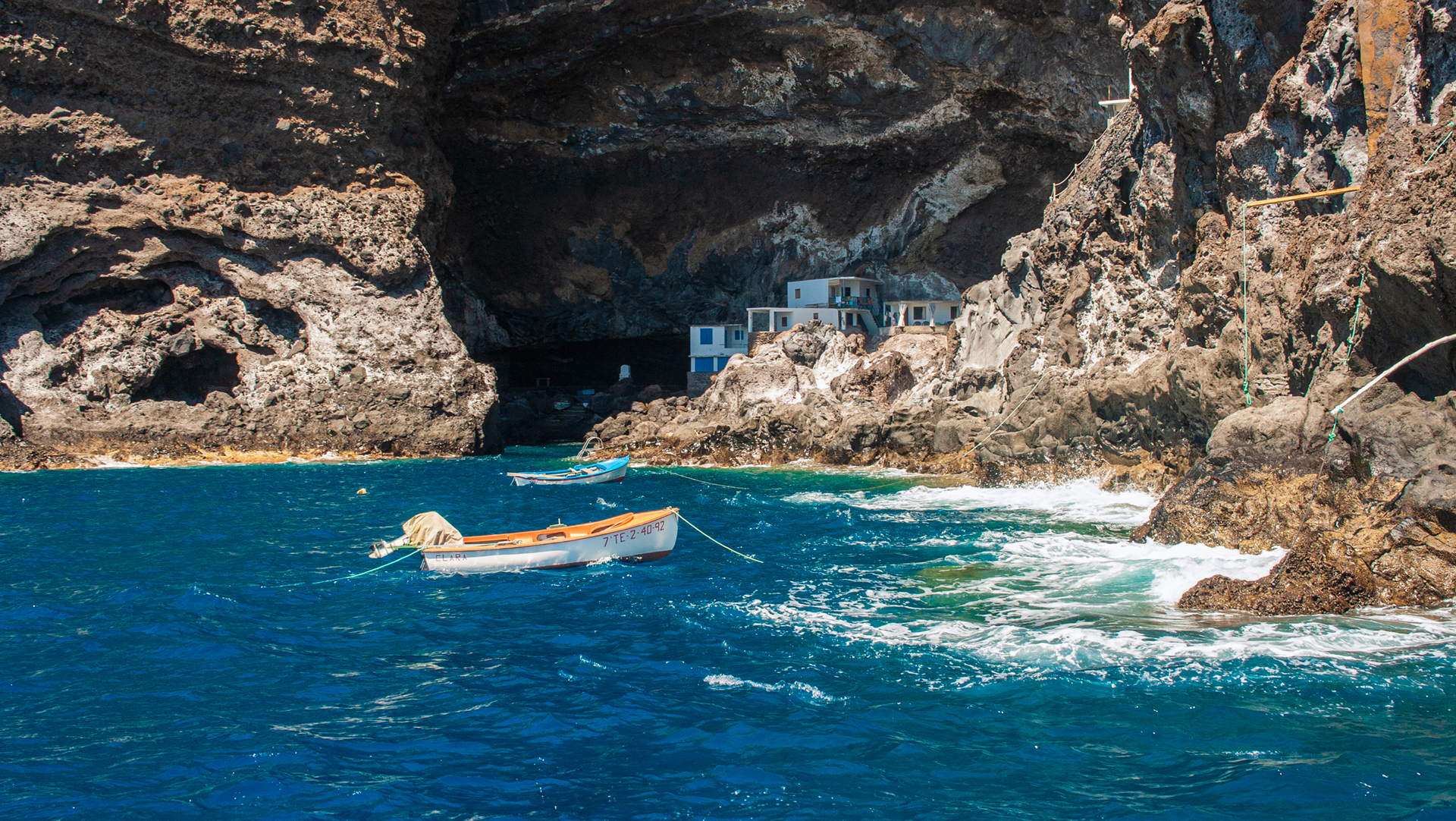
Recommended tour operators at Tazacorte harbour include: Ocean Explorer, aboard the glass-bottomed boat Flipper (approx. 3 hrs, from €58, with a marine biologist on board); the Fancy II catamaran (approx. 3 hrs, from €61, with tapas and cava); the Bussard wooden boat (approx. 4 hrs, max. 12 guests, from €55). Every tour sails into the Cueva Bonita – the difference lies in the type of boat and what’s included along the way.
Practical Information for the Tour
Departure port: Puerto de Tazacorte, west coast of La Palma
Duration: approx. 3 hours (incl. coastal route)
Best time: early afternoon (light effects)
Prices: from approx. €50–61 depending on provider
Booking: directly at the harbour or GetYourGuide
Prone to seasickness? Larger boats (Fancy II, Flipper) are more stable; choose the middle of the boat
Frequently Asked Questions (FAQ)
Can you swim at Cueva Bonita?
What happens in bad weather?
Can Cueva Bonita be visited in any weather?
Can I hike to Cueva Bonita?
Why are tours sometimes cancelled at short notice?
The Tijarafe Steep Coast
Cueva Bonita sits on one of La Palma’s wildest stretches of coastline: the steep coast of Tijarafe, where the Barranco del Jurado drops straight into the sea and cliffs of basalt and tuff rise sheer from the water in turn. No beach, no footpath, no landing point – this stretch of coast is made to be seen from the water, not on foot.
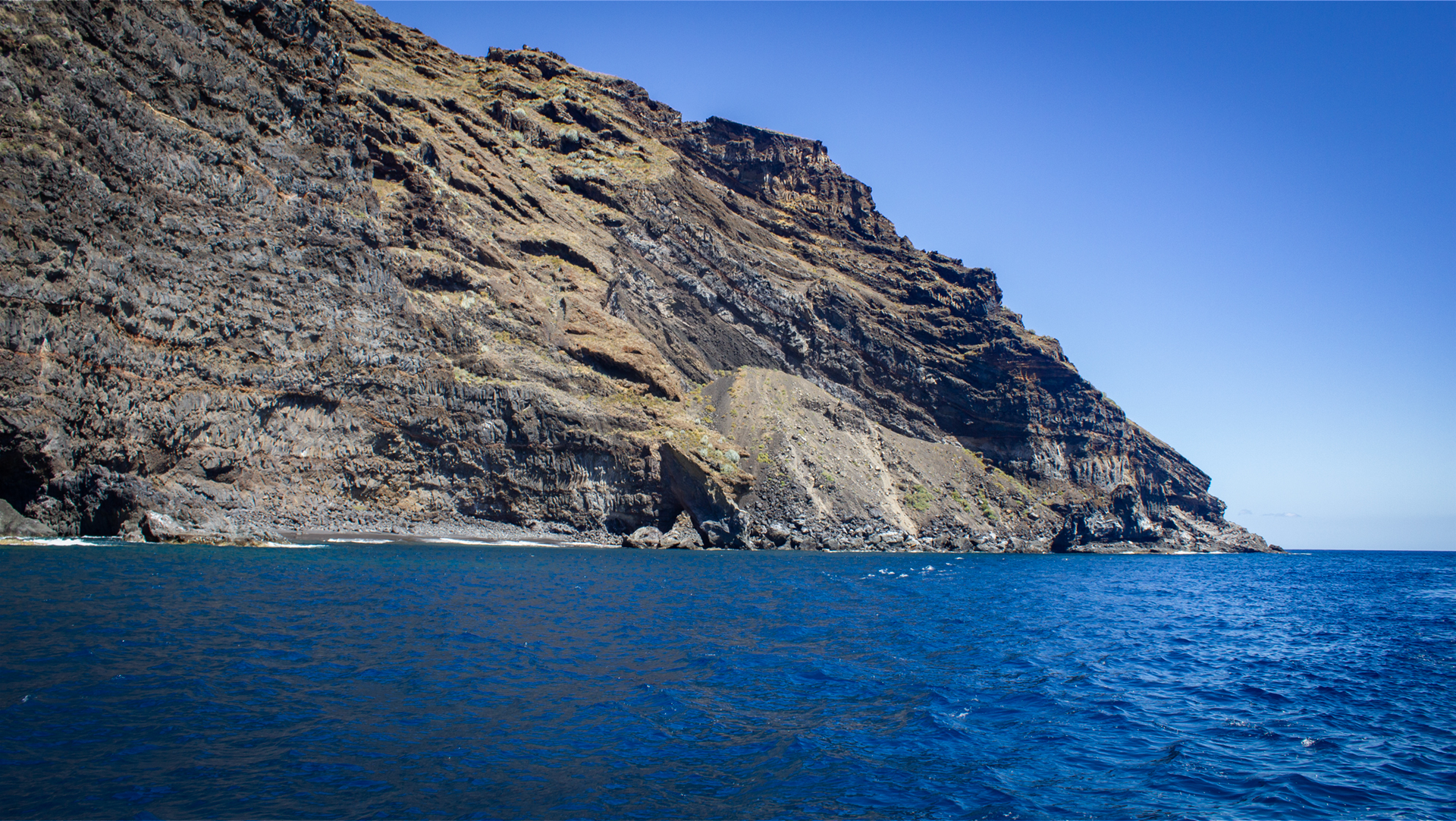
From the boat you see what no hiking trail can show you: the full height of the cliff face, the dark gashes of ravines cutting down to sea level, the black tongues of lava plunging into the water. That view from the sea is one of the strongest arguments for taking a boat trip on La Palma at all – whether you’re there for whales or for caves.
This article is based on the on-the-ground knowledge of the Gequo editorial team – publishers of the Reisezeit hiking guides and operators of Sunhikes.com. Last updated: May 2026