Castillo de Santa Catalina – The Star Fortress at the Harbour
On the Avenida Marítima, where the old town houses meet the harbour, stands the Castillo de Santa Catalina. Designed in 1585 on the orders of Philip II by Italian military architect Leonardo Torriani, it is a classic example of a Renaissance fortress: the star-shaped floor plan with projecting bastions allows complete flanking coverage of the walls – no attacker should be able to approach unobserved.
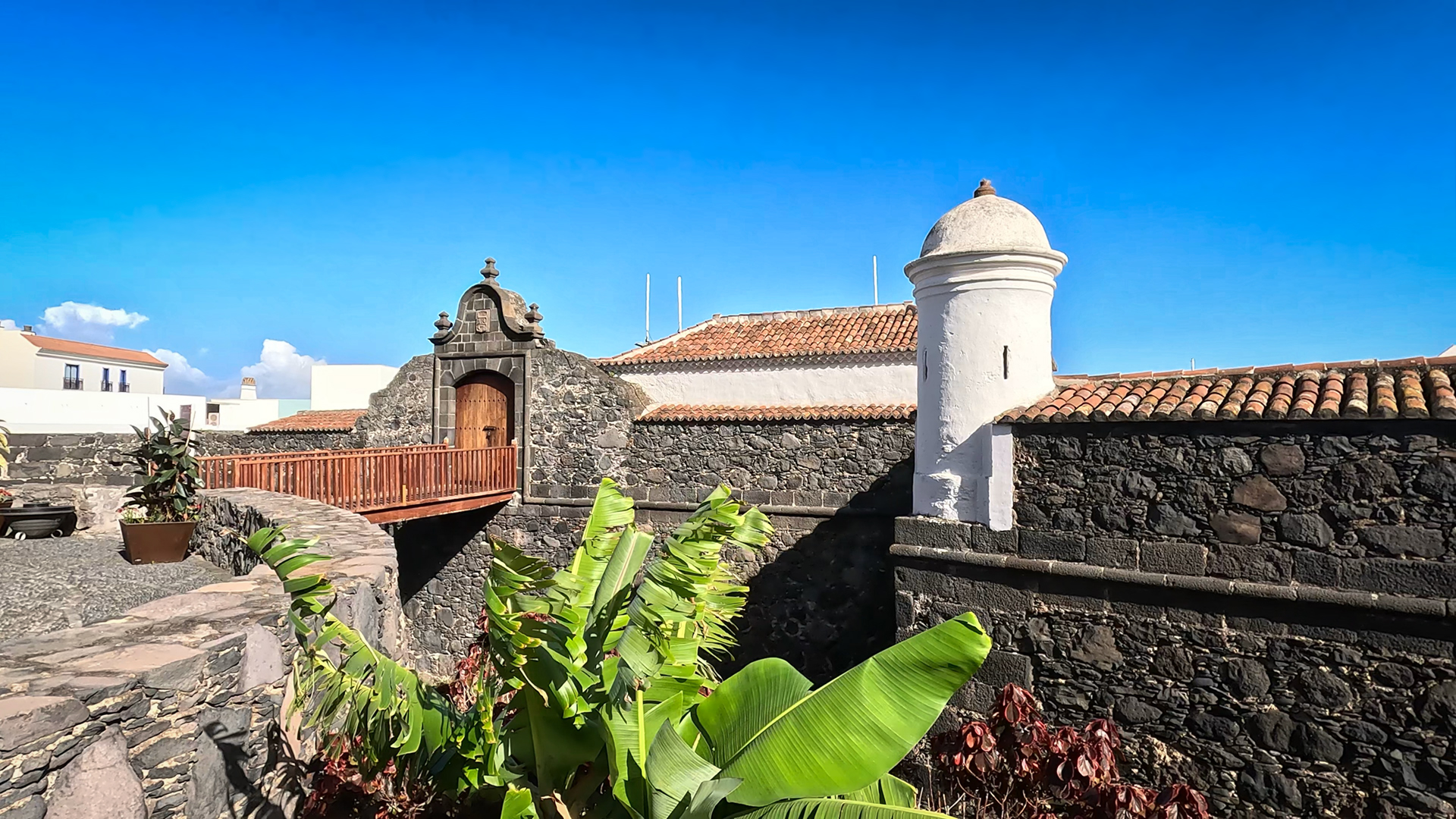
The Castillo de Santa Catalina reflects the strategic importance of Santa Cruz de La Palma in the 16th century. At the time, the port was one of the most vital in the Spanish Empire—outranking Las Palmas and at times rivaling Seville. Protection was not optional; it was existential.
Architecture and Floor Plan
The star-shaped floor plan is the most distinctive feature of this fortress. Unlike medieval round towers, the sharply projecting bastions of the Renaissance fortress allowed every angle of the walls to be covered by artillery. Attackers who approached the walls came under crossfire.
Torriani was one of the most important military architects of his time – he designed fortifications across several Canary Islands. The Castillo de Santa Catalina is his most famous work on La Palma and one of the best-preserved examples of 16th-century Canarian military architecture.
The Chirino Sculpture
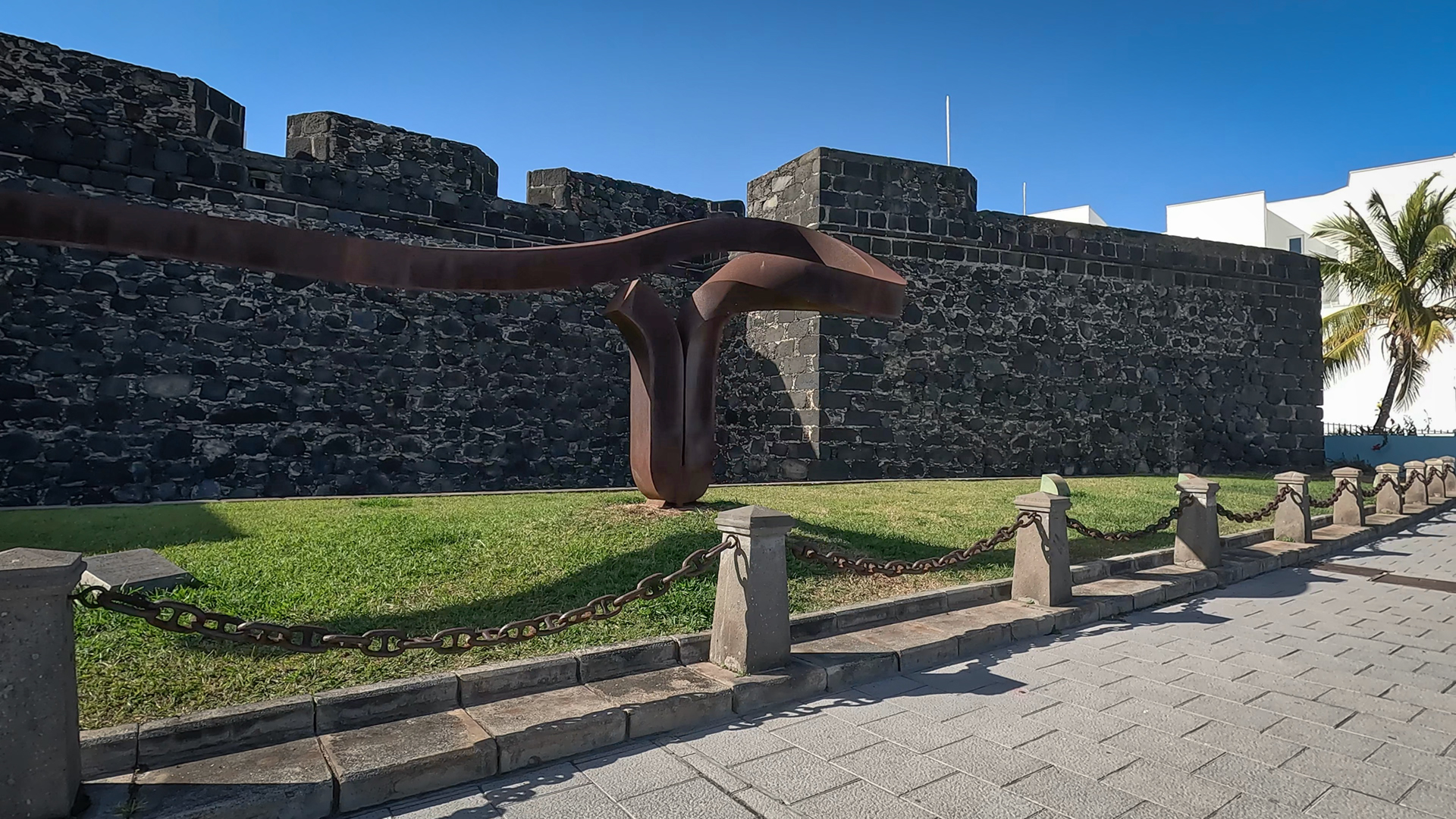
In the gardens of the Castillo de Santa Catalina stands a sculpture by Canarian artist Martín Chirino. Chirino (1925–2019) was one of Spain’s most important sculptors – his characteristic spiral forms in steel are found in museums and public spaces worldwide. The sculpture at the Castillo de Santa Catalina is one of the few original works in La Palma’s public spaces.
Visit and Surroundings
Stepping inside the walls of the Castillo de Santa Catalina means stepping back to a time when pirate raids were a real threat. Free to visit during open hours, this heritage site—now privately owned yet open to the public as a cultural monument—tells the story of how this coastline was once defended. From the historic ramparts, look out across the harbour of Santa Cruz and Avenida Marítima toward the open sea.
The fortress is right on the Avenida Marítima, Santa Cruz de La Palma’s harbour promenade – a few minutes’ walk from the replica of the Santa María (Museo Naval), the Plaza de España and the Balcones Típicos. A complete old town circuit connects all these points.
Practical Tips for Your Visit
Opening Hours and Accessibility
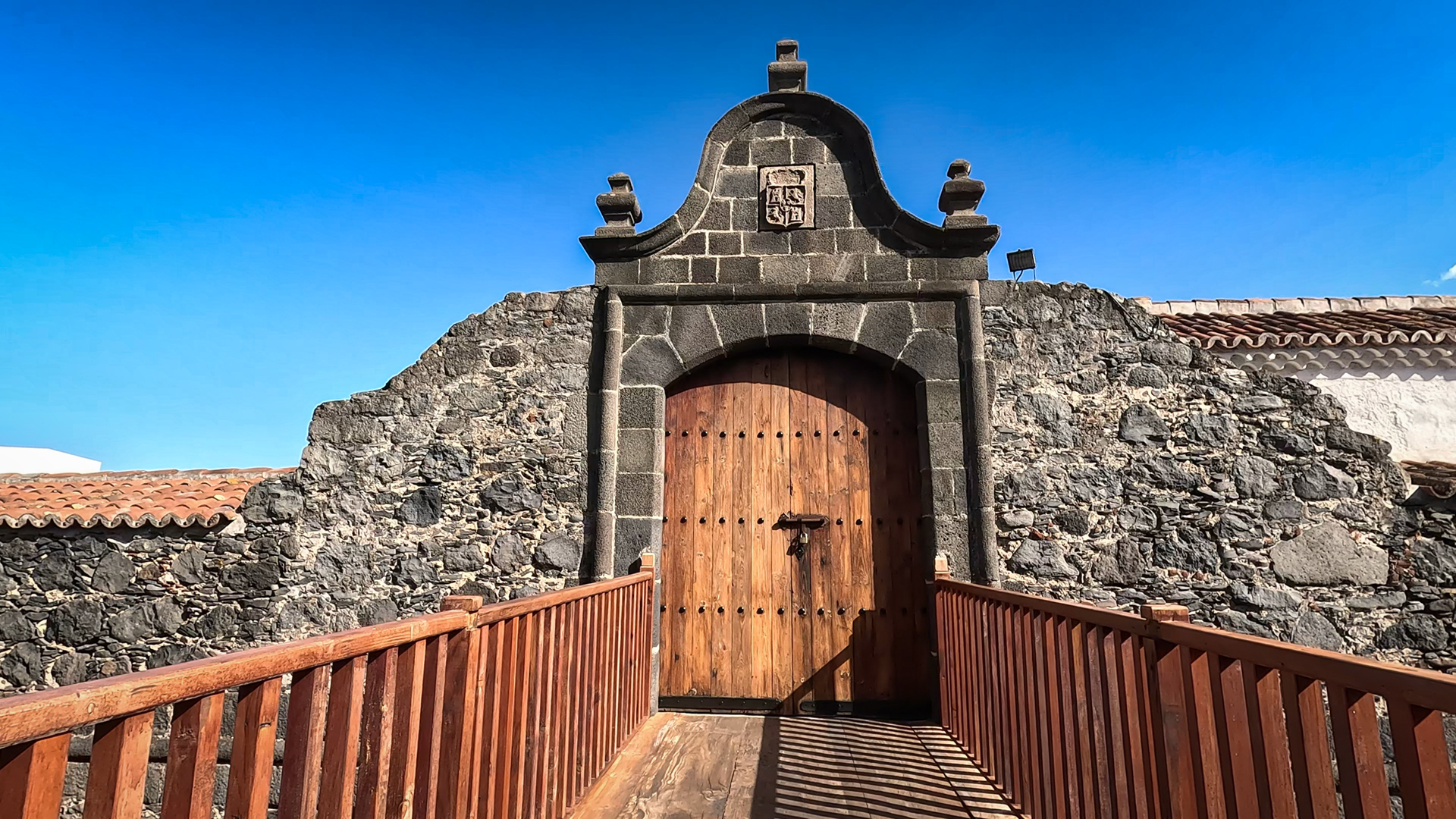
The Castillo de Santa Catalina is not a conventional museum with fixed daily opening hours. The interior is used for cultural events, temporary exhibitions or historical guided tours depending on the occasion. Access to the courtyard or platform may therefore be possible at certain times. Even when access inside isn’t available, it is still worth visiting for the exterior: the massive stone walls, the historic coat of arms and the position right by the sea make the fortress one of the most rewarding subjects for photography in Santa Cruz de La Palma.
Combine It with a Coastal Walk
The Castillo de Santa Catalina is an ideal starting point for a walk along the Avenida Marítima. The route passes the famous Balcones Típicos, the city’s traditional wooden balconies, and continues to the Barco de La Virgen with the Museo Naval. This makes it easy to combine the fortress with the most important sights along the waterfront promenade.
The City’s Second Fortress: Castillo de la Virgen
Anyone with an interest in the maritime history and traditions of Santa Cruz de La Palma should also get to know the Castillo de la Virgen higher up. The small clifftop fortress plays a special role during the Bajada de la Virgen, held every five years, when the historic staging of the “Diálogo entre el Castillo y la Nave” is performed there with cannon fire and fireworks.
Photography Tip: Fortress Walls with Atlantic Views
The best photographs are taken in the late afternoon, when the warm light picks out the dark volcanic stone walls while the Atlantic shimmers in the background. Particularly striking is the view from the Avenida Marítima, where the historic fortress merges with the coastline of Santa Cruz de La Palma.
Visit and Surroundings
Castillo de Santa Catalina: Avenida Marítima, Santa Cruz de La Palma
Built: 1585 | Architect: Leonardo Torriani
Floor plan: star-shaped (Renaissance fortress)
Opening Hours: Monday to Friday: 9:00 AM – 2:00 PM, Saturday: 10:00 AM – 2:00 PM
Suggested Combination: Castillo de La Virgen (10-min walk) + Balcones Típicos
Frequently Asked Questions (FAQ)
Why is the floor plan star-shaped?
Who was Leonardo Torriani?
Can you visit the Castillo de Santa Catalina?
Why was the Castillo de Santa Catalina built?
How can the visit best be combined?
What is the difference between the Castillo de Santa Catalina and the Castillo de la Virgen?
Santa Cruz in the Golden Age
When the Castillo de Santa Catalina was built in 1585, Santa Cruz de La Palma was at the height of its importance. The city was at times considered the third largest port of the Spanish Empire – after Seville and Antwerp. A steady stream of goods, silver, and travelers flowed through the harbour on their way from the Americas to Europe. Merchants from Portugal, Flanders and Genoa settled here.
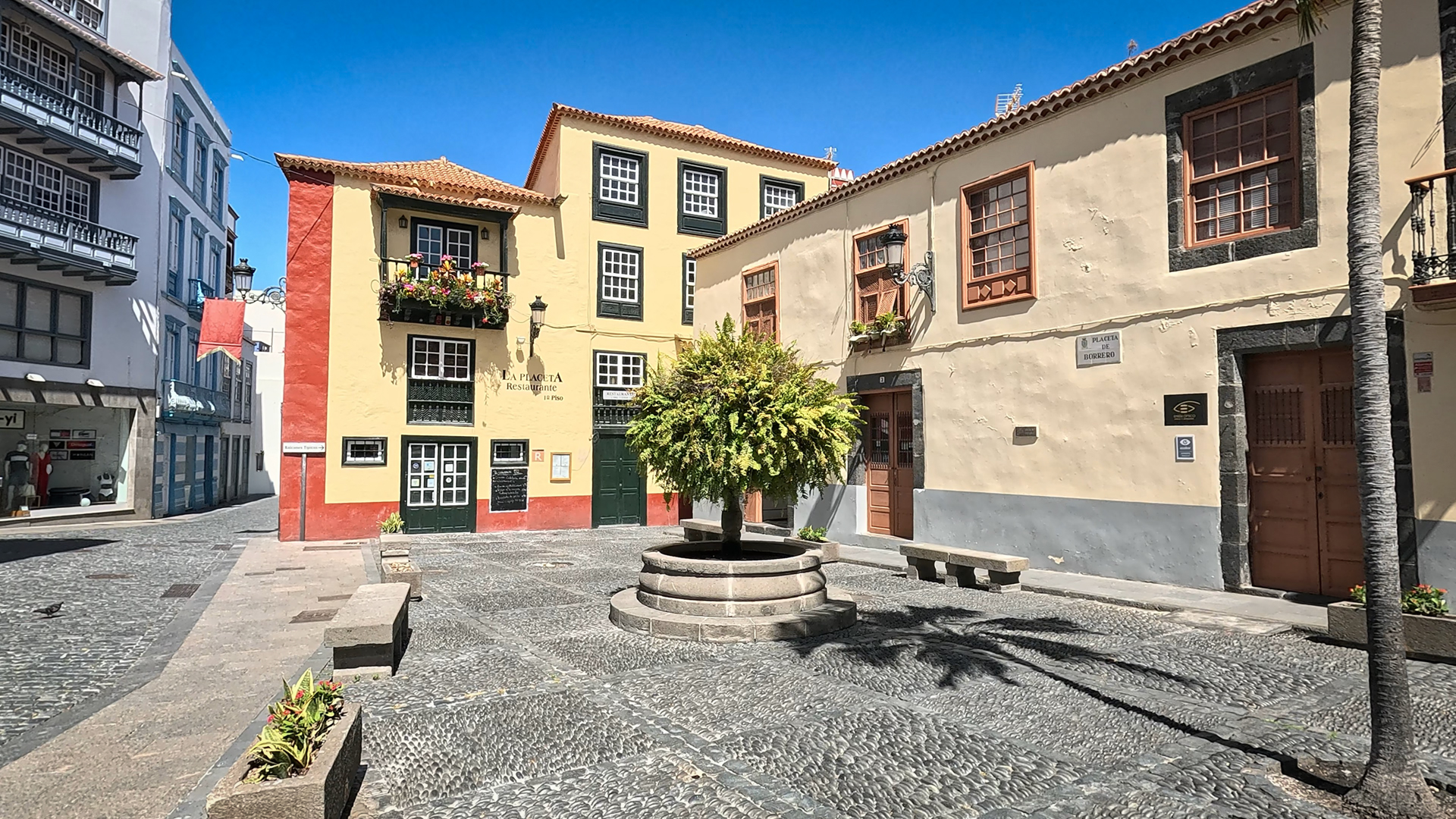
This Golden Age ended with the 17th century: Atlantic trade shifted, and La Palma lost its central position. But the architecture remained – and the Castillo de Santa Catalina still stands today—a lasting monument to a brief, golden era when this small island capital was centre stage on the world map.
Martín Chirino – The Sculptor of Spirals
The sculpture by Martín Chirino in the Castillo gardens is well worth a look. Born in Las Palmas de Gran Canaria in 1925, Chirino was one of the most important sculptors of 20th-century Spain. His characteristic spiral forms in steel became synonymous with a Canarian modernity that bridges African roots and European influences. One of his sculptures also stands in MoMA New York.
This article is based on the on-the-ground knowledge of the Gequo editorial team – publishers of the Reisezeit hiking guides und Betreiber von Sunhikes.com. Stand: Mai 2026