Geology of La Palma: The Steepest Volcanic Island in the World
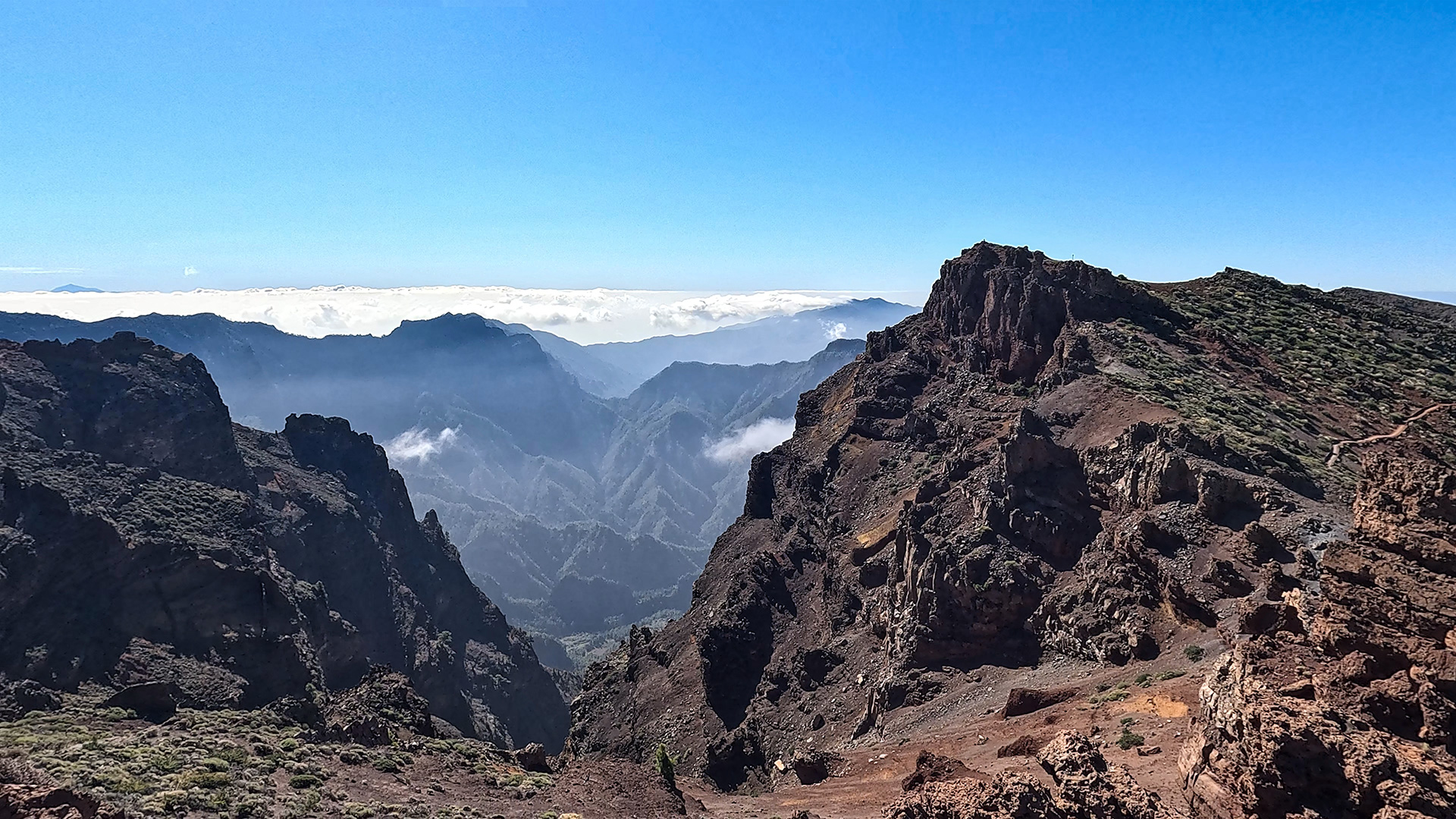
La Palma is, at around 2 million years old, the second youngest of the Canary Islands — after El Hierro. But in one superlative it stands unmatched: La Palma is the steepest volcanic island in the world. With a total height of over 6,000 metres from the ocean floor to the summit ridge, and a base area of just 708 square kilometers, its steepness is virtually unmatched anywhere on Earth. In places, La Palma rises more than 2,400 metres in less than 10 kilometers as the crow flies — from the Atlantic to Roque de los Muchachos. This striking topography makes the island one of the most dramatic volcanic landscapes on Earth.
Formation: From the Ocean Floor to the Mountain Ridge
La Palma’s formation began around 3 to 4 million years ago, when basaltic lava repeatedly erupted from a volcanic hotspot on the ocean floor, roughly 4,000 metres deep. Layer by layer, the underwater volcano grew upward until it broke the ocean surface around 2 million years ago and the present-day island emerged. What is visible today is merely the tip of an enormous volcanic mountain whose height from the seafloor to the summit exceeds 6,000 metres.
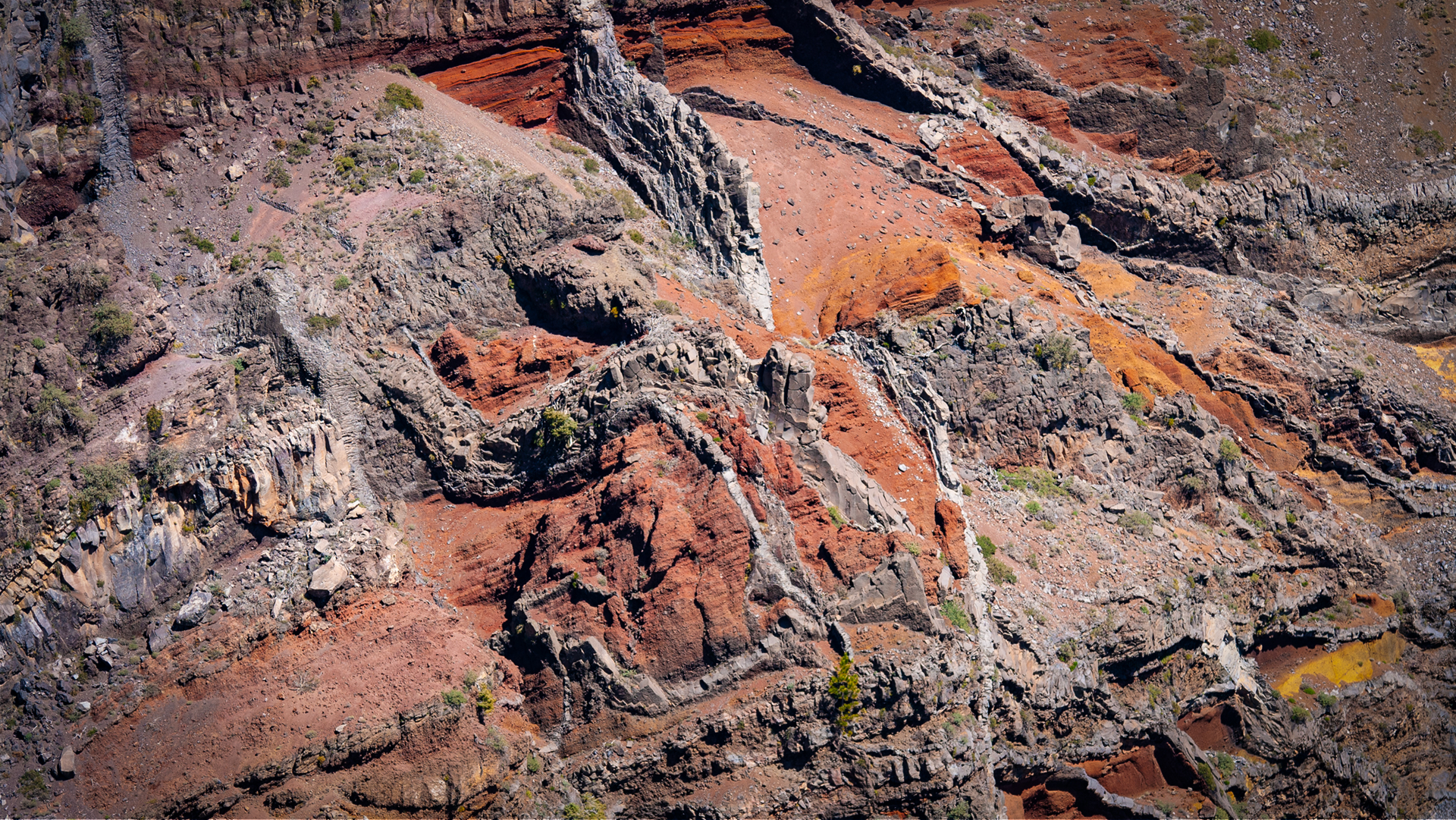
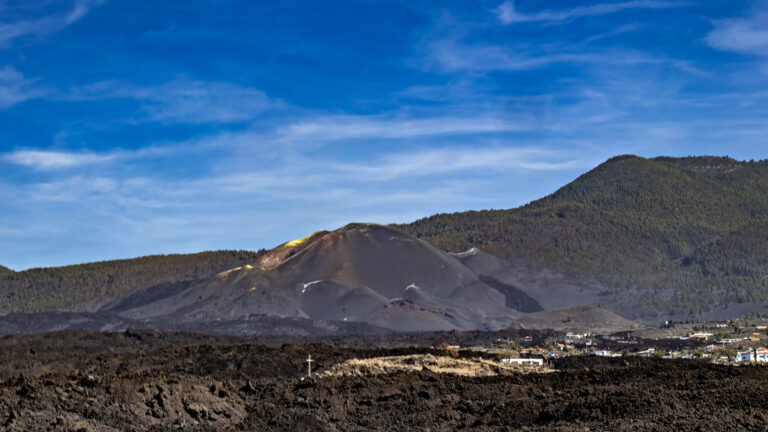
Geologically, La Palma divides into two major sections: the older north with the Caldera de Taburiente, and the younger south with the Cumbre Vieja. All historically documented eruptions (1470, 1585, 1646, 1677, 1712, 1949, 1971, and 2021) occurred along this active volcanic ridge.
Lava Types on La Palma
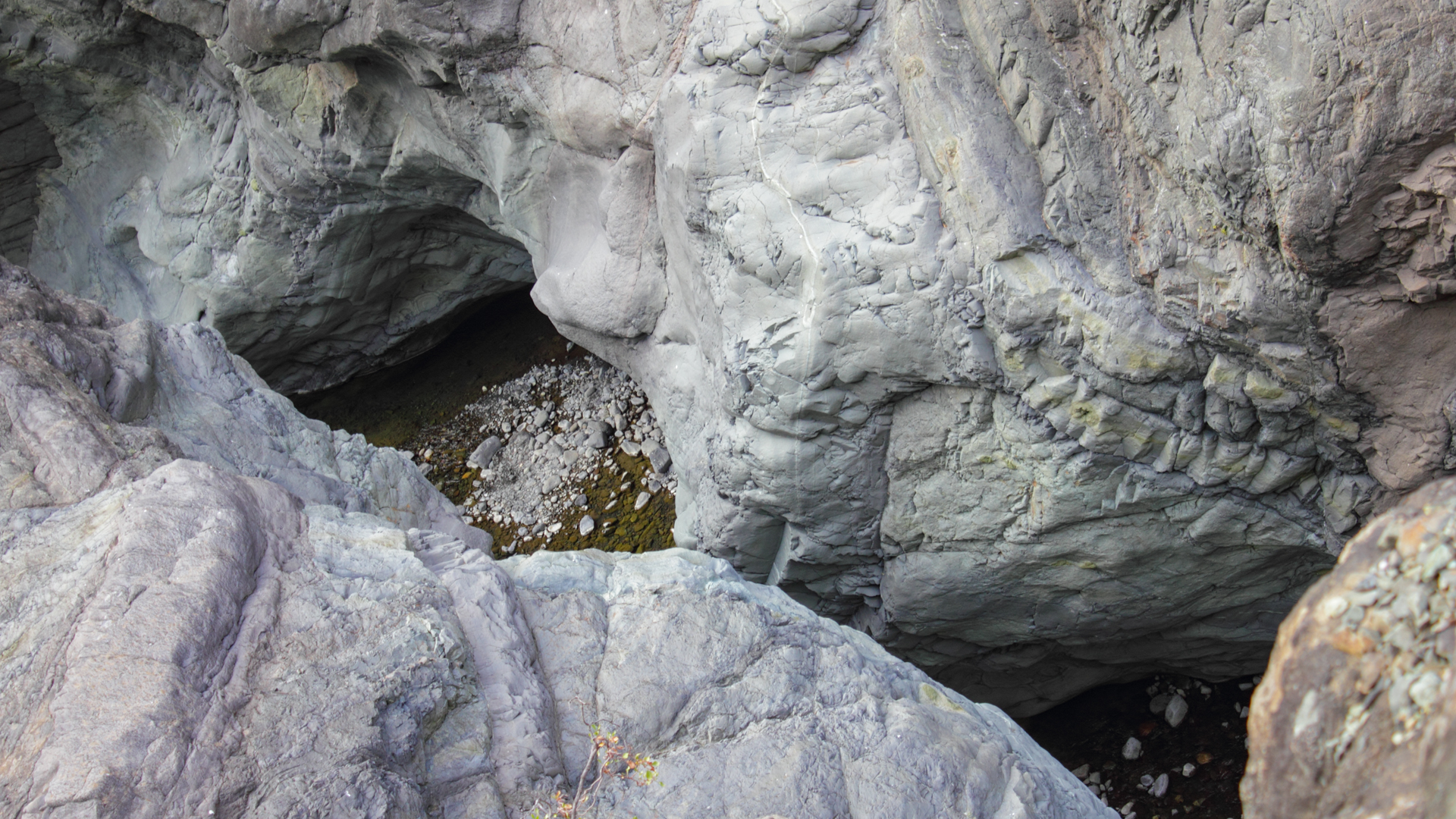
On La Palma, the main types of basaltic lava can be easily observed. Pahoehoe lava (ropy lava) has a smooth, wavy surface and forms when very hot, low-viscosity lava flows out gently. Aa lava (clinkery lava) is rough, sharp-edged and difficult to walk on. It forms when the lava is somewhat cooler and more viscous, and the already solidified surface breaks into countless angular chunks as it continues to flow. Pillow lava forms exclusively underwater. Hot lava solidifies at its surface on contact with seawater, while more molten rock pushes through from inside, forming the characteristic pillow-shaped structures. In the Barranco de las Angustias and along the steep cliffs of Garafía, you can see impressive examples of these submarine rocks today.
Lava Tubes and the 2021 Tajogaite
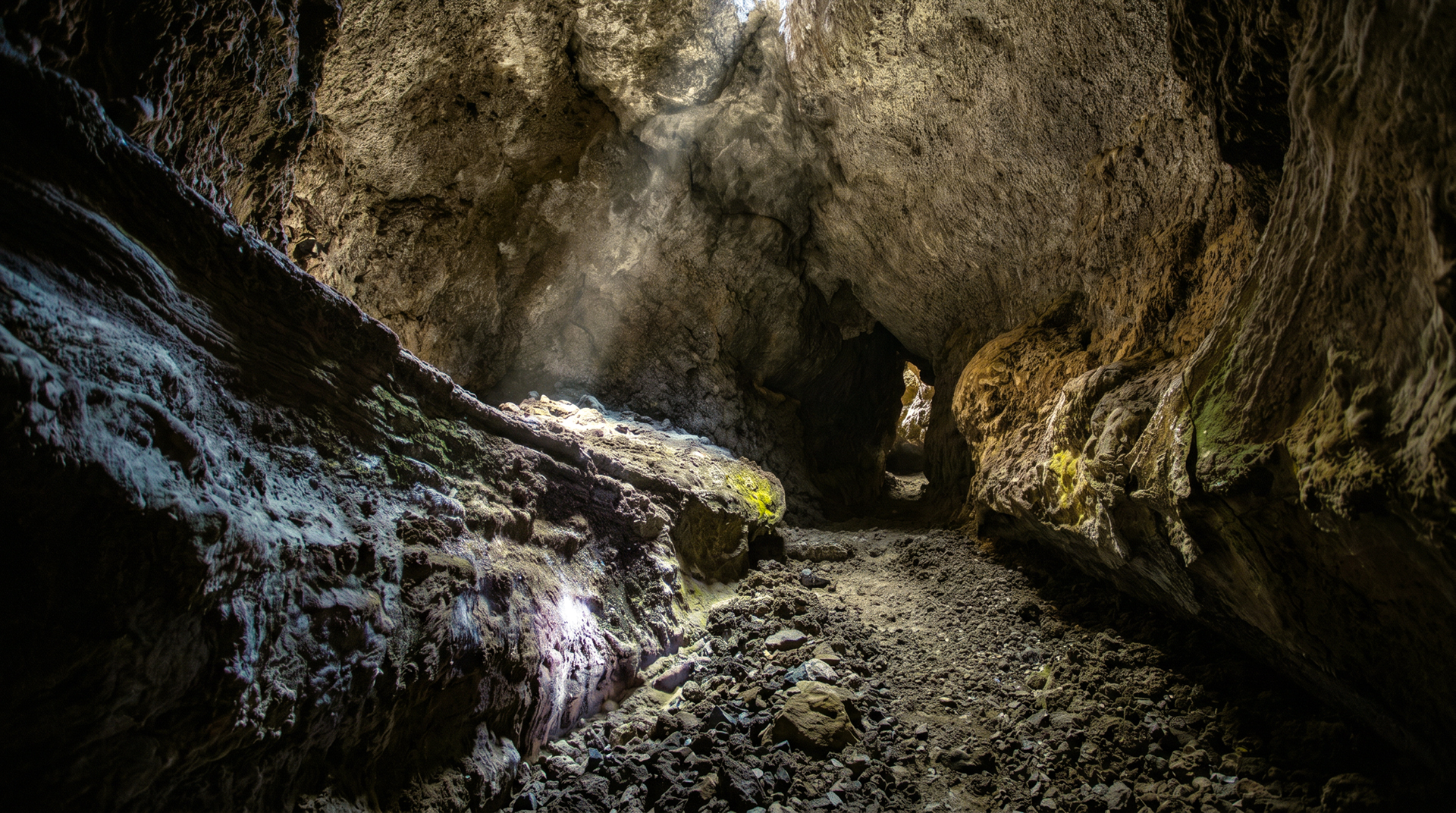
The island is criss-crossed by numerous lava tubes — natural tunnels that form when the surface of a lava flow solidifies while liquid lava continues to drain away inside. After draining, kilometre-long cavities often remain. One of the best-known and visitor-accessible lava tubes is the Cueva de las Palomas at the Caños de Fuego visitor centre. It formed during the 1949 eruption of the San Juan volcano and can be explored on a guided tour. The new lava tubes that formed during the 2021 Tajogaite eruption are not yet open to the public.
Conclusion:
La Palma’s geology is an open-air textbook — from submarine pillow lava that once formed deep beneath the Atlantic, to the youngest volcanic cone in the Canaries, Tajogaite. Those who understand the island’s geological processes see its landscape through entirely different eyes.
Frequently Asked Questions
How old is La Palma?
Is La Palma still volcanically active?
What is pillow lava and where can you see it on La Palma?
Why are there so many deep ravines (barrancos) on La Palma?
Can you visit volcanic caves on La Palma?
This article is based on the on-the-ground knowledge of the Gequo editorial team – publishers of the Reisezeit hiking guides and operators of Sunhikes.com. Last updated: May 2026