Volcanism on La Palma: The Island That Never Stops Growing
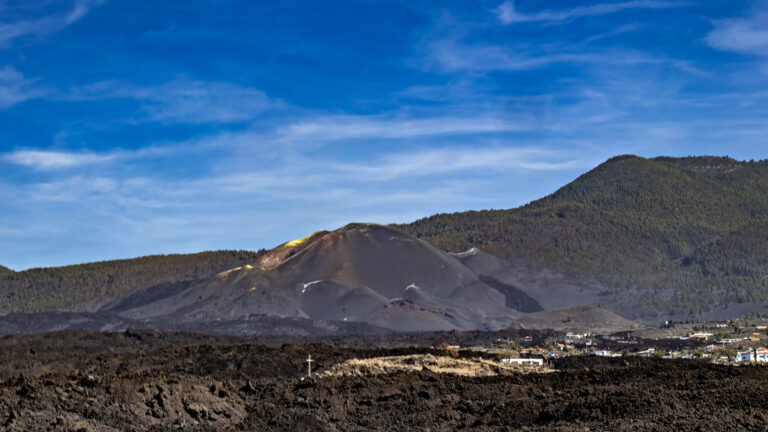
La Palma is not a sleeping island. It is active — in the most literal sense. Together with Tenerife, it ranks among the most volcanically active of the Canary Islands, and among the most active volcanic regions of the entire Macaronesian archipelago. Since the Spanish settlement in the 15th century, La Palma has experienced eight historically documented volcanic eruptions. The most recent — the Tajogaite in 2021 — was also the longest and most impactful in the island’s history, its secondary cones and solidified lava flows still visible on the volcano today.
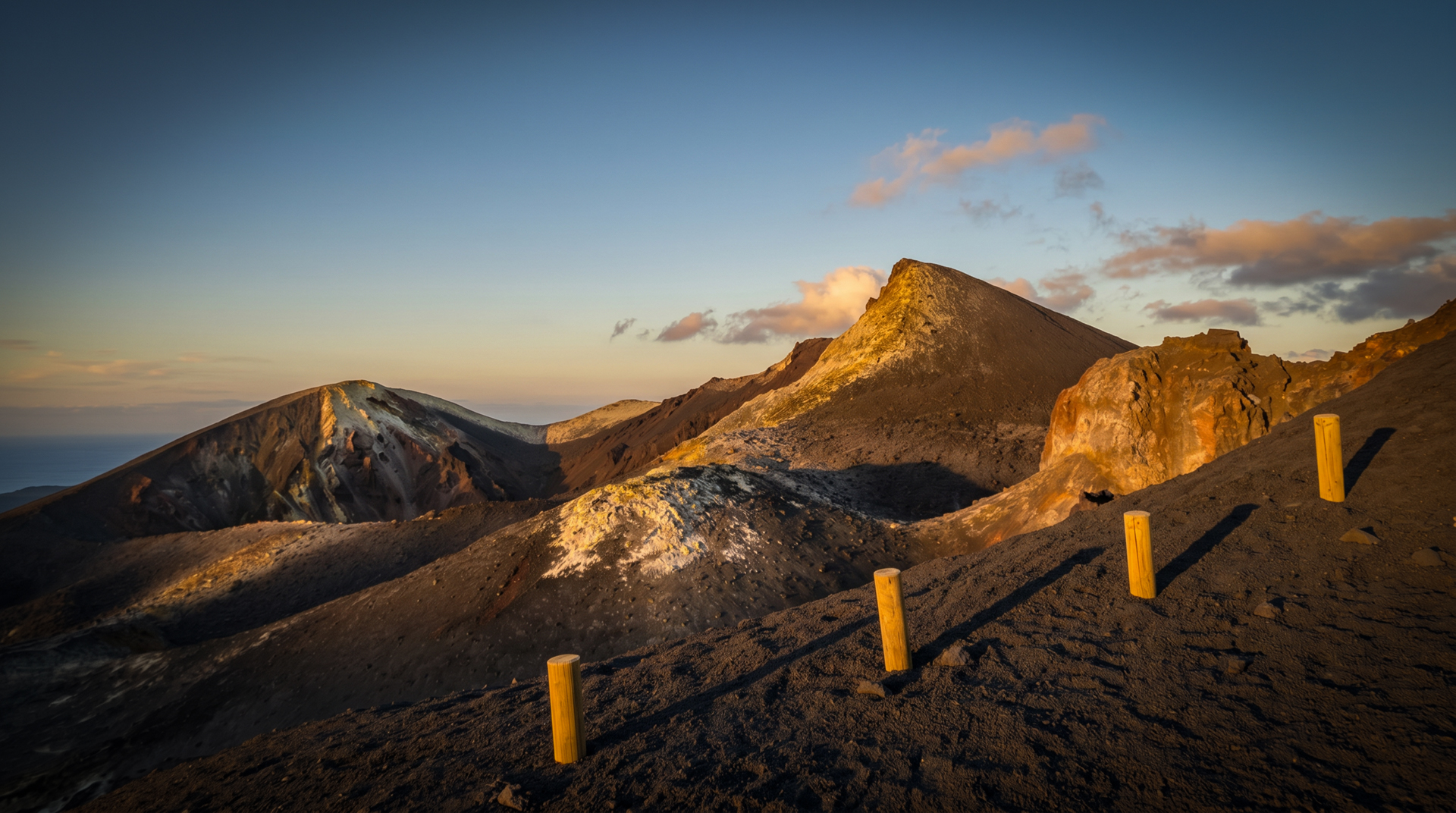
This activity poses very little risk to visitors — eruptions are predictable and have been monitored for decades by a dense sensor network. But it is part of the island’s identity: La Palma is still growing. Still changing. And those who visit it are visiting a place that, in geological time, is still very young.
Historical Eruptions
The chronicle of La Palma’s volcanic eruptions begins in 1470 and continues through 1585, 1646, 1677, 1712, 1949, and 1971 (Teneguía), up to the Tajogaite in 2021. All eruptions occurred in the southern part of the island, along the Cumbre Vieja. Lava flows typically moved westward to the coast, creating new land. The 1971 Teneguía eruption claimed one life when a visitor inhaled toxic volcanic gases at the crater rim; thanks to timely evacuations, it otherwise remained relatively benign — its lava fields still ring the crater of the Teneguía today. The 2021 Tajogaite eruption, by contrast, destroyed more than 3,000 buildings and is considered the longest and most consequential volcanic eruption in La Palma’s modern history.
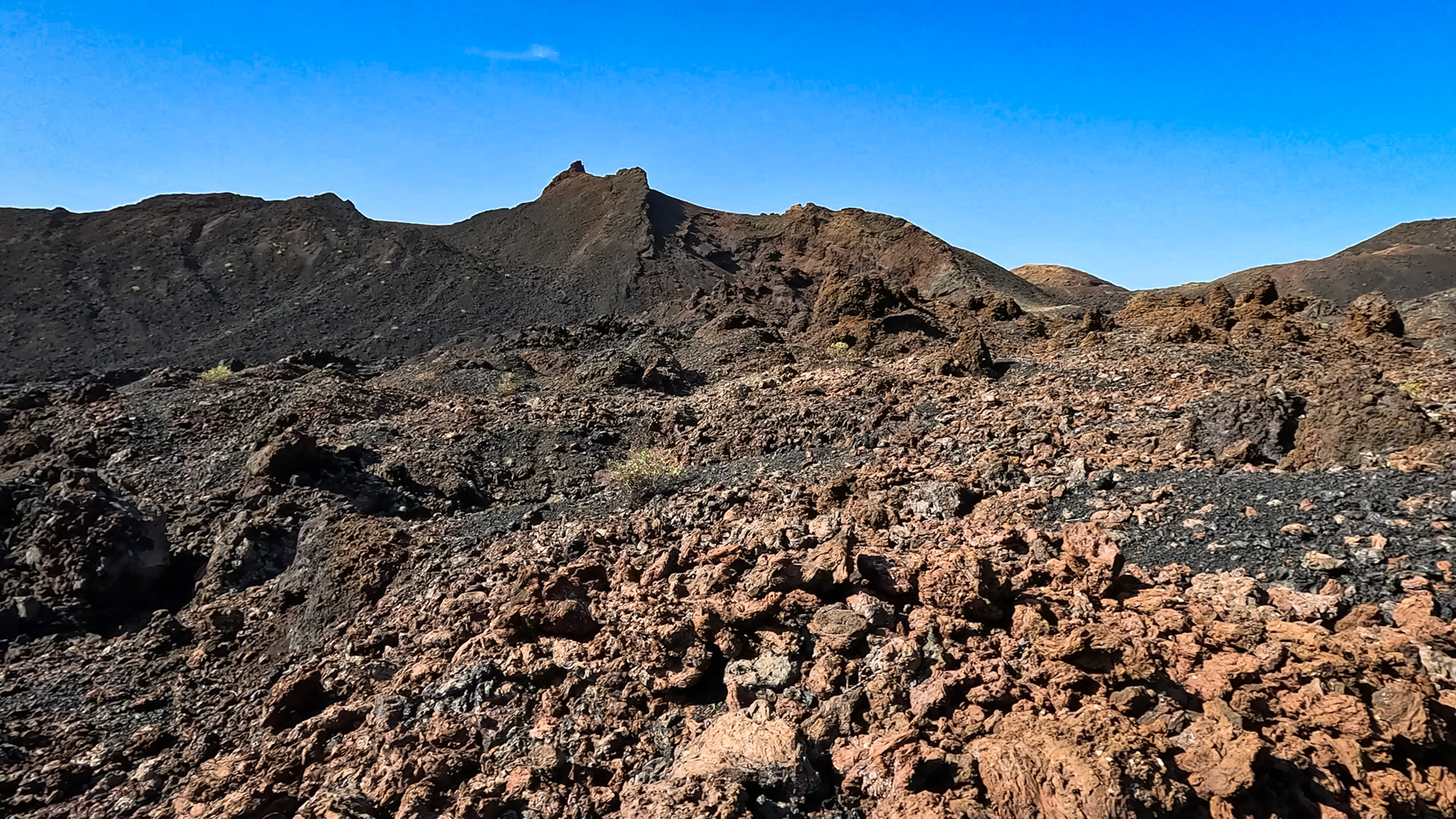
The Tajogaite 2021
On September 19, 2021, the Tajogaite eruption began on the western flank of the Cumbre Vieja. For 85 days, lava flowed across the Aridane plain, burying over 1,200 hectares, destroying more than 3,000 buildings, and creating two new coastal peninsulas that increased the island’s area by around 50 hectares. Reconstruction has since brought new road construction through the lava field.
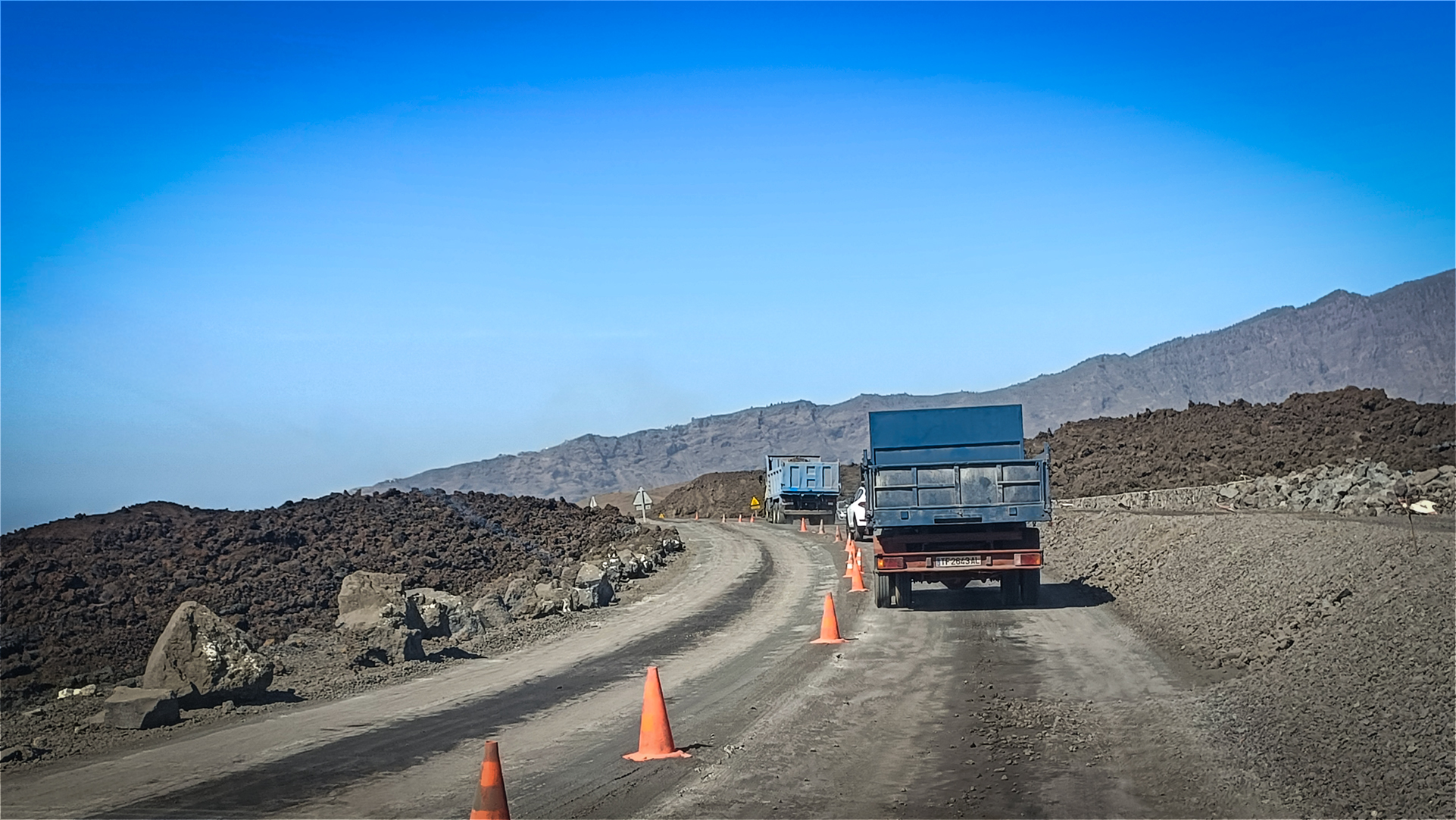
As part of ongoing reconstruction efforts by the municipalities of El Paso and Los Llanos, a CO₂ traffic light system monitors air quality in Puerto Naos and surrounding areas. Today, the young volcanic landscape serves as a reminder of the immense natural forces that continue to shape La Palma. The Tajogaite is the youngest volcanic cone in the Canary Islands and has already become one of the island’s most significant geological attractions.
La Palma Tomorrow: When Will the Next Eruption Occur?
It is impossible to predict precisely when the next eruption will occur. Historically, the intervals between eruptions range from 25 to 50 years. This does not mean an eruption is imminent. The dense monitoring network of the Instituto Geográfico Nacional (IGN) watches the island around the clock. Earthquakes, ground uplift, and changes in gas composition would typically provide days, weeks, or even months of advance warning before a new eruption.
Living with the Volcano
La Palma is an island in constant transformation. Volcanism is not just part of its past — it shapes its present and future. Those who experience the young lava fields, volcanic cones, and solidified lava flows recognise just how dynamically this landscape continues to form. Understanding that changes the way you see every corner of the island.
Frequently Asked Questions
Is La Palma dangerous because of volcanoes?
What is the Tajogaite?
How is La Palma monitored for volcanic activity?
Why do La Palma's volcanoes almost always erupt at the Cumbre Vieja?
Does volcanic activity create new land?
This article is based on the on-the-ground knowledge of the Gequo editorial team – publishers of the Reisezeit hiking guides and operators of Sunhikes.com. Last updated: May 2026