The Calima: When the Sahara Visits La Palma
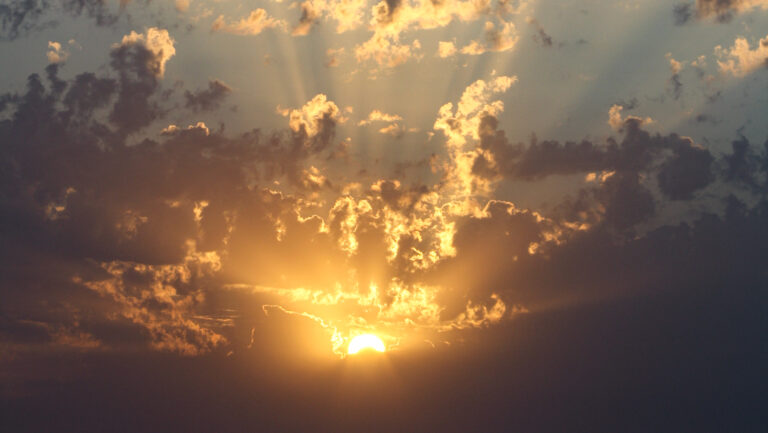
You feel it before you see it. The air grows drier, the light shifts — a muted orange-brown instead of the usual Atlantic blue. Then the horizon hangs in a milky haze, the sun looks as if seen through parchment, and a fine reddish dust coats every surface. Welcome to the Calima — the weather phenomenon that reaches La Palma several times a year, plunging the island into a completely different atmosphere for a few days.
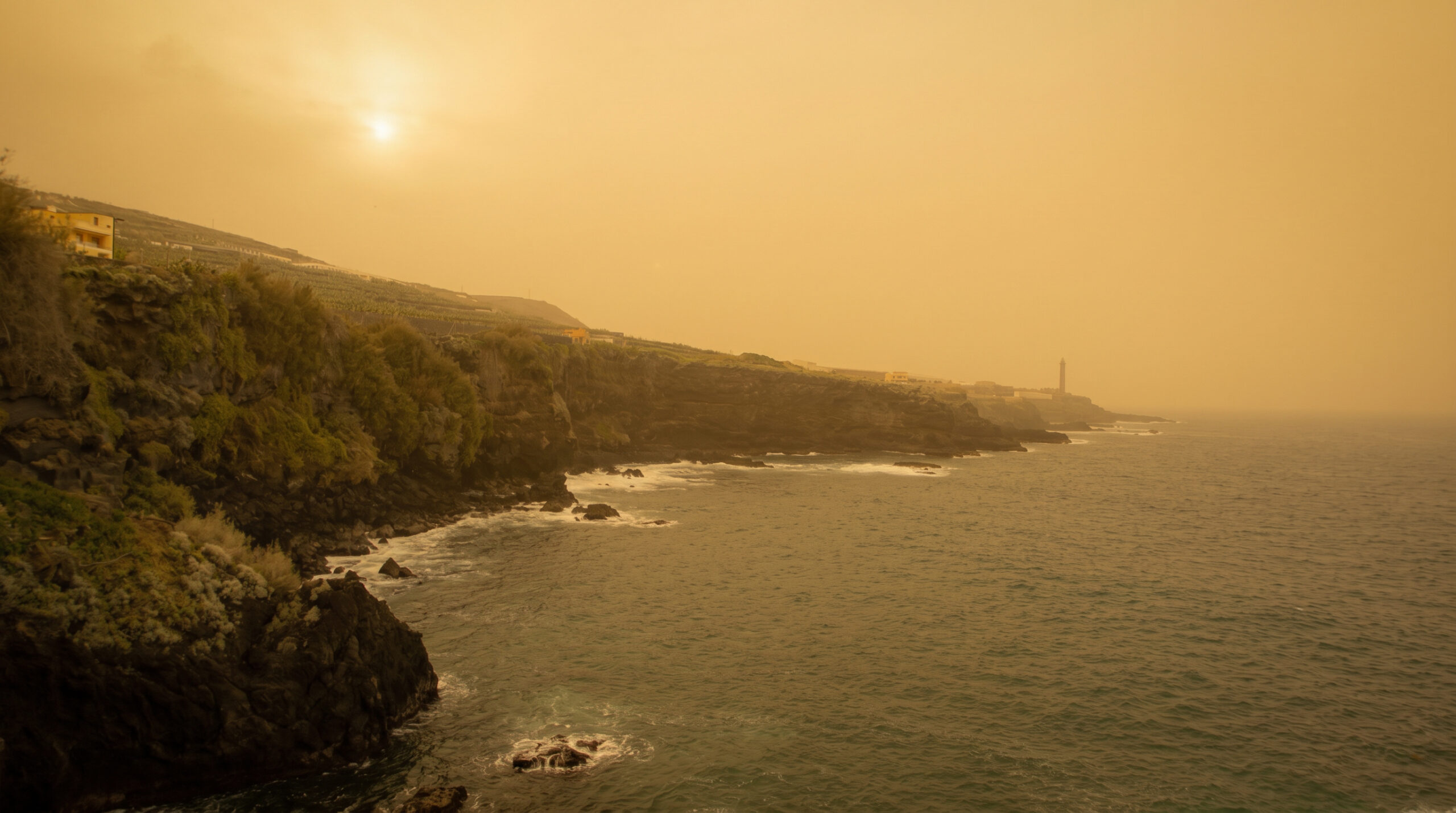
Severe Calima events bringing extreme heat occur only once or twice a year. Lighter episodes, however, are far more frequent — in winter they are often only noticeable by the unusually warm air, a hazy horizon, and a thin coating of Saharan dust on vehicles and windows.
What Is the Calima?
The Calima is a dry easterly wind that carries Saharan dust from North Africa across the Atlantic to the Canary Islands. The fine particles can travel vast distances, typically drifting at altitudes between 1,000 and 4,000 metres.
During a Calima event the dust hangs in the air as an orange-brown veil and transforms the island’s light. When precipitation coincides with a Calima — which is unusual — the dust particles are washed out and can cause what is known as blood rain: a reddish discoloration of rainwater and surfaces.
Calima events typically last just a few days. The strongest events occur most frequently in summer, particularly between July and September, but can also happen during the transitional seasons and in winter. Meteorologists usually give one to two days’ advance notice of stronger events; up-to-date information is provided by the Canary Islands weather services and Spain’s national weather agency AEMET.
Heat in the Mountains: The Special Calima Effect on La Palma
A distinctive feature of the Calima on La Palma is the unusual temperature distribution. The warm Saharan air frequently glides as a dry air layer over the cooler Atlantic air, causing temperatures in the mid-elevations and mountains to rise significantly higher than at sea level.
While places like El Paso, Tijarafe, or the high elevations around the Roque de los Muchachos can reach extreme temperatures, the coast often remains considerably more comfortable thanks to the influence of the Atlantic. A Calima can therefore bring temperatures above 40 °C in the interior of the island, while beaches like Tazacorte or Puerto Naos can feel noticeably cooler.
How to Handle a Calima
Intense outdoor physical activity should be avoided during a strong Calima. The fine dust particles can penetrate deep into the airways and are particularly stressful for people with asthma or other respiratory conditions. Anyone going outside should drink plenty of fluids, avoid the midday heat, and consider wearing sunglasses. For sensitive individuals, a light respiratory mask may be advisable.
Wildfire risk also increases significantly during a Calima: the air is dry, vegetation loses moisture, and warm downslope winds can promote fire spread. Open fires are strictly prohibited on La Palma at all times.
After a Calima, vehicles, windows, and solar panels often need cleaning, as the fine Saharan dust settles everywhere. For photographers, however, the phenomenon has a special side: the diffuse Saharan light creates soft contrasts and an almost otherworldly mood.
Calima and Tourism
A Calima is usually brief and rarely spoils an entire holiday. Anyone who monitors the weather can respond flexibly.
Calima days are well suited to museum visits, relaxed hours at your accommodation, or activities in sheltered areas. Those who do want to go outside will often find the most comfortable conditions at the coast: the cooling sea breeze usually makes coastal spots significantly more bearable than the baked mountain interior.
Living with the Calima
The Calima is La Palma’s African visitor — dry, warm, and sometimes spectacular. It changes light, landscape, and temperatures within just a few hours. Those who understand the phenomenon can enjoy the island even during a Saharan weather event and consciously experience the unusual atmosphere.
Frequently Asked Questions
How often does a Calima occur on La Palma?
Is a Calima dangerous?
Can you go to the beach during a Calima?
Why is it hotter in the mountains than at the sea during a Calima?
Can you go hiking during a Calima?
This article is based on the on-the-ground knowledge of the Gequo editorial team – publishers of the Reisezeit hiking guides and operators of Sunhikes.com. Last updated: May 2026