The Canarian Pine: Fire, Clouds, and the Water of La Palma
No tree shapes La Palma’s landscape more than the Canarian pine — Pinus canariensis. It covers large parts of the island’s mountain regions, grows at elevations above 2,000 metres, and has developed extraordinary traits through evolution: it survives fire, filters moisture from the trade wind clouds, and helps return atmospheric water to the soil. Without it, La Palma would be a different, drier island.
Fire Resistance: Built to Survive
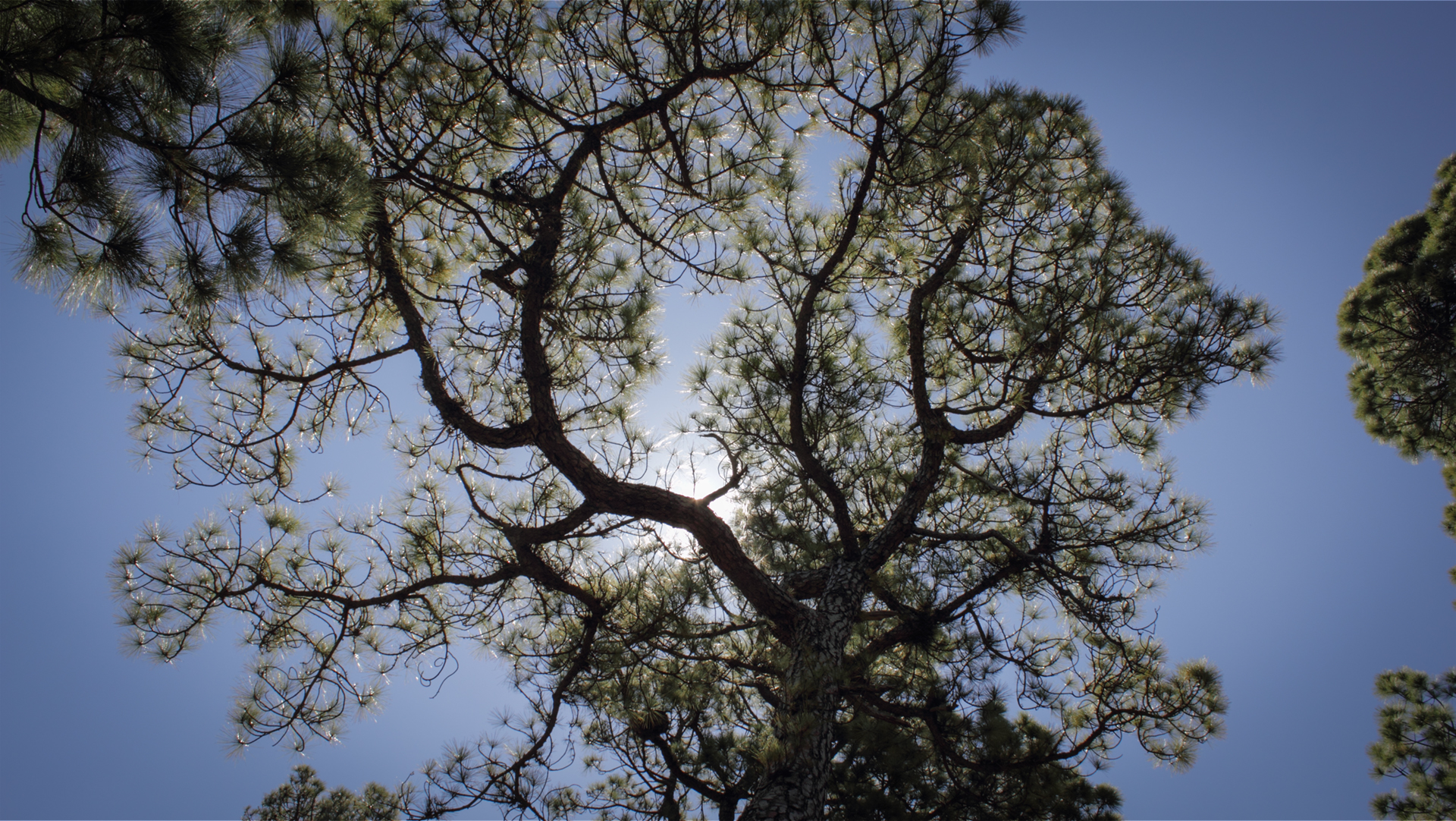
The most remarkable trait of the Canarian pine is its fire resistance. The thick bark protects the cambium — the living cell layer just beneath the bark — from heat. When a pine forest burns, the trunks look black and dead after the fire. Then, just a few weeks later, they begin to re-sprout from the trunk itself: from so-called dormant buds hidden deep within the bark. A pine forest swept by fire often looks greener within a year than it did before.
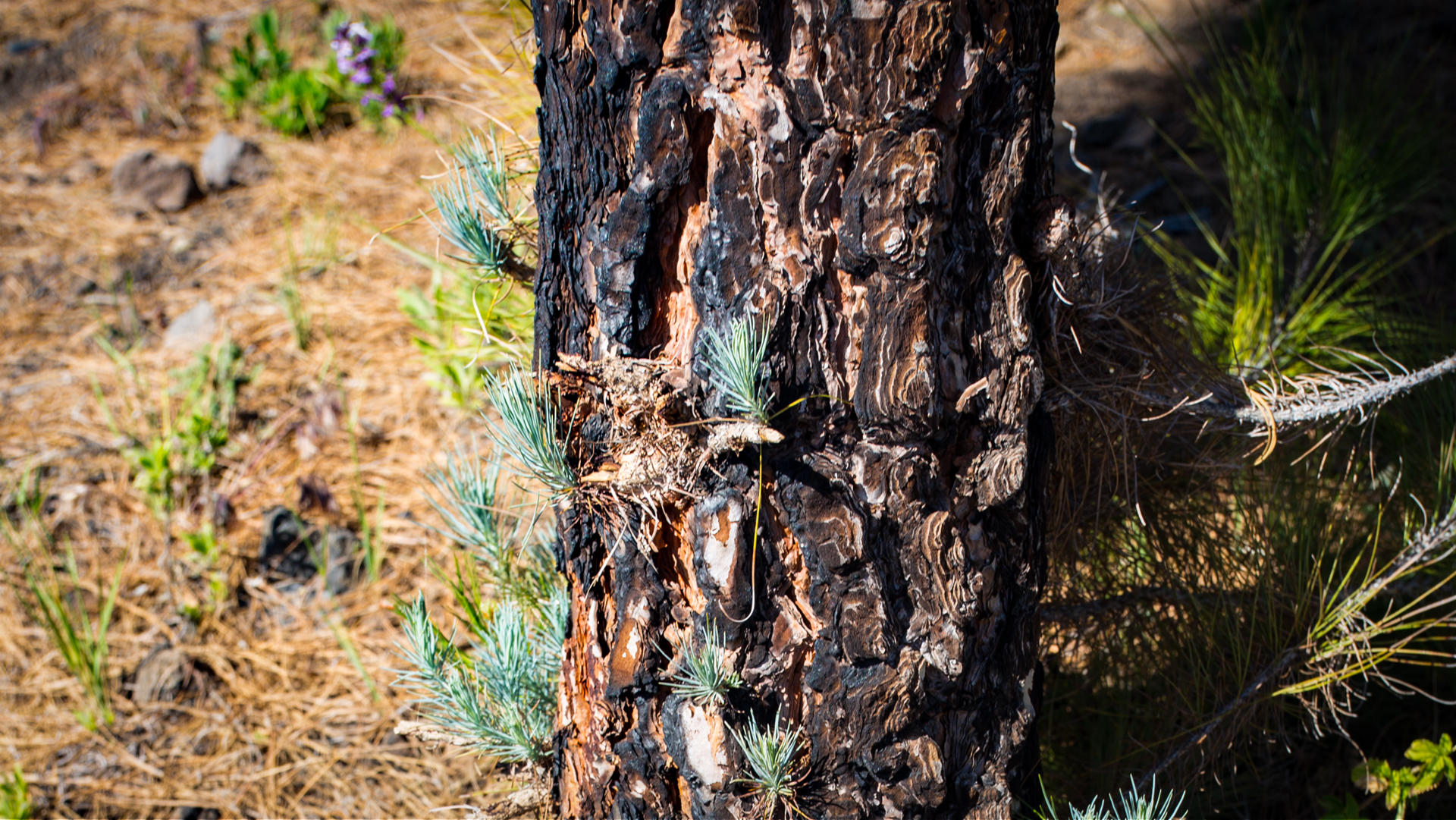
This ability evolved because wildfires occurred naturally in the Canary Islands — through lightning strikes and volcanic activity. The pine has adapted to this selective pressure over thousands of years.
Cloud Combing: The Silent Water Source
The long needles of the Canarian pine comb moisture from the trade wind clouds — a process known as horizontal precipitation. Meteorologically this water does not count as rainfall, but it fulfills a similar function: fine water droplets condense on the needles, collect, and drip onto the forest floor. There they seep into the porous lava rock and contribute to the replenishment of underground water reserves.
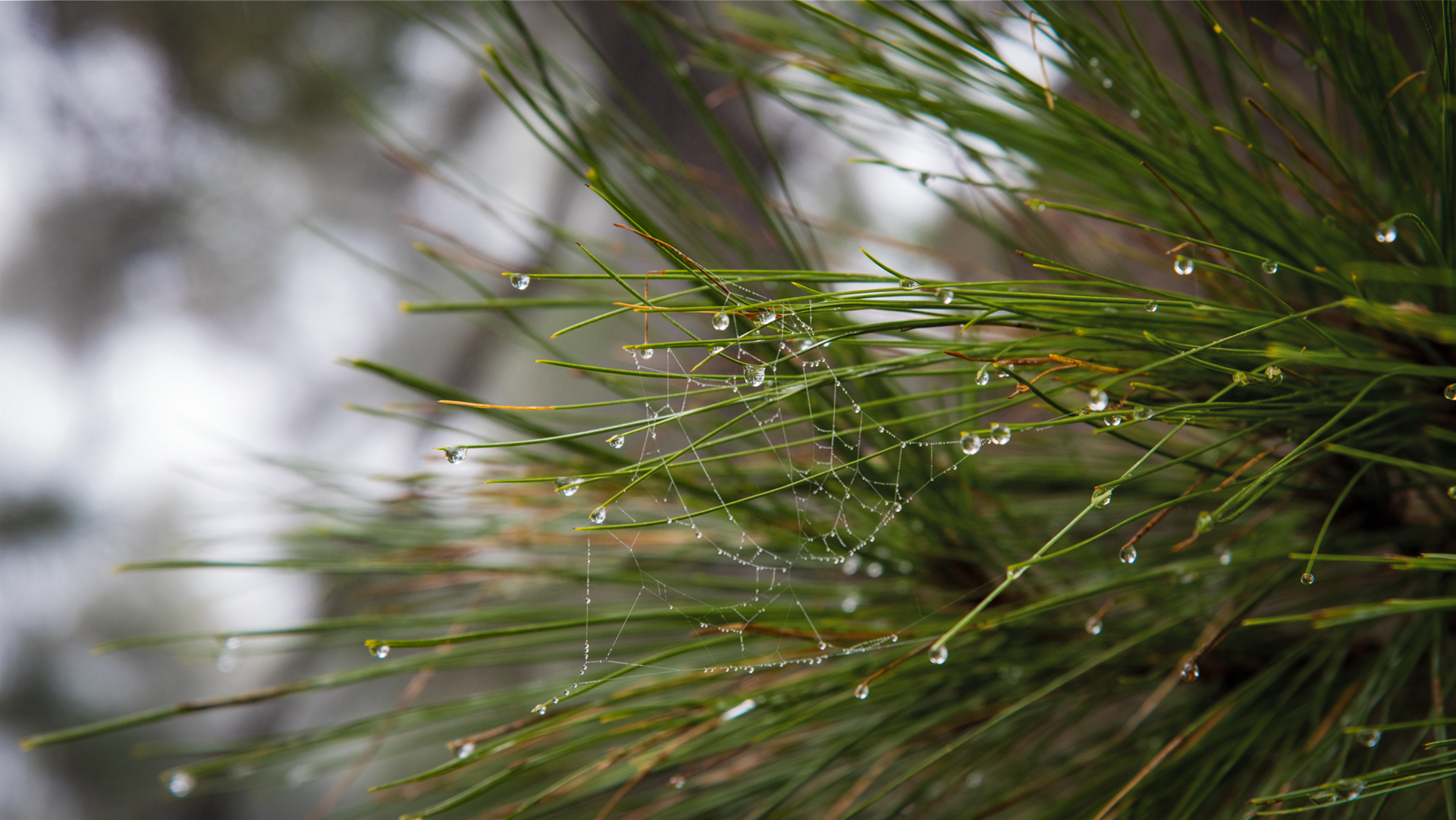
The Canarian pine is uniquely adapted for this: its needles, up to 30 centimetres long, grow in clusters of three. This larger surface area improves its ability to collect moisture from passing clouds.
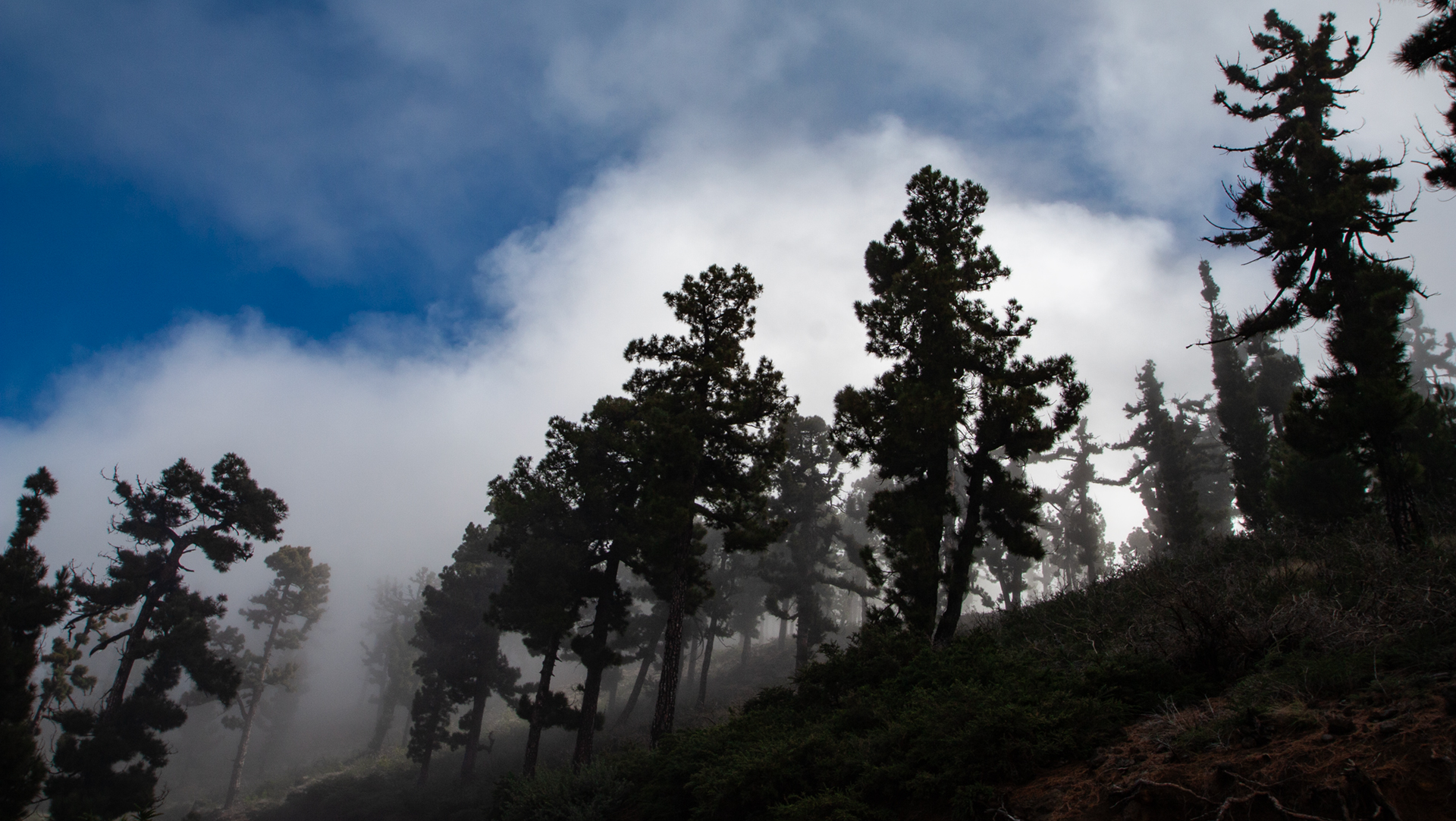
Studies show that horizontal precipitation contributes significantly to replenishing La Palma’s groundwater reserves. The pine forest is more than just a scenic feature — it is an essential part of the island’s natural water cycle.
The Most Beautiful Pine Forests on La Palma
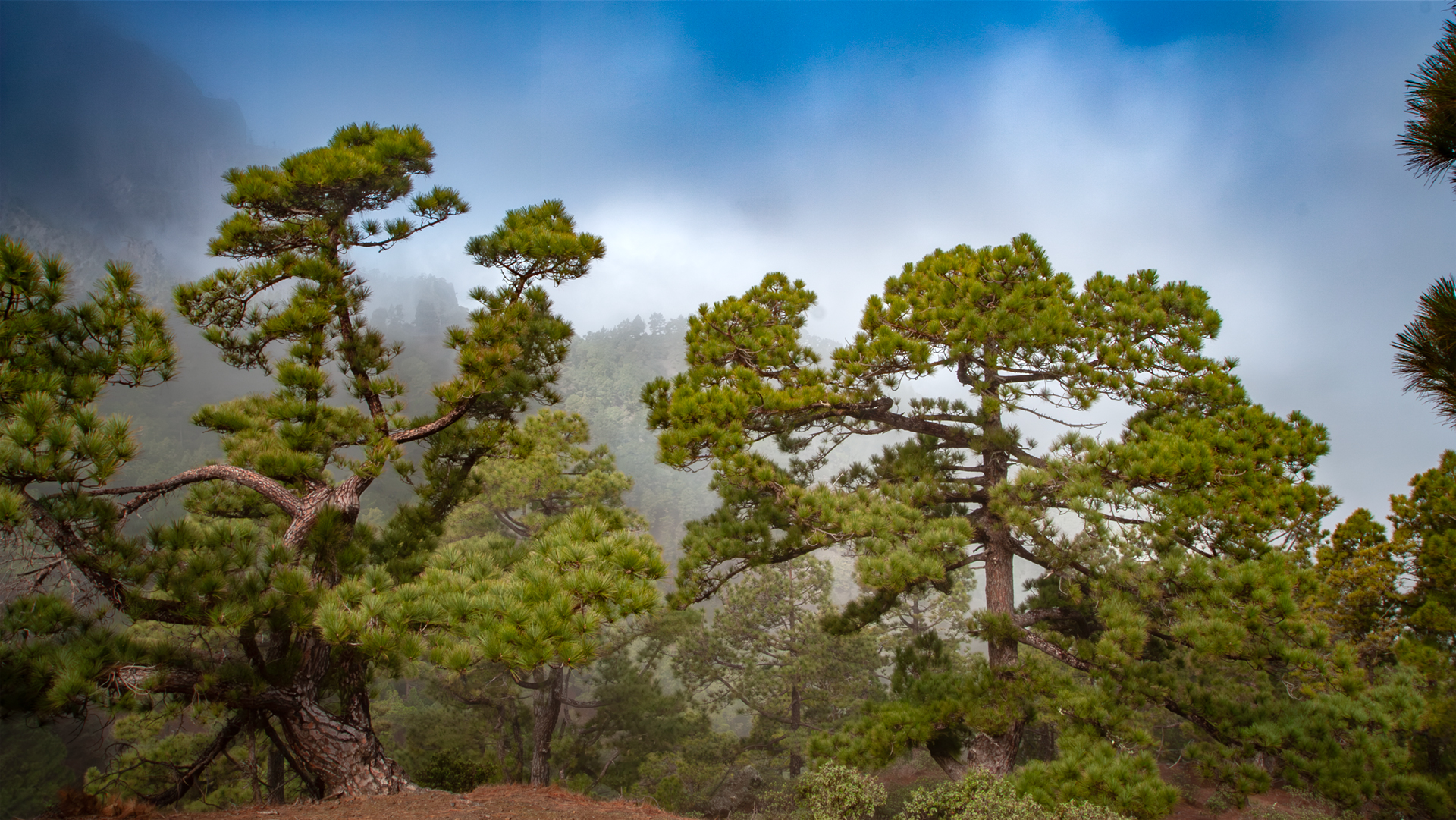
The densest and most beautiful stands grow along the hiking trails of the Cumbre Vieja and the Caldera de Taburiente. Hiking trail PR-LP 8 passes through magnificent pine zones at 1,600–1,800 metres. The descent from Los Brecitos into the Caldera (PR-LP 13) is lined with ancient pines, some reaching 30 to 40 metres in height. Such monumental trees can still be found on La Palma; on the European mainland, the species died out naturally millennia ago and is known there only from fossil records. Today, the Canarian pine grows outside the Canary Islands only as an ornamental tree in parks and gardens.
Living with Fire and Clouds
The Canarian pine is La Palma’s silent hero — fire-resistant, cloud-combing, and water-supplying. Anyone hiking through a pine forest at 1,800 metres is moving through an ecosystem that has shaped and protected the island for thousands of years.
Frequently Asked Questions
Why Is It Called the Canarian Pine?
How Old and How Tall Can Canarian Pines Grow?
When Does the Canarian Pine Flower?
Why Can the Canarian Pine Re-sprout After Wildfires?
How Does the Canarian Pine Collect Water From the Clouds?
This article is based on the on-the-ground knowledge of the Gequo editorial team – publishers of the Reisezeit hiking guides and operators of Sunhikes.com. Last updated: May 2026