Banana Farming on La Palma: The Sweet Backbone of the West Coast
Travelling west on La Palma, you see them everywhere: broad green leaves lined up in dense plantations, wrapped in bright blue protective sheaths from which golden-yellow fruit clusters emerge. The banana — called Plátano in the Canary Islands — is La Palma’s most important export product and the defining landscape element of the west coast. Without it, the Aridane Valley would be economically poorer and the west coast’s scenery entirely different.
Why the Canary Island Banana Is Different
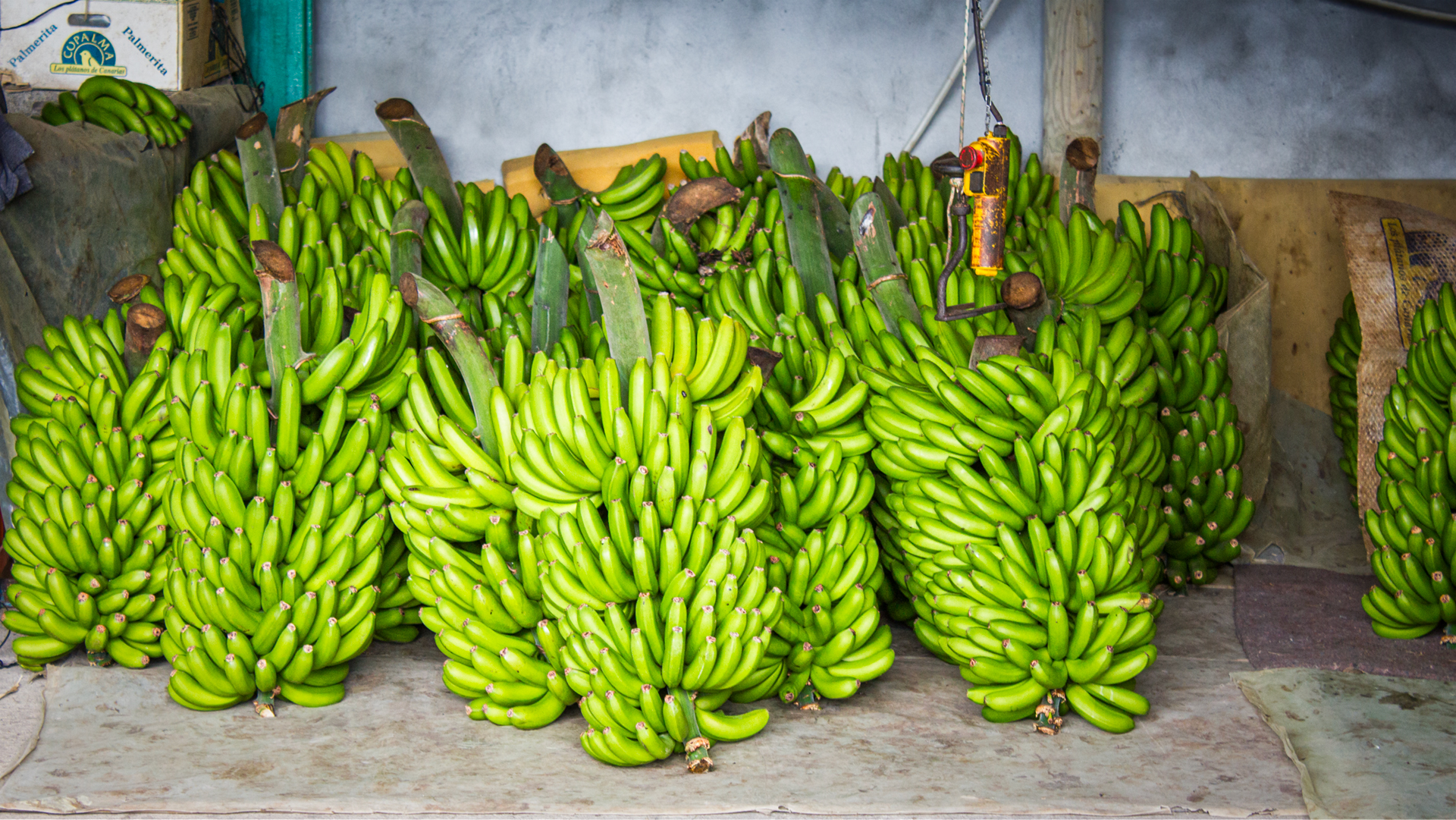
The Canary Island banana is smaller than its competitors from Ecuador or Costa Rica — but especially aromatic and sweet. The difference lies in the subtropical climate of the Canary Islands: thanks to mild Atlantic temperatures, the fruits ripen much more slowly and often remain on the plant for up to six months. During this time, more starch is converted to sugar, giving the Plátano de Canarias its intense flavor.
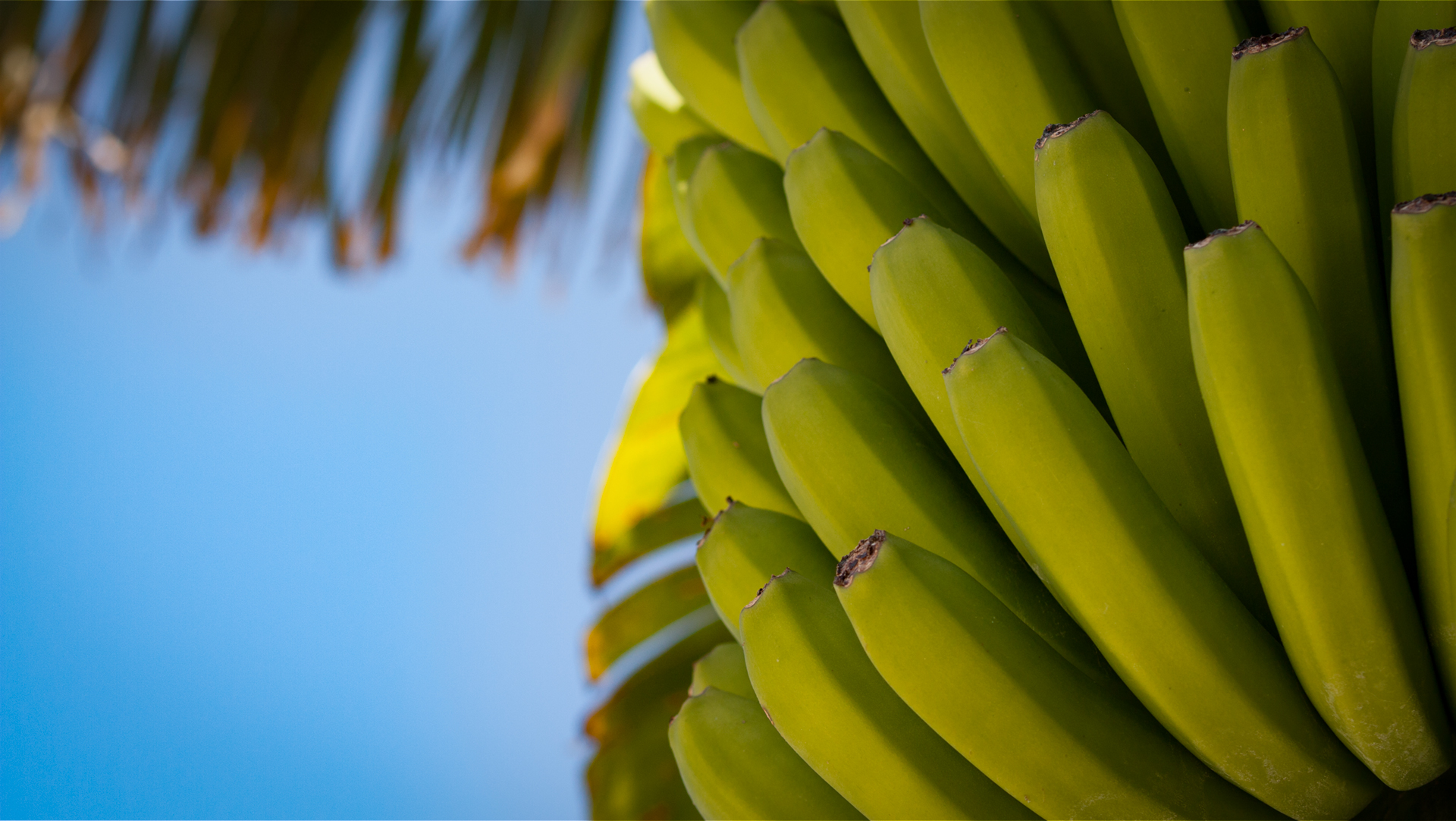
The Canary Island banana carries the protected geographical indication IGP Plátano de Canarias and is marketed primarily on the Spanish mainland. On La Palma, the variety Pequeña Enana dominates. Typical of fully ripe fruits are small black spots on the skin — known as the Motitas. They are considered a quality mark and are not a sign of spoilage.
Cultivation, Harvest, and Irrigation
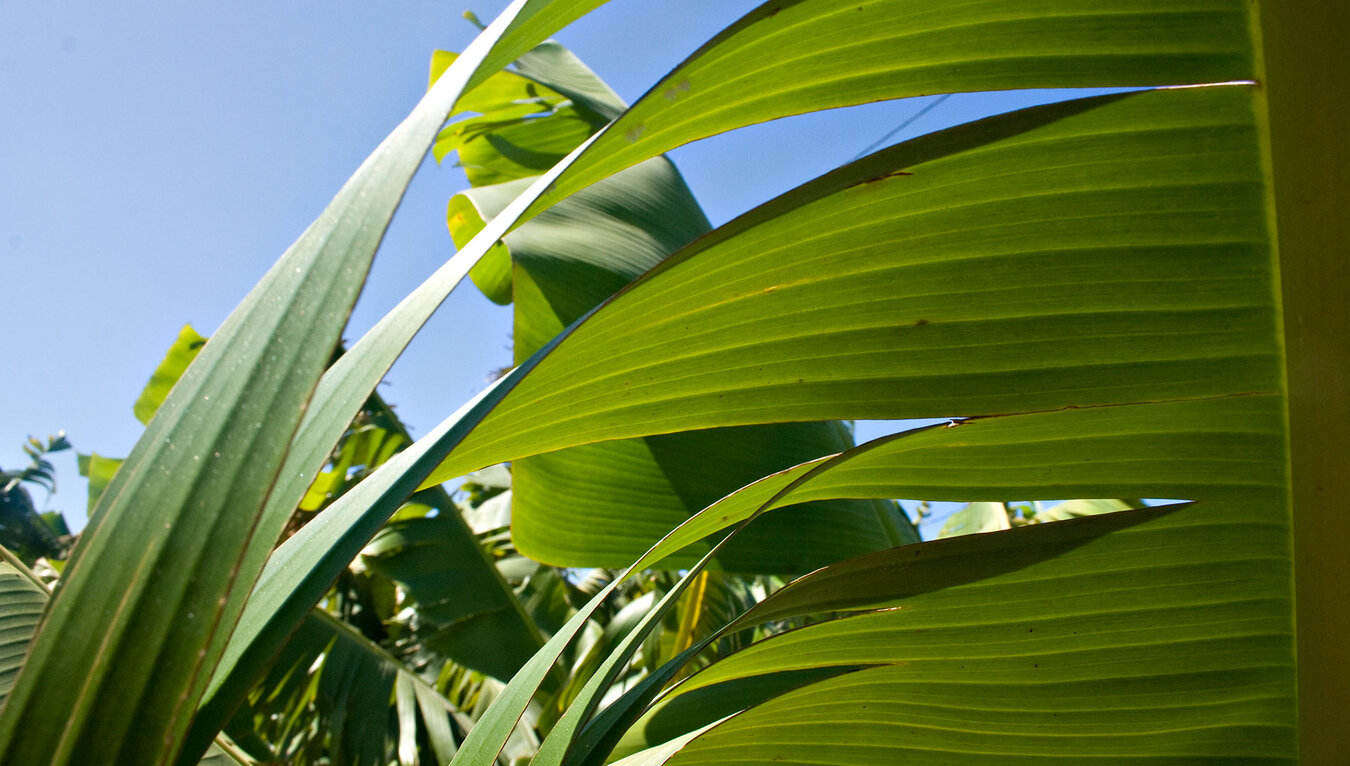
Banana plantations require large amounts of water. In the dry coastal regions of La Palma, it comes primarily from the Galerías, the traditional water tunnels of the island, distributed through an elaborate irrigation network of channels and pipes. The characteristic blue protective sheaths around the fruit clusters serve several purposes: they protect the bananas from wind and friction damage by the large leaves, keep insects away, and create a favorable microclimate that promotes ripening. Botanically, the banana is not a tree but a giant herbaceous plant. Each pseudostem bears fruit only once. After harvest, the spent stem is removed, while from the underground rhizome a new shoot — in the Canary Islands called Hijo (“son”) — already grows to produce the next bunch in the following year.
Tajogaite and the Plantations
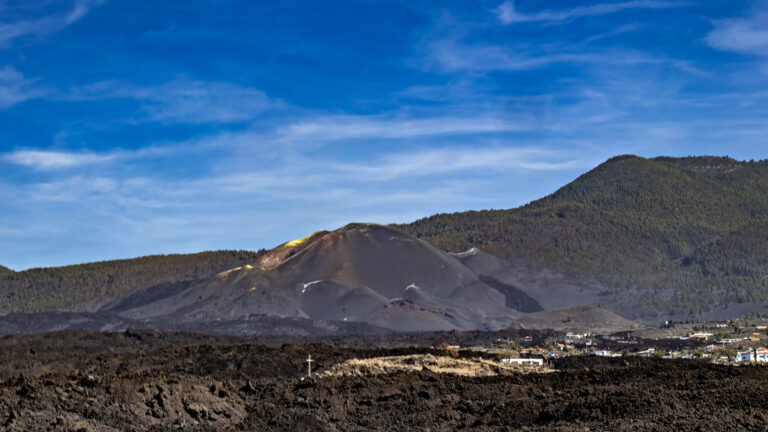
The Tajogaite eruption in 2021 hit banana farming particularly hard. Especially the coastal plantations in Todoque and the growing areas of Tazacorte were destroyed by lava flows or rendered unusable by severed irrigation lines.
The ongoing rebuilding efforts demonstrate the determination of the Palmeros. With great technical effort, devastated areas have been cleared and replanted. On some of these newly created areas, Canary Island bananas are already being harvested again — an impressive symbol of new beginnings after the natural disaster.
A Living Symbol of La Palma’s Resilience
The Canary Island banana is far more than an export product. It shapes the landscape, culture, and economy of La Palma like almost no other plant. Anyone who tries a freshly harvested Plátano de Canarias directly on the island experiences the unmistakable flavor created by volcanic soil, Atlantic climate, and traditional cultivation methods.
Frequently Asked Questions
Why do Canary Island bananas taste different from imported bananas?
How do you recognize a ripe Canary Island banana?
What are the blue protective sheaths on the plantations for?
How does a new banana plant grow after harvest?
What impact did the Tajogaite eruption have on banana farming?
This article is based on the on-the-ground knowledge of the Gequo editorial team – publishers of the Reisezeit hiking guides and operators of Sunhikes.com. Last updated: May 2026