Garafía: Where La Palma Has Not Yet Been Discovered
Well into the second half of the 20th century, Garafía was reachable only via difficult roads. The winding routes through the north of the island kept the municipality a secluded corner of La Palma for a long time. This geographic isolation was a challenge for its residents — but a stroke of luck for the landscape and culture.
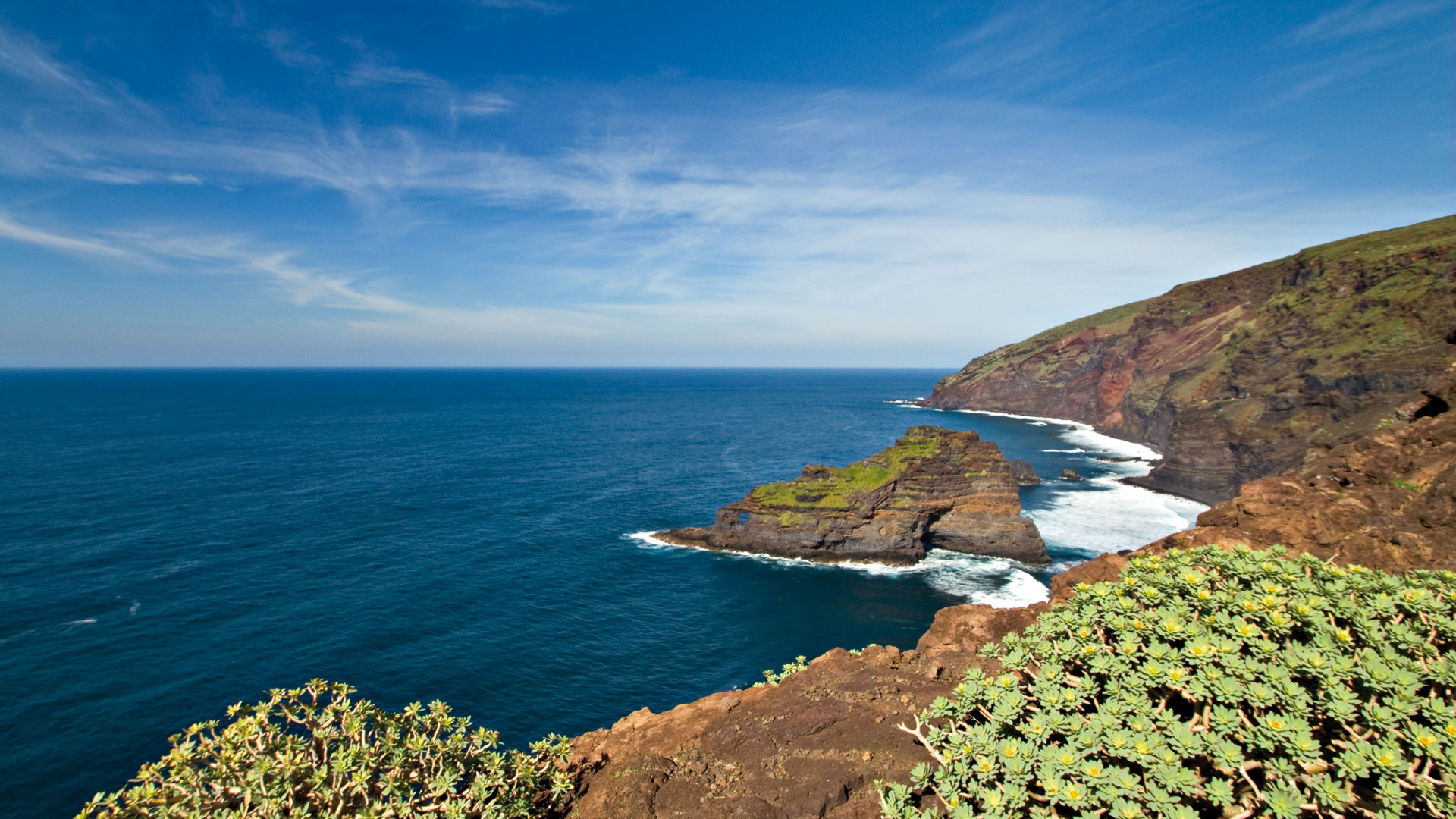
Garafía, the northernmost municipality of La Palma with barely 2,000 residents, has therefore remained what many other places lost long ago: entirely itself. Here, massive cliff faces drop vertically into the Atlantic, deep gorges cut through the landscape, and in remote hamlets ancient, gnarled dragon trees stand watch over the island as they have for centuries.
Visiting Garafía requires time — and ideally a rental car. The bus network is sparse, the roads are winding, and many of the finest spots lie off the main routes. But those who embrace this quiet corner of La Palma are rewarded with landscapes that rank among the most unspoiled on the island.
Santo Domingo de Garafía: A Village Outside of Time
In the midst of a nearly untouched, wild coastal landscape of imposing cliffs and deep gorges lies the small village of Santo Domingo de Garafía, the main town of the municipality. Of the nearly 5,000 residents Garafía counted in the 1950s, a large part emigrated over the decades — to Santa Cruz, to other Canary Islands, or to Venezuela.
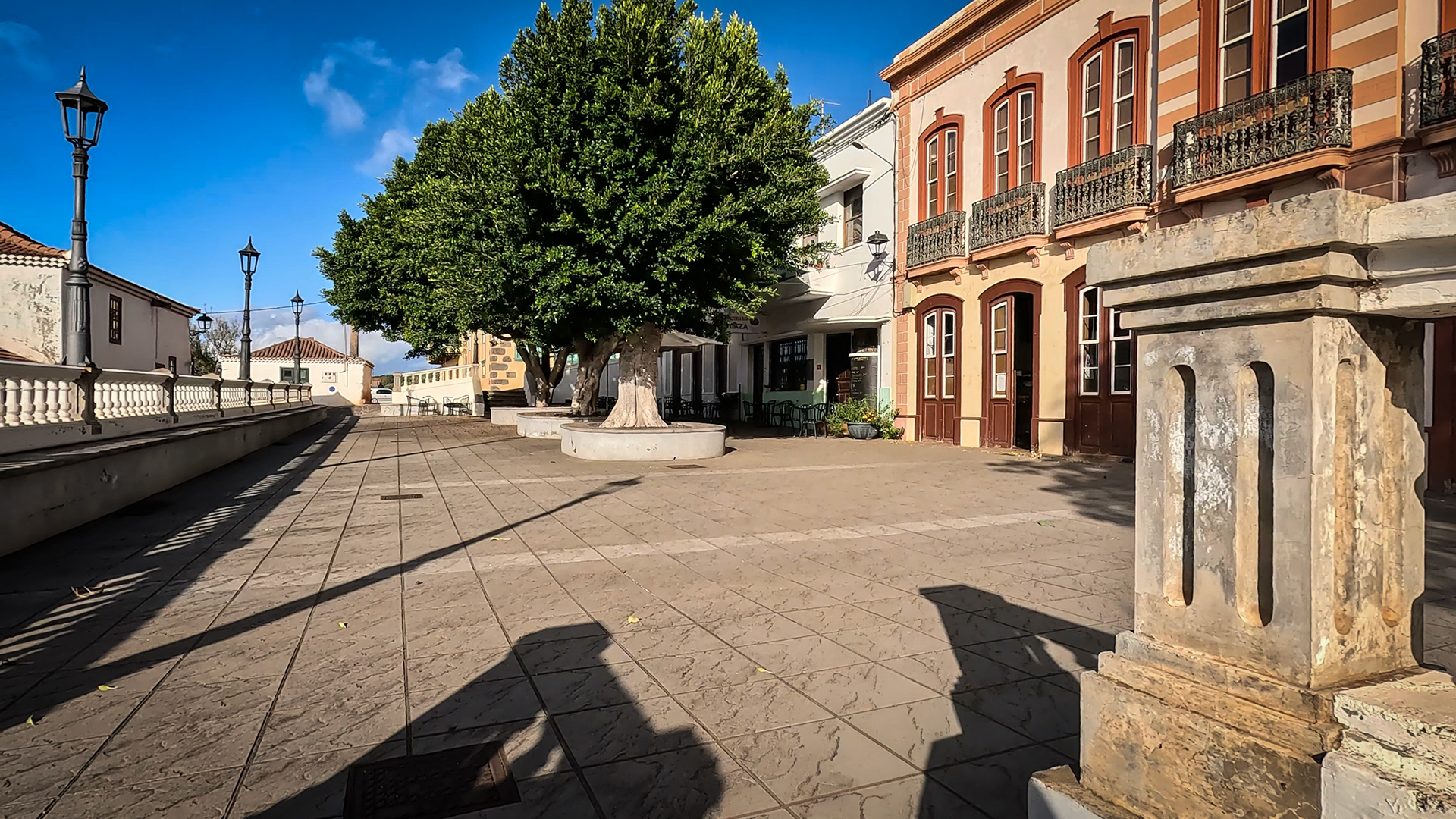
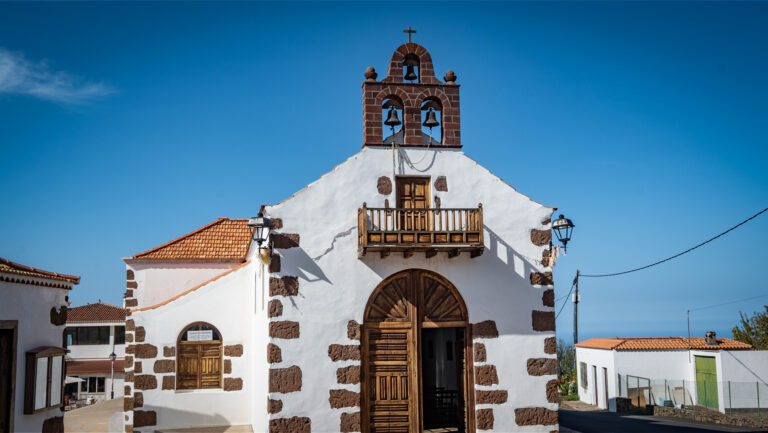
What remains is a quiet place with a historic centre, small squares and an atmosphere where life moves at a slower pace. Around the church, the bars, and the traditional houses, time seems to pass a little more slowly. The Iglesia Nuestra Señora de la Luz was built in the early 16th century and is one of the most significant historic buildings in the municipality. Particularly worth seeing are the artful Mudéjar-style wooden ceiling and the religious works of art inside. At the entrance to the village, the Casa de la Cultura, housed in a restored manor house, documents the history of rural life in Garafía — from agriculture to traditional crafts.
Just a few minutes away lies the archaeological site El Calvario. The petroglyphs there were created by the Benahoaritas, the indigenous people of La Palma, who lived here before Spanish conquistadors conquered the island in 1493.
Puerto de Garafía: Where the Sea Carves Its Way Through the Rock
The descent to the Puerto de Garafía, also known as Porís de Santo Domingo, is one of the most impressive experiences in the municipality. The historic harbour lies deep below the cliff coast, sheltered by massive rock walls. The distinctive Roque de Santo Domingo rises almost 30 metres out of the sea.
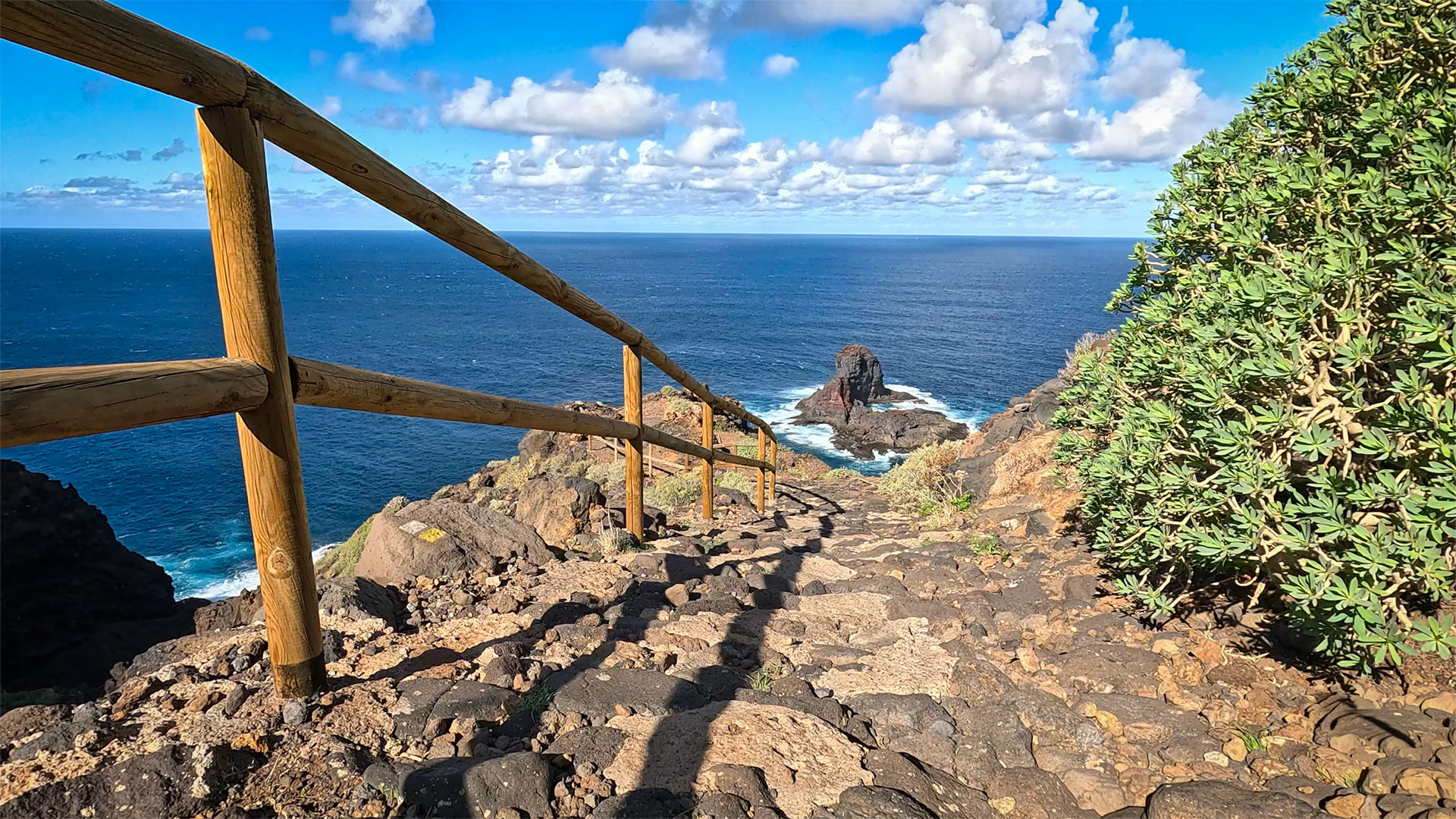 Porís de Santo Domingo with a view of the striking Roque de Santo Domingo.”/>
In former times, this small natural harbour was the link between the remote municipality and the outside world. Goods such as bananas, goats, and grain were transported here via steep paths and ropes, before modern roads changed life on the island.
The site is usually not suitable for swimming due to the heavy surf. But it is precisely this raw power that holds the appeal: when the waves crash against the black lava cliffs, you experience one of the most unspoiled coastal landscapes on La Palma.
Las Tricias and the Dragon Trees of Buracas
A few kilometres south of Santo Domingo lies the small hamlet of Las Tricias. The village is one of the finest starting points for a hike to the Cuevas de Buracas — ancient cave dwellings that were most likely already used by the Benahoaritas.
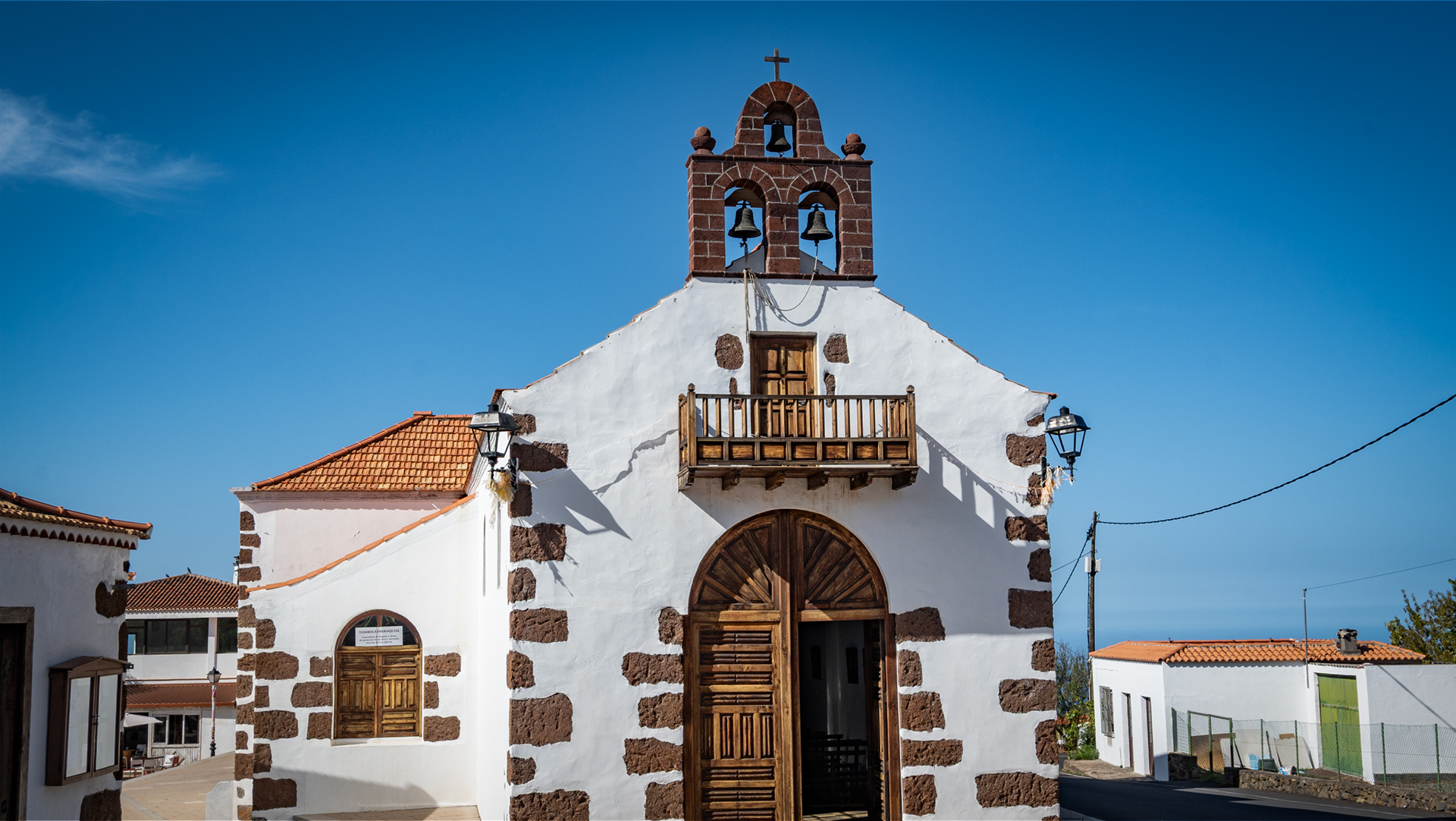 Cuevas de Buracas “/>
The trail leads through a landscape full of Canarian dragon trees (Dracaena draco). Some specimens are said to be several hundred years old. With their gnarled trunks and wide-spreading crowns set against the backdrop of the Atlantic, they are among the most impressive natural subjects on the island.
Las Tricias is also known for its alternative cultural scene, small craft studios, and cosy cafés that welcome hikers with regional products, fresh juices, and vegetarian specialities.
Queso de Garafía: The Taste of the North
A culinary specialty of the region is the Queso de Garafía. This robust goat’s cheese has been produced for generations using traditional methods and holds a protected designation of origin (D.O.P.).
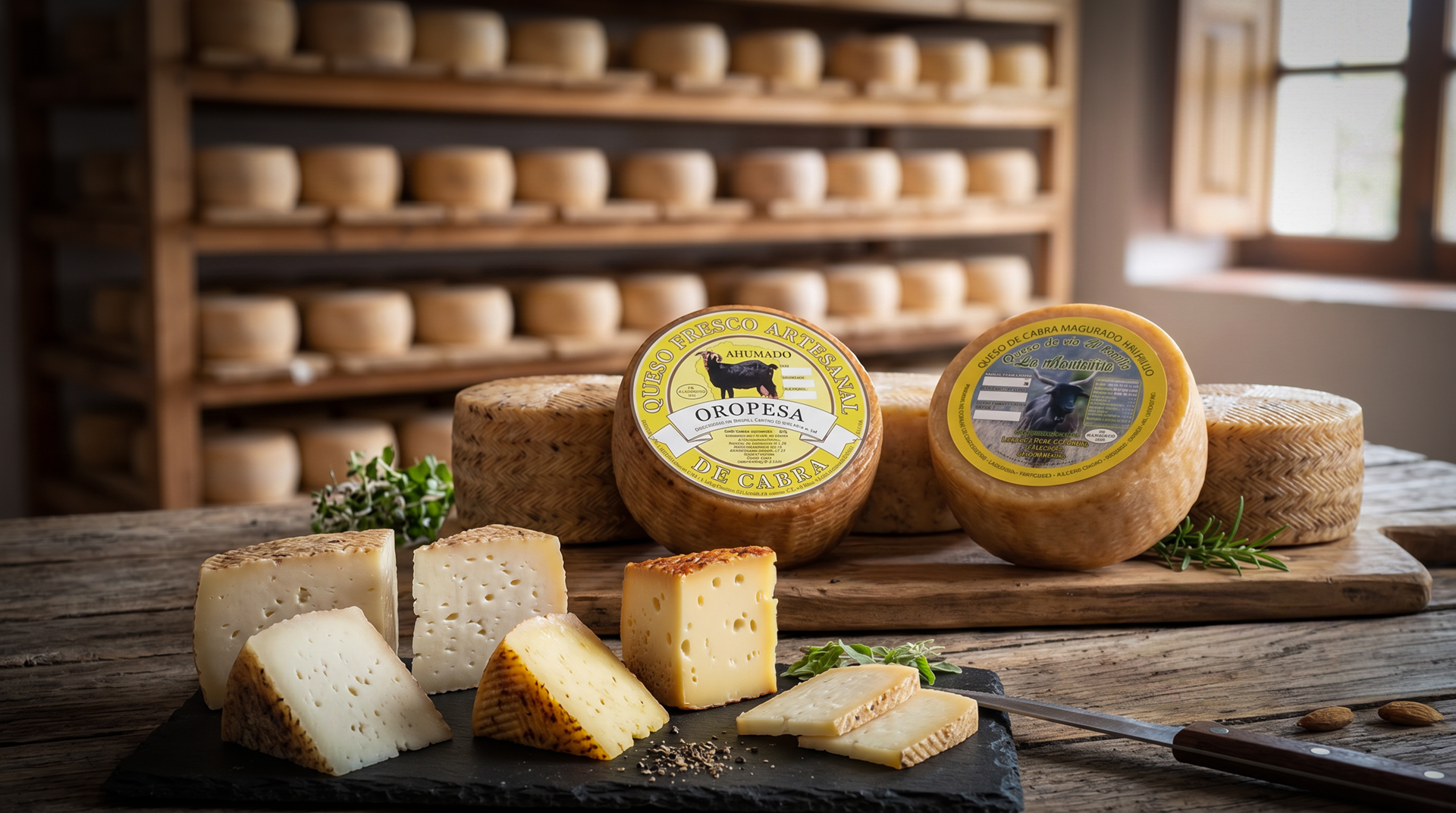 Queso de Garafía — the robust goat’s cheese from northwest La Palma, produced for generations according to old tradition.”/>
The municipality’s dairies have already received top honours at international cheese championships. The cheese can be bought directly at local queserías, in small village shops, or at the farmers’ market in nearby Puntagorda. The flavour perfectly matches the landscape: robust, unpolished, and a little wild — just like Garafía itself.
Garafía at a Glance
| Category | Information |
|---|---|
| Location | Wild northwest of La Palma |
| Getting There | Approx. 1.5 hours from Santa Cruz or Los Llanos |
| Highlights | Dragon trees of Las Tricias, Cuevas de Buracas, Puerto de Garafía |
| Cuisine | Award-winning Queso de Garafía |
| Recommendation | Rental car required |
The Last Wild Refuge of La Palma
Garafía is the La Palma that has not yet made it into the travel magazines. Those looking for dragon trees, ancient harbours, petroglyphs, and the island’s finest cheese — all without other tourists — come here.
Frequently Asked Questions
How do you best get to Garafía?
What should you not miss in Garafía?
Are there accommodations in Garafía?
Where can you buy <em>Queso de Garafía</em>?
This article is based on the on-the-ground knowledge of the Gequo editorial team – publishers of the Reisezeit hiking guides and operators of Sunhikes.com. Last updated: May 2026