Playa de la Veta – Black Sand Beach Through the Rock Tunnel
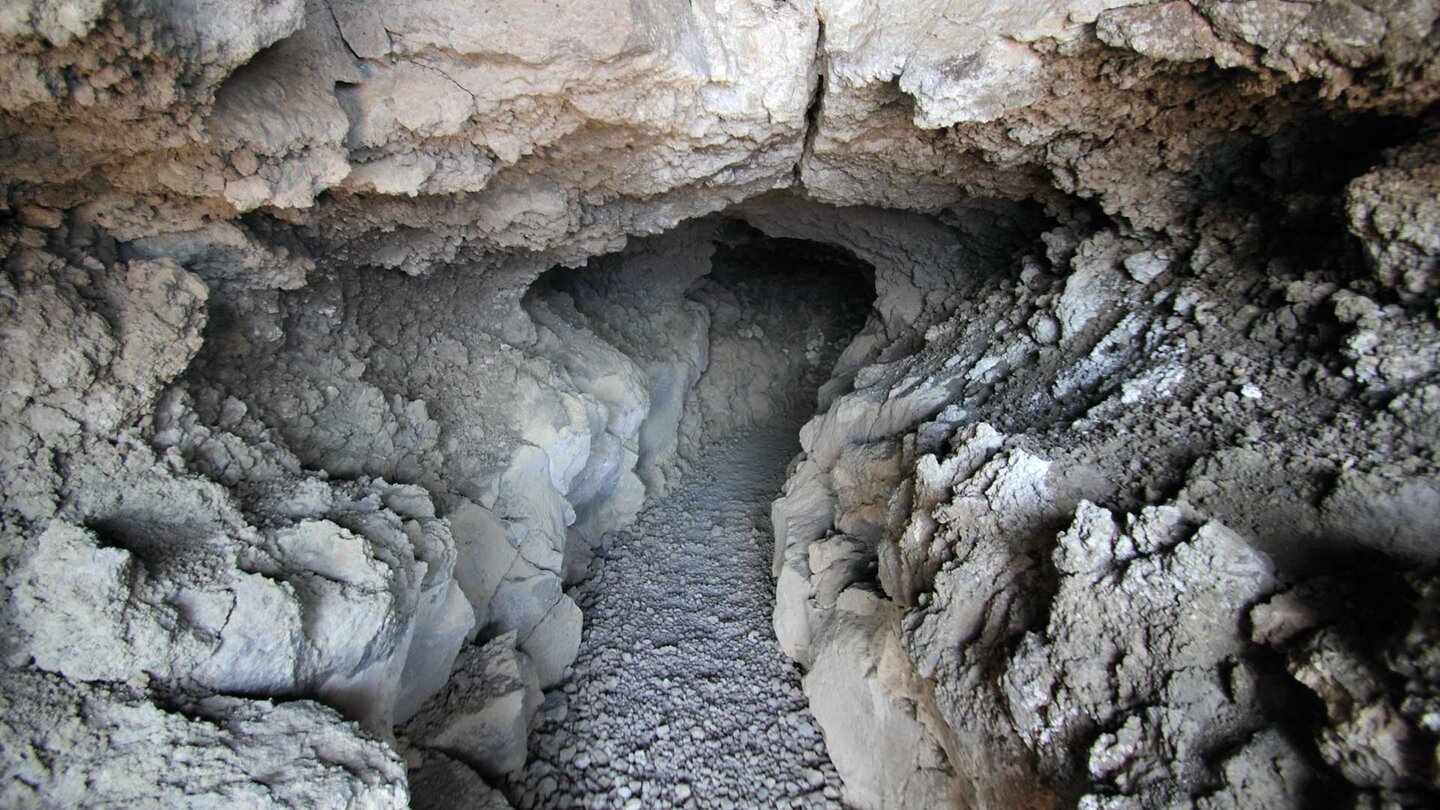
It starts at a car park at the end of a winding road, leading to a dark tunnel cut through the rock. At the other end the coast opens up, and below, at the base of a 200-metre-high cliff, lies Playa de la Veta: a black sand beach that forms only in spring and summer, and is reclaimed by the sea each winter. A route over cliffs, stone steps and steep faces.
The Journey is the Experience
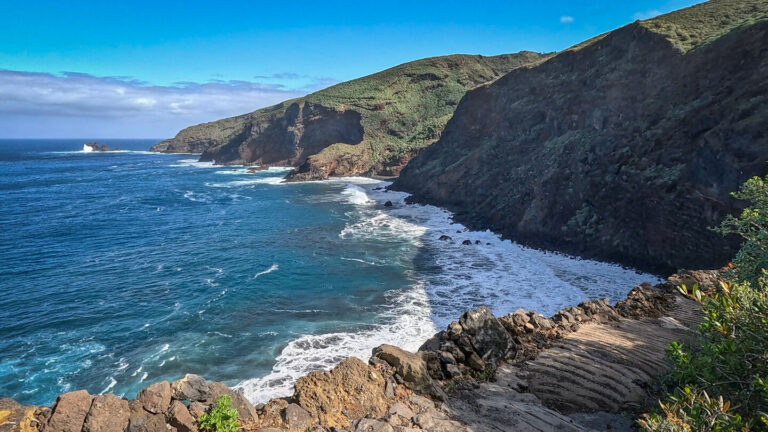
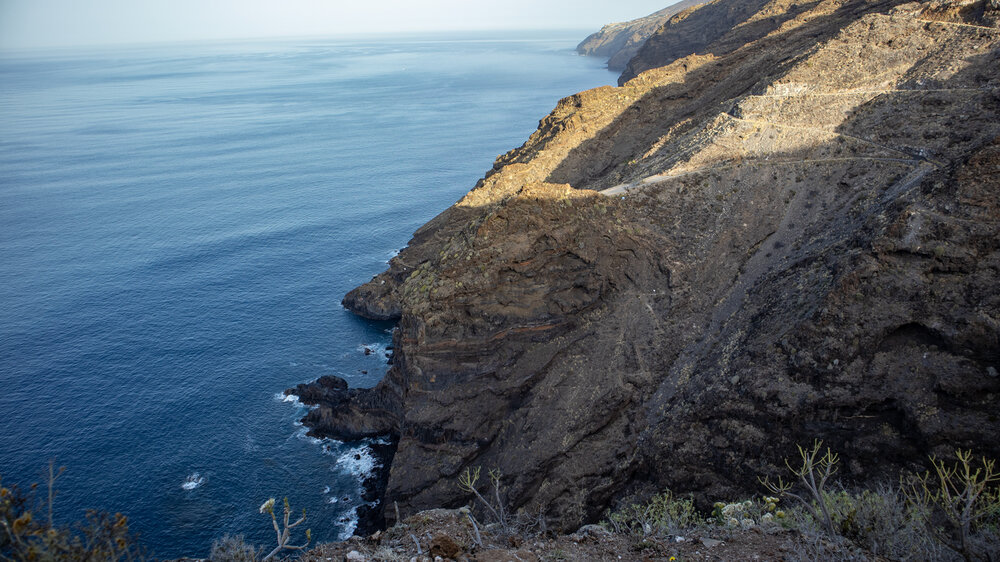
You park the car at the upper end and walk for about 25 minutes. An illuminated tunnel opens the first section of the path to the beach – after that comes the walk along the cliff coast, which offers breathtaking views over the steep west coast of La Palma. The trail itself is a central part of the experience — demanding respect, but entirely manageable.
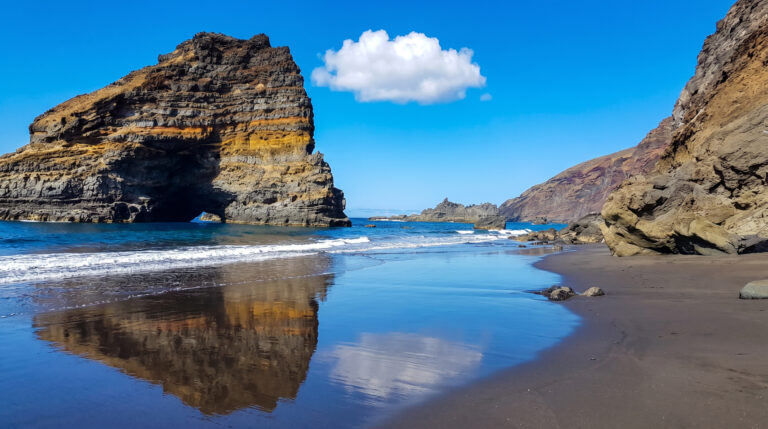
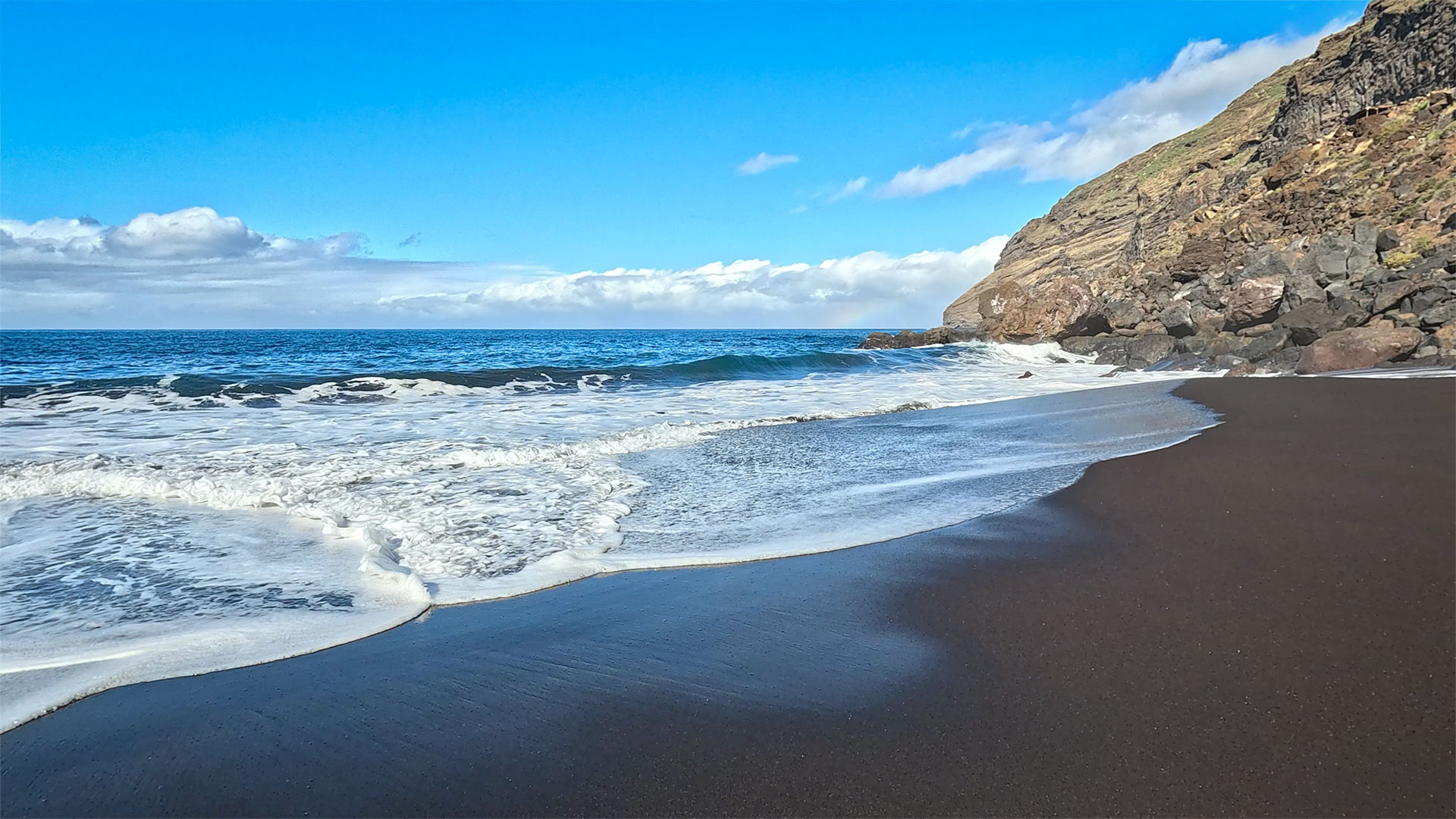
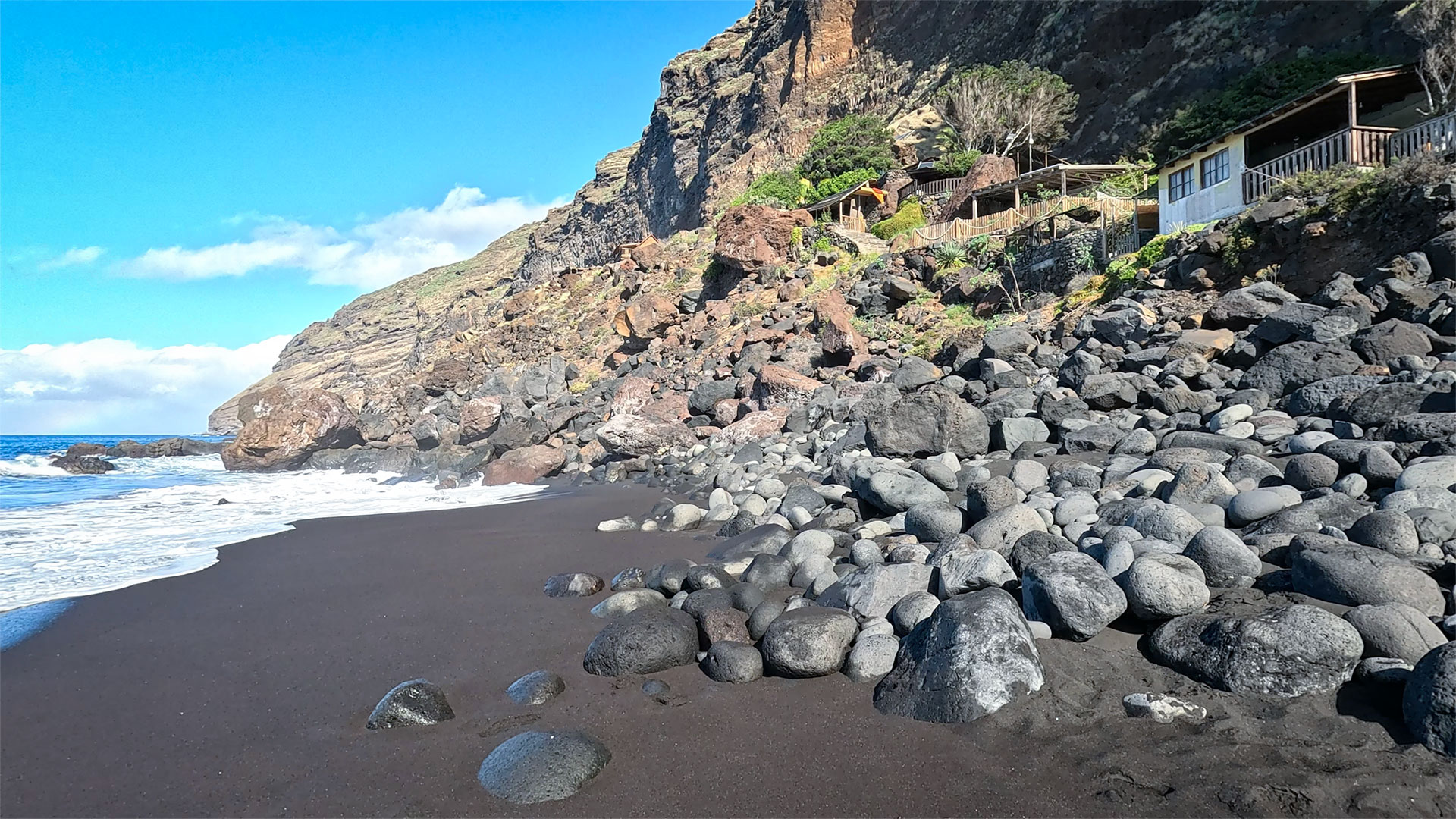
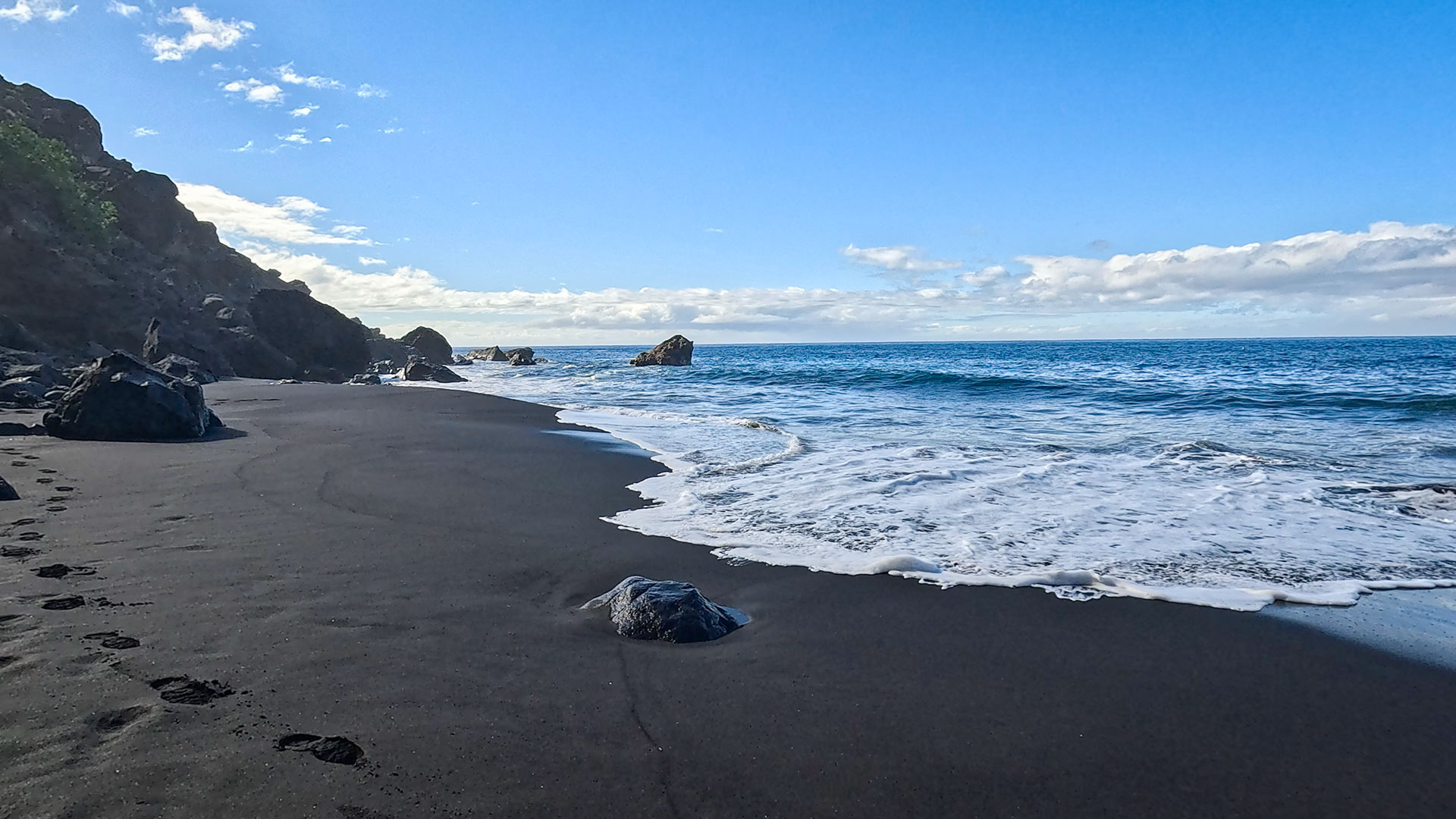
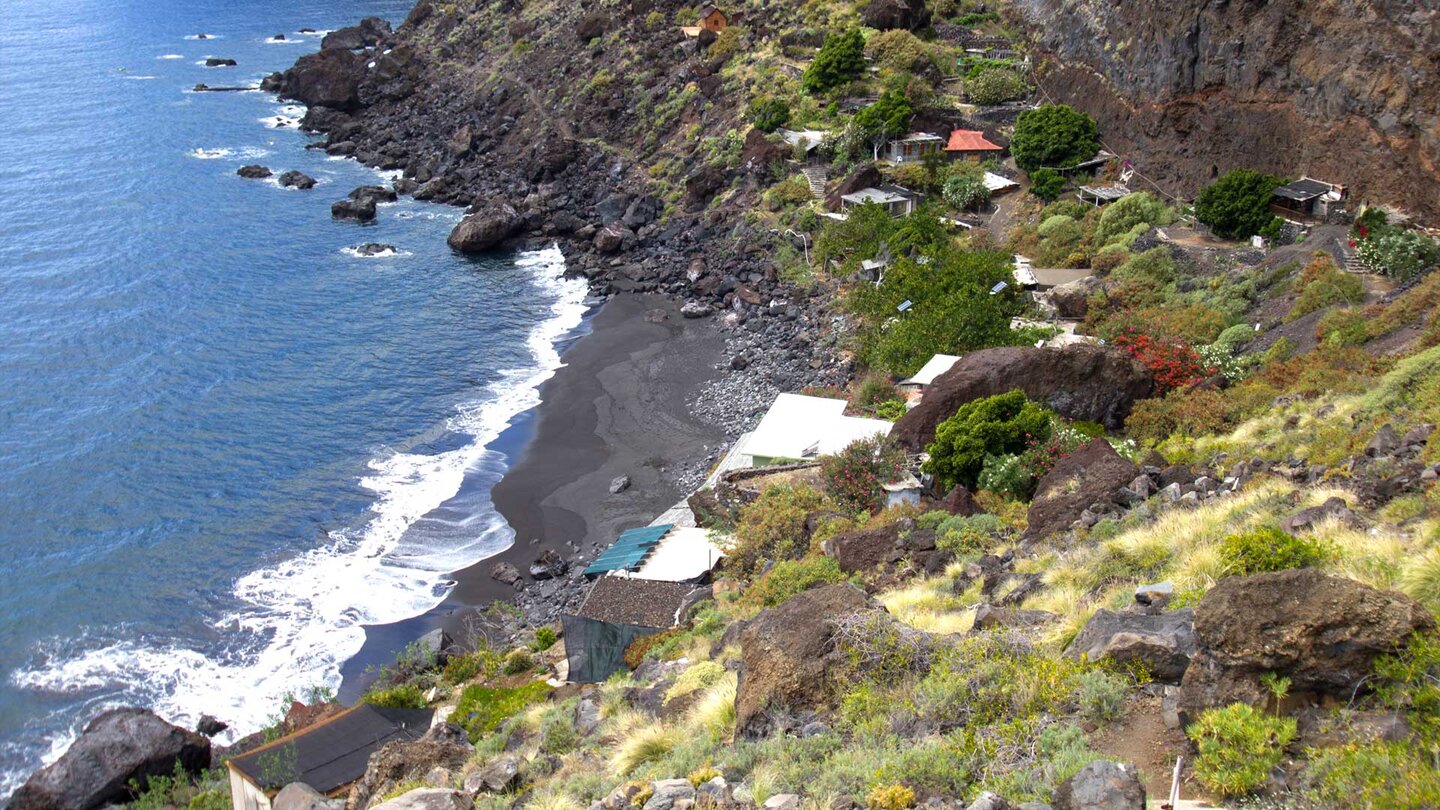
Once at the bottom, you are greeted by fine black sand and crystal-clear waters, with small fishing huts used by locals at weekends. The width of the beach varies with wave height and water level – in winter no sand is often visible, while in summer the bay can be 30 to 40 metres wide.
Swimming & Safety
Strong currents even in calm-looking conditions – suitable for experienced swimmers only.
No rescue service. The descent path is demanding – sturdy footwear is essential.
In winter the beach can disappear completely – visits worthwhile only between April and October.
The Seasonal Beach
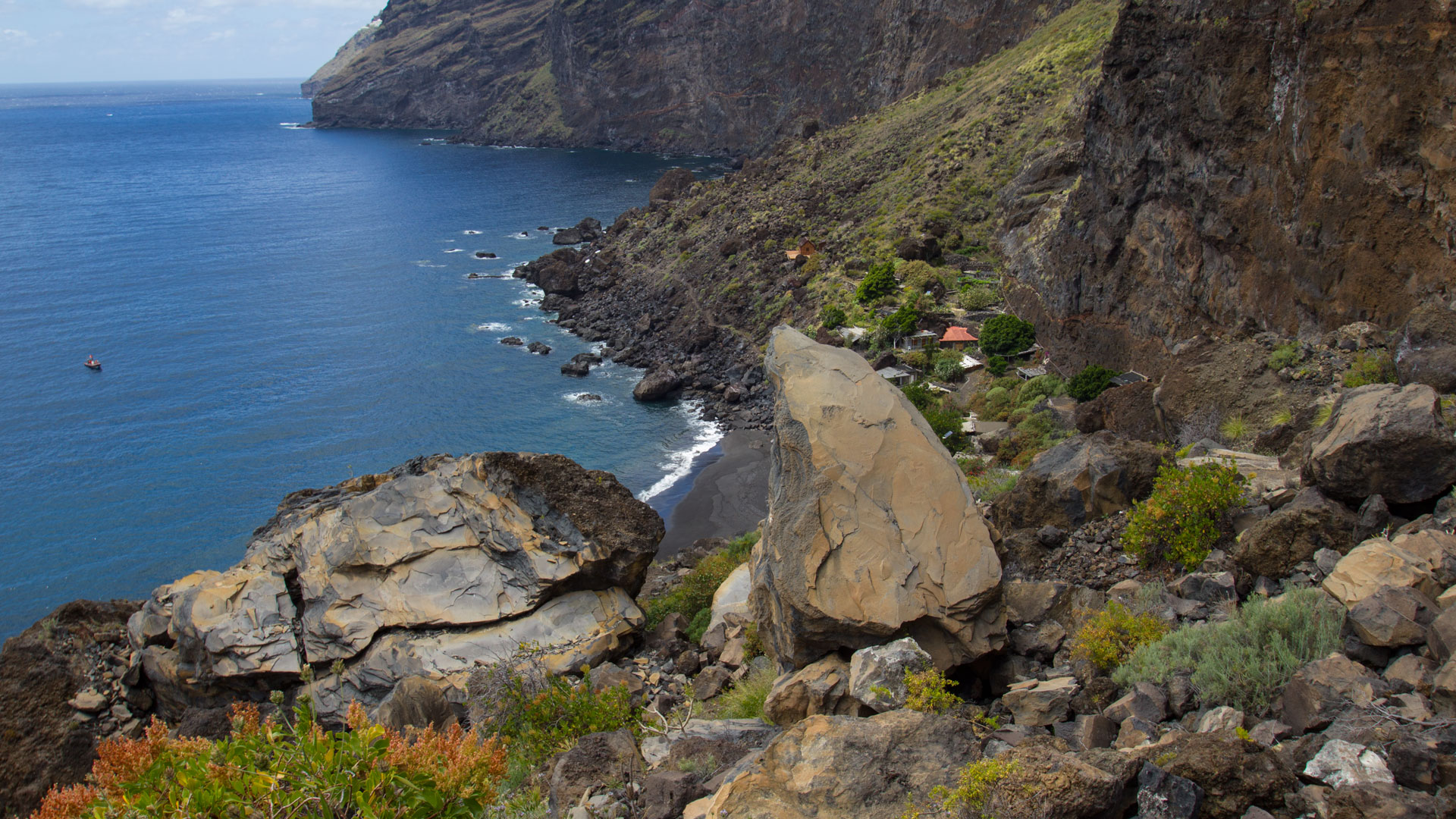
At the foot of the massive cliffs of Tijarafe, a small natural wonder appears year after year: Playa de la Veta. What emerges from nothing in spring disappears again just as completely in autumn – a play of tides that can be observed at several coastal sections of La Palma, but nowhere as radically as here. From around May, the current deposits fine black volcanic sand and shapes a dreamlike swimming bay that lasts through September. Anyone visiting the same spot in winter finds no trace of it: just bare rock and the crashing surf of the Atlantic, not a single metre of sand.
Location and Getting There: The Adventure of Playa de la Veta
Located in the municipality of Tijarafe, hidden along the wild west coast of La Palma, is Playa de la Veta — and getting there is already part of the adventure. Via the Pista de la Veta, extremely steep, narrow and winding, you descend from the main road LP-1 to the cliff edge. You don’t park right at the start of the path — use the designated car park a little further up the road. Sturdy hiking footwear is essential for the roughly 20-to-25-minute descent that follows. For the return ascent, allow roughly double the time due to the steep gradient.
| Location | West coast of La Palma, municipality of Tijarafe |
|---|---|
| Season | April–October – no sand in winter |
| Access | 25-min cliff path + illuminated rock tunnel |
| Beach | Black sand; size varies with the swell |
| Lifeguard | None – swim at your own risk |
| Footwear | Sturdy shoes essential |
| Highlight | Illuminated rock tunnel as the entrance |
Swimming and Currents
The water at Playa de la Veta is crystal clear – but the currents can be strong. The exposed position on the west coast makes the bay susceptible to undertow and undercurrents that do not always announce themselves at the surface. Only experienced swimmers should enter the water. There is no lifeguard service on site, meaning swimmers must exercise extreme caution.
The Weekend Settlement at the Veta
Below at Playa de la Veta, beside the beach, stand a few fishing huts and simple cottages – a small weekend settlement used by families from Tijarafe and the surrounding area on summer Saturdays and Sundays. During the week there is almost no one here. At weekends in summer the settlement briefly comes to life: the smell of barbecues drifts through the air, children play on the rocks, and fishing boats lie resting on the rocks. It is the most tranquil coastal life you can imagine — and then it is over again.
Photography at Playa de la Veta
Playa de la Veta is an exceptional location for photographers. The illuminated tunnel as an entrance, the 200-metre-high cliff behind it, the black sand and clear water: this is where images with a depth rarely found elsewhere on La Palma are created. The best light comes in the afternoon, when the sun has not yet climbed over the cliff and the water glows in a rich, vivid turquoise. In the evening, just before the walk back, the cliff face and beach glow in the last light of the day.
Tijarafe: Almond Blossom, Pine Forests and Steep Coast
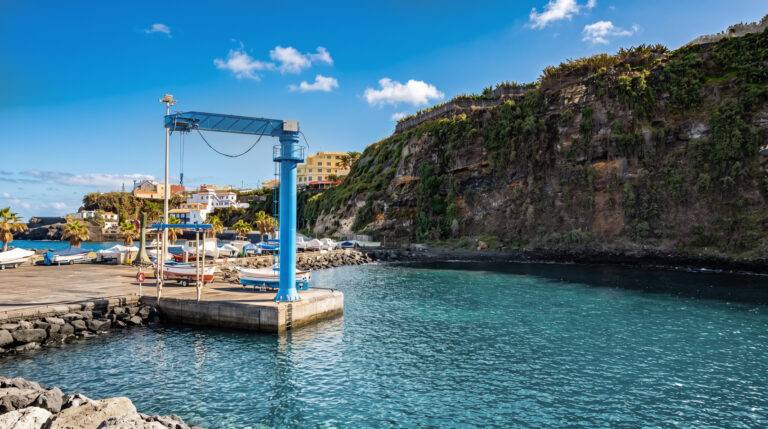
The municipality of Tijarafe on the sunny west coast of La Palma is one of the most scenically impressive regions on the island. Deep, rugged ravines, Canarian pine forests in the harsh highlands, lush almond groves at mid-altitude and bare lava cliffs at the coast — the landscape changes completely within just a few kilometres. The charming main village itself lies idyllically at mid-altitude. While the spectacular pirate bay of Porís de Candelaria is the municipality’s world-famous calling card, the dramatic drop into the Barranco del Jurado and the coastal adventure to the seasonal Playa de la Veta are equally rewarding for explorers.
Clariso Holiday Homes in Tijarafe
Tijarafe is the municipality with the largest selection of Clariso holiday homes on La Palma: 37 properties, many with pool and sea view. Those wanting to use the west coast as a base — with short distances to Playa de la Veta, Playa del Jurado and the pirate bay — will find the best choice here. Book directly via Clariso Tijarafe — avoiding commission fees charged by third-party platforms.
The Seasonal Rhythm of the Veta
Playa de la Veta follows a natural rhythm dictated by the seasons and the Atlantic swell. In April the first sand appears as the winter storms subside. In May and June the beach is at its most complete — fine black sand that the sea has washed out of the lava rocks. In September the sea begins to reclaim the sand. By October and November there is often nothing left. Those who want to see the Playa de la Veta at its best should visit between May and August.
Anyone who has walked through the illuminated tunnel and stood at the bottom on the black sand of Playa de la Veta understands why this beach appears on lists of the Canary Islands’ most hidden shores. It is not the length of the beach, not the width, not the amenities. It is the moment itself: the tunnel, the exit, the sea. La Palma has several such places – spots that only reveal themselves in the final step. The Veta is the most obvious of them.
Conclusion: Playa de la Veta
Playa de la Veta is La Palma’s most sought-after secret: 25 minutes of cliff, an illuminated tunnel, and then black sand that the sea borrows afresh each year.
Spring to autumn only, experienced swimmers only, visitors with sturdy footwear and a taste for adventure only.
Those willing to make the trek are rewarded with one of the island’s most pristine beaches.
Frequently Asked Questions
From approximately April to October. In winter the sea reclaims the sand – then bare rock is all that remains. A visit is only worthwhile in the spring and summer season.
Via a narrow mountain road to the west coast in the municipal area of Tijarafe. Car park at the upper end, then 25 minutes on foot over the cliff and through the illuminated tunnel. Sturdy footwear absolutely essential.
Yes – the short rock tunnel through which you walk the final section to the beach is fitted with basic lighting. A torch as backup is still recommended.
With reservations. The descent path is demanding, currents can be strong, no rescue service on site. Possible for older children with good fitness and swimming ability in calm conditions.
This article is based on the on-the-ground knowledge of the Gequo editorial team – publishers of the Reisezeit hiking guides and operators of Sunhikes.com. Last updated: May 2026