Plaza de España Santa Cruz: The Renaissance Heart of the Capital
Some plazas you enter once and immediately understand: this was the historical and political heart of an entire region. Plaza de España in Santa Cruz de La Palma is exactly that kind of place. The square impresses not with its size but with its extraordinary concentration of historic buildings. It is considered one of the most beautiful and harmonious Renaissance ensembles in the Canary Islands.
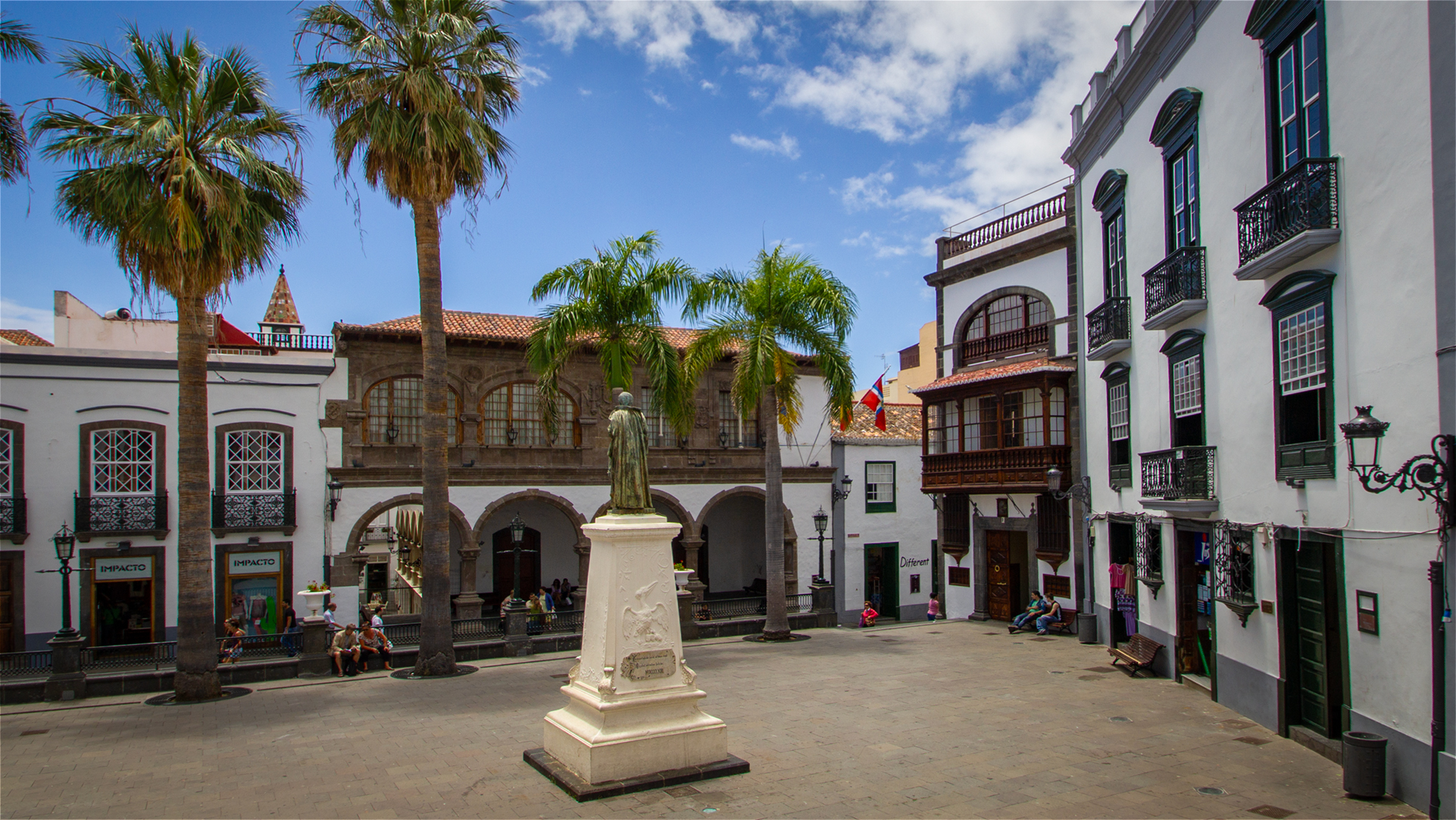
Standing beneath the tall palms, you look out on a perfectly preserved ensemble: the stately 16th-century town hall, the magnificent Iglesia de El Salvador, historic townhouses, and a stone fountain from the era when Santa Cruz was a major trading port. More than five centuries of urban history are concentrated here — every stone tells of La Palma’s former importance as a hub between Europe and the Americas.
The Town Hall: Four Arches and Royal Splendour
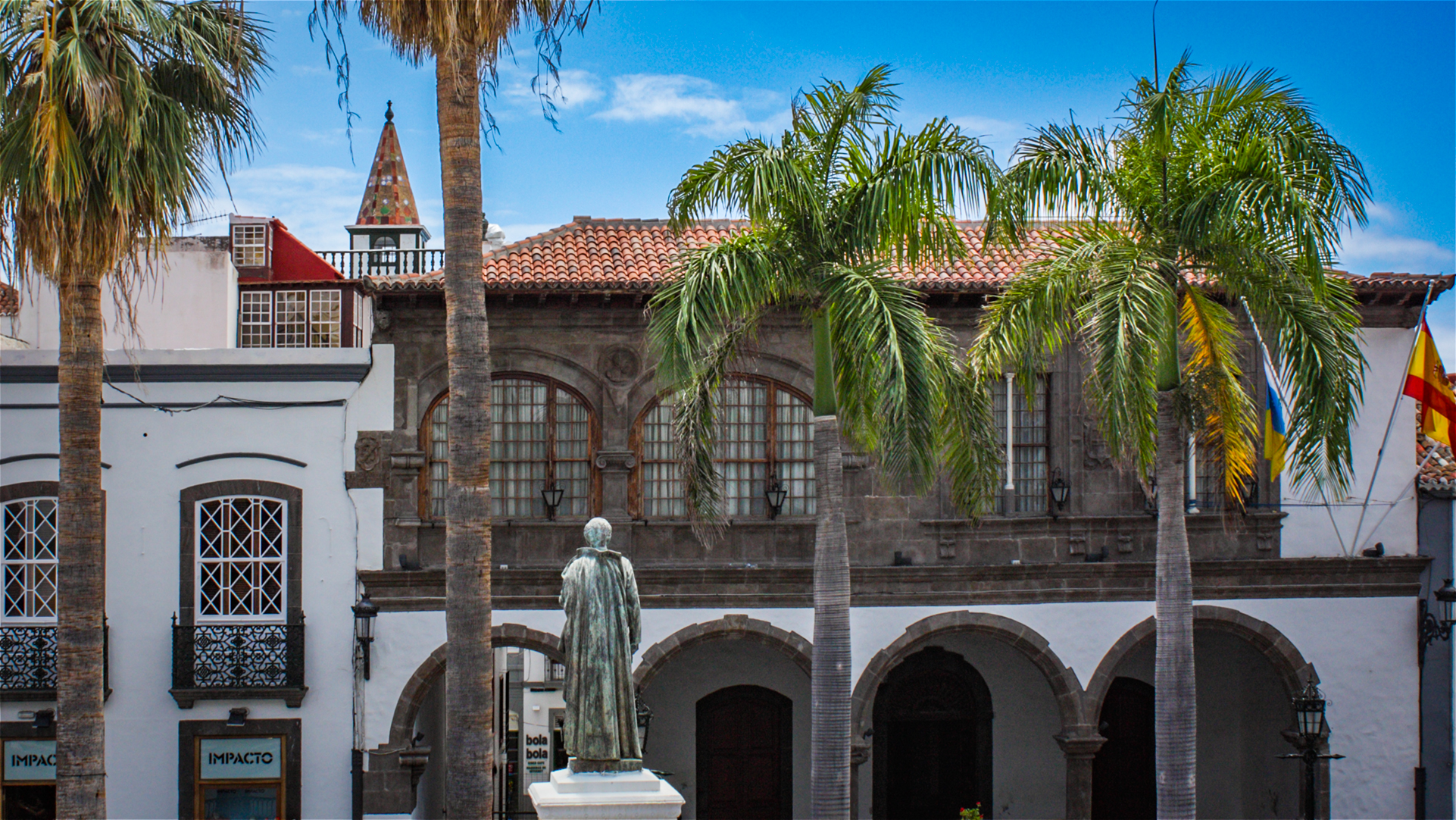
The Ayuntamiento de Santa Cruz de La Palma was built between 1559 and 1563 during the reign of Philip II and is considered one of the most significant civil Renaissance buildings in the Canary Islands. Its construction followed the destruction of earlier city structures by pirate raids in the 16th century. The elegant facade is defined by four symmetrical rounded arches. Above them stand the portrait of the Habsburg king, the coat of arms of La Palma, and an inscription from the time of construction.
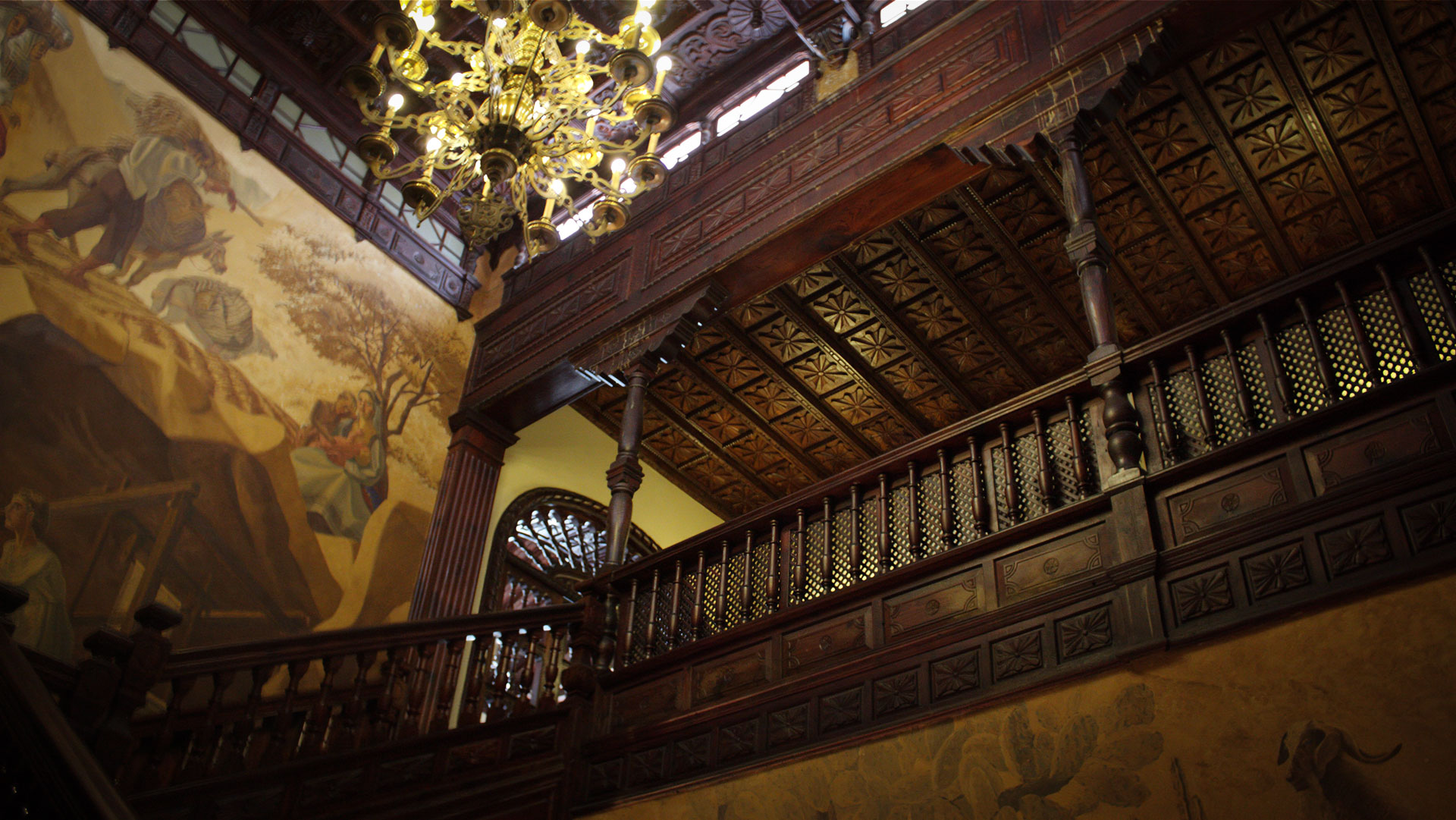
The interior of the town hall is well worth a visit: particularly impressive are the historic wall frescoes by Mariano de Cossío in the staircase, depicting scenes from the history and mythology of La Palma. The intricate coffered ceilings made of Canarian pine (tea wood) are further testament to the extraordinary craftsmanship of past centuries.
Iglesia de El Salvador: Renaissance, Mudéjar, and Island History
Directly opposite the town hall stands the Iglesia de El Salvador. Its imposing main portal in the Plateresque style blends elements of the Spanish Renaissance with late Gothic influences, making it one of the most beautiful church facades on the island.
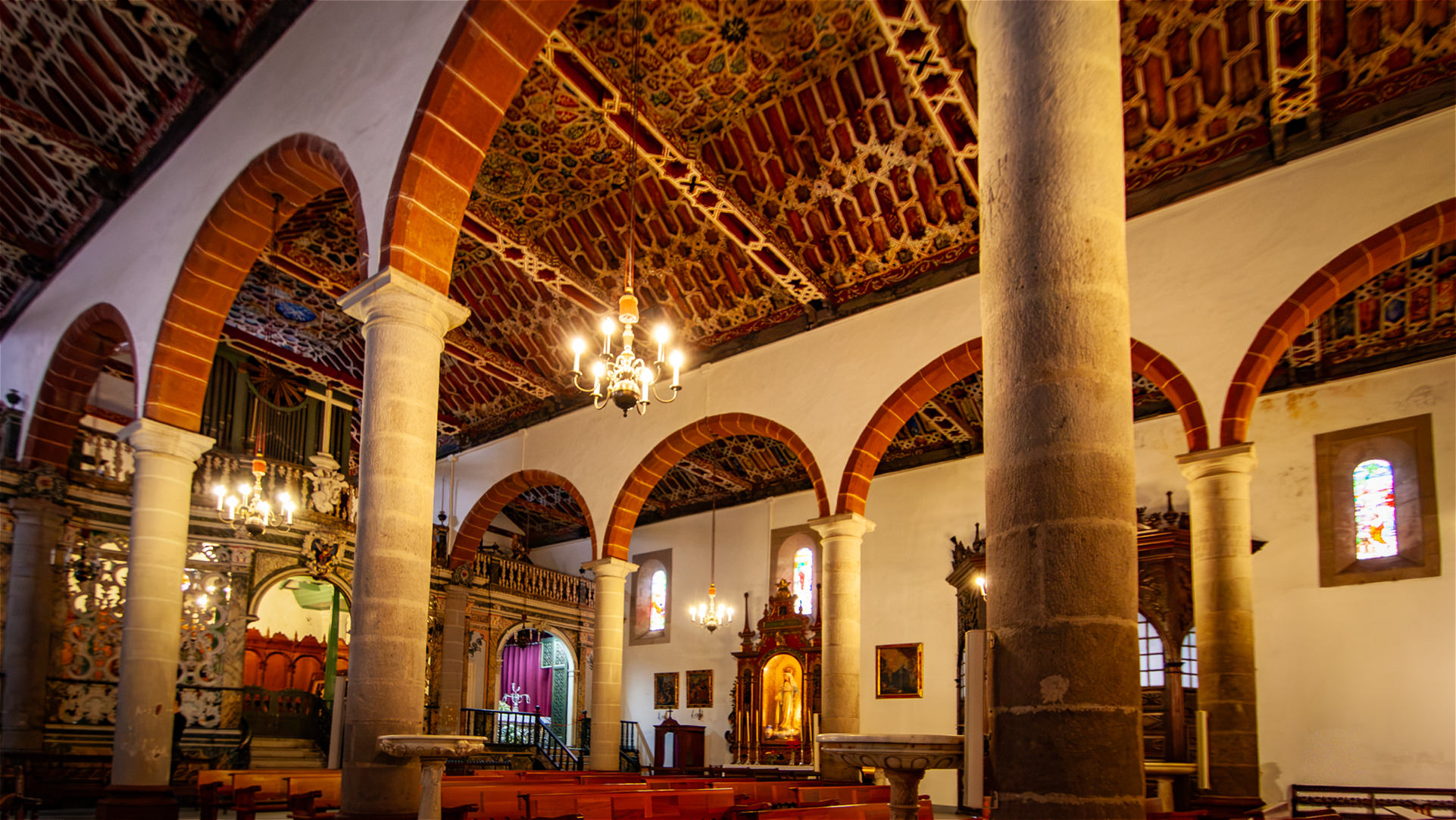
Inside, the three-aisled nave surprises with a magnificent Mudéjar-style wooden ceiling and valuable works of art crafted from Canarian pine. The church is one of the most important historic buildings in Santa Cruz de La Palma and is a must-see for lovers of architecture and art.
Padre Díaz: A Monument to Enlightenment and Progress
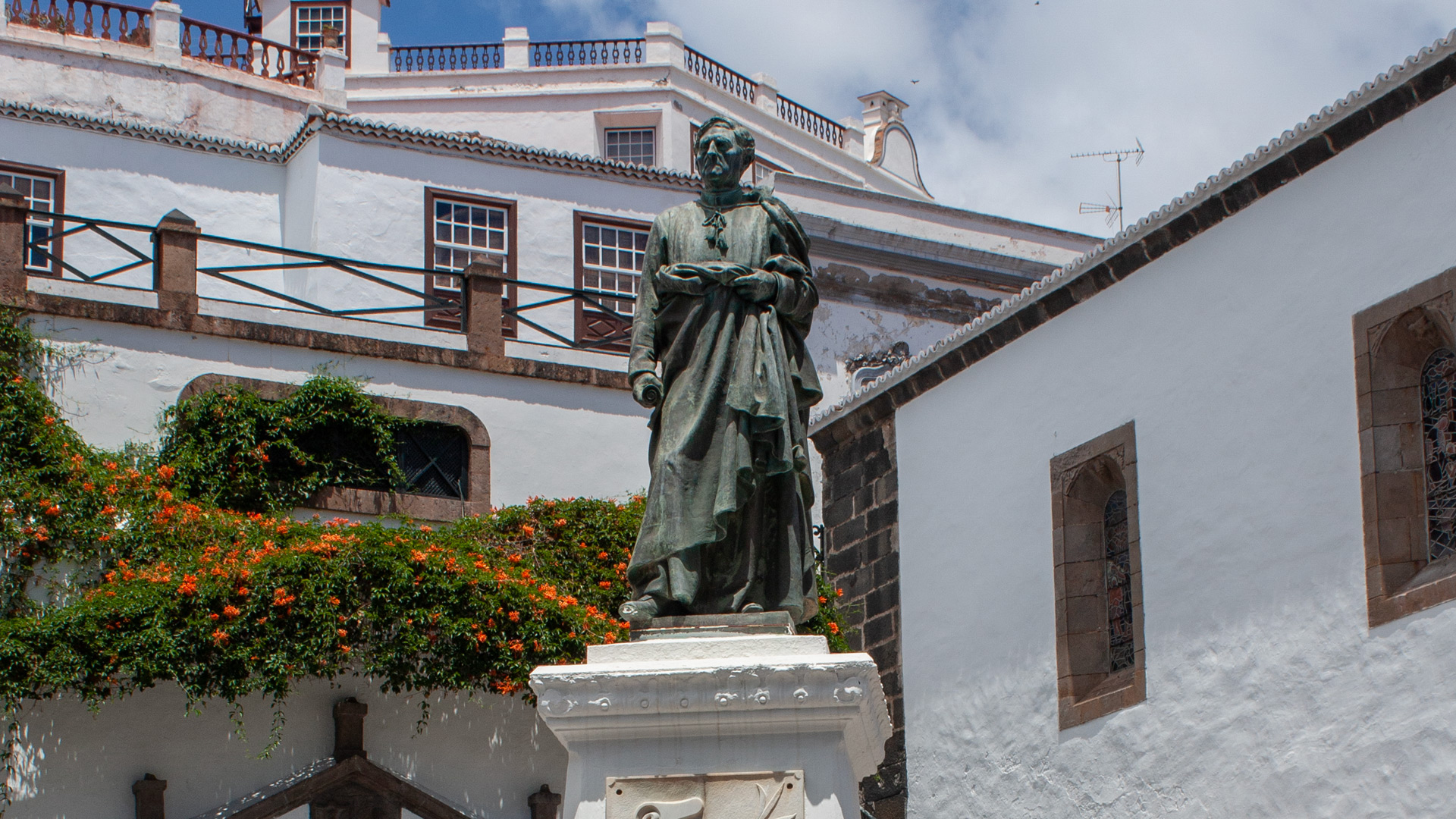
At the centre of Plaza de España stands a striking bronze statue that defines the character of the square. It commemorates Manuel Díaz Hernández, better known as Padre Díaz.
The priest, humanist, and enlightened thinker lived in the early 19th century and championed education, social development, and the modernisation of the island. His monument commemorates a figure whose significance to La Palma’s history extended far beyond his religious role.
The Fountain and the Gateway to the Old Town
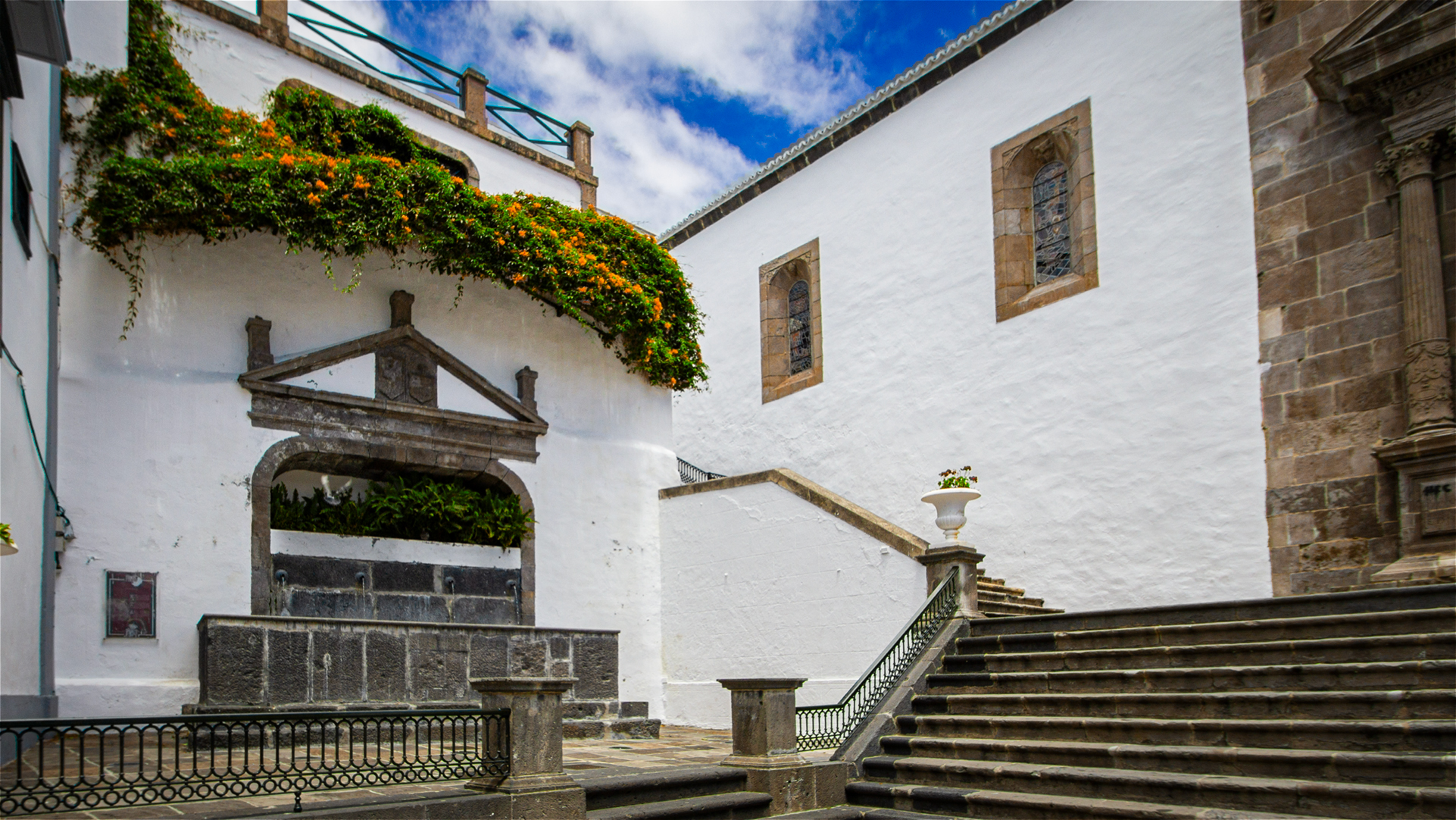
The plaza also features the historic Fuente de la Pila, dating from 1588. The stone fountain bears the coat of arms of La Palma and once served as the water supply for the surrounding houses.
From Plaza de España begins the perfect walking tour through the old town of Santa Cruz de La Palma:
- Calle O’Daly (Calle Real): The historic shopping street runs right past the square, captivating visitors with its colonial townhouses, small shops, and traditional facades.
- Avenida Marítima: Via the side streets you reach the waterfront promenade with its famous colourful Balcones Típicos, the traditional wooden balconies of Santa Cruz de La Palma.
Plaza de España at a Glance
| Category | Information |
|---|---|
| Location | In the heart of the historic old town of Santa Cruz de La Palma, right on the Calle O’Daly pedestrian zone |
| Highlights | Town Hall (Ayuntamiento), Iglesia de El Salvador, historic Fuente de la Pila from 1588, and monument to Padre Díaz |
| Architecture | One of the most beautiful Renaissance ensembles in the Canary Islands, with Plateresque and Mudéjar influences |
| History | Since the 16th century the political, religious, and social centre of the island capital |
| Special Features | Wall frescoes by Mariano de Cossío in the town hall, ornate coffered ceilings, and colonial townhouses around the square |
| Getting There | About 5 minutes on foot from the harbour and cruise terminal; ideal starting point for an old town walk |
| Ideal For | Culture enthusiasts, architecture lovers, cruise visitors, and anyone looking to discover historic Santa Cruz |
| Combine With | Calle O’Daly (Calle Real), Avenida Marítima with the Balcones Típicos, Plaza de Santo Domingo, and old town alleys |
Conclusion
Plaza de España is more than a beautiful city square — it is the historical memory of Santa Cruz de La Palma. Between the Renaissance town hall, the magnificent church, the old townhouses, and the monument to Padre Díaz, you feel the importance of this city as a former trading centre on the Atlantic.
Anyone who takes the time to discover the details of the facades or lingers over a coffee at the plaza will experience one of the most impressive spots in the island capital.
Frequently Asked Questions
When can you visit the town hall of Santa Cruz?
What are the opening hours of Iglesia de El Salvador?
Where is the best place to park for a visit to Plaza de España?
What else should you visit around Plaza de España?
Do hiking trails also start here?
This article is based on the on-the-ground knowledge of the Gequo editorial team – publishers of the Reisezeit hiking guides and operators of Sunhikes.com. Last updated: May 2026